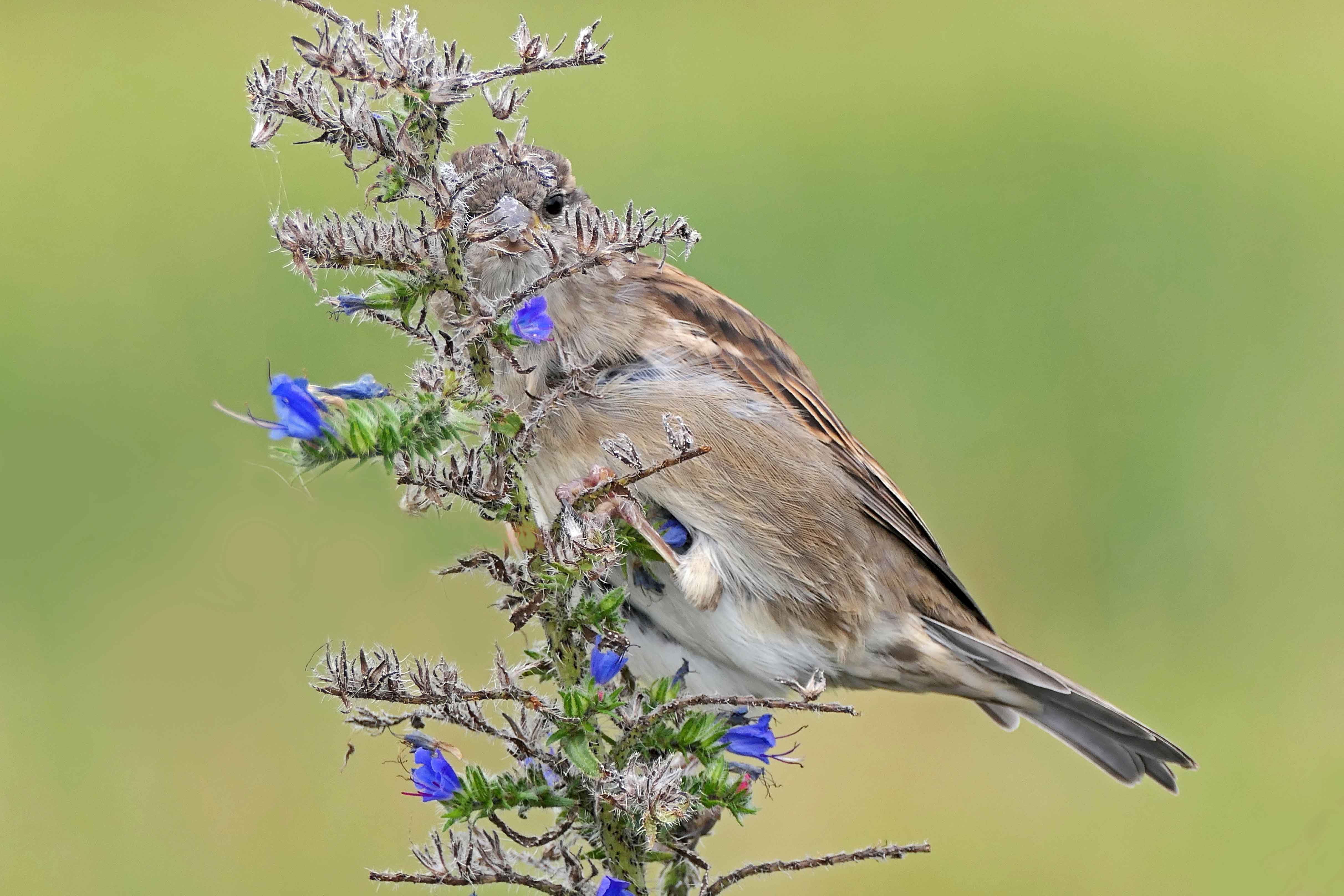
It’s just a sparrow, you might say, but no bird is ‘just’ a bird. And this little House sparrow was seriously sweet, pecking away at the seeds on a Viper’s-bugloss, looking like it was trying to hide from the pesky photographer.

27 Friday Sep 2024
Posted in birds
It’s just a sparrow, you might say, but no bird is ‘just’ a bird. And this little House sparrow was seriously sweet, pecking away at the seeds on a Viper’s-bugloss, looking like it was trying to hide from the pesky photographer.

10 Tuesday Sep 2024
Posted in birds
Tags
autumn migration, birding, birdwatching, British birds, Cardiff Bay birding, migrating birds, Wheatear
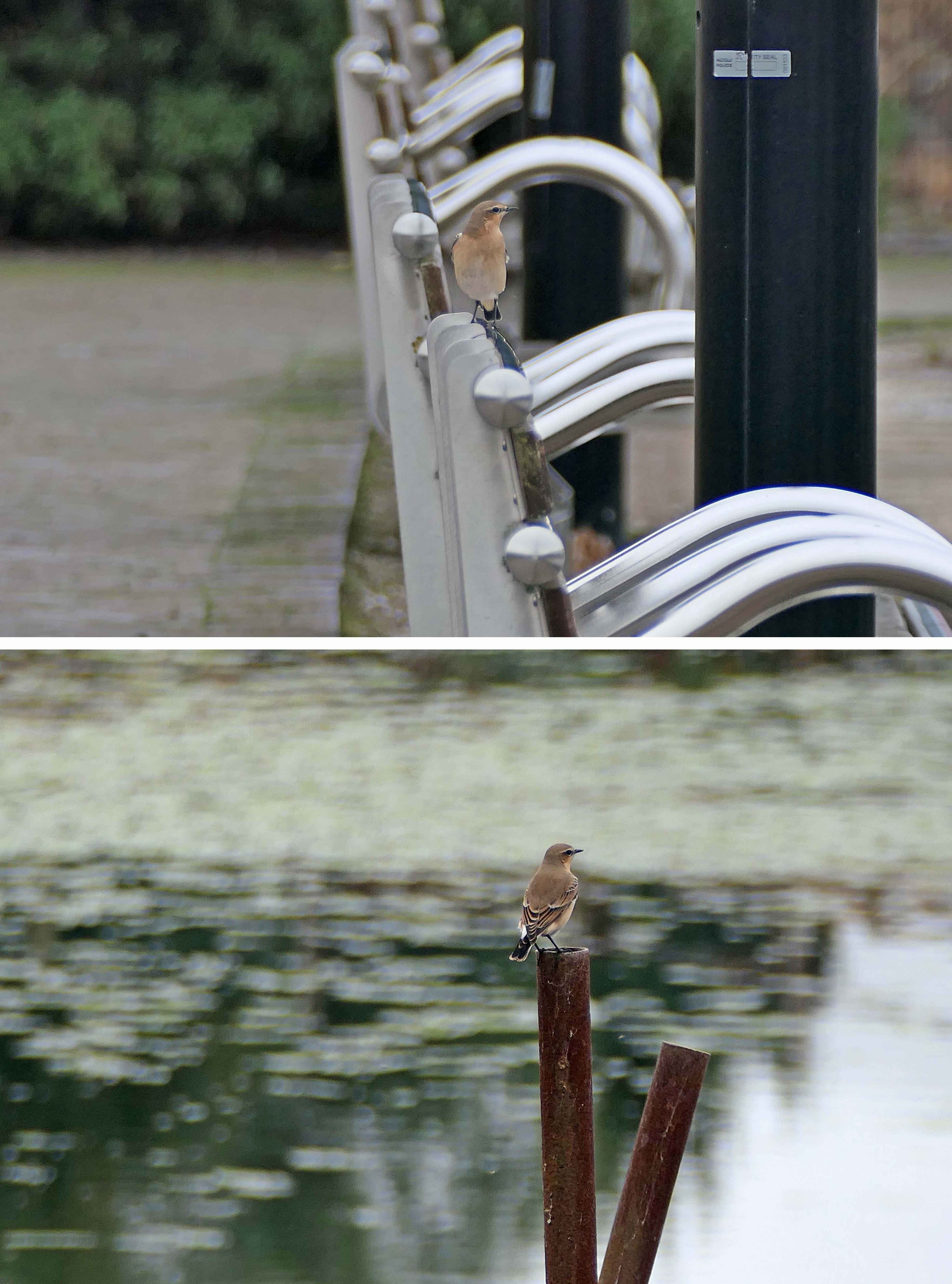
I can’t recall whether I’ve ever seen so many Wheatears in one day so Saturday’s walk around part of Cardiff Bay, with good views of six Wheatears, was certainly a walk to remember.

It was a flash of the white rump feathers of a Wheatear flitting from one rock to another that alerted me to the first group of four birds, moving together along the embankment of the River Ely.

And then, on the other side of the Bay, two more Wheatears were foraging for food along the edge of one of the old docks. What a thrill to see so many of these beautiful birds during their brief migration stopover!
22 Saturday Jun 2024
Posted in birds
Tags
birding, birdwatching, British birds, Canada geese, Canada goose goslings, Cardiff Bay birding, Lesser black-backed gull, Lesser black-backed gull chicks, Oystercatcher, Oystercatcher chick
For the first time in ages I walked a circuit of Cardiff Bay on Tuesday – I usually avoid the place in the summer as there are too many people for my liking, but I’d heard there were some chicks to be seen so I went looking. These are they …

Canada goose (above and below): there were two broods of goslings, one of five and one of six, with their parents and a flock of 20-plus adult geese (as if they were all keeping an eye on the children) in one of the now-landlocked old docks. They’ll be stuck there until they learn to fly but I’ve heard people have been feeding them (perhaps that’s also why so many adults are present) so hopefully they’ll all develop to maturity.

Lesser black-backed gull: one chick was still on the dolphin where their nest must have been (there is no other way the chick could have got there), squawking almost repeatedly at an adult gull that was perched higher up the dolphin structure. The other chick had either fallen or jumped from the dolphin and was nearby, at the water’s edge, washing and preening.

Oystercatcher: this was the main reason for my walk and definitely the highlight. A pair of Oystercatchers has been returning to the same spot, on another of the dolphin structures, for several years, to breed but they have always failed to raise a chick to adulthood. It is a very odd location for their nest – no other Oystercatchers breed locally so I wonder if this is where one of them was originally hatched. So far, this year’s breeding attempt is going well so let’s hope their good luck continues.


03 Friday May 2024
Tags
birding, birdwatching, British birds, Cardiff Bay birding, Cardiff Bay Wetlands Reserve, Reed warbler, Sedge warbler, spring migration
Thursday morning was looking grim and grey, with cloud so low it looked like fog, and a constant fine drizzle. But, when word came through that there was a festival of singing warblers at Cardiff Bay wetlands, I had to go. And it was absolutely amazing – with at least 14 newly arrived Sedge warblers singing alongside the resident Reed and Cetti’s warblers, as well as the more usual Blackbirds, Green- and Goldfinches, and Reed buntings, I may have got wet but was filled with wonder at the surround sound bird song. The Sedge warblers were mostly skulking but this Reed warbler, which had probably arrived a few days earlier and already established his territory, was enthusiastically advertising his presence.

18 Thursday Apr 2024
Posted in birds
Not content with quacking at me from the water below the boardwalk where I was standing, this very handsome male Mallard decided he would improve his chances of successfully begging for food by flying up and perching on the boardwalk’s handrail. First, he tried smiling at me – at least I think this is meant to be a smile …

When that didn’t work, he waddled carefully towards me and quacked very loudly …

Unfortunately for him, I didn’t have any food with me, but I did take the opportunity to take quite a lot of photos as he posed.
13 Saturday Apr 2024
Tags
birding, birdwatching, British birds, Cardiff Bay birding, Delichon urbicum, nesting Sand martins, Sand martin
Although I saw the Sandwich tern again and a large huddle of Turnstones, as well as lots of other birds, the stars of my circuit of Cardiff Bay yesterday were the Sand martins, which are now here in large numbers. As I walked across the Barrage, these gorgeous little birds were buzzing constantly overhead, flitting low over the water just off the edge of the Barrage grass, then coming in to land and preen on the gabions.

Being able to see those martins up close was a delight but things only got better. Sand martins nest in the holes along the concrete edges of the old dock by Tiger Yard, and that area was just alive with birds, seemingly arguing about ownership of particular holes, gathering nesting material, and generally going out their Sand martin business. Some of those beginning to make their nests comfortable were landing on the dock edge to gather moss and grasses. They were behind railing but less than a metre from me so, by staying still, I was able to get a few good close ups. They were simply magical to watch!

11 Thursday Apr 2024
Spring migration is well underway now, with new bird species being sighted by keen-eyed local birders almost every day. My eyes are not so keen these days but, on Monday, with binoculars, I did manage to spot my first couple of House martins (Delichon urbicum) amongst a large flock of Sand martins feeding over Cardiff Bay. The two species can be difficult to tell apart especially in dull weather when the blue upper plumage of the House martin is not so obvious. However, when they’re flying, it was relatively easy to distinguish between the two species – the Sand martins have a brown bib whereas House martins have solid white underparts. As the birds were quite distant, I wasn’t able to get any clear photos so you’re being treated (ha!) to another of my very amateur drawings.

10 Wednesday Apr 2024
Posted in birds
Tags
Aythya affinis, birding, birdwatching, British birds, Cardiff Bay birding, Lesser scaup, Nearctic vagrant bird
We’ve been fortunate to have a rare avian visitor in Cardiff recently, a drake Lesser scaup (Aythya affinis), a bird more usually seen in North America, a ‘Nearctic vagrant’ as it’s described in an excellent photo identification guide on the Bird guides website. I first saw this bird (a lifer for me) on 4 April at Cardiff Bay Wetlands Reserve, where it was snoozing among the flock of Tufted ducks and Great crested grebes. With its glossy green-tinged head and grey mantle I could pick it out easily enough, though, with its similarity to Greater scaup, I would’ve struggled to identify it as a Lesser scaup if I hadn’t been told what it was.

That Bird Guides article describes the Lesser scaup as having the small, compact body proportions of a Tufted duck and the plumage of a Greater scaup but with a distinctive head shape – this is less rounded than a Tufted duck, is tuft-less, and has a steeper forehead with a rear crown ‘bump’.

The bird has moved around the local area, from a couple of different spots in Cardiff Bay to north Cardiff’s Lisvane reservoir, then back to the Bay again. I got a second, closer look on 8 April, though the bird kept its head down and snoozed all the time I was nearby. Obviously, the long flight from North America is very tiring!
08 Monday Apr 2024
Posted in birds
Tags
birding, birdwatching, British birds, Cardiff Bay birding, Common Gull, Sandwich tern, spring migration
I had a cracking walk around Cardiff Bay earlier today. I managed to pick out my first couple of House martins from the large numbers of hirundines flying over the water; I had a brief glimpse of an Otter; the Lesser scaup was still present and still snoozing; and, a particular highlight, the Sandwich tern that had been reported an hour or so before I got to the Barrage was still sitting on the buoys in front of the sluice gates. We rarely see Sandwich terns hereabouts, only on migration in spring and autumn, when they move from their overwintering spots on the coast of west Africa to their breeding colonies along Britain’s coastline, and vice versa.

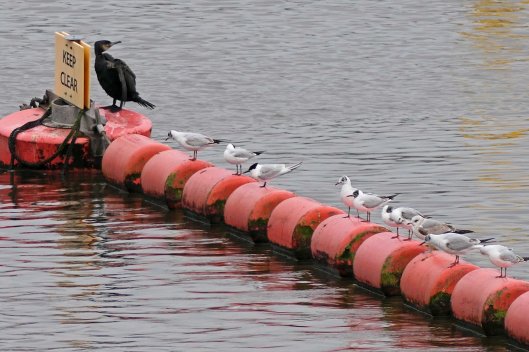
The little group of birds on the buoys also included a bonus juvenile Common gull. In case you don’t know these birds, the photo above shows, from left, a Cormorant, 2 Black-headed gulls, the Sandwich tern, four more Black-headed gulls, the Common gull, and another two Black-headed gulls.
30 Saturday Mar 2024
Tags
birding, birdwatching, British birds, Cardiff Bay birding, Motacilla alba alba, Pied wagtail, White wagtail
White wagtails are Pied wagtails that look a little different, come from a different location and so are usually seen on migration. That’s the gist of it, but trying to nail down the differences between white and regular Pied wags can be tricky. There’s a Bird Guides article online that contains all the facts but to summarise: our regular Pied wagtails that mostly stay put are subspecies Motacilla alba yarrellii, whereas white wagtails are subspecies Motacilla alba alba, and most of the birds seen in Britain are moving from southern continental Europe and Africa to Greenland and Iceland (and vice versa in the autumn). White wagtails can be identified by the clean line between the black at the back of the head and the grey back (especially in male birds); they have a pale grey rump, if you can see it; and the belly and flanks are a very clean white (as opposed to the more streaky grey of Pied wags). Here’s one of several I spotted on Cardiff Bay Barrage yesterday.

You must be logged in to post a comment.