• ABOUT
  • BIRDING 2018
  • Birding 2019
  • BLOG POSTS
  • Butterflies 2018
  • Resources

earthstar

~ a celebration of nature

earthstar

Tag Archives: Cardiff Bay

The winter ten

05 Sunday Nov 2017

Posted by sconzani in flowers, nature, wildflowers

≈ 10 Comments

Tags

#WildflowerHour, British flora, British wildflowers, Cardiff Bay, wildflowers

Do you know about #WildflowerHour? Its aim is to spread the love of plants – not garden plants (though, of course, they are also lovely) but the glorious flowers that grow wild in Britain’s woods and meadows, alongside tracks, beneath hedgerows, beside streams, around buildings, in cracks in pavements. The idea is to take photos of the wildflowers you see, try to identify them (but others will help if you’re not sure), then post your photos on Facebook or Twitter (with the #WildflowerHour tag) every Sunday night between 8 and 9pm.
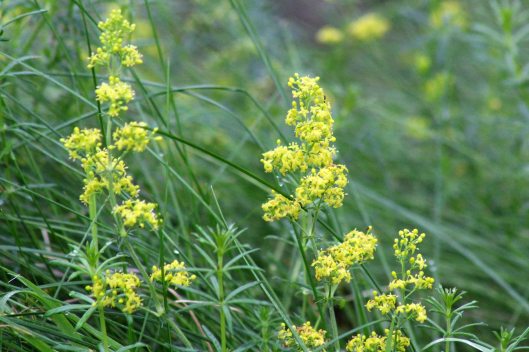
171105 Lady's bedstraw

On 20 October the folks at WildflowerHour issued a new challenge: ‘our weekly winter challenge is #thewinter10 which is to find ten different wild flowers in bloom each week. Once you’ve found them, work out what they are, and post them for the rest of us to see.’ So, as I walked around Cardiff Bay on a grey, gloomy Friday, I kept an eye out for wild flowers. To be honest, I was amazed to find so many still in bloom (not just 10 but 24!). I have not managed to name them all but I hope you enjoy seeing them as much as I did.

171105 Bramble
171105 Buttercup
171105 Chamomile perhaps
171105 Common stork's-bill
171105 Common toadflax
171105 Creeping thistle
171105 Crown vetch
171105 Daisy
171105 Evening primrose
171105 Hare's-foot clover
171105 Hedge bindweed
171105 Herb-Robert
171105 Hoary mustard
171105 Mugwort perhaps
171105 Pale flax
171105 Red clover
171105 Sea-holly
171105 Sow-thistle
171105 Unknown
171105 Vicia sp
171105 Western gorse
171105 White campion
171105 White clover
171105 Yarrow
Like Loading...

On a grey Bay day

04 Saturday Nov 2017

Posted by sconzani in birds, nature, walks

≈ 8 Comments

Tags

birding, birds, birdwatching, black-headed gulls, British birds, Canada geese, Cardiff Bay, Coot, Cormorant, fog, Great Crested Grebe, little grebe, long-tailed tit, Moorhen, Mute swan, Pied wagtail, starling, walk around Cardiff Bay

171104 1 Cardiff Bay fog

Thick fog hung over Cardiff Bay as I set out on a round-the-bay circuit yesterday morning and, though the fog thinned as the day went on, the day remained grey. Still, never let it be said that grey is boring. Birds there were aplenty (and wildflowers, too … but that’s for tomorrow’s post).

171104 2 Cormorant
171104 2 Little grebes

This cormorant was enjoying a successful spot of fishing in the old Penarth dock area, though it was slim pickings for the three Little grebes around the corner in the River Ely.

171104 3 Pied wagtail (1)
171104 3 Pied wagtail (2)
171104 3 Pied wagtail (3)
171104 3 Pied wagtail (4)

All around the Bay, on almost every man-made structure and clump of rocks near the water, Pied wagtails bobbed, wagged and ‘chisicked’.

171104 4 Coot
171104 4 Moorhen

Coots were even more numerous, and an occasional Moorhen prospected along the shoreline.

171104 5 Cormorant171104 5 Flock of Canada geese

As I was watching this Cormorant drying its wings, our peace and tranquillity was interrupted by the loud honking of a large skein of Canada Geese flying in from the west.

171104 6 Long-tailed tits
171104 6 Starlings and gull

Where concrete and buildings dominate the shoreline and there’s a notable absence of trees, the birds have adapted and perch on tree-like things.

171104 7 Great crested grebe
171104 7 Mute swan

I saw perhaps half a dozen Great crested grebes around the Bay: I always admire how long they can stay underwater when fishing. Mute swans were more numerous. They are birds of such contrasts, looking anything but decorous when flaunting their glorious white bottoms as they feed, yet the picture of elegance when preening.

171104 8 Black-headed gull (3)

The most abundant came at the end of my walk. It was standing room only for the Black-headed gulls on the Barrage.

171104 8 Black-headed gull (1)
171104 8 Black-headed gull (2)
Like Loading...

October on the Ely embankment

31 Tuesday Oct 2017

Posted by sconzani in birds, coastal fauna, nature, walks

≈ Leave a comment

Tags

birding, birdwatching, British birds, Cardiff Bay, Ely embankment, Great Crested Grebe, Linnet, little grebe, Pied wagtail, Redshank, River Ely, Rock pipit, Turnstone, Wheatear

At least once a week I take a turn along the embankment where the River Ely flows out into Cardiff Bay as it makes a nice circular walk from my home on the cliff-top above in Penarth. (It’s good exercise too, as what goes down there must walk back up!) I always record what I see – usually birds – so thought I would share my sightings in an end-of-monthly post.

171031a Ely embankment map
171031b turnstone & coot

A variety of birds make their home in this stretch of water, which they share with a yachting marina and associated water traffic coming and going. There are almost always Turnstones in varying quantities (from one to nine), Mallards, Mute swans, one or two Great Crested Grebes (including their progeny this year), a proliferation of Coots, the occasional Cormorant fishing, usually a couple of Grey wagtails and a couple of Pieds. Gulls fly overhead and there are plenty of hirundines, in the season.

171031c Wheatear
171031d Pied wagtail
171031e Rock pipit

2 October: A Wheatear, an unusual visitor, almost certainly on a migration stopover, was dotting about on the embankment stones; a Pied wagtail was doing its morning stretches, and a Rock pipit was browsing for titbits.

171031f Little grebe

171031g Great crested grebe (1)
171031g Great crested grebe (2)
171031g Great crested grebe (3)

16 October: This was the day before ex-hurricane Ophelia made her presence felt, the day of the jaundiced yellow sky and the rusty red sun, which you can see reflected in my photo of the four Little grebes that were sheltering from the incoming weather. A juvenile Grey wagtail was dotting along the embankment, calling incessantly for its parent; and a Great crested grebe was enjoying a very successful fishing session, coming up with fish in two successive dives.

171031h Linnet

22 October: The day after Storm Brian I walked the embankment to see if any unusual birds had been blown in. The usual suspects were present, except that, most unusually, there wasn’t a single Turnstone. A solitary Linnet flitted back and forth from pavement to stones, and three rather exhausted-looking Redshanks dozed warily along the water line. One of these was colour-ringed and might possibly be the bird I saw back in March but I couldn’t see its rings well enough to be sure.

171031i Redshank

Like Loading...

Bay birds

21 Monday Aug 2017

Posted by sconzani in birds, nature

≈ 6 Comments

Tags

birding, birdwatching, British birds, Cardiff Bay, Cardiff Bay wetlands, Great Crested Grebe, House martin, Linnet, Moorhen, Pied wagtail, swan, Turnstone

I had a super walk around Cardiff Bay yesterday …

170821a Linnets

A family of four Linnets were feeding on the Ely embankment. The seeds of Herb Robert seemed to be their food of choice.

170821b Linnets

This is one of six Turnstones foraging along the shoreline. I love their breeding plumage, which is now just beginning to change back to their less colourful winter plumage.

170821c Turnstone

These House martin chicks were poking their heads out of a nest on a house at the end of Penarth Marina.

170821d House martins

A close-up of one of a family of six immature Swans by the Barrage.

170821e Swan

And a little further long, this juvenile Pied wagtail was slipping and sliding along the wires at the shoreline.

170821f Pied wagtail

At Cardiff Bay wetlands, I followed a flock of tits and friends, and snapped this lovely bird. It might be a warbler or it might be a Chiffchaff – I couldn’t be sure as I didn’t hear its song and it wouldn’t show me its legs!

170821g Warbler or Chiffchaff

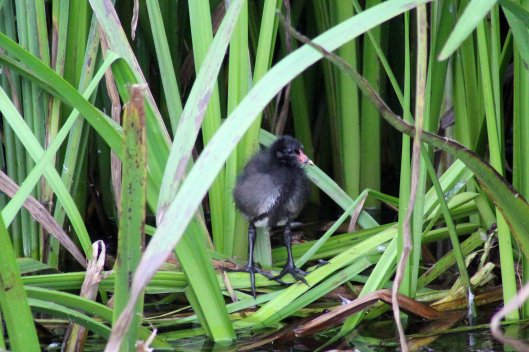
This young Moorhen was sticking close to the reeds while its parent was engaged in nest reconstruction, which seems just a little late in the year.

170821h Moorhen

And back over the other side of the Bay, by Ferry Court, this is one of three immature Great crested grebes that were swimming around amongst the Coots, Tufted ducks and Swans.

170821i Great crested grebe

Like Loading...

A Green-legged long-shank comes to call

17 Monday Apr 2017

Posted by sconzani in birds, nature

≈ 2 Comments

Tags

birding, birdwatching, Cardiff Bay, Green-legged horseman, Green-legged long-shank, Greenshank, Tringa nebularia

I get alerts for sightings of uncommon birds through various Twitter accounts and my birding group on Facebook and, when I heard a Greenshank had been spotted in Cardiff Bay, I crossed my fingers it would stay around overnight and was up early the next morning to see. I was lucky and, considering they have a reputation for being flighty, this bird was uncommonly still and very obliging. When it did start a little nervous jiggle, I quickly moved on.

170417 Greenshank (1)

The Greenshank (Tringa nebularia) has gained a delightful collection of common names including barker, stiltie (in Scotland, meaning wader with long legs), greater plover, green-legged horseman, green-legged long-shank, and green-shanked godwit. As you might guess from all those mentions of ‘green shanks’, it has a greenish tinge to its long slim legs. It’s an elegant bird, I think, not large, though it is the largest amongst its close relatives the redshanks and larger sandpipers.

170417 Greenshank (2)

In south Wales, the Greenshank is mostly a passage bird, seen around coastal wetlands and estuaries and near inland waters like ponds and marshes. They spend their winters in western Europe, the Mediterranean and Africa, through the Middle East and Arabian Peninsula to Southeast Asia, and as far south as Australia, and in Britain they spend their summers in the north and west of Scotland, where they breed on upland moorlands, usually near trees, a large rock or fencepost (possibly as a visual aid to nest location).

Like Loading...

The birds are back in town!

08 Saturday Apr 2017

Posted by sconzani in birds, nature

≈ 3 Comments

Tags

birding, birdwatching, Cardiff Bay, migrating birds, Riparia riparia, Sand martin, signs of summer

Not just any old birds – I’m referring to the Sand martins (Riparia riparia), one of the first migrating birds to arrive in the springtime. When you start to see them swooping and diving in the hunt for insects and hear their characteristic chattering sounds, you know summer really is just around the corner.

170408 Sand Martin (1)

The Sand martins have been arriving at various places along the south Wales coast for the past couple of weeks, after a marathon flight from their overwintering spots in the Sahel, south of the Sahara in Africa. For such small birds, it really is a huge effort so it’s no surprise they stop over in Cardiff Bay to refuel and rest up. Though many birds fly on to destinations throughout Britain, some will stay on in Wales to breed and raise their broods of four or five chicks before heading south to Africa again around August-September. It’s usually quite difficult to get photos of these aerial acrobats but this morning I got lucky when this little one sat and sang me a pretty song.

170408 Sand Martin (2)

Like Loading...

Another day, another new gull!

06 Thursday Apr 2017

Posted by sconzani in birds, nature

≈ Leave a comment

Tags

birding, birdwatching, Blakc-headed gull, Cardiff Bay, gulls, Ichthyaetus melanocephalus, Mediterranean gull

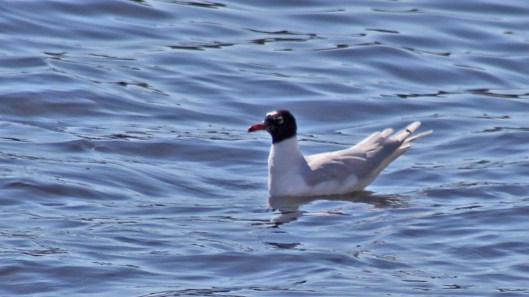
I’m rather ignorant about gulls but, when I saw this particular gull in a flock of about 20 others in Cardiff Bay a few days ago, I realised it looked different though I wasn’t able to identify the bird until I got home and had a good look at my photos. Even then I wasn’t entirely certain so posted some photos on the South Wales Birding group page on Facebook to get some expert opinions. And it turns out my deduction was right – this is a Mediterranean gull (Ichthyaetus melanocephalus).

170406 Mediterranean gull (1)

How did I recognise it from the usual Black-headed gulls (BHGs)? Well, in this bird the black feathers cover the whole head, rather than just the front half, and they are very black, not dark brown like the BHGs – the word melanocephalus means black-headed. Also, as one of my Facebook friends pointed out, you should always keep a look out for gulls that have white primaries, the long outermost feathers towards the top of a bird’s wing. Here are some flight photos that show how pale this bird’s wings were (and apologies for the poor images – it’s not easy to capture a flying bird and these are also heavily cropped).

170406 Mediterranean gull (2)
170406 Mediterranean gull (3)
170406 Mediterranean gull (5)
170406 Mediterranean gull (4)
Like Loading...

Signs of Spring, 2

24 Friday Feb 2017

Posted by sconzani in flowers, nature, seasons, spring, wildflowers

≈ 2 Comments

Tags

Cardiff Bay, Colt's-foot, Coltsfoot, signs of spring, spring flowers, Tussilago farfara

170224-coltsfoot

Determination. Persistence. Resistance. Constancy.
Humans have cleared the land of ‘weeds’; laid a gravel path edged with a concrete strip; planted a bed of ornamental shrubs (many of which have died); and mulched that garden bed with metal chips yet, in spite of all that destruction of its habitat, this little Colt’s-foot (Tussilago farfara) has managed to push through and begin to flower.
Admiration!

Like Loading...

A yodelling duck?

23 Thursday Feb 2017

Posted by sconzani in birds, nature

≈ 4 Comments

Tags

birding, birdwatching, British birds, Cardiff Bay, Clangula hyemalis, duck that yodels, Long-tailed duck

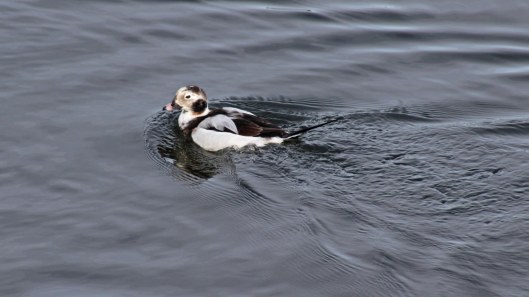
The Long-tailed duck (Clangula hyemalis) is an uncommon visitor to south Wales – the RSPB website recommends looking for them ‘from seawatching points around the coast in winter, particularly in northern Scotland, Shetland and Orkney’ – but this one has been over-wintering in Cardiff Bay with a raft of 8 Greater scaup (Aythya marila), and I finally got to see it a few days ago. (I had tried a couple of times previously but on those occasions the Scaup had Coots and the odd Great crested grebe accompanying them.)

170223-long-tailed-duck-1

The Long-tailed duck is a smallish sea duck that dives for the small fish, crabs and bivalve molluscs that make up its diet. It doesn’t breed in Britain but heads north to the Arctic regions, to Iceland and areas in northern Europe and northern America, so I guess this little guy (only the males have the really long tails) will be heading off soon to find a mate.

170223-long-tailed-duck-2

I didn’t hear this particular duck make any sound but apparently their call sounds something like a yodel and that is reflected in the names it’s known by in the northern isles of Shetland and Orkney: calaw, caloo and coal-and-candlelight are all derived from the sounds the duck makes. I think I would’ve been rather surprised to hear a duck yodel but I certainly feel privileged to have been able to sit and enjoy watching it.

170223-long-tailed-duck-3

with two of its Scaup friends, a male (front) and female (behind)

Like Loading...

Gwas y gog

21 Tuesday Feb 2017

Posted by sconzani in birds, nature

≈ 2 Comments

Tags

'servant of the cuckoo', Anthus pratensis, birding, birdwatching, British birds, Butty lark, Cardiff Bay, Cuckoo's sandie, Cuckoo's titling, Gwas y gog, Meadow pipit, pipit

While sitting watching some water birds at Cardiff Bay the other day, I heard the familiar call of a wagtail and turned to see two Pied wagtails bobbing about on the gravel path behind me but then was delighted to also see that they had a friend with them, a lovely little Meadow pipit (Anthus pratensis). I had seen a pair of Meadow pipits nearby the previous week but not been able to get close enough for good photos. This time I was in luck, probably because I was sitting down so there was no movement to catch its eye. I was able to slowly pivot round far enough to catch a few shots of the bird foraging for insects in the short grass.

170221-meadow-pipit-1

The Meadow pipit looks a bit like a song thrush but is smaller, about the same size as the wagtails this one was feeding near. Once very common, their numbers have been in decline over the last 40 years so they have now been added to the amber list, reflecting an increasing level of concern for their conservation. They tend to nest in moorland and heathland, habitats that have declined significantly in extent in recent years, which is likely to be the most significant factor in their decline.

170221-meadow-pipit-2

The Meadow pipit has long been associated with the Cuckoo, which often lays its eggs in the nests of these little pipits, and the association is reflected in the Meadow pipit’s many common names. In Hampshire it’s known as the Butty lark – Butty meaning friend or companion; in Durham it’s the Cuckoo’s sandie and the Cuckoo’s titling; and in the Welsh language it’s Gwas y gog which translates as ‘servant of the cuckoo’.

170221-meadow-pipit-3

Like Loading...
← Older posts
Newer posts →

About me

sconzani

sconzani

I'm a writer and photographer; researcher and blogger; birder and nature lover; countryside rambler and city strider; volunteer and biodiversity recorder.

View Full Profile →

Follow earthstar on WordPress.com

Enter your email address to follow this blog and receive notifications of new posts by email.

Recent blog posts

  • Beating the gloom March 10, 2026
  • No booming Bittern but … March 9, 2026
  • Danish scurvygrass March 8, 2026
  • Four weeks early March 7, 2026
  • Three shieldbug species March 6, 2026

From the archives

COPYRIGHT

Unless otherwise acknowledged, the text and photographs on this blog are my own and are subject to international copyright. Nothing may be downloaded or copied without my permission.

Fellow Earth Stars!

  • Unknown's avatar
  • Unknown's avatar
  • Unknown's avatar
  • Unknown's avatar
  • Unknown's avatar
  • Unknown's avatar
  • Unknown's avatar
  • Unknown's avatar
  • Unknown's avatar
  • Unknown's avatar
  • Unknown's avatar
  • Unknown's avatar
  • Unknown's avatar
  • Unknown's avatar
  • Unknown's avatar
  • Unknown's avatar
  • Unknown's avatar
  • Unknown's avatar
  • Unknown's avatar
  • Unknown's avatar
  • Unknown's avatar
  • Unknown's avatar
  • Unknown's avatar
  • Unknown's avatar
  • Unknown's avatar
  • Unknown's avatar
  • Unknown's avatar
  • Unknown's avatar
  • Unknown's avatar
  • Unknown's avatar
  • Unknown's avatar
  • Unknown's avatar
  • Unknown's avatar
  • Unknown's avatar
  • Unknown's avatar
  • Unknown's avatar
  • Unknown's avatar
  • Unknown's avatar
  • Unknown's avatar
  • Unknown's avatar
  • Unknown's avatar
  • Unknown's avatar
  • Unknown's avatar
  • Unknown's avatar
  • Unknown's avatar
  • Unknown's avatar
  • Unknown's avatar
  • Unknown's avatar
  • Unknown's avatar
  • Unknown's avatar

Blog at WordPress.com.

Privacy & Cookies: This site uses cookies. By continuing to use this website, you agree to their use.
To find out more, including how to control cookies, see here: Cookie Policy
  • Subscribe Subscribed
    • earthstar
    • Join 668 other subscribers
    • Already have a WordPress.com account? Log in now.
    • earthstar
    • Subscribe Subscribed
    • Sign up
    • Log in
    • Report this content
    • View site in Reader
    • Manage subscriptions
    • Collapse this bar
 

Loading Comments...
 

You must be logged in to post a comment.

    %d