• ABOUT
  • BIRDING 2018
  • Birding 2019
  • BLOG POSTS
  • Butterflies 2018
  • Resources

earthstar

~ a celebration of nature

earthstar

Tag Archives: caterpillar

First caterpillar of 2025

27 Monday Jan 2025

Posted by sconzani in insects, winter

≈ 2 Comments

Tags

caterpillar, caterpillar on Aquilegia, moth caterpillar, moth larva, possible Silver Y caterpillar

I actually spotted this little caterpillar nine days ago, on 16 January, but have struggled to put a name to it (I have a caterpillar guide book but the illustrations are so small that I find it difficult to distinguish between the many green caterpillars). I wondered if it might be a Silver Y moth (Autographa gamma) and some of my social media contacts agreed, though I’m still not entirely convinced. It was munching on the leaves of an Aquilegia that had escaped the confines of someone’s garden bed.

Like Loading...

119/365 Somebody’s got babies!

29 Monday Apr 2019

Posted by sconzani in 365DaysWildin2019, birds, nature, spring

≈ 6 Comments

Tags

#365DaysWild, birding, birdwatching, British birds, caterpillar, Grangemoor Park, long-tailed tit, tit feeding chicks

190429 Long-tailed tit (1)

How cute is this Long-tailed tit I spotted at Cardiff’s Grangemoor Park today? The caterpillar it’s found to feed its chicks is almost as big as it is.

190429 Long-tailed tit (2)
190429 Long-tailed tit (3)
Like Loading...

March of the caterpillars

20 Tuesday Jun 2017

Posted by sconzani in insects, nature

≈ 7 Comments

Tags

Aglais io, butterflies, caterpillar, Euproctis similis, Lasiocampa quercus, moth larvae, moths, Oak eggar, Peacock butterfly, Yellow-tail

Perhaps that should really be MUNCH of the caterpillars because these little creatures are really the ultimate food processors. They eat ravenously, they ingest determinedly, they process interminably, and, yes, they pooh prodigiously. What a life!

170620 Oak eggar larva (1)

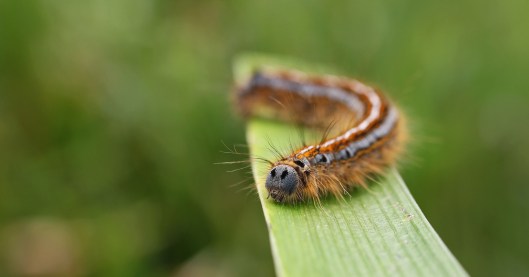
They can be covered in bristles: watch these ones as people with sensitive skin often get a rash from touching them because they can contain chemicals to deter predators from eating them. They can be dull to blend in with the vegetation on their favourite food plant. They can be patterned in startling colours and patterns, again as a warning to predators – ‘Don’t eat me!’

170620 Oak eggar larva (3)
170620 Yellow-tail larva (3)

These particular caterpillars are the larvae of two moths and one butterfly. The hairy ones are the moths, Oak eggar (Lasiocampa quercus) and Yellow-tail (Euproctis similis), and the spiky black one with white dots is the rather surprisingly coloured caterpillar of the Peacock butterfly (Aglais io).

170620 Oak eggar larva (2)
170620 Peacock caterpillars (1)
170620 Peacock caterpillars (2)
170620 Yellow-tail larva (1)
170620 Yellow-tail larva (2)
Like Loading...

Lackey me!

29 Saturday Apr 2017

Posted by sconzani in insects, nature

≈ 3 Comments

Tags

British moth, caterpillar, Lackey caterpillars, Malacosoma neustria, moth, moth caterpillar web, The Lackey

To the arachnophobes out there, I just want to reassure you that not all webs are made by spiders. Some are home to really cute caterpillars like these that I was lucky enough to spot on a recent walk.

170429 Lackey moth Malacosoma neustria caterpillars (3)

Native to central Europe and southern Britain, these are Lackey moth (Malacosoma neustria) caterpillars, pretty little blue-and-orange-and-white-striped crawlies that live happily together in a silken web they’ve spun for themselves amongst the blackthorn, hawthorn and other trees and shrubs that are their food plants. They began life as eggs that were laid towards the end of last summer but didn’t hatch until this spring, meaning these little creatures will have spent around half their lives as eggs. In a few weeks, when they’re munched their way through plenty of leaves and moulted a few times, these caterpillars will drop to the ground and pupate. Once the summer comes, they’ll hatch and the adult moths will be seen flying in and around these hedgerows during July and August – something to look forward to, though the moth is a little drab in comparison to its offspring.

170429 Lackey moth Malacosoma neustria caterpillars (1)
170429 Lackey moth Malacosoma neustria caterpillars (2)

p.s. I cannot take the credit for today’s catchy title. I pinched it from my friend Mark, who used it to comment on another friend’s Lackey web find on Facebook.

Like Loading...

The young ones

04 Thursday Aug 2016

Posted by sconzani in insects, nature

≈ 2 Comments

Tags

caterpillar, Drinker moth caterpillar, Large rose sawfly caterpillar, moth larvae, Old lady moth caterpillar, Pale tussock moth caterpillar, Ruby tiger moth caterpillar, Vapourer moth caterpillar

Caterpillar:
Noun. Pronunciation: /ˈkatəpɪlə/
1. The larva of a butterfly or moth, which has a segmented body resembling a worm with three pairs of true legs and several pairs of leg-like appendages.
1.1. (In general use) any insect larva resembling the larvae of caterpillars and moths, especially that of the sawfly. (Oxford Dictionary)

Here are some examples I’ve spotted of these insect larvae.

Cinnabar (1)
Cinnabar (2)

These black-and-yellow striped critters are Cinnabar moth caterpillars (Tyria jacobaeae), chewing away on their favourite food plant, ragwort.

Parsnip Depressaria pastinacella (1)
Parsnip Depressaria pastinacella (2)

The caterpillars of the Parsnip moth (Depressaria pastinacella) build themselves little silken webs within the structure of the umbellifer flowers (in particular Wild parsnip), on which they feed.

1 Drinker Philudoria potatoria
2 Old lady Mormo maura
3 Vapourer Orgyia antiqua
4 Sawfly rose larva CathaysCem
5 Ruby tiger methyr mawr
6 Pale Tussock Calliteara pudibunda

A snapshot of a few others I’ve sighted (from left to right): Drinker moth (Philudoria potatoria), Old lady moth (Momo maura), Vapourer moth (Orgyia antiqua), sawfly larva (possibly of the Large rose sawfly, Arge pagana), Ruby tiger moth (Phragmatobia fuliginosa), and, lastly, the wild extravagance of the Pale tussock moth caterpillar (Calliteara pudibunda).

Like Loading...

When is a 5-spot not?

08 Friday Jul 2016

Posted by sconzani in insects, nature

≈ 17 Comments

Tags

5-spot Burnet, 5-spot Burnet moth caterpillar, caterpillar, Cathays Cemetery, moth, Narrow-bordered 5-spot

Meet Henderson Cuthert. He’s a 5-spot Burnet moth caterpillar and, though he will never know it, he has been a brilliant help to me in determining whether all the Burnet moths I keep seeing at my local cemetery are 5-spot Burnets or Narrow-bordered 5-spot Burnets. The two moths are almost impossible to tell apart but the length of the hairs on their caterpillars is a determining factor – short for 5-spot, long for Narrow-bordered 5-spot. And it’s likely that there is a colony of just one species at the cemetery rather than both.

160709 5-spot Burnet caterpillar  (1)

You may well wonder why my little friend is called Henderson Cuthbert (and you may well think me more than a little crazy when I explain). The events were as follows:
Day 1: Caterpillar spotted in front of grave of a husband and wife named Henderson. Photos taken, name filed in memory so I could remember where he was located.
Day 2: I had a sneaky feeling he was getting ready to pupate so returned to see what was happening … and he was, though he had only spun the thinnest of coverings at that stage. The weather was lousy and he looked like getting hammered by a nearby bush so I relocated his piece of grass to the grave opposite. The surname on that headstone was Cuthbert (thus Henderson Cuthbert).

160709 5-spot Burnet caterpillar (2)
160709 5-spot Burnet caterpillar (3)
160709 5-spot Burnet pupa (1)

But wait, there’s more …
Day 3: Initially, I thought the pupa had to be examined to determine species, so I returned again and carefully brought Henderson Cuthbert home with me, though I was rather devastated that he might have to sacrifice his life in the name of biological recording.
Day 4: I discovered my mistake, sent photos rather than pupa for identification, and little H.C. gets to live to be a moth. Delight!
Day 5: That’s tomorrow. I will take H.C. back to the cemetery so he can complete his life cycle in peace.

Many thanks to County Recorder Dave Slade for help in identifying Henderson Cuthbert.

Like Loading...

Sleeping caterpillar

21 Thursday Jan 2016

Posted by sconzani in insects, nature, nature photography

≈ 2 Comments

Tags

caterpillar, cutworm, Large Yellow Underwing moth, moth

You never know what might be lurking under a piece of bark on a dead tree but I certainly didn’t expect this little guy, especially in the middle of winter. It’s the caterpillar of the Large Yellow Underwing moth (Noctua pronuba) and, as well as being one of Britain’s most common moths, it can also be found throughout Europe and the Middle East, in central Asia and in North America. This moth also migrates so often arrives in southern Britain in huge numbers.

160121 Large Yellow Underwing moth caterpillar

Though the moth is a harmless nectar-feeder, the caterpillar is a ‘cutworm’, a nasty critter that chews through the base of herbaceous plants, both in the garden and on the farm, causing the plants to die. Though I would have expected it to overwinter as a pupa, it seems these minibeasts usually overwinter in their final caterpillar stage and, in mild weather, even emerge to continue feeding. This little guy certainly had a cosy spot for himself under the tree bark … until I came along.

Big thanks to Steve Ogden at Wildlife Insight, who very kindly identified this caterpillar for me. Check out his most excellent website on British moths and butterflies, birds and things to see when watching the sea.

Like Loading...

About me

sconzani

sconzani

I'm a writer and photographer; researcher and blogger; birder and nature lover; countryside rambler and city strider; volunteer and biodiversity recorder.

View Full Profile →

Follow earthstar on WordPress.com

Enter your email address to follow this blog and receive notifications of new posts by email.

Recent blog posts

  • O is for Odonata December 20, 2025
  • N is for nest December 19, 2025
  • M is for mite December 18, 2025
  • L is for lepidopteran lifers December 17, 2025
  • K is for Keeled skimmers December 16, 2025

From the archives

COPYRIGHT

Unless otherwise acknowledged, the text and photographs on this blog are my own and are subject to international copyright. Nothing may be downloaded or copied without my permission.

Fellow Earth Stars!

  • Unknown's avatar
  • Unknown's avatar
  • Unknown's avatar
  • Unknown's avatar
  • Unknown's avatar
  • Unknown's avatar
  • Unknown's avatar
  • Unknown's avatar
  • Unknown's avatar
  • Unknown's avatar
  • Unknown's avatar
  • Unknown's avatar
  • Unknown's avatar
  • Unknown's avatar
  • Unknown's avatar
  • Unknown's avatar
  • Unknown's avatar
  • Unknown's avatar
  • Unknown's avatar
  • Unknown's avatar
  • Unknown's avatar
  • Unknown's avatar
  • Unknown's avatar
  • Unknown's avatar
  • Unknown's avatar
  • Unknown's avatar
  • Unknown's avatar
  • Unknown's avatar
  • Unknown's avatar
  • Unknown's avatar
  • Unknown's avatar
  • Unknown's avatar
  • Unknown's avatar
  • Unknown's avatar
  • Unknown's avatar
  • Unknown's avatar
  • Unknown's avatar
  • Unknown's avatar
  • Unknown's avatar
  • Unknown's avatar
  • Unknown's avatar
  • Unknown's avatar
  • Unknown's avatar
  • Unknown's avatar
  • Unknown's avatar
  • Unknown's avatar
  • Unknown's avatar
  • Unknown's avatar
  • Unknown's avatar
  • Unknown's avatar

Blog at WordPress.com.

Privacy & Cookies: This site uses cookies. By continuing to use this website, you agree to their use.
To find out more, including how to control cookies, see here: Cookie Policy
  • Subscribe Subscribed
    • earthstar
    • Join 667 other subscribers
    • Already have a WordPress.com account? Log in now.
    • earthstar
    • Subscribe Subscribed
    • Sign up
    • Log in
    • Report this content
    • View site in Reader
    • Manage subscriptions
    • Collapse this bar
 

Loading Comments...
 

You must be logged in to post a comment.

    %d