• ABOUT
  • BIRDING 2018
  • Birding 2019
  • BLOG POSTS
  • Butterflies 2018
  • Resources

earthstar

~ a celebration of nature

earthstar

Tag Archives: Coot

February on the Ely embankment

03 Saturday Mar 2018

Posted by sconzani in birds, nature, walks, winter

≈ Leave a comment

Tags

birding, birdwatching, British birds, Coot, Ely embankment, Grey wagtail, Redshank, Rock pipit, Turnstone

My first February wander alongside the River Ely was in the late afternoon of Saturday the 3rd. It was quiet – were the birds all watching Wales thump Scotland in the 6 Nations rugby, I asked myself? A faint peep alerted me to a Rock pipit tootling along the embankment path towards me. It had been minding its own business, looking for a lunchtime snack, when it suddenly realised there was a stonking great human standing on the path in front of it … at which point it flew off to the relative safety of the water’s edge.

180303 180203 rock pipit (1)180303 180203 rock pipit (2)180303 180203 rock pipit (3)

Shortly afterwards, I could see a roundish form that might’ve been a rock but was, in fact, a Turnstone, the only one seen that day. And, as well as those two birds, one Pied wagtail and two Grey wagtails were in residence. One of the Greys had an interesting plumage aberration, as you can see below.

180303 180203 Grey wagtail (1)
180303 180203 Grey wagtail (2)

I was away for a week mid February so my next visit to the embankment was on Tuesday 20 February. A strong cold wind was blowing small waves on to the stony shore and, initially, there were no birds to be seen. But, about half way along the embankment path, I spotted a huddle of seven Turnstones, looking sleepy, enjoying a little bit of warmth from a shaft of sunlight that had reached their roosting spot from between the nearby houses. And, a minute or two later, I noticed one further Turnstone who was already meandering along, turning stones as it searched for breakfast bugs. Two Grey wagtails, hardy creatures, were also dotting about.

180303 180220 turnstones

The twenty-seventh of February was a bitterly cold day, as Britain was in the grip of a severe blast of polar weather, blown across Europe from Siberia, and even Cardiff had a few snow showers that day (quite unusual in recent years). Hopefully, the birds had found somewhere more sheltered than the embankment, as the stiff easterly was so cold that icicles were forming on branches that littered the shoreline and there was a slab of ice at least a foot wide coating the rocks along the water’s edge.

180303 180227 (3) turnstone180303 180227 (2) coot

In spite of those bitter conditions, I spied one Grey wagtail, one Turnstone, a pair of Coots, and a solitary Redshank. It made me feel cold just looking at that lovely bird standing in the icy water!


180303 180227 (1) redshank

Like Loading...

November on the Ely embankment

30 Thursday Nov 2017

Posted by sconzani in birds, nature

≈ Leave a comment

Tags

birding, birdwatching, British birds, Cardiff Bay, Coot, Ely embankment, Lesser black-backed gull, Linnet, long-tailed tit, Redshank, River Ely, Rock pipit, Turnstone

171130 9th Ely embankment

The 9th of November was a ‘5 Turnstone, 2 Rock pipit, 1 Grey wagtail’ kind of day at Cardiff Bay, with a cool wind blowing through huge banks of clouds and the odd rain shower. That didn’t deter the birds browsing along the embankment edge though.

171130 9th rock pipits (1)
171130 9th rock pipits (2)

On the 15th, a beautifully marked Song thrush was feasting on berries in the small front garden of one of the apartments that sits on the edge of the embankment (see Berries and Birds a few days ago), and, as well as 2 Rock pipits and 6 Turnstones, there were 3 Redshank grazing along the water’s edge – a nice treat. Also, a Lesser black-backed gull was looking exceedingly pleased with itself for finding a huge dead fish and vociferously defending its prize with loud screeching.

171130 15th redshank (1)
171130 15th redshank (2)

171130 15th LBB and fish

On the 17th – a ‘3 turnstone’ day – the star of the show was a lovely little Linnet. I’d seen a family party of parents and two fledglings grazing amongst the rocks here back in August so perhaps this bird was one of those.

171130 17th Linnet and turnstone
171130 17th Linnet

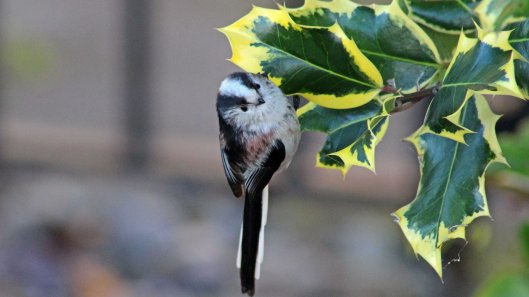
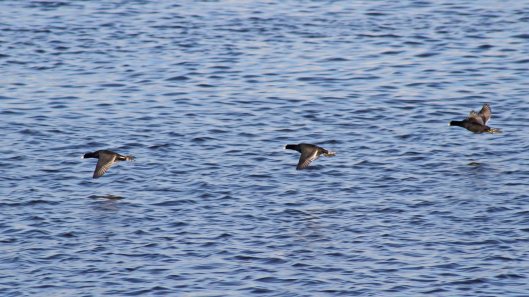
My last November wander by the Ely was on the 25th, when 3 Turnstones, 2 Linnets (nice to see them again), 2 Pied and 2 Grey wagtails, and 1 Redshank were joined by a Dunnock and a small flock of Long-tailed tits passing through the shrubs edging the walkway. Also, something freaked out a group of Coots and, rather than ‘run’ rapidly across the top of the water as they usually do, they actually flew. I’d never seen coots fly before.

171130 25th Long-tailed tit171130 25th Flying coots

Like Loading...

On a grey Bay day

04 Saturday Nov 2017

Posted by sconzani in birds, nature, walks

≈ 8 Comments

Tags

birding, birds, birdwatching, black-headed gulls, British birds, Canada geese, Cardiff Bay, Coot, Cormorant, fog, Great Crested Grebe, little grebe, long-tailed tit, Moorhen, Mute swan, Pied wagtail, starling, walk around Cardiff Bay

171104 1 Cardiff Bay fog

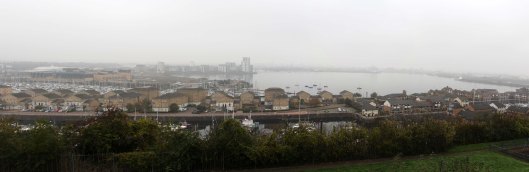
Thick fog hung over Cardiff Bay as I set out on a round-the-bay circuit yesterday morning and, though the fog thinned as the day went on, the day remained grey. Still, never let it be said that grey is boring. Birds there were aplenty (and wildflowers, too … but that’s for tomorrow’s post).

171104 2 Cormorant
171104 2 Little grebes

This cormorant was enjoying a successful spot of fishing in the old Penarth dock area, though it was slim pickings for the three Little grebes around the corner in the River Ely.

171104 3 Pied wagtail (1)
171104 3 Pied wagtail (2)
171104 3 Pied wagtail (3)
171104 3 Pied wagtail (4)

All around the Bay, on almost every man-made structure and clump of rocks near the water, Pied wagtails bobbed, wagged and ‘chisicked’.

171104 4 Coot
171104 4 Moorhen

Coots were even more numerous, and an occasional Moorhen prospected along the shoreline.

171104 5 Cormorant171104 5 Flock of Canada geese

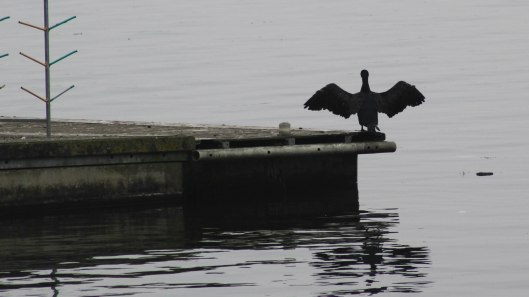
As I was watching this Cormorant drying its wings, our peace and tranquillity was interrupted by the loud honking of a large skein of Canada Geese flying in from the west.

171104 6 Long-tailed tits
171104 6 Starlings and gull

Where concrete and buildings dominate the shoreline and there’s a notable absence of trees, the birds have adapted and perch on tree-like things.

171104 7 Great crested grebe
171104 7 Mute swan

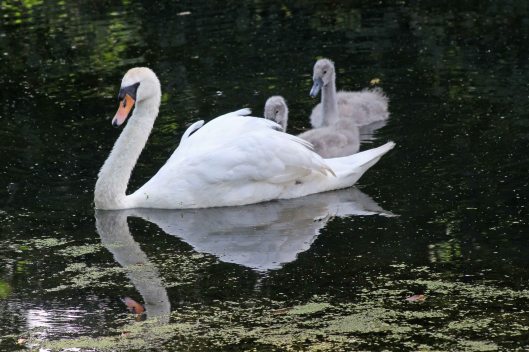
I saw perhaps half a dozen Great crested grebes around the Bay: I always admire how long they can stay underwater when fishing. Mute swans were more numerous. They are birds of such contrasts, looking anything but decorous when flaunting their glorious white bottoms as they feed, yet the picture of elegance when preening.

171104 8 Black-headed gull (3)

The most abundant came at the end of my walk. It was standing room only for the Black-headed gulls on the Barrage.

171104 8 Black-headed gull (1)
171104 8 Black-headed gull (2)
Like Loading...

Bird babies

10 Monday Jul 2017

Posted by sconzani in birds, nature

≈ Leave a comment

Tags

baby birds, birding, birdwatching, British birds, Coot, cootlet, cygnet, duckling, Mallard, Mute swan, Roath Park Lake

While it was a pleasure to see the Little egrets at Roath Park on Thursday, it was the other birds that brought me the most joy, especially because there were so many babies to be seen.

170710 bird babies (2)

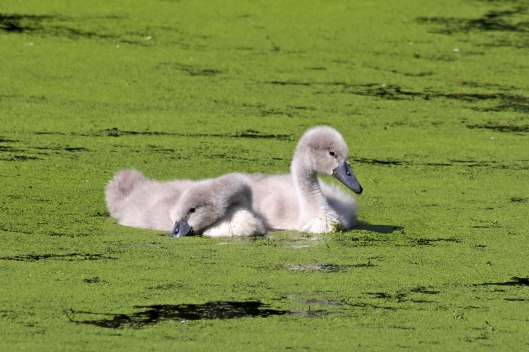
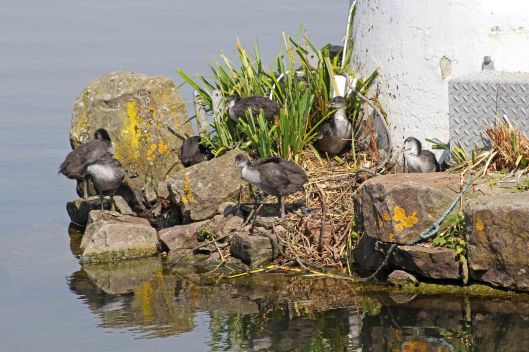
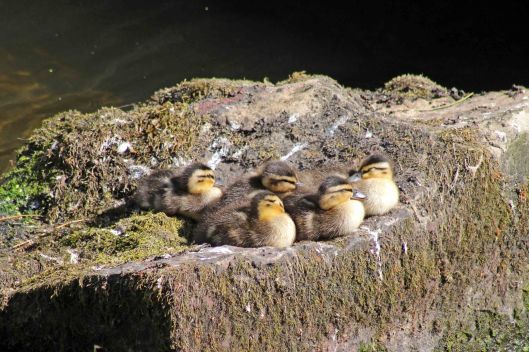
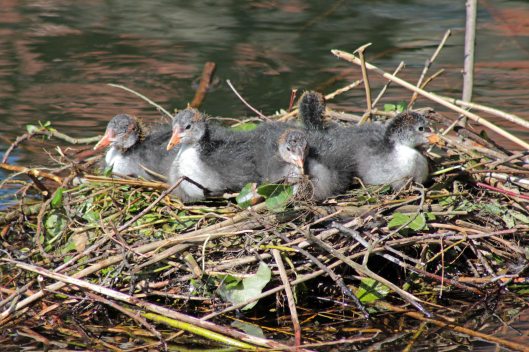
Cygnets, cootlets, ducklings, all at various stages of development, could be seen swimming, being fed by their parents and learning to feed themselves, and just sitting dozing in the warm sunshine.

170710 bird babies (1)170710 bird babies (3)

Even the base of the Scott memorial lighthouse has become a nursery for a family of seven little coots.

170710 bird babies (4)170710 bird babies (5)

I defy anyone to look at these and not smile!

170710 bird babies (6)

Like Loading...

Cootlets, cootlings or cooties?

27 Tuesday Jun 2017

Posted by sconzani in birds, nature, spring

≈ 2 Comments

Tags

birding, birdwatching, British birds, chick, Coot, Coot babies, Coot chicks, Eurasian coot, Fulica atra


160627 Coot chicks (7)

The coot is a beauty but what of its chicks,
with their red baldy heads and orange hairy necks?

160627 Coot chicks (1)
160627 Coot chicks (2)
160627 Coot chicks (3)

Those gawdy colours soon change as they mature
to the timeless greys and blacks of haute couture.

160627 Coot chicks (4)
160627 Coot chicks (5)
160627 Coot chicks (6)

But what should we call these gorgeous wee cuties?
Should they be cootlets or cootlings or cooties?

160627 Coot chicks (8)

Like Loading...

Gulls as kleptoparasites

24 Tuesday Jan 2017

Posted by sconzani in birds, nature, parks

≈ 2 Comments

Tags

bird feeding habits, birding, birdwatching, black-headed gulls, Coot, gulls stealing food, kleptoparasitism, Roath Park Lake, Tufted duck

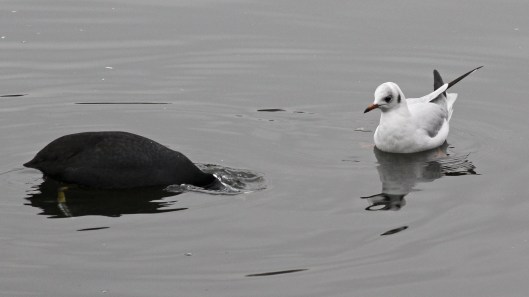
Some time ago at Roath Park Lake I was intrigued to notice Black-headed gulls using Coots as their personal fishers, and I have since noticed this behaviour between the gulls and Tufted ducks as well, though I haven’t yet seen them using this feeding method with the other water bird species at the lake.

170124-coot-and-gull

These gulls eat different food from the coots and ducks – gulls eat insects, worms, scraps, etc whereas the ducks and coots are mostly vegetarian, though the tufties will also eat some insects – so, presumably, the gulls aren’t actually stealing food the other birds would eat themselves.

170124-gull-and-tufted-duck

The ducks and coots dive down for food, while the gulls float patiently waiting for them to surface. When they do, the gulls paddle over to see if there’s anything interesting for them to steal. The coots and tufties don’t seem to object to the gulls, even though they’re doing all the work. I guess they would be doing the diving anyway and, if the gulls aren’t actually stealing their food, then they’ve nothing to lose. The official term for creatures that take the food other creatures have caught, prepared or collected is kleptoparasitism, hence my title.

When researching this post, I located an excellent article that goes into much more detail than I have about this and similar bird behaviour: ‘Food usurpation by waterfowl and waders’ by Juan A. Amat can be found here.

Like Loading...

Baby, you’re adorable!

26 Thursday May 2016

Posted by sconzani in birds, nature

≈ 5 Comments

Tags

baby birds, birding, birdwatching, Blue tit, British birds, chicks, Coot, duckling, gosling, Greylag goose, Mallard, nuthatch

After having the very upsetting experience of seeing a Lesser black-backed gull grab and devour, whole, a little coot chick earlier this week, I want to celebrate today the birds that have made it … so far. There seem so many obstacles in the paths of baby birds, so many predators looking for an easy meal, problems with inexperienced parents not caring for their chicks properly, and also, in some cases, a lack of sufficient food. It seems a miracle any of them make it to adulthood. Here are some that are doing better than most.

IMG_0447

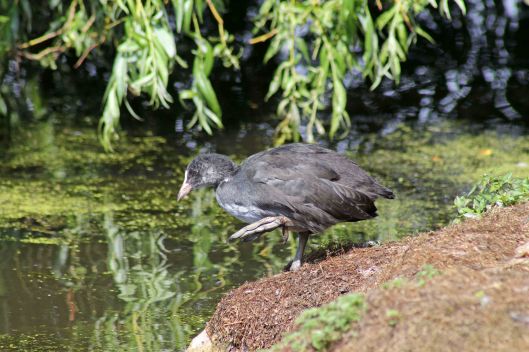
These Coot siblings are doing well, and are looking much more adult now they’ve lost their orange and red head feathers.

IMG_1038

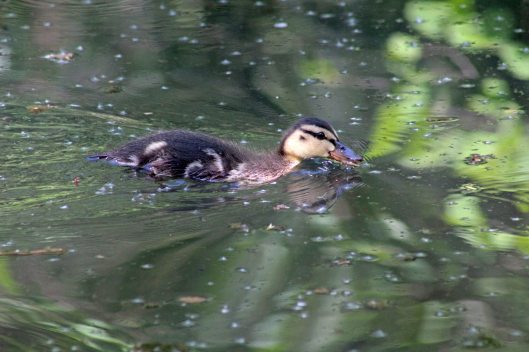
This little Mallard duckling was so cute, scooting along quickly, feeding actively, keeping closely behind mum. Fingers crossed for him/her!

IMG_1274

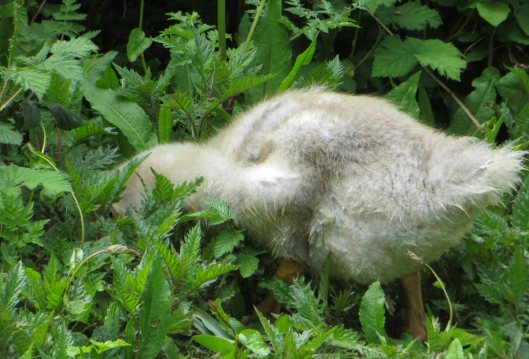
You’ve heard of the ostrich hiding its head in the sand? Well, it seems this Greylag gosling is trying the ‘hiding its head in the nettles’ version.

IMG_1894

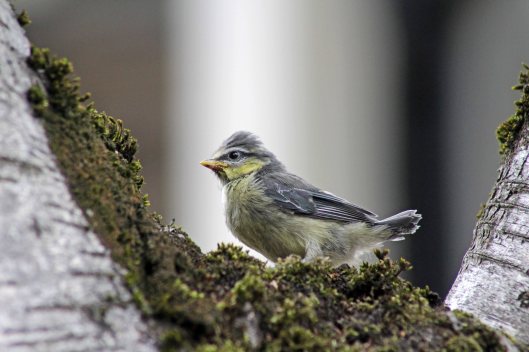
Baby Blue tit was sitting on the pavement outside my house yesterday but quickly, though slightly erratically, fluttered up to the nearest tree as I approached. Luckily, one of its parents was nearby and flew down with some food. Its big eyes make it look surprised by the big wide world outside the nest!

IMG_1909

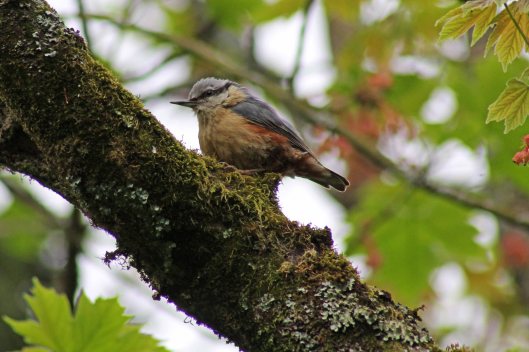
This Nuthatch is the most advanced chick I’ve seen and was actively feeding itself on a tree in a local park, though it was stopping often to preen. Moulting its baby fluff must be an itchy process.

Like Loading...

Cute coots!

08 Sunday May 2016

Posted by sconzani in birds, nature

≈ 4 Comments

Tags

birding, birdwatching, British birds, Coot, Eurasian coot, Fulica atra, nesting birds

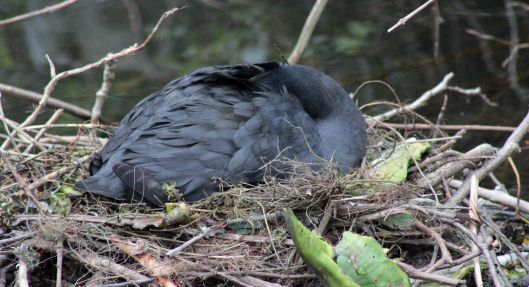
Around the British Isles, near rivers and lakes, ponds and meres, reservoirs, flashes and gravel pits, the Eurasian coot (scientific name Fulica atra, and commonly just called coot) can currently be found nesting. In shallow water, sometimes using the support of an underwater obstacle (two pairs in Cardiff are using the lights that illuminate the council building!), they build nests of sticks and grasses, and bits of human detritus like plastic, paper and other assorted rubbish.

160509 cute coots (1)160509 cute coots (3)

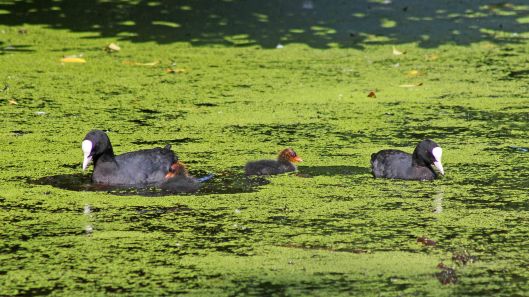
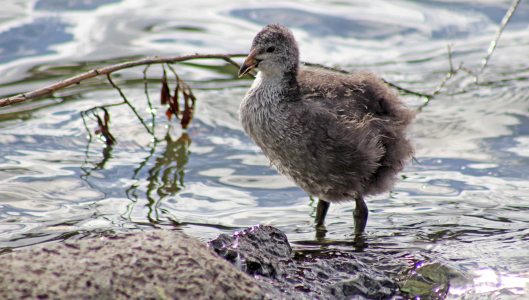
Mrs Coot lays between 5 and 10 eggs then incubates these for around three weeks, while hubby brings her food and continues to beautify the nesting platform. Though exceptionally cute, the chicks are bizarre-looking wee things, little bundles of black fluff with reddish-orange heads and a ruff of yellow feathers around their necks. The vibrant colour fades during their two-month fledgling period and juveniles look more greyish-brown, with a lighter throat and face.

160509 cute coots (5)
160509 cute coots (4)

Though both parents feed the chicks, they rarely all survive. This can be due to predation by Lesser black-backed gulls, mink and pike, though sometimes, if there is a lack of food, coot parents will occasionally kill their own chicks, sacrificing one for the good of the others.

160509 cute coots (6)
160509 cute coots (7)

160509 cute coots (7)

Like Loading...

In nesting news …

23 Saturday Apr 2016

Posted by sconzani in birds, nature, nature photography, spring

≈ 6 Comments

Tags

birding, birdwatching, British birds, chicks, Coot, Great Crested Grebe, Mute swan, nesting, nesting birds

I checked out the nesting neighbourhood again a couple of days ago so here’s the latest family news.

160423 grebe

At the original three-nest site: the Mute swans appear to have abandoned their nest, which was empty – maybe they just weren’t ready for parenthood. The Great crested grebe that had chicks but lost them was still sitting on her second nest, and she was sitting tight again so I still don’t know what she’s sitting on.

160423 coot A (1)
160423 coot A (2)

The Coots that had three chicks in my last update now have just one chick remaining. The family has left the nest, though are still in the same general area. Both parents are actively feeding the little guy but, sadly, I’m not overly optimistic about its chances as there were a lot of gulls, flying overhead and perched on nearby lamp posts, just looking for the right scavenging opportunity.

160423 coot B

Nearby, at the other Great crested grebe nest, the grebe has been usurped by a Coot. Her partner was about and feeding her but she didn’t stand up so I have no egg update for her.

160423 coots C (1)
160423 coots C (2)
160423 coots C (3)
160423 coots C (4)

I recently learnt of another Coot nest, also nearby, and seeing that was the highlight of the afternoon. Six chicks, all well developed and seemingly ravenous, were frantically being fed by both parents. Very cleverly, the parents were keeping them sitting under a lip of concrete at the water’s edge, so they were quite well protected. Let’s hope they continue to thrive.

Like Loading...

News from the nesting neighbourhood

10 Sunday Apr 2016

Posted by sconzani in birds, nature

≈ 5 Comments

Tags

birding, birdwatching, British birds, Coot, Great Crested Grebe, Mute swan, nesting birds

160410 nesting neighbours (1)

It might not look like much but this is Cardiff’s Nest Central! The white blob in the upper left of my photo is a Mute swan, happily ensconced on her nest platform and very well hidden from passing pedestrians. In the more open areas at the front, we have a Coot perched on top of her well-engineered pile of twigs and assorted rubbish and, at the right, a Great Crested Grebe, sitting on her rather more modest nest creation.

160410 nesting neighbours (2)

This is the Grebe pair’s second nesting attempt of the season – I was lucky enough to see the four eggs they produced first time around and, apparently, the eggs did hatch but the chicks were lost to a predator/s (possibly a large pike). It’s great to see they’re trying again.

160410 nesting neighbours (3)
160410 nesting neighbours (4)
160410 nesting neighbours (5)
160410 nesting neighbours (6)

The Coots have been more successful, at least so far, with two healthy looking, very cute chicks. I guess it helps to have a high nesting platform to keep the chicks out the water until they’re larger.

Please note: These photos are taken at a distance, using a long lens, and then cropped. This site is in a public place, with frequent foot traffic, but I still make sure my visits are brief. At this time of year, it is particularly important not to disturb nesting birds, and it is, in fact, a criminal offence to disturb birds on the Schedule 1 list (see link for more information). Please respect the birds.

Like Loading...
← Older posts
Newer posts →

About me

sconzani

sconzani

I'm a writer and photographer; researcher and blogger; birder and nature lover; countryside rambler and city strider; volunteer and biodiversity recorder.

View Full Profile →

Follow earthstar on WordPress.com

Enter your email address to follow this blog and receive notifications of new posts by email.

Recent blog posts

  • The Marl Med gull January 29, 2026
  • Recording Grey squirrels January 28, 2026
  • Jimmy Wren January 27, 2026
  • Millipede: Nanogona polydesmoides January 26, 2026
  • Mid-winter 10 January 25, 2026

From the archives

COPYRIGHT

Unless otherwise acknowledged, the text and photographs on this blog are my own and are subject to international copyright. Nothing may be downloaded or copied without my permission.

Fellow Earth Stars!

  • Unknown's avatar
  • Unknown's avatar
  • Unknown's avatar
  • Unknown's avatar
  • Unknown's avatar
  • Unknown's avatar
  • Unknown's avatar
  • Unknown's avatar
  • Unknown's avatar
  • Unknown's avatar
  • Unknown's avatar
  • Unknown's avatar
  • Unknown's avatar
  • Unknown's avatar
  • Unknown's avatar
  • Unknown's avatar
  • Unknown's avatar
  • Unknown's avatar
  • Unknown's avatar
  • Unknown's avatar
  • Unknown's avatar
  • Unknown's avatar
  • Unknown's avatar
  • Unknown's avatar
  • Unknown's avatar
  • Unknown's avatar
  • Unknown's avatar
  • Unknown's avatar
  • Unknown's avatar
  • Unknown's avatar
  • Unknown's avatar
  • Unknown's avatar
  • Unknown's avatar
  • Unknown's avatar
  • Unknown's avatar
  • Unknown's avatar
  • Unknown's avatar
  • Unknown's avatar
  • Unknown's avatar
  • Unknown's avatar
  • Unknown's avatar
  • Unknown's avatar
  • Unknown's avatar
  • Unknown's avatar
  • Unknown's avatar
  • Unknown's avatar
  • Unknown's avatar
  • Unknown's avatar
  • Unknown's avatar
  • Unknown's avatar

Blog at WordPress.com.

Privacy & Cookies: This site uses cookies. By continuing to use this website, you agree to their use.
To find out more, including how to control cookies, see here: Cookie Policy
  • Subscribe Subscribed
    • earthstar
    • Join 670 other subscribers
    • Already have a WordPress.com account? Log in now.
    • earthstar
    • Subscribe Subscribed
    • Sign up
    • Log in
    • Report this content
    • View site in Reader
    • Manage subscriptions
    • Collapse this bar
 

Loading Comments...
 

You must be logged in to post a comment.

    %d