• ABOUT
  • BIRDING 2018
  • Birding 2019
  • BLOG POSTS
  • Butterflies 2018
  • Resources

earthstar

~ a celebration of nature

earthstar

Tag Archives: damselflies

157/365 A Banded demoiselle

06 Thursday Jun 2019

Posted by sconzani in 365DaysWildin2019, insects, nature

≈ 2 Comments

Tags

#365DaysWild, Banded Demoiselle, British damselflies, damselflies, demoiselle damselflies

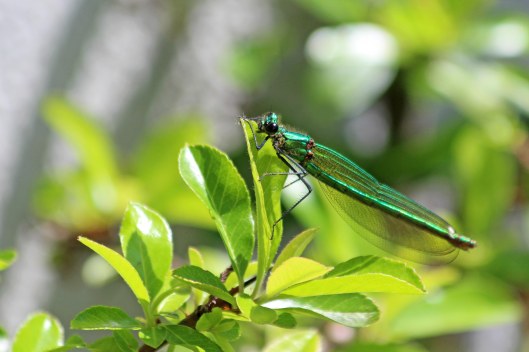
190606 Banded demoiselle (2)

I spotted my first Banded demoiselle of the season today. Though they’re usually found near water – around ponds and lakes, alongside slow-flowing streams and languid rivers, this female was perched on some garden shrubs in front of a tower block of flats at Cardiff Bay. The wind was blowing the greenery around so my shots are not very sharp but it was a real delight to see one of these little treasures again.

190606 Banded demoiselle (1)

Like Loading...

112/365 My first damselfly

22 Monday Apr 2019

Posted by sconzani in 365DaysWildin2019, insects, nature

≈ 4 Comments

Tags

#365DaysWild, British damselflies, Cosmeston, Cosmeston Lakes Country Park, damselflies, damselfly, Large Red damselfly, Pyrrhosoma nymphula

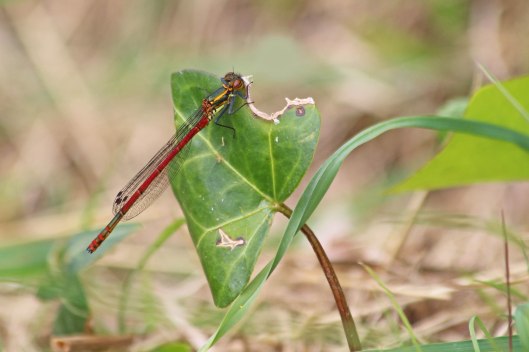
Our warm Easter weekend weather has certainly brought out the critters. Today I spotted my first damselfly of 2019, this lovely Large Red (Pyrrhosoma nymphula). Woot!

190422 Large red damselfly

Like Loading...

Banded demoiselles

01 Wednesday Aug 2018

Posted by sconzani in insects, nature, walks

≈ Leave a comment

Tags

Arlington Reservoir, Banded Demoiselle, British damselflies, Cuckmere River, damselflies

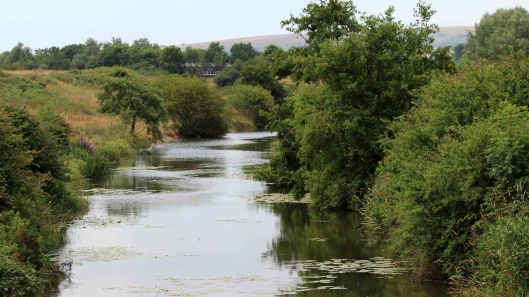
One of the many highlights of my recent walk around Arlington Reservoir in East Sussex with my friend Jill was being able to get quite close to several pairs of Banded demoiselle damselflies (while simultaneously heeding Jill’s warning that if I fell in the stream – actually the Cuckmere River – she wasn’t going to rescue me – ha!).

180801 Arlington stream

And actually this was off the main Arlington trail, as there was an old church that looked interesting not far away and we’d headed off down a public footpath towards it.

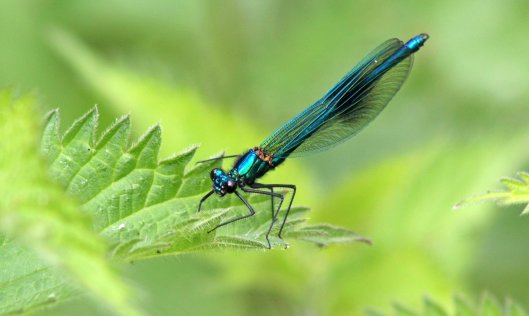
180801 Banded demoiselle (1)

Although I’ve seen a number of Beautiful demoiselles at my local nature reserves in Wales, I haven’t seen any Banded … and they are such gorgeous creatures, especially the bright blue males when they’re flying. Makes me believe in fairies!

180801 Banded demoiselle (2)

If you’re ever in the area, Arlington is a lovely place for a walk, with colourful and insect-rich wildflower meadows and plenty of birdlife, just the right amount of exercise in its circular walk and a cafe with icecreams at the end.

Like Loading...

National Dragonfly Week: Azure damselfly

30 Saturday Jul 2016

Posted by sconzani in insects, nature

≈ 2 Comments

Tags

Azure damselfly, Coenagrion puella, damselflies, damselfly, National Dragonfly Week 2016

As I mentioned in yesterday’s post on Common Blue damselflies, it’s often difficult to distinguish between them and the Azure damselflies so here now is the lovely little Azure (Coenagrion puella).

azure male (1)azure male (2)

The key identifying features for the Azure are: the presence of a Coenagrion spur (a short black line below the other markings) on the thorax, and thin antehumeral stripes (the blue stripes on the top of the body are narrower than the black stripes beneath them). The males also have a U-shaped mark at the top of their ‘tail’ but this is not so easy to see in the females (which are usually green or pale blue) as they often have darker markings on their ‘tail’. Once again, if this is confusing, check out the British Dragonfly Society webpage for more help.

azure fem (1)

Though the Azure isn’t keen on the colder parts of northern Scotland, both the Azure and the Common Blue can be seen throughout most of Britain, fluttering around small ponds, streams and lakes. I also see them amongst the long grass at my local cemetery where I presume their water source is the rain that accumulates in the urns that decorate many of the older graves, though I can’t be sure of that.

azure mating (1)

Like Loading...

National Dragonfly Week: Common Blue damselfly

29 Friday Jul 2016

Posted by sconzani in insects, nature

≈ 13 Comments

Tags

Common blue damselfly, damselflies, damselfly, Enallagma cyathigerum, National Dragonfly Week 2016

We’re over half way through National Dragonfly Week 2016 and now we get to some of the trickier critters to identify because there are several blue-coloured damselflies. In fact, in the course of preparing this and tomorrow’s blog posts, I’ve had to call in the experts to check a couple of my photos. When my books and keys don’t quite cover it, the ‘experts’ I use are all the wonderfully helpful folks on the UK Dragonflies & Damselflies group on Facebook – highly recommended!

160729 Common blue male (1)
160729 Common blue male (2)

As we don’t get Southern damselflies (also blue) in Cardiff, the two blues I sometimes have trouble with are the Common Blue and the Azure. The key features to look out for in the Common Blue damselfly (Enallagma cyathigerum) can be seen in the photos above: no Coenagrion spur (a short black line below the other markings) on the thorax, and broad antehumeral stripes (the blue stripes on the top of the body are wider than the black stripes beneath them). The males also have that thistle-shaped mark at the top of their ‘tail’ but this is not so easy to see in the females (which, as you can see below, are not blue) because of their blacker markings. If this all sounds like gobbledygook, you can get more ID help on the British Dragonfly Society webpage.

160729 common blue fem (1)
160729 common blue fem (2)
160729 common blue fem (3)
160729 common blue fem (4)
160729 common blue fem (5)
160729 common blue fem (6)

The Common Blues are the only damselflies I’ve managed to catch in their full mating ritual, showing the ‘mating wheel’. Sometimes, when you see these, they are the exact shape of a heart … awwwww!

160729 Common blue mating

Like Loading...

National Dragonfly Week: Blue-tailed Damselfly

28 Thursday Jul 2016

Posted by sconzani in insects, nature

≈ 2 Comments

Tags

Blue-tailed damselfly, damselflies, damselfly, exuvia, Ischnura elegans, National Dragonfly Week 2016

Let’s continue National Dragonfly Week today with a delightful damselfly, the little Blue-tailed (Ischnura elegans), another very common damselfly that can be seen flying throughout Britain from May through to September. Though there is also a Scarce blue-tailed damselfly, it is, well, scarce, so chances are if you see a dark-coloured damsel with that distinctive all-blue segment towards the end of its body, it will be the Blue-tailed damselfly. The females are a little more tricky, as their abdomens and tail spots can be different colours – pink, violet, pale green, pale brown – depending on their type and state of maturity.

160728 blue-tailed (1)

160728 blue-tailed (2)

I don’t have any female photos so thought I would show you, instead, earlier stages in a damselfly’s lifecycle. The eggs the females lay in their local pond, lake, or slow-moving stream or river hatch into nymphs that live in that water, preying on other larvae and small insects. After as little as six months or as long as two years, and having gone through a series of skin moults as their bodies grow in size, the nymphs leave the water and climb a plant stem, branch or tree trunk, where they undergo the ultimate change, emerging from their final skin to fly as an adult.

160728 damsel exuvia
160728 damsel new

As you can see above, they are often very pale when they emerge as it takes them a while to colour up. You can often find the discarded skin cases (known as exuvia) near watery places – I found a tree alongside my local lake that was covered in them.

Like Loading...

National Dragonfly Week: Banded Demoiselle

26 Tuesday Jul 2016

Posted by sconzani in insects, nature

≈ 10 Comments

Tags

Banded Demoiselle, Calopteryx splendens, damselflies, damselfy, National Dragonfly Week 2016

On the first day of National Dragonfly Week I showed you the Beautiful Demoiselle; today we have the other damselfly in the Demoiselle species, the only damselflies in Britain to have coloured wings. This is the Banded Demoiselle (Calopteryx splendens), and you can see immediately from the bands of colour on the males’ wings how it got its common name.

160726 Banded demoiselle male (1)

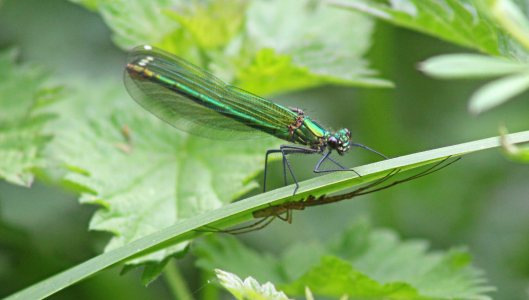
These damselflies are simply gorgeous, the male (above) a stunning metallic blue and the female (below) an equally spectacular metallic green. Common in Wales and all but the northernmost counties of England, they can be seen flying around lakes and ponds and along canals and slow-moving rivers and streams, from late April to early September. Banded Demoiselles are quite sensitive to pollution so their presence is a good sign that the local water source is clean.

160726 Banded demoiselle fem (3)

I wonder if this female knew about the spider, or the spider knew about the damselfly?

The male is territorial and also a bit of a show-off. He performs a delightful display of aeronautic dance moves in his attempts to impress the females – the damselfly version of Patrick Swayze in Dirty Dancing!

160726 Banded demoiselle fem (1)
160726 Banded demoiselle fem (2)
160726 Banded demoiselle male (2)
Like Loading...

National Dragonfly Week: Large Red damsel

24 Sunday Jul 2016

Posted by sconzani in insects, nature

≈ 5 Comments

Tags

damselflies, damselfly, Large Red damselfly, National Dragonfly Week 2016, Pyrrhosoma nymphula

For day two of National Dragonfly Week we have another damselfly, the Large Red (Pyrrhosoma nymphula). Of the 20 species of damselfly found in Britain, there are only two that are red and the other, the Small Red, is rare and confined to specific heathland areas, so the chances are that if you see a mainly red damselfly (the females have varying amounts of red and black on their abdomens), it is the Large Red. If only all damselfly identification were so easy!

160724 Large red (1)

The Large Red is one of the first damselflies to appear each spring, flying from early to mid April through to September, and can be found throughout Britain wherever there’s fresh water – ponds, canals, lakes, boggy areas and slow-moving rivers (not fast) – with some vegetation around for it to perch on.

160724 Large red (2)

Mr Large Red can be quite aggressive, buzzing other males foolish enough to invade his territory. When they mate, the male clamps on to the female just behind her head, as you can see in my photo above, and she would normally then bend her body around to attach to his reproductive organs, thus forming the ‘mating wheel’. Maybe this female just wasn’t that into him!

160724 Large red (3)
160724 Large red (4)
Like Loading...

Welsh biodiversity: Forest Farm

09 Thursday Jun 2016

Posted by sconzani in animals, birds, insects, nature

≈ Leave a comment

Tags

biodiversity, birding, birdwatching, damselflies, dragonflies, Forest Farm Nature Reserve, rabbits, Wales Biodiversity Week

I’ve sung the praises of Forest Farm in previous blogs (here and here) and enjoyed many conversations with robins during my walks there but today, on day six of Wales Biodiversity Week, for the wildlife at Forest Farm it was all about procreation.

160609 forest farm (1)

Male damselflies were flashing their colourful wings trying to impress the females; male dragonflies were patrolling their territory to warn off any potential interlopers; damselflies were copulating as they flew along the canal and around the pond, and I saw two female dragonflies depositing their eggs amongst plants and reeds in the pond.

160609 forest farm (2)

The birdlife was a little more advanced – there were chicks and fledglings everywhere: ducklings, baby coots and moorhens, young robins and dunnocks, to name just a few. Perhaps cutest of all, though, were the baby rabbits, happily frolicking and nibbling on the grass near the bird hides. It was like a scene from Watership Down!

1
2
3
4
5
6
7
8
9
10
11
12
Like Loading...

About me

sconzani

sconzani

I'm a writer and photographer; researcher and blogger; birder and nature lover; countryside rambler and city strider; volunteer and biodiversity recorder.

View Full Profile →

Follow earthstar on WordPress.com

Enter your email address to follow this blog and receive notifications of new posts by email.

Recent blog posts

  • N is for nest December 19, 2025
  • M is for mite December 18, 2025
  • L is for lepidopteran lifers December 17, 2025
  • K is for Keeled skimmers December 16, 2025
  • J is for Jersey tiger December 15, 2025

From the archives

COPYRIGHT

Unless otherwise acknowledged, the text and photographs on this blog are my own and are subject to international copyright. Nothing may be downloaded or copied without my permission.

Fellow Earth Stars!

  • Unknown's avatar
  • Unknown's avatar
  • Unknown's avatar
  • Unknown's avatar
  • Unknown's avatar
  • Unknown's avatar
  • Unknown's avatar
  • Unknown's avatar
  • Unknown's avatar
  • Unknown's avatar
  • Unknown's avatar
  • Unknown's avatar
  • Unknown's avatar
  • Unknown's avatar
  • Unknown's avatar
  • Unknown's avatar
  • Unknown's avatar
  • Unknown's avatar
  • Unknown's avatar
  • Unknown's avatar
  • Unknown's avatar
  • Unknown's avatar
  • Unknown's avatar
  • Unknown's avatar
  • Unknown's avatar
  • Unknown's avatar
  • Unknown's avatar
  • Unknown's avatar
  • Unknown's avatar
  • Unknown's avatar
  • Unknown's avatar
  • Unknown's avatar
  • Unknown's avatar
  • Unknown's avatar
  • Unknown's avatar
  • Unknown's avatar
  • Unknown's avatar
  • Unknown's avatar
  • Unknown's avatar
  • Unknown's avatar
  • Unknown's avatar
  • Unknown's avatar
  • Unknown's avatar
  • Unknown's avatar
  • Unknown's avatar
  • Unknown's avatar
  • Unknown's avatar
  • Unknown's avatar
  • Unknown's avatar
  • Unknown's avatar

Blog at WordPress.com.

Privacy & Cookies: This site uses cookies. By continuing to use this website, you agree to their use.
To find out more, including how to control cookies, see here: Cookie Policy
  • Subscribe Subscribed
    • earthstar
    • Join 667 other subscribers
    • Already have a WordPress.com account? Log in now.
    • earthstar
    • Subscribe Subscribed
    • Sign up
    • Log in
    • Report this content
    • View site in Reader
    • Manage subscriptions
    • Collapse this bar
 

Loading Comments...
 

You must be logged in to post a comment.

    %d