• ABOUT
  • BIRDING 2018
  • Birding 2019
  • BLOG POSTS
  • Butterflies 2018
  • Resources

earthstar

~ a celebration of nature

earthstar

Tag Archives: Dunlin

The sea mouse

18 Thursday Sep 2025

Posted by sconzani in autumn, birds

≈ Leave a comment

Tags

birding, birdwatching, British birds, Calidris alpina, Dunlin, Ferrybridge birding

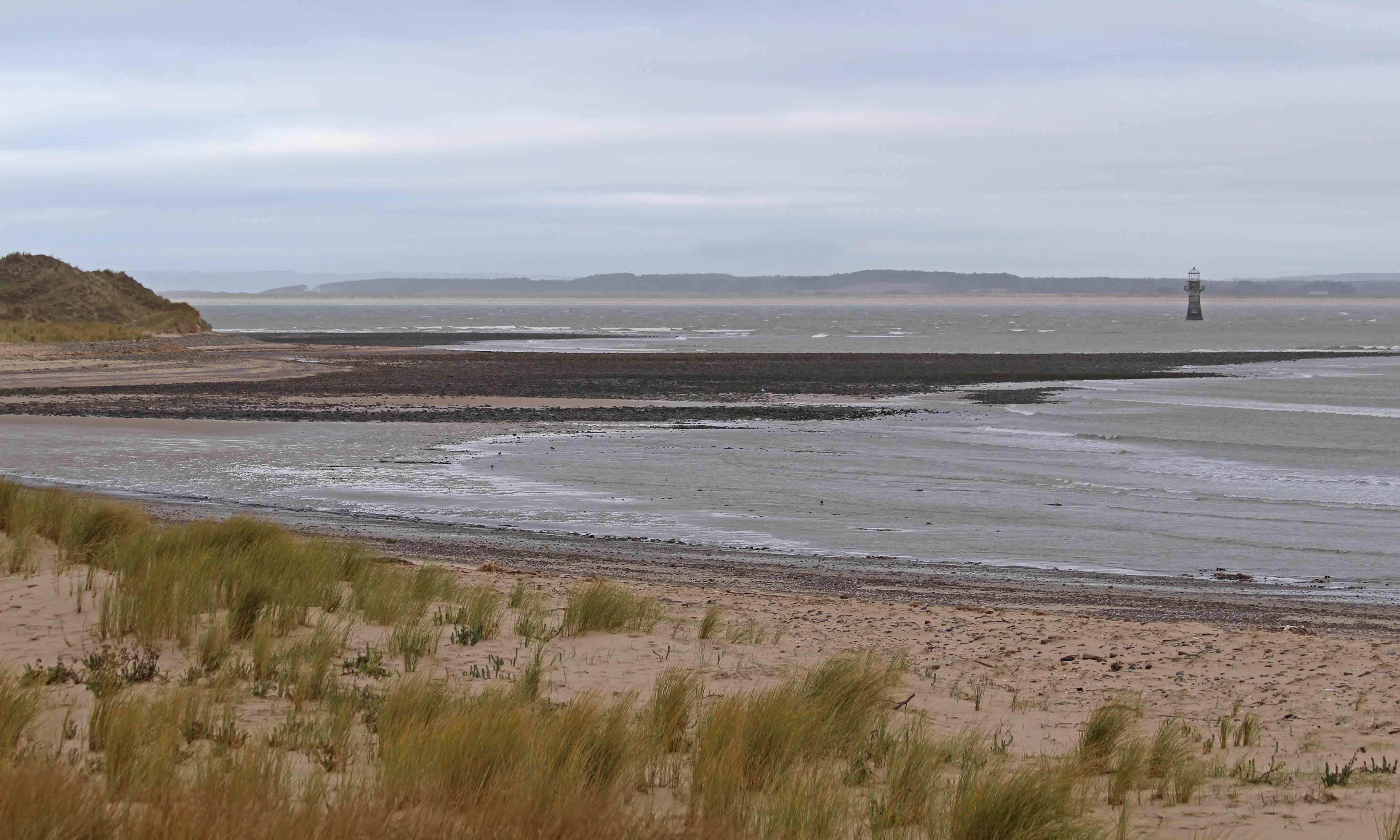
Having blogged twice already about my recent afternoon at Ferrybridge, between Weymouth and the Isle of Portland, it occurred to me to show you what it looks like. This photo was taken at the end of the couple of hours I spent there, by which time the tide was well out and the weather that was rolling in was looking quite ominous: time to beat a hasty retreat!

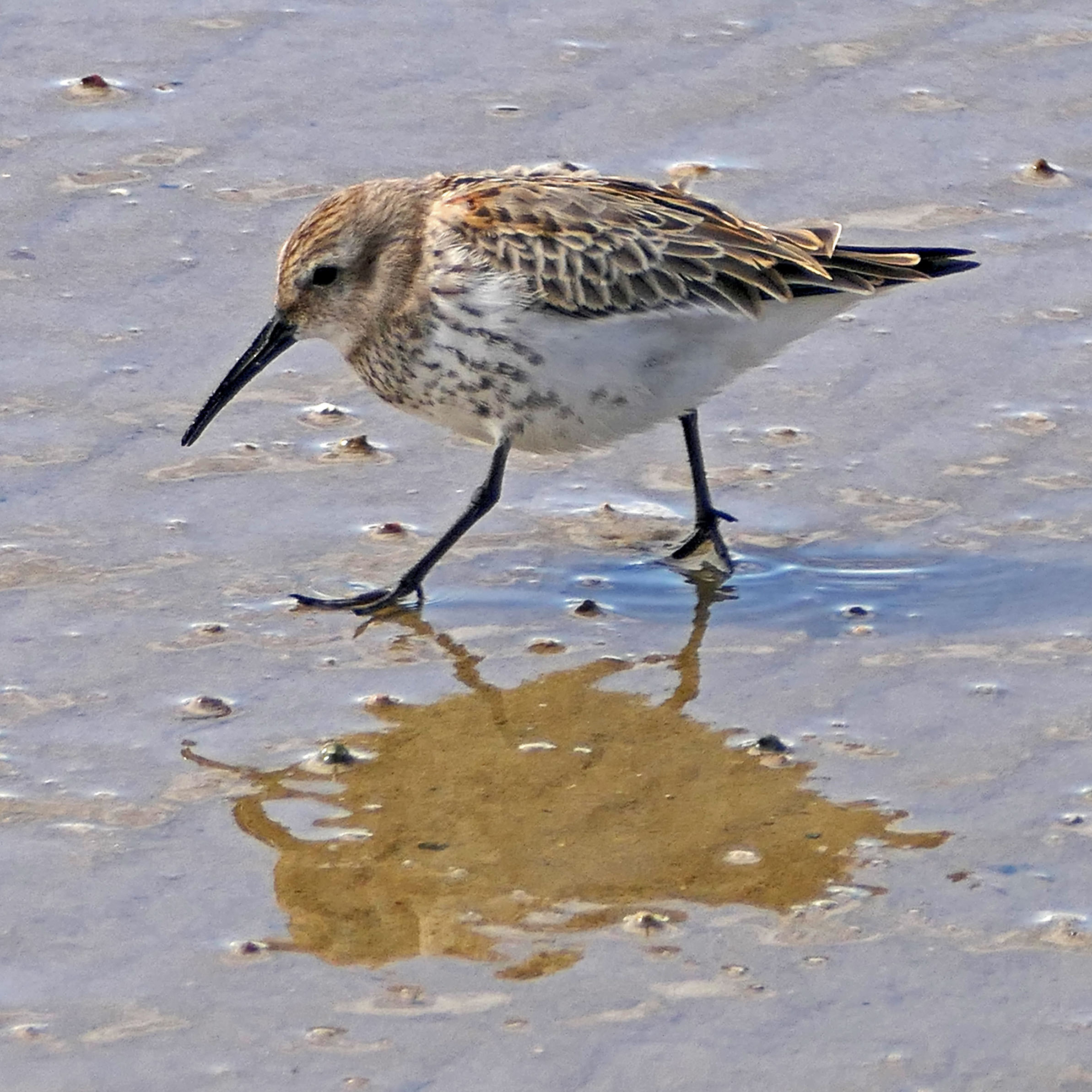
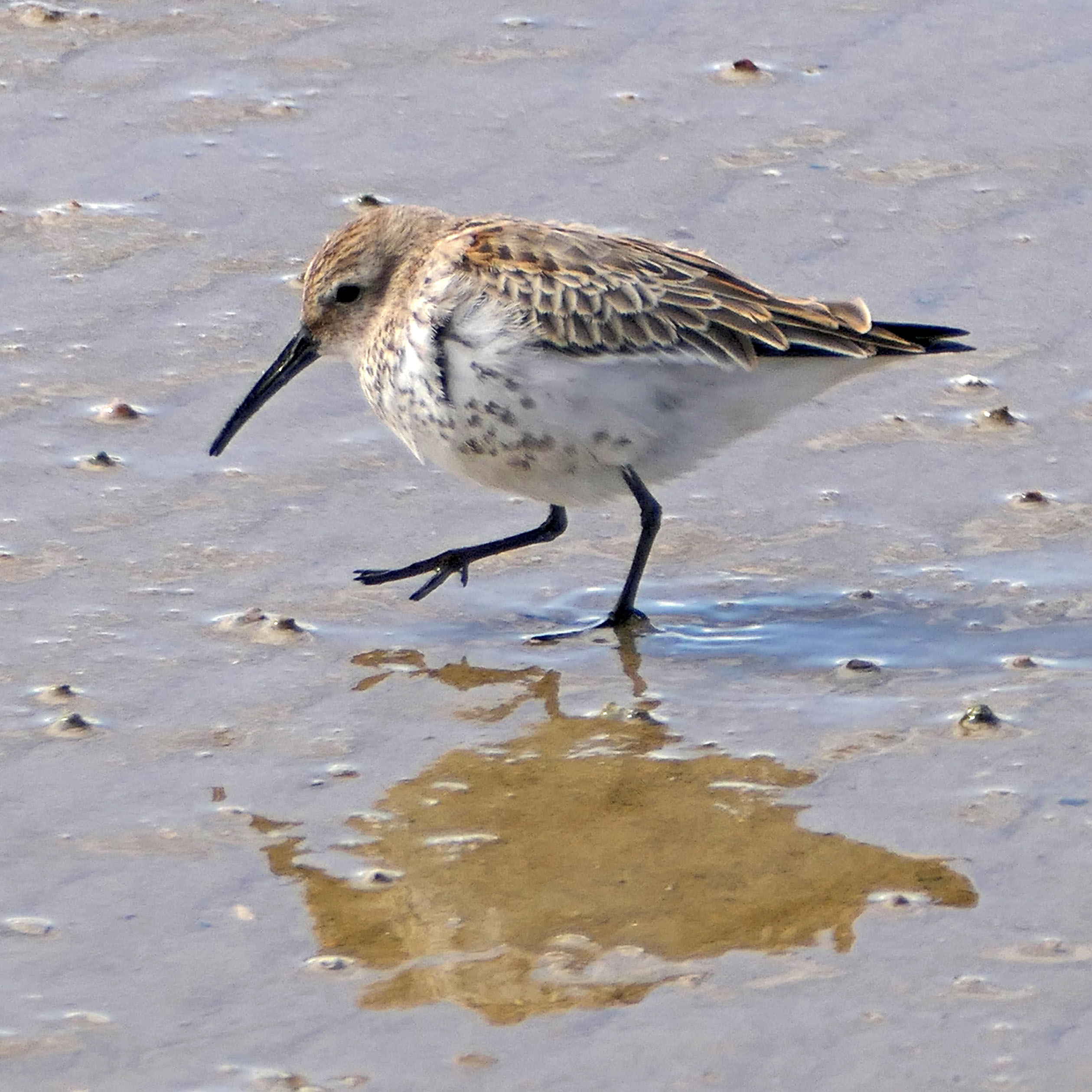
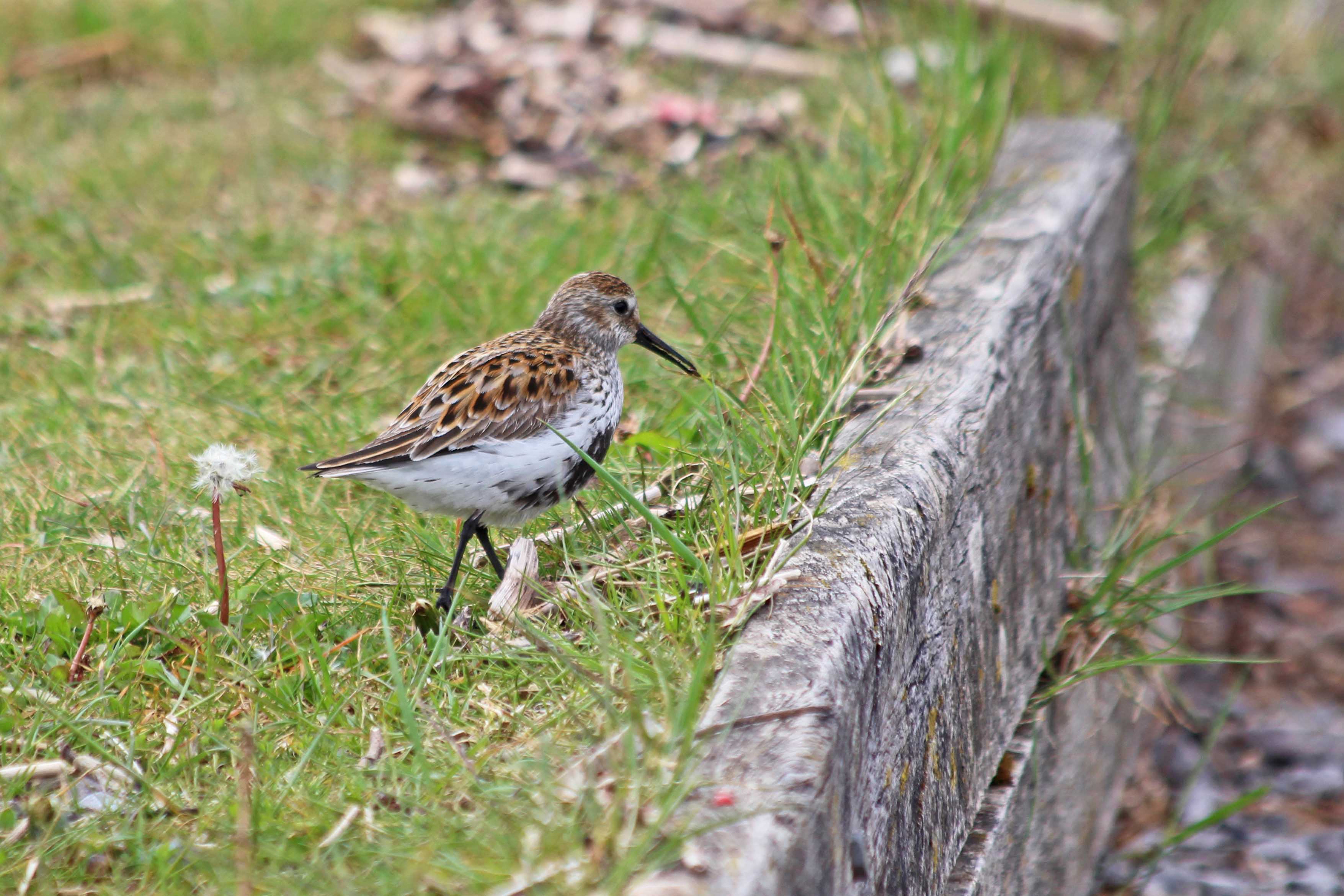
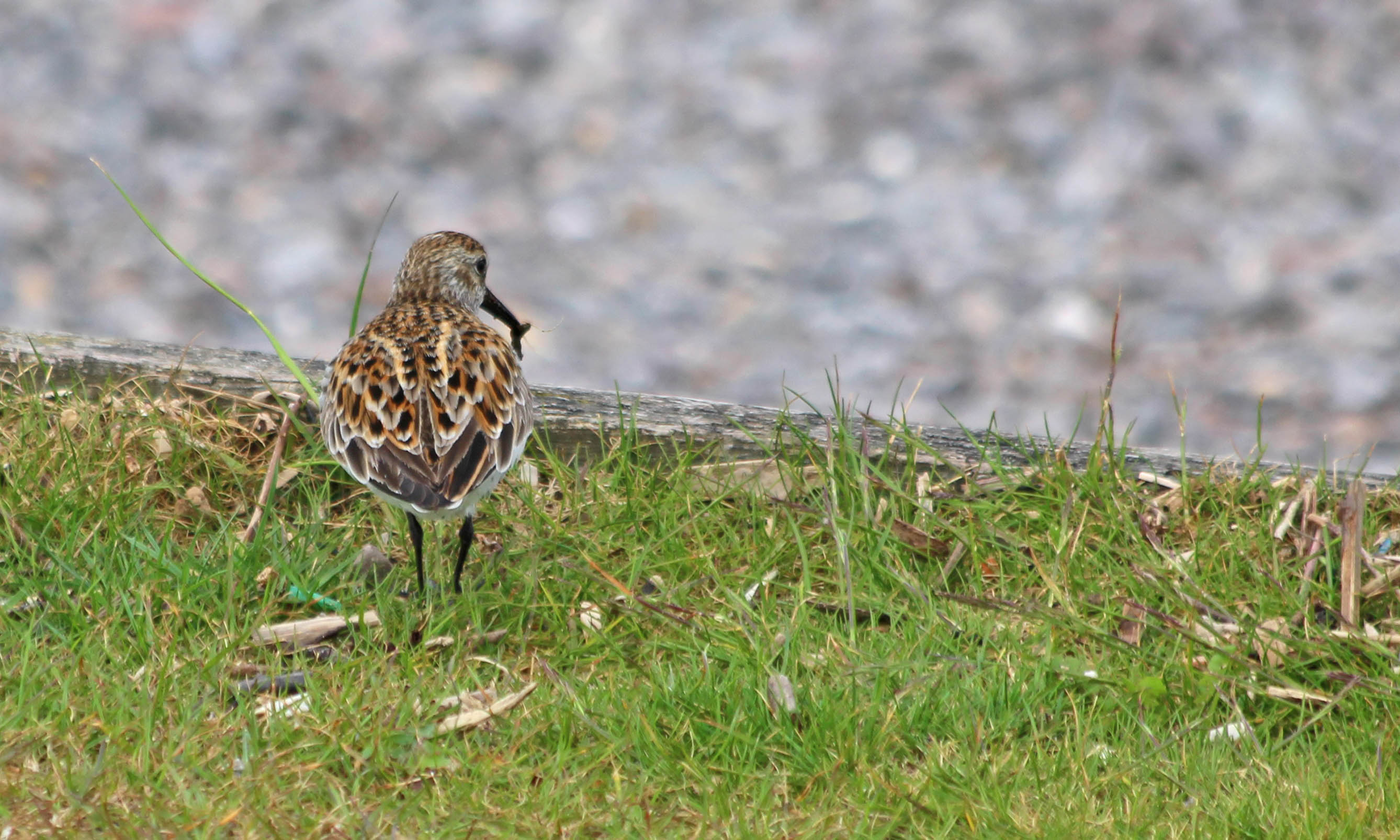
Today’s blog is about the third species I managed to get reasonably close to and spent quality time watching that afternoon, a cousin to the Sanderling and Knot, with which it shares the sandy shores and mud flats, the Dunlin (Calidris alpina).

The Dunlin has some wonderfully evocative vernacular names, according to my Fauna Britannica: ebb cock (by the Shetlanders), pickerel (Scotland, in general), sandy (Northumberland), sand mouse (Westmorland), and sea mouse (Dumfries and Lancashire), amongst many others. Each name suggests an image of the bird’s habit of scurrying back and forth along the sandy shores as it forages for tiny sea creatures.

Luckily for me, there were several Dunlin and Ringed plover foraging along the top of the beach when I arrived, and I managed to find a spot, crouched in the lee of a shed out of the blasting wind and camouflaged by some scrubby vegetation where I could spend time watching these wonderful little waders going about their business.

Though the Dunlin seems common and ubiquitous around the British coastline, its numbers are in serious decline here, with the BTO reporting a 24% decline in the over-wintering population between 1997 and 2022. So, although the bird is listed as of ‘least concern’ internationally, here in Britain it is red-listed. It would be a tragedy to lose this sublime little sea mouse so let’s hope its population somehow manages to recover.

Like Loading...

Lodmoor’s distant birds

07 Thursday Aug 2025

Posted by sconzani in birds

≈ Leave a comment

Tags

Bearded tit, birding, birdwatching, Black-tailed godwits, British birds, Common tern, Dunlin, Green sandpiper, Lapwing, Little tern, Marsh harrier, RSPB Lodmoor, Wood sandpiper

I wrote in Tuesday’s blog (Egrets, little and large) that I would share in a subsequent post more of the birds I saw during last week’s three visits to RSPB Lodmoor, and here they are. Most were quite distant but I thought it was worth documenting the wide variety of birds that can be seen at this wonderful reserve.

You may struggle to spot the two birds in this photo – they are sitting facing each other on the ‘beach’ area but their colours blend in rather well to the background. In spite of that, this was probably the standout sighting for me, as these are Bearded tits, and, given their sandy colouring, these were probably fledglings, the first ones I’ve seen.

Black-tailed godwit numbers increased from three on my first visit to Lodmoor to eight on my final visit, and numbers will likely continue to increase as these birds return from their breeding grounds in Iceland and continental Europe. You may just be able to spot some smaller birds amongst the shorter reeds in the foreground. These are Dunlin.

I blogged about seeing Breeding Common terns after my June visit to Lodmoor. This time the Common terns had almost all fledged, though one chick remained on one of the breeding platforms and several sat on the sand waiting for their parents to return and feed them. Above you can see two Common terns at the left of the frame but the two terns in the centre of the image are Little terns. These breed, in a specially protected area, on nearby Chesil Beach and, though I saw some there very distantly during my last visit, it was wonderful to see these two at a much closer distance. The birds in the background are a mix of Mediterranean and Black-headed gulls.

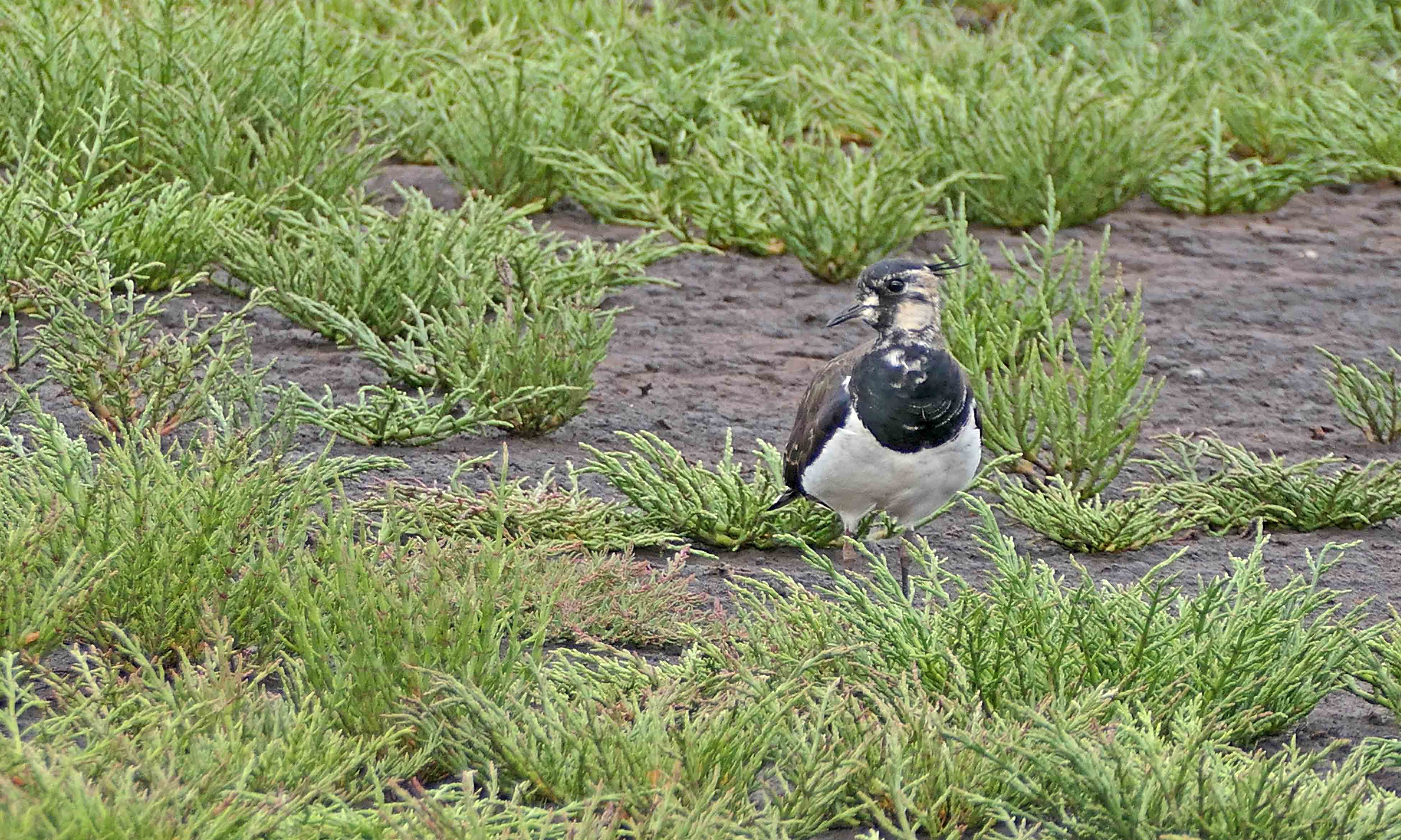
How gorgeous is this Lapwing? I think it’s a juvenile bird as it seemed curious rather than scared by my proximity on the path just across from where it was foraging for food, and I had read that Lapwings have bred on the reserve this year.

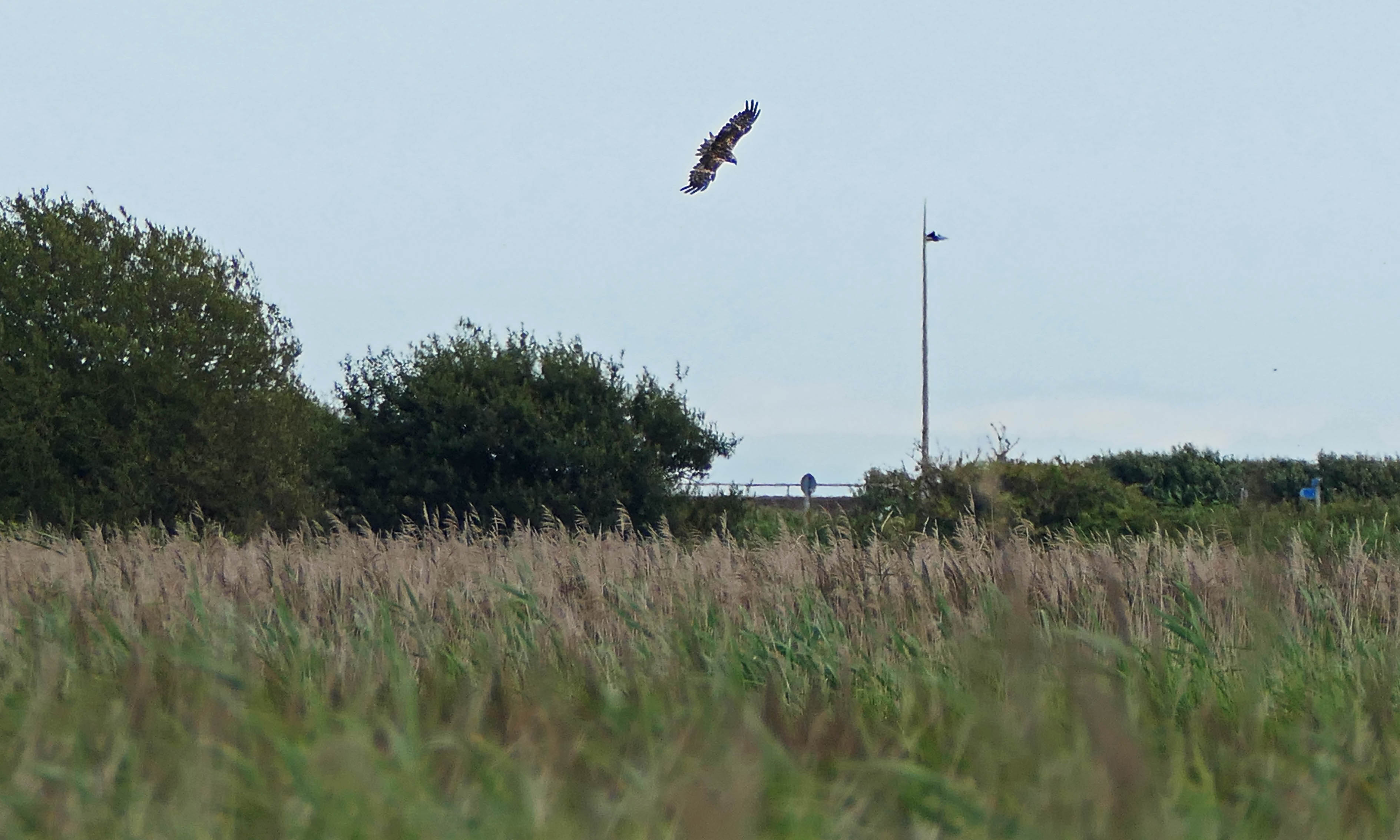
I was scanning the reeds for anything interesting when this stunning Marsh harrier flew up almost right in front of me. Bushes obscured it from view for a few minutes so I couldn’t get any better photos and, though it did a circuit around the far side of the reserve, it soon disappeared from sight once again.

Last but by no means least are two sandpipers. On the left is a Wood sandpiper, a bird I’d only ever seen once before and, though my picture only shows one, two birds frequented this pool all of last week. This species is only seen in Britain during Spring and Autumn as they move between their breeding grounds in northern Europe and their over-wintering locations in Africa, so I was particularly lucky to have synchronised my visit with their stopover. The bird on the right is a Green sandpiper, another bird I don’t see very often. Though they are known to frequent a river quite near where I live, it’s not a location I can easily access, plus they are very flighty birds, heading for the skies at the slightest suggestion of humans close by.

Like Loading...

Murmuration

26 Wednesday Feb 2025

Posted by sconzani in nature

≈ 2 Comments

Tags

birding, birdwatching, Black-tailed godwit, British birds, Dunlin, Knot, large flock of flying birds, murmuration

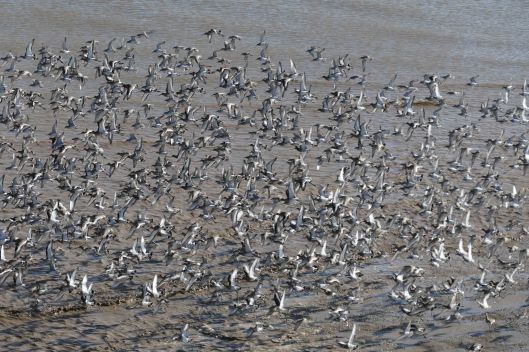
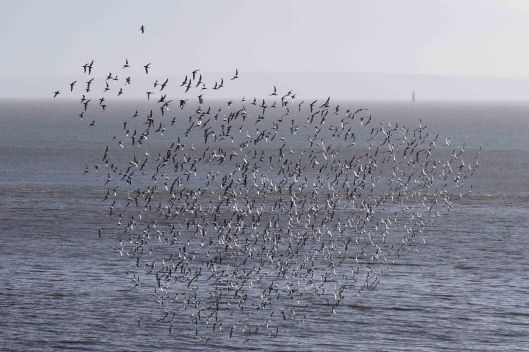
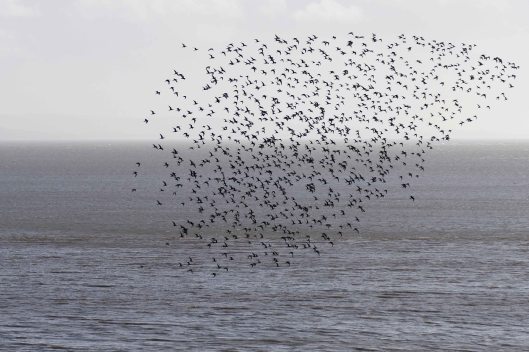
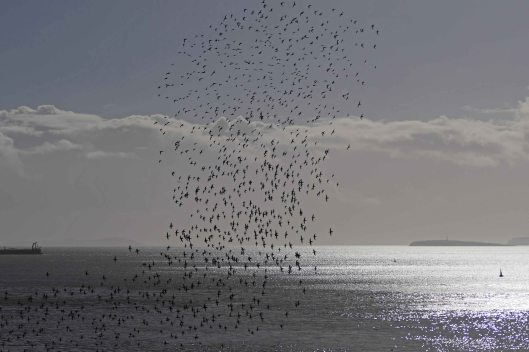
When you hear or read the word murmuration, you probably think of Starlings and the incredible sight of thousands of those birds flying though the evening sky in perfect unison. But it isn’t only Starlings that execute such amazing aerial displays; many other species of bird perform similar feats of synchronised flying and, on Monday, I was privileged to see just such a spectacle.

As soon as I arrived at the Cardiff Bay Barrage, I saw a large flock of birds flying around the area outside the Barrage, on the edge of the Bristol Channel. Luckily for me, the birds settled on one of the mudflats and began feeding. In my almost ten years of living in the area, I had never seen so many waders doing this; they usually feed on mudflats north of Cardiff.

The flock must have been several hundred strong and consisted of three species of wader, Black-tailed godwit, Knot and Dunlin. For 45 minutes, I watched and listened to and photographed these stunning birds, sharing my delight and wonder with a man who was out walking his dog and who’d never seen anything like this sight in his many years of living locally.

Then, for some unknown reason, the Barrage operations staff opened more of the sluice gates that allow water in Cardiff Bay to flow out in to the Bristol Channel, creating a small wave that swiftly encroached on the area of mud where the flock was feeding, and eventually covering it completely. As the wave reached them, the birds took to the air, creating an ever expanding cloud of flying birds. As one, they flew around the outer Barrage area, looking for another place to land but there was nowhere. For perhaps ten minutes, they swirled high into the air, then back down towards the water, wheeling left and right in perfect harmony, before abandoning their search for more mudflats and heading northwards along the coast. It was a sublime aerial symphony that I will never forget.

Like Loading...

Waders little and large

03 Saturday Feb 2024

Posted by sconzani in birds, winter

≈ Leave a comment

Tags

birding, birdwatching, British birds, Dunlin, Ringed plover, Turnstone, waders, wading birds

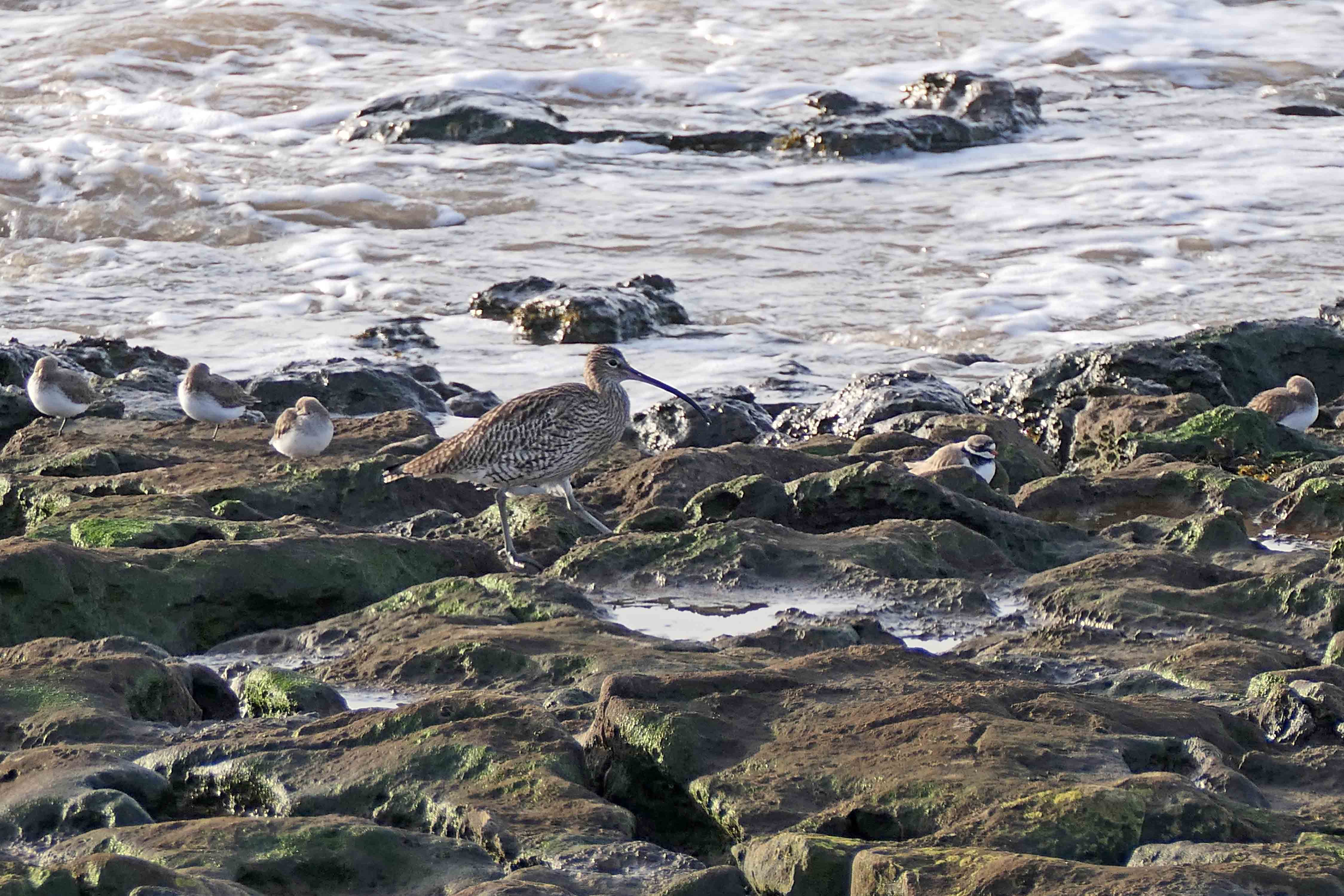
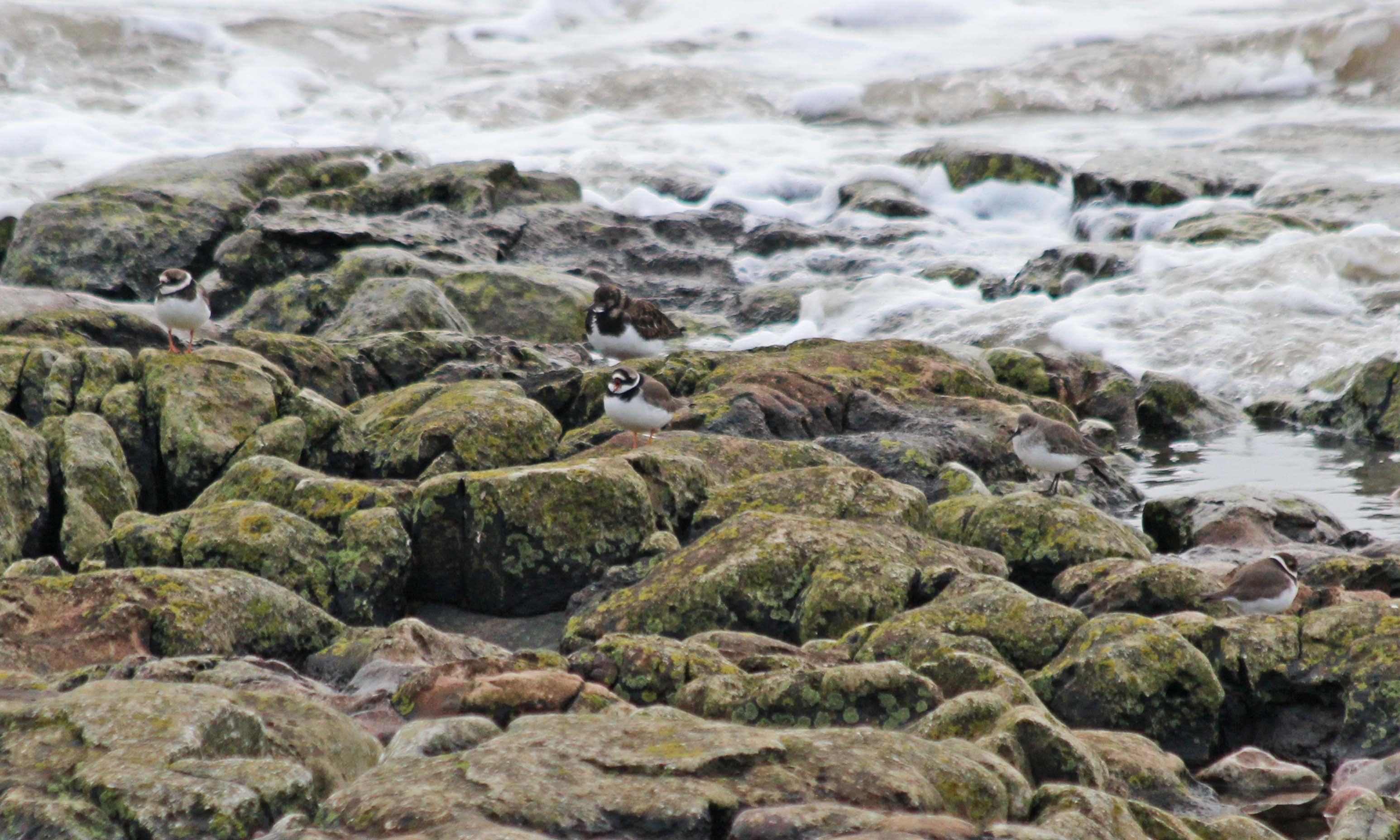
Like a bird giant, a Curlew strides past this small grouping of Ringed plovers and Dunlins.

240203 waders (1)

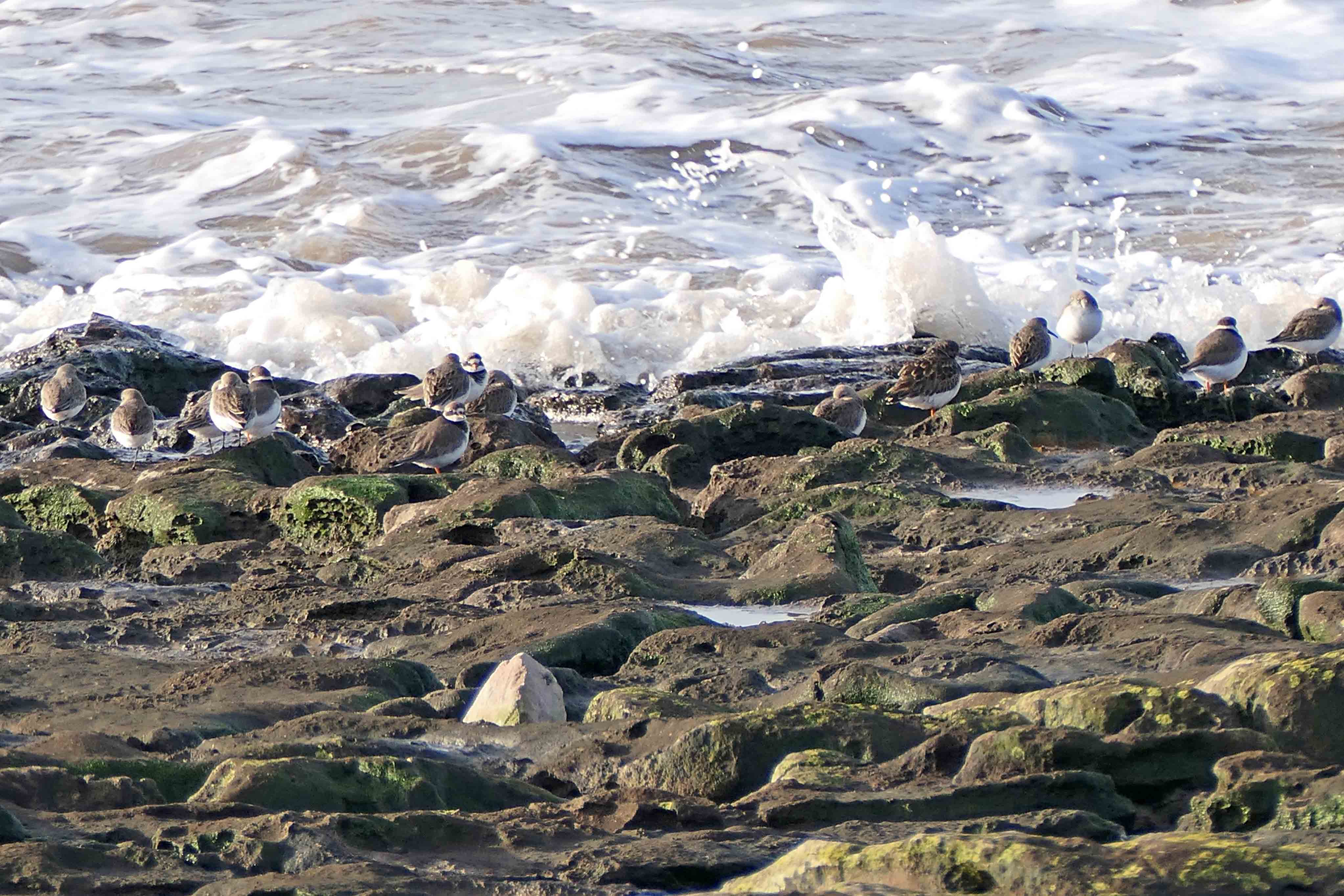
At first glance, I thought there were only a couple of the smaller birds snoozing at the water’s edge but, as the tide was coming in, their slumbers kept being interrupted by waves splashing over them, so every few minutes they had to shuffle a bit further up the beach. And when that happened, more little heads would pop up from where they’d been tucked down amongst the rocks.

240203 waders (2)

Like Loading...

A baker’s dozen

14 Tuesday Feb 2023

Posted by sconzani in birds

≈ Leave a comment

Tags

birding, birdwatching, British birds, Dunlin, Ringed plover, Sully beach

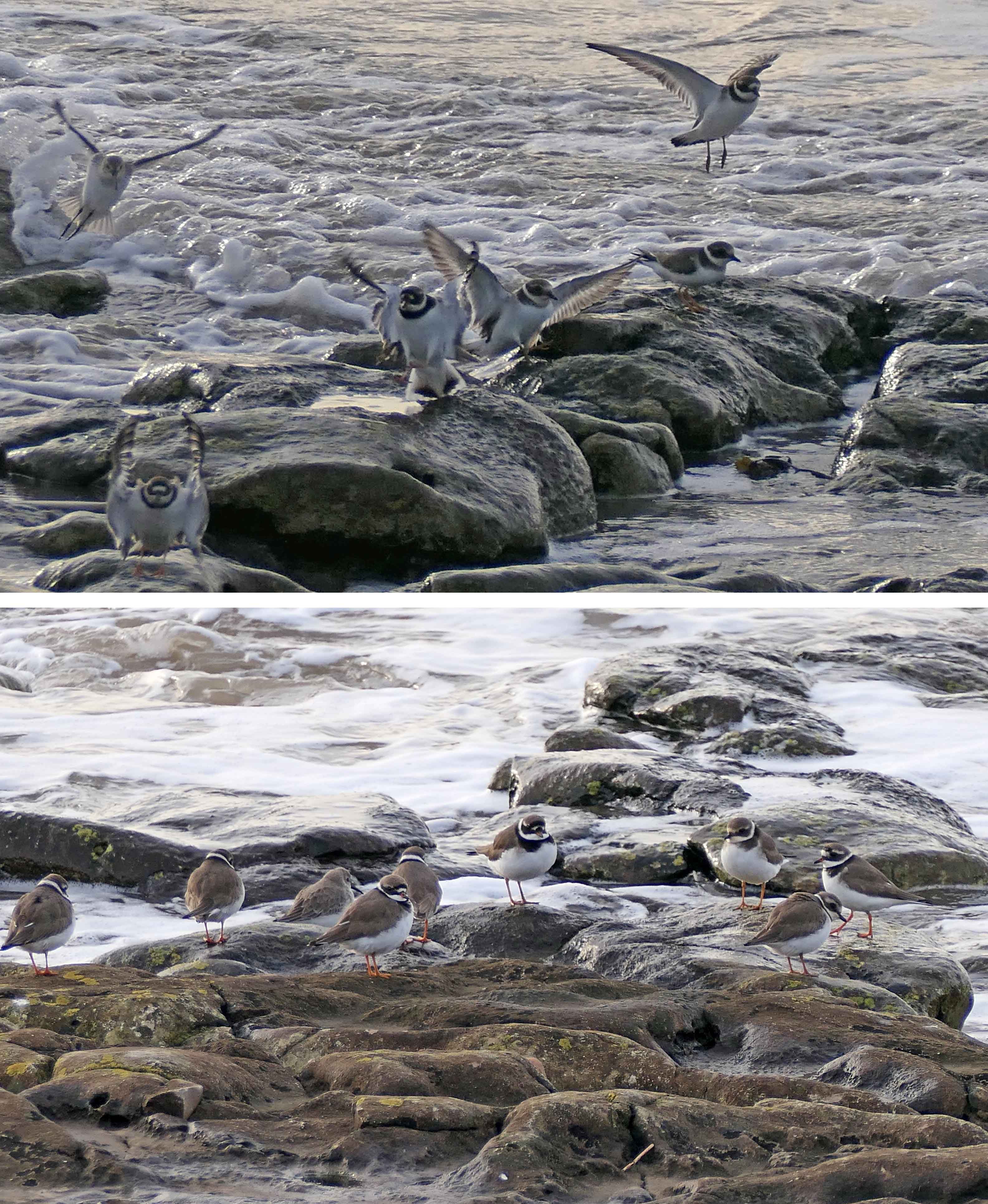
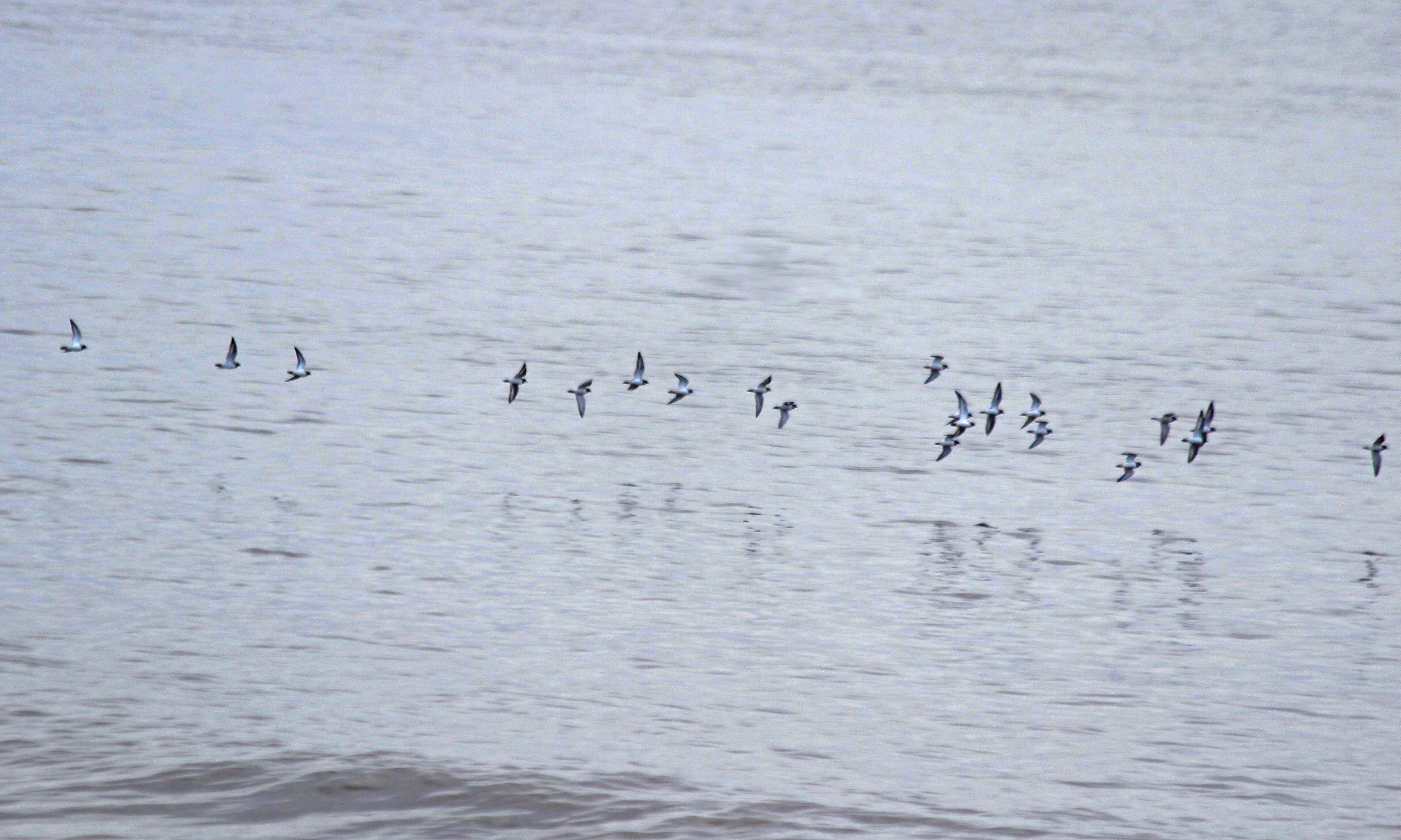
I was walking along Sully beach over last Friday’s high tide when a walker and her wide-roaming dog put up this little flock of waders. In panic, they flew together along the beach, wheeled out over the waves and around, heading back to their original location.

230214 ringed plover (1)

Luckily for me, once they considered the woman – or, more likely, the dog – was far enough away, they settled back on the rocks again. The astute amongst you may have counted the flying flock and noted that there were, in fact, more than a baker’s dozen. That was the number of Ringed plovers. They were accompanied by two Turnstones and a single Dunlin.

230214 ringed plover (2)

Like Loading...

Winding down with waders, 3

12 Wednesday Oct 2022

Posted by sconzani in birds

≈ Leave a comment

Tags

birding, birdwatching, British birds, British waders, Dunlin

A single Dunlin, which appeared to fly in to the rocks at Newton Point with a flock of Ringed plovers, was my first sighting of this handsome wader species this year. Though initially standing alone on the quickly disappearing patch of sand at the base of the rocks, it soon moved on to a large rock to hunker down with the other roosting waders, the Turnstones, Ringed plovers and Sanderlings.

221012 dunlin

Like Loading...

D is for Dunlin

09 Thursday Dec 2021

Posted by sconzani in birds

≈ Leave a comment

Tags

birding, birdwatching, British birds, Cardiff Bay birding, Dunlin, red-listed birds

Seeing this Dunlin was a delightful surprise back in May (a fellow birder had spotted it and put the word out), as these shorebirds rarely stop over in Cardiff Bay. Sadly, the chances of seeing Dunlins at all have declined dramatically in recent years, as their population has plummeted, and, according to British Birds recently published report of ‘The status of our bird populations’, these birds have recently been added to the IUCN Red List, meaning they are now at extreme risk of extinction in Britain.

211209 dunlin

Like Loading...

Dunlin in the Bay

13 Thursday May 2021

Posted by sconzani in birds, spring

≈ Leave a comment

Tags

bird migration, birding, birdwatching, British birds, Cardiff Bay birding, Cardiff Bay birds, Dunlin, spring migration

Though I live near the sea, I don’t get to see Dunlin very often as the coastline near me is mostly cliffs and rocks, not the stretches of mud or sand these little waders can easily feed on.

210512 dunlin (1)

So, it was a real treat during Monday’s walk around Cardiff Bay to see this single Dunlin foraging on the edge of the Barrage.

210512 dunlin (2)

Flocks of Dunlin, and other waders, pass along our shoreline at this time of year on their way to their breeding grounds and, very occasionally, drop in briefly to feed, as this one was. And to have a good scratch …

210512 dunlin (3)

After taking several photos, I left the bird in peace to forage further, grateful for the birding treat!

210512 dunlin (4)

Like Loading...

351/365 Sully beach beauties

17 Tuesday Dec 2019

Posted by sconzani in birds, nature, winter

≈ 4 Comments

Tags

birding, birdwatching, British birds, Dunlin, Ringed plover, Sully beach, Turnstone

It’s been a few weeks since I bussed to Sully and walked back to Penarth so, when I realised today’s high tide was mid morning, I headed off. And I was lucky.

191217 sully birds (1)

When I first arrived at the beach there was a large flock of 21 Ringed plovers flying back and forth over the water, and further west a large flock of Oystercatchers hovered right on the water line.

191217 sully birds (2)

Nearer at hand was a mixed flock of around 35 Turnstones, 13 Ringed plovers and 3 Dunlins, though I couldn’t actually see all the birds at once – they were scuttling back and forth to avoid the rising tide, and frequently disappeared behind small rocks and larger boulders.

191217 sully birds (3)

Dogs and their owners kept flushing the birds, which meant I didn’t manage any good photos, though their frequent flying did allow me to count them more easily.

191217 sully birds (4)

Like Loading...

Birding at Whiteford Point

14 Monday Jan 2019

Posted by sconzani in animals, birds, nature, walks, winter

≈ 4 Comments

Tags

birding, birtdwatching, Brent geese, British birds, Curlew, Dunlin, Glamorgan Bird Club, horses, Little egret, Llanrhidian Marsh, Oystercatchers, saltmarsh, Shelduck, Whiteford Point

Yesterday was our first Glamorgan Bird Club field trip for 2019, and what a magnificent day it was!
190114 (6) whiteford point

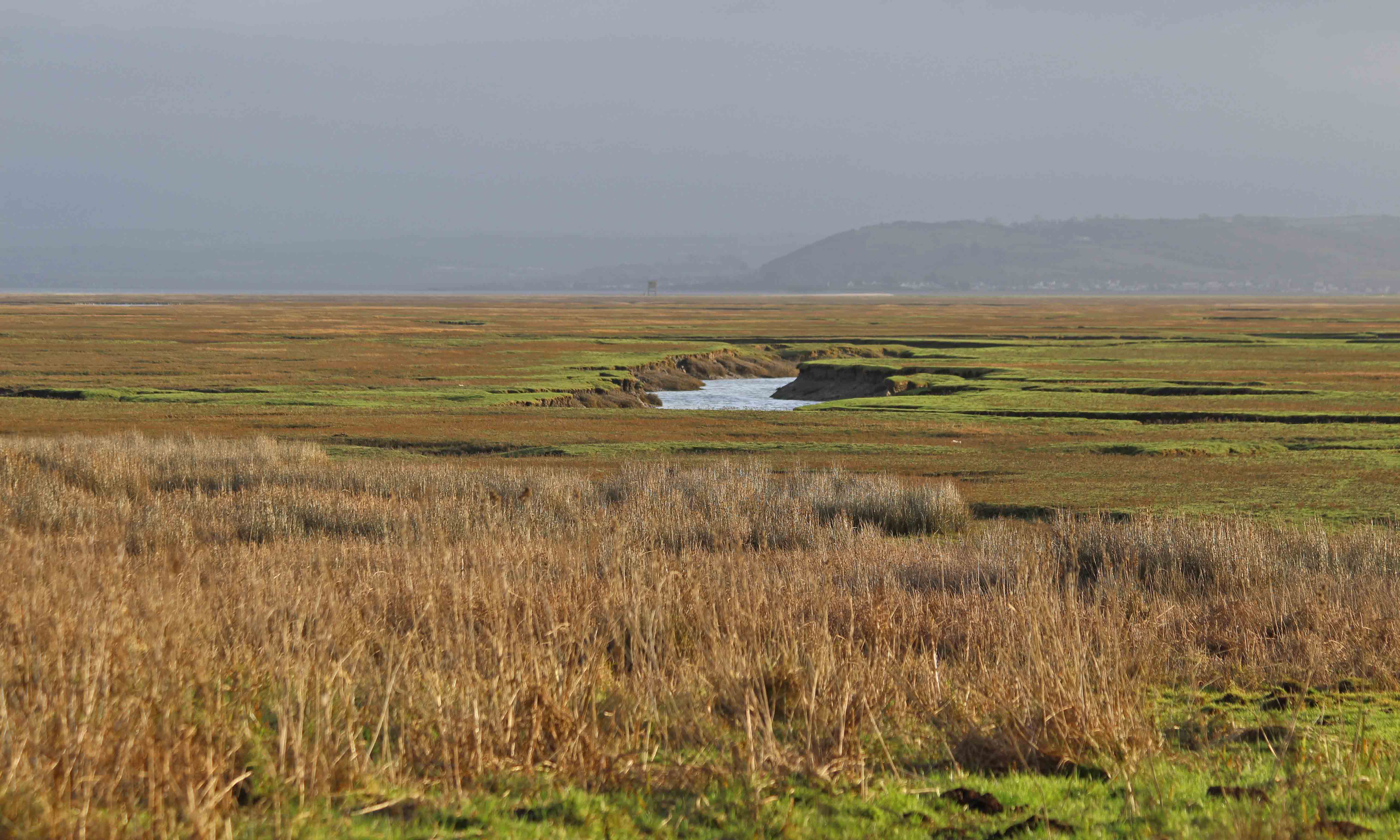
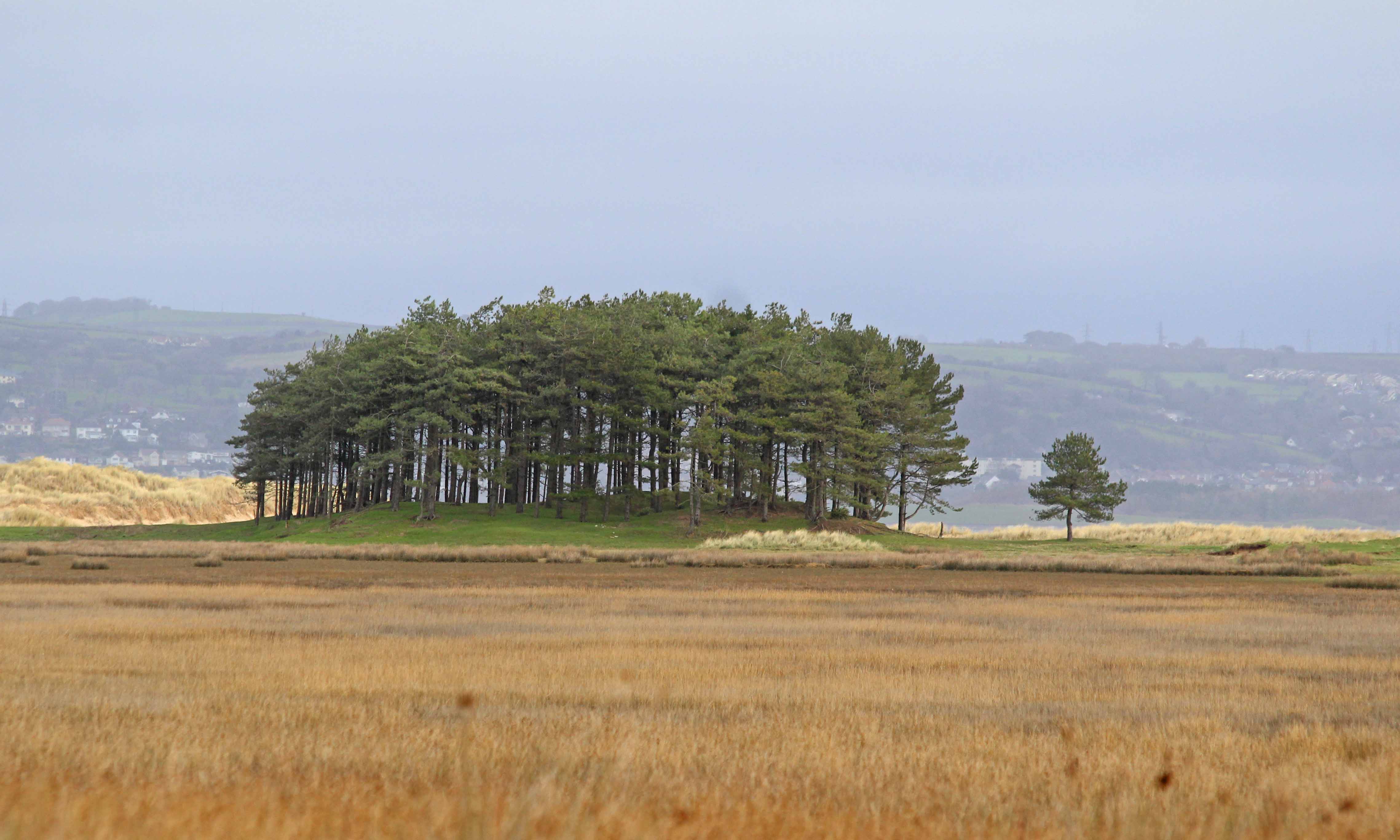
I hadn’t been to this part of the Gower peninsula before – our walk was through the National Trust property at Whiteford Point – and the scenery, like that all over the Gower, was stunning.
190114 (1) saltmarsh at whiteford point

190114 (2) whiteford point

With forestry, saltmarsh and coast line, the environment is very diverse, which means there’s a wonderful variety of flora and fauna to be seen, not just birds – though the bird life certainly didn’t disappoint. And there were many handsome ponies nibbling on the saltmarsh.

190114 (3) horses at whiteford point

As well as most of the smaller, more common birds – blackbirds, robins, singing Song thrushes, calling Bullfinches, a big mixed flock of Chaffinches, Linnets and Reed buntings – we also disturbed both Common snipe and Jack snipe that were lurking in the reed beds next to the path. The Jack snipe was a lifer for me, though views were brief as the birds shot up suddenly and unexpectedly, flew a short way, then disappeared back into the reeds.
190114 (4) brent geese and flying dunlin

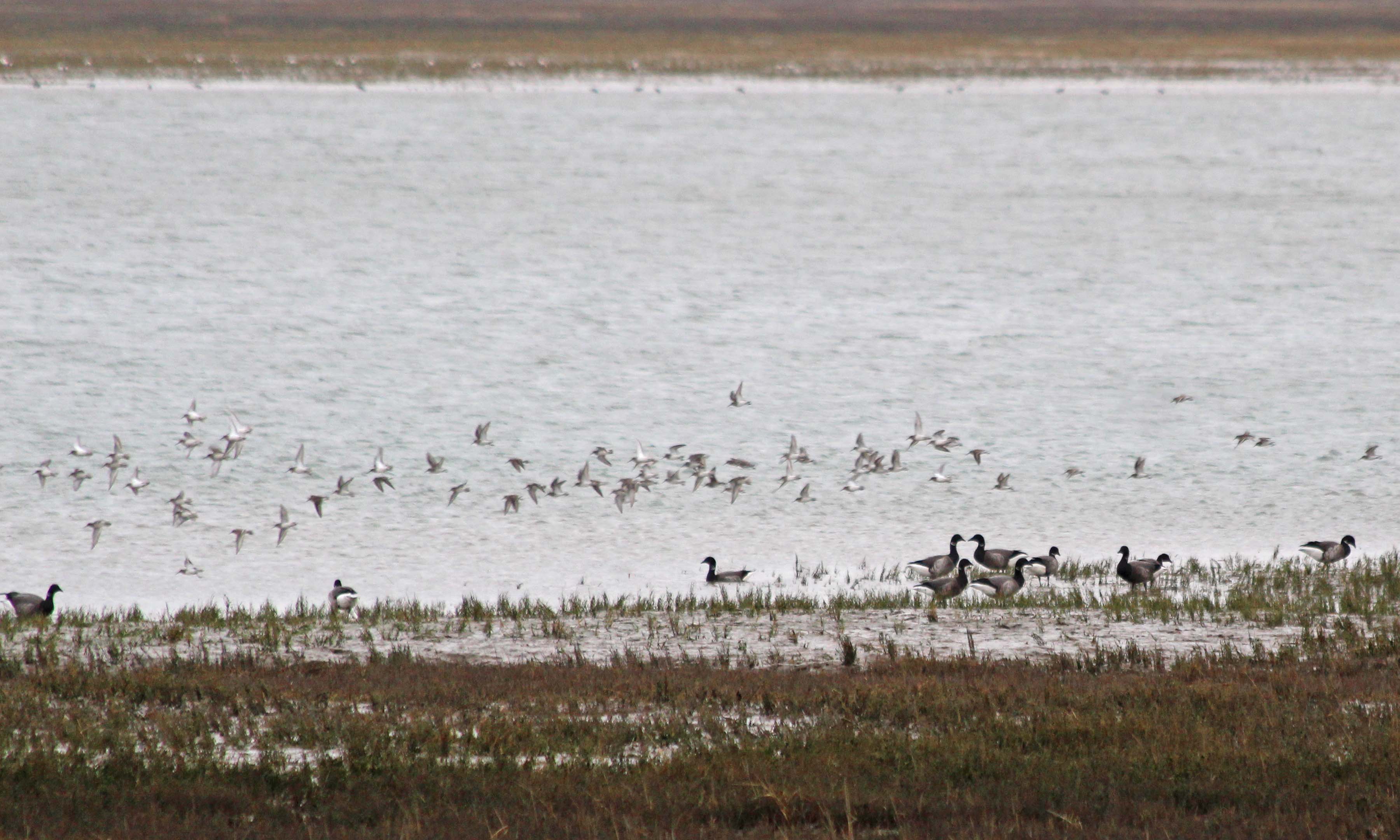
Once we reached the beach, we saw a wide range of waders and sea birds. Here a flock of Dunlin flies past Brent geese grazing along the shoreline.

190114 (5) shelduck and dunlin

More skittish Dunlin flying along the shore, this time above the heads of feeding Shelducks.
190114 (7) oystercatchers and curlew

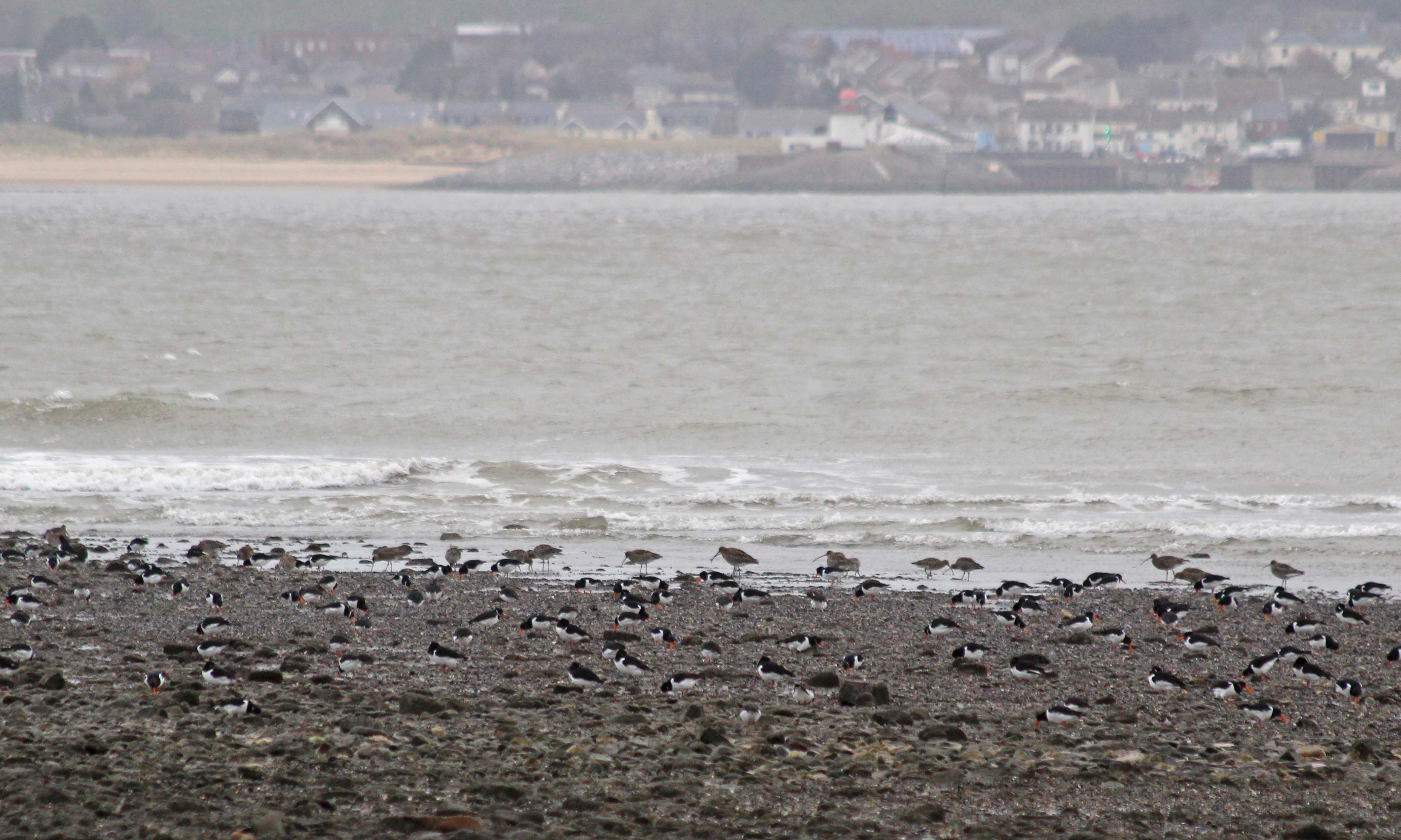
It was wonderful to see such good numbers of Curlew, here with even larger numbers of the ubiquitous Oystercatchers. We also enjoyed sightings of some less common birds – a Great northern diver quite close to the shore; a Slavonian grebe further off and diving frequently so not easy to keep track of; a Red-breasted merganser a distant speck through the ’scopes.

190114 (7) a raft of eider

My favourites were undoubtedly the Eider ducks. I fell in love with them when I first heard their call on our birding trip to Northumberland last year.

190114 (8) horses on the marsh

Eventually, we made the long trek back to the cars and moved on to nearby Llanrhidian Marsh, to await the dusk, hopeful of harriers and perhaps an owl or two. More ponies were running free on the marsh – they looked unloved and uncared for, their manes very long and tatty, but, as we waited, a man arrived and fed them some meal from a bucket. They were very handsome and quite inquisitive.

190114 (9) little egrets

The marsh seemed alive with Little egrets, and we had good sightings of several Great whites – another year first for me. Some of our group saw a Hen harrier, and a couple of Red kites came in gliding low, hunting for their supper, but no owls appeared and the harrier did not return.

Still, as the sun went down, we were treated to this stunning sunset, and we returned home tired but happy after a most excellent day’s birding in a superb setting.

190114 (10) sunset over llanrhidian marsh

Here’s my trip list: Blackbird, Black-headed Gull, Black-tailed Godwit, Blue Tit, Brent Goose, Bullfinch, Carrion Crow, Chaffinch, Coal Tit, Collared Dove, Buzzard, Eider, Redshank, Snipe, Cormorant, Dunlin, Dunnock, Curlew, Teal, Wigeon, Golden Plover, Stonechat, Goldcrest, Goldfinch, Great Black-backed Gull, Great Crested Grebe, Great White Egret, Great Northern Diver, Great Spotted Woodpecker, Great Tit, Green Woodpecker, Greenshank, Herring Gull, House Sparrow, Jack Snipe, Jackdaw, Lesser Black-backed Gull, Linnet, Little Egret, Long-tailed Tit, Magpie, Mallard, Meadow Pipit, Lapwing, Pintail, Oystercatcher, Pheasant, Pied Wagtail, Raven, Red Kite, Red-breasted Merganser, Reed Bunting, Robin, Sanderling, Shelduck, Slavonian Grebe, Song Thrush, Starling, Treecreeper, Woodpigeon, Wren.

My birding friend and I saw Greenshank at Penclawdd when we stopped for a quick scan on the way to Whiteford Point so my total for the day was 61 and, as other birders saw a few birds I didn’t, the club’s total was 70. Those extras were, most notably, that Hen harrier but also Common gull, Green sandpiper, Jay, Merlin, Redwing, Rook, Stock dove and Turnstone.

Like Loading...
← Older posts

About me

sconzani

sconzani

I'm a writer and photographer; researcher and blogger; birder and nature lover; countryside rambler and city strider; volunteer and biodiversity recorder.

View Full Profile →

Follow earthstar on WordPress.com

Enter your email address to follow this blog and receive notifications of new posts by email.

Recent blog posts

  • M is for mite December 18, 2025
  • L is for lepidopteran lifers December 17, 2025
  • K is for Keeled skimmers December 16, 2025
  • J is for Jersey tiger December 15, 2025
  • I is for Ichneumon December 14, 2025

From the archives

COPYRIGHT

Unless otherwise acknowledged, the text and photographs on this blog are my own and are subject to international copyright. Nothing may be downloaded or copied without my permission.

Fellow Earth Stars!

  • Unknown's avatar
  • Unknown's avatar
  • Unknown's avatar
  • Unknown's avatar
  • Unknown's avatar
  • Unknown's avatar
  • Unknown's avatar
  • Unknown's avatar
  • Unknown's avatar
  • Unknown's avatar
  • Unknown's avatar
  • Unknown's avatar
  • Unknown's avatar
  • Unknown's avatar
  • Unknown's avatar
  • Unknown's avatar
  • Unknown's avatar
  • Unknown's avatar
  • Unknown's avatar
  • Unknown's avatar
  • Unknown's avatar
  • Unknown's avatar
  • Unknown's avatar
  • Unknown's avatar
  • Unknown's avatar
  • Unknown's avatar
  • Unknown's avatar
  • Unknown's avatar
  • Unknown's avatar
  • Unknown's avatar
  • Unknown's avatar
  • Unknown's avatar
  • Unknown's avatar
  • Unknown's avatar
  • Unknown's avatar
  • Unknown's avatar
  • Unknown's avatar
  • Unknown's avatar
  • Unknown's avatar
  • Unknown's avatar
  • Unknown's avatar
  • Unknown's avatar
  • Unknown's avatar
  • Unknown's avatar
  • Unknown's avatar
  • Unknown's avatar
  • Unknown's avatar
  • Unknown's avatar
  • Unknown's avatar
  • Unknown's avatar

Blog at WordPress.com.

Privacy & Cookies: This site uses cookies. By continuing to use this website, you agree to their use.
To find out more, including how to control cookies, see here: Cookie Policy
  • Subscribe Subscribed
    • earthstar
    • Join 667 other subscribers
    • Already have a WordPress.com account? Log in now.
    • earthstar
    • Subscribe Subscribed
    • Sign up
    • Log in
    • Report this content
    • View site in Reader
    • Manage subscriptions
    • Collapse this bar
 

Loading Comments...
 

You must be logged in to post a comment.

    %d