• ABOUT
  • BIRDING 2018
  • Birding 2019
  • BLOG POSTS
  • Butterflies 2018
  • Resources

earthstar

~ a celebration of nature

earthstar

Tag Archives: Elm tree

Wrinkled peach

29 Friday Nov 2024

Posted by sconzani in fungi

≈ 2 Comments

Tags

British fungi, Elm tree, fungi on Elm, fungus, Rhodotus palmatus, Wrinkled peach

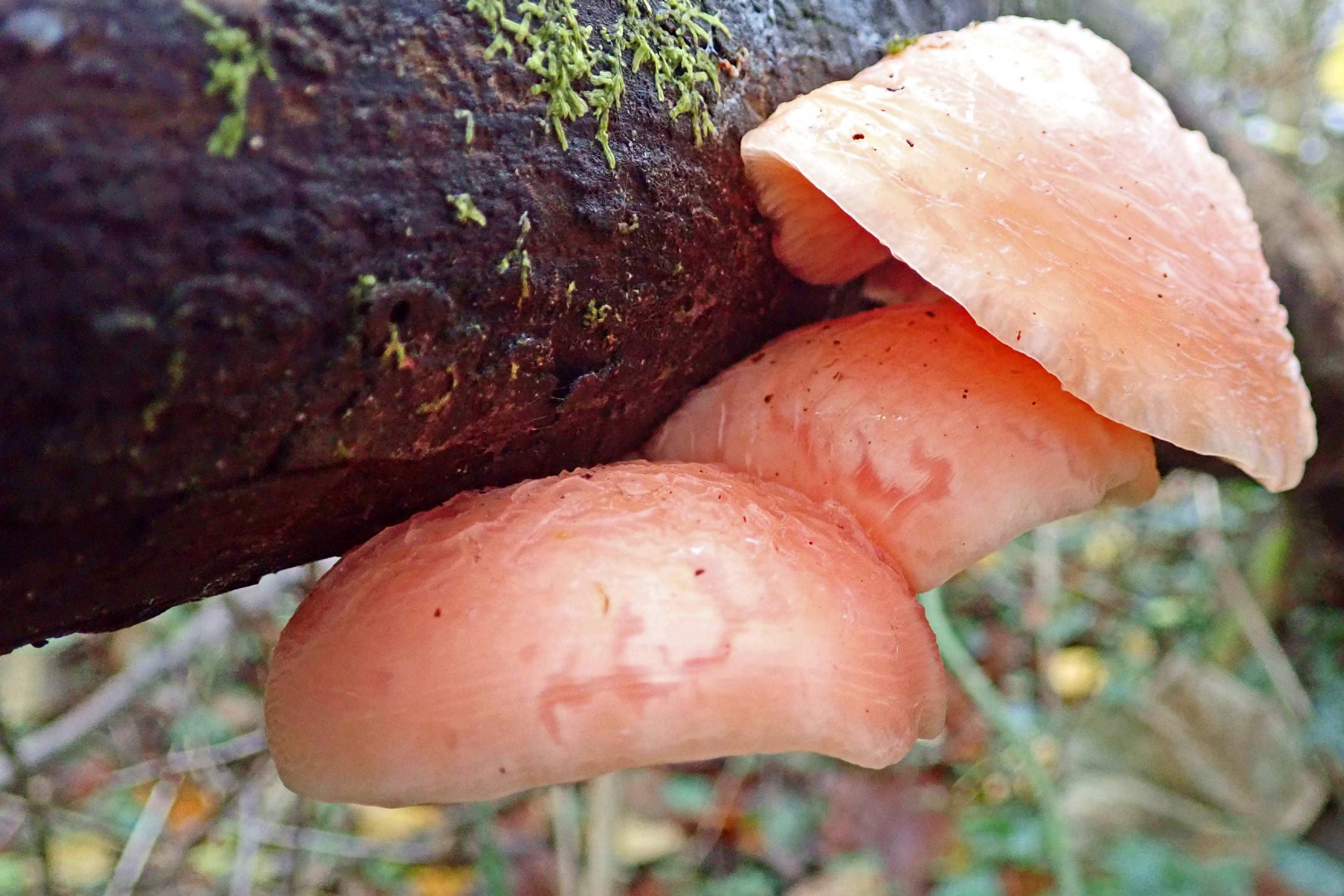
I was struggling to think of what I would blog about today so, for my daily walk, I headed to an area where I thought I should be able to find some fungi. And so it proved. In fact, much to my surprise and delight, I found today’s subject first, then went on to find two other relative rarities at other sites during my meander. This was a very good day for fungi!
241129 wrinkled peach (1)

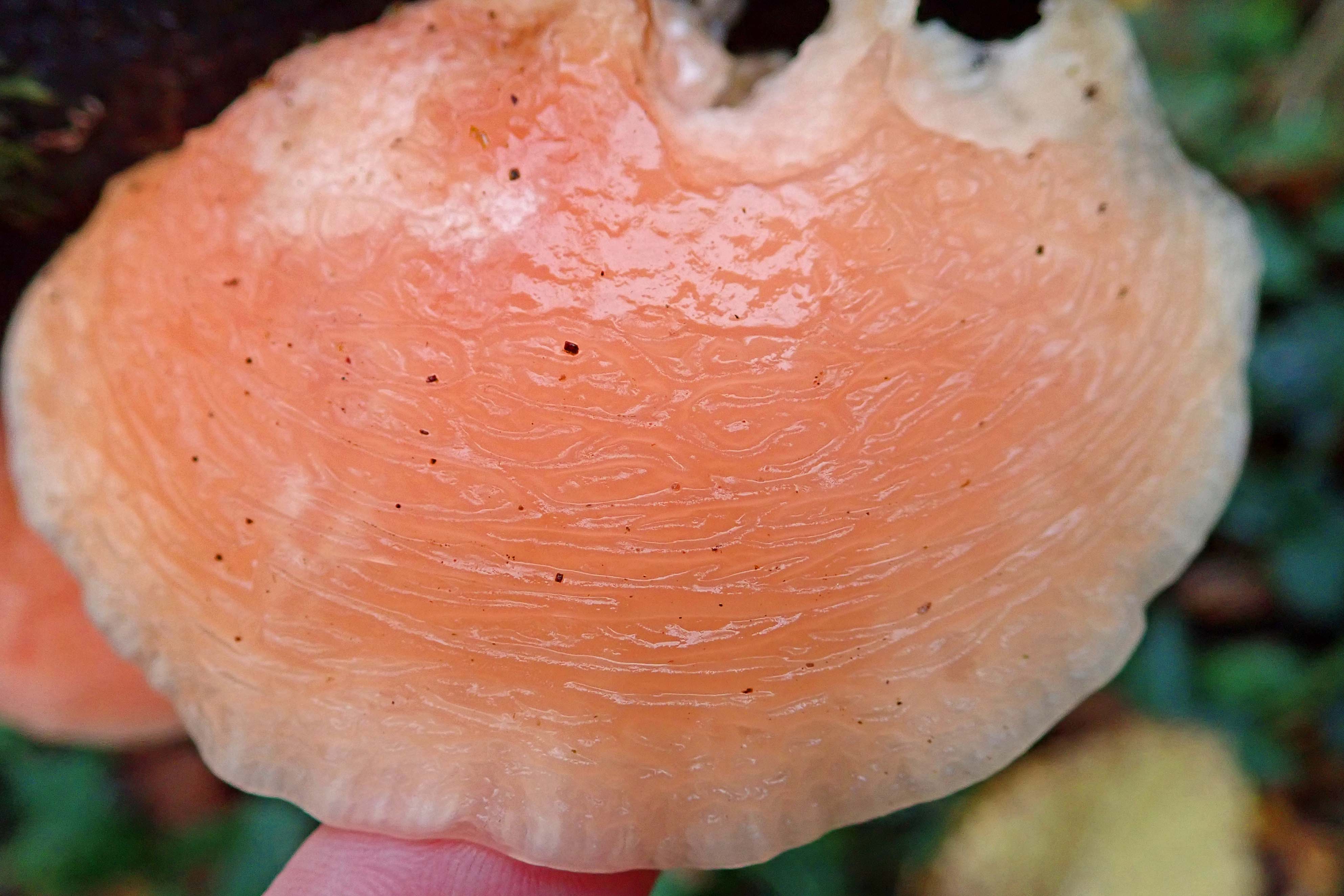
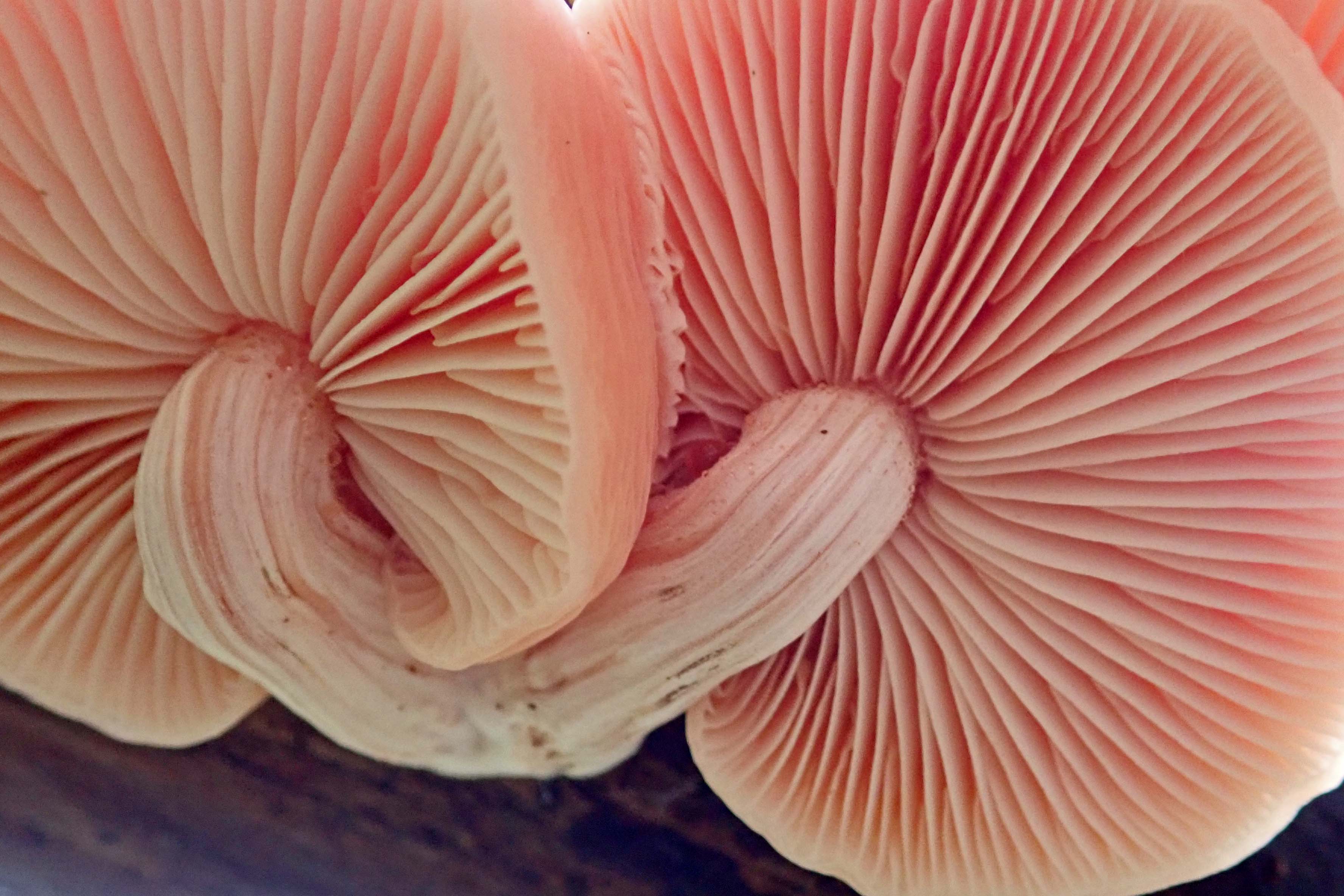
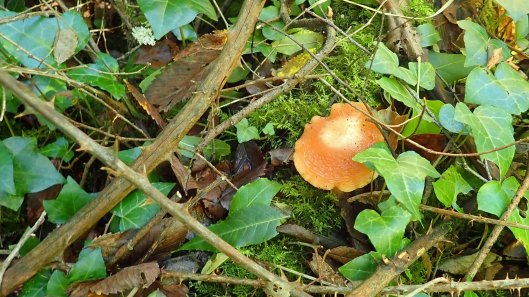
Today’s fungus is Wrinkled peach (Rhodotus palmatus), still beautiful even though the five specimens I found were all a little past their best. They are perfectly named: their pale pinkish peachy colour is unmistakeable, as is the crinkled skin on their caps.
241129 wrinkled peach (2)

And, as they grow exclusively on Elm trees, which have been devastated by Dutch elm disease, these fungi are now quite a rarity so I was particularly lucky to spot them.
241129 wrinkled peach (3)

Like Loading...

Just peachy

06 Saturday Oct 2018

Posted by sconzani in autumn, fungi, nature

≈ 1 Comment

Tags

British fungi, Elm tree, fungi on Elm, fungus, Rhodotus palmatus, Wrinkled peach

I was over the moon when I spotted this first little burst of peachiness growing on an old, ivy-smothered log a week ago.

181006 Wrinkled peach (1)

Why? Because this is one of the few fungi I can positively identify by sight, and it’s quite the rarity in most parts of Britain these days because it grows on Elm, a tree that is itself increasingly rare in Britain nowadays. According to the Forest Research website, 60 million Elm trees have been killed by Dutch Elm disease since it was first discovered in Britain in the 1920s, the majority of those dying since the 1970s.

181006 wrinkled peach (2)181006 wrinkled peach (3)

This fungus is the wonderfully named Wrinkled peach (Rhodotus palmatus). Rhodotus comes from the Ancient Greek Rhodon, meaning rose, and palmatus is Latin and means ‘shaped like a hand’, presumably a reference to the surface texture of the fungus’s cap resembling the lines on the palm of a hand.

181006 Wrinkled peach (4)

Incredibly, I found nine of these fungi on two different logs, and then, on a subsequent visit, found another one growing on a log a few metres away. Presumably the logs are the remains of an Elm that was cut down when Dutch Elm disease was at its height.

181006 wrinkled peach (7)

As you can see from my photos, the fungi range from the very young and fresh to the aging and wrinkled and decaying. Wrinkled peach, when seen at all, is usually found between July and November, so I have a few more weeks yet to enjoy these little beauties.

181006 Wrinkled peach (5)
181006 Wrinkled peach (6)

181006 Wrinkled peach (8)181006 Wrinkled peach (9)

Like Loading...

The Pontcanna 100

12 Sunday Feb 2017

Posted by sconzani in nature, parks, trees

≈ Leave a comment

Tags

avenue of trees, Cardiff parks, disease-resistant elm, Elm tree, Pontcanna Fields, tree avenue, Ulmus New Horizon

170212-pontcanna-elm-avenue

I’ve admired this young avenue of trees since I moved to Cardiff in August 2015, and I posted some photos of how it looked through the seasons back in November 2016, when I blogged about National Tree Week. I’d always been puzzled by what type of tree these were, but no longer. Thanks to the wonderfully informative blog by Pat at The Squirrelbasket and a look at the excellent Cardiff Council Horticultural Database website, I now know the avenue is made up of 100 disease-resistant elms of the variety Ulmus ‘New Horizon’. The trees were planted in November 2004 to mark 2005 as the centenary of Cardiff becoming a city and the city’s 25th jubilee as capital of Wales. Pat will be blogging about these trees each month for the next year so, if you’re a tree lover like me, I suggest you follow her blog to read more about this glorious elm avenue.

Like Loading...

Fungi Friday: A load of tripe

16 Friday Dec 2016

Posted by sconzani in fungi, nature, trees

≈ 9 Comments

Tags

Auricularia auricula-judae, Auricularia mesenterica, Dutch Elm disease, Elm tree, Jelly Ear fungus, Tripe fungus

If you’re wondering how the Tripe fungus, Auricularia mesenterica, got its name, well, according to Pat O’Reilly’s most excellent First Nature website, ‘The specific epithet mesenterica is a Latinised adjective derived from the Ancient Greek word mesenterion meaning ‘middle intestine’.’ I checked – he’s not talking tripe! Auricularia comes from the Latin word for ear, a nod to its fleshy ear-like shape. (Fungi fans will notice that it resembles the Jelly Ear fungus, Auricularia auricula-judae, which is in the same genus.)

161215-tripe-fungus-3

This is not a particularly common fungus these days as it usually grows on dead elm trees but, with the devastating effects of Dutch Elm disease, which has killed over 60 million British elm trees, there are now not many elms left, even dead ones. I had first noticed this particularly fungus in one of my local woodlands several months ago when the hot dry summer had left it shrivelled up and unidentifiable but, as soon as the autumn rains came, it almost immediately fleshed out and began creating new growth. It’s very variable in colour, with bands of brown, grey, white or purple on top, and it is a rather odd combination of hairy above and jelly-like below.

161215-tripe-fungus-1
161215-tripe-fungus-4
161215-tripe-fungus-5
161215-tripe-fungus-6
161215-tripe-fungus-2
Like Loading...

About me

sconzani

sconzani

I'm a writer and photographer; researcher and blogger; birder and nature lover; countryside rambler and city strider; volunteer and biodiversity recorder.

View Full Profile →

Follow earthstar on WordPress.com

Enter your email address to follow this blog and receive notifications of new posts by email.

Recent blog posts

  • M is for mite December 18, 2025
  • L is for lepidopteran lifers December 17, 2025
  • K is for Keeled skimmers December 16, 2025
  • J is for Jersey tiger December 15, 2025
  • I is for Ichneumon December 14, 2025

From the archives

COPYRIGHT

Unless otherwise acknowledged, the text and photographs on this blog are my own and are subject to international copyright. Nothing may be downloaded or copied without my permission.

Fellow Earth Stars!

  • Unknown's avatar
  • Unknown's avatar
  • Unknown's avatar
  • Unknown's avatar
  • Unknown's avatar
  • Unknown's avatar
  • Unknown's avatar
  • Unknown's avatar
  • Unknown's avatar
  • Unknown's avatar
  • Unknown's avatar
  • Unknown's avatar
  • Unknown's avatar
  • Unknown's avatar
  • Unknown's avatar
  • Unknown's avatar
  • Unknown's avatar
  • Unknown's avatar
  • Unknown's avatar
  • Unknown's avatar
  • Unknown's avatar
  • Unknown's avatar
  • Unknown's avatar
  • Unknown's avatar
  • Unknown's avatar
  • Unknown's avatar
  • Unknown's avatar
  • Unknown's avatar
  • Unknown's avatar
  • Unknown's avatar
  • Unknown's avatar
  • Unknown's avatar
  • Unknown's avatar
  • Unknown's avatar
  • Unknown's avatar
  • Unknown's avatar
  • Unknown's avatar
  • Unknown's avatar
  • Unknown's avatar
  • Unknown's avatar
  • Unknown's avatar
  • Unknown's avatar
  • Unknown's avatar
  • Unknown's avatar
  • Unknown's avatar
  • Unknown's avatar
  • Unknown's avatar
  • Unknown's avatar
  • Unknown's avatar
  • Unknown's avatar

Blog at WordPress.com.

Privacy & Cookies: This site uses cookies. By continuing to use this website, you agree to their use.
To find out more, including how to control cookies, see here: Cookie Policy
  • Subscribe Subscribed
    • earthstar
    • Join 667 other subscribers
    • Already have a WordPress.com account? Log in now.
    • earthstar
    • Subscribe Subscribed
    • Sign up
    • Log in
    • Report this content
    • View site in Reader
    • Manage subscriptions
    • Collapse this bar
 

Loading Comments...
 

You must be logged in to post a comment.

    %d