
Tags
anther smut, anther smut on Soapwort, archaeophyte, British wildflowers, fungus on Soapwort flowers, Microbotryum saponariae, Saponaria officinalis, Soapwort
During a walk around Cardiff’s Bute Park last week, I spotted a wildflower growing alongside my path that I couldn’t ever recall seeing before. It had pink flowers and looked a lot like Red campion so I wondered if it might be a cultivated variety of campion that had escaped from someone’s garden.
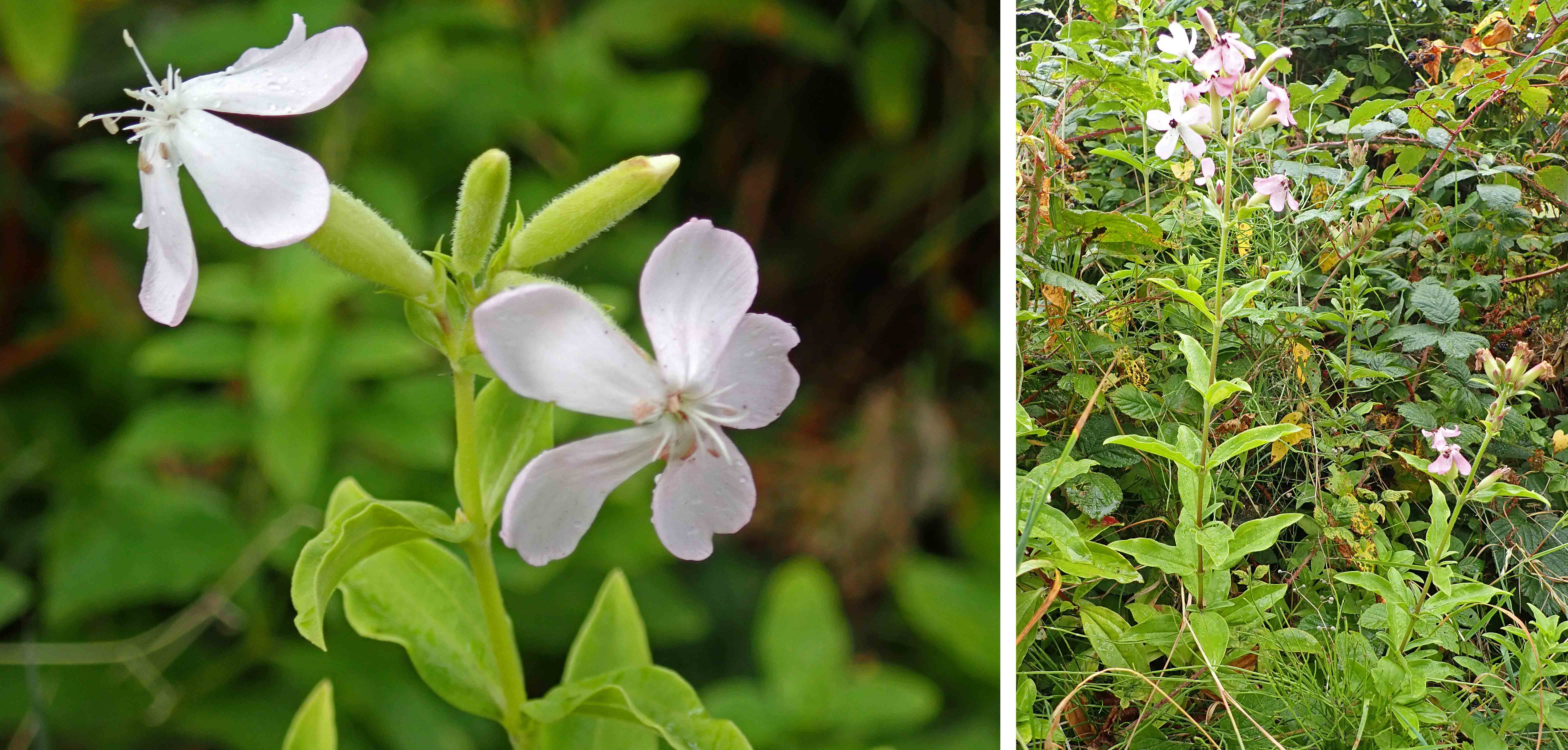
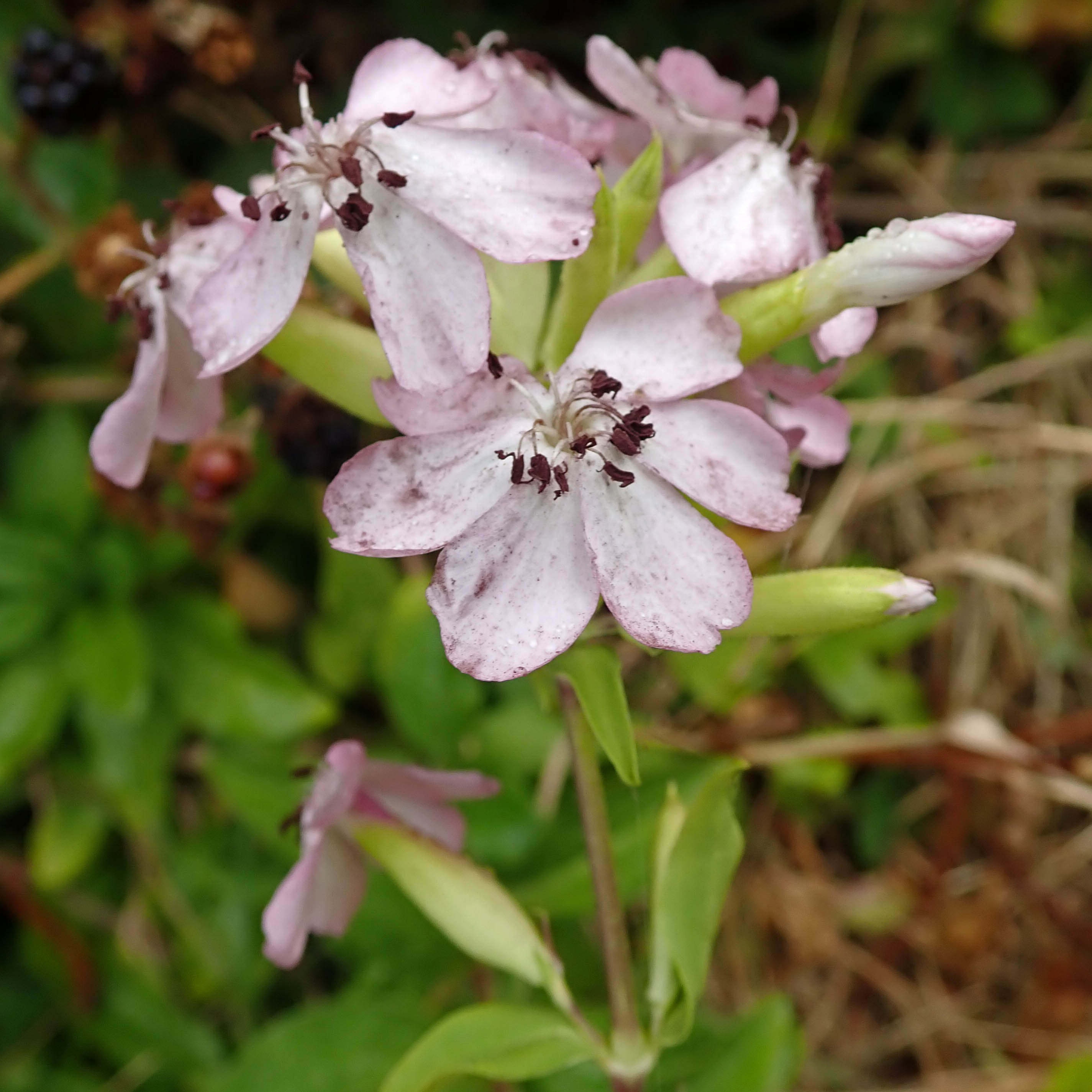
A look through the appropriate section of my wildflower guide when I got home proved me half right and half wrong. It was definitely a member of the campion family but this was Soapwort (Saponaria officinalis), no garden escape but not native either. It’s classified as an archaeophyte, which means this extremely useful detergent-plant was introduced to Britain in ancient times, prior to 1500 AD.
A few snippets from Flora Britannica:
Simply rubbing a leaf between the fingers will produce a slight, slippery froth. Boiled in water, the plant produces a green lather with the power to lift grease and dirt, especially from fabrics. … due to the presence of saponins – chemicals which, like inorganic soaps, appear to ‘lubricate’ and absorb dirt particles.
… cultivated for laundering woollens in Syria … and in Britain employed as a soaping agent by medieval fullers … because vegetable saponins are so much gentler than soaps, Saponaria has been used much more recently for washing ancient tapestries … Victoria &Albert Museum it was last used for cleaning fragile fabrics in the 1970s. The National Trust have also used it, for bringing up the colours in antique curtains.
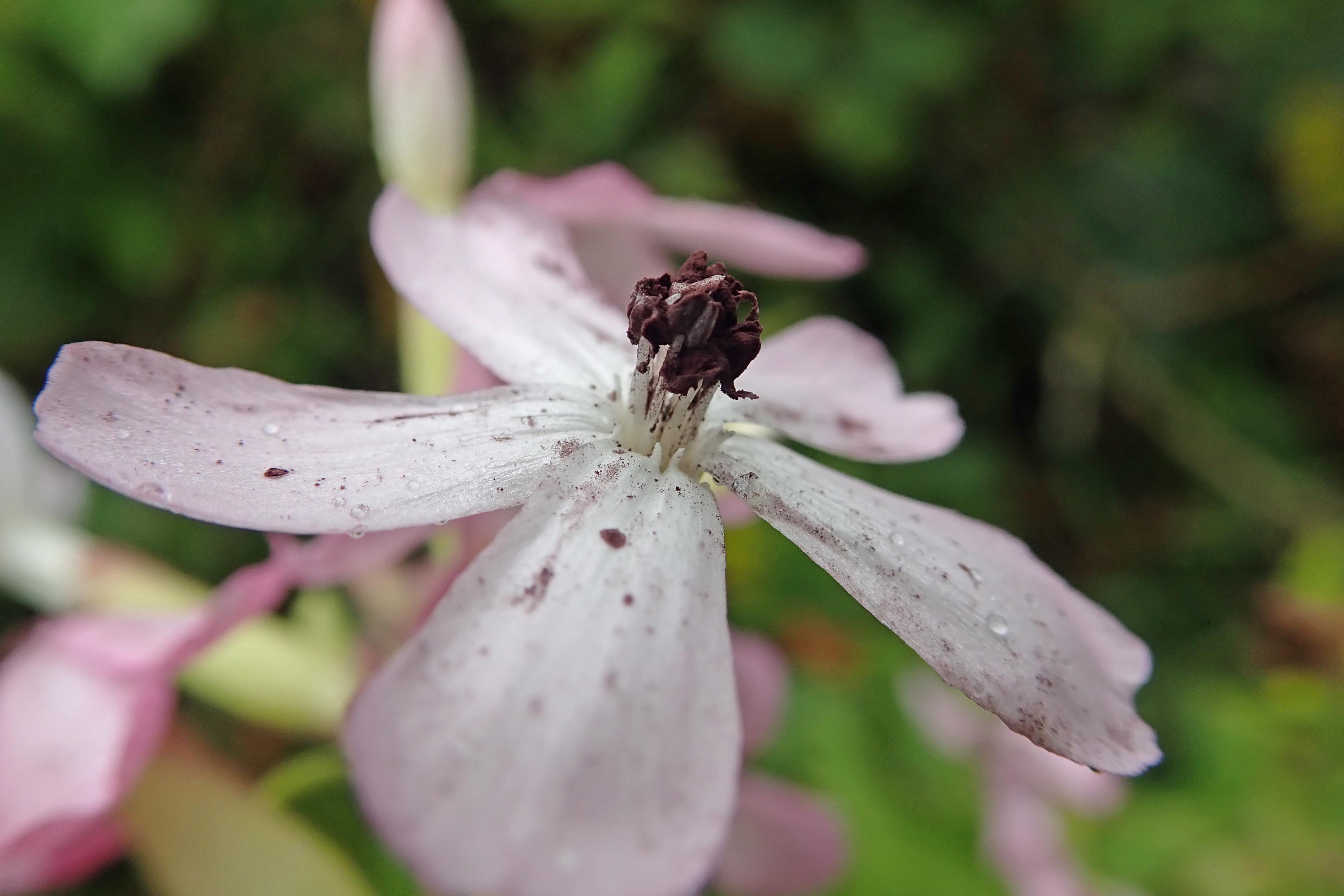
Now, the keen-eyed amongst you may have noticed something a little odd about the flowers in some of my photos; the centres of the flower heads look black. This is because many of the plants I found were suffering from anther smut, in this case caused by the fungus Microbotryum saponariae. The pollen in the flowers’ anthers has been replaced with fungal spores, meaning the plant is unable to reproduce. This may be a recent infestation as I found plenty of plants growing along the path as I walked further. I often see something similar on Red campion flowers, though that is caused by a different fungal species, Microbotryum silenes-dioicae. So, two for the price of one today: a fascinating plant and an equally fascinating fungus.
 earthstar
You must be logged in to post a comment.