I’ve come to the conclusion, rightly or wrongly, that large hoverflies are like buses: you don’t see any at all and then they all come along at once. At least that has been my recent experience (it’s probably more to do with the weather and the time of year, but I like my buses theory). The five big beasties shown here were all seen over just four days, between 29 May and 1 June.

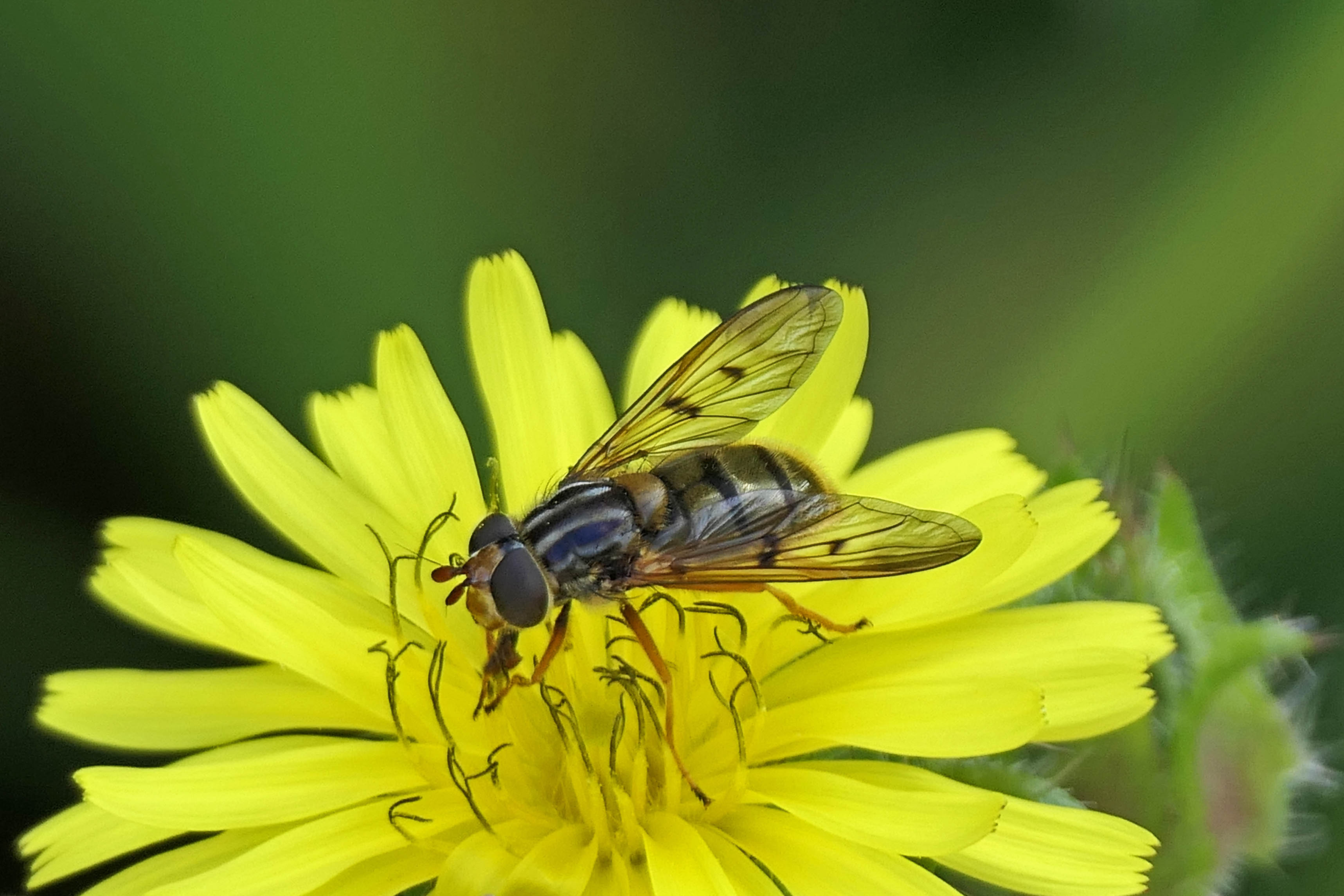
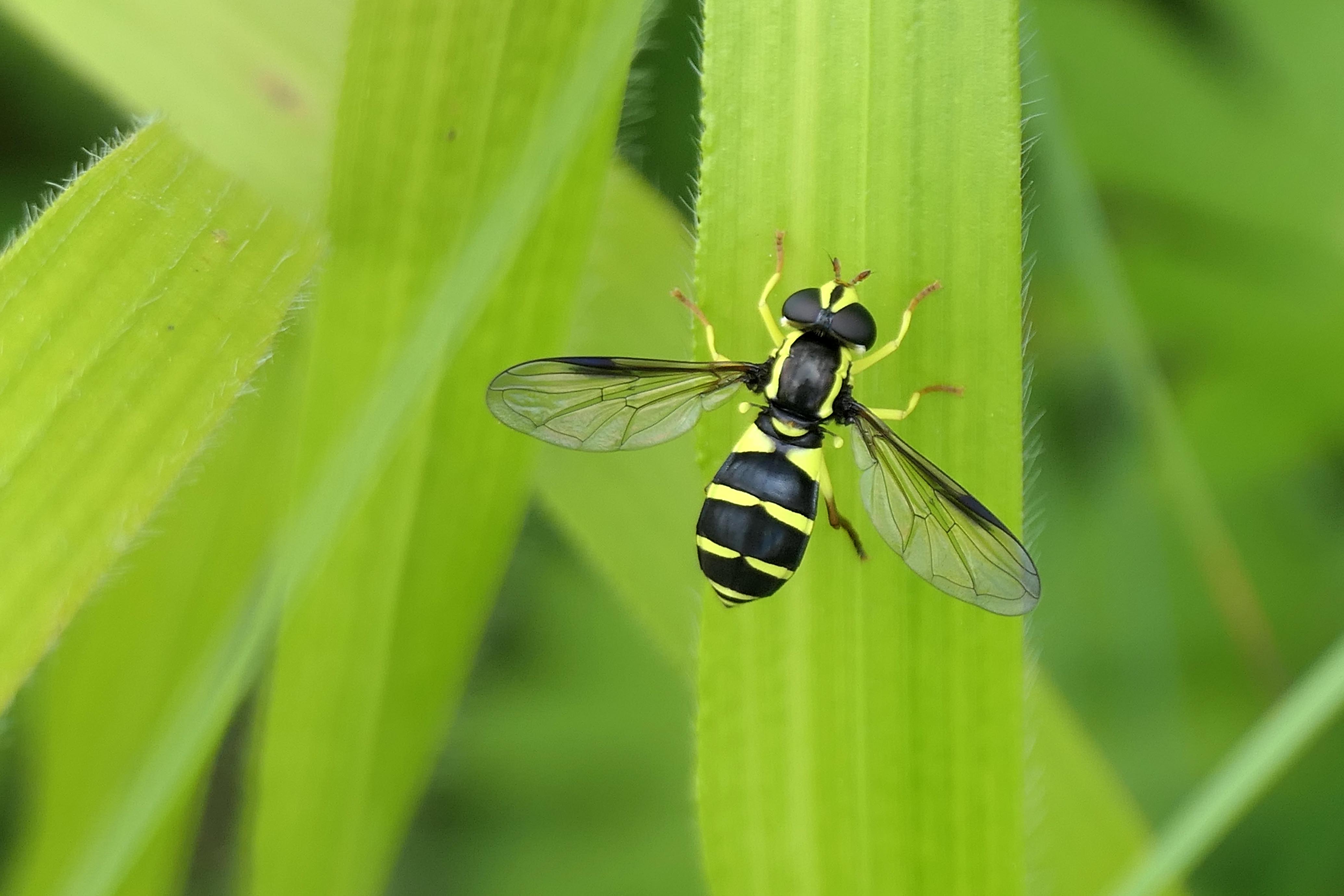
With its black-and-yellow striping, it’s easy to see that Chrysotoxum cautum is one of the wasp-mimicking hoverflies. The eight British species of Chrysotoxum all have quite long antennae, and it is the relative lengths of the segments of those antennae that are used to differentiate between the five most similar species.

Merodon equestris comes in a variety of colour forms, each of which mimics bumblebees. The one pictured above is a rather worn specimen of form validus, which has a totally dark thorax and a grey-buff coloured bottom.
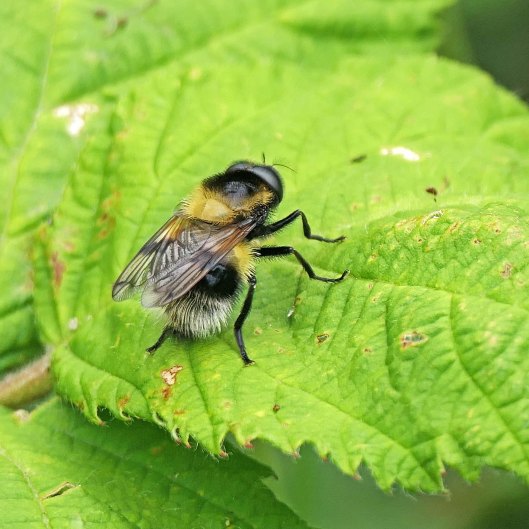
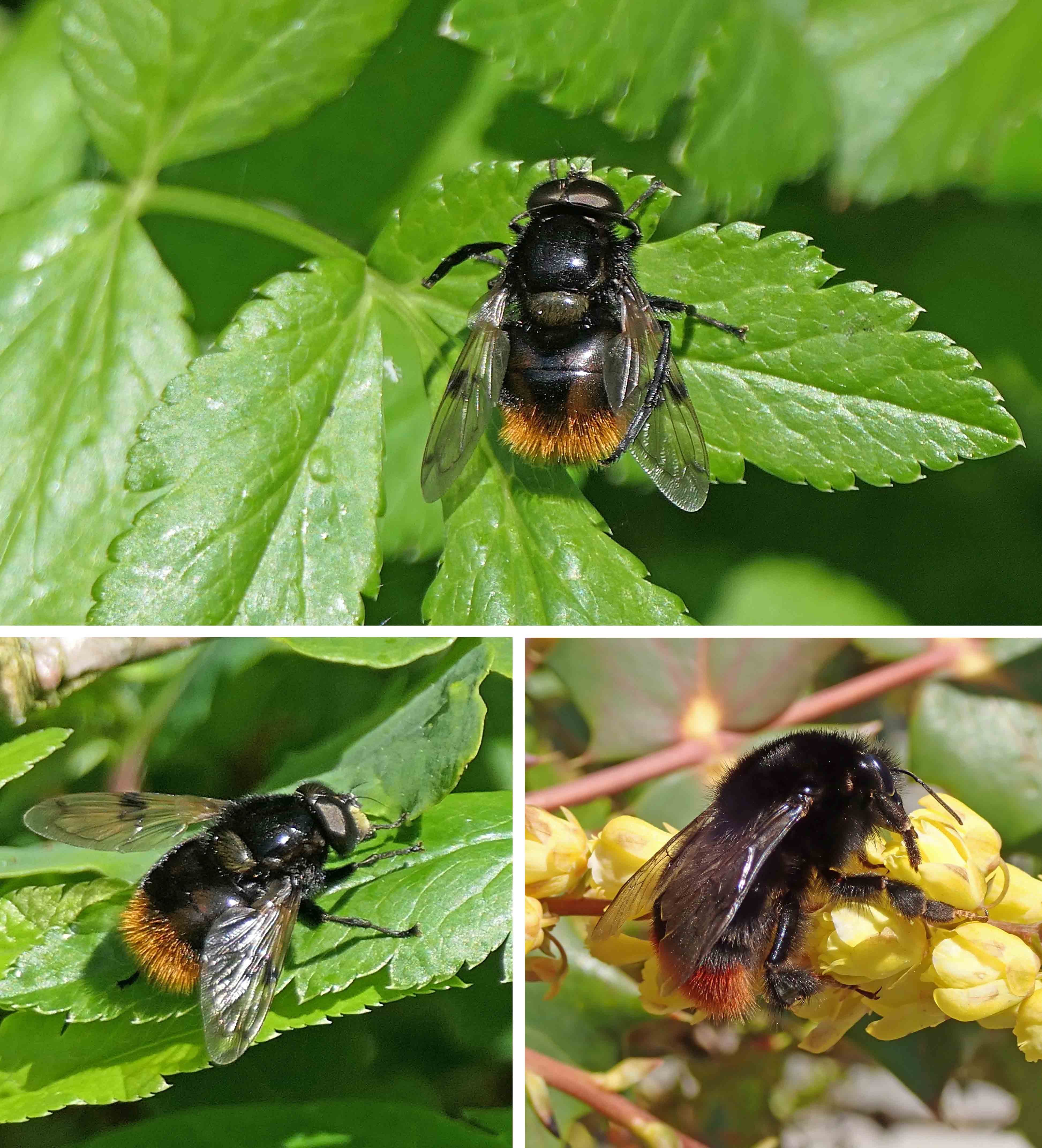
These final three are all members of the Volucellini, of which there are five British species. Like Merodon equestris, Volucella bombylans is a bumblebee mimic; which bumblebee it is attempting to mimic depends on which of the colour variations you see. This yellow-and-black form mimics Bombus lucorum, the White-tailed bumblebee, but there is also a mostly black, orange-bottomed variation of Volucella bombylans that mimics Bombus lapidarius, the Red-tailed bumblebee.
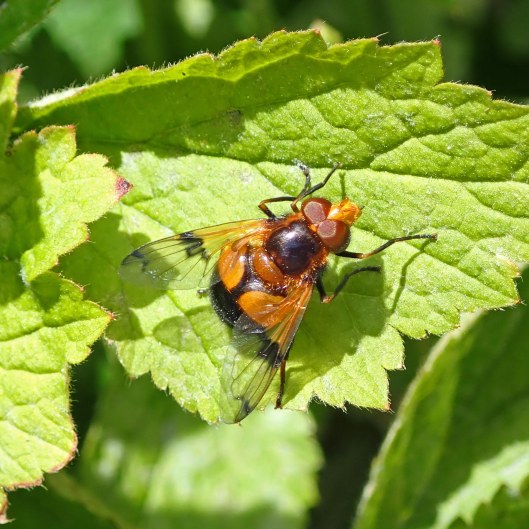
I was particularly pleased to see Volucella inflata as I’ve only found it once before. With its vivid and very distinctive markings, its round body, and protruding yellow snout, it’s a stunning hoverfly to encounter. Sadly for those of you in northern Britain, it’s mostly found in the southern counties and south Wales.
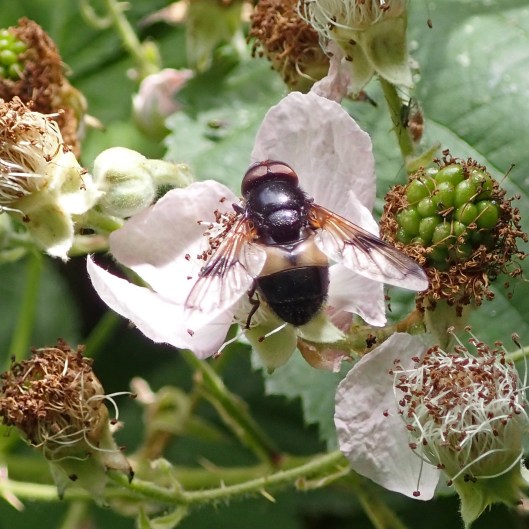
Volucella pellucens, on the other hand, is common and abundant throughout Britain, often seen hovering around head height along woodland rides and forest tracks. Due to its black-and-white colouring, it’s also known as the Great pied hoverfly.






 earthstar
You must be logged in to post a comment.