• ABOUT
  • BIRDING 2018
  • Birding 2019
  • BLOG POSTS
  • Butterflies 2018
  • Resources

earthstar

~ a celebration of nature

earthstar

Tag Archives: leaf-mining fly larvae

Leafmines: Aulagromyza tremulae

07 Monday Oct 2024

Posted by sconzani in insects, trees

≈ Leave a comment

Tags

Aspen, Aulagromyza tremulae, leaf-mining flies, leaf-mining fly larvae, leafmines on Aspen, leafmines on Black poplar

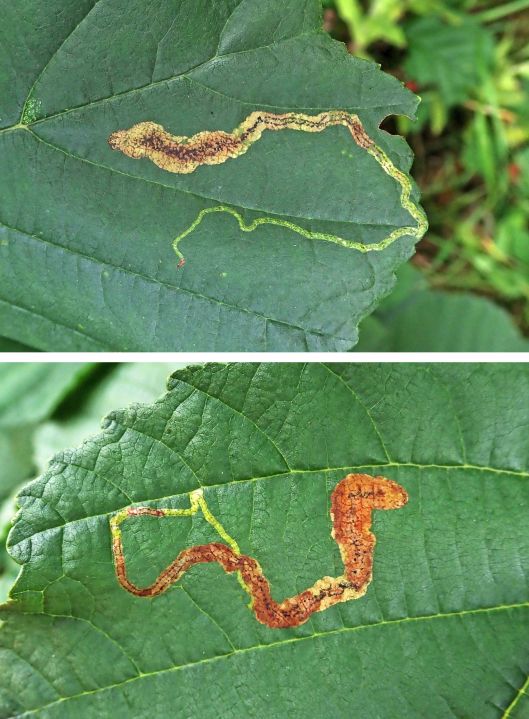
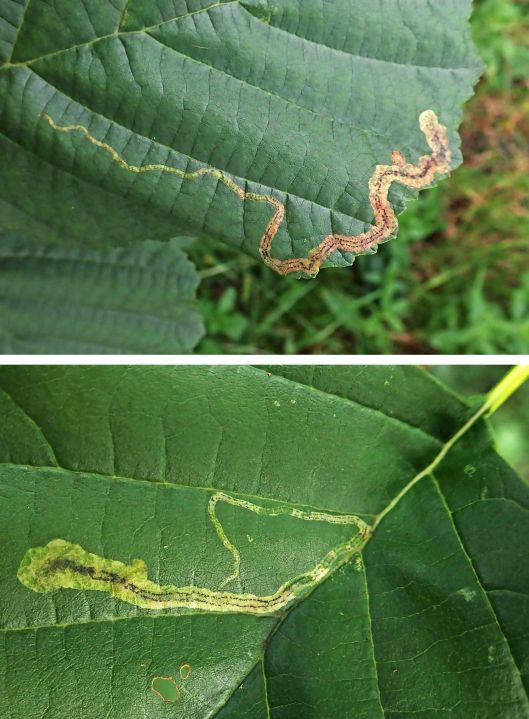
I don’t find many leafmines on Aspen, probably because there aren’t a lot of Aspen trees growing locally. Also, I haven’t been finding many mines made by creatures other than moths but today’s find is an exception, as these silvery meandering gallery mines on Aspen leaves were made by the larva of the tiny fly Aulagromyza tremulae.
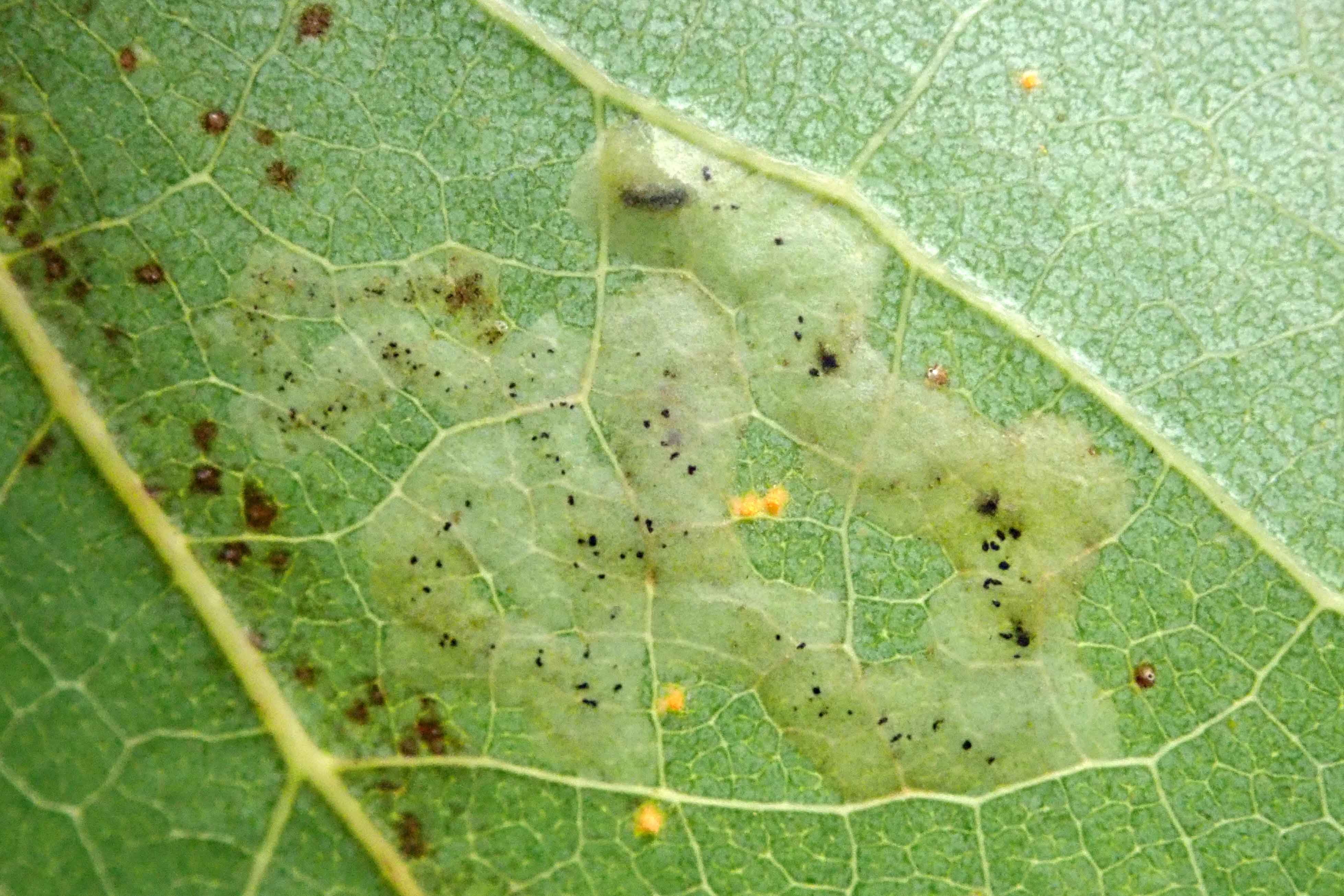
241007 Aulagromyza tremulae (1)

If I hadn’t been doing a spot of leaf-turning, I could easily have missed these mines, as they are almost exclusively made in the lower surface of the leaf (see images below showing the lower and upper leaf surfaces). This is one of the characteristics that distinguishes these mines from those of other species, though Barry Warrington, who runs the National Agromyzidae Recording Scheme and website, discovered this wasn’t always the case when he recently bred Aulagromyza tremulae flies from upper surface mines. (Barry has confirmed the identity of the mines pictured here, fortunately.)
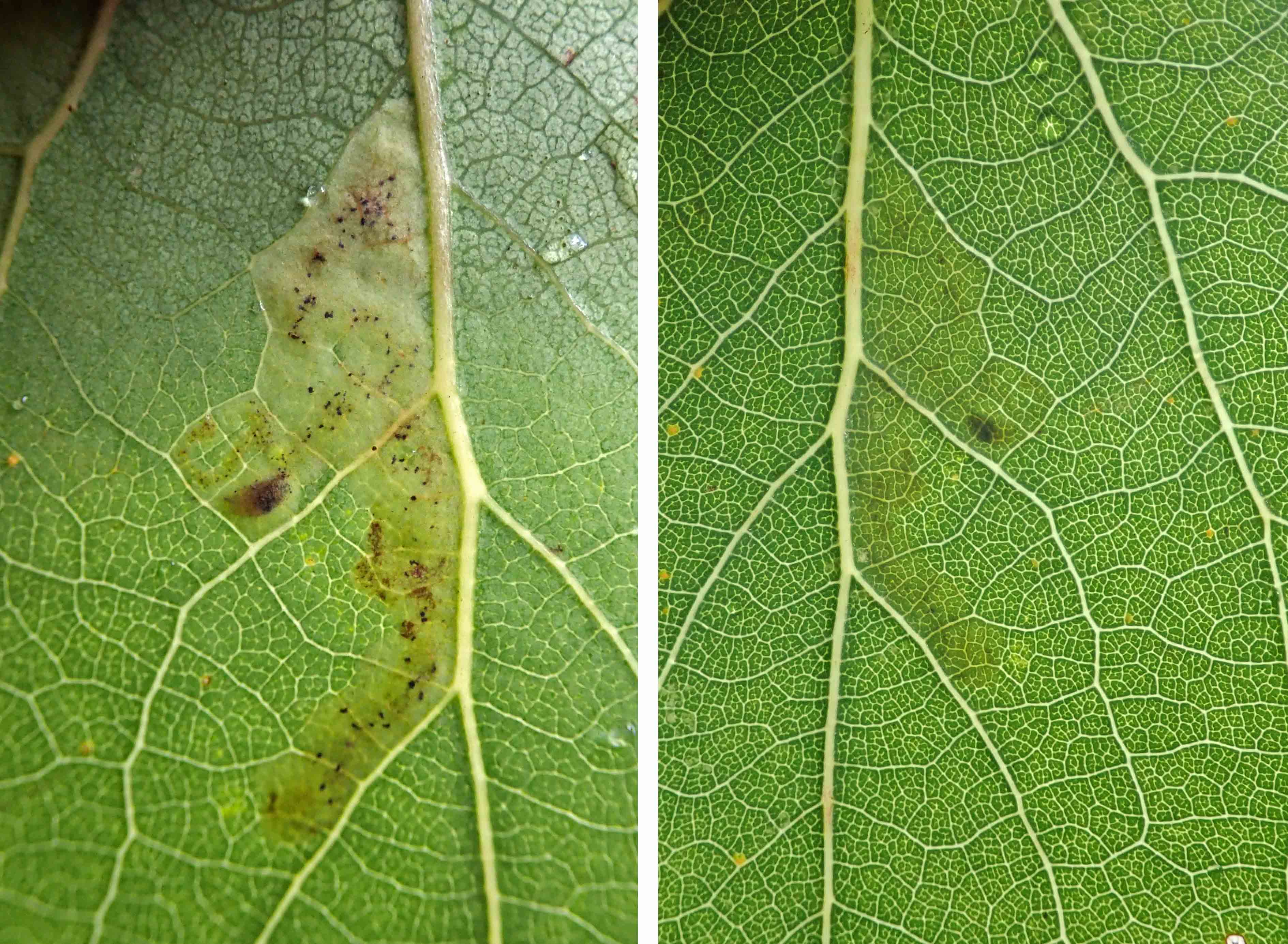
241007 Aulagromyza tremulae (2)

This little fly has two broods per year, so mines can be found on Aspen (Populus tremula), and also on Black poplar (Populus nigra), in the early summer and again in early autumn. I haven’t managed to find any images of the adult fly so maybe I should try to breed one through to see what they look like. If that happens, there’ll definitely be a show-and-tell post.

Like Loading...

Leafmines: Agromyza albitarsis

17 Monday Jun 2024

Posted by sconzani in insects, trees

≈ Leave a comment

Tags

Agromyza albitarsis, British leafmines, leaf-mining fly larvae, leafmine, leafmine on White poplar, White poplar

I hadn’t found any new leafminers for a while so was delighted recently to find two within five minutes of each other. These two mines were the first I spotted, here on the leaves of White poplar (Populus alba), though they can also be found on other Poplar (Populus) and Willow (Salix) species.

240617 agromyza albitarsis

These are the larval mines of the little fly Agromyza albitarsis – you can see what the adult fly looks like by clicking on the ‘images’ tab on the National Agromyzidae Recording Scheme website. I couldn’t actually count how many larvae were present in these mines but have read that they often feed communally, forming large green blotches that eventually turns a dark brown-black colour.

Like Loading...

L is for leafminers

17 Sunday Dec 2023

Posted by sconzani in insects, leaves, plants, trees

≈ Leave a comment

Tags

British leafminers, leaf-mining fly larvae, leaf-mining moth larvae, leafminers, leafmines, leafmines on plants, leafmines on trees

As a result of standing staring for hours at leaves, I’ve found lots and lots of lovely new-to-me leafminers this year. Here’s a summary of those I’ve blogged about:

On 13 February, Leafmines: Phyllonorycter ulicicolella covered the tricky-to-find mines of tiny moth larvae on gorse. In Leafmines: Eriocrania unimaculella, 22 May, the larvae of a different moth were mining Birch leaves, and, on 26 June, Leafmines: Mompha terminella, featured more moth larvae mines, this time on Enchanter’s nightshade. In October the moth miners were munching on Hawthorn leaves (Leafmines: Bucculatrix bechsteinella, 2 October) and on Blackthorn (Leafmines: Lyonetia prunifoliella, 9 October). The only new non-moth miner of the year was a fly whose larvae were found mining the leaves of Alder (Leafmines: Agromyza alnivora, 16 October) and, later in October, we were back to moth miners, with Hawthorn once again the plant of choice (Leafmines: Phyllonorycter corylifoliella, 23 October). In November, a willow moth miner I’d mentioned once before in passing starred in its very own blog (Leafmines: Phyllonorycter viminiella, 20 November) and, a week later, on 27 November, another moth larva was found on the leaves of a rose species (Leafmines: Stigmella anomalella). The final leafminer find of 2023 was yet another moth, this time devouring the leaves of Wild privet (Leafmines: Gracillaria syringella, 4 December).

231217 leafmines

I’ve already referenced the three case-bearing moth larvae leafminers in an earlier countdown blog (C is for Coleophora) but, just for completeness, I’ll also link to them here: Leafmines: Coleophora lutipennella on 1 May, Leafmines: Coleophora serratella on 15 May, and Leafmines: Coleophora gryphipennella on 13 November.

Like Loading...

Leafmines: Agromyza alnivora

16 Monday Oct 2023

Posted by sconzani in insects, leaves, trees

≈ Leave a comment

Tags

Agromyza alnivora, Alder, British leafminers, fly mines, leaf-mining fly larvae, leafmines, leafmines on Alder

These are new leafmines for me, found during time recently spent checking the leaves of Alder trees, both the more frequently seen Alder (Alnus glutinosa) and the Italian alder (Alnus cordata), a common planting here along street edges and in parks. To me, these mines all look very snake-like!

231016 Agromyza alnivora (1)

These are the work of larvae of the fly species Agromyza alnivora. As the British Leafminers website describes, they create ‘An upper surface corridor, gradually widening, which is not associated with leaf margin or veins’, but the most distinctive feature of these mines is the frass, which is always deposited in two rows. The larvae make their mines twice each year – the technical term is bivoltine – in summer and in early autumn.

231016 Agromyza alnivora (2)

Like Loading...

Leafmines: Phytomyza glechomae

12 Monday Dec 2022

Posted by sconzani in insects, leaves, plants

≈ Leave a comment

Tags

fly leafmines, Ground-ivy, leaf mines, leaf-mining fly larvae, leafmines on Ground-ivy, Phytomyza glechomae

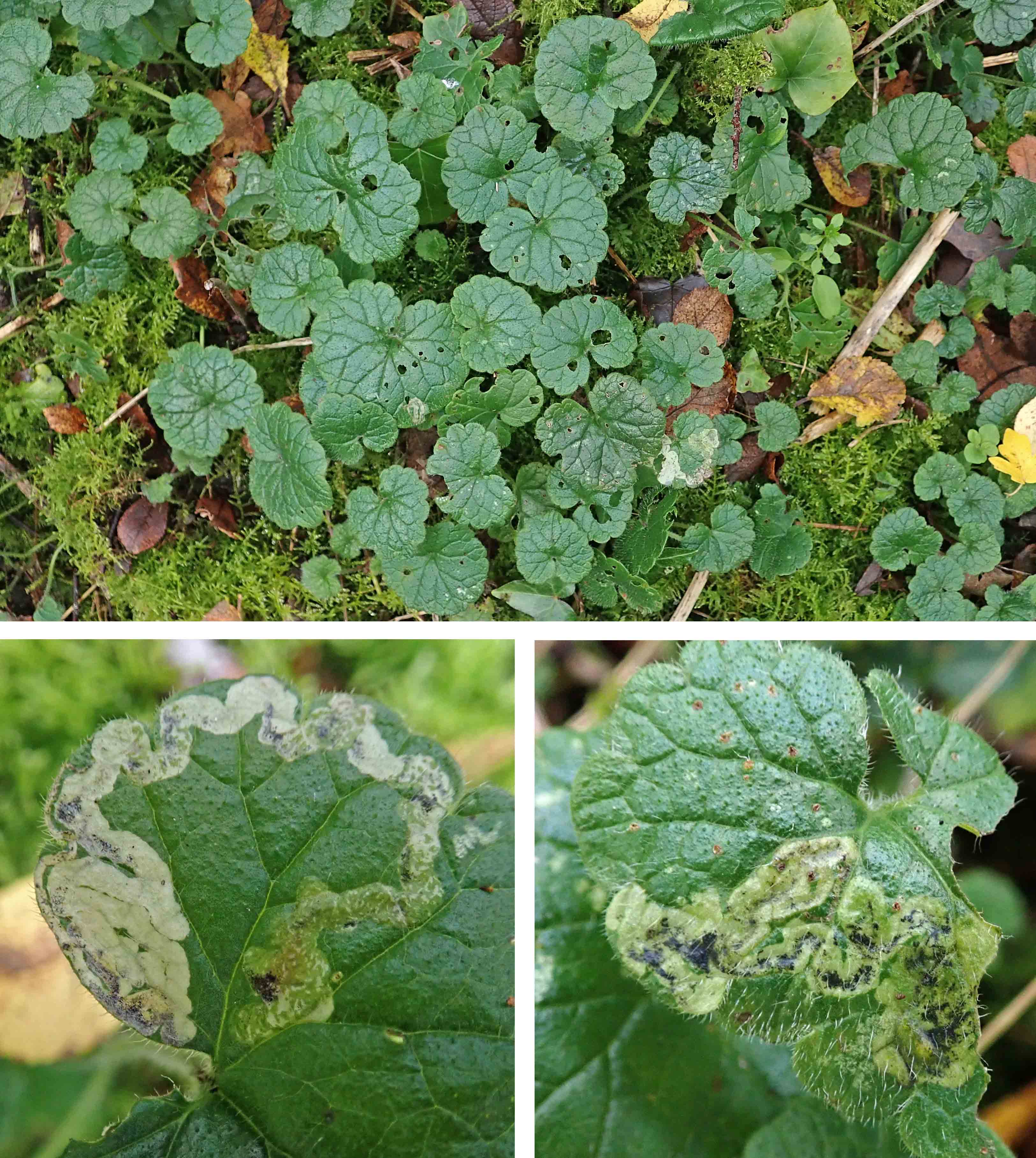
This time last month I found my first leafmines on Ground-ivy (Glechoma hederacea) (and blogged about them on 14 November, Leafmines: Coleophora albitarsella). Now, I’ve found another new-to-me leafmine on this same plant species only this one was made not by the larva of a moth but rather but the larva of a fly called Phytomyza glechomae. The mines are quite distinctive, starting with a winding gallery and finishing with a wider blotch, with plenty of frass scattered throughout. As always, you can read more and see plenty of images on the excellent British Leafminers website.

221212 Phytomyza glechomae

Like Loading...

Leafmines: Liriomyza eupatorii

04 Monday Jul 2022

Posted by sconzani in insects, plants

≈ 1 Comment

Tags

British leaf mines, leaf mines, leaf-mining fly larvae, leafmines on Hemp agrimony, Liriomyza eupatorii

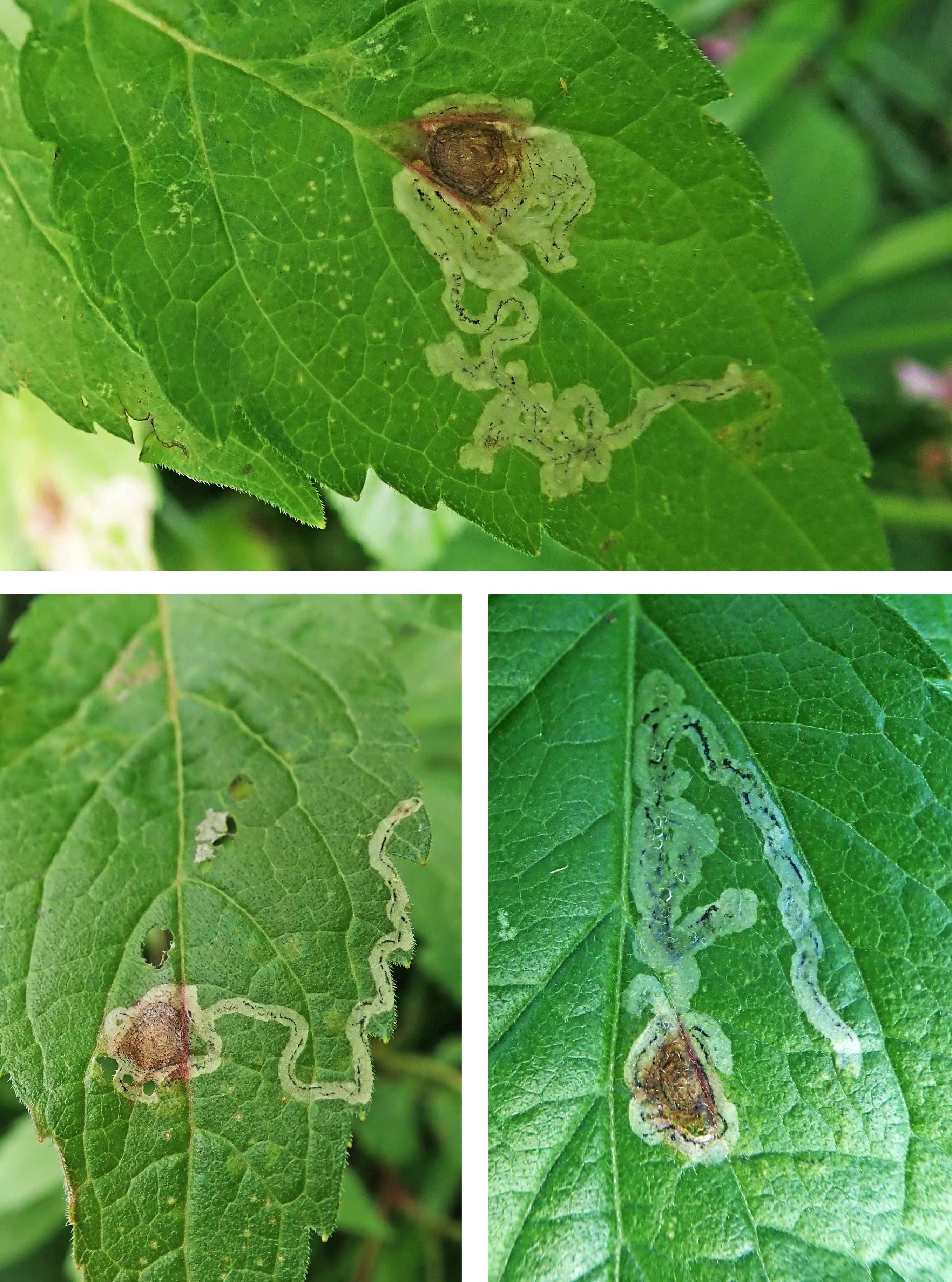
This week’s leafminers are little artists, beginning their feeding going round and round in half a dozen spirals before heading off along the leaf in a long meandering gallery mine. These miniature artworks have been created by the larvae of the tiny fly Liriomyza eupatorii and, though I found these on Hemp agrimony (Eupatorium cannabinum), the British Leafminers website lists several other possible host plants, including Goldenrod and Common hemp-nettle. With two broods each year, during spring and summer, there’s still plenty of time to spot these little miners in action.

220704 Liriomyza eupatorii

Like Loading...

Leafmines: on Himalayan honeysuckle

10 Monday Jan 2022

Posted by sconzani in insects, plants

≈ Leave a comment

Tags

Chromatomyia lonicerae, Himalayan honeysuckle, leaf-mining fly larvae, leaf-mining moth larvae, leafmines on Evergreen oak, leafmines on Himalayan honeysuckle, Leycesteria formosa, Phyllonorycter emberizaepenella

Two for the price of one this week. The plant is Himalayan honeysuckle (Leycesteria formosa), not a British native as you can guess from its name, but a plant that’s now naturalised quite extensively in the wild, at least in my local area. The leafmines were found on 18 December, quite late in the year but a sign of how mild our weather has been so far this winter.

220110 Leycesteria formosa (1)
220110 Leycesteria formosa (2)

These first mines were made by the larvae of the tiny fly Chromatomyia lonicerae. I like the description of this mine on the Nature Spot website: ‘The leafmine starts with an irregular star-like blotch with a later linear section’. You can see that in my photo on the left below, and, in the photo on the right, you can see a pupa, which remains in the mine until it emerges as an adult fly.

220110 Chromatomyia lonicerae (1)
220110 Chromatomyia lonicerae (2)

This second mine is the creation of the larva of the moth Phyllonorycter emberizaepenella, a beautiful little brown-and-white creature that you can see on the UK Moths website. The larva spins itself a blotch mine, which pulls the underside of the leaf together, as you can see in the photos below: top of the leaf on the left, bottom on the right.

220110 Phyllonorycter emberizaepenella (1)
220110 Phyllonorycter emberizaepenella (2)

Like Loading...

Leafmines: on Columbine

08 Monday Nov 2021

Posted by sconzani in insects, plants

≈ Leave a comment

Tags

British leafmines, leaf-mining fly larvae, leafmines on Aquilejia, leafmines on Columbine, Phytomyza aquilegiae, Phytomyza minuscula

Here’s one – actually, two – for the gardeners out there, if you grow Columbine (Aquilegia vulgaris, also known as Granny’s bonnets) in your flower beds (though you can also find this plant growing in the wild, where it’s an indicator of ancient woodland, or perhaps as a naturalised garden escapee).

211108 (1) phytomyza minuscula

This first leafmine has been created by a larva of the tiny fly, Phytomyza minuscula. As you can see, the mine takes the form of a wavering tunnel with the larva’s frass, in blobs and lines, easily visible.

211108 (2) Phytomyza aquilegiae
211108 (3) Phytomyza aquilegiae

And this second lot of mines, in the form of large blotches, have been created by a related fly species, Phytomyza aquilegiae. Often, these mines contain more than one larva – you may be able to spot the two larvae in the photo on the right above – and the purplish blotches in these mines are also typical.

Like Loading...

Leafmines: on Himalayan balsam

27 Monday Sep 2021

Posted by sconzani in flowers, insects

≈ Leave a comment

Tags

British leafmines, leaf-mining fly, leaf-mining fly larvae, leafmine on Himalayan balsam, leafmine on Indian balsam, leafminer, leafmines, Phytoliriomyza melampyga

Here’s a leafmine I hope you don’t find but you probably will, and easily. So, why do I hope you don’t? Because this mine is found on plants of the Impatiens species, including the highly invasive plant Himalayan balsam (or Indian balsam, as it’s officially known; i.e. Impatiens grandulifera).

210927 himalayan balsam

The leafminer is the larva of Phytoliriomyza melampyga, which creates an initial narrow twisting gallery that then widens into a variable whitish blotch. The larva’s frass can easily be seen within the mine. The adult fly is actually rather cute, with mostly yellow, a bit of black colouring. (You can see a short video of it on Wikipedia.)

210927 Phytoliriomyza melampyga

The NBN Atlas is currently showing just 192 records for this species in Britain, though, like most flies, it’s probably under-recorded.

Like Loading...

Leafmines: a first for Wales!

06 Monday Sep 2021

Posted by sconzani in insects, leaves, plants

≈ Leave a comment

Tags

British leafmines, Broad-leaved everlasting pea, leaf-mining fly larvae, leafmine, leafmine on everlasting pea, leafminer, Liriomyza pisivora

Back on 18 August, I noticed Rob Edmunds’ post on Twitter about his find of Liriomyza pisivora mines on the Everlasting pea in his garden, which led me to check, the next day, the plants growing at Cardiff’s Grangemoor Park. I found plenty of leafmines but my finds were inconclusive – there are several species that form similar mines so I needed to get better photos, if possible transparent images that showed the frass distribution in the mines.

210906 Liriomyza pisivora (1)

So, when I visited Grangemoor again on 28 August to look for the Wasp spiders that had been reported the previous day, I also took the opportunity to look again at the Everlasting pea plants and took several more photographs. From them, I could see that in some of the mines the frass had been deposited as thin lines alternating from one side of gallery to the other.

210906 Liriomyza pisivora (3)
210906 Liriomyza pisivora (2)

Those images were good enough for Barry Warrington, the national recorder of the Agromyzidae family of flies, to confirm that I had indeed found Liriomyza pisivora and, a splendid surprise, that this was the first ever record of these flies in Wales!

210906 Liriomyza pisivora (4)

The host plant in this instance, Broad-leaved everlasting-pea (Lathyrus latifolius), is a relatively recent arrival at Grangemoor, though it is now sprawling abundantly over bramble bushes and along scrubby hedgerows in several parts of the park. So far, I’ve only found Liriomyza pisivora mines in one relatively small area but, perhaps, in time, they will spread throughout the park.

Like Loading...
← Older posts

About me

sconzani

sconzani

I'm a writer and photographer; researcher and blogger; birder and nature lover; countryside rambler and city strider; volunteer and biodiversity recorder.

View Full Profile →

Follow earthstar on WordPress.com

Enter your email address to follow this blog and receive notifications of new posts by email.

Recent blog posts

  • M is for mite December 18, 2025
  • L is for lepidopteran lifers December 17, 2025
  • K is for Keeled skimmers December 16, 2025
  • J is for Jersey tiger December 15, 2025
  • I is for Ichneumon December 14, 2025

From the archives

COPYRIGHT

Unless otherwise acknowledged, the text and photographs on this blog are my own and are subject to international copyright. Nothing may be downloaded or copied without my permission.

Fellow Earth Stars!

  • Unknown's avatar
  • Unknown's avatar
  • Unknown's avatar
  • Unknown's avatar
  • Unknown's avatar
  • Unknown's avatar
  • Unknown's avatar
  • Unknown's avatar
  • Unknown's avatar
  • Unknown's avatar
  • Unknown's avatar
  • Unknown's avatar
  • Unknown's avatar
  • Unknown's avatar
  • Unknown's avatar
  • Unknown's avatar
  • Unknown's avatar
  • Unknown's avatar
  • Unknown's avatar
  • Unknown's avatar
  • Unknown's avatar
  • Unknown's avatar
  • Unknown's avatar
  • Unknown's avatar
  • Unknown's avatar
  • Unknown's avatar
  • Unknown's avatar
  • Unknown's avatar
  • Unknown's avatar
  • Unknown's avatar
  • Unknown's avatar
  • Unknown's avatar
  • Unknown's avatar
  • Unknown's avatar
  • Unknown's avatar
  • Unknown's avatar
  • Unknown's avatar
  • Unknown's avatar
  • Unknown's avatar
  • Unknown's avatar
  • Unknown's avatar
  • Unknown's avatar
  • Unknown's avatar
  • Unknown's avatar
  • Unknown's avatar
  • Unknown's avatar
  • Unknown's avatar
  • Unknown's avatar
  • Unknown's avatar
  • Unknown's avatar

Blog at WordPress.com.

Privacy & Cookies: This site uses cookies. By continuing to use this website, you agree to their use.
To find out more, including how to control cookies, see here: Cookie Policy
  • Subscribe Subscribed
    • earthstar
    • Join 667 other subscribers
    • Already have a WordPress.com account? Log in now.
    • earthstar
    • Subscribe Subscribed
    • Sign up
    • Log in
    • Report this content
    • View site in Reader
    • Manage subscriptions
    • Collapse this bar
 

Loading Comments...
 

You must be logged in to post a comment.

    %d