• ABOUT
  • BIRDING 2018
  • Birding 2019
  • BLOG POSTS
  • Butterflies 2018
  • Resources

earthstar

~ a celebration of nature

earthstar

Tag Archives: leaf-mining moth larvae

Bedellia somnulentella revisited

20 Monday Oct 2025

Posted by sconzani in insects

≈ Leave a comment

Tags

Bedellia somnulentella, Bedellia somnulentella pupa, British leafmines, British moths, leaf-mining moth larvae, leafmines on Field bindweed, moth pupae on Field bindweed

Back in September, in my blog Leafmines: Bedellia somnulentella, I covered the mines of a moth whose larvae have some unusual habits, spinning hammocks outside their mines to rest and pupate in. Now that I’m aware of them, I’ve been seeing these mines almost everywhere I see Field bindweed. And, during last Tuesday’s walk, when I saw the plant and turned over a few leaves, I spotted two leaves that had a total of three pupae suspended beneath. I decided to bring them home so that I could, hopefully, see what the adult moth looked like.
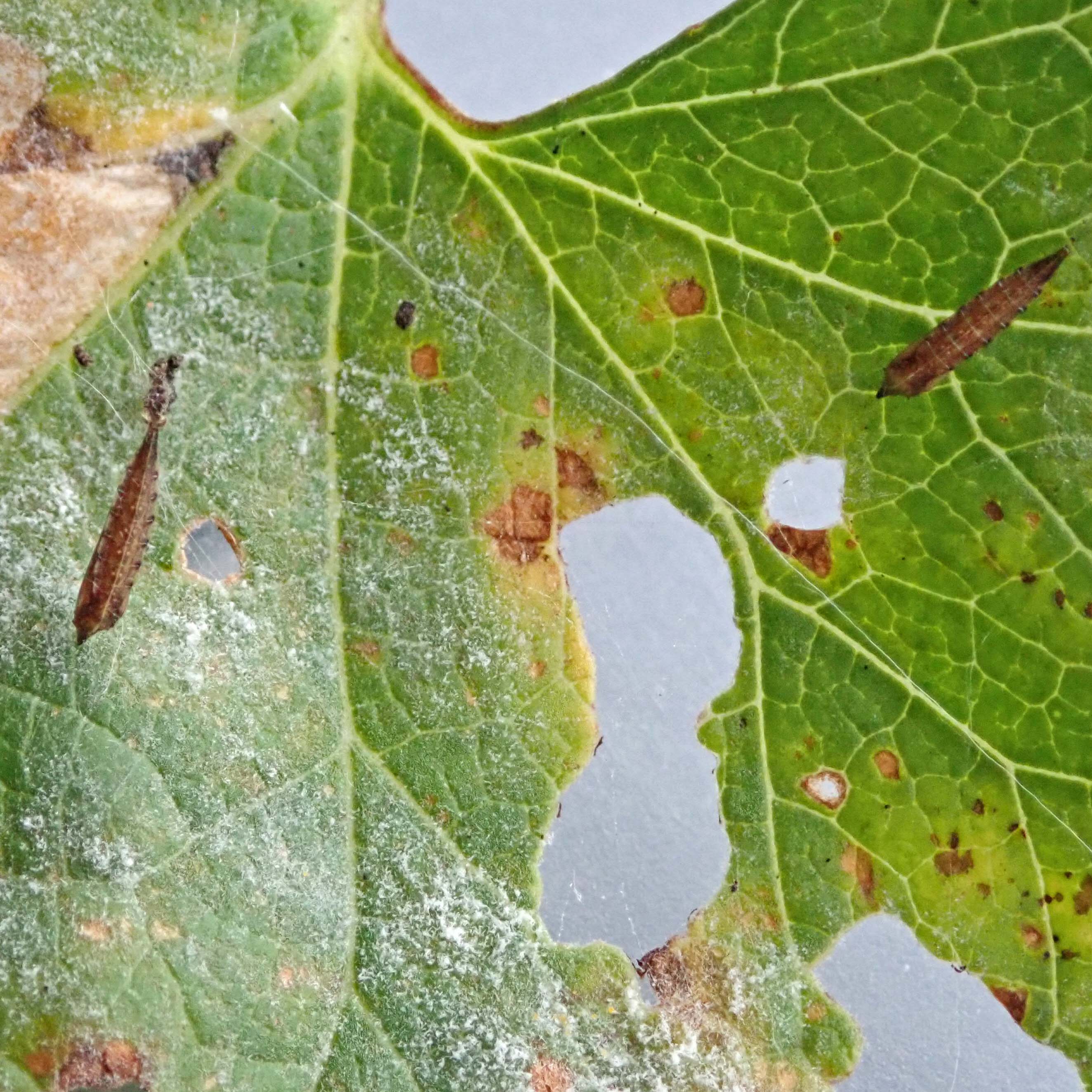
In the intervening six days, another larva has pupated – I hadn’t even realised there was another larva in the leaves but, on Thursday, as the leaves began to dry and shrivel, it appeared, climbed up the side of the jar, spun a hammock under the lid, and pupated.
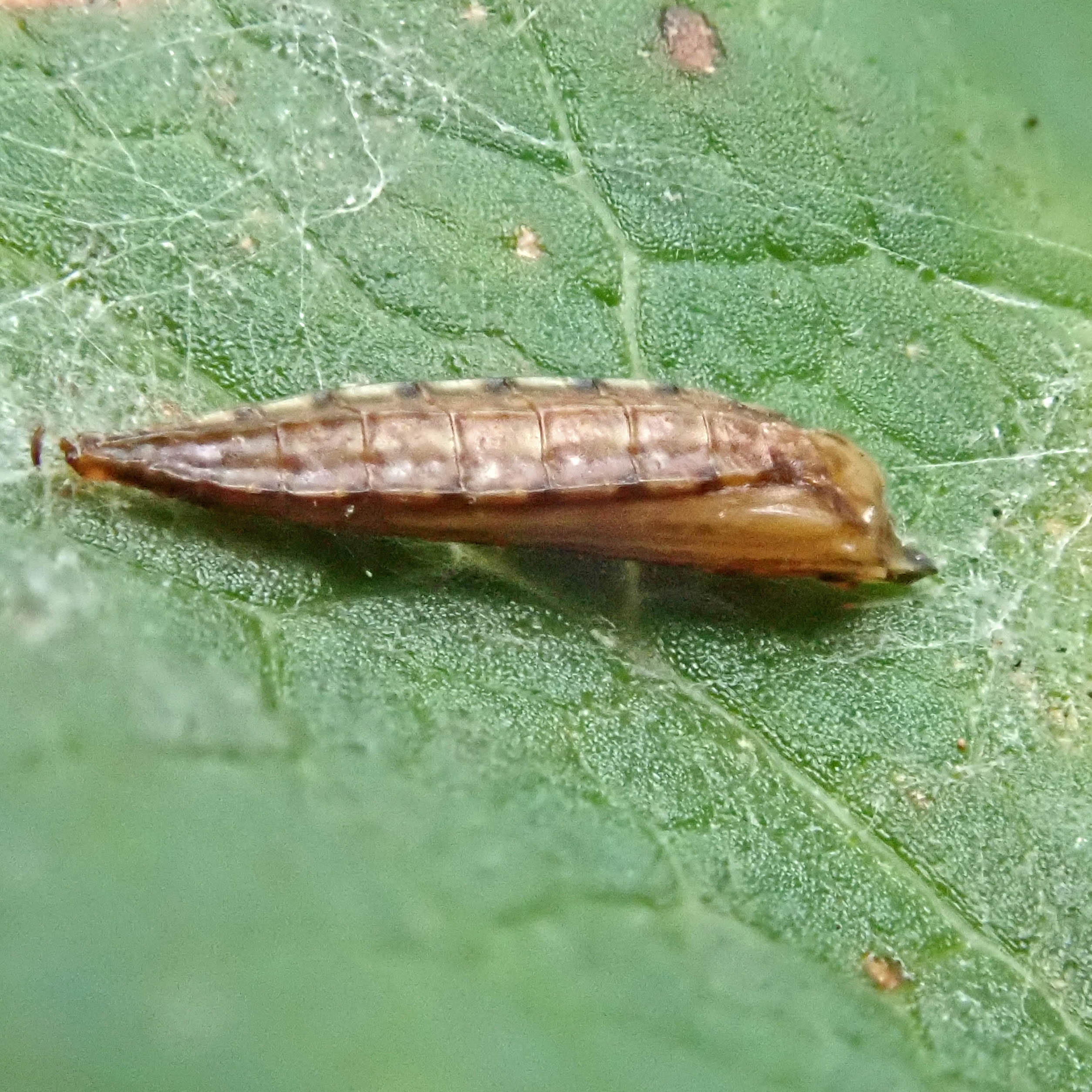
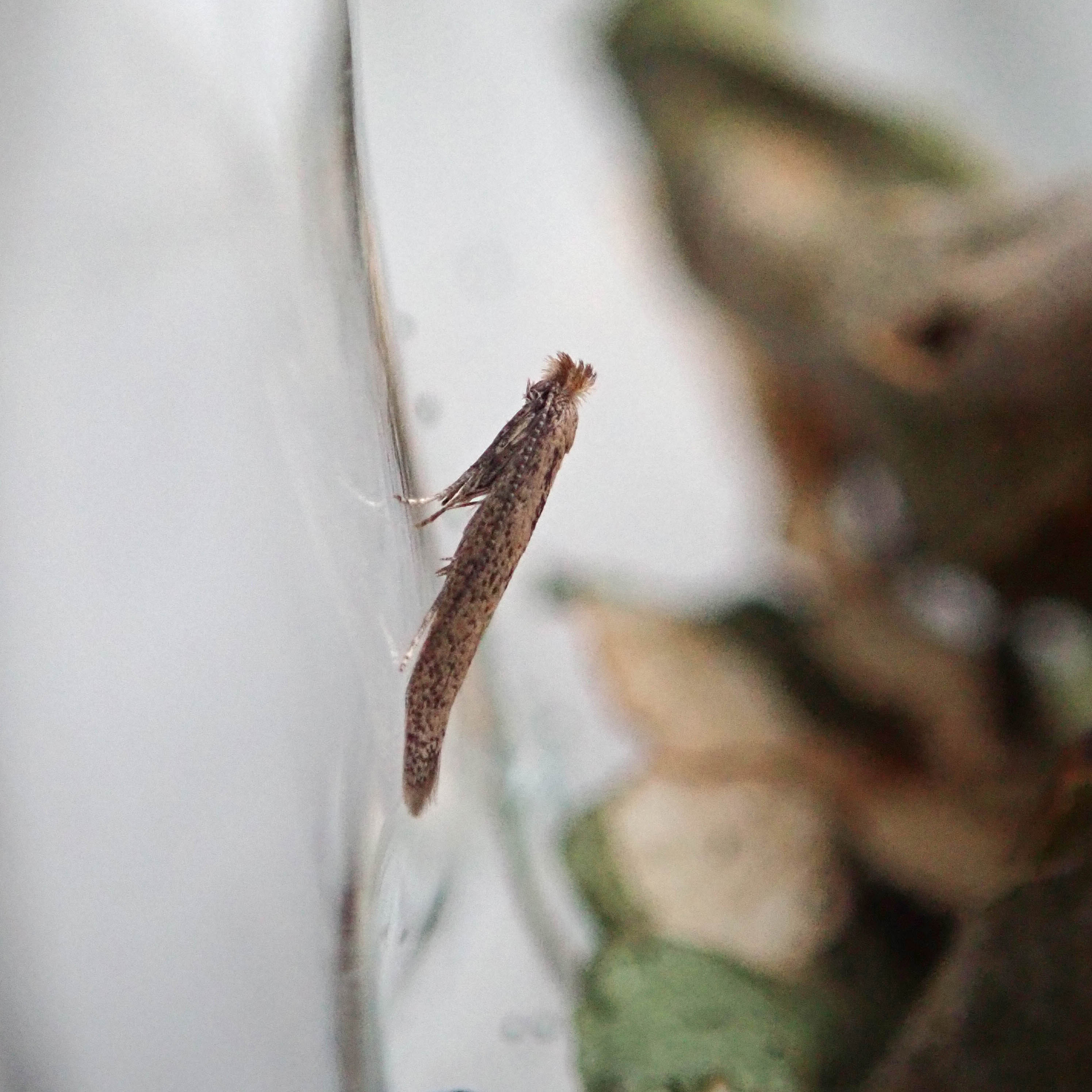
Then, yesterday, when the wild, wet, windy weather meant I spent a day at home – a rarity for me, two of the adult moths hatched from their pupae. I couldn’t get any decent images through the glass so decided to risk opening the jar to grab a few quick photos.
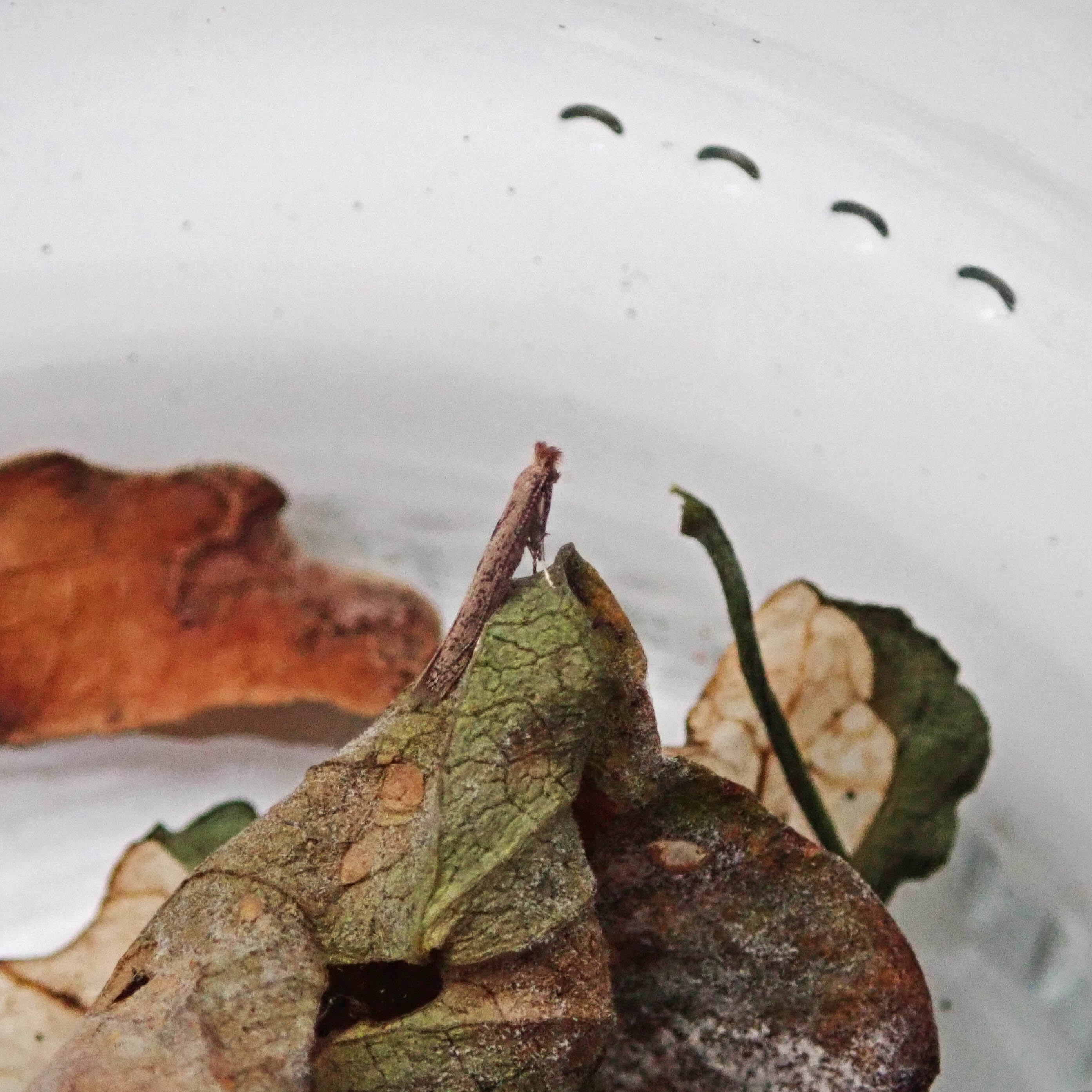
And today I released them into the wild. All going well, there should be two more moths to come.
Like Loading...

Leafmines: Chrysoesthia sexgutella

06 Monday Oct 2025

Posted by sconzani in insects, plants

≈ Leave a comment

Tags

British leafminers, British moths, leaf-mining moth larvae, leafmines, leafmines on Goosefoot, leafmines on Orache

Last Wednesday evening I got a message from local moth expert George that another local moth-er had found the leafmines of the moth Chrysoesthia drurella, a new find for the county of Glamorgan, in a suburb on the opposite side of Cardiff to where I live. As he knows I’m a keen seeker of leafmines, George just wanted to let me know to keep an eye out for them when I’m out walking.

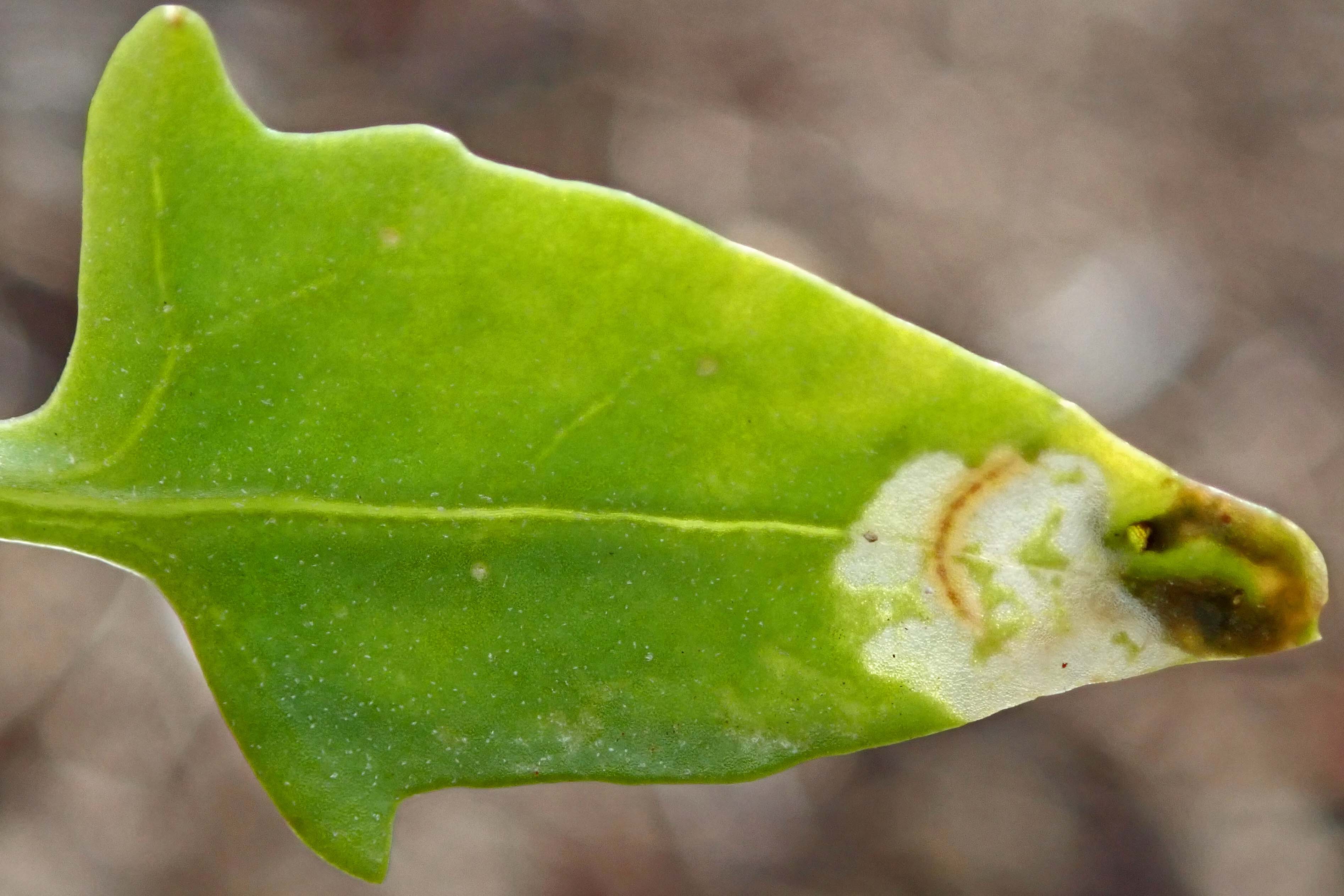
The moth larvae mine the leaves of Orache (Atriplex sp.) and Goosefoot (Chenopodium sp.), neither of which plants I’m familiar with so that was my first hurdle, being able to recognise the plants and knowing where to find them. Out came my plant books! Sometime later I was fairly confident I’d recognise the plants, though not be able to distinguish one from the other; fortunately, in this case that didn’t matter.

Thursday dawned and, after dealing with some necessary chores, I headed out for a walk, deciding to detour to a local beach in the hope of finding the correct plants. I was in luck, and the plants had mines on their leaves, though they didn’t look like how they should for the moth larvae I was seeking. So, finding a mine that still had a larva in it, I plucked it off the plant and brought it home to take a closer look at it, as the larva’s markings would tell me one way or the other whether I’d found C. drurella. I hadn’t!

However, I had found a closely related species, Chrysoesthia sexgutella, which mines the leaves of the same plants and was a new find for me. This moth breeds twice each year, with the first brood adults flying in May/June and the second on the wing in August. You can see what the adult moth looks like on the UK Moths website. And my search for the rarer Chrysoesthia drurella continues.

Like Loading...

Leafmines: Acrolepia autumnitella

29 Monday Sep 2025

Posted by sconzani in insects, plants

≈ 2 Comments

Tags

Acrolepia autumnitella, Bittersweet, British leafminers, British moths, leaf-mining moth larvae, leaf-mining moths, leafmines on Bittersweet, Solanum dulcamara

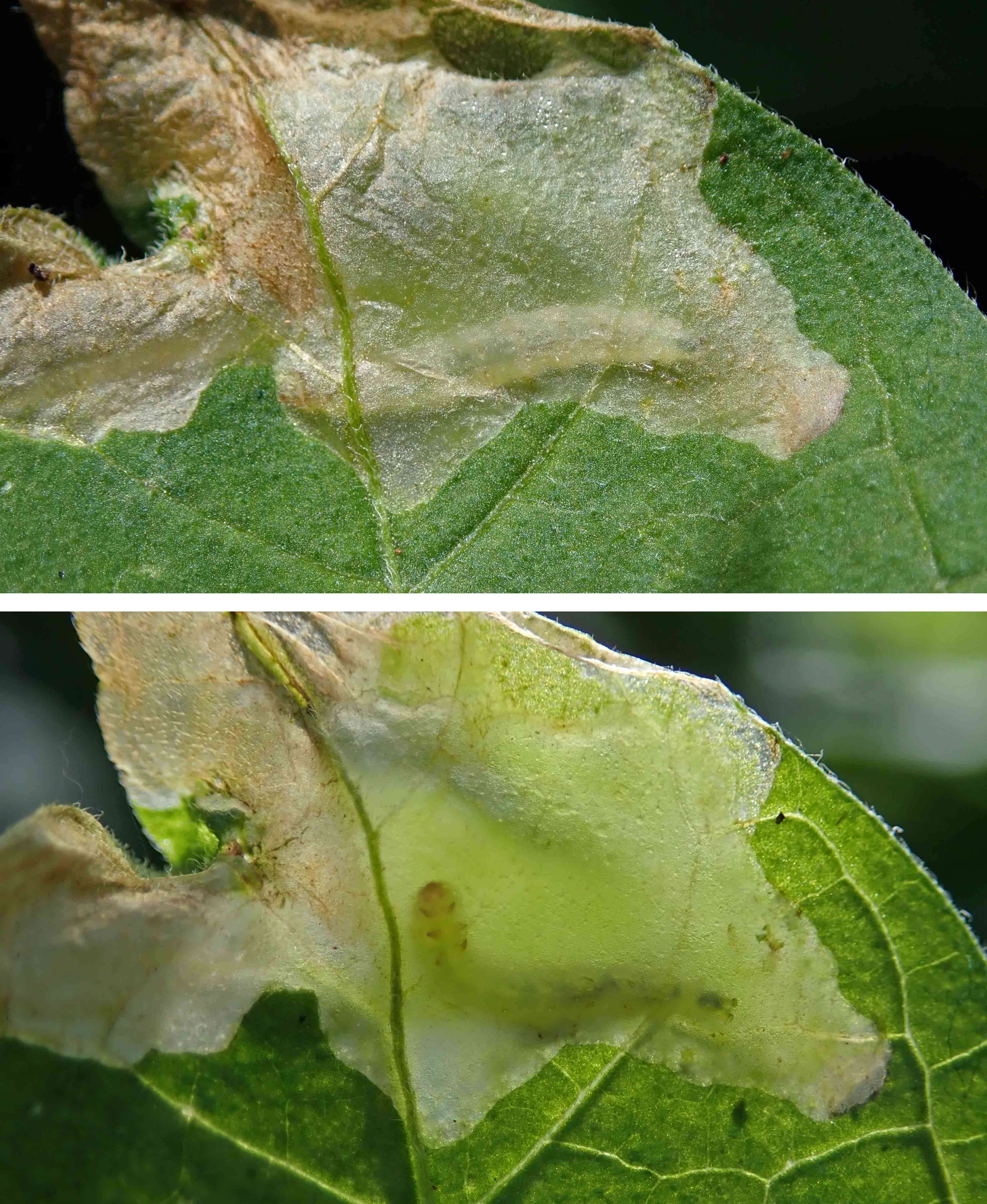
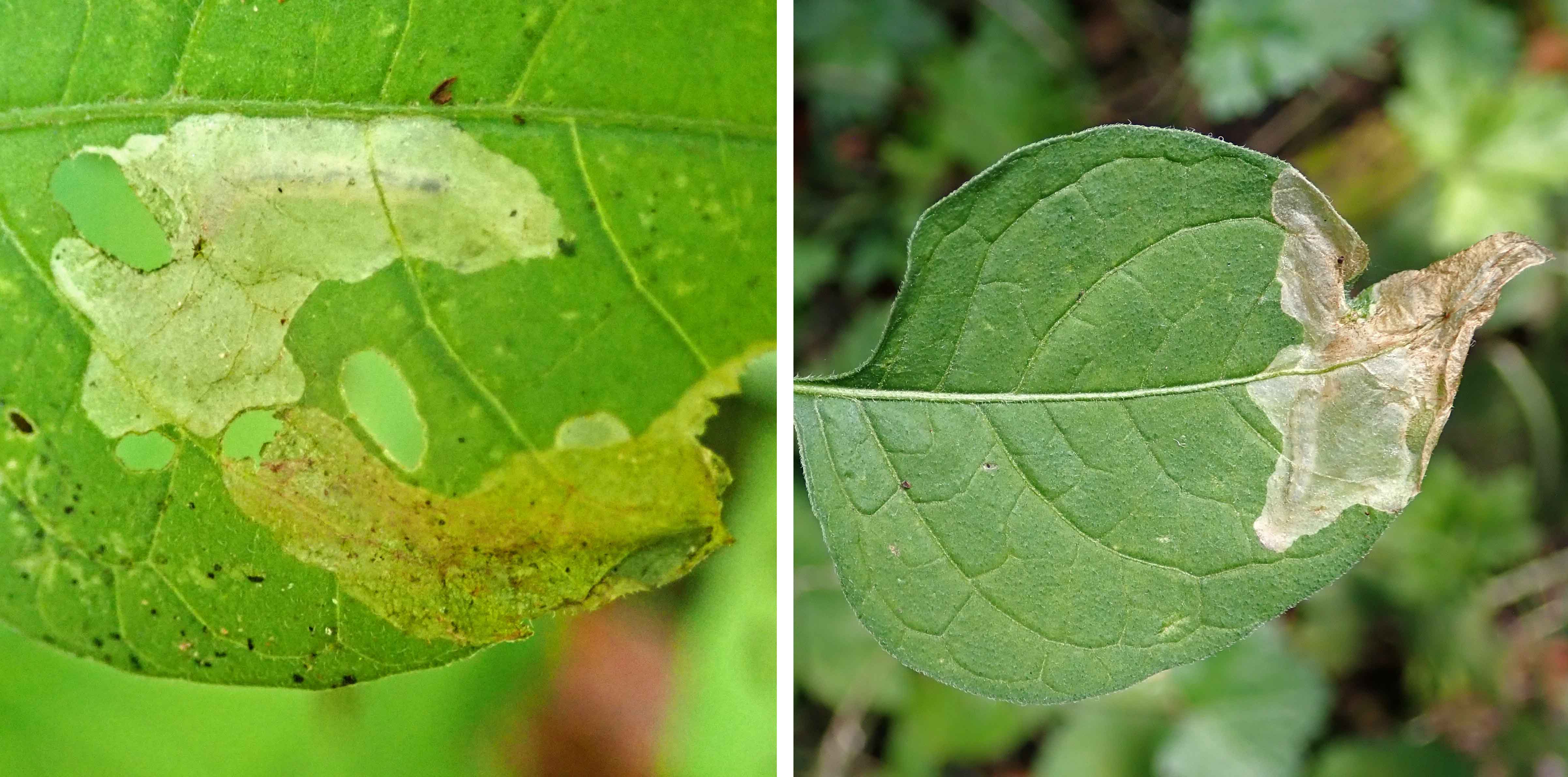
I don’t think I’ve seen leafmines on this plant before – this is Bittersweet (Solanum dulcamara), and the mines can also be found on other members of this plant genus, Tomato (S. lycopersicum) and Potato (S. tuberosum), as well as on Deadly nightshade (Atropa belladonna).

The miners here are the larvae of the moth Acrolepia autumnitella, a very pretty little chestnut-coloured creature, which is shown on the UK Moths website. As you can see in my images, the larvae create quite large blotch mines, and these can be found twice a year, in June and September. I haven’t yet found a pupa but I will keep looking because the silk cocoon that surrounds the pupa looks rather lovely, as a photo on the British Leafminers website shows.

Like Loading...

Leafmines: Coleophora lineolea

22 Monday Sep 2025

Posted by sconzani in insects, plants

≈ Leave a comment

Tags

case-bearing moth larvae, Coleophora lineolea, Coleophora on Hedge woundwort, Coleophora species, leaf-mining moth larvae, leaf-mining moths

When I spotted the spiders I blogged about on Saturday (Spiders: Metellina segmentata), they were spinning their webs on two adjacent plants of Hedge woundwort (Stachys sylvatica) (I was actually looking for Woundwort shieldbugs, which I haven’t seen this year). In the process of photographing those spiders, I spotted some leafmines, something I’d not seen previously on these particular plants.

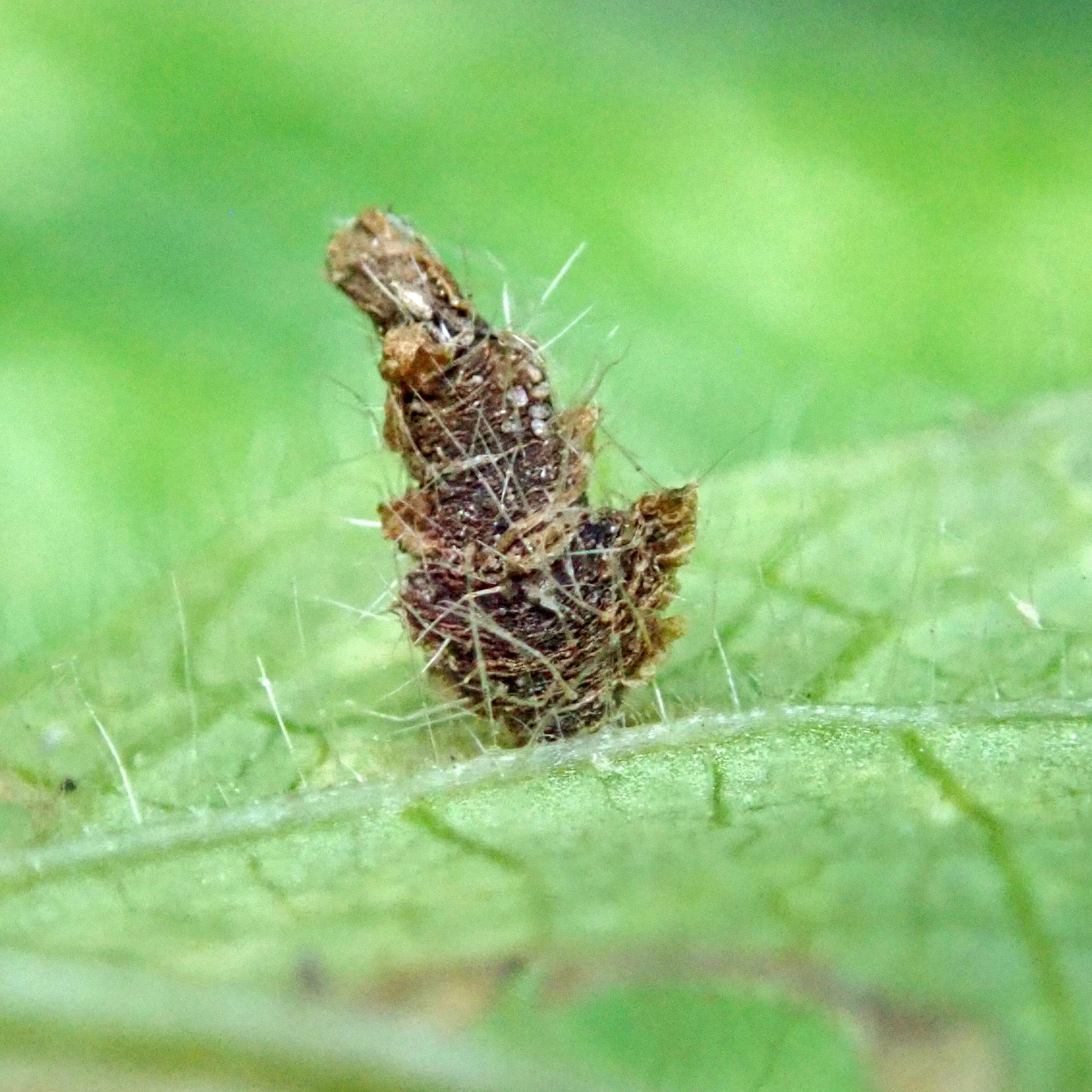
Noticing what looked like tiny holes in the blotch mines, I suspected the miners must be a species of Coleophora moth and, sure enough, when I turned the leaves over, I found two of the little cases that Coleophora larvae construct to shelter in. There is only one Coleophora moth species whose larvae eat Hedge woundwort so, for once, identification was straight forward: these were Coleophora lineolea. The adult moth is a little cracker, a pale orange-and-white striped beauty, a photo of which you can see on the UK Moths website.

As they’re made from the hairy leaves of the woundwort, the tiny larval cases were themselves very hairy, and rather attractive. This moth uses several other larval plant species – Black and White horehound, Lamb’s ear, and a couple of sages – as well as Hedge woundwort, and the mines and cases can be found between September and May, as they overwinter as larvae, snug in their little cases.

Like Loading...

Leafmines: Coptotriche marginea

15 Monday Sep 2025

Posted by sconzani in insects, leaves, plants

≈ 2 Comments

Tags

British leafminers, British moths, Coptotriche marginea, leaf-mining moth larvae, leaf-mining moths, leafmines on Bramble

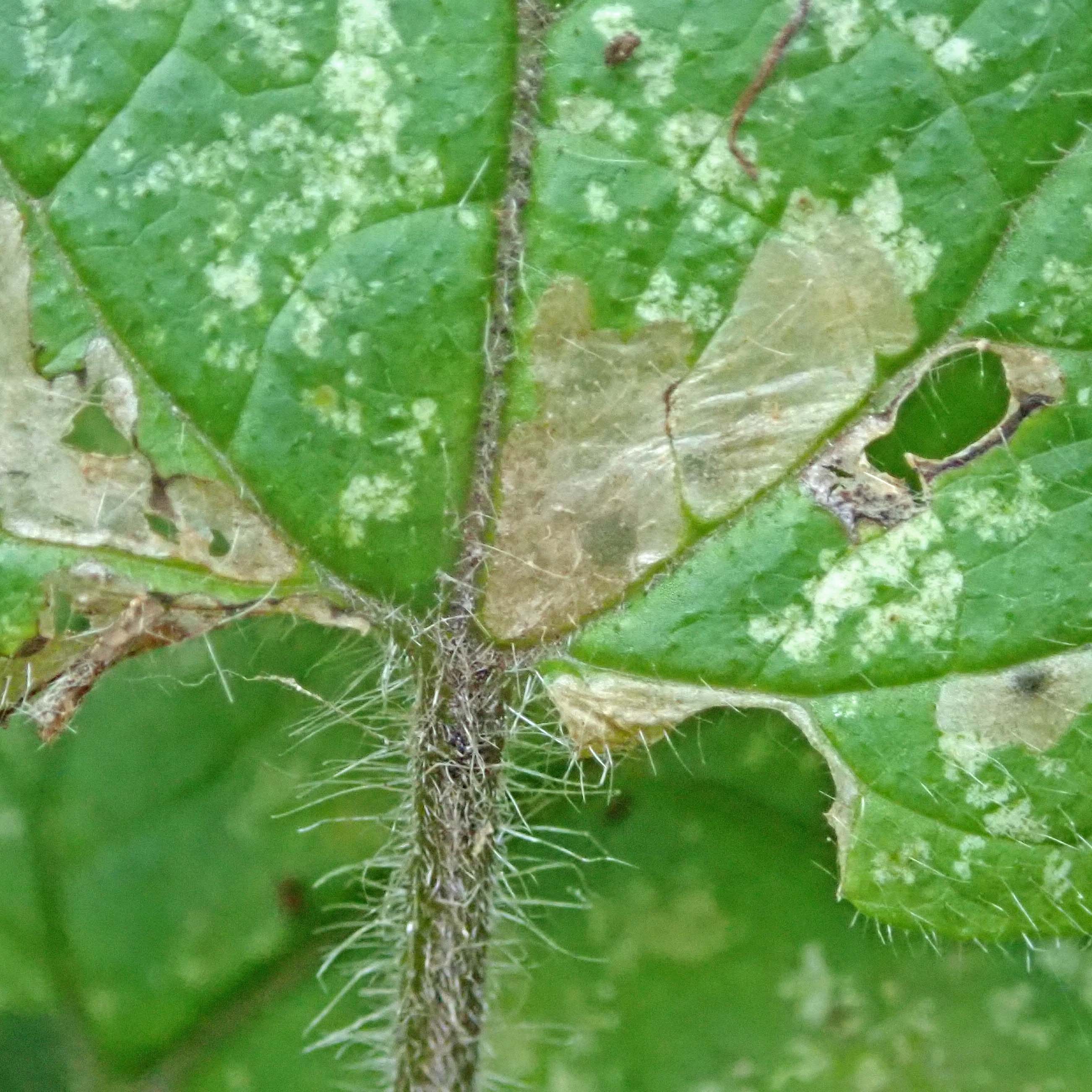
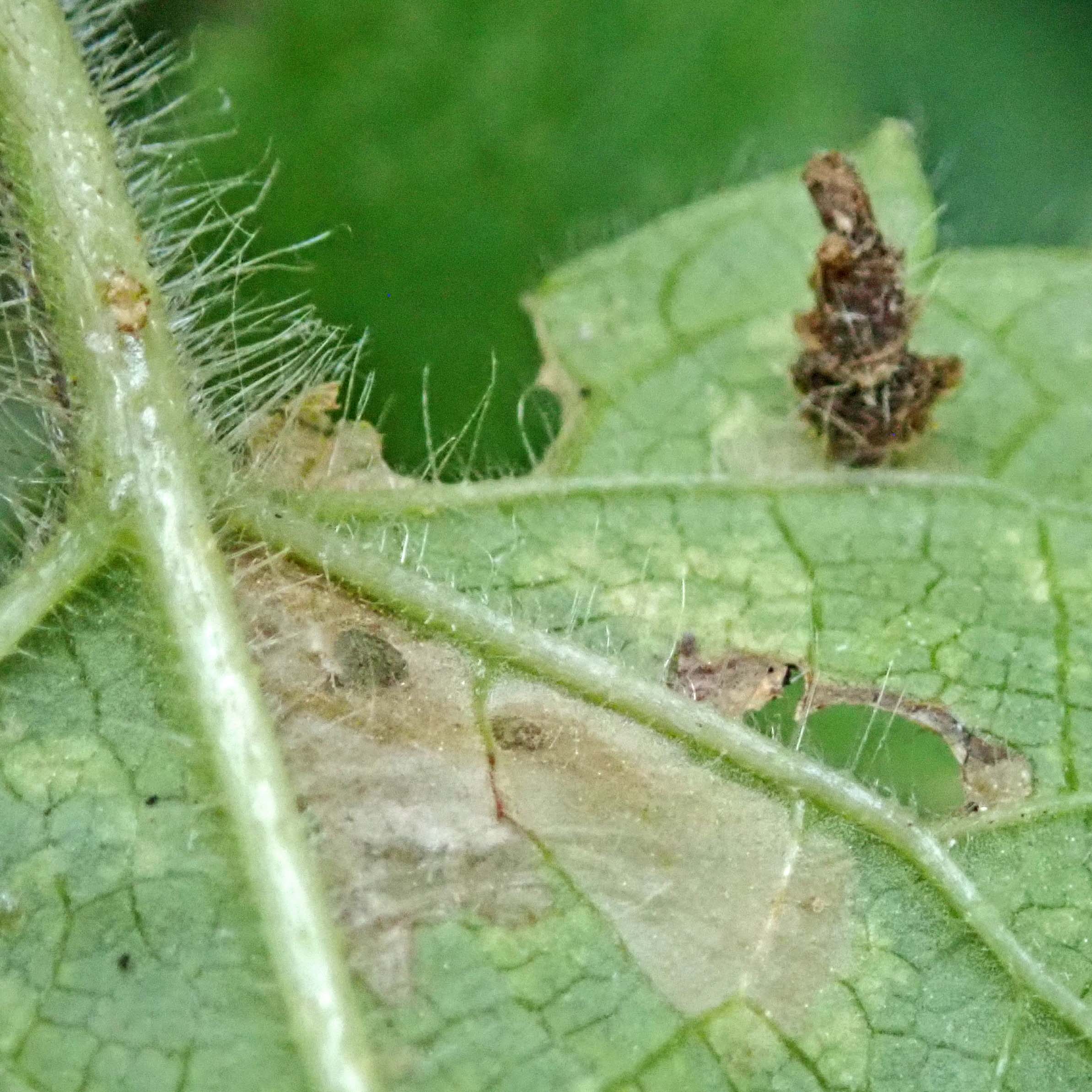
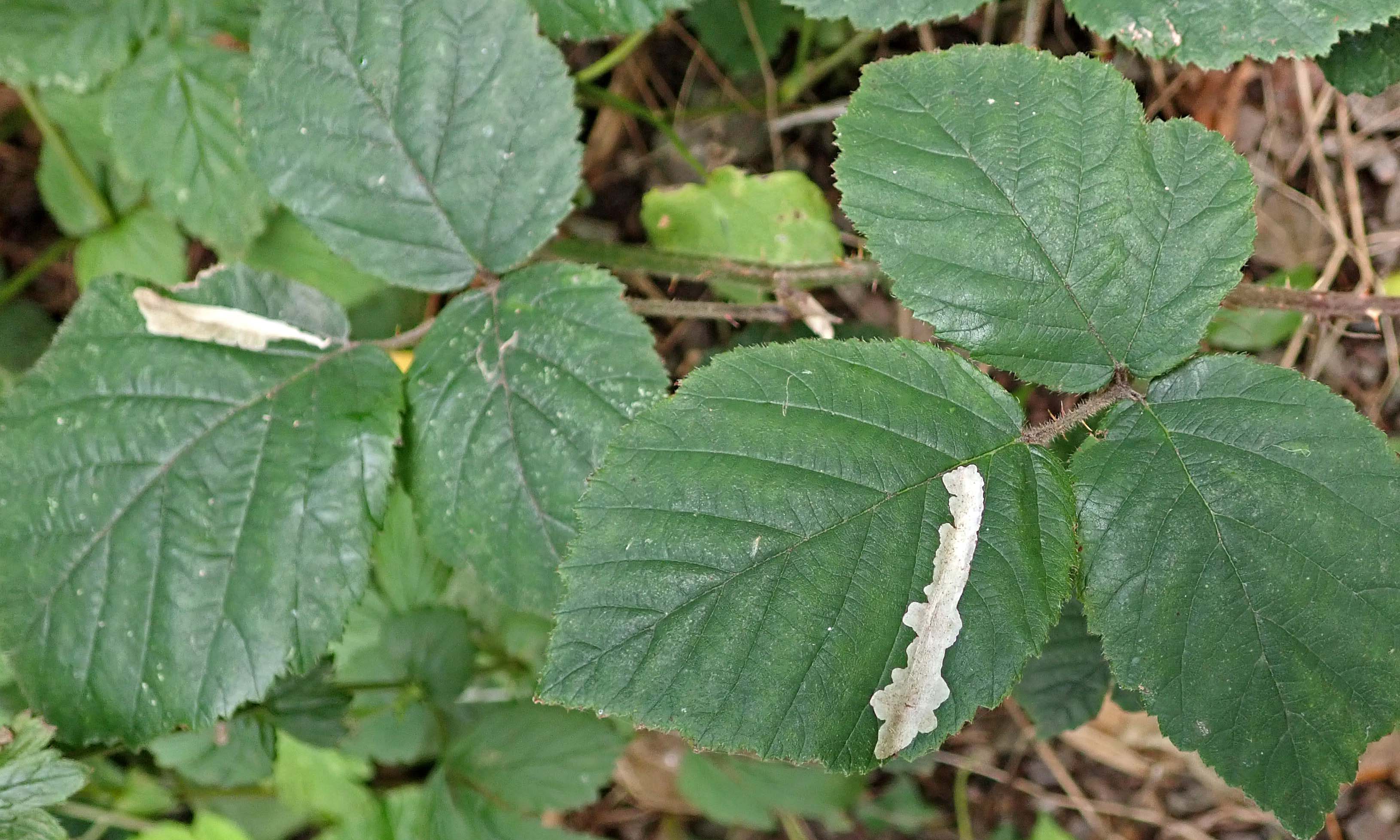
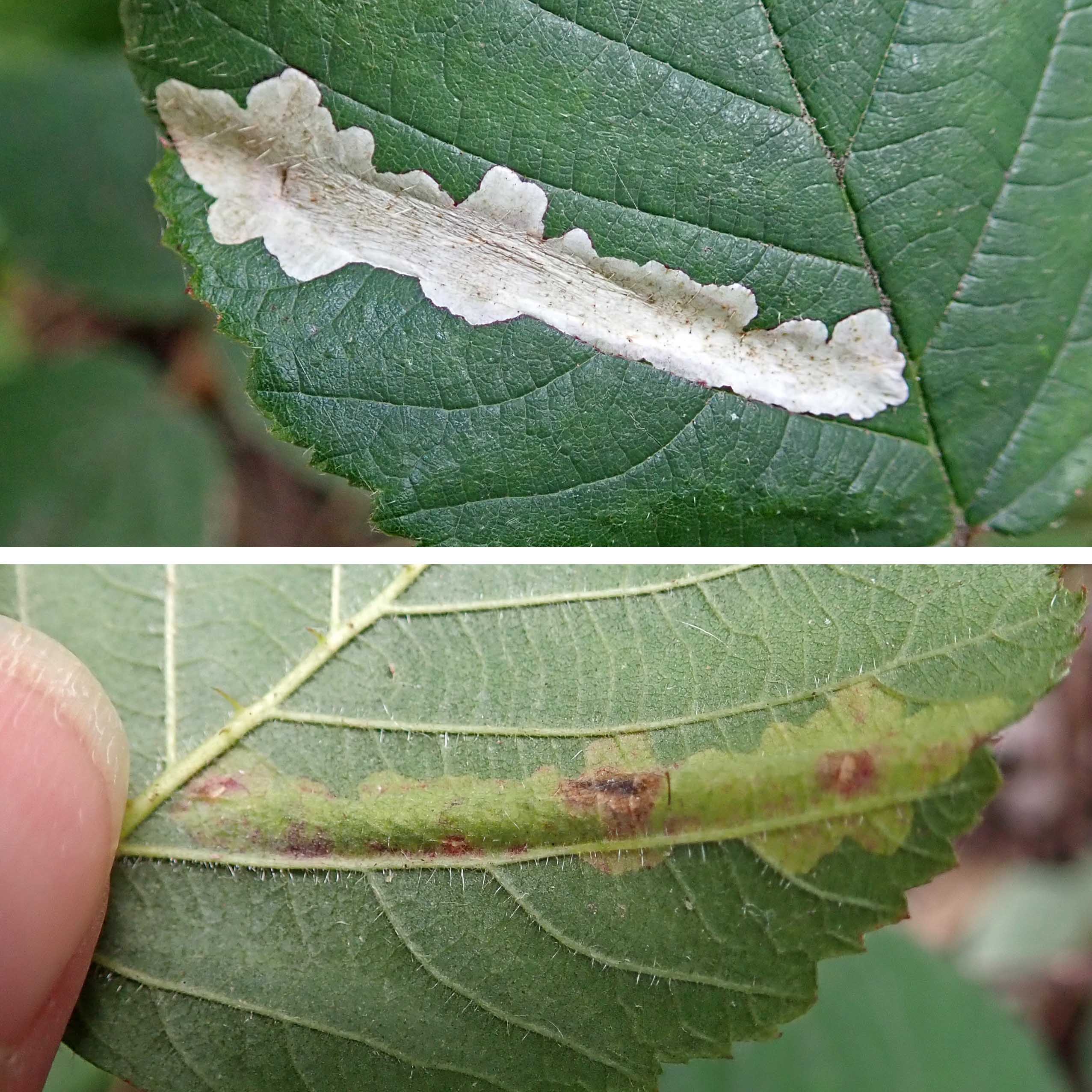
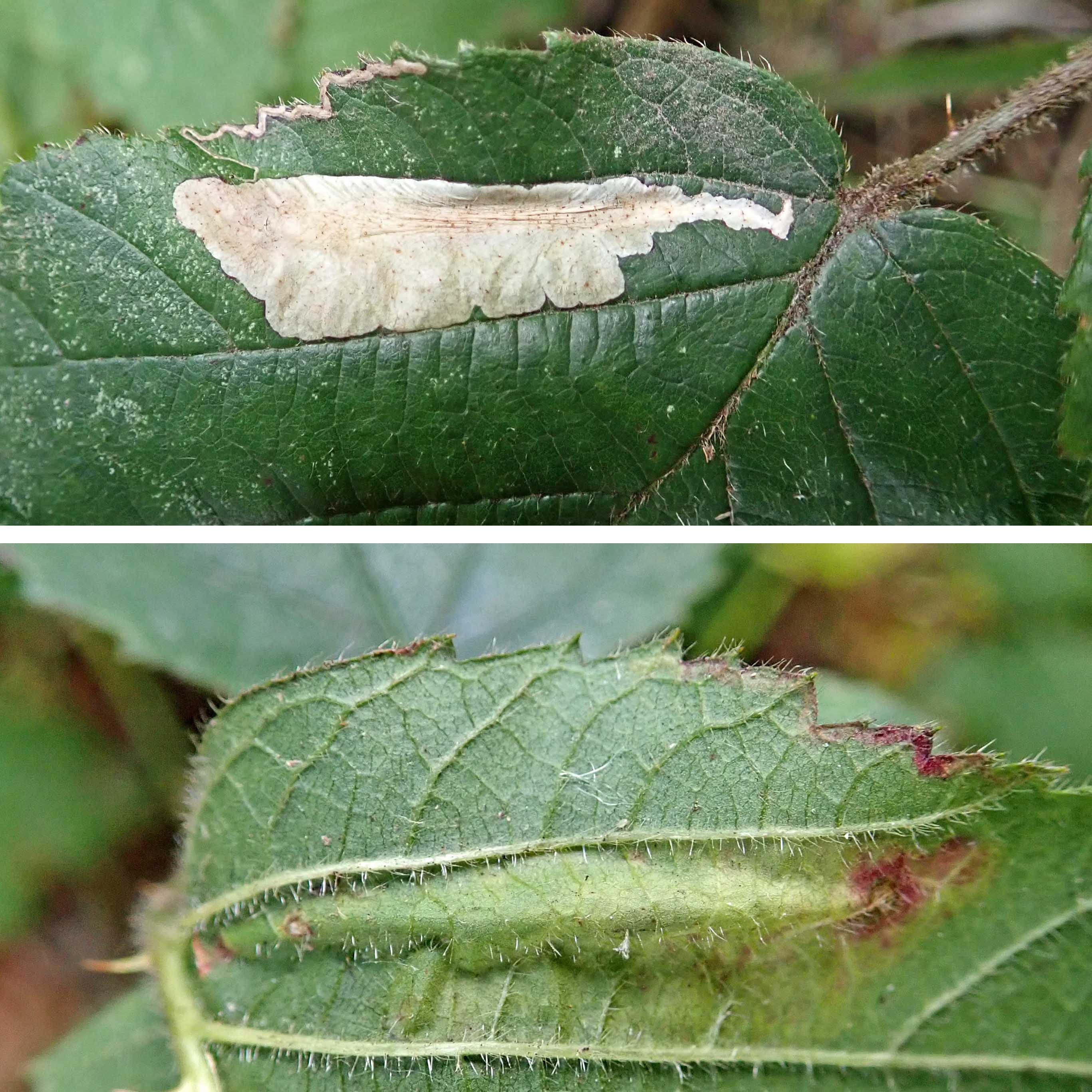
Today’s leafminer is one of two I found before I went away on my latest little mini break (I’ll feature the second in next Monday’s blog post). These bright white blotches, shown here on Bramble, but also found on other Rubus species, were made by the larvae of the moth Coptotriche marginea. Here’s a link to the UK Moth website’s entry on this moth, if you want to see what the adult looks like.

The female moth lays her egg on the upper side of a leaf, then, when the larva hatches, it chews into the leaf and initially creates a linear, gallery mine (you can see this in the third of my images, below), before the mine widens out to form a blotch. My photos below show the upper and under sides of each leaf.

This species is bivoltine; the first leafmines can be seen during July, while the second brood feed right through the winter months, from September to March. I guess staying inside a leaf is a cosy enough place to spend the winter, as long as your leaf doesn’t wither and die during the colder months.

Like Loading...

Leafmines: Bedellia somnulentella

08 Monday Sep 2025

Posted by sconzani in insects, leaves, plants

≈ Leave a comment

Tags

Bedellia somnulentella, Bedellia somnulentella larva, Bedellia somnulentella pupa, British leafminers, British moths, leaf-mining moth larvae, leaf-mining moths, leafmines on Field bindweed

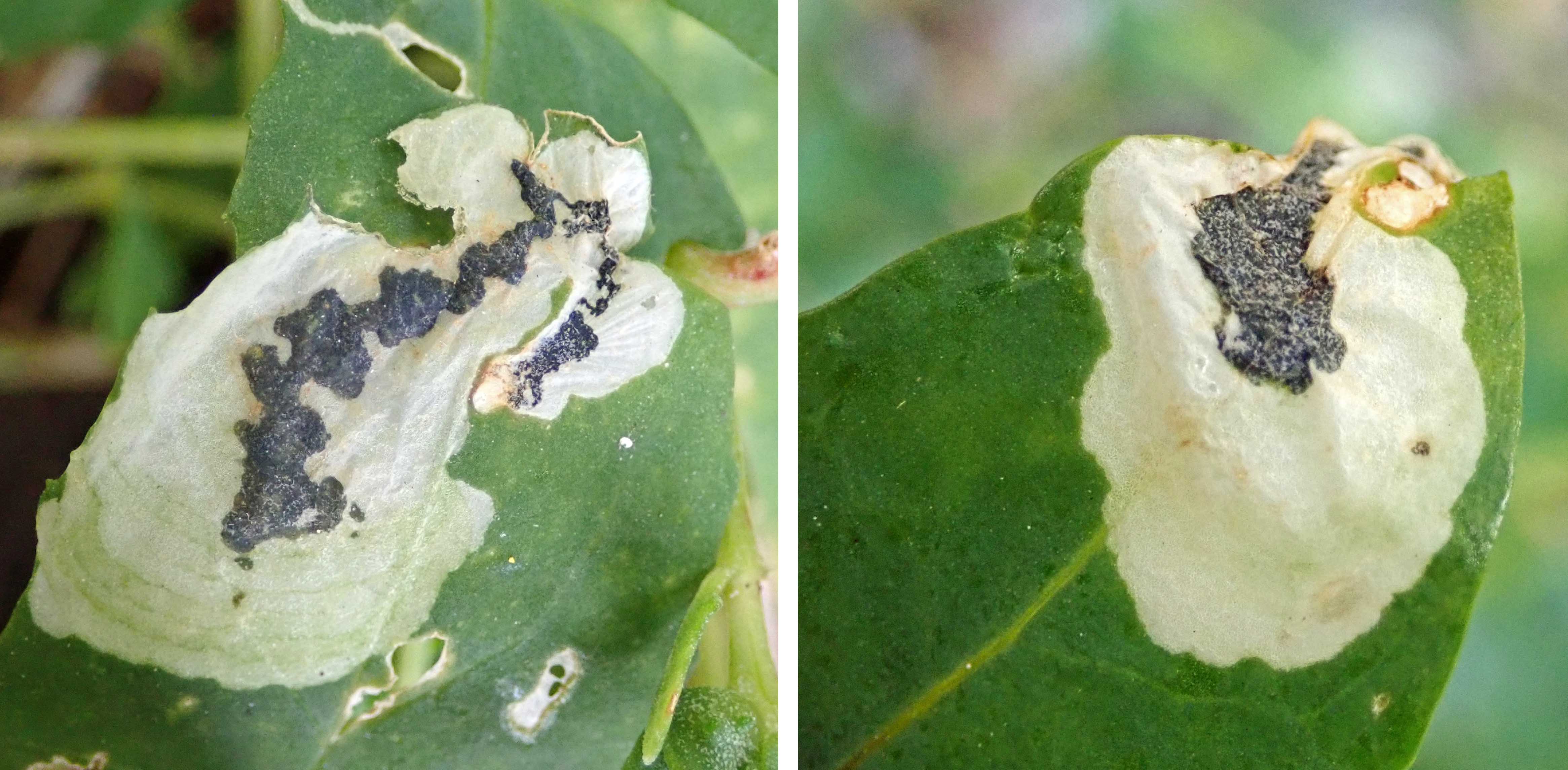
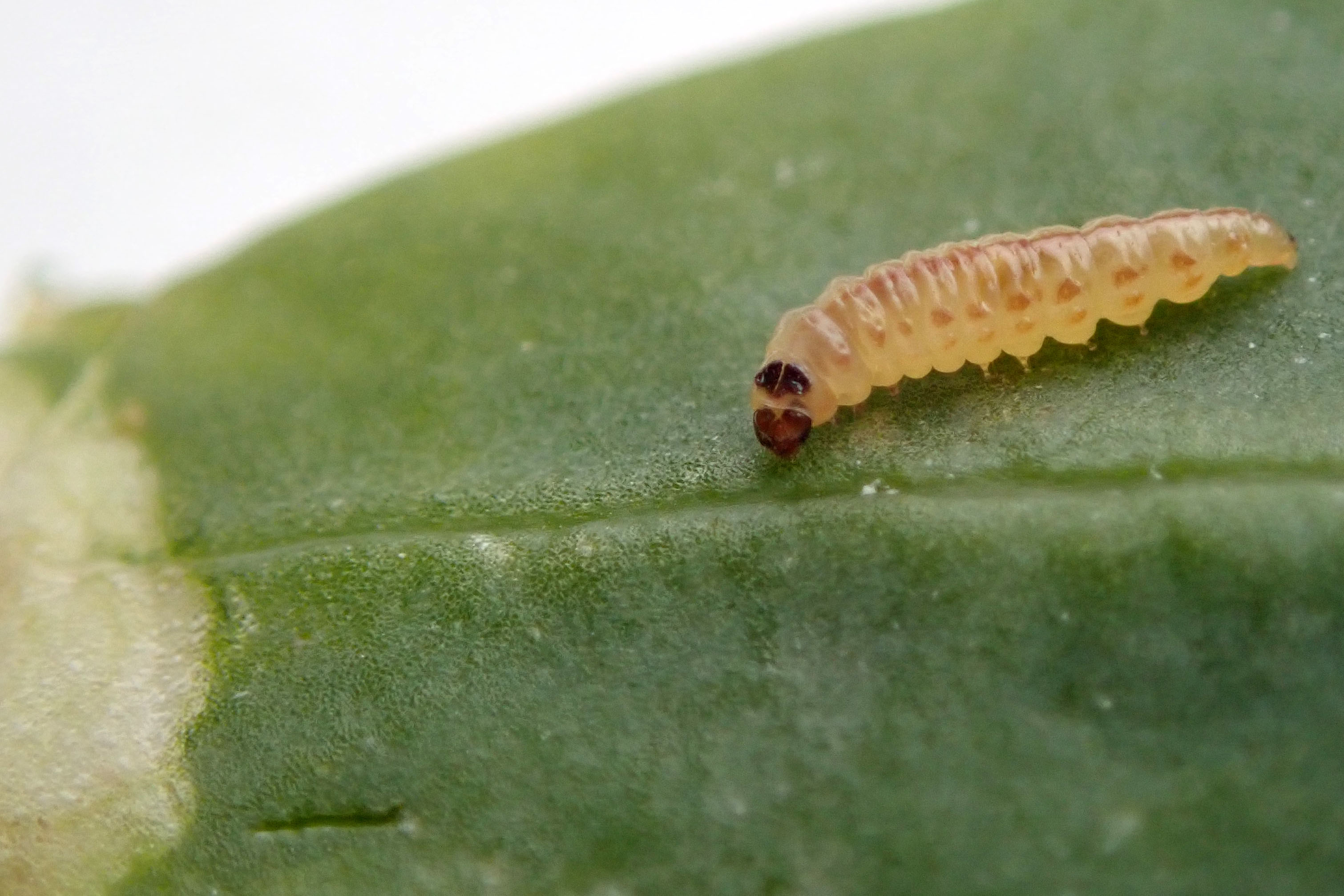
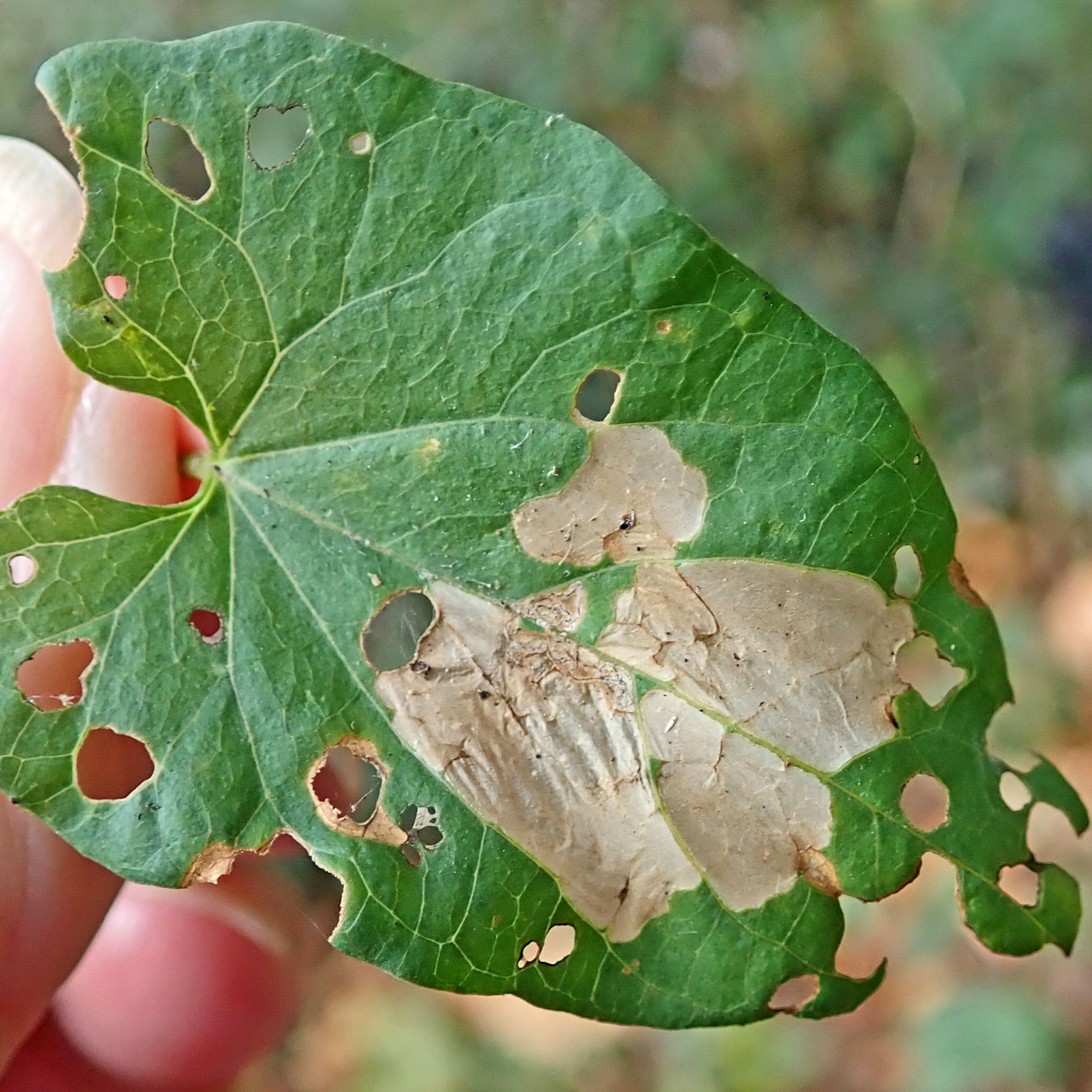
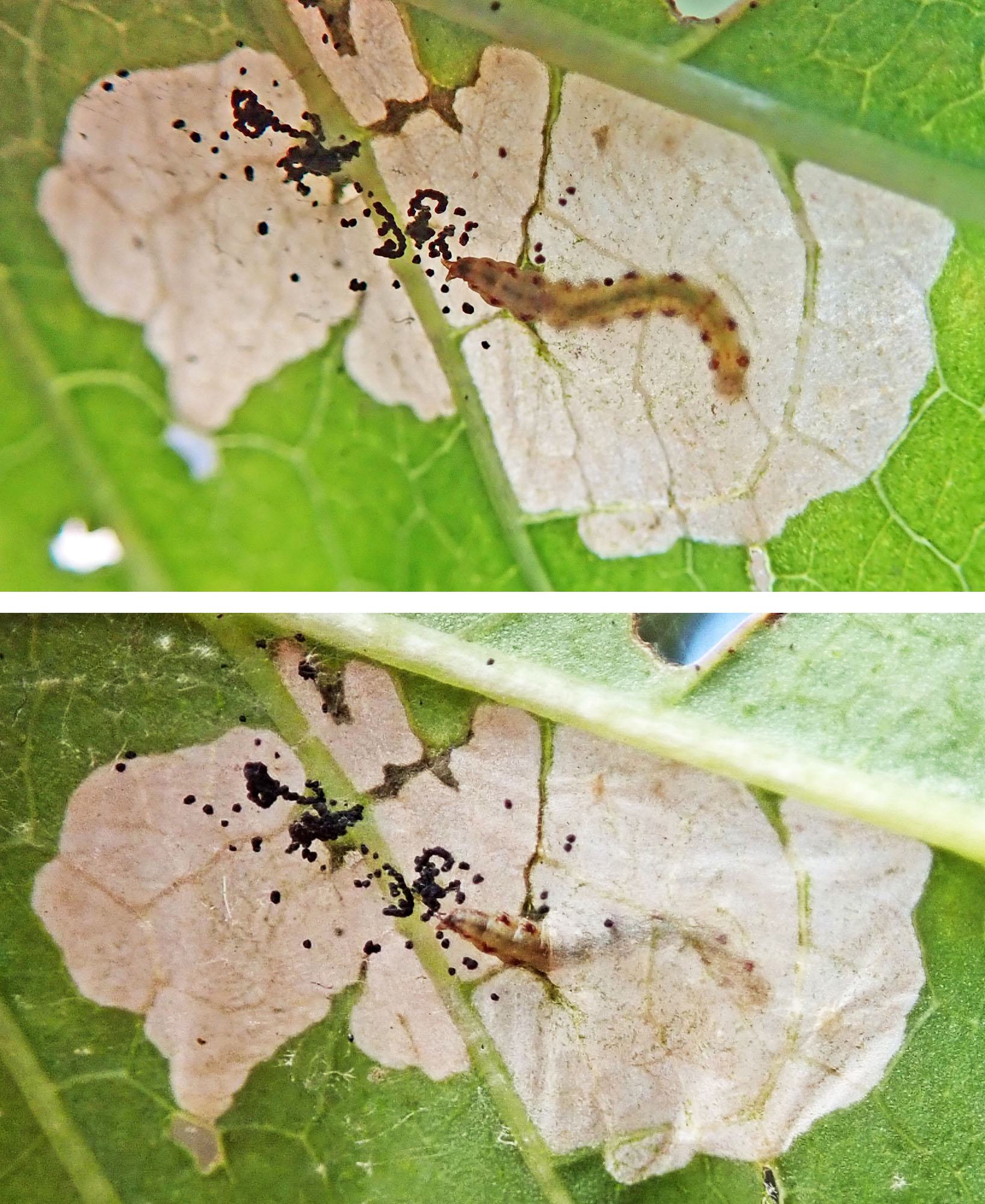
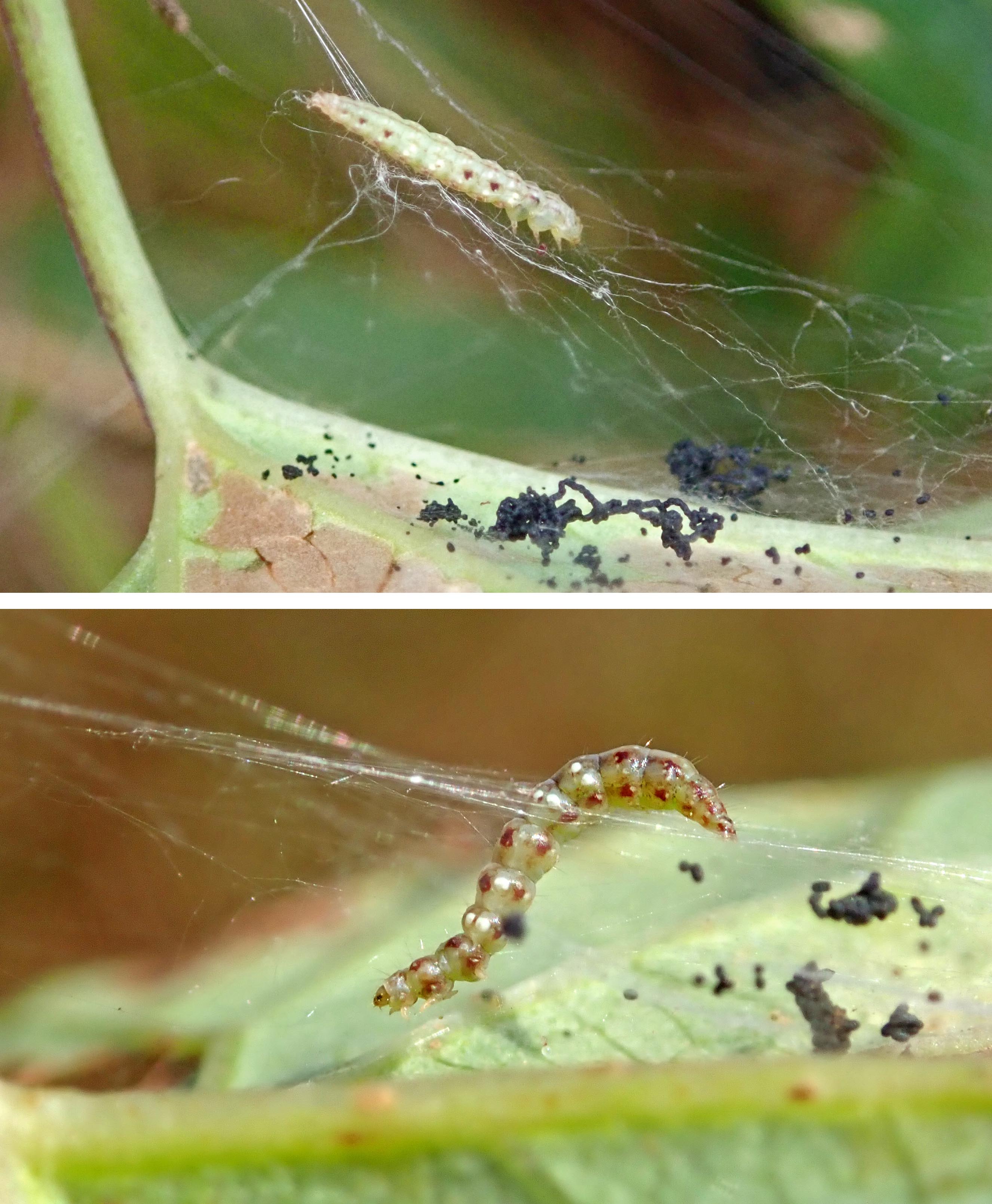
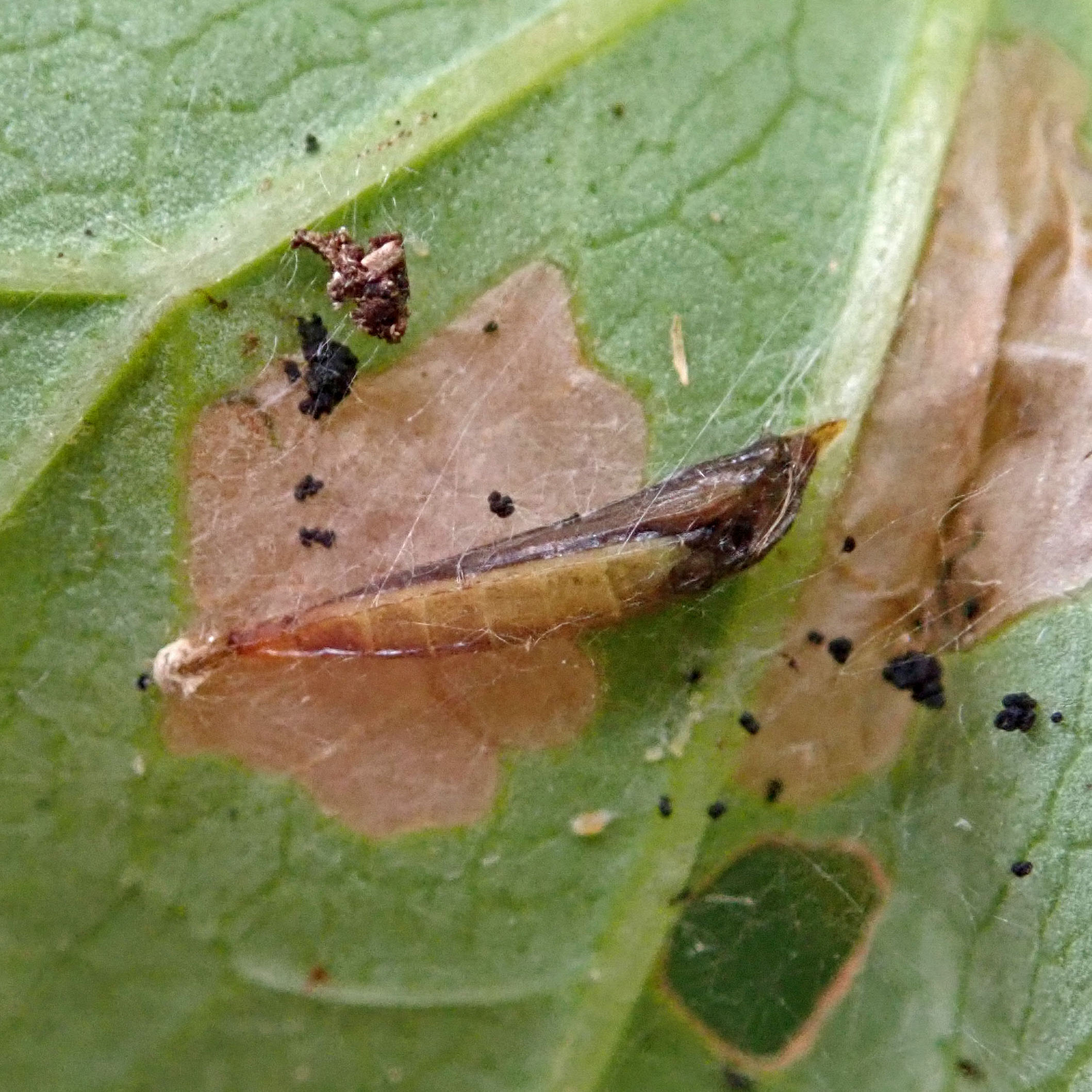
I’m particularly pleased to share this new leafminer as it’s not often that I find the signs of the mine, a larva within said mine, larvae resting outside their mines, and also a pupa, but here they are. These were found during two walks around the edge of a local recreation ground with, perhaps surprisingly, the pupa being seen on 9 August, a couple of weeks before I found the larvae (on 27 August) on plants that were a couple of hundred metres from the initial find site.

These mines are the work of the larvae of the moth Bedellia somnulentella, the adult of which is something of a ‘little brown job’, as you can see on the UK Moths website. The larval plants include both Field bindweed (as shown here) and Hedge bindweed, as well as Morning glory, and, though the mine begins as a gallery, this appears to be subsumed by the later blotch, as blotches were all I noticed.

These larvae have some interesting habits: they weave silken threads below their mines to create resting places outside their mines (an unusual habit). The threads would not be easy to spot, except for the fact that the larvae’s frass is also caught by them and so appears as scattered clumps and strings of pooh.

When they’ve finished feeding and their development is complete, the larvae exit their blotches and pupate suspended amongst their silken threads. They’re fascinating little creatures.


Like Loading...

Leafmines: Stigmella lemniscella

25 Monday Aug 2025

Posted by sconzani in insects, trees

≈ Leave a comment

Tags

Beautiful elm dot, British leafminers, leaf-mining moth larvae, leaf-mining moths, leafmines, leafmines on Wych elm, Stigmella lemniscella

I discovered today’s new leafmines the same day as I found last week’s (Leafmines: Stigmella viscerella) and, considering how much time I spend leaf-fossicking and simply staring at trees, was also amazed I’d not noticed these very distinctive mines before.

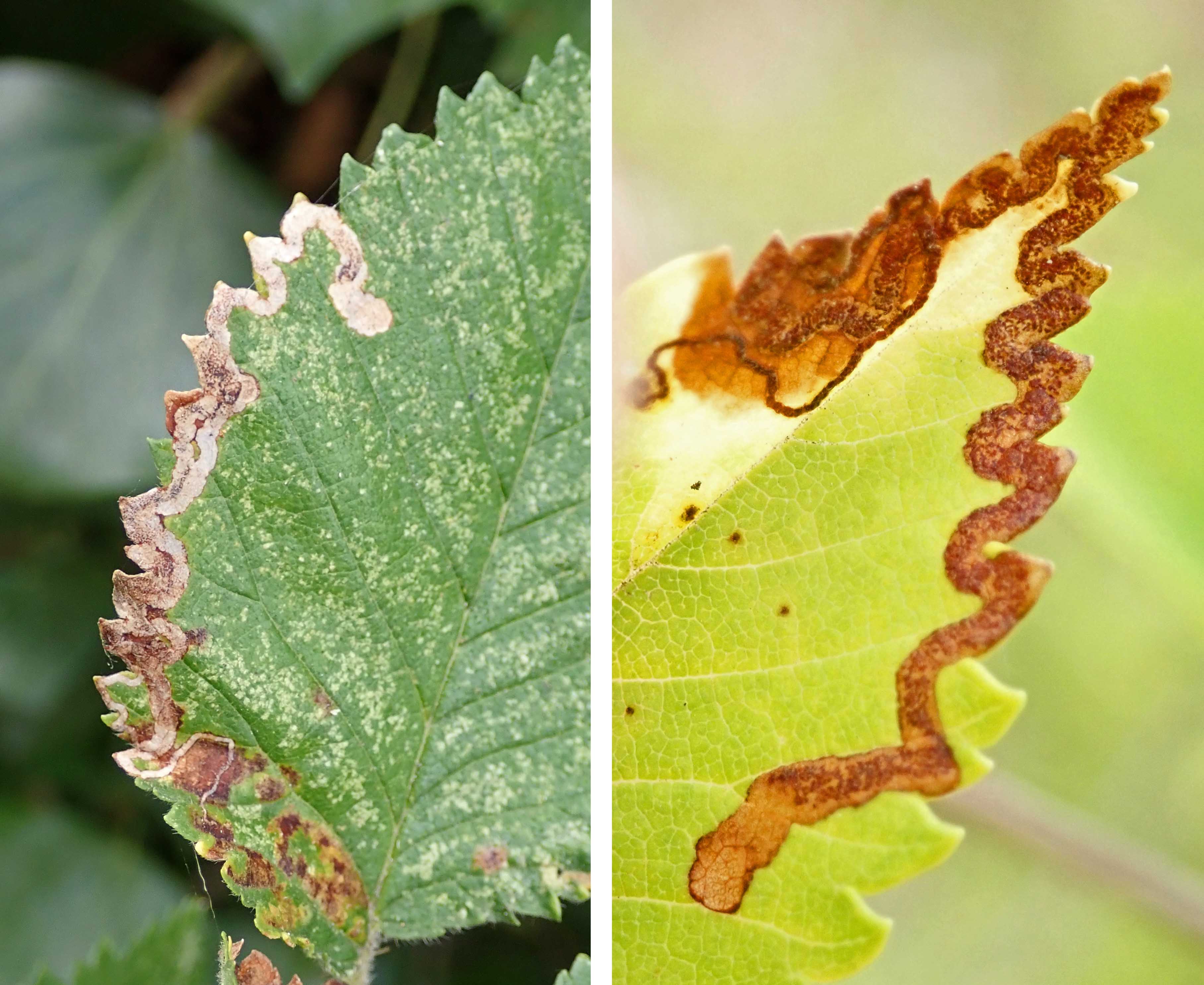
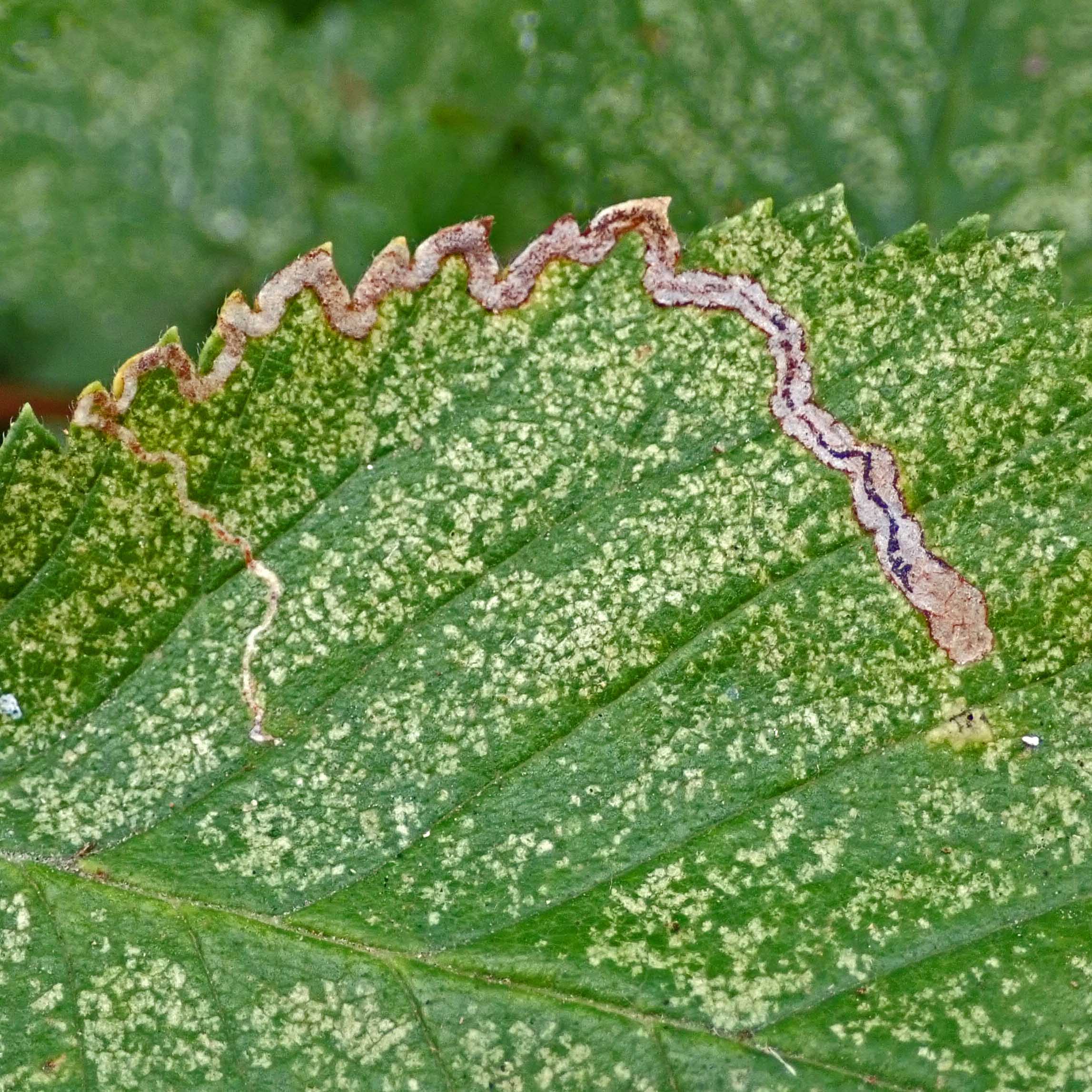
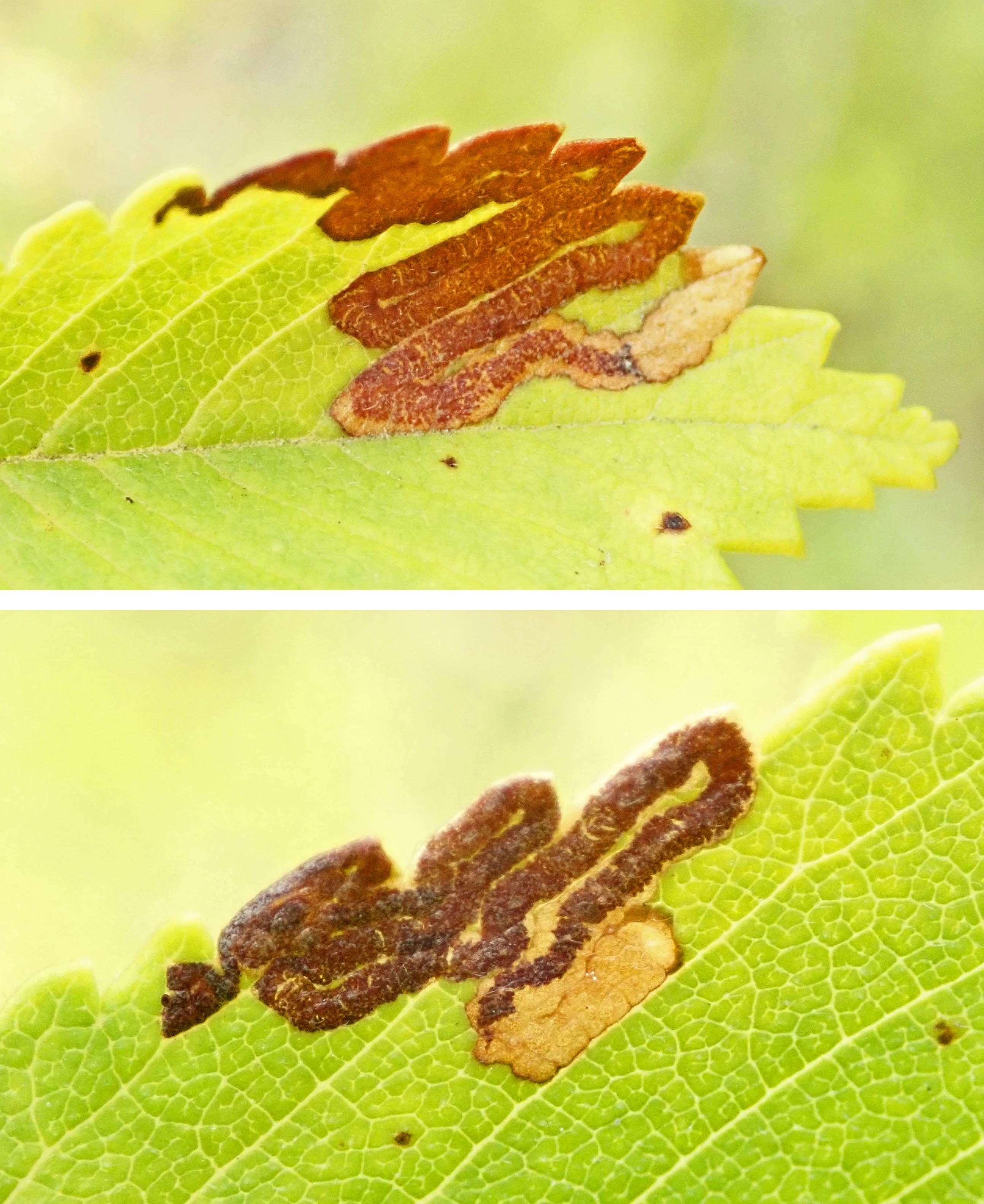
The larvae of the moth Stigmella lemniscella munch away within the leaves of Elm trees (Ulmus species), in this case Wych elms (Ulmus glabra), and their galleries often follow the edge of the leaves, looking like a zigzag pattern. These moths are bivoltine so are active during July, and again in September – October. The adult moth is a pretty little thing – there’s a photo on the UK Moths website, which has the common name of Beautiful elm dot.

Like Loading...

Leafmines: Stigmella viscerella

18 Monday Aug 2025

Posted by sconzani in insects, trees

≈ Leave a comment

Tags

British leafmines, leaf-mining moth larvae, leaf-mining moths, leafmines on Wych elm, Stigmella viscerella, Wych elm

I’m often surprised when I find a new leafmine: how is it that I’ve not noticed this one before, and how many different leafmines can there be? The answer to the first question has to be that I haven’t been paying enough attention, and to the second that there are probably hundreds that I haven’t yet found.

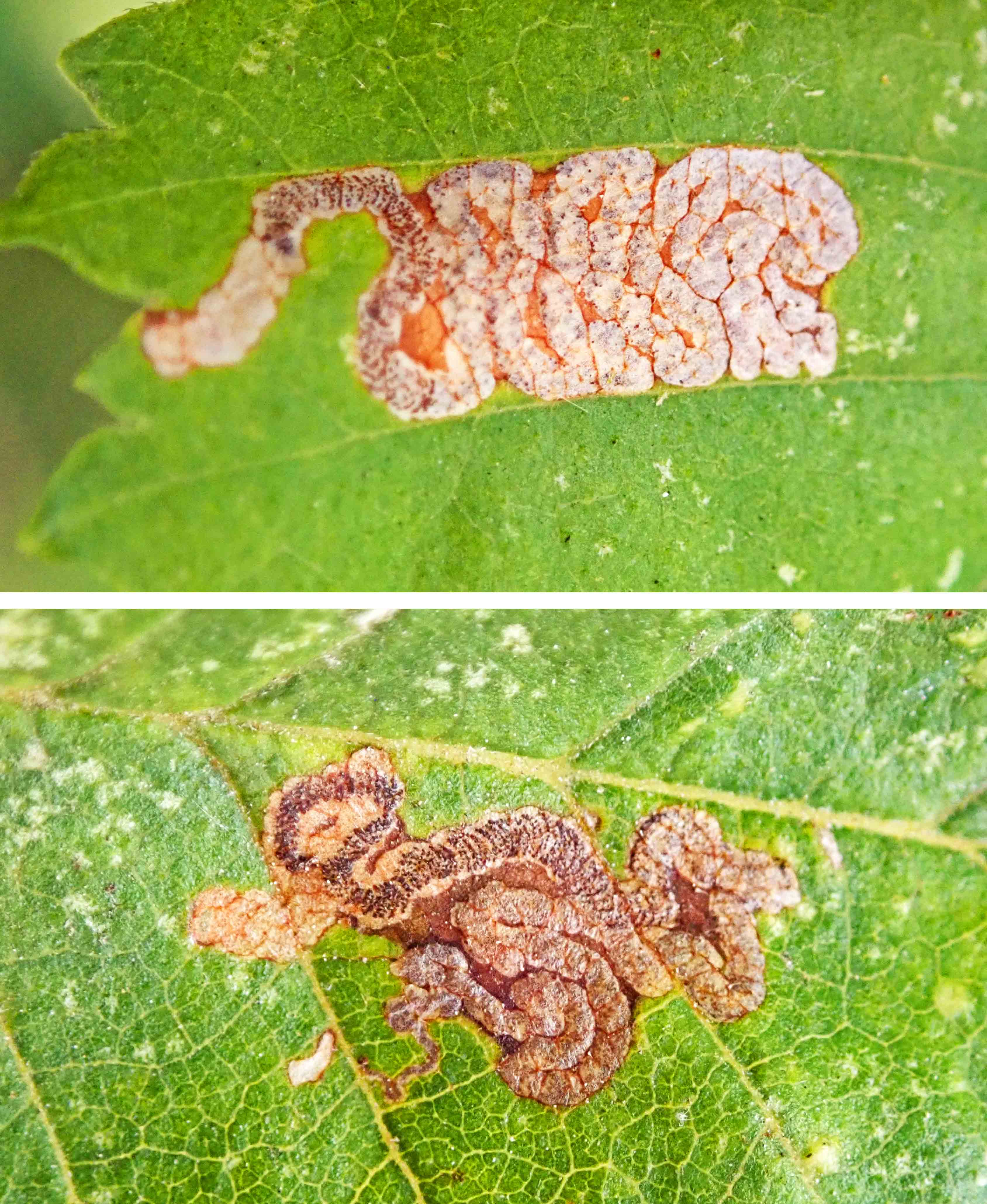
Today’s new leafmines were made by larvae of the moth Stigmella viscerella, and the mines can be found on the leaves of Elm trees, in this case Wych elm (Ulmus glabra), during August and September. Now that I’m aware of them, I’ve managed to find the mines in two different locations on two separate days, which is why the elm leaves in the two sets of images look different in colour (one day was brighter than the other).

The epithet viscerella may seem odd – it comes from the Latin viscera, plural of viscus, and refers to the human body’s internal organs – but when I look at these mines, the twisting shapes of the frass-filled galleries do, indeed, remind me of human intestines. I presume that the adult moth is not often seen as the UK Moths website doesn’t have its photo but, if you’re curious to see what emerged from these ‘intestines’, I managed to find an image on the German Lepiforum website.

Like Loading...

Leafmines: Phyllonocnistis unipunctella

28 Monday Jul 2025

Posted by sconzani in insects, nature, trees

≈ Leave a comment

Tags

British leafmines, leaf-mining moth larvae, leaf-mining moths, leafmines on Poplar trees, Phyllonocnistis unipunctella

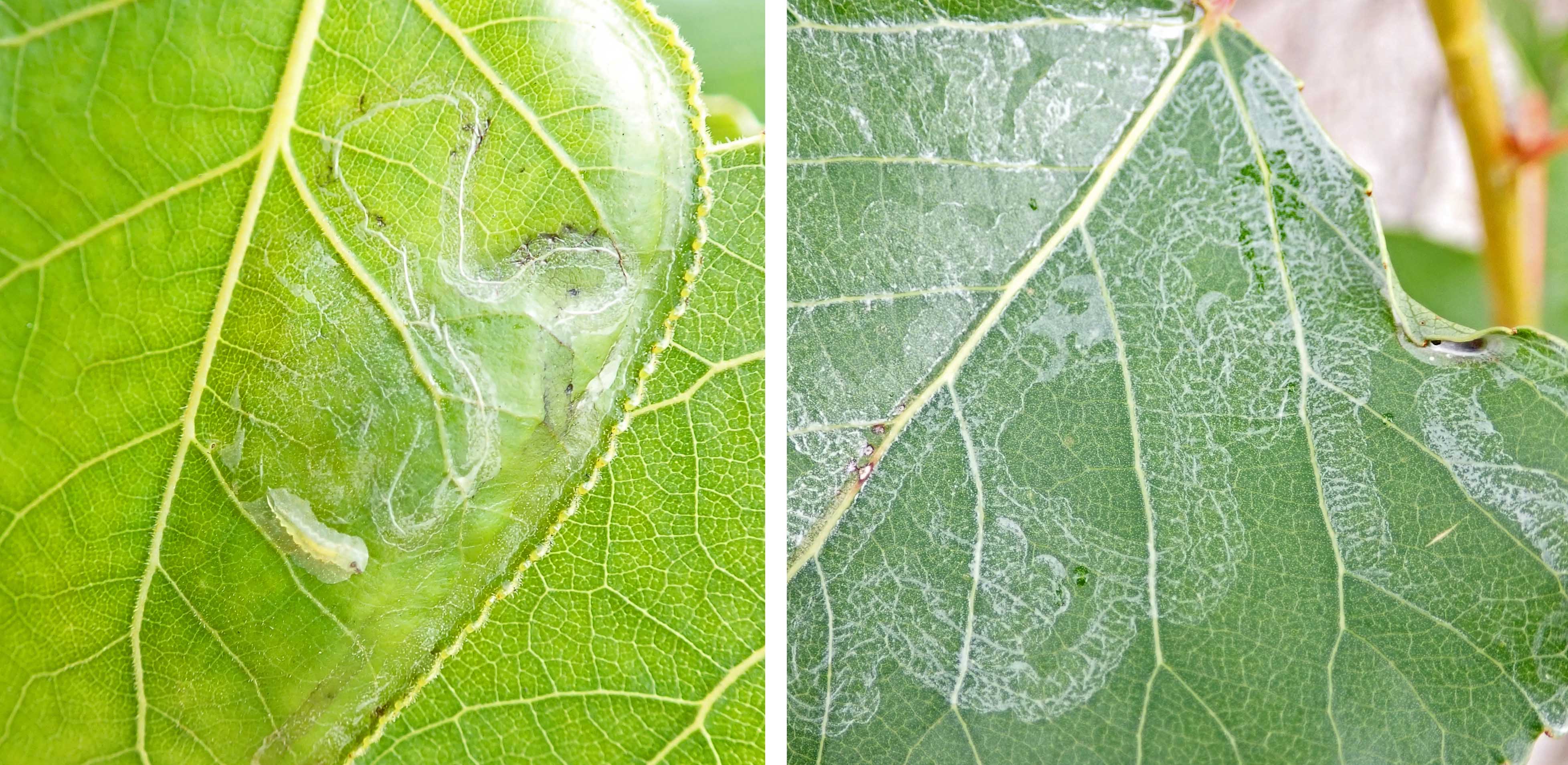
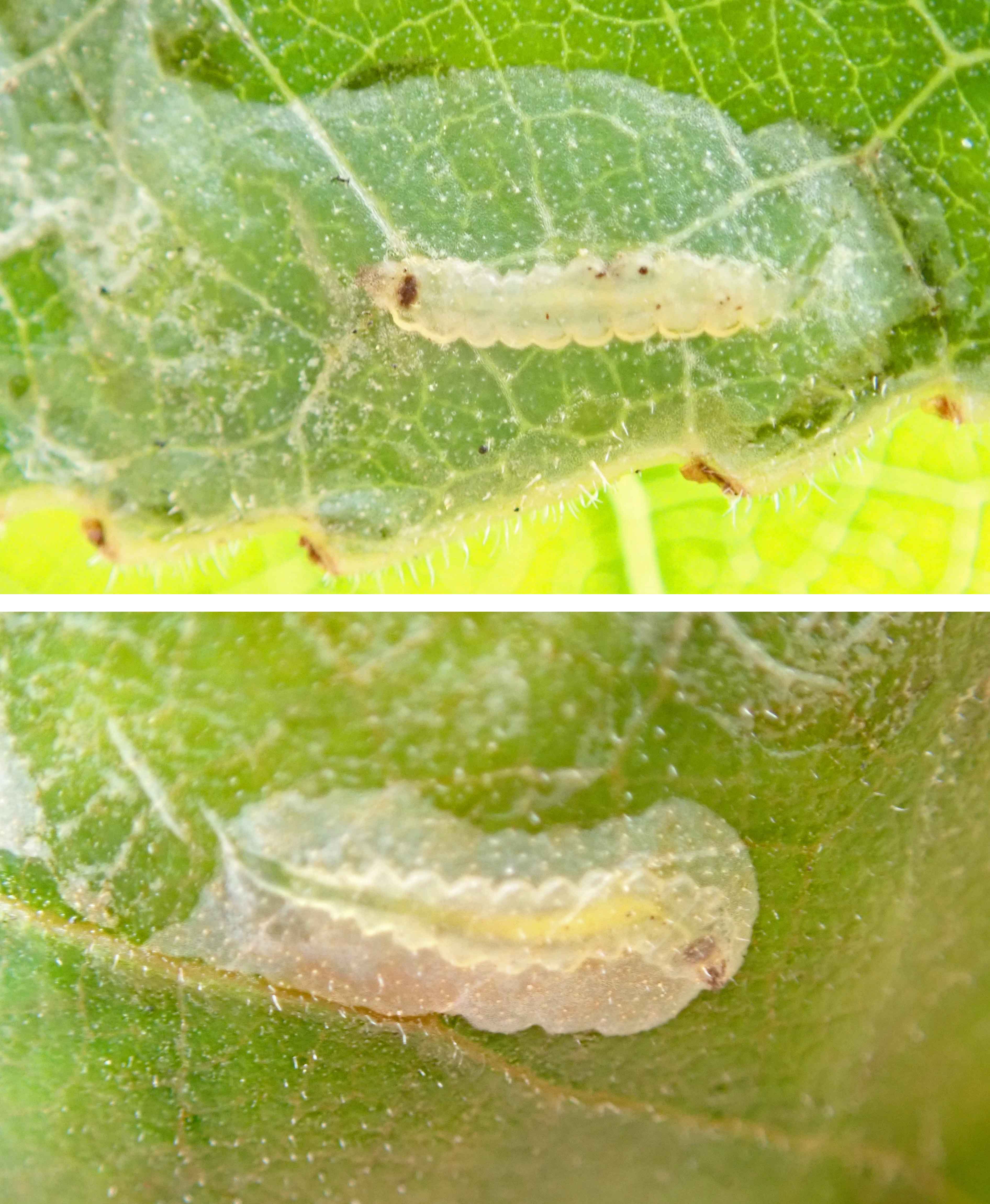
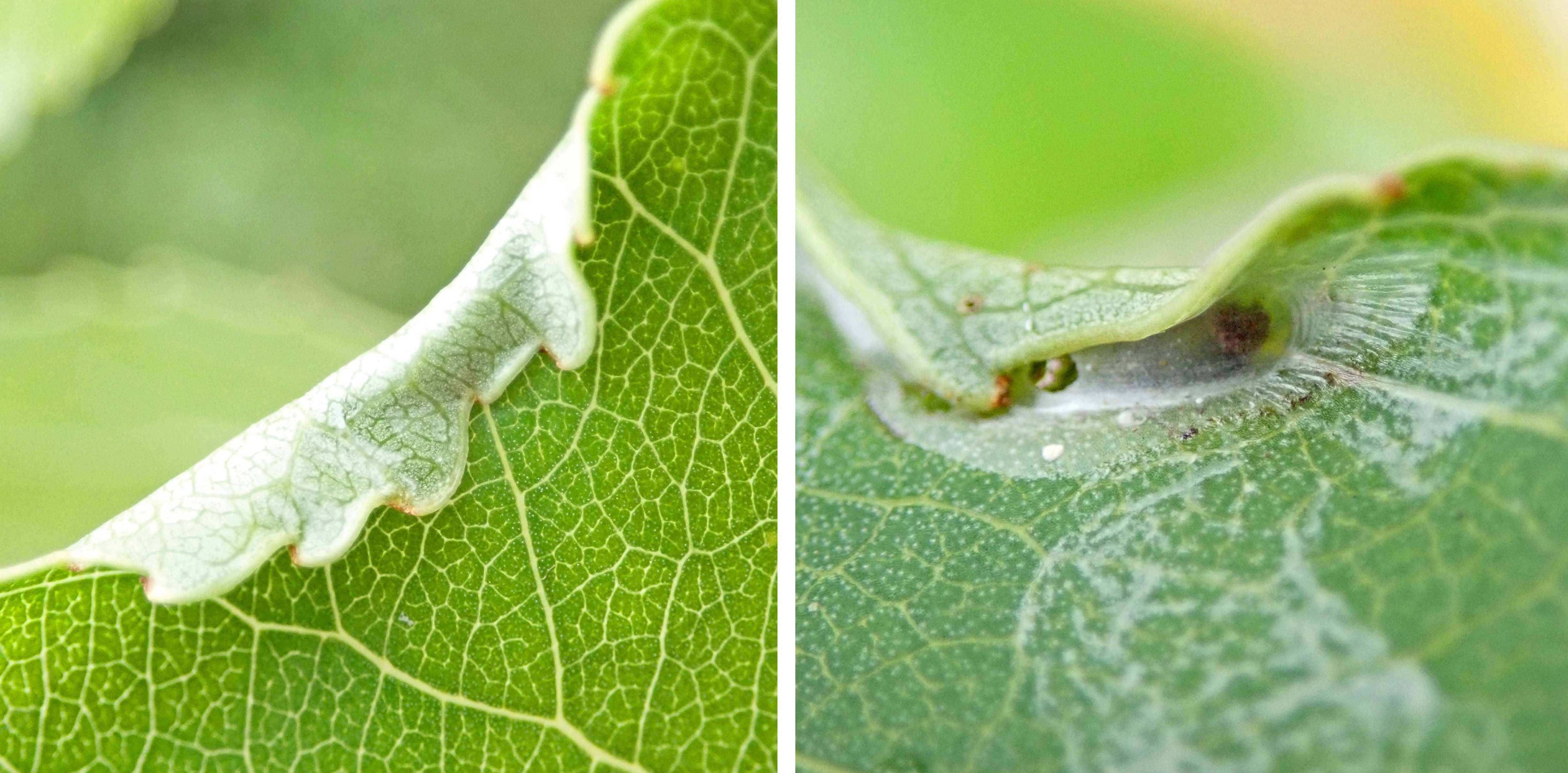
You could easily mistake the leafmines of the tiny moth Phyllonocnistis unipunctella for the dried trails of a snail after it had meandered around a leaf’s surface. This is due to the moth’s larvae mining just underneath the upper epidermis rather than more deeply within the leaf structure (and that can occur on the upper or lower surface of the leaf, though I’ve only found upper surface mines so far). The larvae also do not leave a trail of frass in the mine; I’ve not found any explanation for where that disappears to!

The fact that they mine so close to the leaf surface means the larvae are clearly visible within their mines, as you can see in my photos here. And, once they’ve munched as much leaf matter as necessary, they pupate in a silken membrane they create under the rolled down edge of the leaf, which you can also see in my images.

According to the British Leafminers website, Phyllonocnistis unipunctella uses three species of Populus as its larval plant: Black poplar (Populus nigra), Lombardy poplar (Populus x italica) and Black cottonwood (Populus trichocarpa). The mines shown here are from Black and Lombardy poplars found in a local park. You can see the adult moth, a pale silvery creature with a single dot near its tail end (hence the epithet unipunctella), on the UK Moths website.

Like Loading...

Leafmines: Phyllonorycters on Alder

14 Monday Jul 2025

Posted by sconzani in insects, trees

≈ Leave a comment

Tags

British leafmines, British moths, leaf-mining moth larvae, leafmines on Alder, moth larvae on Alder, Phyllonorycter rajella, Phyllonorycter stettinensis

It’s been a while since I’ve blogged about a new leaf-mining moth, and today you get two for the price of one.

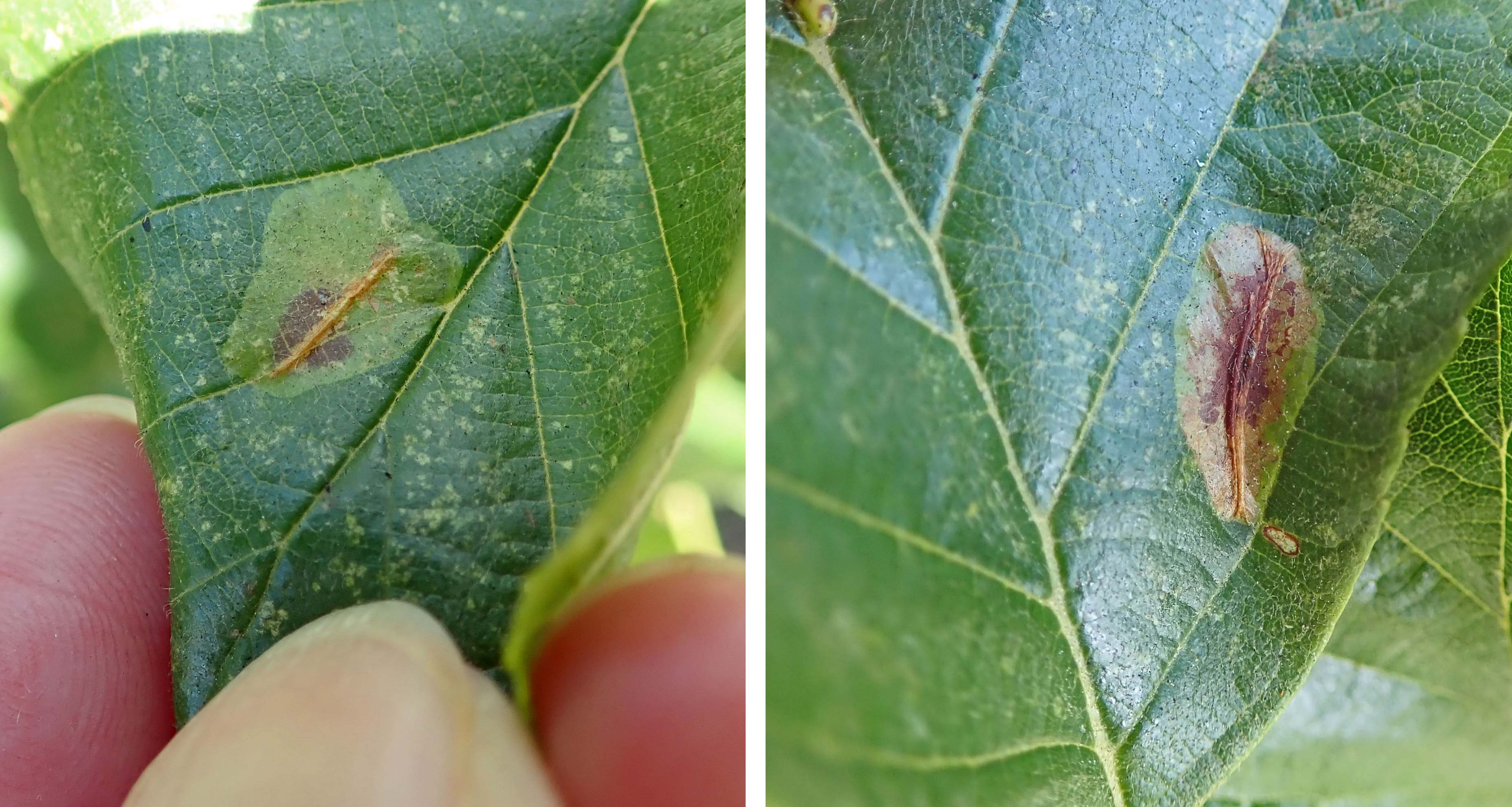
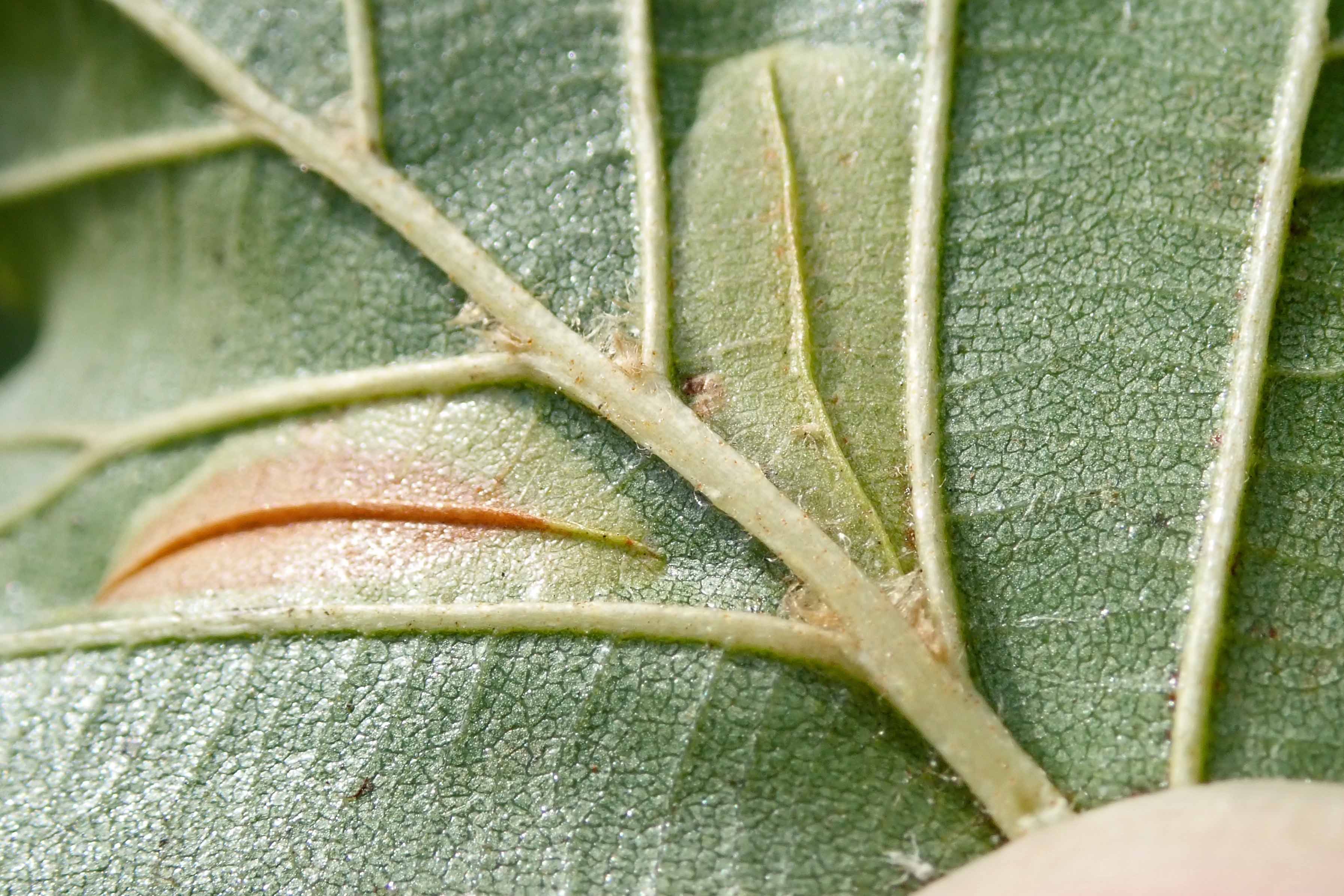
You see, the larvae of both these moths mine the leaves of Alder trees, creating a blotch with a single strong crease along the mine’s centre but, fortunately for those of us trying to identify these mines, there is one vital difference: the larval mines of Phyllonorycter rajella (below) can be found on the underside of the leaf, whereas the mines of Phyllonorycter stettinensis (above) are on the upper side of the leaf.

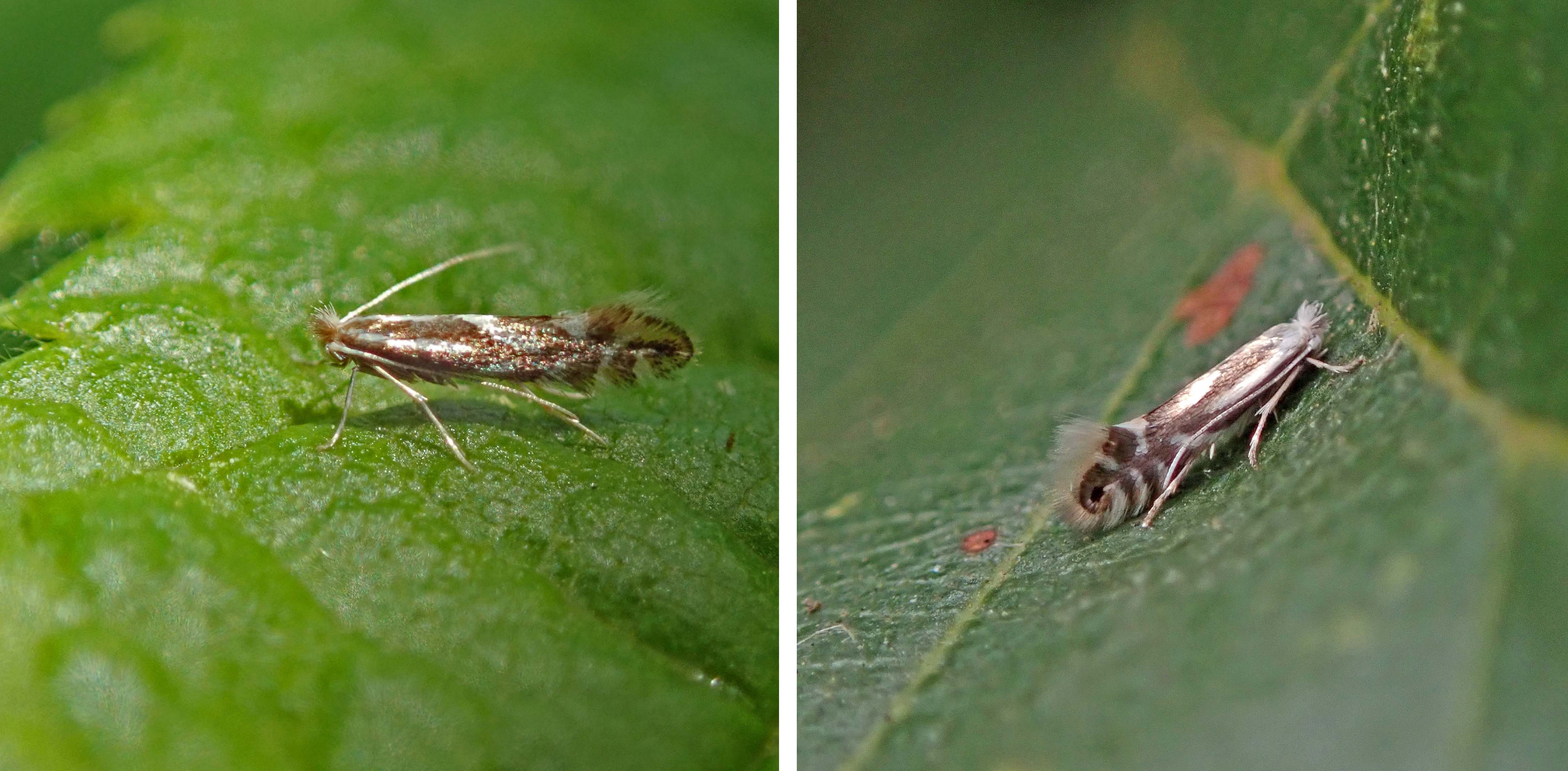
Both moths are bivoltine, i.e. they produce two generations each year; in both cases, the adult moths are active in May and again in August, so there’s a good chance of seeing the mines right through the summer. Amazingly, I’ve actually seen the adult Phyllonorycter rajella moth several times – two instances are shown below, but you can see better images of the very pretty adult moths of both these species on the UK Moths website: click the name to see Phyllonorycter rajella here, and Phyllonorycter stettinensis here.

Like Loading...
← Older posts

About me

sconzani

sconzani

I'm a writer and photographer; researcher and blogger; birder and nature lover; countryside rambler and city strider; volunteer and biodiversity recorder.

View Full Profile →

Follow earthstar on WordPress.com

Enter your email address to follow this blog and receive notifications of new posts by email.

Recent blog posts

  • M is for mite December 18, 2025
  • L is for lepidopteran lifers December 17, 2025
  • K is for Keeled skimmers December 16, 2025
  • J is for Jersey tiger December 15, 2025
  • I is for Ichneumon December 14, 2025

From the archives

COPYRIGHT

Unless otherwise acknowledged, the text and photographs on this blog are my own and are subject to international copyright. Nothing may be downloaded or copied without my permission.

Fellow Earth Stars!

  • Unknown's avatar
  • Unknown's avatar
  • Unknown's avatar
  • Unknown's avatar
  • Unknown's avatar
  • Unknown's avatar
  • Unknown's avatar
  • Unknown's avatar
  • Unknown's avatar
  • Unknown's avatar
  • Unknown's avatar
  • Unknown's avatar
  • Unknown's avatar
  • Unknown's avatar
  • Unknown's avatar
  • Unknown's avatar
  • Unknown's avatar
  • Unknown's avatar
  • Unknown's avatar
  • Unknown's avatar
  • Unknown's avatar
  • Unknown's avatar
  • Unknown's avatar
  • Unknown's avatar
  • Unknown's avatar
  • Unknown's avatar
  • Unknown's avatar
  • Unknown's avatar
  • Unknown's avatar
  • Unknown's avatar
  • Unknown's avatar
  • Unknown's avatar
  • Unknown's avatar
  • Unknown's avatar
  • Unknown's avatar
  • Unknown's avatar
  • Unknown's avatar
  • Unknown's avatar
  • Unknown's avatar
  • Unknown's avatar
  • Unknown's avatar
  • Unknown's avatar
  • Unknown's avatar
  • Unknown's avatar
  • Unknown's avatar
  • Unknown's avatar
  • Unknown's avatar
  • Unknown's avatar
  • Unknown's avatar
  • Unknown's avatar

Blog at WordPress.com.

Privacy & Cookies: This site uses cookies. By continuing to use this website, you agree to their use.
To find out more, including how to control cookies, see here: Cookie Policy
  • Subscribe Subscribed
    • earthstar
    • Join 667 other subscribers
    • Already have a WordPress.com account? Log in now.
    • earthstar
    • Subscribe Subscribed
    • Sign up
    • Log in
    • Report this content
    • View site in Reader
    • Manage subscriptions
    • Collapse this bar
 

Loading Comments...
 

You must be logged in to post a comment.

    %d