• ABOUT
  • BIRDING 2018
  • Birding 2019
  • BLOG POSTS
  • Butterflies 2018
  • Resources

earthstar

~ a celebration of nature

earthstar

Tag Archives: leaf-mining moth larvae

Leafmines: Lyonetia prunifoliella, 2

30 Monday Sep 2024

Posted by sconzani in insects, plants

≈ Leave a comment

Tags

blackthorn, leaf-mining moth larvae, leaf-mining moths, leafmines on Blackthorn, Lyonetia prunifoliella

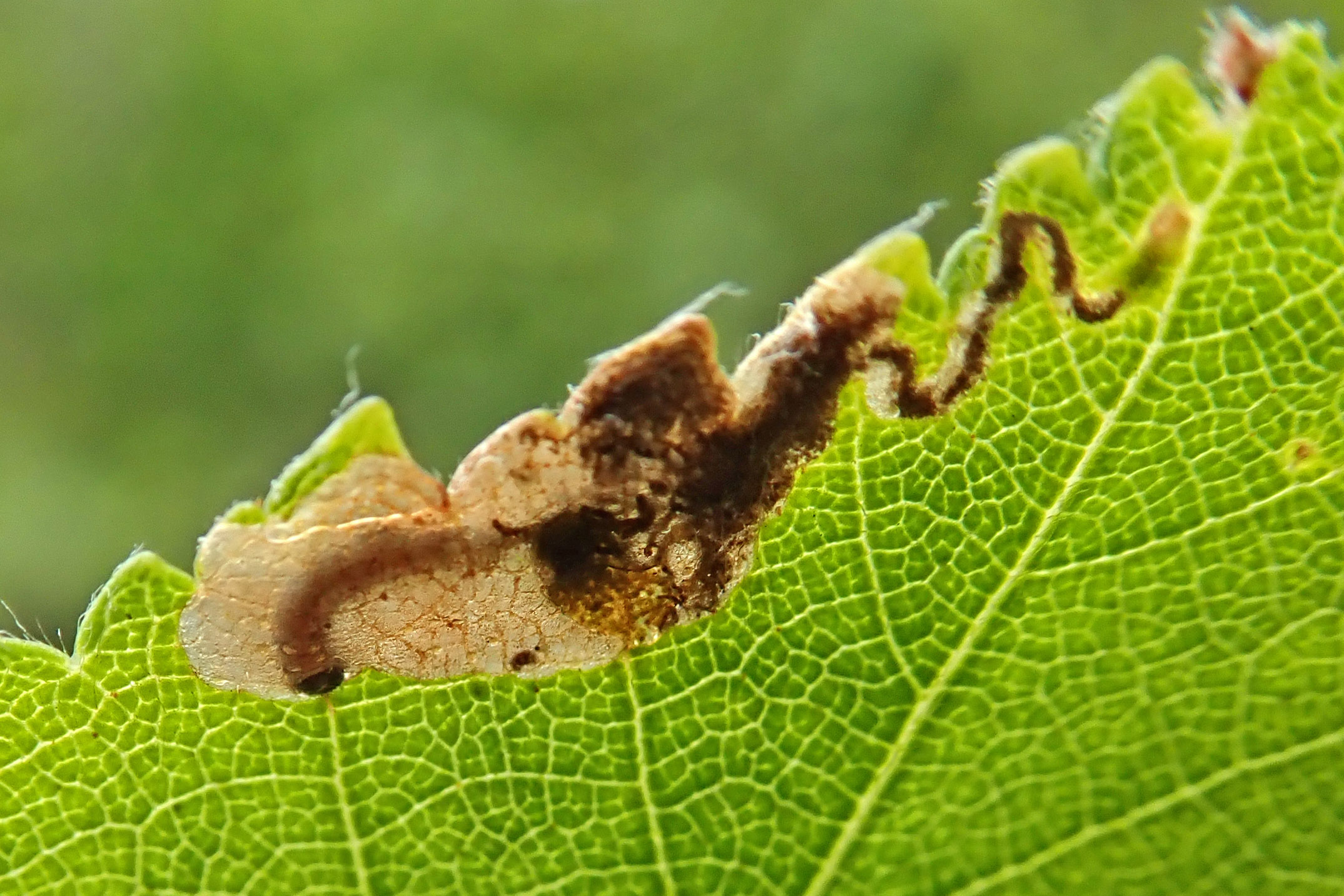
As you will have gathered from the ‘2’ in the title, I’ve blogged about this leafmine before (Leafmines: Lyonetia prunifoliella, 9 October 2023).
240930 lyonetia prunifoliella (1)

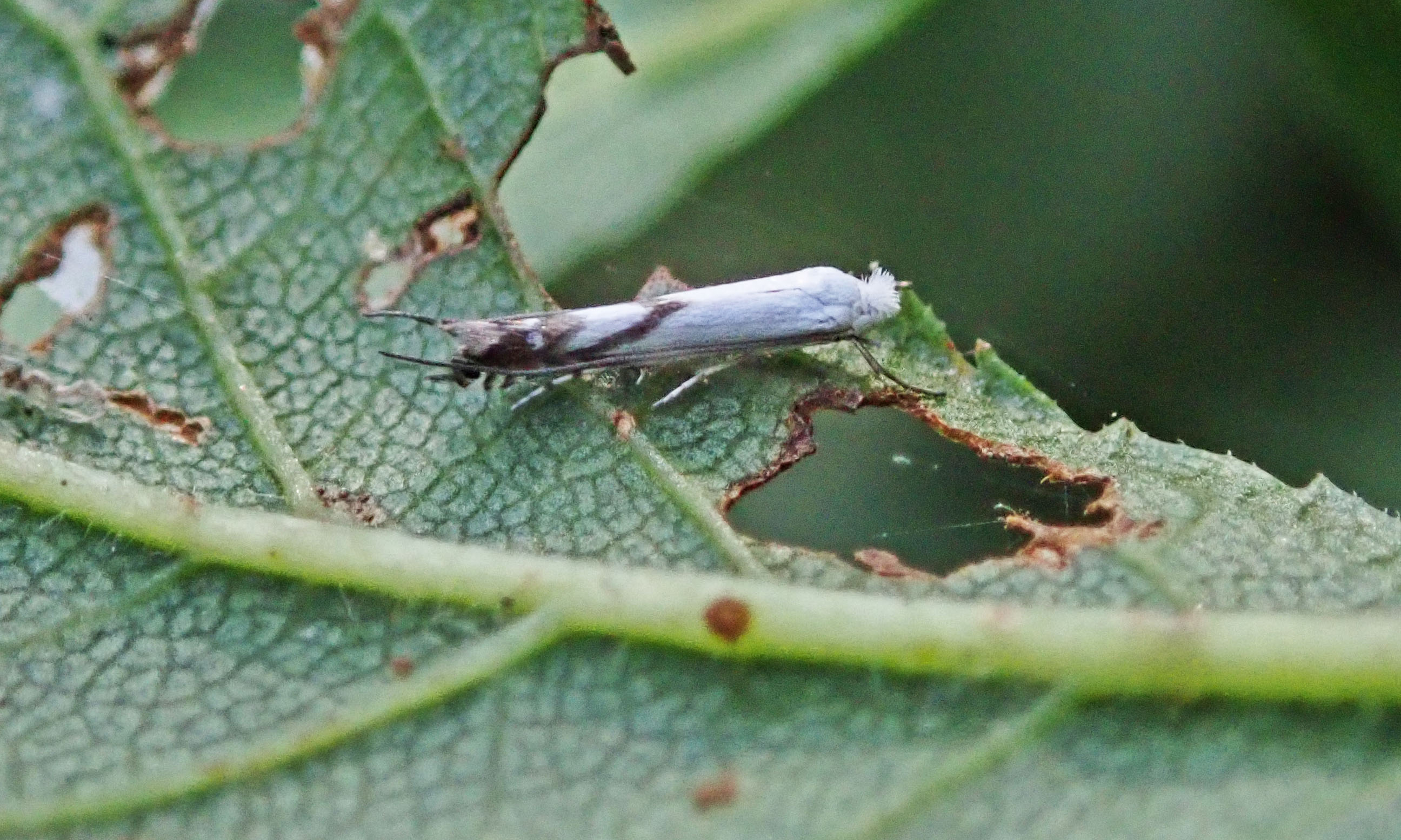
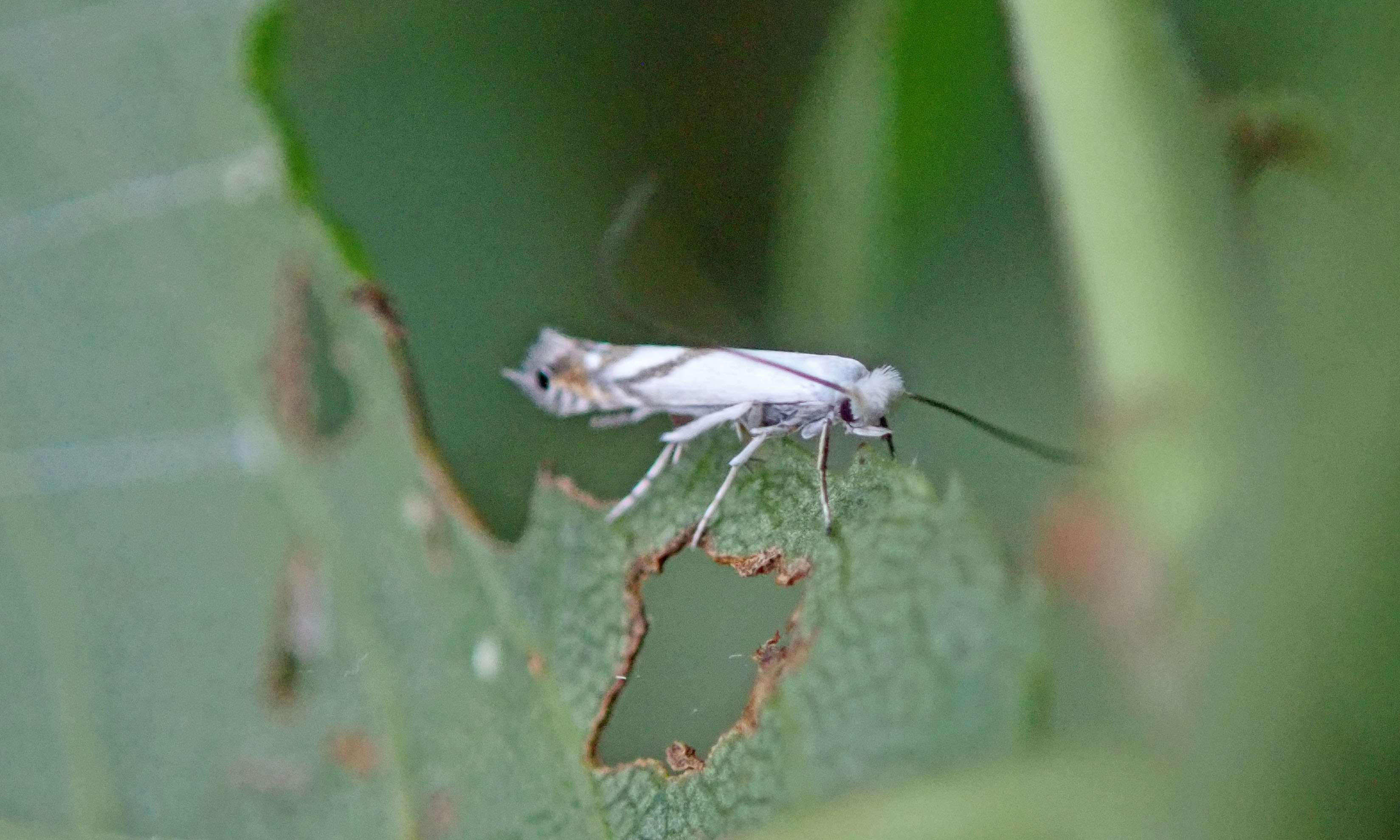
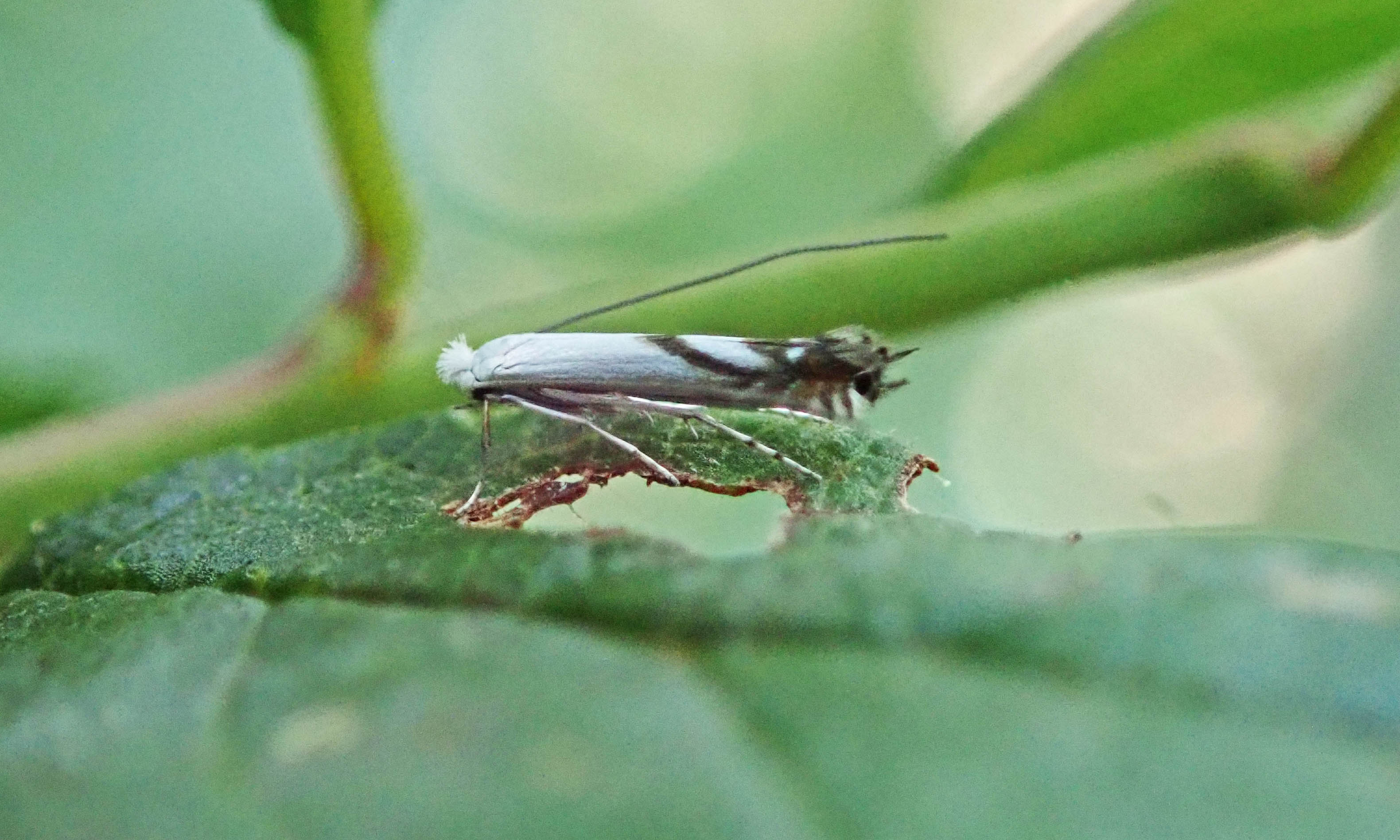
The reason I’m revisiting this species is that, by sheer chance, I turned over a couple of Blackthorn leaves at Cosmeston Lakes Country Park last week and discovered an adult moth sitting next to the ‘hammock’ cocoon from which it had, presumably, very recently emerged.
240930 lyonetia prunifoliella (2)

My photos aren’t sharp as the Blackthorn was growing just inside the edge of a woodland and the light wasn’t good but I was still delighted to find this gorgeous little moth.
240930 lyonetia prunifoliella (3)

Like Loading...

Leafmines: Caloptilia rufipennella

23 Monday Sep 2024

Posted by sconzani in insects, trees

≈ Leave a comment

Tags

British leafminers, Caloptilia rufipennella, leaf-mining moth larvae, leaf-mining moths, leafminers on Sycamore, sycamore

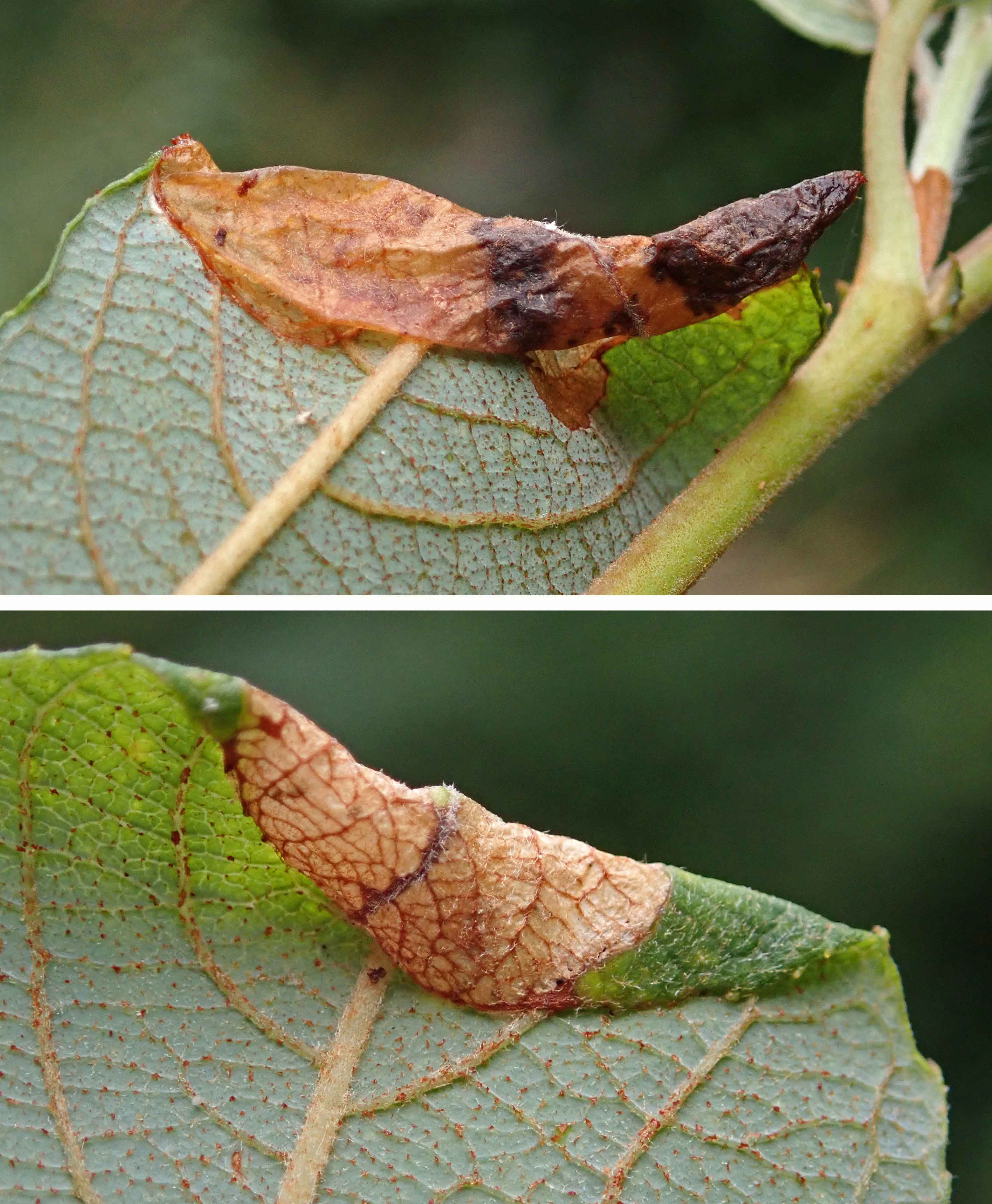
I was really pleased with my leaf-turning results on this particular Sycamore tree as I managed to find all three stages of this leaf-mining larva’s progress through the leaves. They illustrate quite well the breeding cycle of the little brown moth, Caloptilia rufipennella (you can see what it looks like on the UK Moths website).

240923 Caloptilia rufipennella (1)

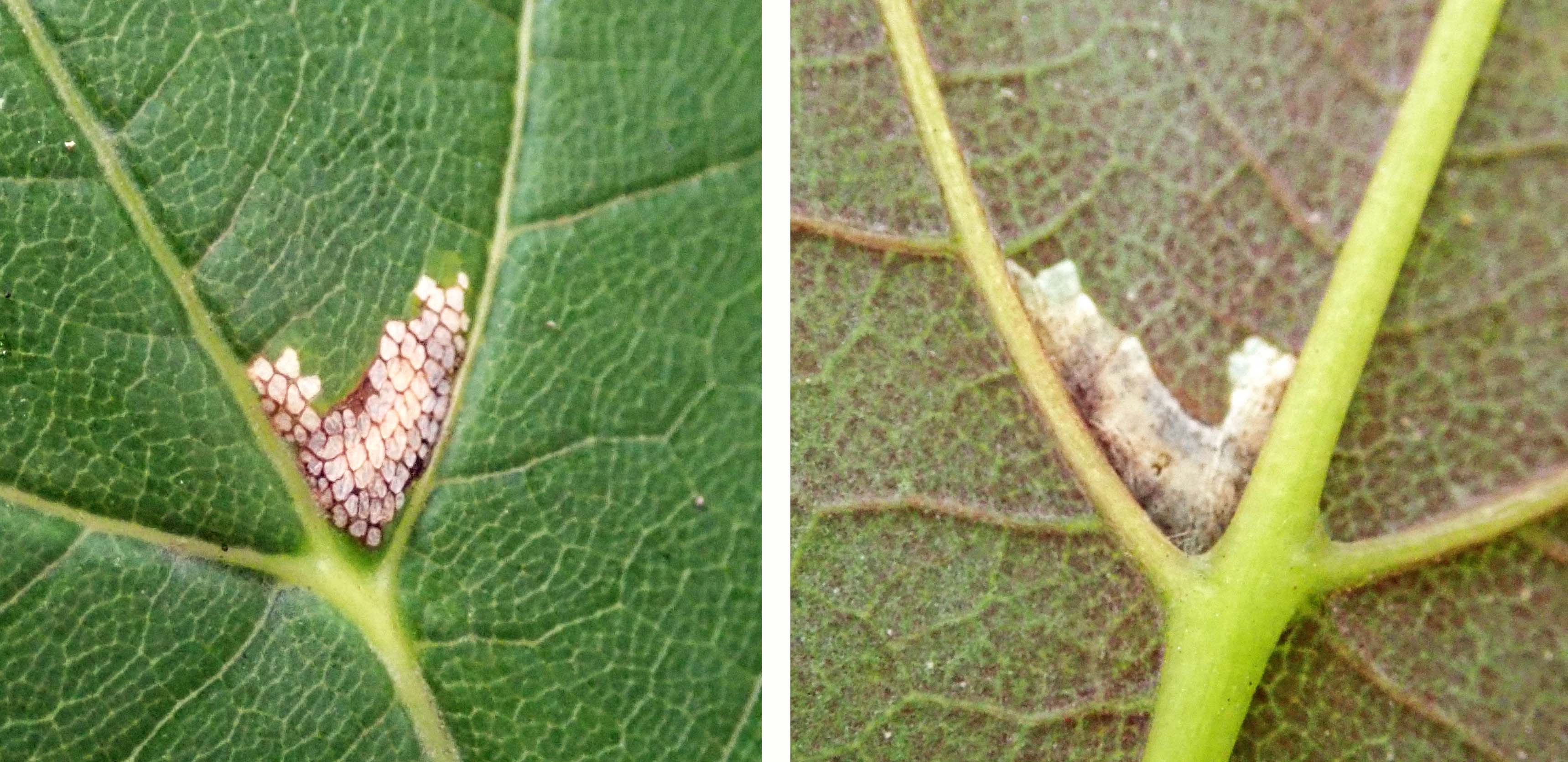
After hatching from its egg, the larva chews away at the leaf, always in the angle between the veins, creating a small, often triangular-shaped blotch. The photos above show the upper and lower sides of the leaf where it has been feeding. The larva then moves to the tips of the lobes of the leaf where it creates a series of two or three cones, folding the tip of the lobe to create a little shelter in which to feed, each cone bigger than the previous one as the larva grows (as shown below).

240923 Caloptilia rufipennella (2)

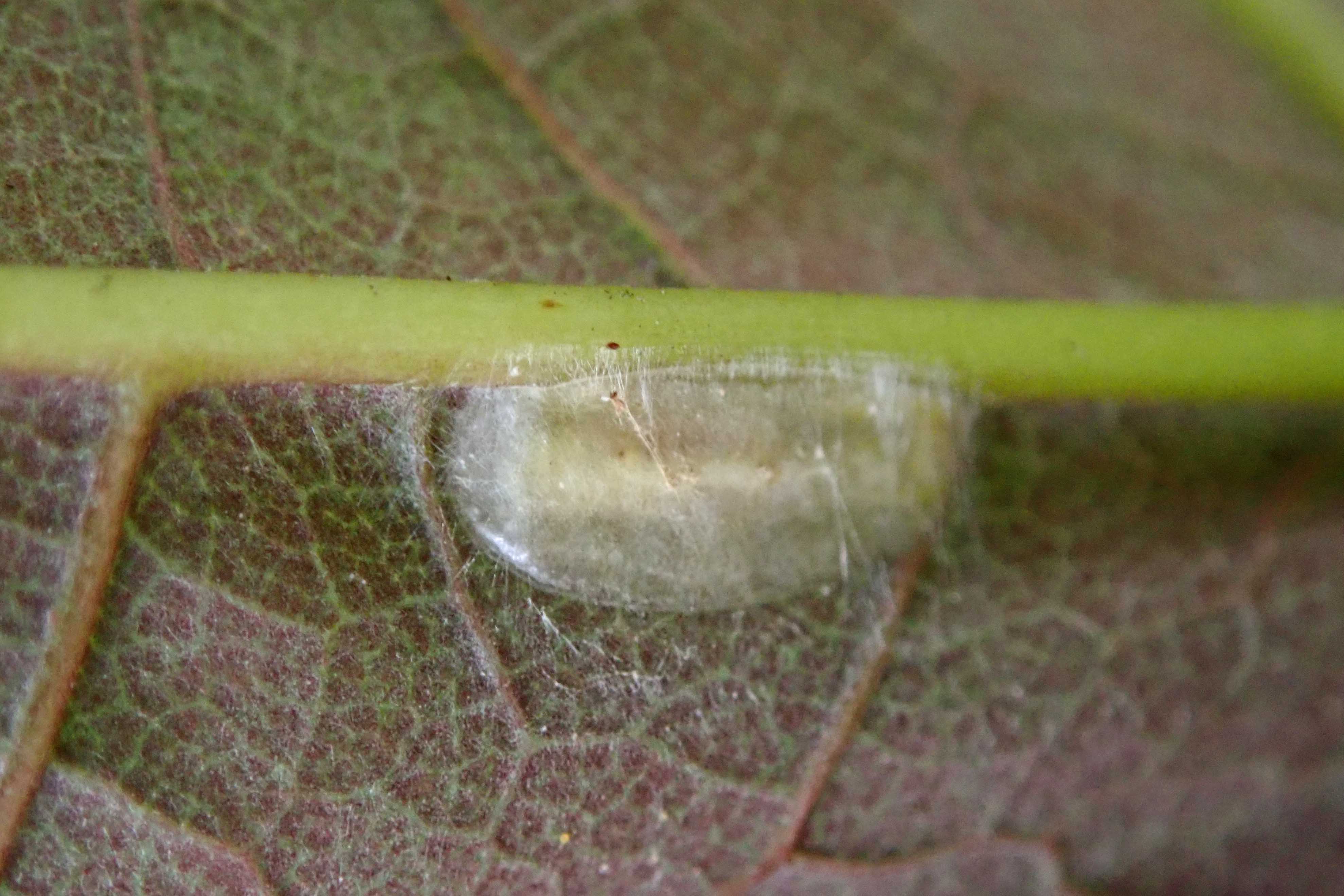
And finally, once it’s fully grown, the larva weaves itself a little cocoon in which to pupate (see below). Interestingly, the UK Moths website says that Caloptilia rufipennella was discovered in Britain as recently as 1970 but is now quite common in most of England and Scotland. Wales doesn’t get a mention but the Welsh national database shows records starting in 1980 and now scattered across the country.

OLYMPUS DIGITAL CAMERA

Like Loading...

Leafmines: Mompha raschkiella

16 Monday Sep 2024

Posted by sconzani in insects, plants

≈ Leave a comment

Tags

British leafminers, British moths, leaf-mining moth larvae, leaf-mining moths, leafmines on Rosebay willowherb, Mompha raschkiella

Between June and July, and then again in September, the leafmines of the gorgeous little moth Mompha raschkiella (check out the adult on the UK Moths website here) can be found on their food plant Rosebay willowherb (Chamaenerion angustifolium).

240916 mompha raschkiella (1)

Beginning with a narrow linear mine that frequently follows the leaf’s midrib, the larvae chew their way along the leaf, eventually creating a blotch with a slight yellow caste that’s scattered with its poop (frass). When fully grown, the larvae cut a slit in the leaf, dropping to the ground to pupate. You can read further and see more images on the British Leafminers website.

240916 mompha raschkiella (2)

Like Loading...

Leafmines: Antispila petryi

09 Monday Sep 2024

Posted by sconzani in insects

≈ Leave a comment

Tags

Antispila petryi, British leafminers, Dogwood cutter, leaf-mining moth larvae, leaf-mining moths, leafmines on Dogwood

Prompted by a post on Twitter by Butterfly Conservation’s Head of Science Richard Fox, I spent some of last Monday’s walk checking for mines on the leaves of Dogwood (Cornus sanguinea), a plant I tend to ignore when leaf bothering. I got lucky, finding several mines when checking the first Dogwood I came across.

240909 Antispila petryi (1)

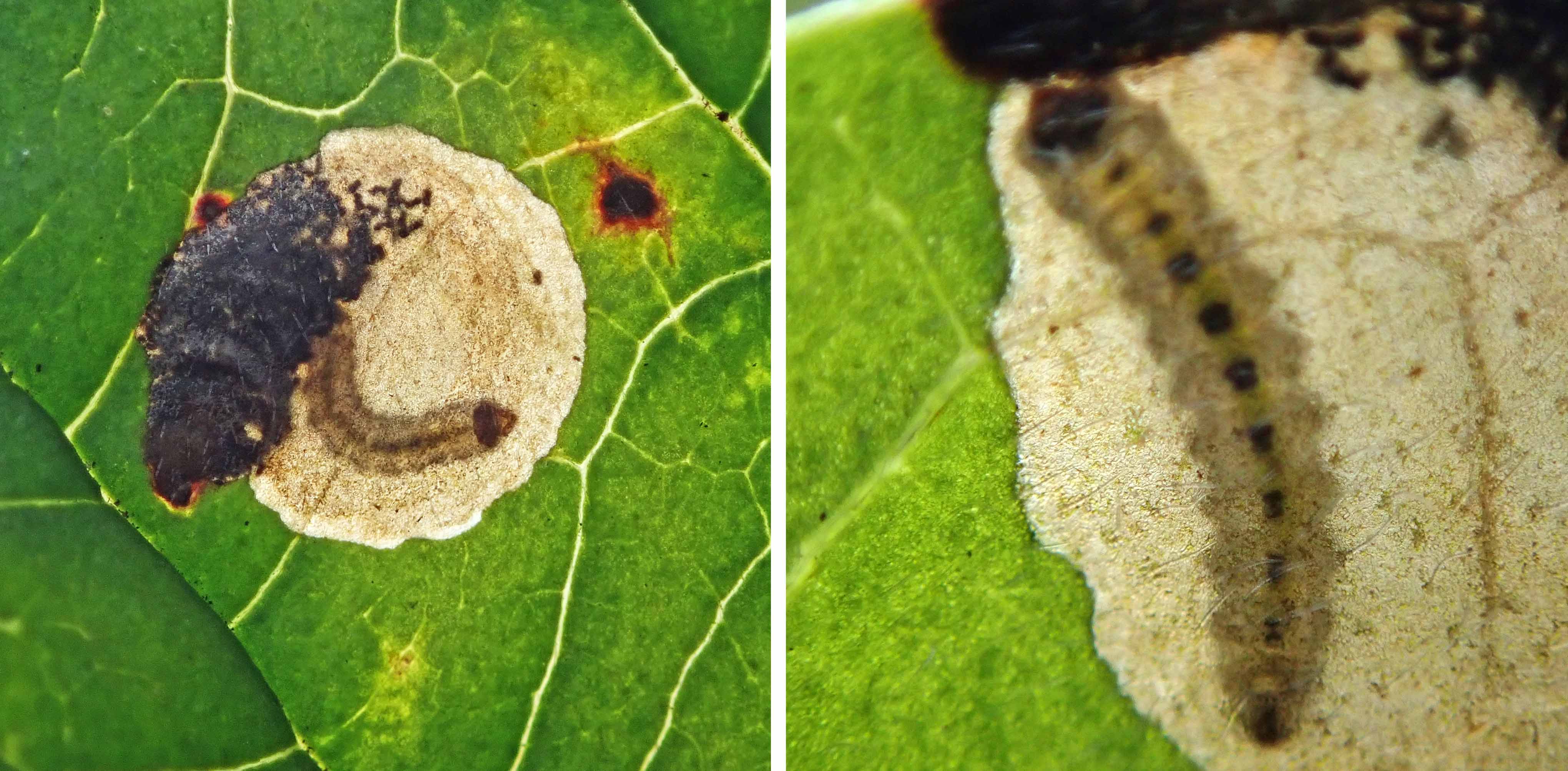
There are two leafminers that make very similar mines so it’s important to check the larvae if they’re still present. If the larvae have dark spots along the centre of their bodies, they are Antispila petryi (a little moth that’s also known as the Dogwood cutter); if there are no spots, they are Antispila metallela (Shining dogwood cutter). As you can see, the larvae I found have spots, so are the former.

240909 Antispila petryi (2)

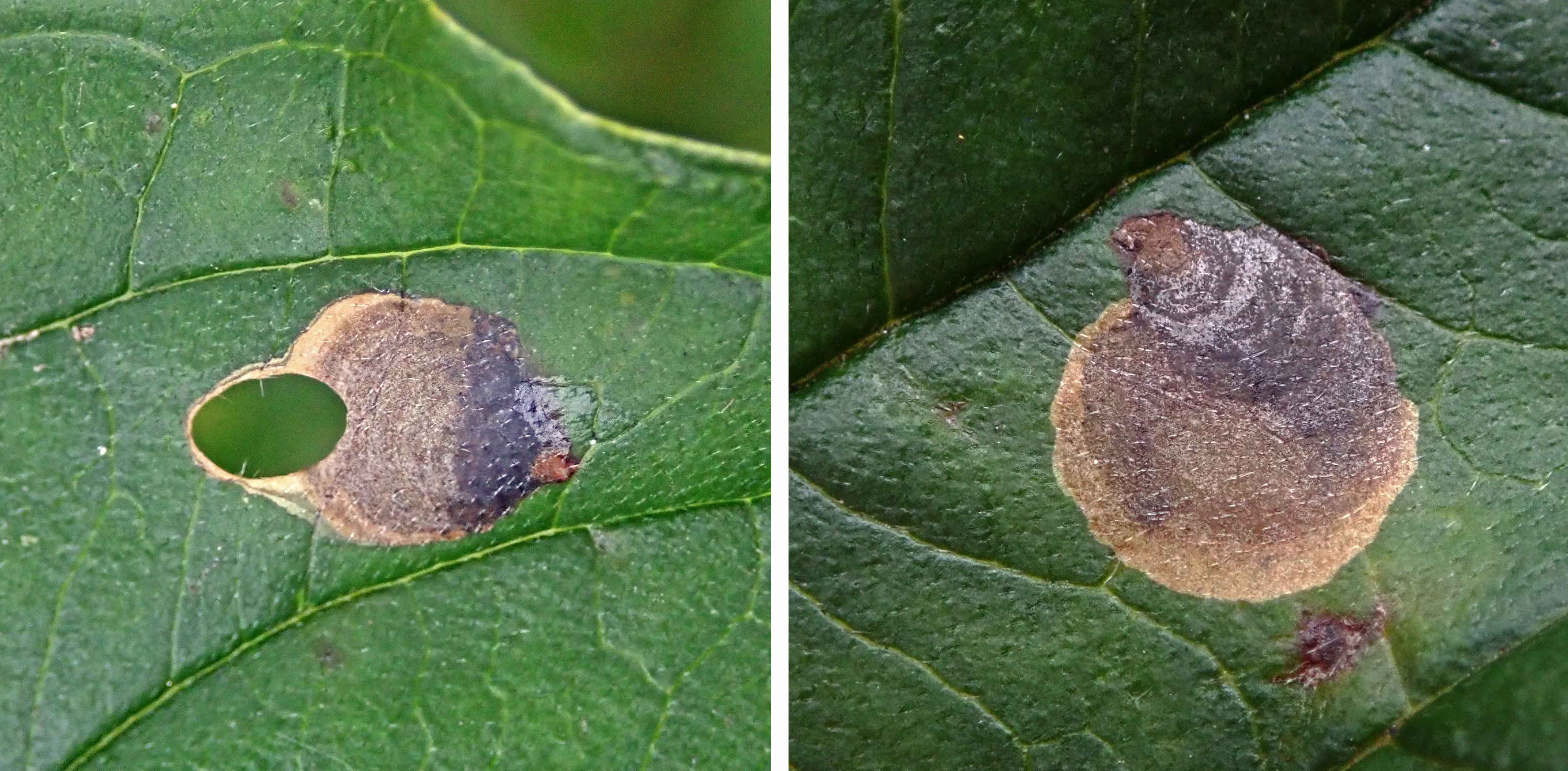
When they are fully grown, the larvae cut out an oval from the leaf to make themselves a case and drop to the ground to pupate, hence the holes shown in my photos. The mines can be found from August to October.

240909 Antispila petryi (3)

When I checked the Welsh biodiversity records database, I found that there were very few Welsh records, and none in my area. However, a few days later I found more mines in another location so it seems that, like many other leafminers, this species is under-recorded. I’m now on the look out for the other species, Antispila metallela.

Like Loading...

Leafmines: Caloptilia stigmatella

02 Monday Sep 2024

Posted by sconzani in insects, trees

≈ Leave a comment

Tags

British moths, Caloptilia stigmatella, leaf mines on poplar, leaf mines on willow, leaf-mining moth larvae, leaf-mining moths

Another Monday, another new leaf mine – they’re never ending!

240902 Caloptilia stigmatella (1)

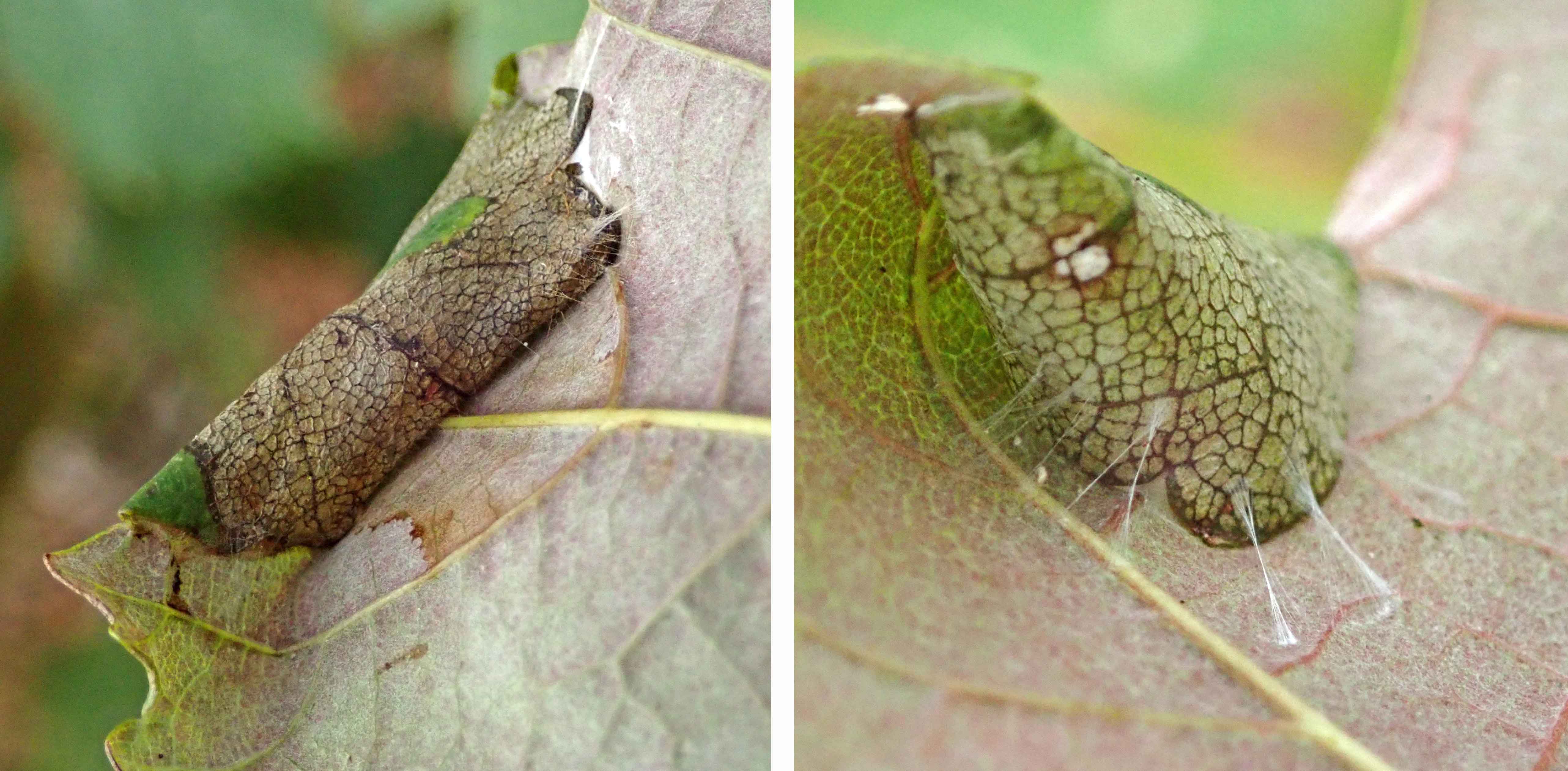
Now, this may not look like a mine but what’s happened is this: once hatched from its egg, the larva chewed an initial linear mine in the surface on the underside of the leaf – this species uses willow (Salix sp.) and poplar (Populus sp.). Then it munched out a blotch at the edge of the leaf and rolled the edge over to create a cone. As you see here, the larva will often create two or even three cones before it pupates.

240902 Caloptilia stigmatella (2)

These mines and cones are the work of the moth Caloptilia stigmatella. You can see more examples of the mines and get more information on the British Leafminers website here, and see photos of the adult of the species on the UK Moths website here.

Like Loading...

Leafmines: Cameraria ochridella

05 Monday Aug 2024

Posted by sconzani in insects, trees

≈ Leave a comment

Tags

British moths, Cameraria ochridella, Horse chestnut leaf-mining moth, Horse chestnut leafminer, Horse chestnut tree, leaf-mining moth larvae

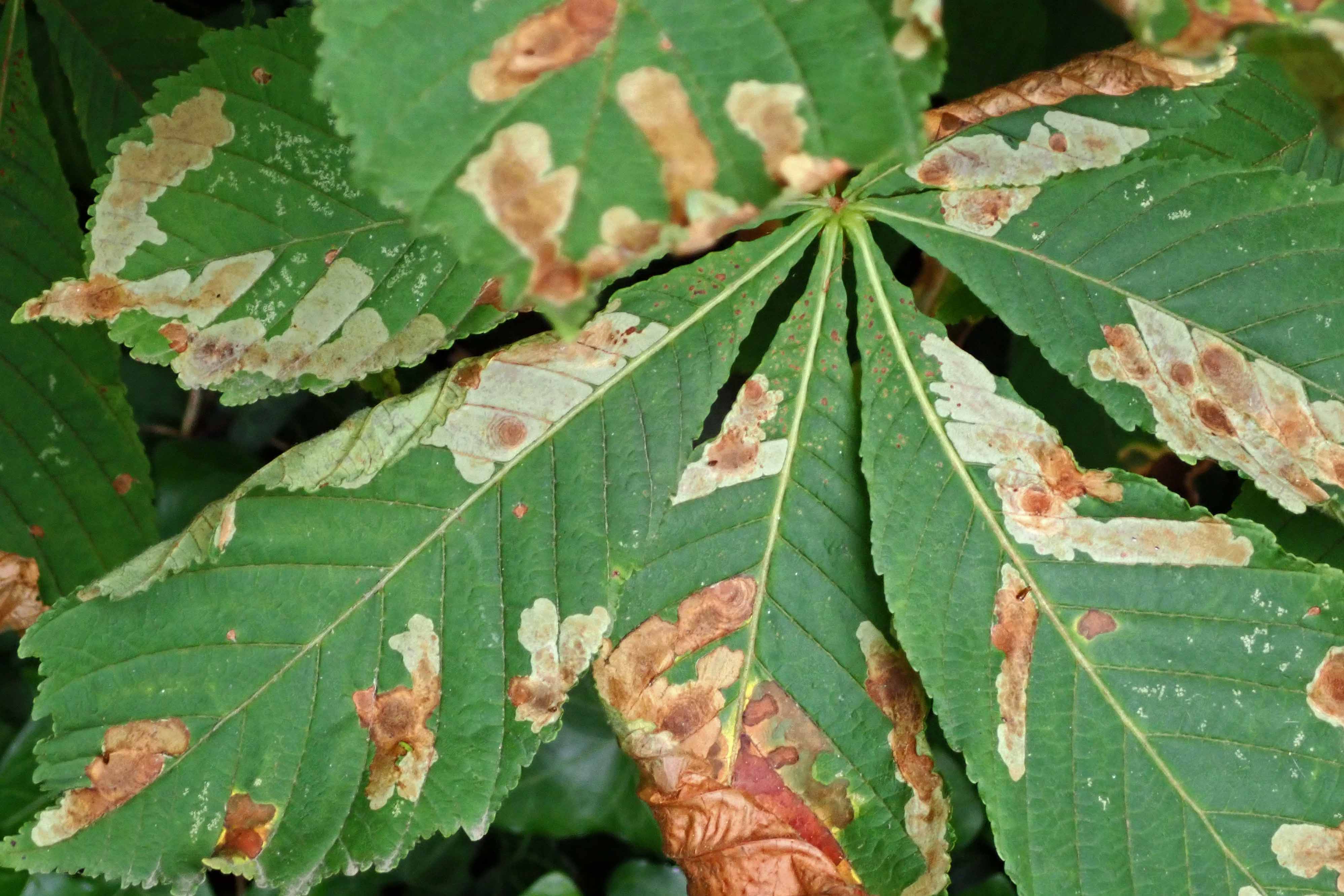
As it’s very common, I’m sure you’ve all seen this damage on the leaves of Horse chestnut trees. These are leafmines, made by the larvae of the Horse chestnut leafminer (Cameraria ochridella) (see my blog Horse chestnut leafminer, 18 July 2018).

240805 Cameraria ochridella (1)

Until last Friday, I’d only ever seen the leafmines, never the adult moth. But, as I walked past this particular Horse chestnut tree, lots of tiny creatures were flitting around its lower leaves. At first, I wasn’t sure what the creatures were – they looked like little flies. Then one of them landed on a leaf in front of me and I managed to get a closer look – a moth, not a fly, and very prettily marked too.

240805 Cameraria ochridella (2)

I must have stood watching for 15 minutes or more, waiting for a moth to settle and snapping a few quick photos before it zipped off … and again … and again. It was a good test of my patience, and I’m really glad I was in the right place at the right time to see these beautiful moths.

240805 Cameraria ochridella (3)

Like Loading...

Leafmines: Coleophora siccifolia

22 Monday Jul 2024

Posted by sconzani in insects, trees

≈ Leave a comment

Tags

British moths, Coleophora mining Hawthorn, Coleophora siccifolia, Hawthorn, leaf-mining moth larvae, leafmines on Hawthorn

As often happens, my search for these leafmines was inspired by a post on Twitter/X. In this instance, George, a locally based senior ecologist with Butterfly Conservation, posted that he had found, for the first time in Glamorgan, the larval cases of the tiny moth Coleophora siccifolia. The find site was on a part of the south Wales coastal path within bus-and-walking distance from home so, on the next fine day, off I set.

240722 Coleophora siccifolia (1)

Searching the leaves of Hawthorn, I found lots of evidence where Coleophora larvae had been feeding. As they live in cases, there’s usually a tiny hole where the larva has parked its case and poked its head and part of its body inside the layers of the leaf to feed, thus creating a distinctive blotch (as you can see in the photograph above).

240722 Coleophora siccifolia (2)

As the British leafminers website relates, the larvae also mine the leaves of Apple, Rowan and Birch, and the cases they create from bits of leaves are quite distinctive. George had found several cases but I only managed to find one, and that one was empty. Still, now that we know Coleophora siccifolia can be found locally, I’ll keep on looking for more.

Like Loading...

Leafmines: Coleophora follicularis

20 Monday May 2024

Posted by sconzani in insects, plants

≈ Leave a comment

Tags

Agrimony case-bearer, British moths, casebearing moth larvae, Coleophora follicularis, Hemp-agrimony, leaf-mining moth larvae, leafminers on Hemp agrimony

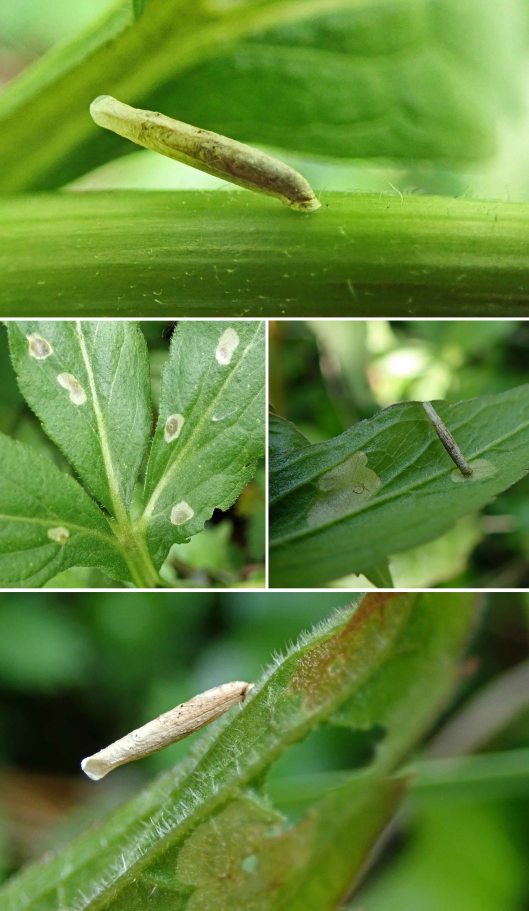
As often happens, I was alerted to the existence of this leafminer by a post on Twitter of someone else finding one. So, in the following days, I pointed my walking shoes in the direction I knew I would find their host plant for a little leaf staring, and Bob’s your uncle (such a strange expression, don’t you think?)! After checking two or three clumps of Hemp-agrimony (Eupatorium cannabinum), I spotted the tell-tale feeding signs (see photos below) and, lurking beneath a leaf, my first Coleophora follicularis (Agrimony case-bearer).

240520 Coleophora follicularis

According to the British Leafminers website, as well as feeding on Hemp-agrimony, these larvae also feed on Common fleabane (Pulicaria dysenterica) and Ploughman’s-spikenard (Inula conyzae), and the times of year of the appearance of the larvae and adults vary depending on the larval food plant. When Hemp-agrimony is used, the mines can be found in April-May and then again in July-August. The UK Moths website shows an adult moth that has a subtle pattern of beige and cream stripes, a smart-looking little flier.

Like Loading...

Leafminers: Eriocrania sangii

13 Monday May 2024

Posted by sconzani in insects, trees

≈ Leave a comment

Tags

Birch, British leafminers, British moths, Eriocrania sangii, leaf-mining moth larvae, leafmine on Birch

Last week I covered Eriocrania semipurpurella; this week’s leafminer is the second of the eight British Eriocraniidae moth species I’ve now found mining the leaves of Birch trees.

240513 Eriocrania sangii (1)

This dark grey larva (the colour makes this the easiest of the family to identify) will eventually develop into the moth Eriocrania sangii, which looks to be a very pretty sparkly purple if the image on the UK Moths website is true to life.

240513 Eriocrania sangii (2)

Like Loading...

Leafminers: Eriocrania semipurpurella

06 Monday May 2024

Posted by sconzani in insects, trees

≈ Leave a comment

Tags

British leafminers, British moths, Eriocrania semipurpurella, Eriocraniidae, leaf-mining moth larvae, leafmine on Birch

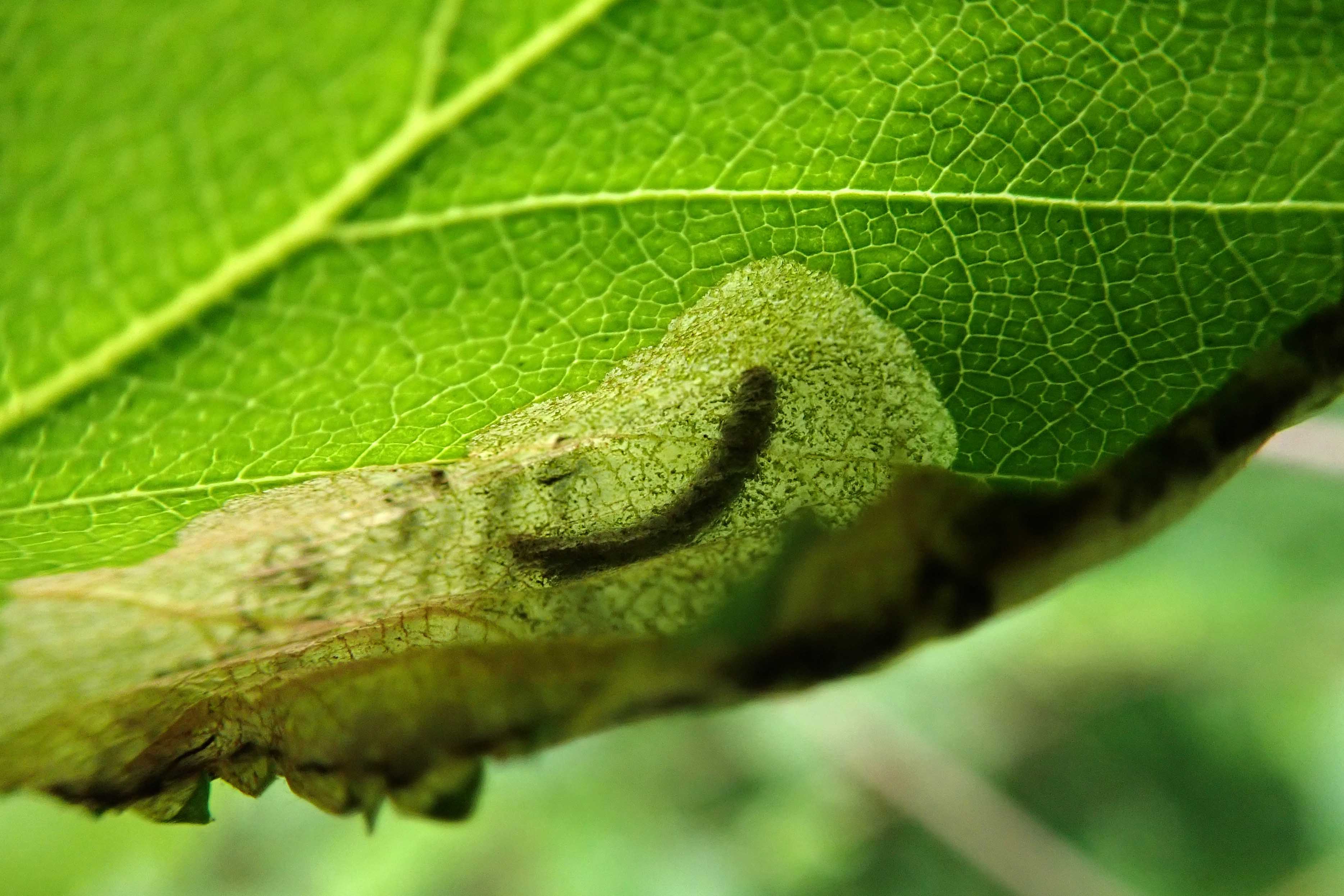
There are eight Eriocraniidae species of moth in Britain, the larvae of which can all be found mining the leaves of Birch trees at this time of year. And this means that, whenever I’m out walking and pass a Birch tree, I have to stop and stare at its leaves, looking for the signs of leaf mining. This is the first one I’ve found, Eriocrania semipurpurella, and it’s the biggest and most common of the Eriocraniidae. You can see what the adult moth looks like on the UK Moths website here.

240506 Eriocrania semipurpurella (1)

The entry on the British Leafminers website explains: ‘The mine starts at or near the leaf edge and then widens into a blotch. The young larva has a dark head and sclerotizations on the prothorax (as shown) [click the link to see the images]. As the larva matures it loses these dark markings….’ I am still finding these mines tricky to differentiate – the British Leafminers site has a page of images that is a good starting point, and I’m lucky to have contact with one of the site managers, Rob Edmunds, so can easily get my finds checked.

240506 Eriocrania semipurpurella (2)

Like Loading...
← Older posts
Newer posts →

About me

sconzani

sconzani

I'm a writer and photographer; researcher and blogger; birder and nature lover; countryside rambler and city strider; volunteer and biodiversity recorder.

View Full Profile →

Follow earthstar on WordPress.com

Enter your email address to follow this blog and receive notifications of new posts by email.

Recent blog posts

  • Blackthorn in bloom January 11, 2026
  • Weevil: Mecinus pyraster January 10, 2026
  • Red in beak and claw January 9, 2026
  • Who’s watching who? January 8, 2026
  • Springtail: Orchesella cincta January 7, 2026

From the archives

COPYRIGHT

Unless otherwise acknowledged, the text and photographs on this blog are my own and are subject to international copyright. Nothing may be downloaded or copied without my permission.

Fellow Earth Stars!

  • Unknown's avatar
  • Unknown's avatar
  • Unknown's avatar
  • Unknown's avatar
  • Unknown's avatar
  • Unknown's avatar
  • Unknown's avatar
  • Unknown's avatar
  • Unknown's avatar
  • Unknown's avatar
  • Unknown's avatar
  • Unknown's avatar
  • Unknown's avatar
  • Unknown's avatar
  • Unknown's avatar
  • Unknown's avatar
  • Unknown's avatar
  • Unknown's avatar
  • Unknown's avatar
  • Unknown's avatar
  • Unknown's avatar
  • Unknown's avatar
  • Unknown's avatar
  • Unknown's avatar
  • Unknown's avatar
  • Unknown's avatar
  • Unknown's avatar
  • Unknown's avatar
  • Unknown's avatar
  • Unknown's avatar
  • Unknown's avatar
  • Unknown's avatar
  • Unknown's avatar
  • Unknown's avatar
  • Unknown's avatar
  • Unknown's avatar
  • Unknown's avatar
  • Unknown's avatar
  • Unknown's avatar
  • Unknown's avatar
  • Unknown's avatar
  • Unknown's avatar
  • Unknown's avatar
  • Unknown's avatar
  • Unknown's avatar
  • Unknown's avatar
  • Unknown's avatar
  • Unknown's avatar
  • Unknown's avatar
  • Unknown's avatar

Blog at WordPress.com.

Privacy & Cookies: This site uses cookies. By continuing to use this website, you agree to their use.
To find out more, including how to control cookies, see here: Cookie Policy
  • Subscribe Subscribed
    • earthstar
    • Join 669 other subscribers
    • Already have a WordPress.com account? Log in now.
    • earthstar
    • Subscribe Subscribed
    • Sign up
    • Log in
    • Report this content
    • View site in Reader
    • Manage subscriptions
    • Collapse this bar
 

Loading Comments...
 

You must be logged in to post a comment.

    %d