• ABOUT
  • BIRDING 2018
  • Birding 2019
  • BLOG POSTS
  • Butterflies 2018
  • Resources

earthstar

~ a celebration of nature

earthstar

Tag Archives: Miridae

Bug: Megacoelum infusum

12 Friday Sep 2025

Posted by sconzani in insects, trees

≈ Leave a comment

Tags

British miridae, bugs on Oak, Megacoelum infusum, mirid bugs on Oak, Miridae

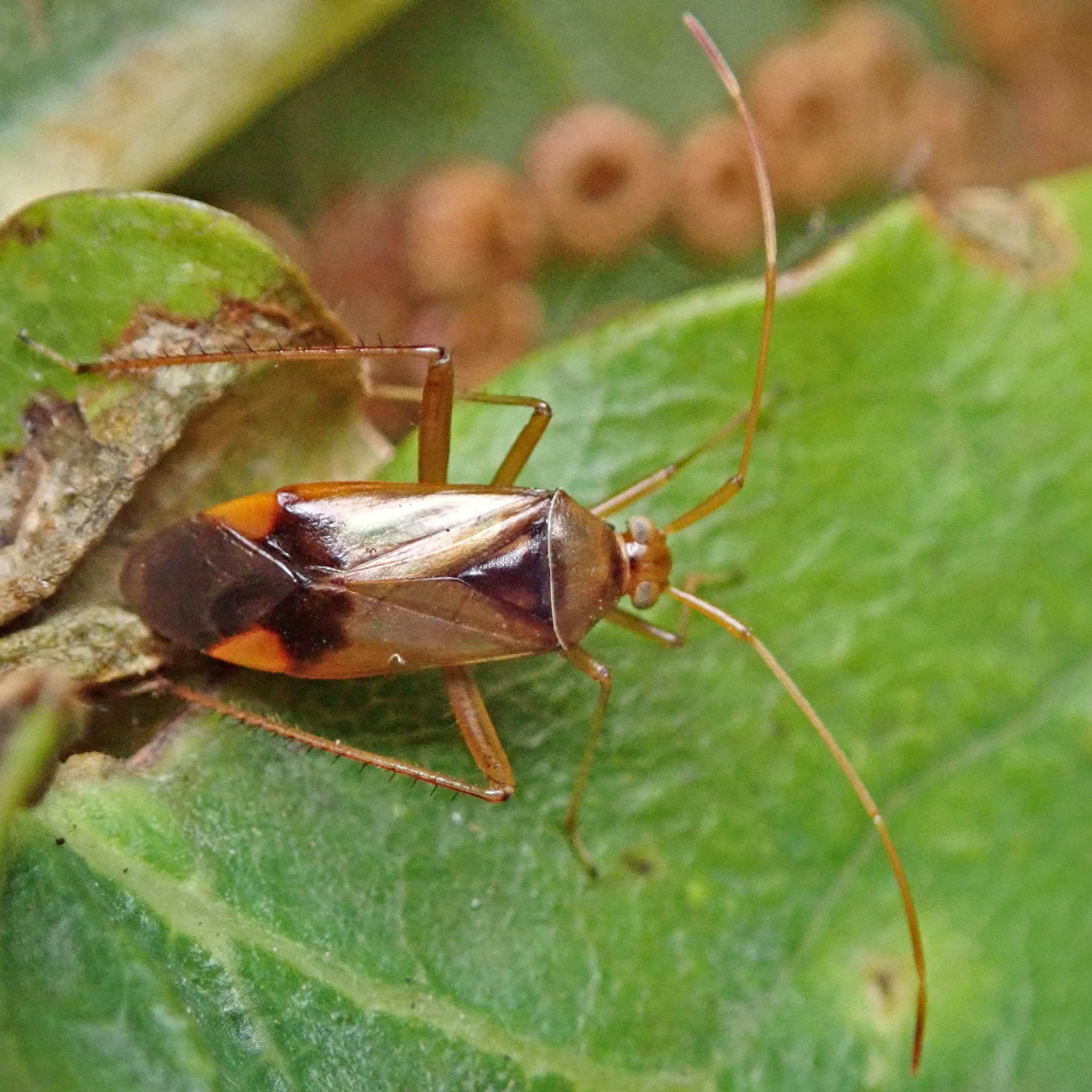
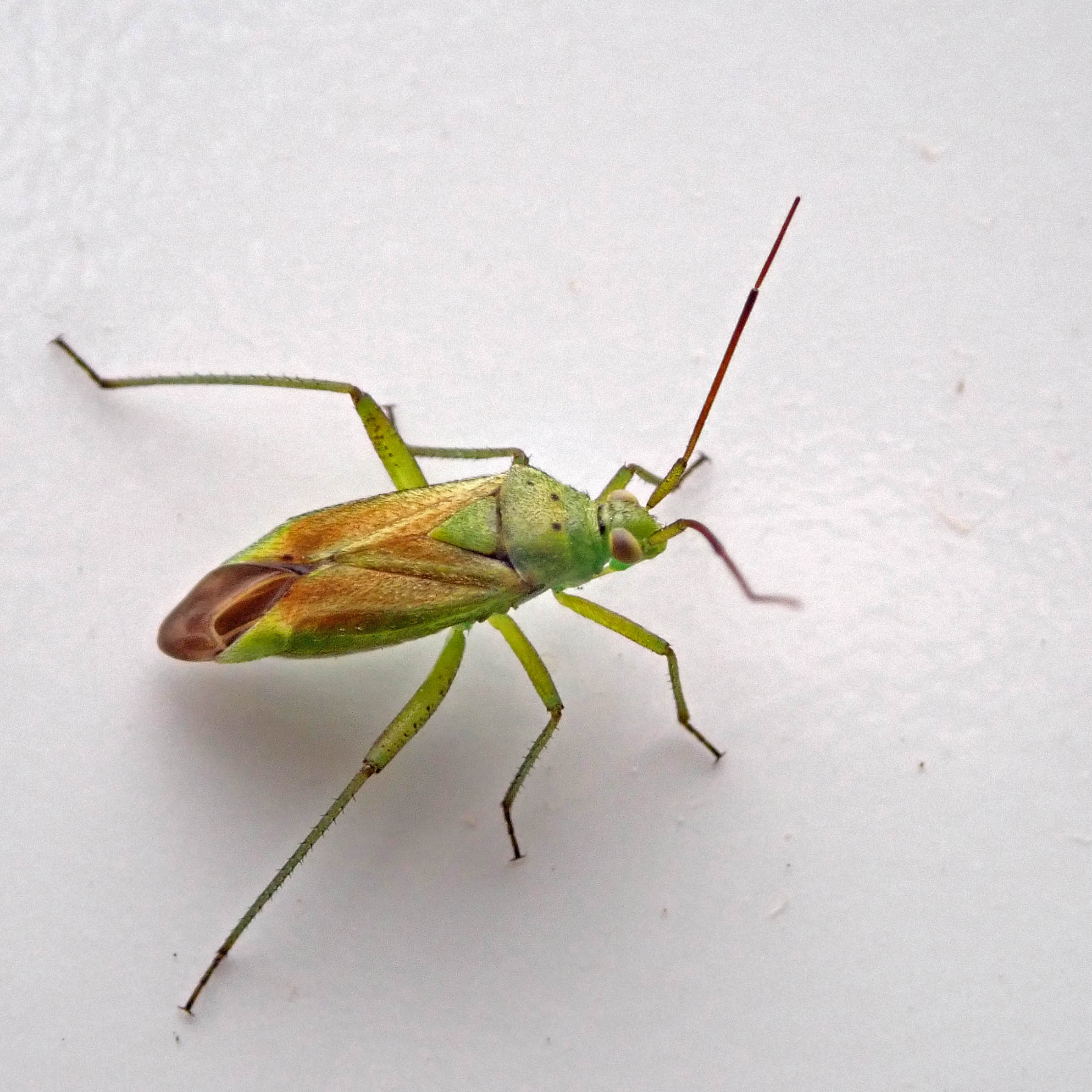
Here’s another of this year’s new bug finds, a handsome little mirid bug coloured a rich brown and orange, Megacoelum infusum. I found it on a local Oak tree, which was fortunate, as there’s a very similar looking bug (Megacoelum beckeri) that lives on Scots pine (Pinus sylvestris). The British Bugs website entry for this species says it is both vegetarian and carnivorous, supping on Oak sap and tiny insects.

Like Loading...

Closterotomus cousins

03 Wednesday Sep 2025

Posted by sconzani in insects

≈ Leave a comment

Tags

British bugs, Closterotomus fulvomaculatus, Closterotomus norwegicus, Closterotomus species, mirid bugs, Miridae, Potato capsid

This is a tale of two Closterotomuses – Closterotomi?

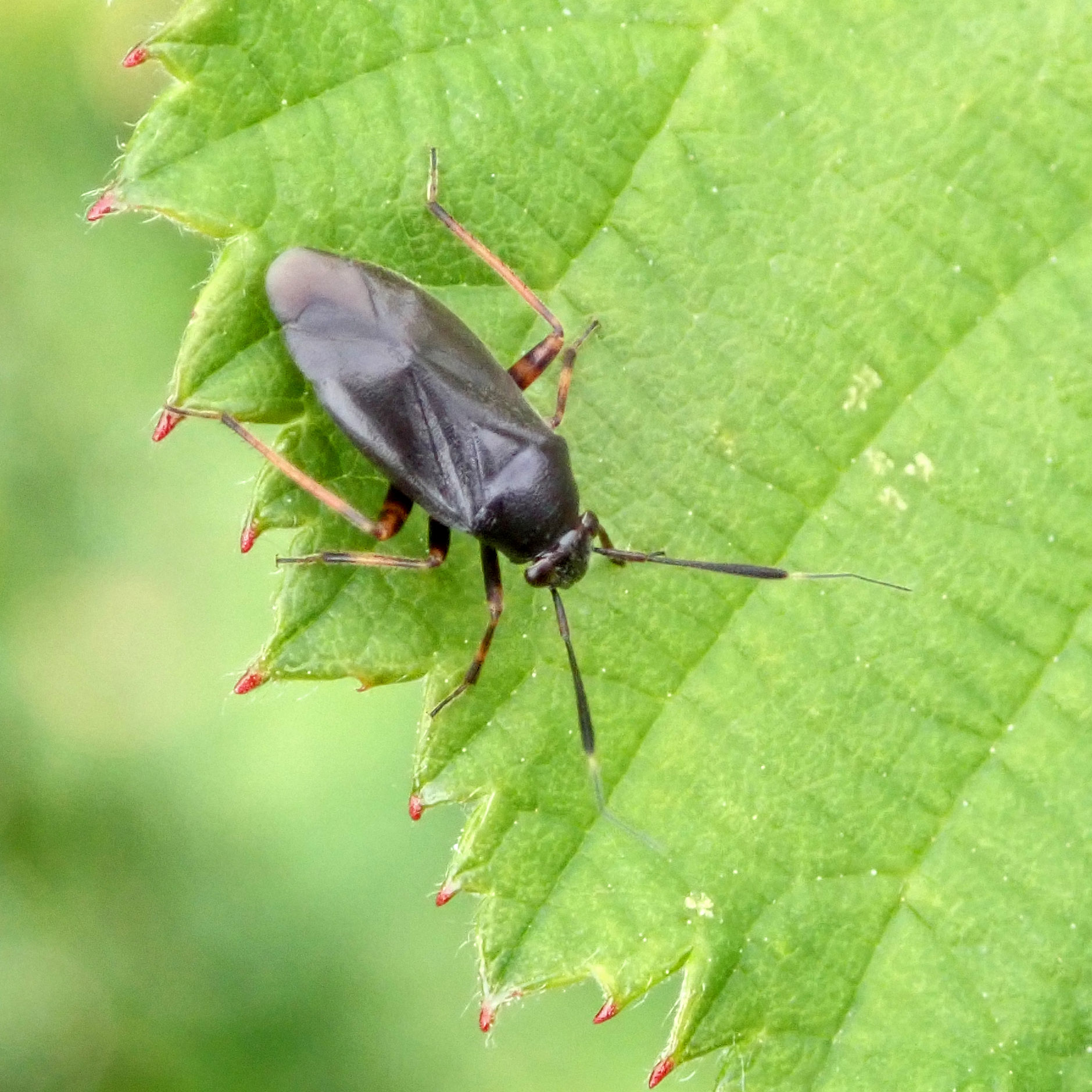
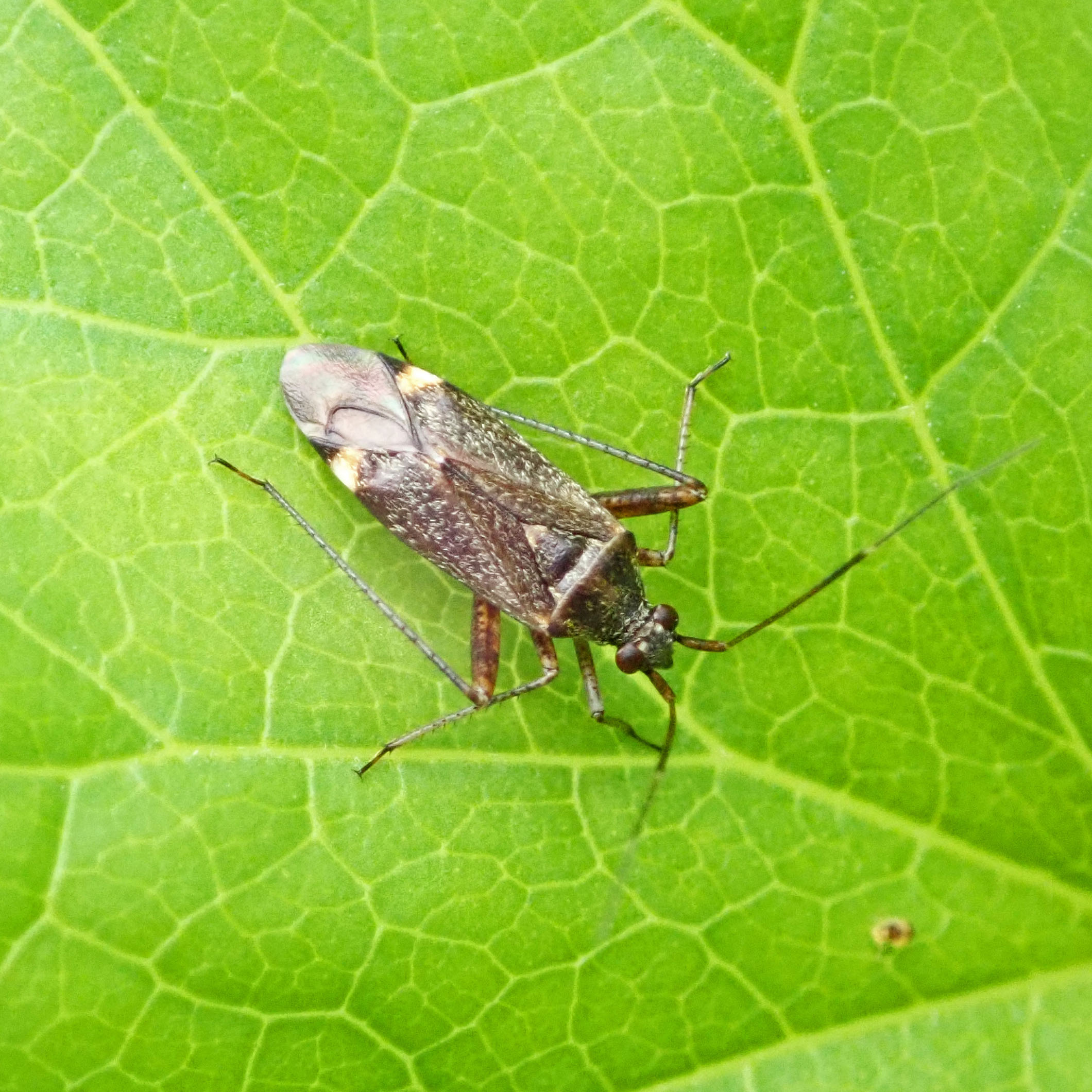
The first is Closterotomus norwegicus, also known as the Potato capsid, though I’m not sure why it has that common name. The British Bugs website says it ‘feeds on a wide range of plants, especially nettles, composites and clovers’, with no mention of potatoes. It’s a handsome little bug and quite common, though can be confused with other similar mirid bugs – the British Bugs page lists some of the distinguishing features to look out for.

This second Closterotomus species is C. fulvomaculatus – no common name that I’m aware of. It can be seen between June and August, so we’re right at the end of its date range now but there may still be time to spot it on scrub and in hedgerows where it feeds on nettles and meadowsweet. Apparently, it’s also quite partial to hops, but we don’t have those in my local area. It looks like just another brown bug until you look more closely and notice the lovely golden hairs that cover its upper body.

Like Loading...

Bug: Deraeocoris flavilinea

28 Saturday Jun 2025

Posted by sconzani in insects

≈ Leave a comment

Tags

British miridae, bug, bugs on Field maple, bugs on Sycamore, Deraeocoris flavilinea, mirid bugs, Miridae

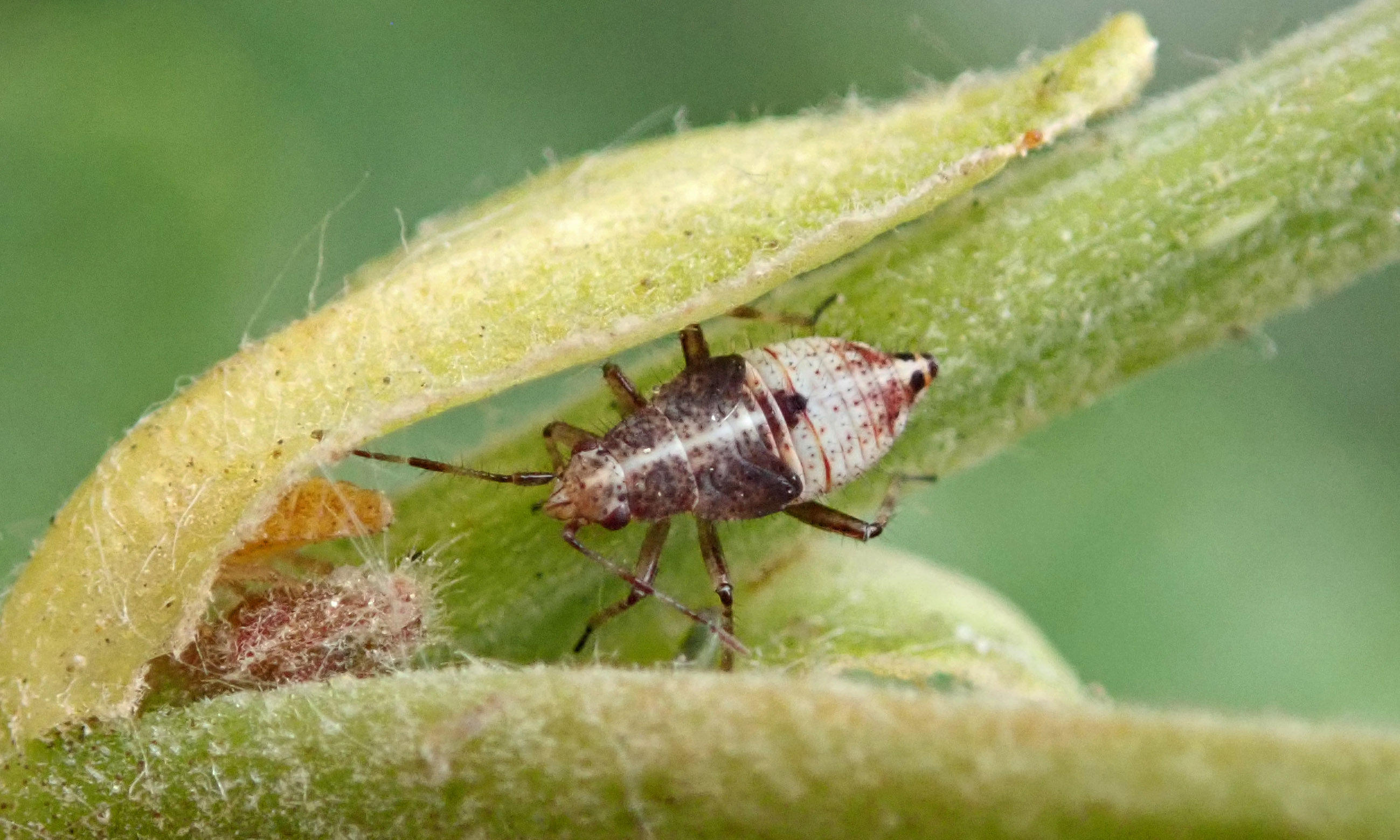
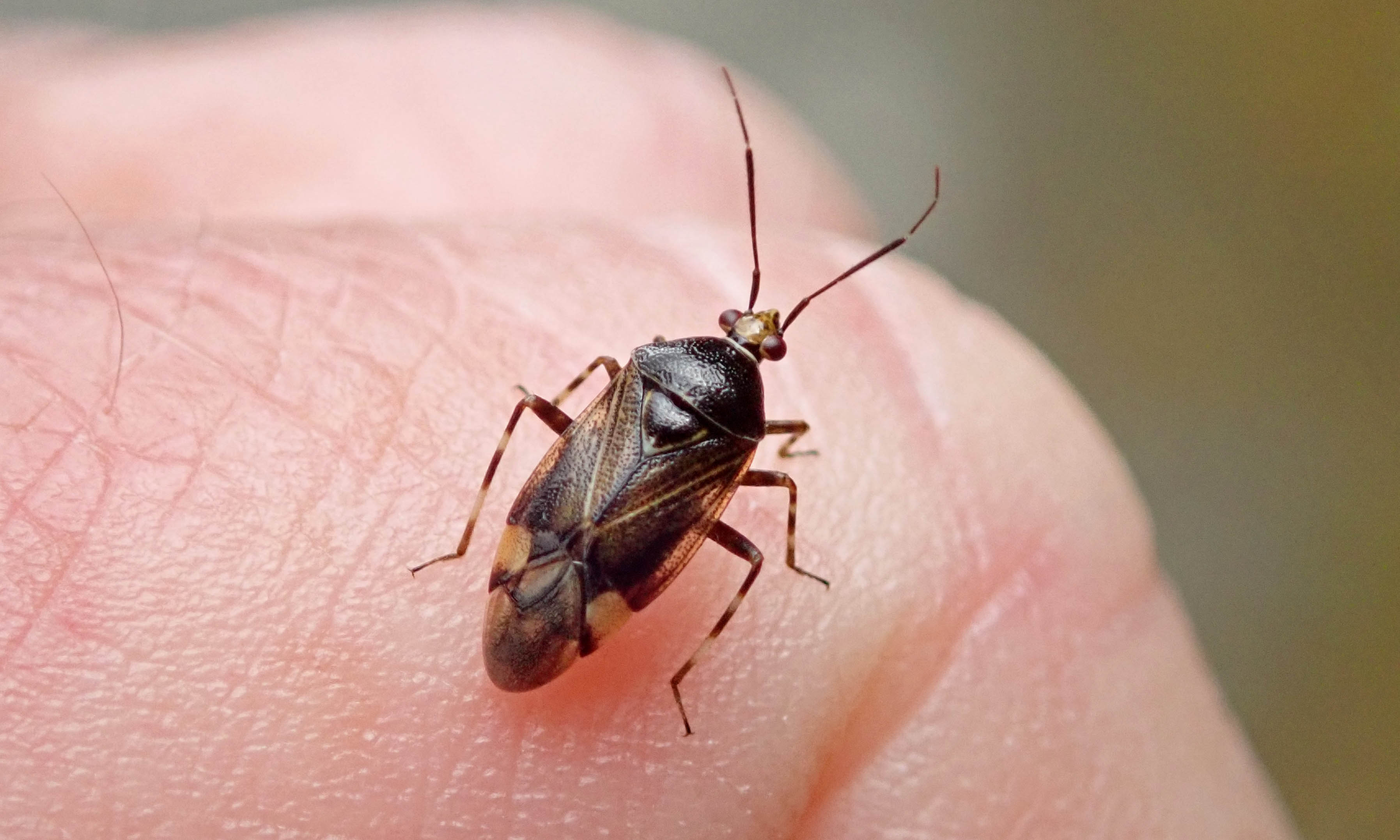
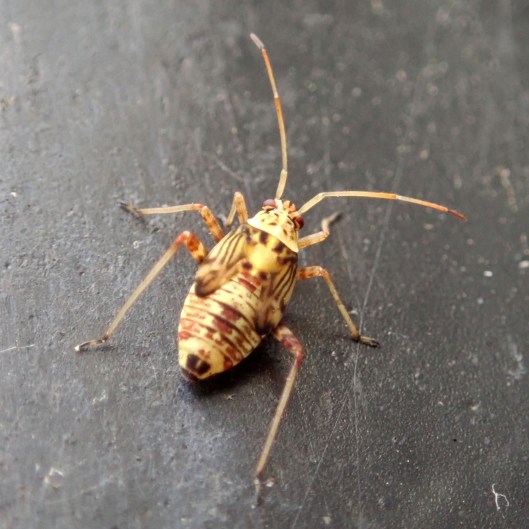
How bugs are able to colonise places as rapidly as many seem to do always surprises me, and this new-to-me Mirid bug is one of those. Deraeocoris flavilinea was first reported in the UK in 1996.

In the interim 29 years between then and now it has made itself at home across most of the southern and central parts of Britain. Perhaps the fact that this bug’s larvae feed on Field maple and Sycamore, both very common tree species, has helped with its rapid colonisation efforts.

I saw my first, the nymph shown above, on 12 May and, at the end of May, saw my first adult. Since then, I’ve seen several more, even had one walking sedately up my arm, down again and on to my hand, which allowed for a nice close up as my final photo shows.

Like Loading...

Rhabdomiris striatellus

10 Tuesday Jun 2025

Posted by sconzani in insects, trees

≈ Leave a comment

Tags

British miridae, British plant bugs, bugs on Oak, insects on Oak trees, Miridae, oak tree, plant bug on Oak, Rhabdomiris striatellus

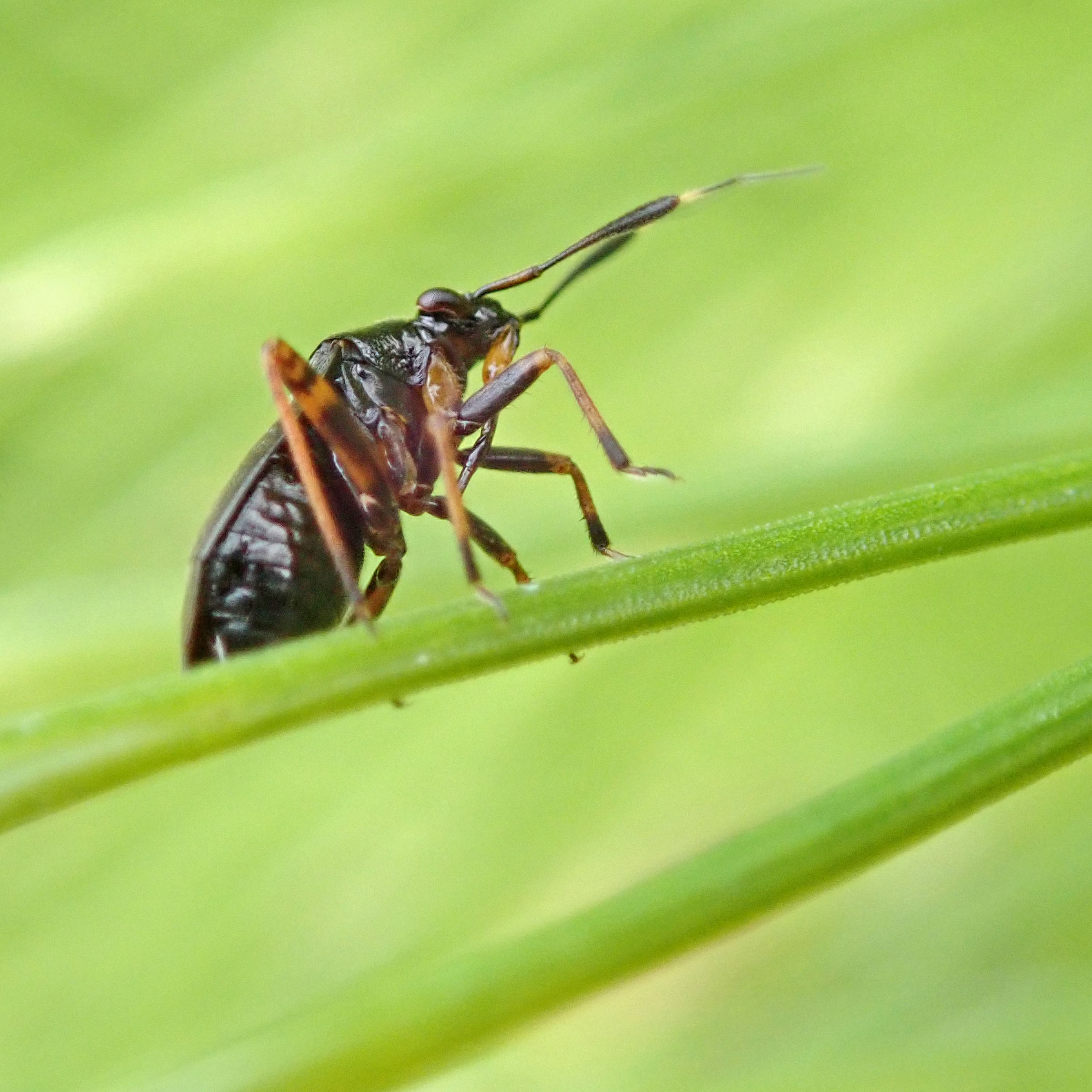
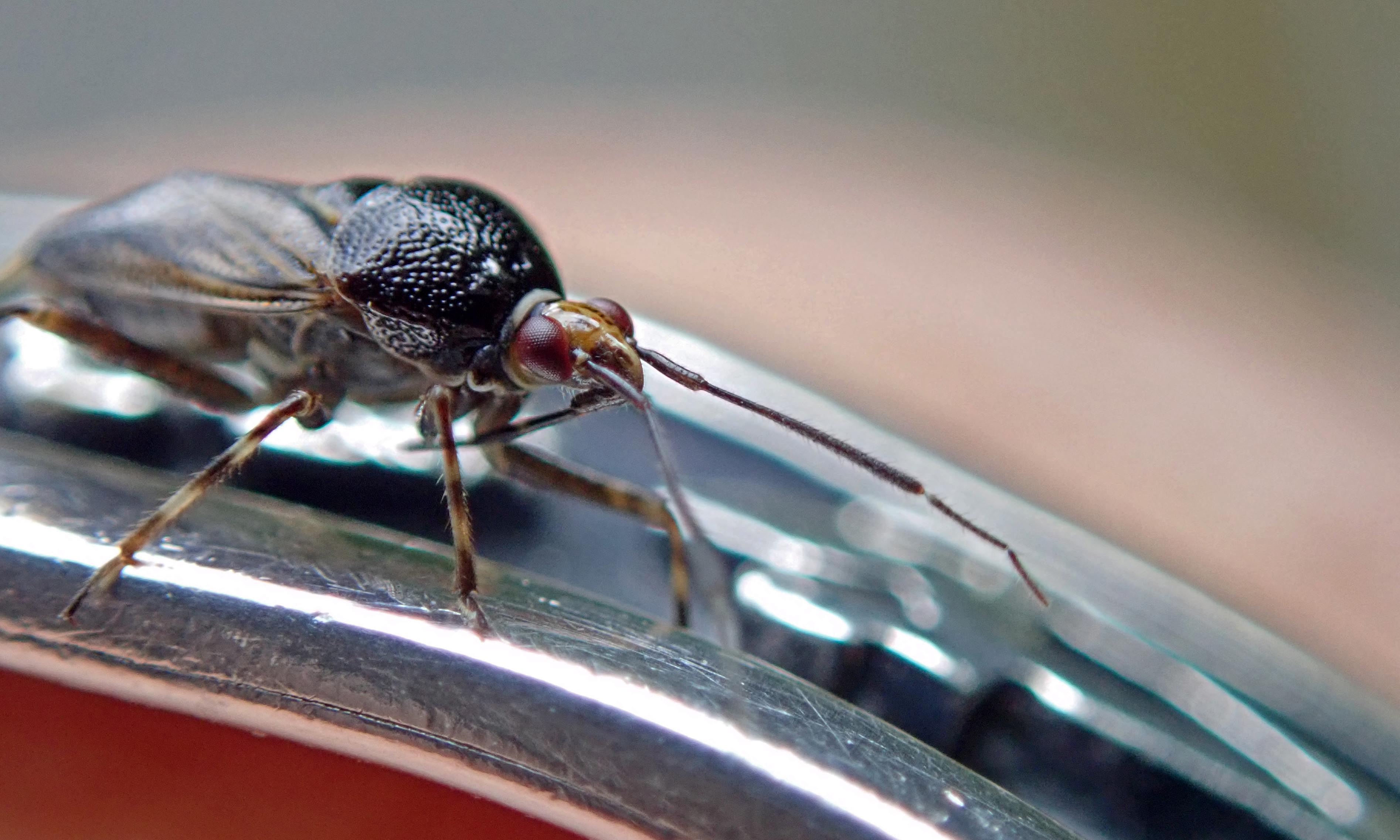
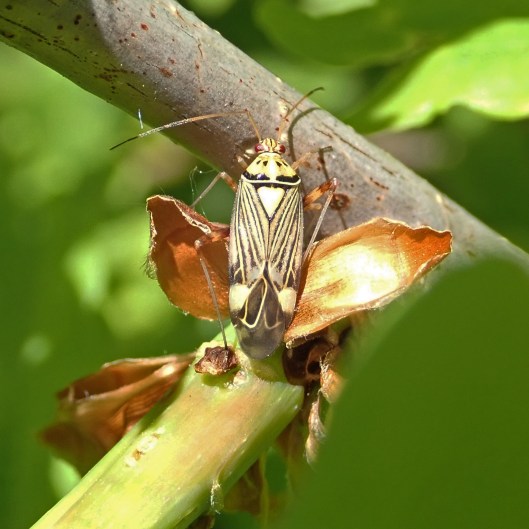
Here’s another bug that I’d never seen before this year and I’ve been lucky enough to find both a nymph and an adult. This is Rhabdomiris striatellus, one of the UK’s 200-plus species of plant bugs in the Miridae family. (I’ve probably only seen about a tenth of them so I’ve got plenty more discoveries yet to make.)

As this bug’s larvae feed on unripe catkins, it is usually found on or around Oak trees, and that’s certainly where I found the adult bug, shown below. The nymph above had probably fallen out of an Oak tree, or had decided to go walkabout to find a neighbouring Oak; I found it on the railings of my local park, where I’ve found so many invertebrates.

Rhabdomiris striatellus overwinters as an egg, hatches out in mid Spring, then passes through a series of instars until it reaches adulthood. The adults can then be seen from May through to July. Those timings certainly fit with my discoveries; I found the nymph on 25 April and the adult, in a different location, on 3 May.

Like Loading...

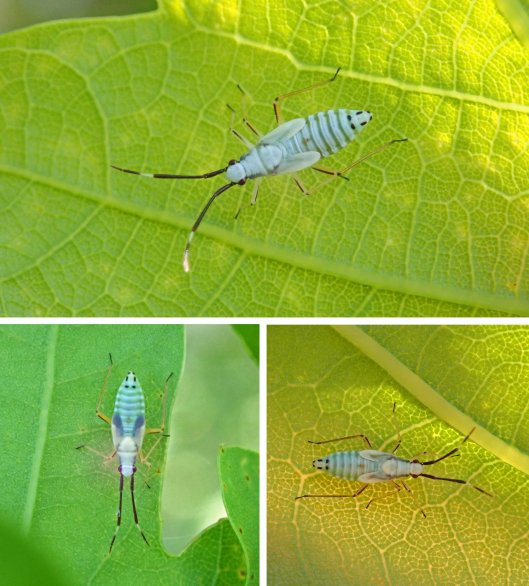
Cyllecoris histrionius, adult and nymph

12 Monday May 2025

Posted by sconzani in insects

≈ Leave a comment

Tags

British plant bugs, bugs on Oak, Cyllecoris histrionius, Cyllecoris histrionius adult, Cyllecoris histrionius nymph, Miridae, plant bugs

It’s not often that I manage to find both adult bugs and their nymphs at the same time but, during Saturday’s meander around local fields, I got lucky. These are Cyllecoris histrionius, members of the Miridae family, and they spend their lives on Oak trees. I’ve seen the adult bugs before, just not the young’uns.

There are a few plant bugs whose adults have markings quite similar to this one so care must be taken when identifying them, but it’s not too difficult. They are both carnivores and vegetarians, feeding on insects smaller than they are, like bark flies and aphids, as well as on parts of their host tree.

After laying their eggs, the adults die; they’re usually only seen from May through to July. In the Spring, the eggs hatch, and go through several stages (instars) before reaching adulthood. The gorgeous blue-green nymphs shown above are all final instars.

Like Loading...

Common nettle bugs

29 Tuesday Apr 2025

Posted by sconzani in insects, plants

≈ Leave a comment

Tags

bugs on Stinging nettle, Common nettle bug, insect on Stinging nettle, Liocoris tripustulatus, Miridae, plant bugs

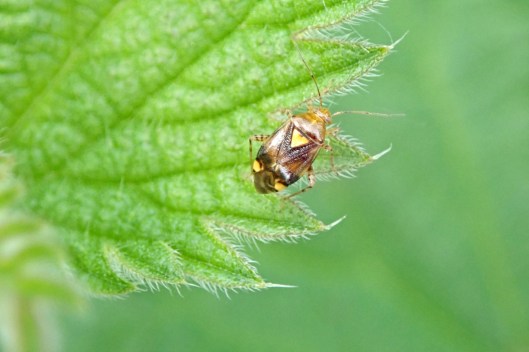
I’ve been finding a few new insects recently and this is one of them, the supposedly common Common nettle bug (Liocoris tripustulatus). Perhaps I’ve never noticed them because they tend to live mainly on Stinging nettle (and you know by now that I find nettles challenging – those stings!). This month I’ve seen them twice and they can, apparently, be seen all year round. And, fortunately, with their three yellow dots, these little (4 to 5 mm long) plant bugs are easy to identify.

Like Loading...

Fine streaked bugkins

26 Saturday Apr 2025

Posted by sconzani in insects, spring

≈ Leave a comment

Tags

Fine streaked bugkin, Fine streaked bugkin nymphs, Miridae, Miris striatus, Miris striatus nymphs, plant bug nymphs, plant bugs

At first glance, I thought these little creatures were fancy ants but a closer look took in the striped waist, the longer antennae and the generally larger size, and I knew they definitely weren’t ants. But what were they?
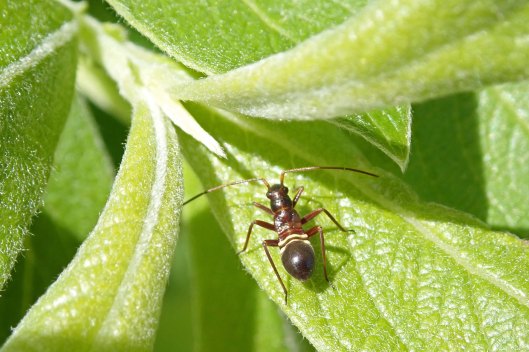
At this time of year, many insects are still in their early stages of development, particularly those that have over-wintered as eggs, so they can be tricky to identify. Usually, some well-focused internet research produces an answer, or a clue I can then follow, and, luckily, that was the case with these tiny creatures.

These are the nymphs of Miris striatus, a plant bug that has the wonderfully descriptive common name of Fine streaked bugkin – although these nymphs have their small yellow stripes, the streaking actually refers to the adult bugs, photos of which you can see on Naturespot by clicking this link.

That website entry states that these insects are usually associated with Oak and Hawthorn but, as I often find, creatures don’t read websites, and these bugkin nymphs were all on a single willow sapling (though there were Hawthorn bushes nearby). I’ll have to keep an eye out for the adults from May through to July.


Like Loading...

Stenodema laevigata

01 Monday Aug 2022

Posted by sconzani in insects

≈ Leave a comment

Tags

British bugs, mirid bugs, Miridae, plant bugs, Stenodema laevigata

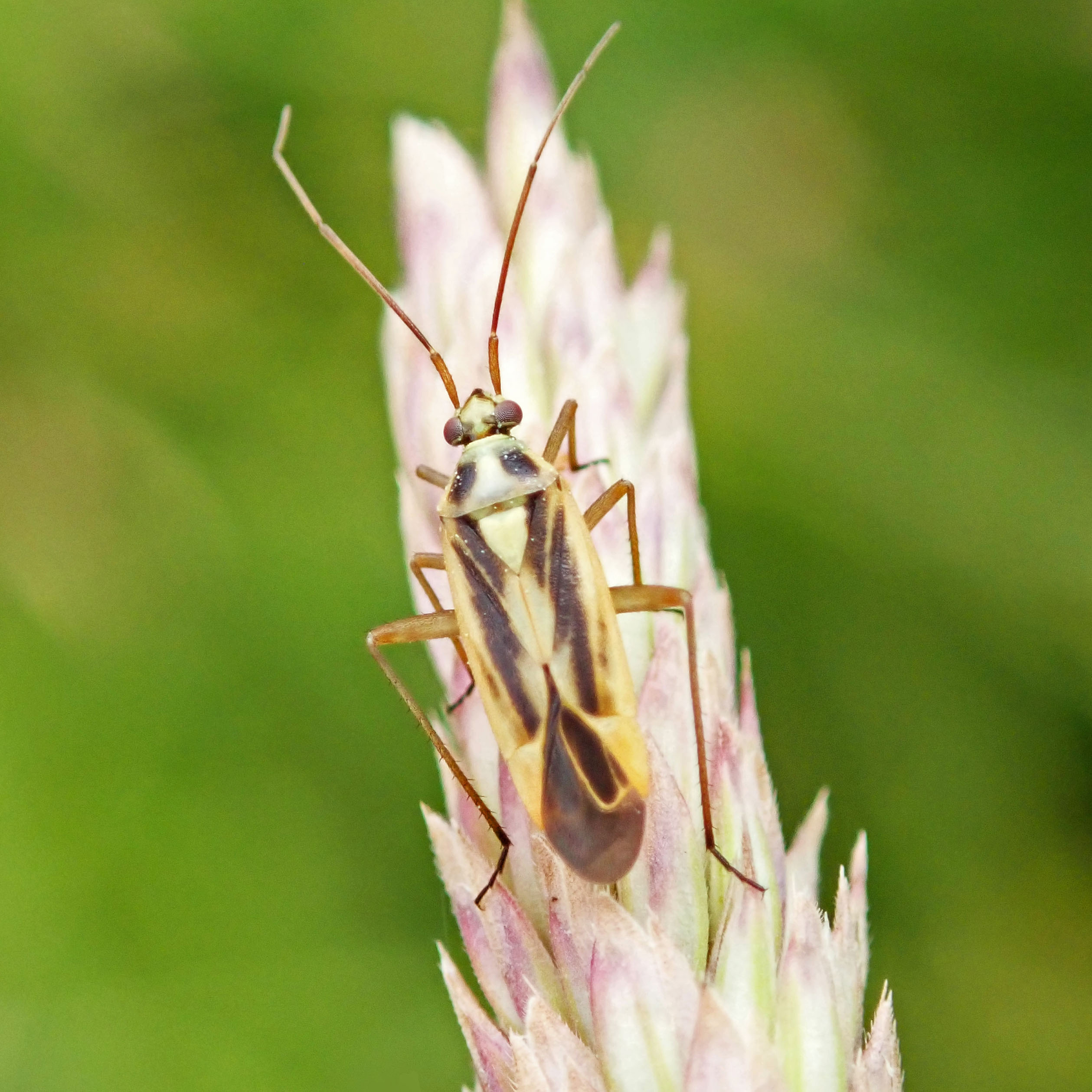
I cannot tell a lie – I didn’t find this bug, it found me. As I was wandering around a local field, I glimpsed something flit up from the flowers and looked down to find it sitting on my t-shirt. Very obligingly, it waited until I got my camera out of my pocket and was then persuaded to climb on to my hand for some photos. Meet Stenodema laevigata, another of the Miridae family of plant bugs. This species is much more common and widespread, with over 3000 records currently showing on the NBN Atlas webpage, or perhaps it’s more often recorded because its slim shape and singular markings make it easier to identify.

220801 Stenodema laevigata

Like Loading...

Adelphocoris lineolatus

30 Saturday Jul 2022

Posted by sconzani in insects

≈ Leave a comment

Tags

Adelphocoris lineolatus, British bugs, Miridae, plant bug

At last a bug with a common name – Adelphocoris lineolatus is also known as the Lucerne bug, though it actually favours quite a wide variety of food plants and, as you can see, I found it sitting on Common fleabane (Pulicaria dysenterica). This species is a little trickier to identify but its combination of paired lines and double spots helped me nail it down. As with yesterday’s mirid bug, records for this species are scattered and mostly to be found in southern Britain, though some adventurous individuals have been recorded in Scotland. (I have not identified the smaller bug in this picture – my photo didn’t show enough details and I suspect it might have fallen into the ‘too hard’ basket anyway.)

220730 Adelphocoris lineolatus

Like Loading...

Oncotylus viridiflavus

29 Friday Jul 2022

Posted by sconzani in insects, wildflowers

≈ Leave a comment

Tags

British bugs, insects on knapweed, knapweed, Miridae, Oncotylus viridiflavus, plant bugs

High summer is prime time for spotting plant bugs. By keeping an eye out for insects on wildflowers, I’ve managed to spot three new (to me) species in the past week alone. This is one of them: a mirid bug with a mouthful of a name, Oncotylus viridiflavus. A lot of these bugs have very similar markings and can be tricky to tell apart but, luckily, this little guy has quite distinct colouration and patterning and, very helpfully, was sitting right where it should be, on top of its food plant, Knapweed. The records for this species are scattered throughout the southern half of Britain but there are a lot of gaps in the map – perhaps you can be the first to find one in your area.

220729 oncotylus viridiflavus

Like Loading...
← Older posts

About me

sconzani

sconzani

I'm a writer and photographer; researcher and blogger; birder and nature lover; countryside rambler and city strider; volunteer and biodiversity recorder.

View Full Profile →

Follow earthstar on WordPress.com

Enter your email address to follow this blog and receive notifications of new posts by email.

Recent blog posts

  • M is for mite December 18, 2025
  • L is for lepidopteran lifers December 17, 2025
  • K is for Keeled skimmers December 16, 2025
  • J is for Jersey tiger December 15, 2025
  • I is for Ichneumon December 14, 2025

From the archives

COPYRIGHT

Unless otherwise acknowledged, the text and photographs on this blog are my own and are subject to international copyright. Nothing may be downloaded or copied without my permission.

Fellow Earth Stars!

  • Unknown's avatar
  • Unknown's avatar
  • Unknown's avatar
  • Unknown's avatar
  • Unknown's avatar
  • Unknown's avatar
  • Unknown's avatar
  • Unknown's avatar
  • Unknown's avatar
  • Unknown's avatar
  • Unknown's avatar
  • Unknown's avatar
  • Unknown's avatar
  • Unknown's avatar
  • Unknown's avatar
  • Unknown's avatar
  • Unknown's avatar
  • Unknown's avatar
  • Unknown's avatar
  • Unknown's avatar
  • Unknown's avatar
  • Unknown's avatar
  • Unknown's avatar
  • Unknown's avatar
  • Unknown's avatar
  • Unknown's avatar
  • Unknown's avatar
  • Unknown's avatar
  • Unknown's avatar
  • Unknown's avatar
  • Unknown's avatar
  • Unknown's avatar
  • Unknown's avatar
  • Unknown's avatar
  • Unknown's avatar
  • Unknown's avatar
  • Unknown's avatar
  • Unknown's avatar
  • Unknown's avatar
  • Unknown's avatar
  • Unknown's avatar
  • Unknown's avatar
  • Unknown's avatar
  • Unknown's avatar
  • Unknown's avatar
  • Unknown's avatar
  • Unknown's avatar
  • Unknown's avatar
  • Unknown's avatar
  • Unknown's avatar

Blog at WordPress.com.

Privacy & Cookies: This site uses cookies. By continuing to use this website, you agree to their use.
To find out more, including how to control cookies, see here: Cookie Policy
  • Subscribe Subscribed
    • earthstar
    • Join 667 other subscribers
    • Already have a WordPress.com account? Log in now.
    • earthstar
    • Subscribe Subscribed
    • Sign up
    • Log in
    • Report this content
    • View site in Reader
    • Manage subscriptions
    • Collapse this bar
 

Loading Comments...
 

You must be logged in to post a comment.

    %d