• ABOUT
  • BIRDING 2018
  • Birding 2019
  • BLOG POSTS
  • Butterflies 2018
  • Resources

earthstar

~ a celebration of nature

earthstar

Tag Archives: moth

Pale tussock moth

07 Friday Jun 2024

Posted by sconzani in insects

≈ Comments Off on Pale tussock moth

Tags

British moths, Calliteara pudibunda, egg-laying moth, moth, Pale tussock moth, Pale tussock moth egg-laying

240607 pale tussock (1)I probably wouldn’t have noticed this gorgeous moth but, when I was standing chatting to an ecologist I hadn’t seen for a while, he spotted it, clinging on to a piece of grass close to the ground.

It’s a Pale tussock moth (Calliteara pudibunda), a female who was busy laying an abundance of eggs – hopefully, you will be able to see them, on the grass stem underneath and below her body, in my first photo and in the photo on the right below. I’m sure many of you will have seen the amazing tufty yellow caterpillars that will emerge from those eggs (see my blog Pale tussock moth caterpillar, 3 September 2022).

I’ve included the photo below left not only to show more detail of this beautiful moth but also so that you can see a distinctive aspect of her behaviour, what the UK Moths website describes as the ‘forward-facing “furry” legs at rest’.

240607 pale tussock (2)

Like this:

Like Loading…

T is for plume

31 Tuesday Oct 2023

Posted by sconzani in insects

≈ Comments Off on T is for plume

Tags

Amblyptilia acanthadactyla, Beautiful plume, British moths, Common plume, Emmelina monodactyla, moth, plume moths

‘T is for plume’ may sound an odd title but it’s the T shape these moths make when they’re resting that makes them recognisable as plume moths, the Pterophorinae. And why plume? Well, when their wings are spread, the deep indentations look like feathers (the photos of a White plume on the UK Moths website show a beautiful example).

231031 common plume

Common plume (Emmelina monodactyla)
As you’d expect from its name, this pretty moth is quite common – in fact, I’ve seen several in the last few weeks.

231031 Beautiful plume

Beautiful plume (Amblyptilia acanthadactyla)
Though this moth can be confused with another that’s very similar (Brindled plume, Amblyptilia punctidactyla), the reddish-brown hue confirms it as a Beautiful plume.

Like this:

Like Loading…

That tongue!

15 Tuesday Aug 2023

Posted by sconzani in insects

≈ 2 Comments

Tags

#MothsMatter, British moths, Hummingbird hawk-moth, moth, Red valerian

In a recent post (Moths matter, 4 August), I included photographs of a stationary Hummingbird hawk-moth that had flown past me before going to ground on the path in front of me. This week, during a walk along the embankment footpath where the River Ely flows in to Cardiff Bay, I watched spellbound as another of these magical moths hovered, feeding from Red valerian flowers, right in front me. I took rather a lot of photos, clicking almost continuously, hoping I was getting some in focus. This, I think, is the best of those images, and one I’m very pleased with. And, yes, that tongue!

230815 hummingbird hawk-moth

Like this:

Like Loading…

Moths matter

04 Friday Aug 2023

Posted by sconzani in insects

≈ Comments Off on Moths matter

Tags

#MothsMatter, Autographa gamma, British moths, Burnet companion, Chiasmia clathrata, Euclidia glyphica, Hummingbird hawk-moth, Large Yellow Underwing, Latticed heath, Macroglossum stellatarum, moth, Noctua pronuba, Silver Y, Six-spot burnet, Zygaena filipendulae

Some recent mothy goodness …

230804 1 Caloptilia semifascia

First, the micro moth Caloptilia semifascia, which I found perched on a leaf during a local meander and which, miraculously, stayed still for some photos.

230804 2 large yellow underwing

I grabbed the rain parka I’d left drying on the back of a chair and this beauty flew up. Either I’d brought it home from the previous day’s walk or it had flown in an open window during the night. Whichever it was, this Large yellow underwing (Noctua pronuba) was a welcome visitor.

230804 3 6-spot burnet

I always enjoy watching the Five- and Six-spot burnets during the summer months. This is one of the latter (Zygaena filipendulae).

230804 4 silver y

Most of the Silver Ys (Autographa gamma) I see are constantly fluttering about in the long grass but these two were much more cooperative.

230804 5 burnet companion

Burnet companions (Euclidia glyphica) are also frequently camera shy but I got lucky with this beauty that was more intent on feeding than on the lurking photographer.

230804 6 humming-bird hawk-moth

Hummingbird hawk-moths (Macroglossum stellatarum) are most often seem hovering in front of flowers, their long tongues seeking out the tasty nectar within, but this one whizzed past during a recent walk then, luckily for me, settled on the path in front of me.

230804 7 latticed heath

This lovely is another summertime treat. Last but certainly not least, a Latticed heath (Chiasmia clathrata).
Like this:

Like Loading…

Scarlet tiger moths

12 Wednesday Jul 2023

Posted by sconzani in insects

≈ 1 Comment

Tags

British moths, moth, Scarlet tiger moth, tiger moth

When you read the words ‘tiger moth’, you probably think plane, after the flying machines engineered by Geoffrey de Havilland (the first of these was designed with foldable wings, so as to fit into a small space – hence the name moth]. I hadn’t realised until I read up about him that de Havilland designed lots of planes, with variations of the moth name – no surprise then to read he was apparently an enthusiastic lepidopterist.

230713 scarlet tiger (1)

However, I digress. In this blog, the tiger moths are actually moths not planes, Scarlet tiger moths – in fact, the two Scarlet tigers seen during last week’s perambulations. The Scarlet tiger is the tiger moth I see most often, though it is only one of six tiger moths regularly seen in the UK – the others are Ruby, Wood, Garden, Cream-spot and Jersey tiger.

230713 scarlet tiger (2)

Like this:

Like Loading…

The tiniest moth

07 Friday Jul 2023

Posted by sconzani in insects

≈ Comments Off on The tiniest moth

Tags

Batia lunaris, British moths, Lesser tawny tubic, moth, tiny moth

At first I thought this was just a scrap of dried leaf or something similar, but then I looked more closely and could see that the two white bits sticking out one end were in fact tiny legs. It was a moth, a Lesser tawny tubic (Batia lunaris), hands down the smallest moth I’ve ever seen.

230707 Batia lunaris (1)

According to the UK Moths website, it has a wingspan of 7-10mm, is present throughout England (it doesn’t mention the rest of the UK but, obviously, it’s here in Wales!), and can generally be found in woodland areas – if you can find it at all, that is. I’m so glad I decided to check it out rather than ignore it.

230707 Batia lunaris (2)

Like this:

Like Loading…

Flitting about in the grass

24 Saturday Jun 2023

Posted by sconzani in insects

≈ Comments Off on Flitting about in the grass

Tags

Autographa gamma, British moths, Burnet companion, Chrysoteuchia culmella, Euclidia glyphica, Garden Grass-veneer, moth, Silver Y

During my recent wanders, particularly through areas of long grass, moths tiny and large have been flitting up and flying a short distance, before fluttering back into the grass. Ninety-nine percent of the time, the moths have seemingly disappeared, so capable of stillness have they been and so well camouflaged. Fortunately for me, in the other one percent of instances I’ve managed to get photographs. Here are some of these flitters …

230624 burnet companion

– Burnet companion (Euclidia glyphica)

230624 silver y

– Silver Y (Autographa gamma)

230624 Chrysoteuchia culmella

– Garden grass-veneer (Chrysoteuchia culmella)

Like this:

Like Loading…

Variations on a shell

09 Friday Jun 2023

Posted by sconzani in insects

≈ Comments Off on Variations on a shell

Tags

British moths, Camptogramma bilineata, moth, Yellow Shell

The UK Moths website entry for the Yellow shell (Camptogramma bilineata) begins: ‘A very variable species, with examples ranging from bright yellow through to dark brown….’ And variable it most certainly is, as you can see in this series of images, not the sharpest of photos but a selection of the various Yellow shells I’ve seen over the years. These moths fly by day, and the adults are active from now through to August.

230609 yellow shell

Like this:

Like Loading…

Beautiful plume

07 Wednesday Dec 2022

Posted by sconzani in insects

≈ Comments Off on Beautiful plume

Tags

Amblyptilia acanthadactyla, Beautiful plume, British moths, moth, plume moth

This tiny moth was a lovely surprise from last week’s wildflower searching. I only managed a couple of quick shots before it flew into the vegetation but they were good enough for my friendly local moth expert to identify this as a Beautiful plume (Amblyptilia acanthadactyla), which George also told me is ‘One of the few plumes that overwinters as an adult’. Beautiful, indeed!

221207 Beautiful plume

Like this:

Like Loading…

Rush veneer

07 Friday Oct 2022

Posted by sconzani in insects

≈ Comments Off on Rush veneer

Tags

British moths, migrant moth, moth, Nomophila noctuella, Rush veneer

The migrants just keep coming, and I love to see them because it always seems so amazing to me that a little moth like this, with a wingspan of just 26-32mm, can fly all the way to south Wales from somewhere in Europe.

221007 rush veneer

Meet the Rush veneer (Nomophila noctuella), which the UK Moths website says ‘can often be found in large numbers at coastal watch-points, and tends to occur in the adult stage between May and September’. At least six of these little migrants flew up from the path as I walked through a local field earlier this week.

Like this:

Like Loading…
← Older posts
Newer posts →

About me

sconzani

sconzani

I'm a writer and photographer; researcher and blogger; birder and nature lover; countryside rambler and city strider; volunteer and biodiversity recorder.

View Full Profile →

Follow Blog via Email

Enter your email address to follow this blog and receive notifications of new posts by email.

Recent blog posts

  • Aphid: Chaitophorus populeti 3 September 2026
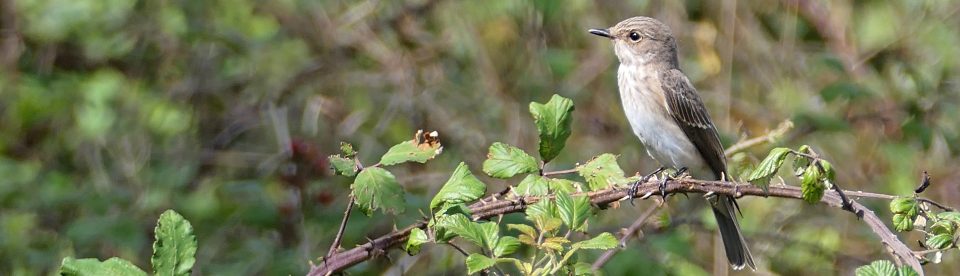
  • Spotted flycatchers in the garden 2 September 2026
  • A Brown argus pair 1 September 2026
  • A very pale buzzard 31 August 2026
  • On Devil’s-bit scabious 30 August 2026

From the archives

COPYRIGHT

Unless otherwise acknowledged, the text and photographs on this blog are my own and are subject to international copyright. Nothing may be downloaded or copied without my permission.

Fellow Earth Stars!

  • evie h
  • Tammie Rogers
  • Daniel Greenwood
  • klindajames
  • aykutatila
  • MalcolmSafechuck
  • supernaturallyd92135e67a
  • Farida
  • debbiestevens084bd32238
  • Jillian
  • Matthew James
  • fadingfun2d25f7d4de
  • Vito Prasad
  • The New Renaissance Mindset
  • boruma1977
  • Bob Ramsak
  • lleuadwr
  • Maria Vincent Robinson
  • toure16
  • Luigi Spadorcia
  • shankar019
  • Danny @ DGPIX
  • Hannes
  • Alison Moya
  • famous65e373e926
  • Strivemindz
  • Penny Bowers
  • Kana Smith
  • Rr
  • Boys Will Be Boys Michael Jackson
  • Jean Reiland
  • Geraldine Hughes
  • goateeironb98ef7f4ba
  • moll3
  • MLLESHOPPING
  • 大阪のうめ吉
  • atanabalan
  • shillingt
  • Robert Galpin
  • Caleb Cheruiyot
  • shannon
  • FrankieWoodknob
  • The Michael Jackson Debate
  • joyfullycreation4f2bcb3356
  • UK Safari
  • Fatima
  • Ric Holmes Wheelbuilding
  • scotishhobbit
  • Louis Spadorcia
  • Michael Jackson Facts

Powered by WordPress.com.

Loading Comments...
%d