
Tags
#MothsMatter, Alder signal, Angerona prunaria, British moths, Eucosma cana, Evergestis forficalis, Garden pebble, Hoary tortrix, Orange moth, Stathmopoda pedella
From all the leafmine blogs I post, you might well get the impression that I only ever see moths in their larval form, and often those are hidden within leaves. I don’t operate a moth trap – my living accommodation has no outside space for such things, and, though I’m sure there is some value in knowing what moths are around at any given time, I’m not convinced that artificially luring all the moths in your garden to spend the night confined inside a trap is actually a good thing. Still, I do occasionally spot day-flying moths or momentarily disturb roosting night-flying moths during my walks. So, here are a few recent finds (for each species I’ve added links to the UK Moths website in case you want to learn more about them).
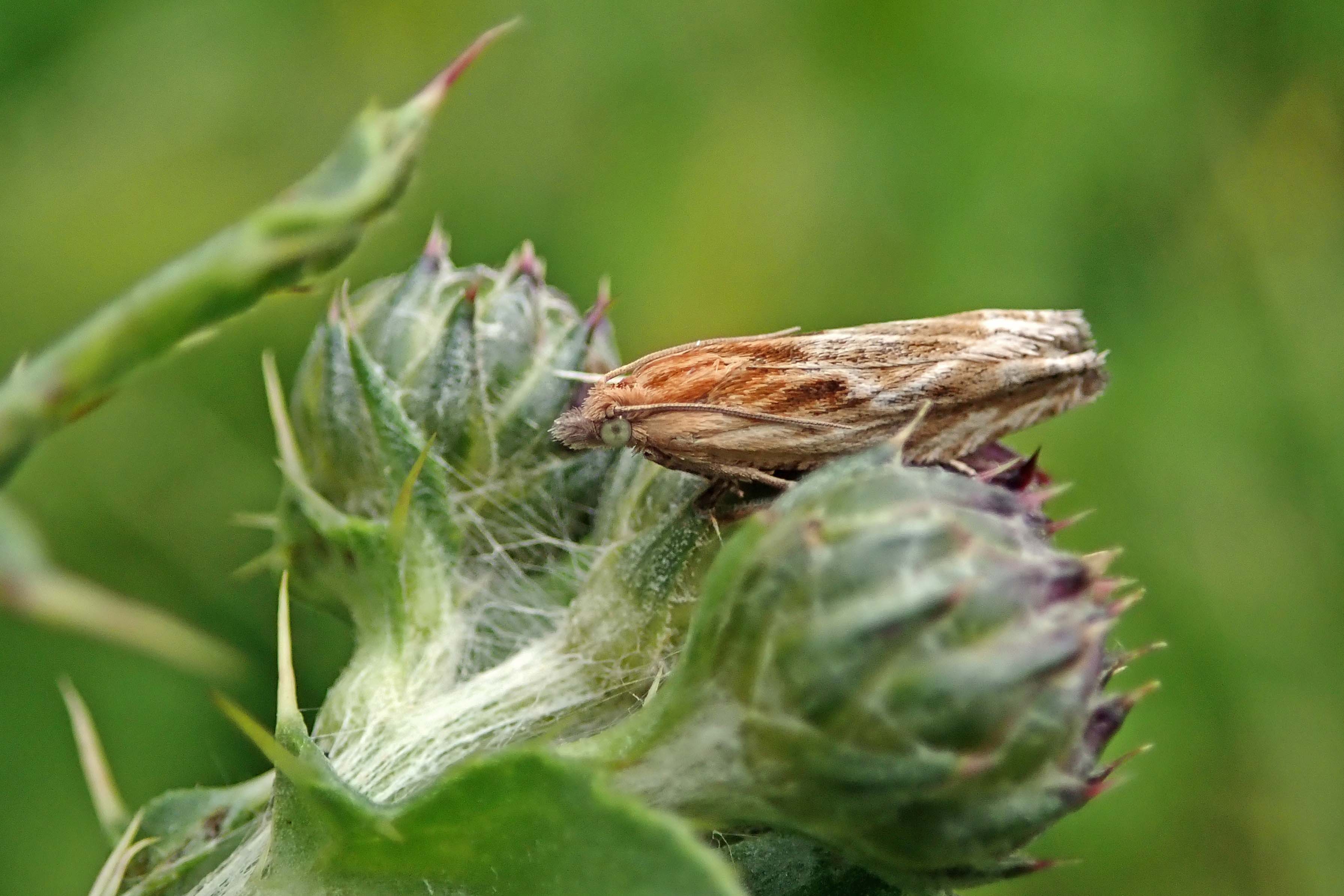
Eucosma cana, also known as Hoary tortrix or Hoary bell, found on thistle in a local meadow.

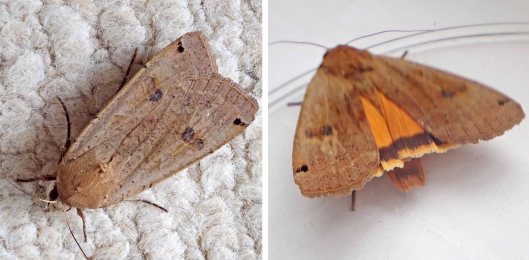
On the left, Evergestis forficalis, common name Garden pebble, spotted in its distinctive resting posture in vegetation by a local path.
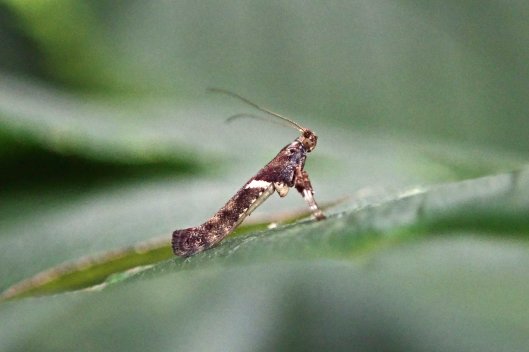
On the right, Stathmopoda pedella, another moth with a unique method of sitting, this one found on an Alder leaf, which presumably is why its common names are Alder signal or Alder signaller.
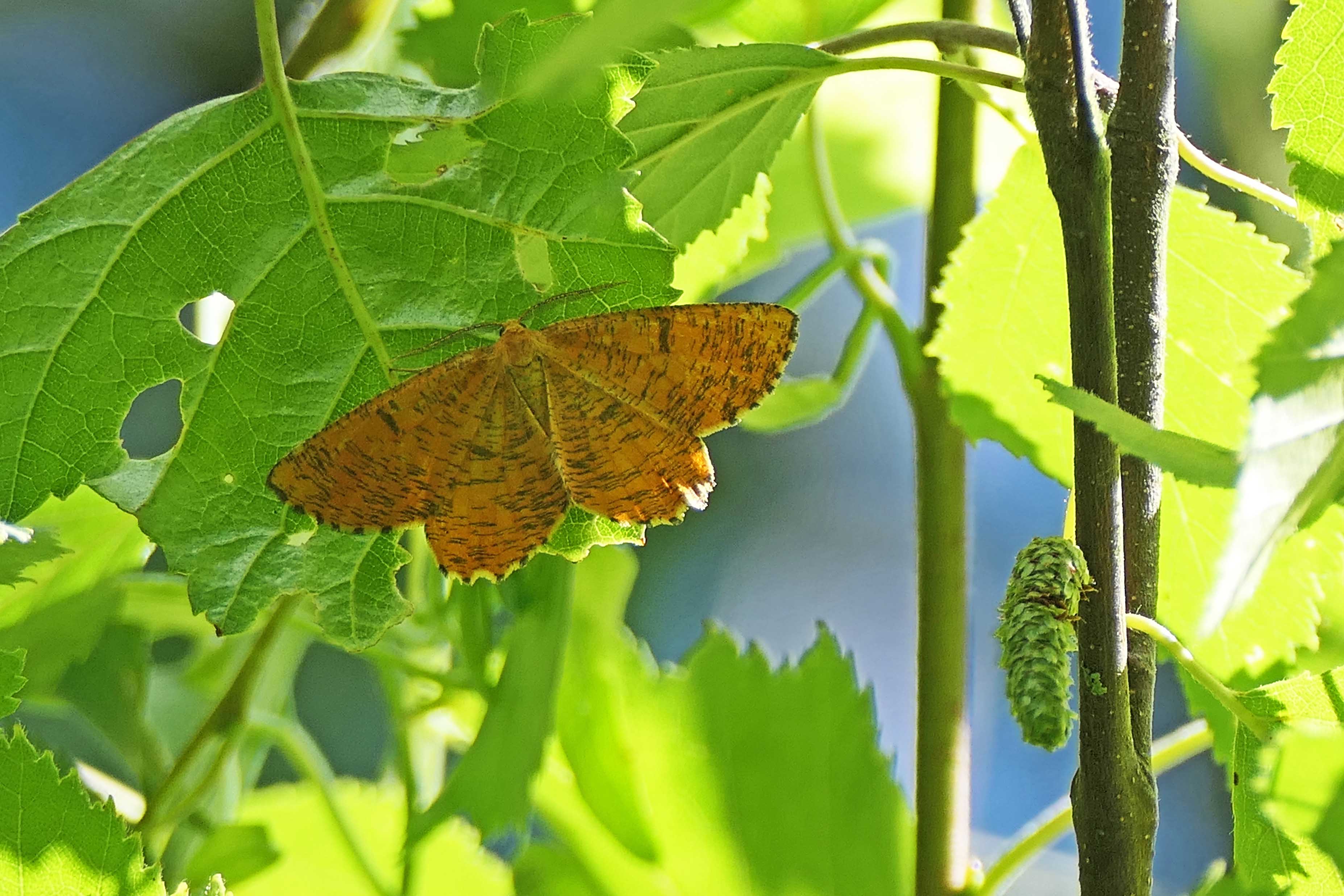
Angerona prunaria or Orange moth. Not a common moth locally so I was fortunate that it fluttered up from vegetation during my recent visit to Slade Wood.




 earthstar
You must be logged in to post a comment.