
Tags
Bird-cherry ermine, British moths, moth, Nomophila noctuella, Orchard ermine, Pleuroptya ruralis, Pyrausta aurata, Yponomeuta evonymella, Yponomeuta padella
It’s moth appreciation time. Here are a few recent finds …
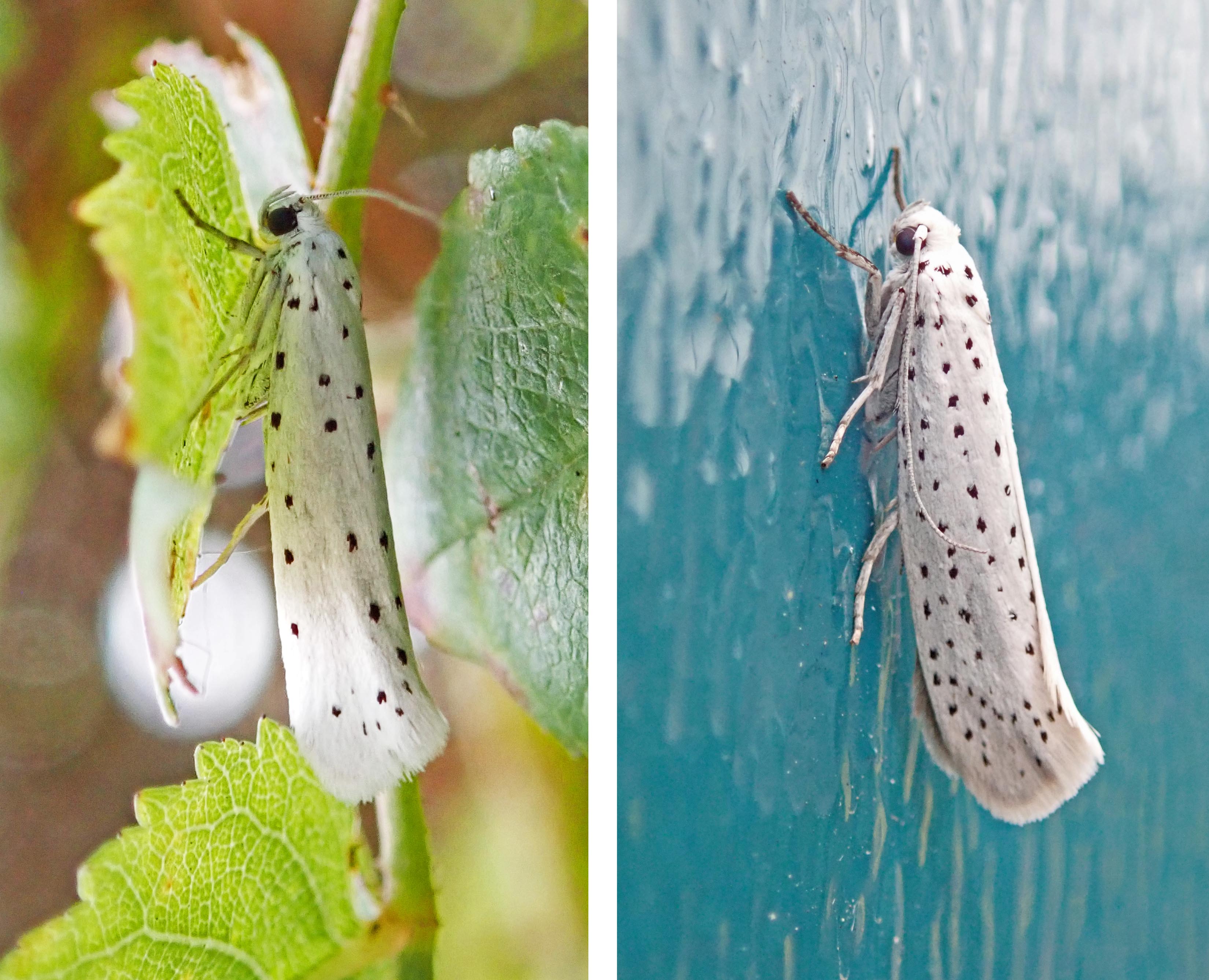
I thought it would be interesting to place these two ermine moths together so as to show their differences. On the left is an Orchard ermine (Yponomeuta padella), on the right a Bird-cherry ermine (Yponomeuta evonymella). To identify these and the several other species of ermine moths, you need to look carefully at the patterns of their spots and also at their food plants. The Bird-cherry has five rows of black dots on the forewing, so is quite distinctive. The Orchard ermine is very similar in appearance to a couple of other ermines, the Apple ermine and the Spindle ermine, so knowing their food plants is a great help (for the Orchard, they are Blackthorn, Hawthorn and Cherry, while the key to the other two is in their names, Apple and Spindle).
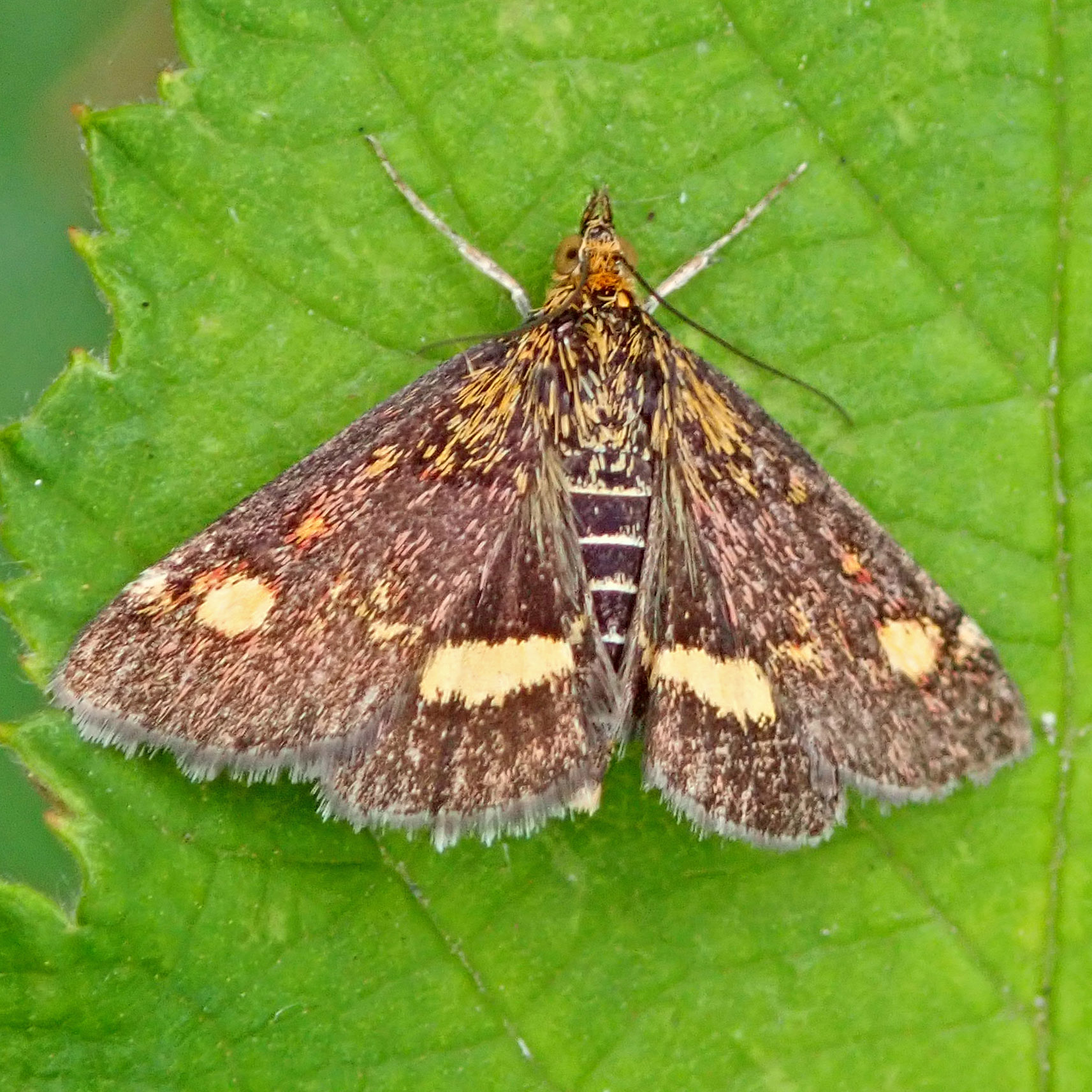
The Mint moth (Pyrausta aurata) can also be a bit tricksy to ID, as it’s very similar to the Common purple-and-gold (Pyrausta purpuralis), but the latter has distinctive light spots on its hind wings, which the Mint moth does not. Unsurprisingly, the Mint moth is often found on or near plants from the Mint (Mentha) family.
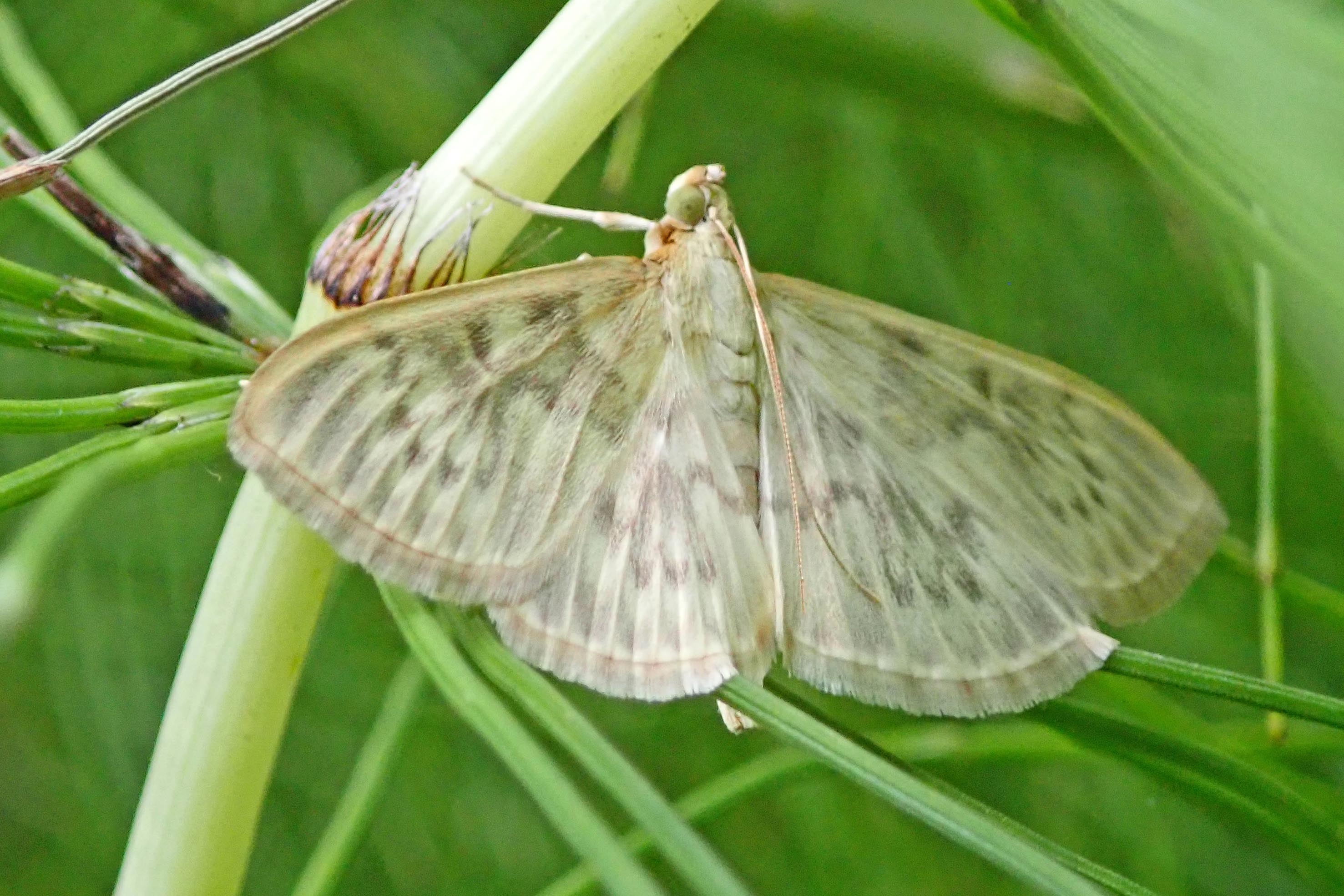
This, in my opinion, is the loveliest of today’s moths, the Mother of pearl (Pleuroptya ruralis), named for the pearlescent sheen of its wings. I must remember to look for its larvae, which feed in rolled-up leaves on Nettle plants (I can feel those stings already!).
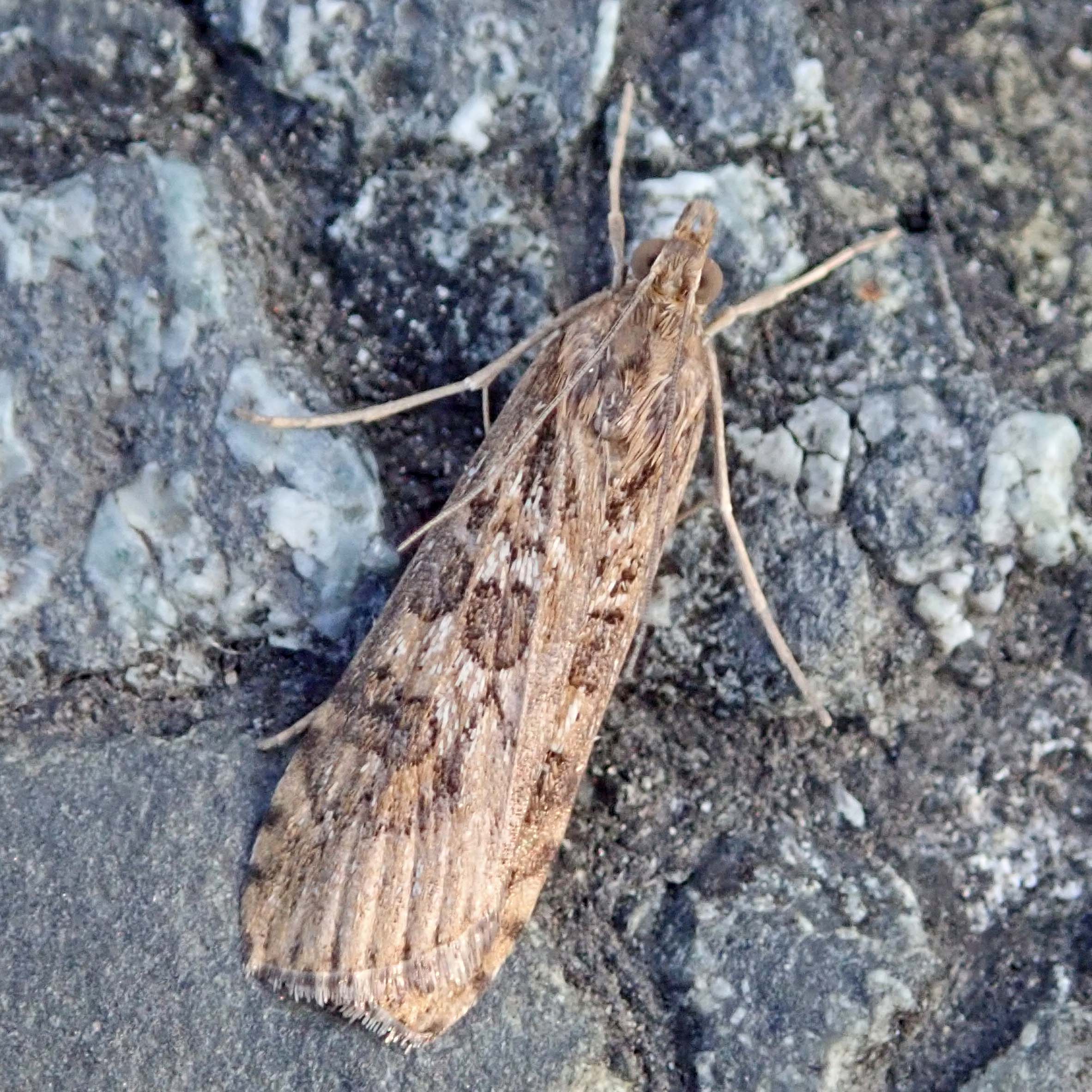
For me, seeing a Rush veneer (Nomophila noctuella) – or, usually, several Rush veneers in one day – means warm winds are blowing from the south, bringing in migrating insects from Europe. And they are exactly the weather conditions we were experiencing over a couple of days very recently, when I saw more than six of these moths in just a few hours during a coastal walk.

 earthstar
You must be logged in to post a comment.