
Tags
British beetles, Longhorn beetles, Rutpela maculata, Spotted longhorn beetle, Stenocorus meridianus
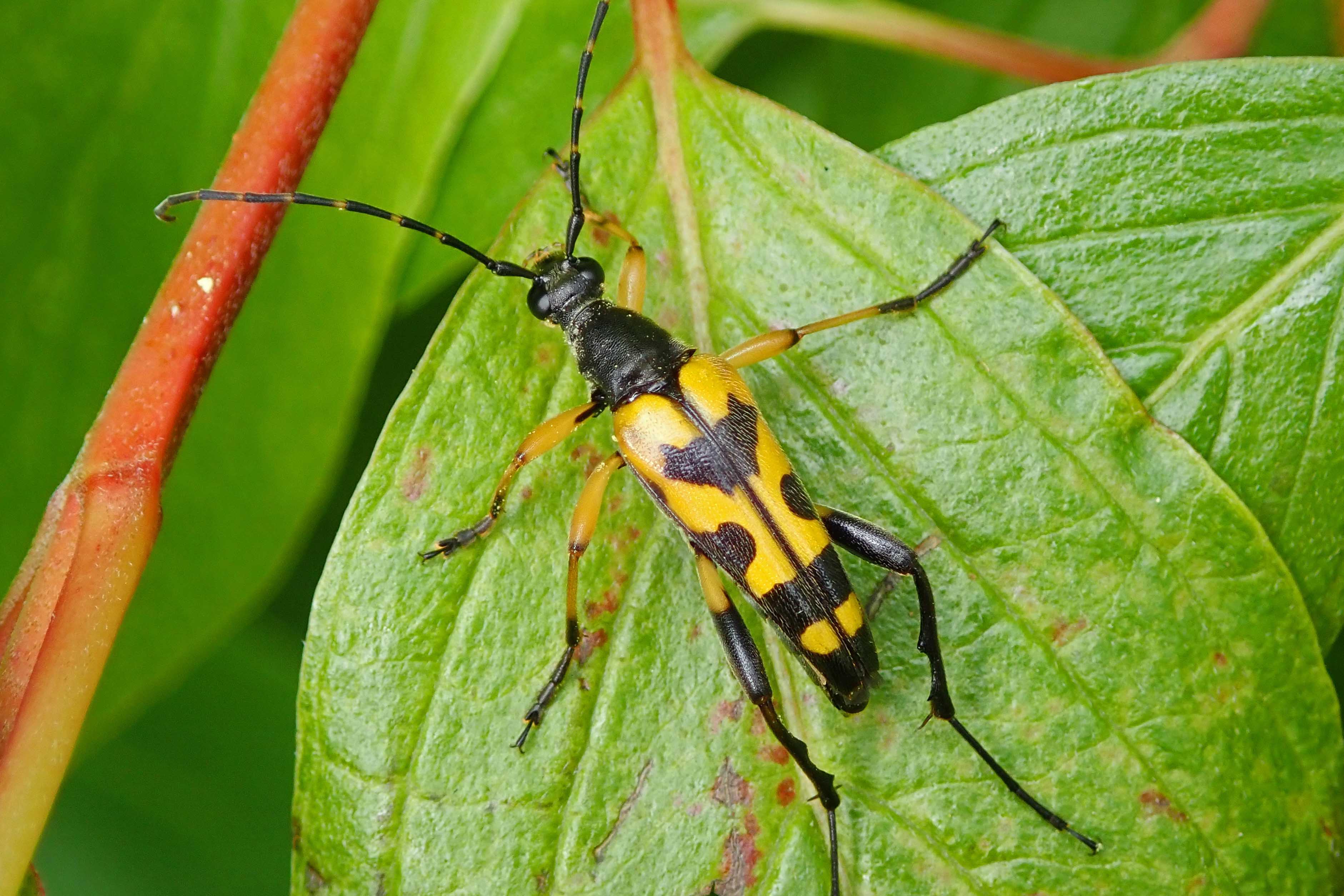
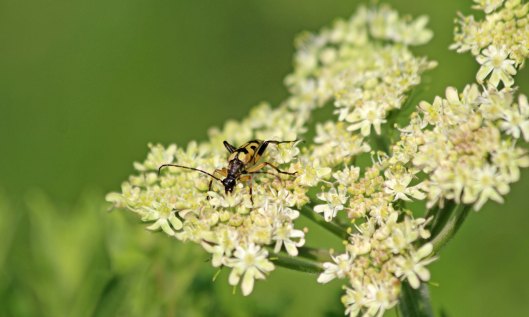
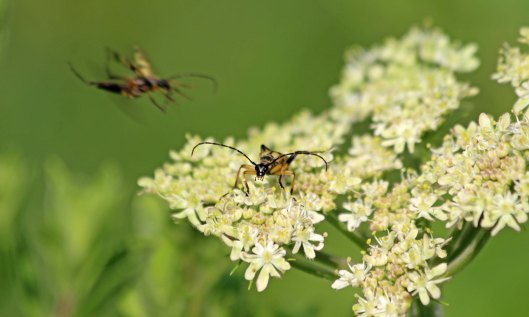
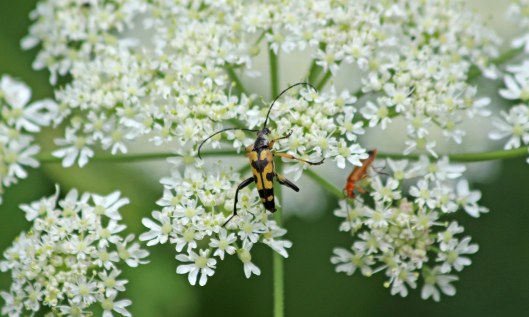
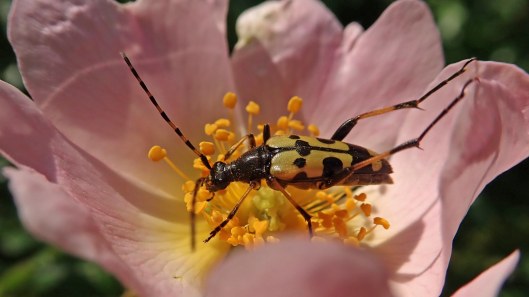
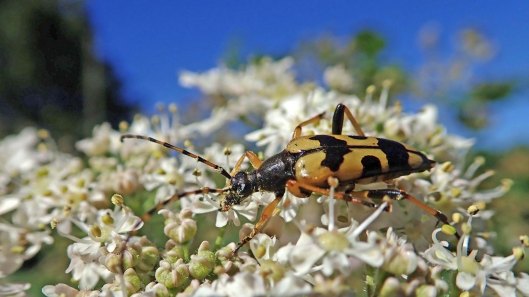
I’m sure many of you will have seen this first longhorn beetle, the Spotted longhorn (Rutpela maculata). Though the patterns may vary, its colourful yellow-and-black colouring is quite distinctive, and it is our most common longhorn beetle, though it doesn’t frequent the more northerly parts of Britain. Look for it along the edges of woodland rides and in hedgerows, particularly on the flowers of Hawthorn and various species of umbellifer, throughout the summer months.
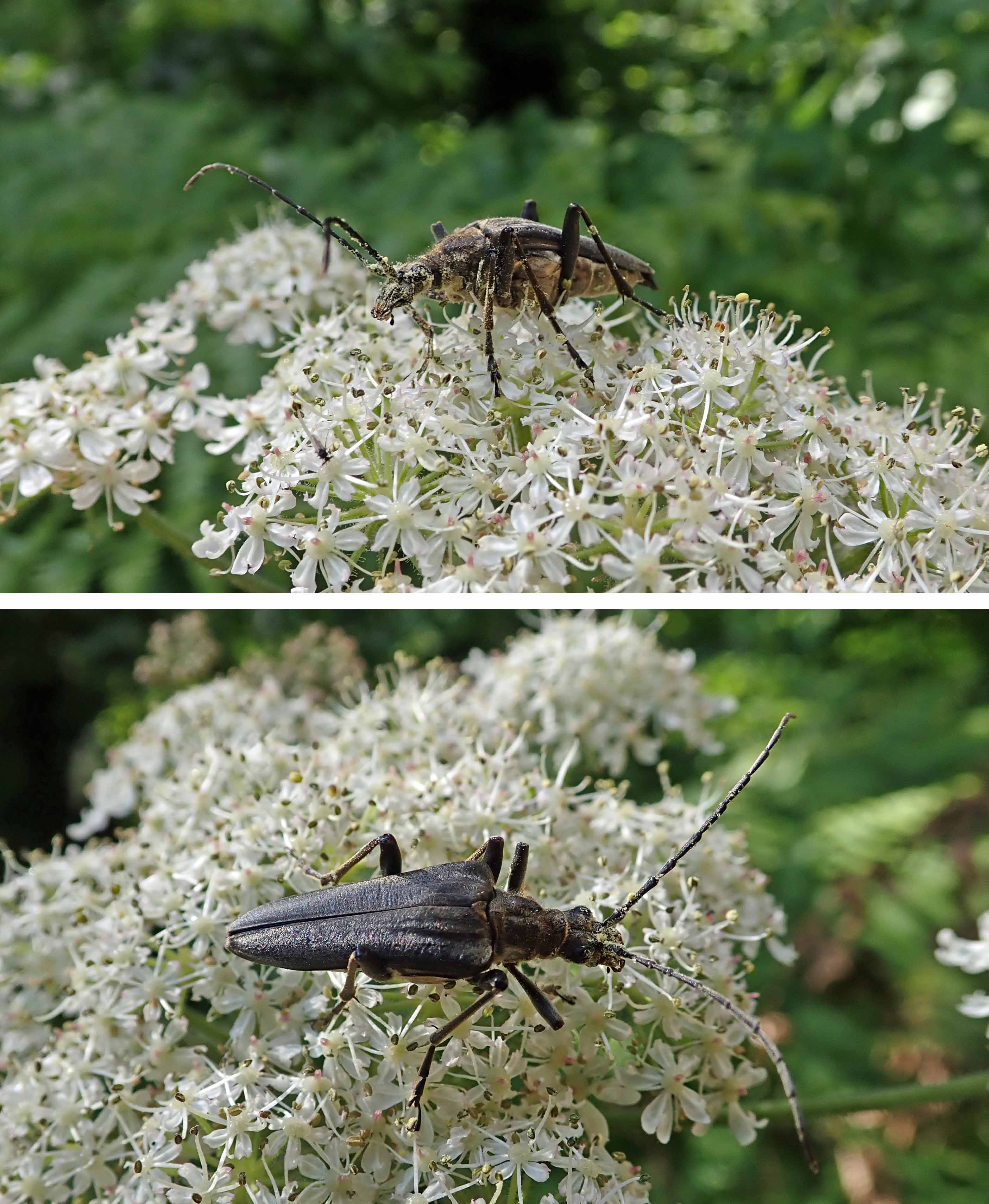
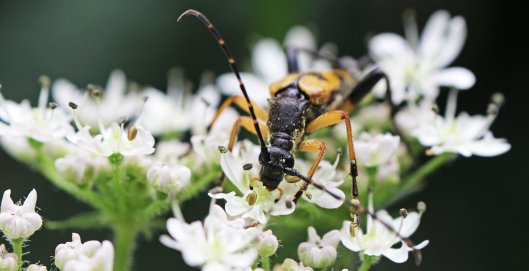
My second longhorn was a new discovery for me, once again from my recent visit to Slade Wood: this is Stenocorus meridianus (no common name). The fragmented broadleaf woodland of Slade Wood – where a lot of non-native trees have been felled in recent years to make way for native species – is the ideal habitat for this beetle, as it likes to feed on the flowers growing in sunny locations along woodland rides and on the edges of clearings. It is a large beetle, between 15 and 25mm, quite triangular in shape with its broad shoulders tapering to a more narrow apex. Its head and thorax are black (though that’s not so obvious when it’s covered in white pollen like this beastie), and the colour of its electra (wing covers) can vary from pale brown to black.








 earthstar
You must be logged in to post a comment.