‘There is not a fragment in all nature, for every relative fragment of one thing is a full harmonious unit in itself.’
~ John Muir, The Wilderness World of John Muir, ed. Edwin Way Teale, 1954



04 Sunday Oct 2020
Posted in autumn, plants, wildflowers
‘There is not a fragment in all nature, for every relative fragment of one thing is a full harmonious unit in itself.’
~ John Muir, The Wilderness World of John Muir, ed. Edwin Way Teale, 1954
20 Sunday Sep 2020
Posted in autumn, plants, wildflowers
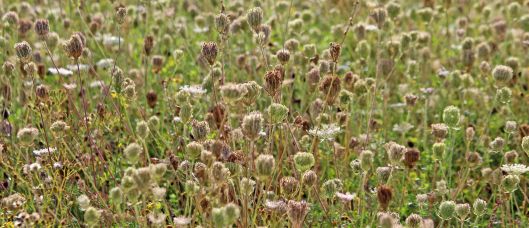
‘The vegetable life does not content itself with casting from the flower or the tree a single seed, but it fills the air and earth with a prodigality of seeds, that, if thousands perish, thousands may plant themselves, that hundreds may come up, that tens may live to maturity; that, at least one may replace the parent.’
~ Ralph Waldo Emerson, Chapter 6: Nature, Essays, Second Series, 1844.
20 Thursday Feb 2020
This seedpod is a mystery to me.
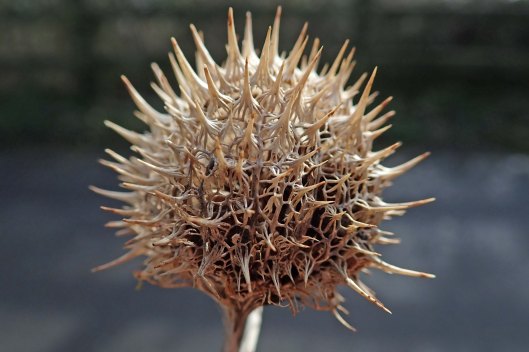
I found it alongside the path through Grangemoor Park in Cardiff, just two dried up stems about 12 inches tall, with seedpods – four in total – at the tips of each branched stem. No leaves remained and I saw no other similar plants anywhere along the path.
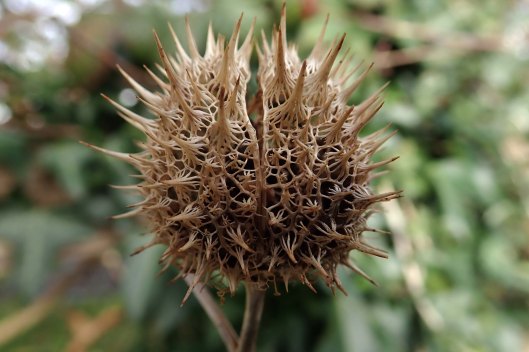
The structure of the seedpod is glorious, so sculptural. I brought two pods home with me, and one has now split into quarters, with small brown seeds spilling out of it.
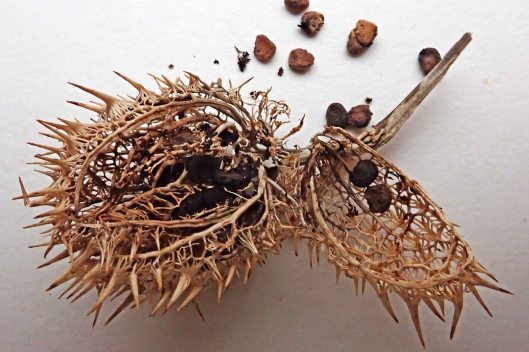
But what is this plant? I’ve tried looking online but found nothing that matches. Of course, the solution would be to plant the seeds but I do not have a garden. I could try planting a couple of seeds in a pot but I’d rather return the seeds to the wild where I found them. So, if there are any botanists or plant people out there who recognise this seedpod, please do let me know in the comments below. Thanks!
p.s. Thanks to Barbara Brown, of BSBI Wales, I now know this is a species of Datura, possibly Datura stramonium, the Thorn-apple. In this case, the seedpod has lost all its flesh making it look a little different from the images I’ve found online.
27 Sunday Oct 2019
Posted in autumn, nature, plants, wildflowers

‘For me, wildflowers are joy-giving. They have enriched my life and fed my soul and given beautiful memories to sustain me.’ ~ Lady Bird Johnson letter in National Wildflower Research Center report ‘The First Ten Years: 1983-1993’


29 Tuesday Jan 2019
Posted in 365DaysWildin2019, nature, wildflowers, winter
Tags
#365DaysWild, clematis vitalba, feathery seeds, Old Man's Beard, plant seeds, seeds, Traveller's joy
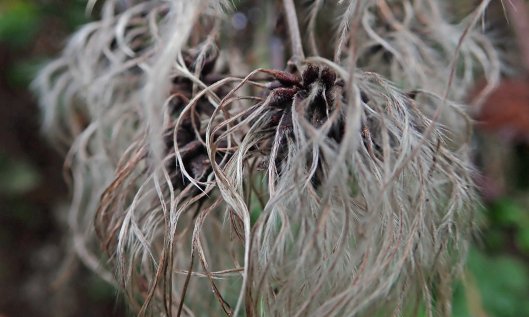
This is Clematis vitalba, commonly known as Traveller’s joy though, at this time of year, when its feathery seeds festoon hedgerows, clamber over fences, and bedeck stone walls, I think its other common name of Old man’s beard is more apt. Today, the Old men’s beards were looking a little damp and they’ll now be completely sodden – I managed a walk early this morning before the heavy rain came in.
22 Thursday Nov 2018
Posted in autumn, flowers, nature, wildflowers
Tags
British flora, Carlina vulgaris, Carline thistle, everlasting flowers, seedheads, seeds, thistle, thistle seeds
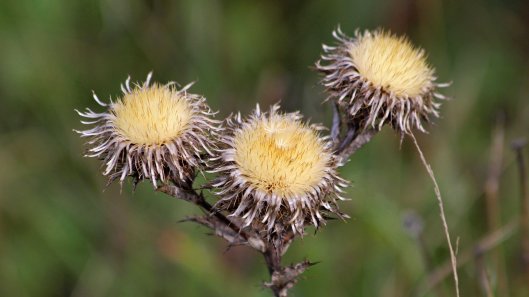
They glisten silver and gold in the late autumn sunshine these Carline thistles, with their thick fringe of papery bracts and heads of soft golden down. I blogged about the flowers last year; now here are the ‘everlasting’ seed heads that can be seen all through the chilly months of winter.

15 Thursday Nov 2018
Posted in autumn, nature, wildflowers
Tags
dandelion, dandelion seedhead, plant seeds, round seedheads, seed dispersal methods, seed dissemination, seeds
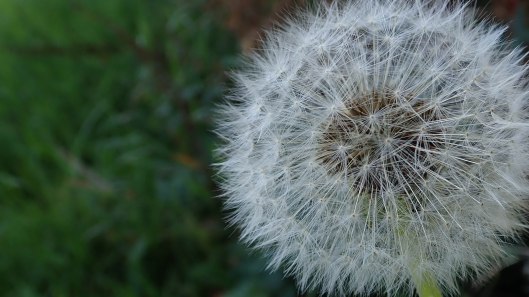
With its seeds attached to tiny botanical parachutes that can be distributed far and wide by the wind, the Dandelion (Taraxacum officinale agg.) has evolved an extremely efficient method of disseminating its seed. It’s not surprising, then, that many other species use a very similar method to disperse their seeds.


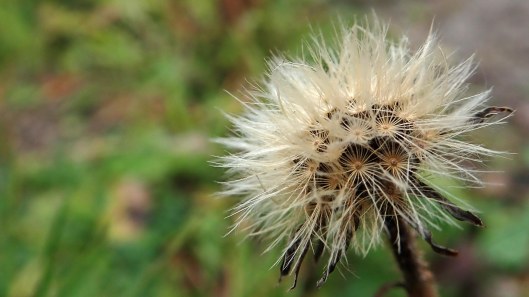

I don’t think I’m getting my wish this time around!

10 Wednesday Oct 2018
‘A seed knows how to wait. Most seeds wait for at least a year before starting to grow; a cherry seed can wait for a hundred years with no problem. What exactly each seed is waiting for is known only to that seed. Some unique trigger-combination of temperature-moisture-light and many other things is required to convince a seed to jump off the deep end and take its chance – to take its one and only chance to grow.’
~ Hope Jahren, Lab Girl


07 Tuesday Nov 2017
‘One for the rock, one for the crow, one to die, and one to grow.’
~ an old English saying


30 Monday Oct 2017
Posted in flowers, nature, wildflowers
Tags
British flora, British wildflowers, flower seeds, Iris, Iris foetidissima, plant seeds, Roast-beef plant, seeds, Stinking iris
I gave it a really good sniff but I smelled nothing. It was only later that I read the smell comes from the leaves, but only when you crush or rub them, which I didn’t do. And, even then, some people can’t smell the ‘slightly stale, raw beef’ smell that Stinking iris is named for. Even its scientific name, Iris foetidissima, refers to the smell, as do two of its vernacular names: Roast-beef plant and Bloody bones.

However, I’m not here to warn about this iris’s smell nor, in fact, to extol the virtues of the plant itself, which is often a bit untidy and tatty looking, but rather to praise the beauty of its seeds. The flowers themselves are nothing to write home about, being a rather dull greyish-purple but the seeds erupt in the autumn, like bright orange peas in a papery brown pod. As the weather gets colder, if they’re not plundered as food by birds, they turn a fabulous scarlet and then, eventually, if the weather’s not too wet, dry to a rich golden brown. Just beautiful!


 earthstar
You must be logged in to post a comment.