• ABOUT
  • BIRDING 2018
  • Birding 2019
  • BLOG POSTS
  • Butterflies 2018
  • Resources

earthstar

~ a celebration of nature

earthstar

Tag Archives: wild words

Wild word: moult

10 Wednesday Jul 2024

Posted by sconzani in insects

≈ Leave a comment

Tags

British leafhoppers, Eupterycyba jucunda, insect moulting, leafhopper nymph moulting, moult, wild words

Moult (or molt, if you’re from the USA): noun; (of birds, mammals, arthropods, etc.) to shed (feathers, hair, or cuticle) in order that new growth can take place (Collins Concise Dictionary).

240710 Eupterycyba jucunda (2)

Last week, when checking the leaves of Italian alder, I found tiny creatures on almost every leaf. They were the various stages of the leafhopper Eupterycyba jucunda, from nymph to adult, and, amazingly, I even caught one in the middle of its moult from one stage to the next. The images below show an early stage nymph on the left and an adult on the right.

240710 Eupterycyba jucunda (1)

Like Loading...

351/366 Wild word: nidification

16 Wednesday Dec 2020

Posted by sconzani in birds

≈ 2 Comments

Tags

birds' nests, empty nests, nest building, nests, nidifcation, nidify, wild words

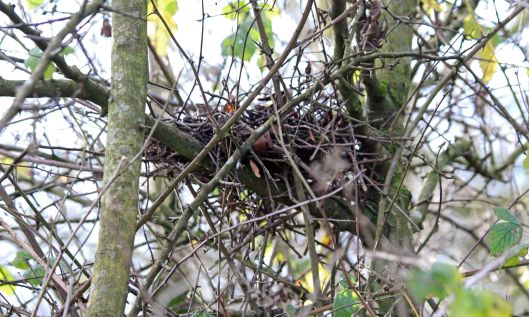
Nidification: noun; [zoology] nest-building; origin: mid 17th century from Latin nidificat– ‘made into a nest’ (from the verb nidificare, from nidus ‘nest’) + -ation (Oxford Dictionary).

201216 nidification (1)

This might not be the time of year for nest-building for most critters (though I did spot a Magpie poking a stick into what looked like a potential nest site yesterday) but it is the time of year, with the trees bare of leaves, when you can see some of our birds’ nest-building efforts from earlier this year, and previous years, if they’re birds that keep the same nest site year after year. And I only just learnt this new word this week so thought I’d pass it on.

201216 nidification (2)

Like Loading...

30/366 Fascinating fasciation

30 Thursday Jan 2020

Posted by sconzani in flowers, nature, wildflowers

≈ 4 Comments

Tags

British wildflowers, dandelion, dandelion flower, fasciated, fasciation, wild words

I’ve posted about this phenomenon before (see Wild word: fasciated, back in July 2018) but, as some of you may not have been following me back then, I thought it was worth repeating, especially as I’ve found such a magnificent example.

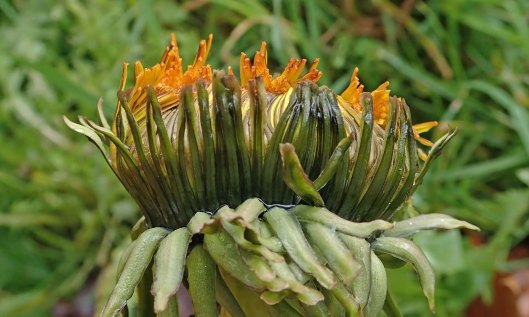
200130 fasciation (1)

So, this Dandelion stem and flower are fasciated, i.e. both parts of the plant exhibit an abnormal fusion which has resulted in a flattening of their structure. In this particular case, it almost appears as if three separate stems and flowers have fused into one.

200130 fasciation (2)

I couldn’t resist the alliteration in the title as my spellchecker kept changing fasciated to fascinated – what a difference an ‘n’ makes!

200130 fasciation (3)


Like Loading...

Wild word: root

05 Wednesday Dec 2018

Posted by sconzani in nature

≈ Leave a comment

Tags

#WildWords, plant roots, root, roots, tree roots, wild words

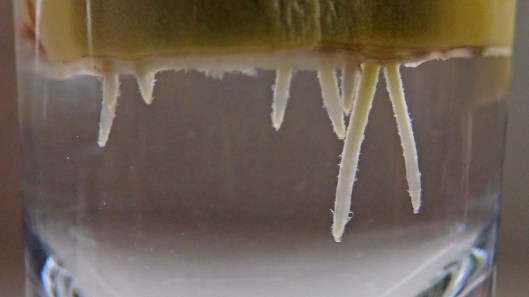
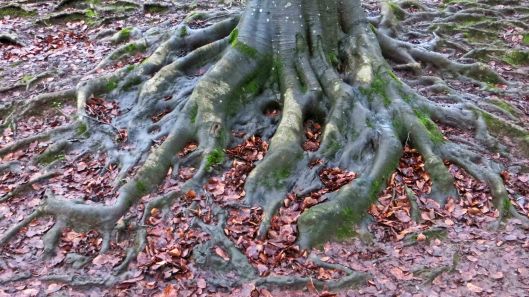
Root: noun; ‘The part of a plant which attaches it to the ground or to a support, typically underground, conveying water and nourishment to the rest of the plant via numerous branches and fibres.’ (Oxford Dictionary).

181205 roots (1)

Like Loading...

Wild word: Dew

26 Wednesday Sep 2018

Posted by sconzani in autumn, nature, weather

≈ 2 Comments

Tags

#WildWords, dew, dew on dandelion seedhead, dew on grass, wild words

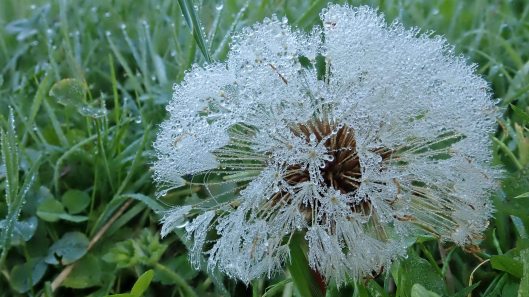
Dew: Noun; tiny drops of water that form on cool surfaces at night, when atmospheric vapour condenses (Oxford Dictionary).

OLYMPUS DIGITAL CAMERA

Like Loading...

Wild word: feather

05 Wednesday Sep 2018

Posted by sconzani in birds, nature

≈ 5 Comments

Tags

#WildWords, bird feathers, birding, birdwatching, British birds, feather, wild words

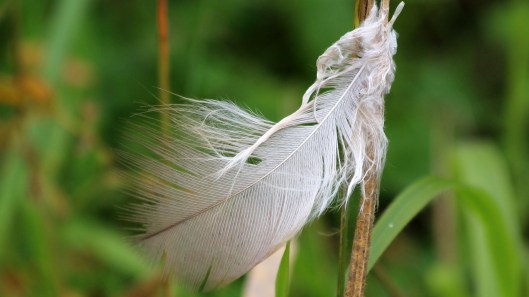
Feather: Noun; any of the flat appendages growing from a bird’s skin and forming its plumage, consisting of a partly hollow horny shaft fringed with vanes of barbs (Oxford Dictionary).

180905 feather (1)

I often come across discarded feathers when I’m out walking and try to guess which birds they’ve come from, though, unless they’re very distinctively patterned, that can be virtually impossible. Sometimes the feather just has to come home with me … like these three below. I think the bottom one’s probably from a Pheasant – not sure about the other two.

180905 feather (3)
180905 feather (4)

180905 feather (5)

Like Loading...

Wild word: cocoon

29 Wednesday Aug 2018

Posted by sconzani in insects, nature

≈ 5 Comments

Tags

#WildWords, 5-spot Burnet, 6-spot Burnet, British moths, Burnet moth cocoon, cocoon, Five-spot Burnet moth, moth cocoon, Six-spot Burnet moth, wild words

Cocoon: Noun; A silky case spun by the larvae of many insects for protection as pupae (Oxford Dictionary).
The cocoons in my photos are those of Burnet moths, both 5-spot (below left) and 6-spot (below right): you can’t tell the difference in the cocoons from the outside – I just know which moths were present in the locations where I took my photos.

180828 5-spot burnet moth
180828 6-spot burnet moth

After hatching from their eggs, the caterpillars/larvae of both moths feed on plants from the pea family; the 6-spot burnet is particularly partial to Common bird’s-foot trefoil, which is why I see a lot of these moths at Cosmeston.

180828 occupied 5-spot pupa
180828 occupied 6-spot pupa

When they’re ready to pupate, the caterpillars find themselves a suitable location, often high up on a sturdy grass stem (though I have seen them on other plants), and spin an oval-shaped cocoon. The cocoons pictured above are still occupied by caterpillars in the throes of metamorphosing into moths, a process which takes about two weeks.

180828 empty cocoon (2)
180828 empty cocoon (1)

These are the empty cocoons that remain once the adult moths have emerged (with the remains of the larvae’s pupae cases poking out the tops). The cocoons are quite sturdy: their yellowish-white papery structures often seem to last for a month or more after the adults have departed or even until the grasses themselves collapse with the coming of the wild winds and chilly days of autumn.

Like Loading...

Wild word: fasciated

11 Wednesday Jul 2018

Posted by sconzani in flowers, nature, wildflowers

≈ 3 Comments

Tags

#WildWords, fasciated, fasciated thistle, fasciation, thistle, wild words

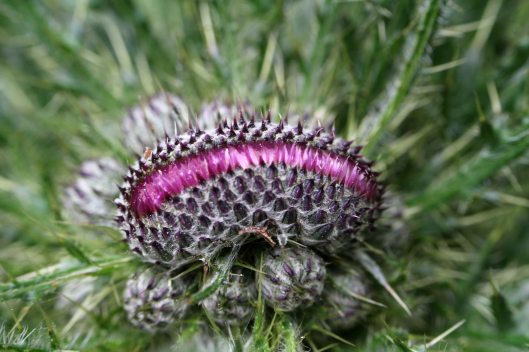
Fasciated: Adjective; (Botany) Showing abnormal fusion of parts or organs, resulting in a flattened ribbon-like structure (Oxford Dictionary).

The thistle in my photo is an example; instead of developing in the circular shape that is usual for this plant, the flower has, for some unknown reason, become distorted into a flattened and elongated, almost oblong shape.

180711 fasciated

Like Loading...

Wild word: mnemonic

23 Wednesday May 2018

Posted by sconzani in birds, nature

≈ 4 Comments

Tags

#WildWords, birding, birdwatching, British birds, mnemonic, mnemonic for bird song, ways to remember bird songs, wild words

Mnemonic: Noun; a system such as a pattern of letters, ideas, or associations which assists in remembering something; from the Greek mnēmonikos, from mnēmōn, meaning ‘mindful’ (Oxford Dictionary).

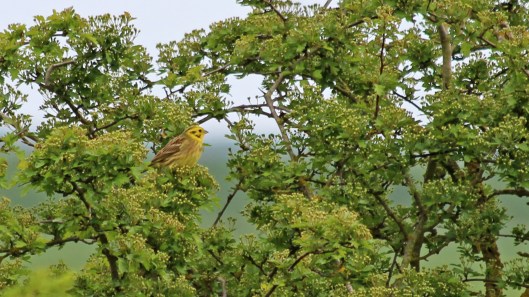
I’ve found mnemonics particularly useful when trying to remember bird songs. Apart from the very obvious sounds, where the bird is, in fact, named for its song – I’m thinking here of the Chiffchaff and the Kittiwake – there are also some well-known phrases that many birders know, like ‘a little bit of bread and no cheeeeese’ for the song of the Yellowhammer, ‘chissick’ for the Pied wagtail, and ‘teacher, teacher’ for the Great tit. Do you have any bird song mnemonics you can share?

yellowhammer

The yellowhammer: ‘a little bit of bread and no cheeeeese’

Like Loading...

Wild word: ornithomancy

16 Wednesday May 2018

Posted by sconzani in birds, nature

≈ Leave a comment

Tags

#WildWords, augury, divination using birds, ornithomancy, wild words

180416 ornithomancy (1)

Ornithomancy: Noun; rarely used; divination by means of the flight and cries of birds; augury. From Byzantine Greek ὀρνιθομαντεία divination from birds, augury from ancient Greek ὀρνιθο- + μαντεία (Oxford Dictionary).

I predict that the person who eats fish and chips at the seaside will be attacked by gulls and is likely also to get pooped upon!

180416 ornithomancy (2)

Like Loading...
← Older posts

About me

sconzani

sconzani

I'm a writer and photographer; researcher and blogger; birder and nature lover; countryside rambler and city strider; volunteer and biodiversity recorder.

View Full Profile →

Follow earthstar on WordPress.com

Enter your email address to follow this blog and receive notifications of new posts by email.

Recent blog posts

  • M is for mite December 18, 2025
  • L is for lepidopteran lifers December 17, 2025
  • K is for Keeled skimmers December 16, 2025
  • J is for Jersey tiger December 15, 2025
  • I is for Ichneumon December 14, 2025

From the archives

COPYRIGHT

Unless otherwise acknowledged, the text and photographs on this blog are my own and are subject to international copyright. Nothing may be downloaded or copied without my permission.

Fellow Earth Stars!

  • Unknown's avatar
  • Unknown's avatar
  • Unknown's avatar
  • Unknown's avatar
  • Unknown's avatar
  • Unknown's avatar
  • Unknown's avatar
  • Unknown's avatar
  • Unknown's avatar
  • Unknown's avatar
  • Unknown's avatar
  • Unknown's avatar
  • Unknown's avatar
  • Unknown's avatar
  • Unknown's avatar
  • Unknown's avatar
  • Unknown's avatar
  • Unknown's avatar
  • Unknown's avatar
  • Unknown's avatar
  • Unknown's avatar
  • Unknown's avatar
  • Unknown's avatar
  • Unknown's avatar
  • Unknown's avatar
  • Unknown's avatar
  • Unknown's avatar
  • Unknown's avatar
  • Unknown's avatar
  • Unknown's avatar
  • Unknown's avatar
  • Unknown's avatar
  • Unknown's avatar
  • Unknown's avatar
  • Unknown's avatar
  • Unknown's avatar
  • Unknown's avatar
  • Unknown's avatar
  • Unknown's avatar
  • Unknown's avatar
  • Unknown's avatar
  • Unknown's avatar
  • Unknown's avatar
  • Unknown's avatar
  • Unknown's avatar
  • Unknown's avatar
  • Unknown's avatar
  • Unknown's avatar
  • Unknown's avatar
  • Unknown's avatar

Blog at WordPress.com.

Privacy & Cookies: This site uses cookies. By continuing to use this website, you agree to their use.
To find out more, including how to control cookies, see here: Cookie Policy
  • Subscribe Subscribed
    • earthstar
    • Join 667 other subscribers
    • Already have a WordPress.com account? Log in now.
    • earthstar
    • Subscribe Subscribed
    • Sign up
    • Log in
    • Report this content
    • View site in Reader
    • Manage subscriptions
    • Collapse this bar
 

Loading Comments...
 

You must be logged in to post a comment.

    %d