• ABOUT
  • BIRDING 2018
  • Birding 2019
  • BLOG POSTS
  • Butterflies 2018
  • Resources

earthstar

~ a celebration of nature

earthstar

Tag Archives: winter

Snow day

01 Friday Feb 2019

Posted by sconzani in nature, trees, weather, winter

≈ 3 Comments

Tags

snow, snow on trees, snow-covered branches, Victoria Square Penarth, winter, winter wonderland

It was wonderful to wake up to a white landscape this morning but, with the wind chill taking the temperature down to -5°C and the pavements and roads very slippery in places, I didn’t linger long outdoors, just did a circuit of local streets and spent some time in the tree-filled Victoria Square that surrounds the Church of All Saints. This square is filled with an excellent variety of trees – very grand old oaks, a selection of tall conifers, smaller birch and cherry plum. The square looked like a magical winter wonderland today so I thought I’d share some snowy tree photos.

This slideshow requires JavaScript.

Like Loading...

It’s ivy berry time

05 Tuesday Jan 2016

Posted by sconzani in birds, insects, nature, nature photography, winter

≈ Leave a comment

Tags

berries, birds, ivy, winter

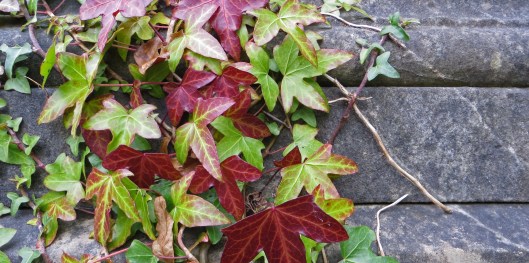
Though its roots can creep between gaps in stonework causing severe damage to ancient ruins, stone walls, grave monuments and the like, ivy (Hedera helix, also known as English ivy, common ivy or just plain ivy) is of great importance to wildlife. Not only does it provide shelter and nesting places for insects, birds, bats and other beasties, it is also an important food source.

english ivy 1

Ivy’s flowering period begins in August and continues right through to November, sometimes later, and the flowers produce plentiful quantities of nectar and pollen. Over 70 species of nectar-loving insects feast on the flowers, including wasps and bumblebees, Red admiral, Small tortoiseshell and Peacock butterflies.

English ivy

Once the berries begin to ripen, they turn a deep purple-black colour, and provide an important winter source of food when most other berries are finished. At this time, the ivy becomes a favourite snacking place for lots of berry-eating birds, blackbirds and thrushes in particular, but also starlings and jays, finches and wood pigeons.

english ivy 2

Like Loading...

Elfcups and Fairies’ baths

04 Monday Jan 2016

Posted by sconzani in fungi, nature, nature photography

≈ 10 Comments

Tags

Elfcups, fungi, fungus, winter

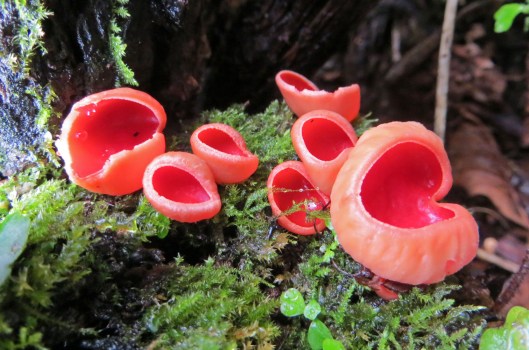
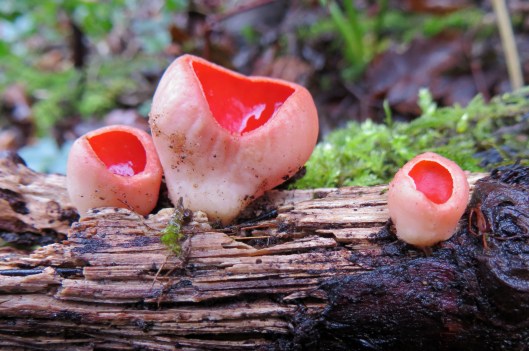
Just as the Scarlet waxcaps are the jewels of the autumn meadows so the Elfcups are the jewels of the wet winter woodlands. Though they’re tiny (no more than 7cm across) and frequently half buried in moss, their eye-catching bright red colour makes them easy to spot in the damp shady places where they live on dead wood, particularly beech, hazel, hawthorn, willow and elm.

160104 elfcups (3)

Two Elfcups can be found in Britain – the Scarlet Elfcup (Sarcoscypha austriaca) and the Ruby Elfcup (Sarcoscypha coccinea). They are so similar in outward appearance that a microscope is required to distinguish between them and, even then, it’s not easy. With a goblet-shaped cup and short stem when young, which flattens into a cup shape as they mature, it’s not difficult to see where they got the name Elfcup, nor their other common name of Fairies’ Baths.

160104 elfcups (1)

In fact, that ‘bath’ is where the spores can be found. These fungi don’t drop their spores from gills like regular mushrooms; instead, they fire spores from structures called asci, a bit like a cannon fires cannon balls and, apparently, they make a tiny puffing sound when that happens. So, listen closely next time you see them.

160104 elfcups (2)

Like Loading...

The night the sun stands still

21 Monday Dec 2015

Posted by sconzani in nature, seasons, winter

≈ Leave a comment

Tags

solstice, sunrise, sunset, winter

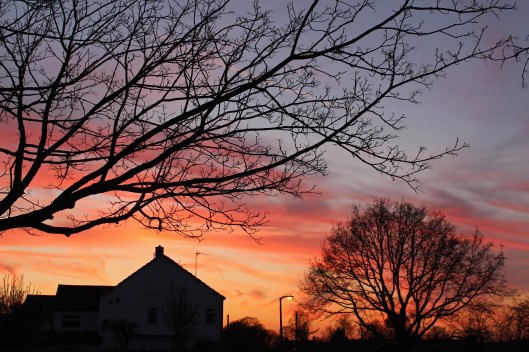
Are you getting up early tomorrow to see the sunrise? Crowds will gather at England’s ancient monument Stonehenge, and around the world various cultures will be celebrating because this is the solstice, from the Latin solstitium meaning ‘the sun stands still’.

151221 sunrise

As our modern calendar (of 365 days and a leap year of 366) does not equate exactly with the solar calendar of 365.2422 days, the precise time of the solstice varies each year. This year, at 4:49am (GMT) on 22 December, the earth will reach the point where the North Pole is tilted furthest from the sun. For us northerners, this means that, in the coming days, we will begin to see an increase in the hours of daylight.
151221 sunset

For the ancient Romans, this was the festival of Saturnalia, seven days of partying and gift-giving. For the Scandinavians, it was the Feast of Yuul when the Juul (Yule) log was ceremonially brought in and one end placed in the fire as a tribute to the Norse god Thor, protector of mankind. In China, the celebration is called Dong Zhi (‘winter arrival’), a time for family get-togethers, eating glutinous-rice-ball soup and becoming one year older! Whether or not you are celebrating perhaps, just like the sun, pause, savour the stillness, reflect, then take a deep breath and move boldly into the year ahead.

Like Loading...

Lovin’ the lichen

17 Thursday Dec 2015

Posted by sconzani in lichen, nature, nature photography, trees

≈ 2 Comments

Tags

algae, copper beech trees, lichen, winter

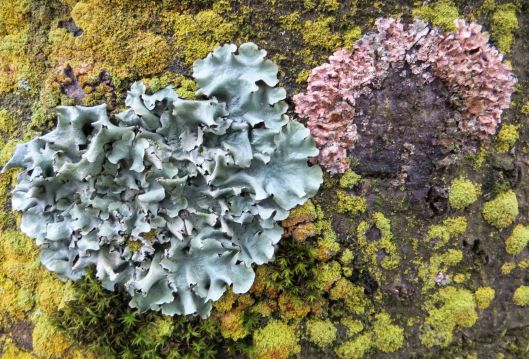
Bordering the recreation grounds opposite where I live is a magnificent long line of copper beech trees. Their leaves provide a glorious show of colour in spring, summer and autumn but the trees look rather barren during the winter months. However, if you look closer, you’ll find their bark is alive with algae, mosses and lichens, and the colours, shapes and patterns of these small organisms are, indeed, many and splendid.

151217 lichen on copper beech (2)

A lichen is a complicated entity – it is not actually one single organism but rather a fungus living in a symbiotic relationship with a photosynthetic partner, which might be a green alga or a cyanobacterium or both. The fungus is the farmer and the alga and/or bacterium produce/s the food it survives on.

151217 lichen on copper beech (1)

Next time you see a lichen, look closer and be amazed!

151217 lichen on copper beech (3)

Like Loading...

There’s a cannibal in my kitchen

12 Saturday Dec 2015

Posted by sconzani in insects, ladybird, nature, nature photography, winter

≈ Leave a comment

Tags

harlequin ladybird, hibernation, insect, invasive species, ladybird, ladybug, winter

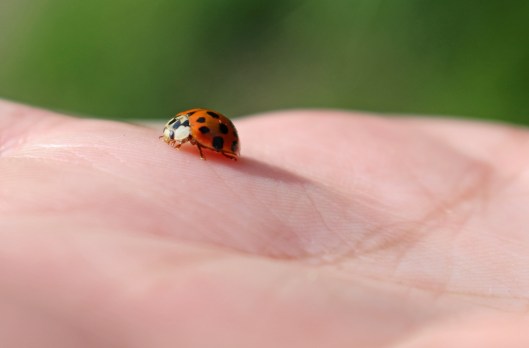
For the third time in as many weeks a Harlequin ladybird (Harmonia axyridis) has appeared as if from nowhere in my kitchen. They like to find somewhere cosy to hibernate the winter away so I’m sure a warm spot near my gas boiler would suit them very well and normally I wouldn’t mind but this is the most invasive ladybird on earth.
151212 ladybird harlequin (1)

The voracious little Harlequin originated in Asia but was introduced firstly to North America and later to Europe to control aphids. Though it only arrived in Britain in 2004 – perhaps blown across the Channel, or it may have hitched a ride on a vehicle – it has already spread throughout half these isles. The problem is that the Harlequin doesn’t just eat aphids; not only does it compete with native ladybirds for food but it also devours their eggs and larvae, as well as the eggs and caterpillars of butterflies and moths. It may look cute but it has the devastating potential to wipe out all 26 resident species of ladybird.

This is one time when I really wish this ladybird would fly away home!

151212 ladybird harlequin (2)

Like Loading...

About me

sconzani

sconzani

I'm a writer and photographer; researcher and blogger; birder and nature lover; countryside rambler and city strider; volunteer and biodiversity recorder.

View Full Profile →

Follow earthstar on WordPress.com

Enter your email address to follow this blog and receive notifications of new posts by email.

Recent blog posts

  • N is for nest December 19, 2025
  • M is for mite December 18, 2025
  • L is for lepidopteran lifers December 17, 2025
  • K is for Keeled skimmers December 16, 2025
  • J is for Jersey tiger December 15, 2025

From the archives

COPYRIGHT

Unless otherwise acknowledged, the text and photographs on this blog are my own and are subject to international copyright. Nothing may be downloaded or copied without my permission.

Fellow Earth Stars!

  • Unknown's avatar
  • Unknown's avatar
  • Unknown's avatar
  • Unknown's avatar
  • Unknown's avatar
  • Unknown's avatar
  • Unknown's avatar
  • Unknown's avatar
  • Unknown's avatar
  • Unknown's avatar
  • Unknown's avatar
  • Unknown's avatar
  • Unknown's avatar
  • Unknown's avatar
  • Unknown's avatar
  • Unknown's avatar
  • Unknown's avatar
  • Unknown's avatar
  • Unknown's avatar
  • Unknown's avatar
  • Unknown's avatar
  • Unknown's avatar
  • Unknown's avatar
  • Unknown's avatar
  • Unknown's avatar
  • Unknown's avatar
  • Unknown's avatar
  • Unknown's avatar
  • Unknown's avatar
  • Unknown's avatar
  • Unknown's avatar
  • Unknown's avatar
  • Unknown's avatar
  • Unknown's avatar
  • Unknown's avatar
  • Unknown's avatar
  • Unknown's avatar
  • Unknown's avatar
  • Unknown's avatar
  • Unknown's avatar
  • Unknown's avatar
  • Unknown's avatar
  • Unknown's avatar
  • Unknown's avatar
  • Unknown's avatar
  • Unknown's avatar
  • Unknown's avatar
  • Unknown's avatar
  • Unknown's avatar
  • Unknown's avatar

Blog at WordPress.com.

Privacy & Cookies: This site uses cookies. By continuing to use this website, you agree to their use.
To find out more, including how to control cookies, see here: Cookie Policy
  • Subscribe Subscribed
    • earthstar
    • Join 667 other subscribers
    • Already have a WordPress.com account? Log in now.
    • earthstar
    • Subscribe Subscribed
    • Sign up
    • Log in
    • Report this content
    • View site in Reader
    • Manage subscriptions
    • Collapse this bar
 

Loading Comments...
 

You must be logged in to post a comment.

    %d