
Tags
British butterflies, butterflies, butterflies that hibernate, butterfly, Comma, Comma butterfly, Polygonia c-album

In Fauna Britannica, Stefan Buczacki describes this butterfly’s ragged outline as being the ‘shape of a fallen leaf’ and its colours, too, are quite autumnal. This is the most grammatically correct of Britain’s butterflies, the Comma, Polygonia c-album.
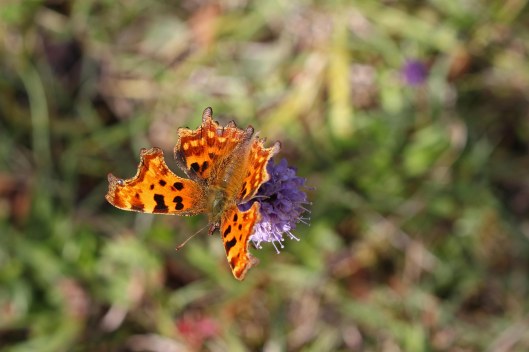
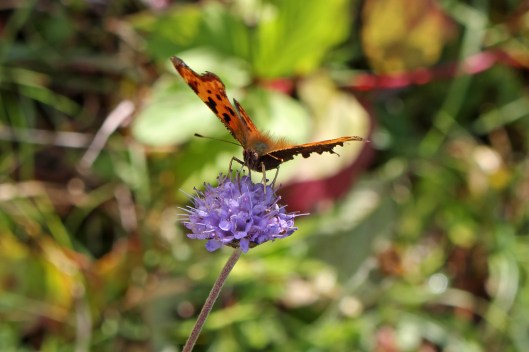
Though I have no personal experience of this, the Comma is, apparently, one of the three butterflies most likely to be found hibernating in sheds and outhouses – the other two are the Small tortoiseshell and the Peacock. Adult Commas can usually be seen flying between March and September so maybe these ones I’ve seen recently were having their last feeds before looking for a cosy spot to snooze away the cold months of winter. If I had a shed, they’d be most welcome.

 earthstar
I found this little bit of information on the University of Kentucky butterfly webpage: The coloration and pattern of a butterfly’s wings may enable it to blend into its surrounding. Some may look like dead leaves on a twig when they are at rest with their wings closed. The under wing markings of the comma and question mark butterflies help them to go unnoticed when hibernating in leaf litter. (This info was under the section on camouflage.)
LikeLiked by 1 person
So, the resemblance to an autumn leaf is no coincidence! That’s brilliant, Ann. Thanks so much for taking the time to look this up. 🙂
LikeLike
Beautiful and interesting post. I think the description of the Comma is delightful and certainly accurate. It is a unique shape and I wonder if it is a protective mechanism from predators.
LikeLiked by 1 person
It’s believed most brightly coloured insects are that way to frighten off predators but I don’t know about the shape. It’s a fascinating question! Thanks, Ann. 🙂
LikeLiked by 1 person
I’ll dig around a bit and see what I can find!
LikeLiked by 1 person