
Tags
British wildflowers, crane's bills, geranium, Geranium lucidum, Geranium Robertianum, Geranium rotundifolium, Herb Robert, Round-leaved crane's-bill, Shining crane's-bill, spring flowers, spring wildflowers
The word geranium comes from the Greek geranos, meaning crane, so named because of the likeness of the plant’s seed case to the bill of the bird. Thus, in the plant world, the crane’s-bills are the wild geraniums.
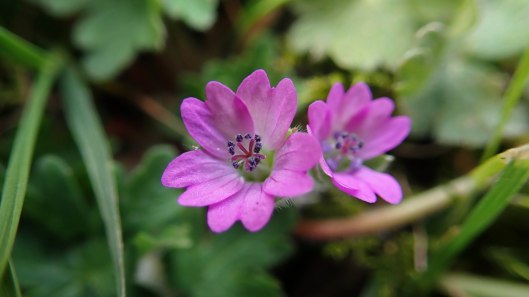
’Tis the time the geraniums begin to bloom and I’m trying to learn which is which, so I thought I’d share a few I’ve found during recent perambulations. The first is the Round-leaved crane’s-bill (Geranium rotundifolium).
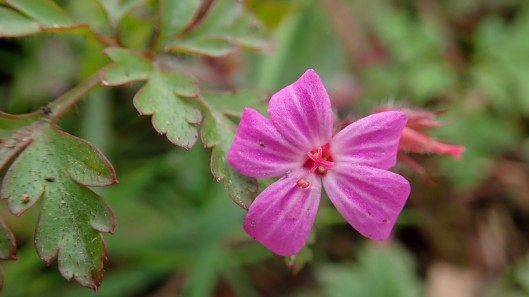
This next is the one most people can name. It seems to grow almost anywhere and makes even a rubbish heap look beautiful: Herb Robert (Geranium robertianum).

At a quick glance, this Shining crane’s-bill (Geranium lucidum) looks a lot like Herb Robert … and then you notice how different the leaves are.
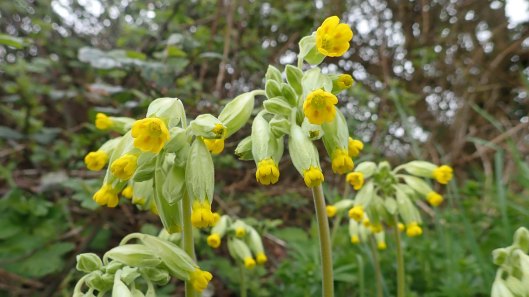
 Senecio squalidus (Oxford ragwort) translates as ‘dirty old man’ and Primula vulgaris (Primrose) is ‘first common girl’. There are names derived from fiction: Yoda purpurata, a genus of deep-sea acorn worms, is so named because the large lips on the sides of its head are reminiscent of Yoda’s ears; and, under the influence of the Harry Potter books, a dragon-like dinosaur is named Dracorex hogwartsia, dragon king of Hogwarts. There’s a midge named after a rock band: Dicrotendipes thanatogratus translates to Grateful Dead; and a land snail named after Australian zookeeper and conservationist Steven Irwin: Crikey steveirwini. There are carabid beetles named Agra vate and Agra vation (say them out loud), and there’s a horsefly with ‘a perfectly round and golden rear end’ called Scaptia beyonceae. Enough … check out the book for more.








 earthstar
You must be logged in to post a comment.