• ABOUT
  • BIRDING 2018
  • Birding 2019
  • BLOG POSTS
  • Butterflies 2018
  • Resources

earthstar

~ a celebration of nature

earthstar

Author Archives: sconzani

Brown rollrims

18 Friday Nov 2022

Posted by sconzani in fungi

≈ Leave a comment

Tags

British fungi, Brown rollrim, fungus, Paxillus involutus

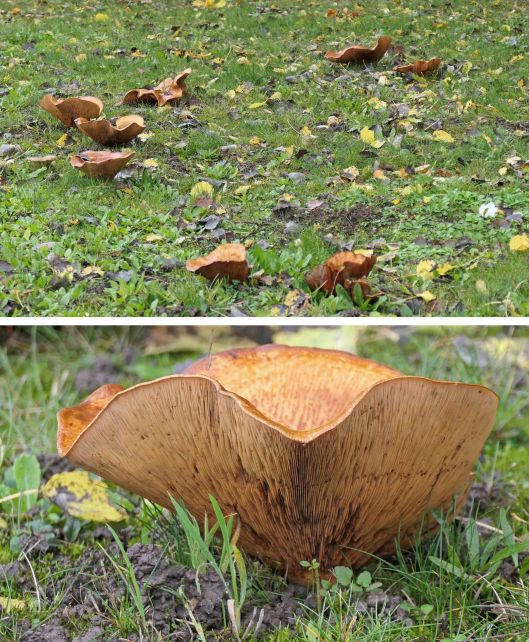
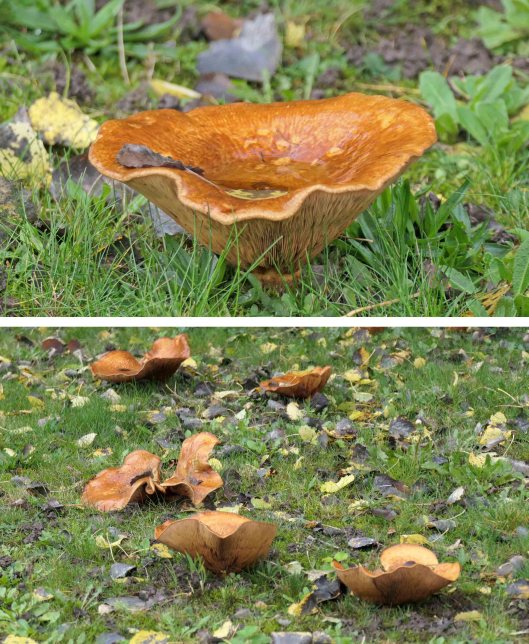
I initially thought these were a type of funnel fungi, one of the several Clitocybe species perhaps but, as I’m only too well aware that I’ve forgotten most of what I ever knew – never much – about fungi identification, I consulted an expert, Emma [@Coalspoilfungi on Twitter]. Turns out I was wrong – no surprise there!

221118 paxillus involutus (1)

These are Brown rollrims (Paxillus involutus) and they were massive, the biggest at least 12 inches across. They were growing on a grassy verge, next to a very busy local road. Emma told me: ‘They would have been viscid when wet, but when dry, [are] the texture of silky soft pig leather. Gills, cap and stem bruise easily deep red /orange to dark brown / Blackening slowly.’ Fungi are just so fascinating!

221118 paxillus involutus (2)

Like Loading...

A rare visitor to Cardiff Bay

17 Thursday Nov 2022

Posted by sconzani in birds

≈ 2 Comments

Tags

autumn bird migration, birding, birdwatching, Branta bernicla, Brent goose, British birds, Cardiff Bay birding, Dark-bellied Brent goose

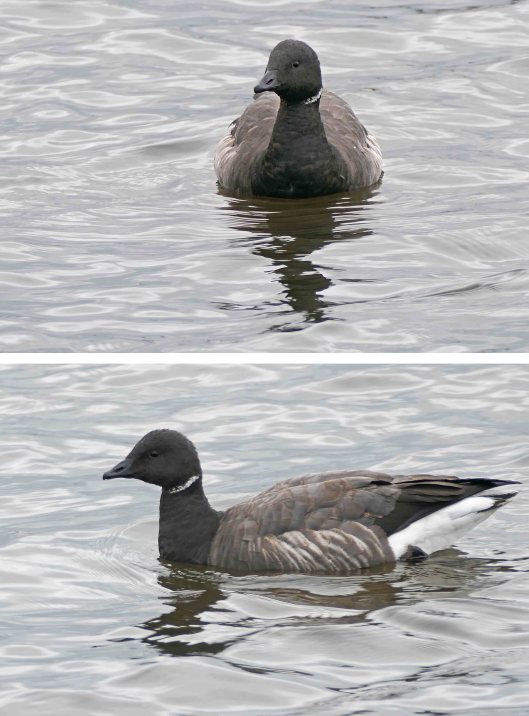
Monday’s walk around part of Cardiff Bay was special. When I reached the eastern side of the Barrage, I noticed an unusual bird with a flock of the 20-plus Canada geese that were cruising close to shore. I wasn’t sure what it was but a quick photo post to the local WhatsApp group produced three rapid responses: ‘It’s a Brent goose, Annie!’

221117 brent goose (1)

I probably should have known that but I’ve only seen these geese a few times before and then only at a distance. It’s a rare occurrence for one to drop in to the Bay. There are four races of Brent goose (Branta bernicla) (if you’re interested, there’s a good article, with photos, on the Bird Guides website); this bird was one of the dark-bellied sub species that breed in the Russian Arctic. Good numbers of these birds over-winter on the Exe estuary in southern England, so it’s possible that this bird was heading in that direction.
221117 brent goose (2)

Perhaps it got a little lost en route, though I suspect it was simply hungry. It repeatedly came out of the water and up on to the grass to feed – I say repeatedly because dog owners often let their mutts run loose in that area and the Brent, and the Canada geese that followed its lead, kept getting chased, causing them to fly back to the safety of the water. The geese persevered though and, from reports I heard from other birders who came to see this local rarity, I know that it was still in the area in the late afternoon. Our Brent visitor disappeared overnight, hopefully with its energy restored for the flight south to find its kin.


221117 brent goose (3)

Like Loading...

Caterpillars in November

16 Wednesday Nov 2022

Posted by sconzani in autumn, insects

≈ Leave a comment

Tags

Knot grass larva, Knot grass moth, moth caterpillars, moth larvae, Noctiud caterpillar

Though I know many Lepidoptera over-winter as caterpillars, and this has been a particularly mild November as well, it was still a surprise to see these two caterpillars on one of my recent walks. From previous sightings, I knew that the black, red and white hairy beastie was the larva of a Knot grass moth (Acronicta rumicis) but I didn’t recognise the other one. One of my Twitter pals was able to tell me it’s one of the Noctuid species of moths but wasn’t able to be more specific, but I’ve just ordered a book I’ve long desired, The Field Guide to Caterpillars of Great Britain and Ireland, so will hopefully be able to update this post soon.

221116 noctuid sp knot grass

Like Loading...

The shield-bearing duck

15 Tuesday Nov 2022

Posted by sconzani in birds

≈ Leave a comment

Tags

Anas clypeata, birding, birdingwatching, British birds, shoveler

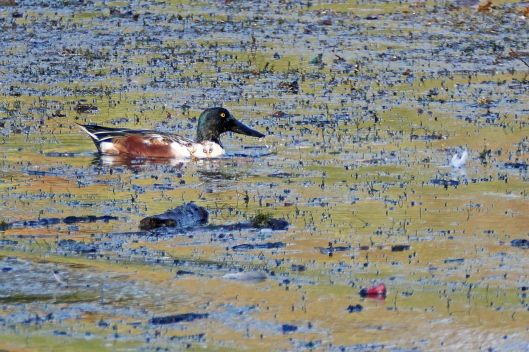
It’s always a pleasure to see a Shoveler, one species of duck that’s easy to identify because of its massive beak. This distinctive appendage is perfectly designed for sieving through water to find the tiny invertebrates and plant life that make up this bird’s balanced diet. Its scientific name is Anas clypeata, anas being the Latin for duck and clypeata, from the Latin clypeus for shield, here meaning shield-bearing, a reference to that massive shield-like bill.

221115 shoveler

Like Loading...

Leafmines: Coleophora albitarsella

14 Monday Nov 2022

Posted by sconzani in insects, plants

≈ Leave a comment

Tags

blotch leafmines, British leafmines, case-bearing larva, Case-bearing moth, Coleophora albitarsella, leafmines on Ground-ivy, leafmining moth larvae

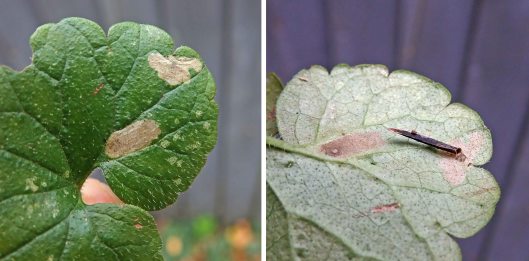
For months, both earlier this year and in recent weeks, I’ve been casting an eye over all the patches of Ground-ivy (Glechoma hederacea) I’ve noticed so I was delighted, last Friday, to finally find what I’ve been searching for, a new leafminer. Even better, as well as the tell-tale blotches on several leaves, when I turned over one leaf there was also an empty larval case.

221114 coleophora albitarsella (1)

These are the feeding signs for the larvae of the little moth Coleophora albitarsella (also known as the White-legged case-bearer, you can see the rather non-descript adult moth on the UK Moths website here), which munches on a wide variety of different plants (see full list on the British Leafminers website here). This moth species is relatively scarce in Glamorgan, with just a few sightings this millennium; in fact, it’s not very common anywhere in the UK, with just 109 records currently showing in the NBN Atlas (110, when mine is added) , so I feel rather privileged to have found these leafmines.

221114 coleophora albitarsella (2)

Like Loading...

Flying autumn leaves

13 Sunday Nov 2022

Posted by sconzani in autumn, leaves, trees

≈ Leave a comment

Tags

autumn, autumn colour, autumn leaves, falling leaves, flying leaves

‘Autumn leaves don’t fall, they fly. They take their time and wander on this their only chance to soar. Reflecting sunlight, they swirled and sailed and fluttered on the wind drafts.’ ~ from Where the crawdads sing, Delia Owens, G. P. Putnam’s Sons, New York, 2018

221113 autumn leaf

Like Loading...

Dabchicks

12 Saturday Nov 2022

Posted by sconzani in birds

≈ Leave a comment

Tags

birding, birdwatching, British birds, little grebe, Tachybaptus ruficollis

The Little grebe (Tachybaptus ruficollis) is also commonly known as the Dabchick, though it has a wide variety of other vernacular names. Its scientific name, according to professor Wikipedia, is a combination of Ancient Greek and Latin: takhus means fast, bapto means ‘to sink under’, rufus is red and collis comes from the Latin for neck – so, fast diving red-neck. It’s aptly named. Although these cute little grebes are widespread and common, they are ‘seen infrequently as they live on waterways where there is dense aquatic vegetation’, according to Fauna Britannia, though I would modify that to read that they are seen infrequently close up because they dive rapidly as soon as they realise someone is near.

221112 little grebe

Like Loading...

Dusky puffball

11 Friday Nov 2022

Posted by sconzani in autumn, fungi

≈ 2 Comments

Tags

British fungi, Dusky puffball, Lycoperdon nigrescens, puffballs

As you can see, the Dusky puffball (Lycoperdon nigrescens) is very similar to the Common puffball but its skin is darker. Specimens are primarily found in coniferous woodland (mine was fruiting in a section of a local cemetery planted with various species of conifer), though these flexible puffballs can also be found growing amongst the dunes at the seaside and in the acid soils of heathland. According to Pat O’Reilly in his book Fascinated by Fungi, these fungi emit ‘an unpleasant gassy smell’ when their flesh is cut. I didn’t check!

221111 Dusky Puffball

Like Loading...

Tooting Teal

10 Thursday Nov 2022

Posted by sconzani in autumn, birds

≈ Leave a comment

Tags

birding, birdwatching, British birds, British ducks, Roath Park Lake, Teal

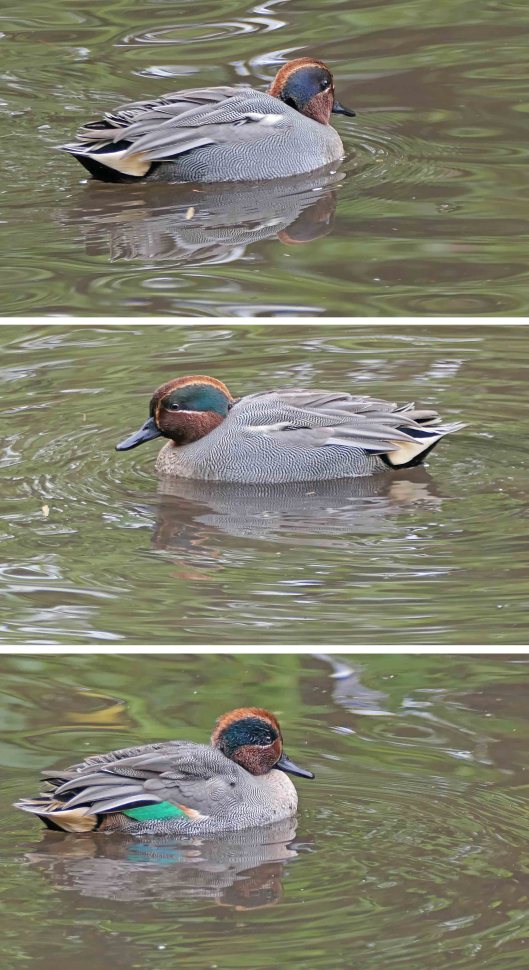
I could hear them tooting from the other side of the road so quickly got my camera out and headed across to Roath Park Lake. There were six Teal in total, four males and two females. One pair was drifting off to one side together but it was the other three males that were making all the noise.

221110 teal (1)

The second female, a delicate brown-and-grey beauty, was the subject of their intense attention. All three males were circling her, making their distinctive tooting call and flinging back their heads. I had never seen this behaviour before but their display was unmistakeable. Each was trying, but seemingly failing to impress the female. They were certainly presenting her with some very handsome choices, and I was definitely impressed.

221110 teal (2)

Like Loading...

Twenty two

09 Wednesday Nov 2022

Posted by sconzani in autumn, insects, ladybird

≈ Leave a comment

Tags

British ladybirds, Harlequin ladybirds, ladybirds

I know the weather’s been mild – we haven’t even had a frost here yet – but I still didn’t expect to see a bunch of ladybirds on nettles as I walked through a local park on Monday afternoon. Initially I thought there were just one or two but the little red dots just kept on appearing so I retraced my steps to where I’d seen the first one and counted. Twenty two! Sadly, they were all the invasive Harlequins but hopefully that means the native breeds are all tucked up somewhere safe for the winter.

221109 ladybirds

Like Loading...
← Older posts
Newer posts →

About me

sconzani

sconzani

I'm a writer and photographer; researcher and blogger; birder and nature lover; countryside rambler and city strider; volunteer and biodiversity recorder.

View Full Profile →

Follow earthstar on WordPress.com

Enter your email address to follow this blog and receive notifications of new posts by email.

Recent blog posts

  • My first Holly blue April 10, 2026
  • Alder flies April 9, 2026
  • Lily beetle April 8, 2026
  • First bee-flies April 7, 2026
  • Bloody-nosed beetle April 6, 2026

From the archives

COPYRIGHT

Unless otherwise acknowledged, the text and photographs on this blog are my own and are subject to international copyright. Nothing may be downloaded or copied without my permission.

Fellow Earth Stars!

  • Unknown's avatar
  • Unknown's avatar
  • Unknown's avatar
  • Unknown's avatar
  • Unknown's avatar
  • Unknown's avatar
  • Unknown's avatar
  • Unknown's avatar
  • Unknown's avatar
  • Unknown's avatar
  • Unknown's avatar
  • Unknown's avatar
  • Unknown's avatar
  • Unknown's avatar
  • Unknown's avatar
  • Unknown's avatar
  • Unknown's avatar
  • Unknown's avatar
  • Unknown's avatar
  • Unknown's avatar
  • Unknown's avatar
  • Unknown's avatar
  • Unknown's avatar
  • Unknown's avatar
  • Unknown's avatar
  • Unknown's avatar
  • Unknown's avatar
  • Unknown's avatar
  • Unknown's avatar
  • Unknown's avatar
  • Unknown's avatar
  • Unknown's avatar
  • Unknown's avatar
  • Unknown's avatar
  • Unknown's avatar
  • Unknown's avatar
  • Unknown's avatar
  • Unknown's avatar
  • Unknown's avatar
  • Unknown's avatar
  • Unknown's avatar
  • Unknown's avatar
  • Unknown's avatar
  • Unknown's avatar
  • Unknown's avatar
  • Unknown's avatar
  • Unknown's avatar
  • Unknown's avatar
  • Unknown's avatar
  • Unknown's avatar

Blog at WordPress.com.

Privacy & Cookies: This site uses cookies. By continuing to use this website, you agree to their use.
To find out more, including how to control cookies, see here: Cookie Policy
  • Subscribe Subscribed
    • earthstar
    • Join 642 other subscribers
    • Already have a WordPress.com account? Log in now.
    • earthstar
    • Subscribe Subscribed
    • Sign up
    • Log in
    • Report this content
    • View site in Reader
    • Manage subscriptions
    • Collapse this bar
 

Loading Comments...
 

You must be logged in to post a comment.

    %d