• ABOUT
  • BIRDING 2018
  • Birding 2019
  • BLOG POSTS
  • Butterflies 2018
  • Resources

earthstar

~ a celebration of nature

earthstar

Category Archives: animals

1/365 Urban foxes

01 Tuesday Jan 2019

Posted by sconzani in 365DaysWildin2019, animals, mammal, nature

≈ 2 Comments

Tags

#365DaysWild, British mammals, fox, male and female fox, pair of foxes, urban fox

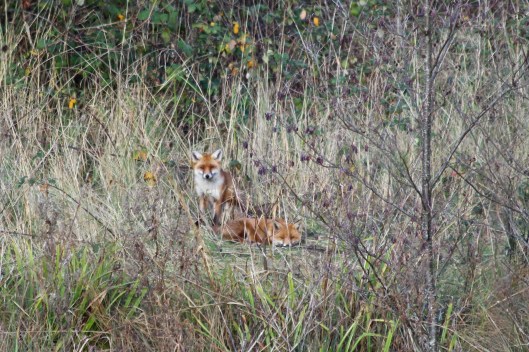
To kickstart my birding list for the new year, I walked 8+ miles around Cardiff Bay, logging all the different bird species I could find (they’ll appear on my Birding 2019 page as soon as I finish editing my photos). With mostly blue skies and an abundance of lovely birds, it was a super walk but the highlight wasn’t the birds – it was spotting and then watching these two beautiful foxes lolling about in the grass, enjoying the winter sunshine. Such magnificent creatures!

190101 urban foxes

Like Loading...

Arne deer

03 Saturday Nov 2018

Posted by sconzani in animals, mammal, nature

≈ Leave a comment

Tags

British deer, deer, Roe deer, RSPB Arne, Sika, Sika deer, wild deer

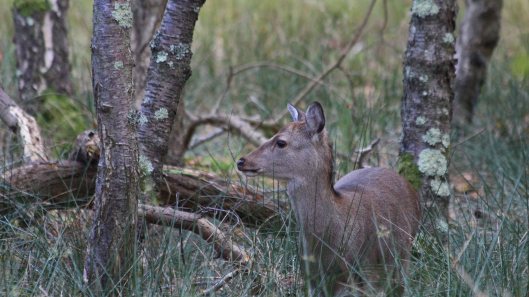
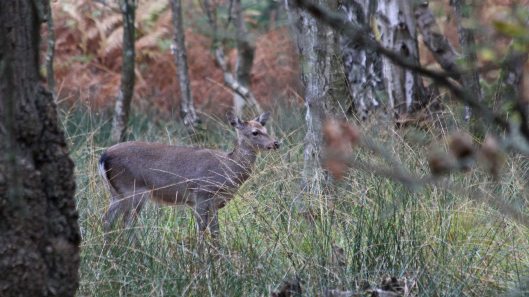
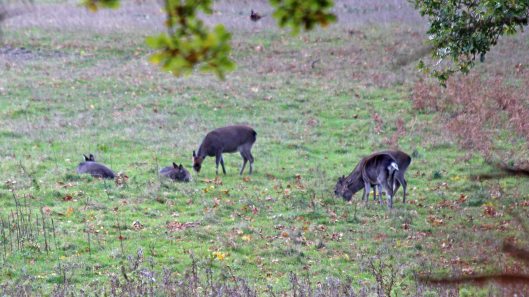
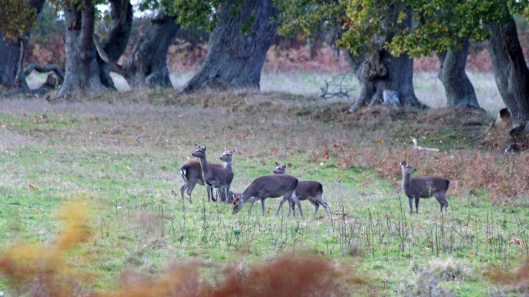
As well as the birds at RSPB Arne, we were treated to very close views of Sika deer and more distant views of a herd of Roe deer.

181103 sika deer (1)

The Sika were sporting their winter coats of dark grey so the spots you would be able to see in summer were not visible. These are not native deer – they were introduced from Asia in 1860 but some have since escaped and there is now a sizable wild population.

181103 sika deer (2)

Arne must be like heaven to the Sika, as they love coniferous forests and heathlands, where they graze on heather, grasses and small shrubs.

181103 sika deer (3)

Although October and November are the traditional months for the rut, we didn’t hear any of the usual male groans, whistles or yak-yak barks, though we did hear an alarming whining noise at one stage when a female was calling to her calf.

181103 sika deer (4)

A small herd of six Roe deer were in a neighbouring field as we walked along one of Arne’s many trails. None of these deer had antlers, so I assume they were all females and juveniles.

181103 roe deer (1)

Roe deer are native to Britain and, though they were once hunted to extinction in England, they survived in Scotland and have since been re-introduced across the border so are now abundant in much of England and Scotland, with a small population in Wales.

181103 roe deer (2)

Like Loading...

Steart Marshes Longhorns

15 Monday Oct 2018

Posted by sconzani in animals, mammal, nature

≈ 2 Comments

Tags

cattle with horns, English cattle breeds, English Longhorn, Longhorn cattle, Steart Point, WWT Steart Marshes

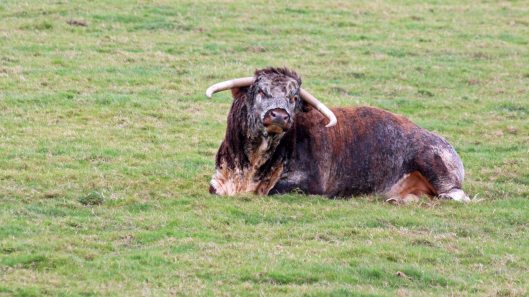
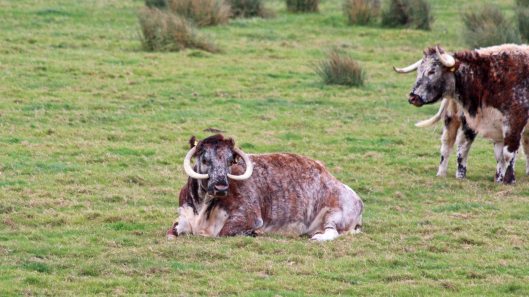
As well as the stunning birdlife at WWT Steart Marshes on Saturday, I was particularly intrigued by these cattle, which one of my birding friends identified as English Longhorns.

181015 longhorn (1)

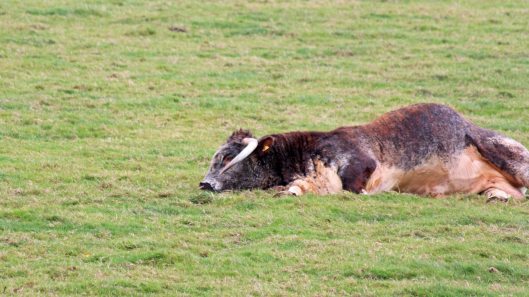
One of the advantages for local farmers of the wetland development on the Steart peninsula is that they can now graze their cattle on saltmarsh. This gives the meat of these cattle a unique flavour that is apparently highly prized by some human carnivores, so it attracts a better price for the farmers. I thought the beast shown below was already destined for the abattoir as it looked to be dead already.

181015 longhorn (2)

But no – turns out it was merely sleeping heavily and, after five minutes or so, raised its enormous head to blink sleepily at the passing humans. What an impressive beast it was!

181015 longhorn (5)

The horns of these cattle were fascinating: they seemed to grow in all different directions. One animal had one horn growing upwards, the other down, and the creature shown below must surely have had its horns cut, otherwise it would have been in danger of them piercing its face.

181015 longhorn (3)

For all their huge size, these seemed to be gentle giants. The younger animal in this photo came over and began to rub against and lick the head of the older beast – its mother?

181015 longhorn (4)

Still, I don’t think I’d want to venture into a field with any of them any time soon.

Like Loading...

Birding at WWT Steart Marshes

14 Sunday Oct 2018

Posted by sconzani in animals, autumn, birds, nature, seaside, walks

≈ 1 Comment

Tags

Bar-tailed godwits, birding, birdwatching, British birds, Cattle egret, coastal habitats, Glamorgan Bird Club, Golden plover, Greenshank, Hare, Roe deer, saltmarsh, WWT Steart Marshes

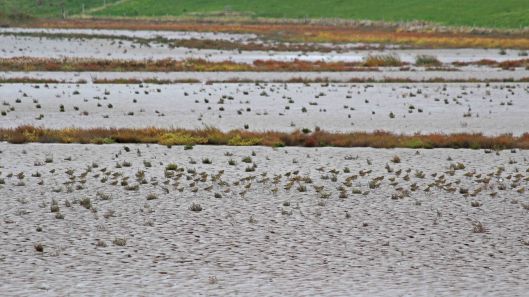
Storm Callum was wind-blasting the south-western counties of Wales and England with 50-mph-plus gusts yesterday but that didn’t deter 10 mad keen (some might just say mad) members of the Glamorgan Bird Club from heading to England, to the Wildfowl & Wetlands Trust property at Steart Marshes in Somerset, for a day’s birding. And what a magnificent place it is and an incredible day we had!

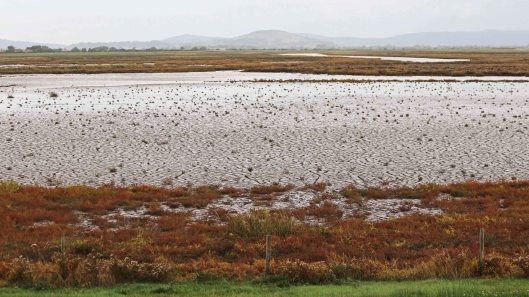
181014 Steart Marshes (1)

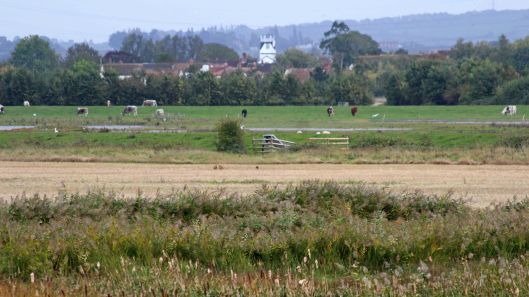
This is a man-made landscape, engineered to deal with local flooding issues and future sea-level rises, but it has the advantage of providing much-needed and extensive salt- and fresh-water wetland habitats. You can read more and watch a video on the WWT website.

181014 Steart Marshes (2)

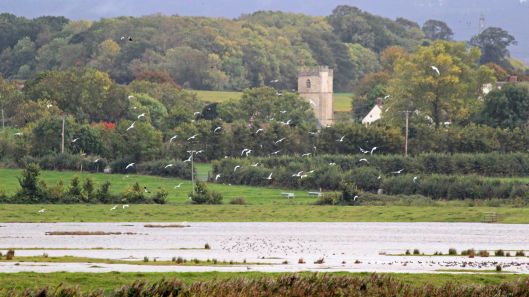
I don’t have a lot of close-up photos to share from this trip. As I mentioned at the start, it was incredibly windy so the conditions for non-blurry photography were difficult, and many of the birds were distant so I was relying on my bins and the generosity of my birding friends and their telescopes for better views.

181014 Steart Marshes (3)

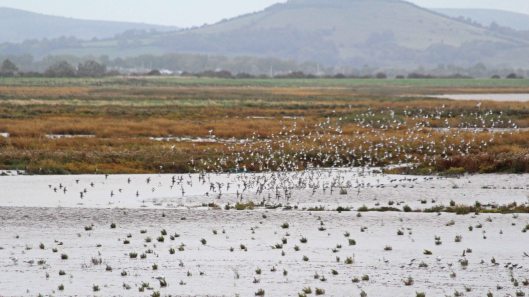
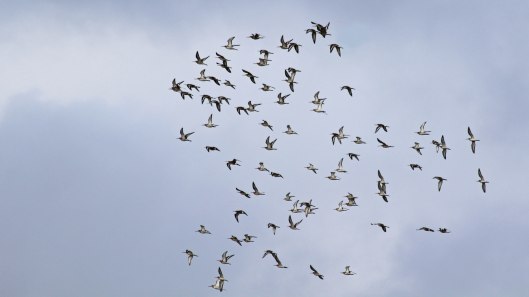
That doesn’t mean you can’t see some incredible sights here with the naked eye though: the miracle of hundreds of Lapwings or Bar-tailed godwits rising and flying in unison is one of Nature’s finest wonders, as are views of birds of prey like Merlin and Hobby screaming like fighter jets across the marshes in pursuit of prey.

181014 Steart Marshes (10)181014 Steart Marshes (7)

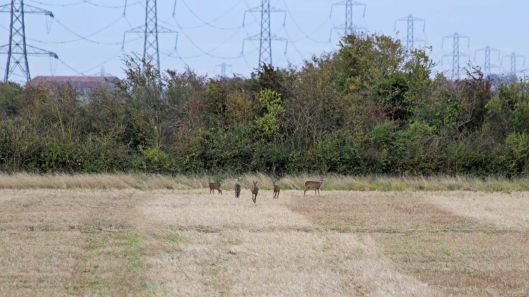
We also saw small numbers of Roe deer and Hares, scampering about in the fields.

181014 Steart Marshes (5)181014 Steart Marshes (6)

For the serious birder, there was much to quicken the heartbeat, with 13 species of wader seen, 12 Cattle egrets, a Spoonbill and a Glossy ibis. I managed to add five ticks to my year list so I was well pleased.

181014 Steart Marshes (9)181014 Steart Marshes (8)

This is a site that will only improve in future years and will almost certainly continue to attract star birds, but it’s also a place for everyone to enjoy the many walking trails, the excellent wildlife viewing facilities and the stunning beauty of the saltmarsh, an environment more colourful than I had imagined it would be. If you can, do visit!

181014 Steart Marshes (11)

My species total for the day was only 49 but this list is about quality, not quantity. Five of these were year ticks for me: Mute Swan, Canada Goose, Shelduck, Eurasian Wigeon, Mallard, Northern Pintail, Pheasant, Little Grebe, Glossy Ibis, Spoonbill, Cattle Egret, Grey Heron, Little Egret, Cormorant, Marsh Harrier, Common Buzzard, Kestrel, Merlin, Hobby, Moorhen, Coot, Ringed Plover, European Golden Plover, Grey Plover, Northern Lapwing, Knot, Little Stint, Dunlin, Ruff, Common Snipe, Black-tailed Godwit, Bar-tailed Godwit, Eurasian Curlew, Spotted Redshank, Greenshank, Common Redshank, Black-headed Gull, Lesser Black-backed Gull, Herring Gull, Woodpigeon, Magpie, Carrion Crow, Skylark, Wren, Starling, Pied Wagtail, Meadow Pipit, Goldfinch and Linnet.

The ones I missed but others saw or heard: Eurasian Teal, Northern Shoveler, Mediterranean Gull, Stock Dove, Collared Dove, Raven, Jackdaw, Blue Tit, Cetti’s Warbler, Blackbird and Chaffinch.

Like Loading...

Ratty’s back

15 Sunday Jul 2018

Posted by sconzani in animals, mammal, nature

≈ Leave a comment

Tags

British mammals, Cosmeston, Cosmeston Lakes Country Park, Water vole

180715 water vole (1)

Well, the truth is Ratty probably never went away. Water voles might disappear from sight during the cold months of winter but they don’t actually hibernate – they simply burrow deeper underground to keep warm, and they spend a lot of time sleeping, which means they don’t need to snack too often from the larder they stock in autumn, full of bulbs, roots and tubers. They also bung up the entrance to their burrows with a mix of vegetation and mud, which helps keep the heat inside.

180715 water vole (2)

Come the Spring, they emerge and spend more time out and about, though it’s only in the past month or so that I’ve seen them again at Cosmeston. That may just be the timing of my visits, though the few I’ve seen have also seemed a bit less confident about being out and about than last year’s Water voles, possibly because some idiot people have let their dogs jump into the dipping pond, an area where they are obviously forbidden.

180715 water vole (3)

It’s probably impossible to tell how many of last year’s release of 100 Water voles have survived the winter but another 40-odd were released a few weeks back to supplement the local population.

180715 water vole (4)

People love to watch them, young and old alike, so let’s hope we can all enjoy them chewing away at the vegetation for the days, weeks, months to come.

180715 water vole (5)

Like Loading...

Birding at Peterston & Pendoylan Moors

12 Thursday Jul 2018

Posted by sconzani in animals, birds, insects, nature, walks

≈ 2 Comments

Tags

birding, birdwatching, British birds, British butterflies, butterflies, Cinnabar caterpillars, Comma, Cows, Glamorgan Bird Club, Green-veined white, Meadow Brown, Peacock, Red fox, Red kite, River Ely, Sand martin, Small tortoiseshell, Stock dove

Yesterday I enjoyed another wonderful, if rather hot day’s birding with my friends from the Glamorgan Bird Club, this time wandering a trail alongside the River Ely near Peterston-super-Ely and Pendoylan.

180711 2 red kites

On the way there, my friend John and I had incredibly close views of three Red kites and more of these magnificent birds of prey were gliding overhead during our walk.

180711 1 stock dove

We saw Stock doves (one pictured above) sitting obligingly close to Woodpigeons so we could see the differences in the two species.

180711 2 red fox

A Red fox was spotted trotting along in a distant field, its lunch in its mouth.

180711 4 meeting the locals

A large herd of large cows moved reluctantly away from the river so we could pass by. You’d have to be crazy to mess with this lady, who was keeping a steady eye on us in case we ventured too close to her calves.

180711 5 participants

The fifteen participants … well, fourteen really, as I was taking the photo.

180711 6 river ely

The meandering River Ely was running low due to the recent drought conditions here in south Wales.

180711 b cinnabar caterpillars
180711 b comma
180711 b green-veined white
180711 b meadow brown
180711 b peacock
180711 b small tortoiseshell

As well as birds, we also saw lots of butterflies, including these: Cinnabar caterpillars, Comma, Green-veined white, Meadow brown, Peacock, and more Small tortoiseshell than I’ve ever seen in one day before.

180711 7 sandmartins

The highlight of the day for me was watching these Sand martins hawking for food over the fields and then returning to their burrows in the river bank to feed their hungry young. Magic!

Like Loading...

Heatwave

26 Tuesday Jun 2018

Posted by sconzani in animals, mammal, nature, seasons, weather

≈ 2 Comments

Tags

#30DaysWild, 30 Days Wild, heatwave, Penarth, shrew, summer heat

And I thought yesterday was hot!

180626 Penarth

On day 26 of #30DaysWild the temperature hit 29°C here in Penarth, even hotter than yesterday. And while people may be enjoying this weather (I am not!), it’s really tough for wildlife. I’m not sure what caused this little shrew to die but it’s easy to believe it was the heat, or perhaps thirst. We’ve had a couple of dry months now, and ponds and streams are running low and / or drying up. So, if you’re in a position to put water out for the birds and the beasties, please do – they really need all the help they can get right now.

180626 shrew

Like Loading...

Birding at Bargoed & Cefn Gelligaer

17 Sunday Jun 2018

Posted by sconzani in animals, birds, mammal, nature, walks

≈ 2 Comments

Tags

birding, birdwatching, Glamorgan Bird Club, Stonechat, Swallow, Welsh mountain pony

I was out birding again on day 17 of #30DaysWild, once again with Glamorgan Bird Club, this time to Cefn Gelligaer and the Bargoed uplands. And what a wonderful day it was, in spite of the light rain that set in after lunch (though that does mean I don’t have a lot of photos). One of our club members, Lee, guided us around his local patch and it was a real bonus tapping in to his local knowledge.

180617 Birding Bargoed uplands (6)180617 Birding Bargoed uplands (2)180617 Birding Bargoed uplands (5)

This is ‘big sky’ country, with a long history of human settlement, from the era of Megalithic chambered tombs through the years of Roman road-building to the coal mining of 19th and early 20th centuries. There are ancient trees, superbly crafted dry-stone walls, old droving roads and narrow green lanes.

180617 Birding Bargoed uplands (3)
180617 Birding Bargoed uplands (12)
180617 Birding Bargoed uplands (7)

As well as the 42 bird species we saw – a very respectable list, given the conditions – we also had a weasel checking us out, before streaking across the lane behind us, and I saw my first Welsh mountain ponies, very handsome little beasts with quite oddly shaped heads.

180617 Birding Bargoed uplands (11)180617 Birding Bargoed uplands (10)

Lee kindly gave us each a brochure for a walking trail that includes many of the local historical features so I will definitely be heading back for another look.

180617 Birding Bargoed uplands (9)

Spot the Stonechat

Here’s our bird list: Carrion crow, Mistle thrush, Lesser black-backed gull, Pheasant, Robin, Skylark, Wren, Starling, Woodpigeon, Jackdaw, Chaffinch, Goldfinch, Meadow pipit, Swallow, Willow warbler, Great tit, Great spotted woodpecker, Swift, Blackbird, Herring gull, Dunnock, Pied wagtail, Buzzard, Curlew, Red kite, Green woodpecker, Song thrush, Stonechat, Stock dove, Tree pipit, Redstart, Coal tit, Blackcap, Nuthatch, Long-tailed tit, Cuckoo, Blue tit, Linnet, Reed bunting, Whinchat, Magpie, and House sparrow.

180617 Birding Bargoed uplands (1)

Swallows swooping over the fields

Like Loading...

April at Cosmeston

30 Monday Apr 2018

Posted by sconzani in animals, birds, insects, nature

≈ Leave a comment

Tags

birding, birdwatching, Blackcap, British birds, Buzzards, Chiffchaff, Coot, Cosmeston, Cosmeston Lakes Country Park, Hawthorn Shield Bug, Large Red damselfly, long-tailed tit, Swallow, Willow warbler

Easter Sunday – April the 1st this year – is not a particularly smart day to go to Cosmeston to spend a quiet, peaceful time with Nature, but I wanted to stretch my legs and public transport on Sundays is quite restricted. So, I passed through Cosmeston on one of my circular local circuits, avoiding the main paths, taking the fields less trodden. I still managed to spot a Long-tailed tit (below left) nest-building – it’ll be cosy with a few more feathers like that, and, with the help of my friend John, I heard and then spotted my first Willow warbler of 2018 (below right), a good start to the month.

180430 1 Long-tailed tit
180430 2 Willow warbler

180430 3 blackcaps

5 April  Another quick walk-through, to avoid the school holiday madness, but I did pause at the place I’d recently spotted a Hawfinch, to see if I could hear or see it. No luck with that but I did spot my first Blackcaps of 2018 (above), and there were Willow warblers and Chiffchaffs (below) aplenty!

180430 4 chiffchaff

8 April  Once again, I passed through Cosmeston as part of a longer walk, though I did linger for a short time by the west lake where I got talking to a fellow birder. From there, I had distant views of two Buzzards on the far shore – were they investigating a nest site? – and I got a fleeting glimpse and photos of a mysterious mammal swimming rapidly through the reeds. Was it a Water vole, a Stoat or a Mink? Debate raged on Twitter and Facebook when I posted photos and requested opinions but the jury is still out on its identification.

180430 5 buzzards
180430 6 unidentified mammal

11 April  Though the heavy rain of the previous night and morning had cleared, cloud cover was thick and low, making for a very gloomy walk around Cosmeston, and it was almost as if the birds were experiencing a similar dullness. Although I spotted several Blackcaps and many of the regulars (Blackbirds, Dunnocks, Robins, Chaffinches, etc), bird song was generally subdued.

180430 7 coot chick
180430 8 swallow

Highlights were my first Coot chicks of the season, with the attentive parents feeding three chicks near the former bird hide site on the west lake, and Swallows swooping and diving over both lakes. I tried for about 15 minutes to get photos of them but it was very difficult to keep up with their super speedy aerobatics, so a silhouette will have to do. There’s no mistaking that forked tail though.

I passed through Cosmeston again on 16 April, but saw nothing particularly noteworthy, and then had a break to see other sites and while a friend was visiting. My last visit for the month was today, 30 April. Though a cool wind was blowing it was fine, and warm in sheltered spots. And, though I could hear bird song all around, with the trees now rapidly greening, we’ve reached that time of year when the birds pretty much disappear behind the foliage.

180430 9 Large red damselfly

The good news is that this is also the time of year when the other flying creatures take over: today I saw my first damselfly of the year, a Large Red; the butterflies were out in numbers: Brimstones, Peacocks, Commas, a Large white, a couple of Orange-tips and several Speckled woods (I’ll do a separate post for those in a few days); and I also saw my first shieldbug of 2018, a Hawthorn. It was a lovely walk!

OLYMPUS DIGITAL CAMERA

Like Loading...

The 18-buzzard bus

26 Monday Feb 2018

Posted by sconzani in animals, birds, nature

≈ 4 Comments

Tags

birding, birdwatching, British birds, Buteo buteo, Buzzard, killing time on bus journeys

What do you do to help pass the time on a long bus journey? Read, sleep, listen to music, do crosswords or puzzles? I had taken along my knitting for the three-and-a-half-hour bus ride from Cardiff to London, but I didn’t knit a single stitch.

180226 buzzards (1)
180226 buzzards (2)

I spent the 15 minutes waiting for the bus watching the earth of a molehill moving as the little mole tidied up its tunnel (and, of course, I was hoping it might poke its head out, but no such luck). And, once we were underway, we hadn’t cleared Cardiff’s suburbs before I spotted my first buzzard hovering over a park so, after that, I decided to abandon my knitting and keep my eyes on the countryside that was whizzing past outside the window.

180226 buzzards (5)

And what did I see? My list reads as follows: Lesser black-backed gulls, Herring gulls and Black-headed gulls, Carrion crows, Robins, Jackdaws, Pied wagtails, Feral and Woodpigeons, Magpies, Starlings, Mallards and Mute swans, Mistle thrushes and Blackbirds, a Rookery, lots of rabbits and Pheasants, and two small groups of deer, plus, of course, the 18 Buzzards alluded to in the title of this blog. I was very impressed to see so many of them.

180226 buzzards (3)
180226 buzzards (4)
Like Loading...
← Older posts
Newer posts →

About me

sconzani

sconzani

I'm a writer and photographer; researcher and blogger; birder and nature lover; countryside rambler and city strider; volunteer and biodiversity recorder.

View Full Profile →

Follow earthstar on WordPress.com

Enter your email address to follow this blog and receive notifications of new posts by email.

Recent blog posts

  • Blackthorn in bloom January 11, 2026
  • Weevil: Mecinus pyraster January 10, 2026
  • Red in beak and claw January 9, 2026
  • Who’s watching who? January 8, 2026
  • Springtail: Orchesella cincta January 7, 2026

From the archives

COPYRIGHT

Unless otherwise acknowledged, the text and photographs on this blog are my own and are subject to international copyright. Nothing may be downloaded or copied without my permission.

Fellow Earth Stars!

  • Unknown's avatar
  • Unknown's avatar
  • Unknown's avatar
  • Unknown's avatar
  • Unknown's avatar
  • Unknown's avatar
  • Unknown's avatar
  • Unknown's avatar
  • Unknown's avatar
  • Unknown's avatar
  • Unknown's avatar
  • Unknown's avatar
  • Unknown's avatar
  • Unknown's avatar
  • Unknown's avatar
  • Unknown's avatar
  • Unknown's avatar
  • Unknown's avatar
  • Unknown's avatar
  • Unknown's avatar
  • Unknown's avatar
  • Unknown's avatar
  • Unknown's avatar
  • Unknown's avatar
  • Unknown's avatar
  • Unknown's avatar
  • Unknown's avatar
  • Unknown's avatar
  • Unknown's avatar
  • Unknown's avatar
  • Unknown's avatar
  • Unknown's avatar
  • Unknown's avatar
  • Unknown's avatar
  • Unknown's avatar
  • Unknown's avatar
  • Unknown's avatar
  • Unknown's avatar
  • Unknown's avatar
  • Unknown's avatar
  • Unknown's avatar
  • Unknown's avatar
  • Unknown's avatar
  • Unknown's avatar
  • Unknown's avatar
  • Unknown's avatar
  • Unknown's avatar
  • Unknown's avatar
  • Unknown's avatar
  • Unknown's avatar

Blog at WordPress.com.

Privacy & Cookies: This site uses cookies. By continuing to use this website, you agree to their use.
To find out more, including how to control cookies, see here: Cookie Policy
  • Subscribe Subscribed
    • earthstar
    • Join 669 other subscribers
    • Already have a WordPress.com account? Log in now.
    • earthstar
    • Subscribe Subscribed
    • Sign up
    • Log in
    • Report this content
    • View site in Reader
    • Manage subscriptions
    • Collapse this bar
 

Loading Comments...
 

You must be logged in to post a comment.

    %d