• ABOUT
  • BIRDING 2018
  • Birding 2019
  • BLOG POSTS
  • Butterflies 2018
  • Resources

earthstar

~ a celebration of nature

earthstar

Category Archives: animals

Viscacha

07 Wednesday Sep 2016

Posted by sconzani in animals, nature

≈ 4 Comments

Tags

Bolivian animal, Lagidium peruanum, Northern Viscacha, Northern Vizcacha, Peruvian animal, viscacha, vizcacha

The impending arrival of yet another World Wildlife Wednesday sent me trawling through my photos to see what other examples of international wildlife I had in my archives, which resulted in a wonderful hour or more of reminiscing about past travel experiences. I love how photos bring back such amazing memories.

160906-viscacha-bolivia-1
160906-viscacha-bolivia-2

But I digress. I first met this furry little creature in November 2011 in Bolivia, on the edge of the highest desert in the world, the Siloli. Looking a bit like a cross between a hare and a squirrel, the Northern Viscacha (Lagidium peruanum) is actually part of the Chinchilla family. It lives in large colonies that are split into family groups, and it eats a wide range of plant matter, settling for almost anything it can find growing in such a harsh, rocky environment. It also eats bread – probably not the best thing to feed a wild animal but that was all the members of my group had to entice the beasties down from their rocky hideaways for some photos.

viscacha-macchupichu-5
viscacha-macchupichu-2

I next met the Viscacha in May 2012 in Peru, at Macchu Pichu, sleepily lazing away the afternoon in a nice sunny spot amongst the rocks. We were mutually surprised to see each other but, after rapidly firing off a few quick shots, I backed off and the two little Vissies quickly went back to sleep. They were very cute!

Like Loading...

Meeting the Maasai cattle

24 Wednesday Aug 2016

Posted by sconzani in animals, nature

≈ 8 Comments

Tags

Cattle herding, Maasai, Maasai cattle, Maasai village, Tanzania

Herding cattle, sheep and goats, sleeping in a boma, getting blessed by the chief, making bead jewellery and dancing – all in a day’s work when you spend time with the Maasai!

160824 Maasai cattle (1)

After writing about Cambodia cattle for last Wednesday’s world wildlife post, I just had to show you some Maasai cattle (and people) images this week. In October 2014 I was privileged to spend 3 days and a night in a Maasai village in Tanzania, and it was one of the most memorable experiences of my life.

160824 Maasai cattle (3)
160824 Maasai cattle (2)

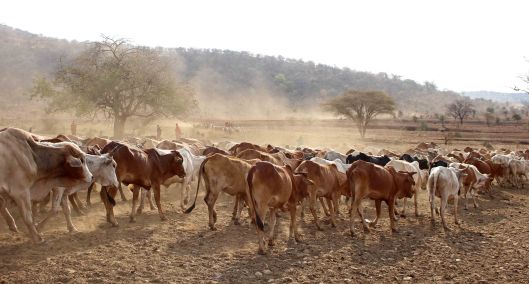
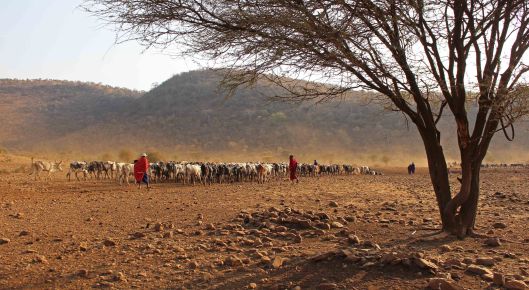
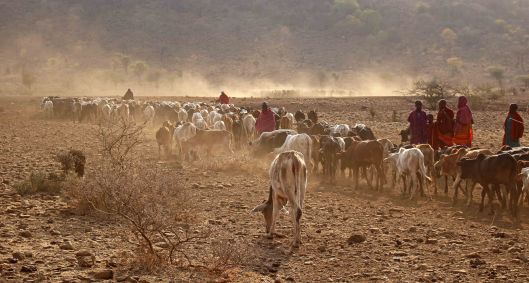
In this and the surrounding villages controlled by chief Meshuku Mappi, the Maasai own approximately 170,000 cattle, sheep and goats. That number seems almost incredible but, after watching huge herds of beasts being driven home to their overnight corrals by the men of the tribe, I can definitely believe it.

160824 Maasai cattle (5)160824 Maasai cattle (4)

It was the perfect photo opportunity – cloven hooves churned up dust from the bone dry ground, statuesque baobob trees punctuated the landscape like frozen giants, and the bright reds and blues of the men’s clothing popped against the browns of the landscape and the animals.

160824 Maasai cattle (11)160824 Maasai cattle (7)160824 Maasai cattle (6)

And, after an overnight stay in one of the village bomas (mud huts), we were up early next morning to catch the sun rise over the nearby hills and to watch the men driving the animals out for the day’s grazing. Life for the Maasai revolves around their animals – their cows are their primary source of food, and their wealth and status are measured in cattle. The Maasai are very special people and it was a huge privilege to spend time with them and get a glimpse of their daily lives.

160824 Maasai cattle (8)160824 Maasai cattle (9)160824 Maasai cattle (10)

Like Loading...

Cattle in Cambodia

16 Tuesday Aug 2016

Posted by sconzani in animals, nature

≈ 4 Comments

Tags

bovine, Cambodia, cattle, Cattle in Cambodia, cow, Water buffalo

World wildlife Wednesday has rolled around again, and I was stuck for an idea this week until my friend Viv, who lives in Thailand, posted a photo of one of her local water buffalo.

160817 cambo cattle (11)

My photos, however, were not taken in Thailand but in Cambodia, where I lived and worked for seven months back in 2013. Both water buffalo and the local cattle are common sights there, pulling wagons and ploughs, and wallowing in muddy watering holes. These valuable, well-tended beasts of burden are also farmed for their dairy products, and cow dung has long been used both as fertiliser and as fuel in impoverished countries like Cambodia. Cattle also feature in their ancient religions, and representations can be seen in the stone statues and sculptured reliefs that adorn the world-famous temples of Angkor Wat and the local pagodas. So, today we have a celebration of ‘bovinity’!

160817 cambo cattle (1)
160817 cambo cattle (2)
160817 cambo cattle (3)
160817 cambo cattle (4)
160817 cambo cattle (5)
160817 cambo cattle (6)
160817 cambo cattle (7)
160817 cambo cattle (8)
160817 cambo cattle (9)
160817 cambo cattle (10)
Like Loading...

‘Dedicated Naturalist’: Crafty grey squirrels

02 Tuesday Aug 2016

Posted by sconzani in 'Dedicated Naturalist' Project, animals, nature

≈ 6 Comments

Tags

acorn, acorn weevil, Dr Mary Gillham, grey squirrel, Mary Gillham Archive Project, oak tree

A snippet from my volunteer work on the ‘Dedicated Naturalist’ Project, helping to decipher and digitise, record and publicise the life’s work of naturalist extraordinaire, Dr Mary Gillham. This is an extract from a piece called ‘Oak trees and rabbits helped by those crafty grey squirrels’, written by Mary for the Cardiff Naturalists’ Society newsletter, June 1997:

We hear a lot about the squirrels’ intelligence in overcoming man’s best efforts to deter them from appropriating victuals put out for others. Recent work … has revealed their native wisdom in dealing with more natural foods.

160802 grey squirrel (1)

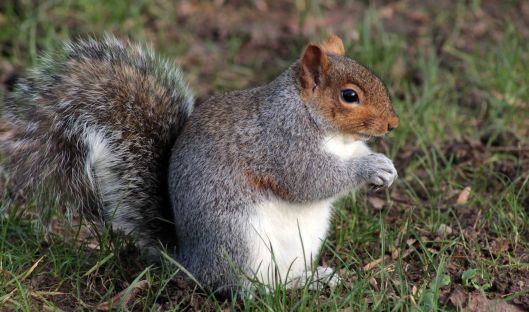
Many acorns are invaded by weevils, which are as acceptable as squirrel food as is the surrounding nut, but which shorten the life and viability of the fruit. Acorns collected are assessed for longevity by the squirrels, the infected ones eaten and the sound ones buried for another day. This guarantees them a surer food supply for winter and benefits the oak population by giving a higher than average viability of the acorns left to germinate and provide tender shoots for rabbits, rodents and sheep.

The squirrels’ ability … [is] from a high level of intellect evolved to better their own lot and – as part of the general wider plan governing the complex web of nature – to benefit others. Natural mechanisms of behaviour have more repercussions than are at first apparent!

160802 grey squirrel (2)
160802 grey squirrel (3)

For the full story about the Mary Gillham Archive Project, check out our website,  and follow our progress on Facebook and on Twitter.

Like Loading...

World wildlife Wednesday: Antelopes anonymous

13 Wednesday Jul 2016

Posted by sconzani in animals, nature

≈ 6 Comments

Tags

antelope, Ngorongoro Crater, safari, Serengeti National Park, Serengeti Plains, Tanzania

I used the word anonymous in my title because I’m not entirely sure what all of these animals are. And I use the word ‘antelopes’ in the broadest possible sense, as my photos may well include creatures that are not strictly speaking members of the antelope family. The trouble is that when you go on safari in a country like Tanzania, it’s far too easy to be overwhelmed by and enraptured with the less common, more sensational animals (the lions and leopards and cheetahs), so the ‘antelopes’, though no less interesting in themselves, tend to get ignored just a little.

160713 antelopes (7)

Having said that I did have to sort through more than a hundred ‘antelope’ photos when choosing which to include in this post. And, because I knew I would forget them, I did ask our guides the names of what we were seeing and made a list – I’m just not sure now which is which on that list. So, these photos may or may not include: impala, topi, Thomson’s gazelle, Grant’s gazelle, dik-dik, waterbuck, bushbuck, Cape eland, and Coke’s hartebeest.

160713 antelopes (1)
160713 antelopes (2)
160713 antelopes (3)
160713 antelopes (5)
160713 antelopes (8)
160713 antelopes (9)
160713 antelopes (11)
160713 antelopes (4)
160713 antelopes (10)
160713 antelopes (6)
Like Loading...

Welsh cats

19 Sunday Jun 2016

Posted by sconzani in animals, nature

≈ 19 Comments

Tags

cat lover, cats, felines, Welsh cats

I’m a cat person. I know many people who are besotted with their dogs – about 90% of all Britons, judging by the numbers of dogs everywhere – but I just don’t get it. In fact, I get positively annoyed by dog owners who don’t clean up after their dogs or who seem to think it’s funny when their wet and muddy little rats jump up on strangers leaving wet and muddy footprints on what was clean clothing. Grrrrrr!

160619 welsh cats (2)
160619 welsh cats (6)
160619 welsh cats (8)
160619 welsh cats (9)
160619 welsh cats (10)

On the other hand, I love cats – though, I admit, these days I am frequently torn between my love of cats and my love of birds, the former being frequently the killers of the latter. Still, I love cats and would love to have one but my living arrangements prevent that. So, when I’m out walking I often spend time talking to the cats I meet along the way – lurking in long grass, keeping look-out from rooftops, guarding the wheelies, controlling the traffic, sunning on window sills, communing with spirits in the graveyard, and that battered and bruised old Tom patrolling the local patch.

160619 welsh cats (3)
160619 welsh cats (1)
160619 welsh cats (7)
160619 welsh cats (4)
160619 welsh cats (5)
160619 welsh cats (11)
Like Loading...

Welsh biodiversity: Forest Farm

09 Thursday Jun 2016

Posted by sconzani in animals, birds, insects, nature

≈ Leave a comment

Tags

biodiversity, birding, birdwatching, damselflies, dragonflies, Forest Farm Nature Reserve, rabbits, Wales Biodiversity Week

I’ve sung the praises of Forest Farm in previous blogs (here and here) and enjoyed many conversations with robins during my walks there but today, on day six of Wales Biodiversity Week, for the wildlife at Forest Farm it was all about procreation.

160609 forest farm (1)

Male damselflies were flashing their colourful wings trying to impress the females; male dragonflies were patrolling their territory to warn off any potential interlopers; damselflies were copulating as they flew along the canal and around the pond, and I saw two female dragonflies depositing their eggs amongst plants and reeds in the pond.

160609 forest farm (2)

The birdlife was a little more advanced – there were chicks and fledglings everywhere: ducklings, baby coots and moorhens, young robins and dunnocks, to name just a few. Perhaps cutest of all, though, were the baby rabbits, happily frolicking and nibbling on the grass near the bird hides. It was like a scene from Watership Down!

1
2
3
4
5
6
7
8
9
10
11
12
Like Loading...

‘Dedicated Naturalist’: The Rabbit

15 Sunday May 2016

Posted by sconzani in 'Dedicated Naturalist' Project, animals, nature

≈ Leave a comment

Tags

Dr Mary Gillham, Forest Farm Nature Reserve, rabbit

A snippet from my volunteer work on the ‘Dedicated Naturalist’ Project, helping to decipher and digitise, record and publicise the life’s work of naturalist extraordinaire, Dr Mary Gillham.

160515 rabbit (1)

From Mary’s 1935 Form IIa Biology exercise book:

The rabbit is covered with a soft greyish coloured fur. The teats or milk glands of the mother sometimes range over the whole of the ventral side of the body. Rabbits have flat feet with fur on the underneath. Their claws cannot be drawn in as can those of a cat, and so if it wasn’t for the fact that they usually run on grass they would make a noise when running. As it is easy prey for other animals it has large ears so that it can hear the slightest sound. The rabbit has a prominent white tail, so that when one runs away the others may see it and know there is danger at hand, then they can make good their escape. The three most formidable enemies of the rabbit are the stoat, weasel and fox. Sometimes when the rabbit sees any of these it is so overcome with fright that it seems paralysed and cannot move while its attacker comes up and kills it. The rabbit has three eyelids instead of the usual two, it also has sensitive whiskers like those of a cat growing from the sides of its face. The ventral side is a much lighter grey that the dorsal side. Rabbits are very common in England and in almost any field you go into you can see either the rabbits or their burrows.

160515 rabbit (2)
160515 rabbit (3)
160515 rabbit (4)
160515 rabbit (5)

My rabbits were photographed this week at Forest Farm Nature Reserve, where they are certainly very common!

160515 rabbit (6)

You can follow our progress with this project on Facebook and on Twitter. A website will follow soon.

Like Loading...

Have you ridden a camel?

11 Wednesday May 2016

Posted by sconzani in animals, nature

≈ 5 Comments

Tags

camel, camel safari, camels and tourism, Camels in Morocco, camels in Tanzania, camels in Turkey

camels 1

From left, camels in Tanzania, in Turkey and in Morocco

I have, and I can tell you it is the most uncomfortable animal ever invented! Even with padded seating, the camel’s back bones soon make your body sore in unmentionable places and, without any kind of stirrups, your feet very quickly go numb from hanging down the camel’s sides.

camels 5 morocco

My camel safari was part of an overnight trip into the desert in Morocco. It was a novel experience, and being in the desert was magical, but I have no desire for a repeat performance.

camels 4 morocco

Camels were not an animal I expected to see in Tanzania but they were introduced from neighbouring Kenya in the 1990s and quickly became an important stock animal in the arid northern parts of the country. Not only are they used for transport, they are also an important source of milk, helping to combat malnutrition in some Maasai tribal areas. They are also used in the tourism industry for camel safaris, though I did read that, while you will undoubtedly see many of the special birds that live in the area, ‘if you are lucky, you can also see some game running away’! Perhaps not the ideal vehicle for a wildlife safari then.

camels 2 Tanzania

I saw camels awaiting willing tourists in Turkey some years ago as well, but camels are not native to Turkey and these were not for safaris. It seems the canny Turks discovered tourists like to be photographed sitting on or simply standing next to camels, and thus was a new tourism business created.

camels 3 Turkey

Like Loading...

It’s Hedgehog Awareness Week!

04 Wednesday May 2016

Posted by sconzani in animals, nature

≈ 10 Comments

Tags

#hedgehogweek, Erinaceus europaeus, hedgehog, Hedgehog Awareness Week, Mrs Tiggy-Winkles

My photos here are of a New Zealand hedgehog, though it is, in fact, the European species, Erinaceus europaeus, which British colonists introduced in the 1870s, partly to remind them of ‘home’ and partly to control garden pests like slugs and snails. As often happens when humans interfere with Nature, their introduction was not a wise move, as the hedgehog preys on some New Zealand native creatures and competes with them for food. It is considered a pest by many.

160504 hedgehog (1)

In Britain, their home, hedgehogs can be found almost everywhere, except in bogs and up mountains, and they are mostly certainly not pests. I’m sad to say I’ve never seen a hedgehog in Britain, neither in the six months I spent in Cheshire, nor since moving to Wales nine months ago. This may be an unfortunate side-effect of living in a first-floor flat with no garden access but it may also be because hedgehog numbers have declined rapidly in recent years, from an estimated 30 million in the 1950s to around 1.5 million in the 1990s.

160504 hedgehog (2)

Hedgehogs need our help. The British Hedgehog Preservation Society runs Hedgehog Awareness Week each year, to ‘highlight the problems hedgehogs face and how you can help them’. Check out their website for more information, and please help. After all, where would Britain be without its Mrs Tiggy-Winkles?

160504 hedgehogweek

Like Loading...
← Older posts
Newer posts →

About me

sconzani

sconzani

I'm a writer and photographer; researcher and blogger; birder and nature lover; countryside rambler and city strider; volunteer and biodiversity recorder.

View Full Profile →

Follow earthstar on WordPress.com

Enter your email address to follow this blog and receive notifications of new posts by email.

Recent blog posts

  • City Hall Peregrine January 12, 2026
  • Blackthorn in bloom January 11, 2026
  • Weevil: Mecinus pyraster January 10, 2026
  • Red in beak and claw January 9, 2026
  • Who’s watching who? January 8, 2026

From the archives

COPYRIGHT

Unless otherwise acknowledged, the text and photographs on this blog are my own and are subject to international copyright. Nothing may be downloaded or copied without my permission.

Fellow Earth Stars!

  • Unknown's avatar
  • Unknown's avatar
  • Unknown's avatar
  • Unknown's avatar
  • Unknown's avatar
  • Unknown's avatar
  • Unknown's avatar
  • Unknown's avatar
  • Unknown's avatar
  • Unknown's avatar
  • Unknown's avatar
  • Unknown's avatar
  • Unknown's avatar
  • Unknown's avatar
  • Unknown's avatar
  • Unknown's avatar
  • Unknown's avatar
  • Unknown's avatar
  • Unknown's avatar
  • Unknown's avatar
  • Unknown's avatar
  • Unknown's avatar
  • Unknown's avatar
  • Unknown's avatar
  • Unknown's avatar
  • Unknown's avatar
  • Unknown's avatar
  • Unknown's avatar
  • Unknown's avatar
  • Unknown's avatar
  • Unknown's avatar
  • Unknown's avatar
  • Unknown's avatar
  • Unknown's avatar
  • Unknown's avatar
  • Unknown's avatar
  • Unknown's avatar
  • Unknown's avatar
  • Unknown's avatar
  • Unknown's avatar
  • Unknown's avatar
  • Unknown's avatar
  • Unknown's avatar
  • Unknown's avatar
  • Unknown's avatar
  • Unknown's avatar
  • Unknown's avatar
  • Unknown's avatar
  • Unknown's avatar
  • Unknown's avatar

Blog at WordPress.com.

Privacy & Cookies: This site uses cookies. By continuing to use this website, you agree to their use.
To find out more, including how to control cookies, see here: Cookie Policy
  • Subscribe Subscribed
    • earthstar
    • Join 669 other subscribers
    • Already have a WordPress.com account? Log in now.
    • earthstar
    • Subscribe Subscribed
    • Sign up
    • Log in
    • Report this content
    • View site in Reader
    • Manage subscriptions
    • Collapse this bar
 

Loading Comments...
 

You must be logged in to post a comment.

    %d