• ABOUT
  • BIRDING 2018
  • Birding 2019
  • BLOG POSTS
  • Butterflies 2018
  • Resources

earthstar

~ a celebration of nature

earthstar

Category Archives: fungi

Fungus: Ergot

05 Friday Sep 2025

Posted by sconzani in fungi

≈ Leave a comment

Tags

#FungiFriday, British fungi, dangers of ergot, ergot, ergotism, fungal pathogens, fungi on cereals

I’m sure most of you will have heard of ergot poisoning or, at the very least, some of the notable times in history when humans have felt its effects. The Salem witch trials, which took place in Massachusetts in 1692-93 and where over 200 people were accused of witchcraft and 20 were executed, are probably the most well known; the unfortunate ‘witches’ are now thought to have been suffering from a form of ergotism. Through researching this post, I’ve also learned that ‘severe ergot epidemics in France between 900 AD and 1300 AD killed between 20,000 to 50,000 people’, and that ‘Julius Caesar lost legions of soldiers to ergot poisoning during his campaigns in Gaul’. And these are just a few of the more well-known examples; ergotism has been affecting humans since our ancestors first began eating grains and cereals.

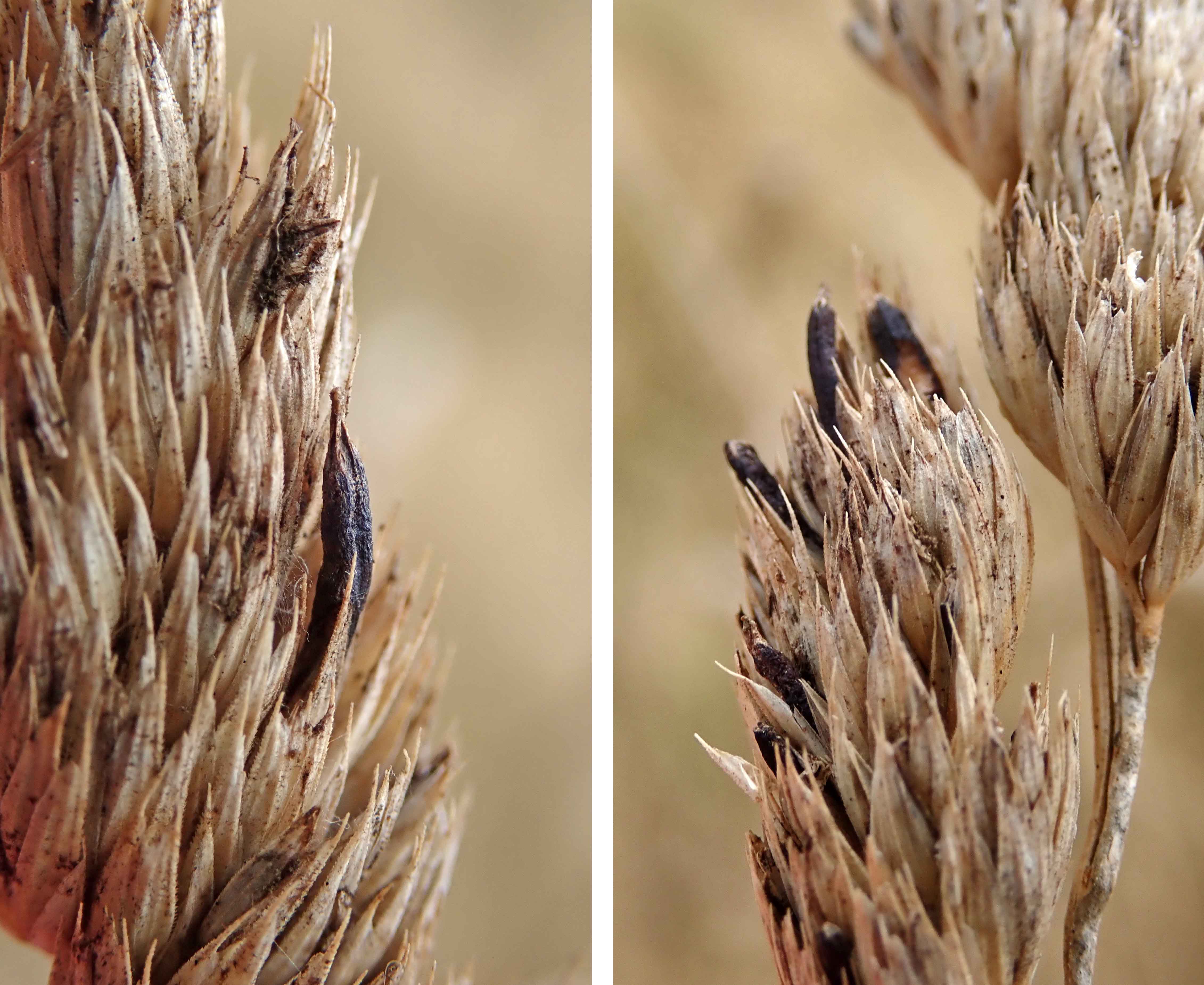
Ergot (Claviceps purpurea) is a fungal pathogen that grows on many cereal species, including wheat, rye and barley. When ingested by humans and animals, the toxins contained in the fungus cause ergotism, the effects of which can include convulsions, hallucinations, gangrenous limbs, and, in severe cases, even death. These days, cereal producers and government regulatory bodies are very much aware of the dangers of ergot, and have precautionary measures in place to reduce its presence in food and feed to an absolute minimum. This is excellent news, as 2025 seems to be a good year, in terms of climate and environmental conditions, for the growth of the ergot fungus, if my finds in local fields are anything to go by. The small dark horn-shaped masses you can see in my photos indicate that these plants are infected with ergot; the masses, which replace the grains in cereals and grasses, are called sclerotia. So, with the subject of today’s post, it’s a case of look and be fascinated but definitely don’t be tempted to consume.
Amongst many other places, you can read more about ergot on the UK website of the Agriculture and Horticulture Development Board and, in the US, on the United States Forest Service agency website.
Like Loading...

Fungus: Cercospora depazeoides

29 Friday Aug 2025

Posted by sconzani in fungi, leaves, trees

≈ Leave a comment

Tags

British fungi, Cercospora depazeoides, fungal pathogen, fungus on Elder leaves, fungus on Elder trees

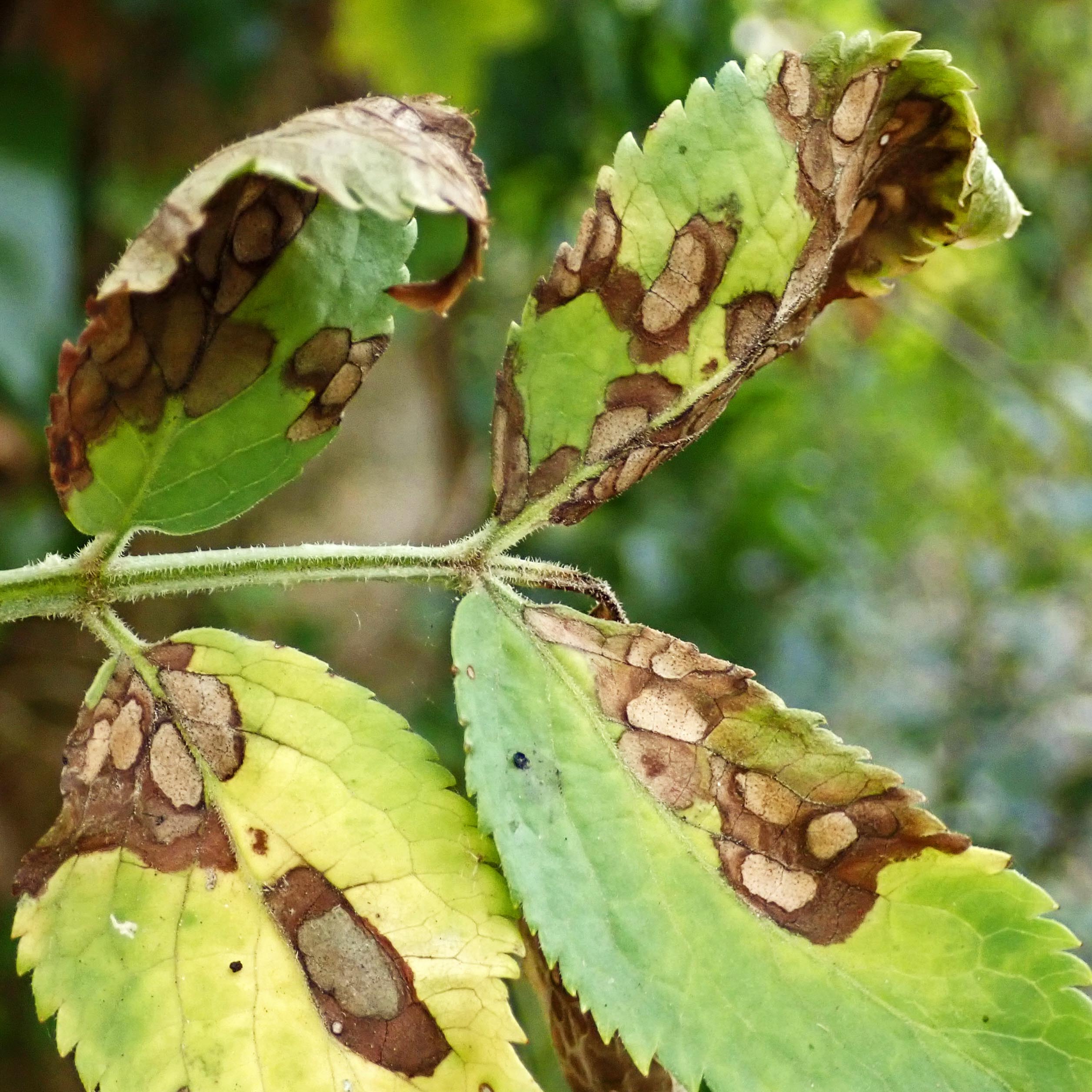
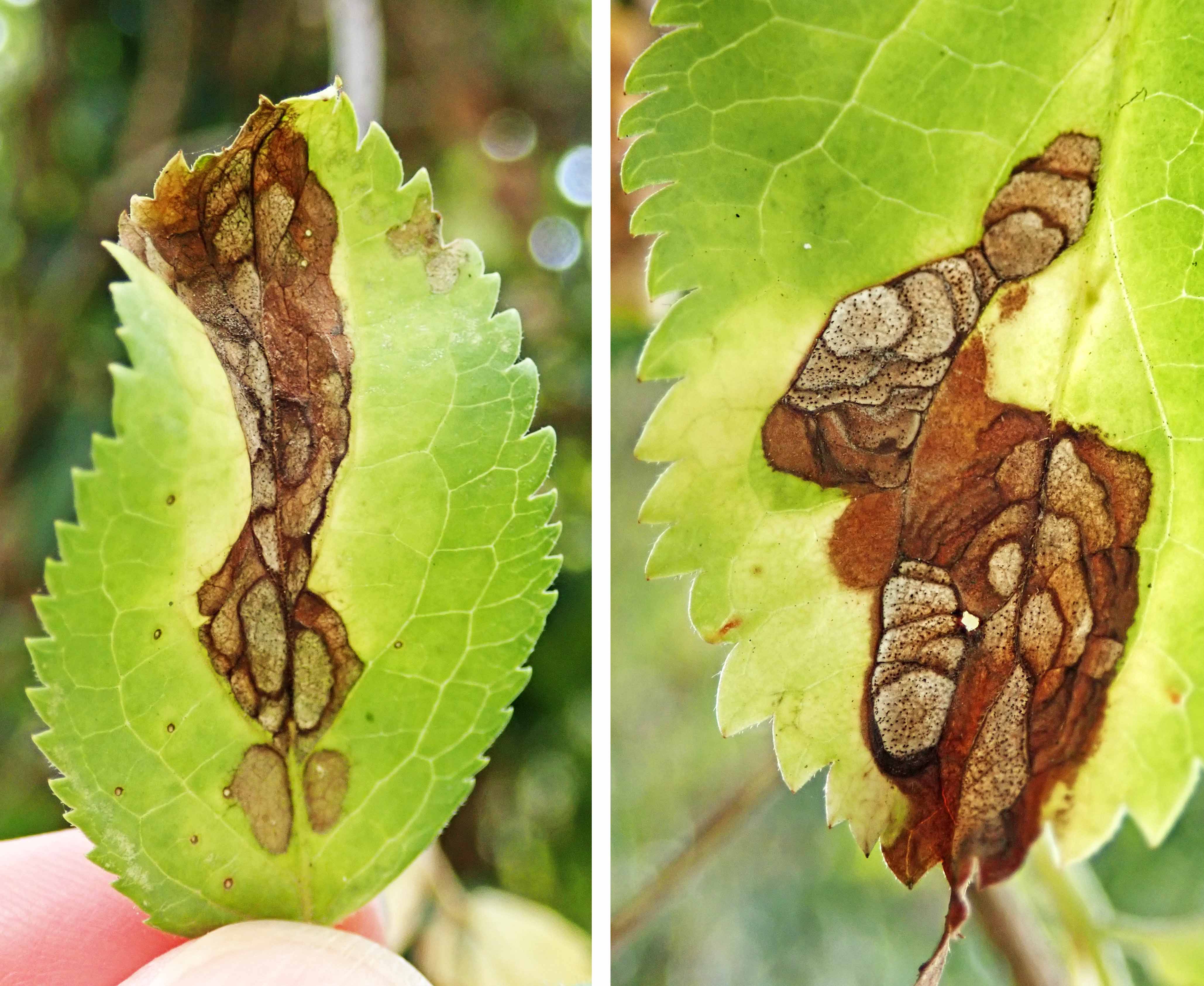
Given our recent, seemingly never-ending high temperatures, I’ve been surprised to find fungi flourishing, though they’ve not been the mushroom-shaped life forms you might expect when you read the word fungi. Take today’s fungus, for example. I didn’t immediately realise these very distinctive marks on the leaves of an Elder tree (Sambucus sp.) were caused by a fungus.

These marks are caused by Cercospora depazeoides, and it seems the fungus can be quite destructive. According to the European Forest Pests website, this fungal pathogen leads to ‘premature leaf drop and reduced photosynthesis’. When the spots merge, dominating the leaf surface, they cause defoliation, which can ‘weaken the plant, impacting its growth and fruit production’. Fortunately for those who harvest the berries to make Elderberry cordial, according to iRecord, this fungus has thus far not been recorded in many locations in the UK.

Like Loading...

Soapwort and smut

24 Sunday Aug 2025

Posted by sconzani in flowers, fungi, plants, wildflowers

≈ Leave a comment

Tags

anther smut, anther smut on Soapwort, archaeophyte, British wildflowers, fungus on Soapwort flowers, Microbotryum saponariae, Saponaria officinalis, Soapwort

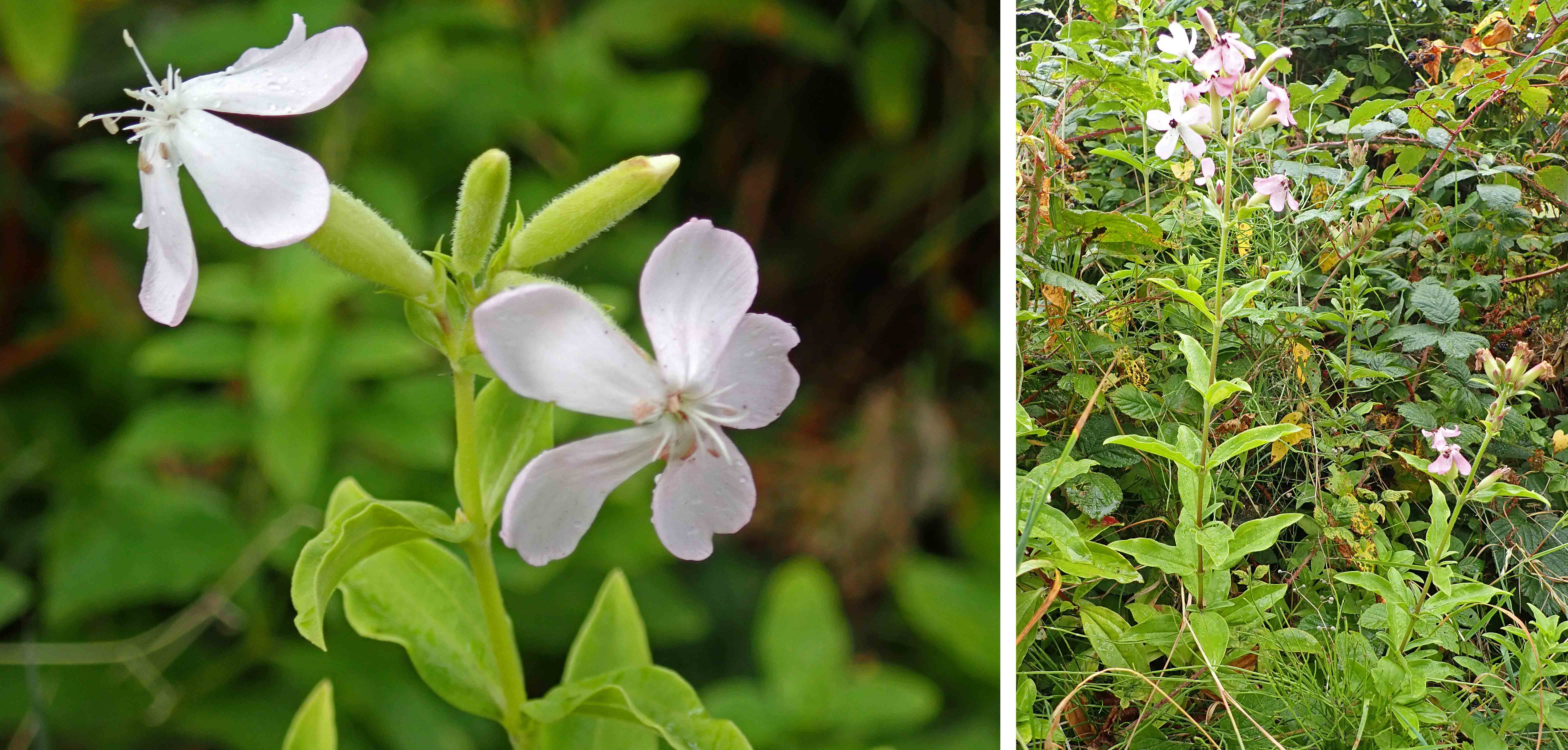
During a walk around Cardiff’s Bute Park last week, I spotted a wildflower growing alongside my path that I couldn’t ever recall seeing before. It had pink flowers and looked a lot like Red campion so I wondered if it might be a cultivated variety of campion that had escaped from someone’s garden.

A look through the appropriate section of my wildflower guide when I got home proved me half right and half wrong. It was definitely a member of the campion family but this was Soapwort (Saponaria officinalis), no garden escape but not native either. It’s classified as an archaeophyte, which means this extremely useful detergent-plant was introduced to Britain in ancient times, prior to 1500 AD.

A few snippets from Flora Britannica:

Simply rubbing a leaf between the fingers will produce a slight, slippery froth. Boiled in water, the plant produces a green lather with the power to lift grease and dirt, especially from fabrics. … due to the presence of saponins – chemicals which, like inorganic soaps, appear to ‘lubricate’ and absorb dirt particles.
… cultivated for laundering woollens in Syria … and in Britain employed as a soaping agent by medieval fullers … because vegetable saponins are so much gentler than soaps, Saponaria has been used much more recently for washing ancient tapestries … Victoria &Albert Museum it was last used for cleaning fragile fabrics in the 1970s. The National Trust have also used it, for bringing up the colours in antique curtains.

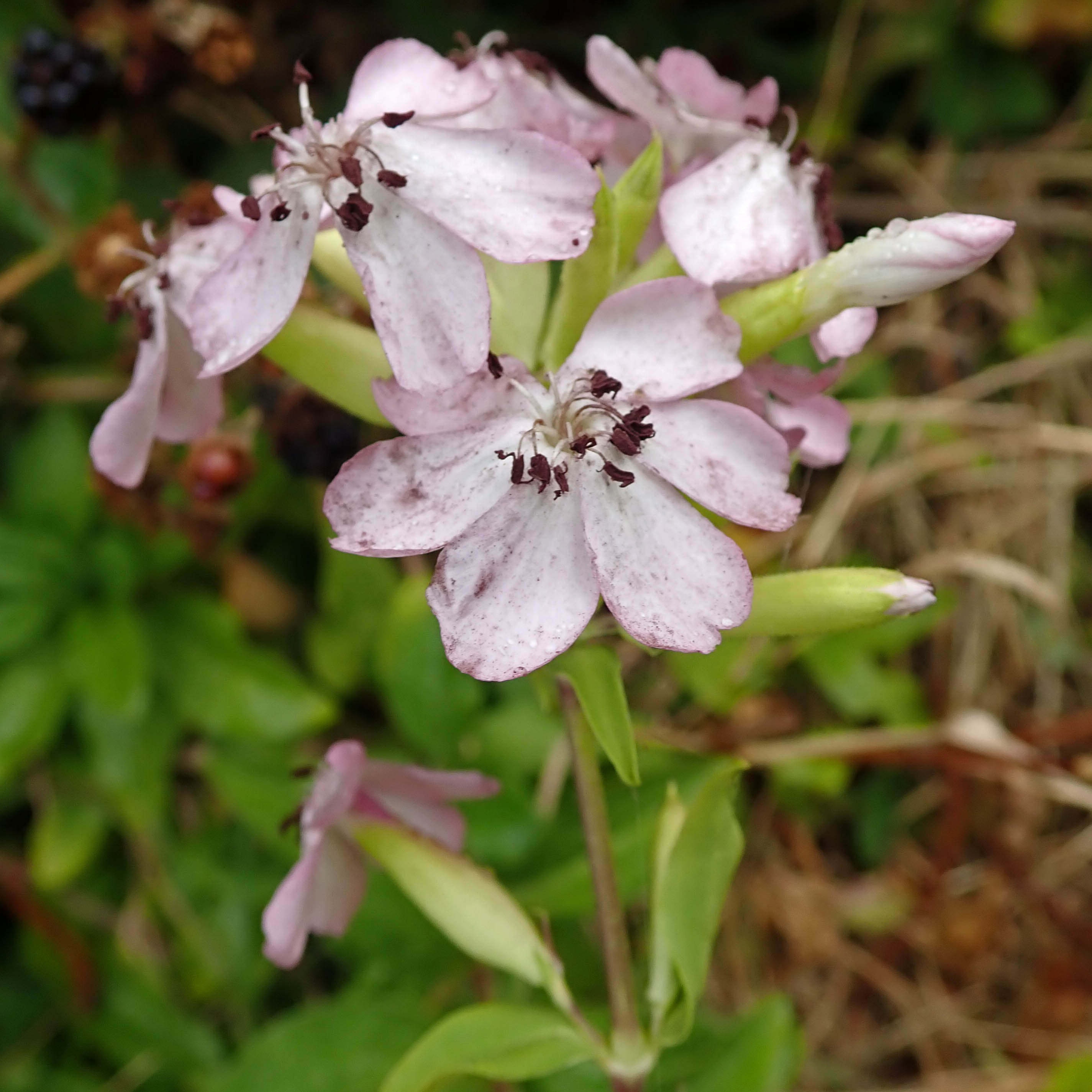
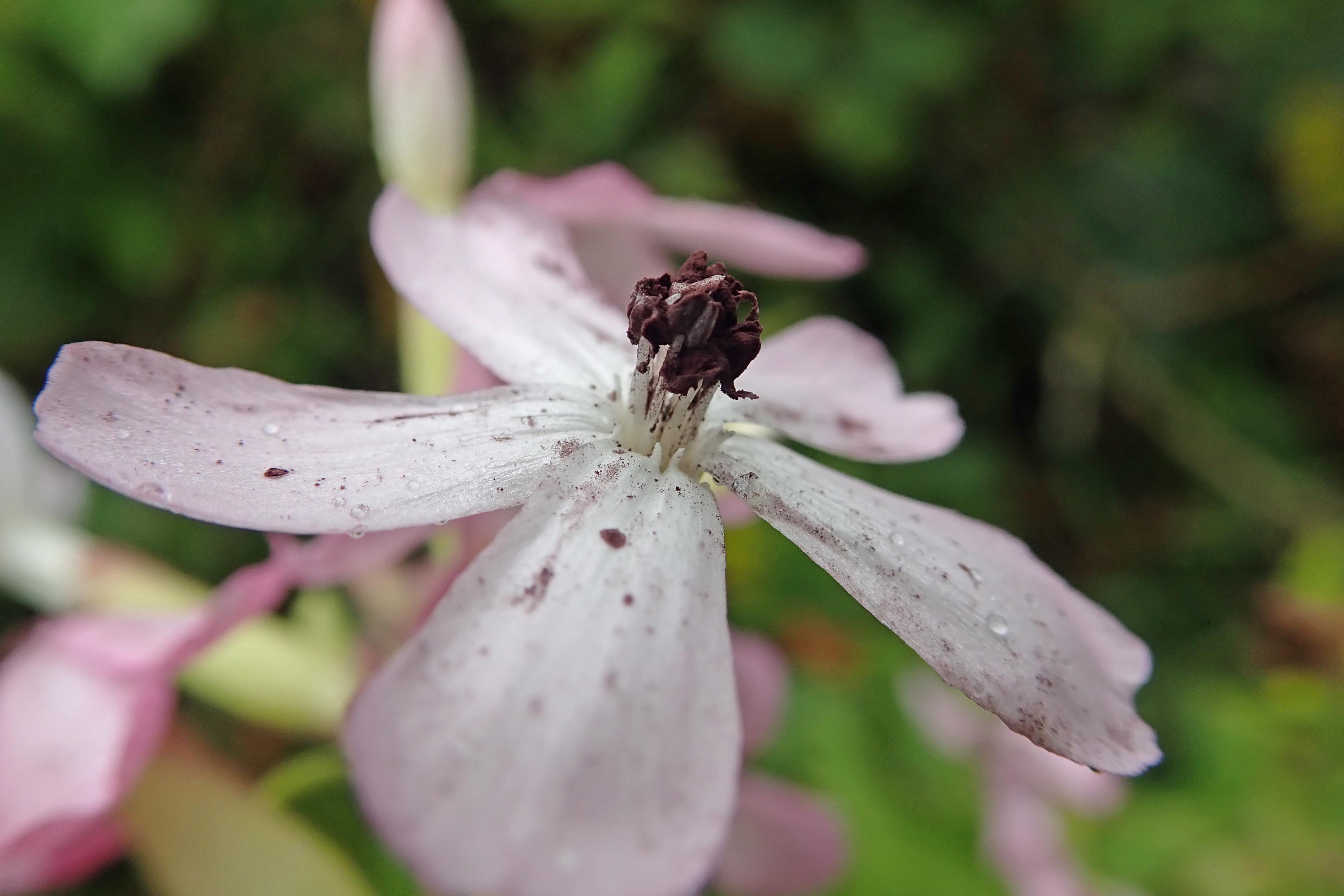
Now, the keen-eyed amongst you may have noticed something a little odd about the flowers in some of my photos; the centres of the flower heads look black. This is because many of the plants I found were suffering from anther smut, in this case caused by the fungus Microbotryum saponariae. The pollen in the flowers’ anthers has been replaced with fungal spores, meaning the plant is unable to reproduce. This may be a recent infestation as I found plenty of plants growing along the path as I walked further. I often see something similar on Red campion flowers, though that is caused by a different fungal species, Microbotryum silenes-dioicae. So, two for the price of one today: a fascinating plant and an equally fascinating fungus.

Like Loading...

Rust on roses

25 Friday Apr 2025

Posted by sconzani in fungi, plants

≈ Leave a comment

Tags

Phragmidium mucronatum, Phragmidium tuberculatum, rust fungi, rust on Field rose, rust on roses

I haven’t seen many fungi lately but this blob of bright orange rust really stood out amongst the greenery of this Field rose. The two possible species that might have caused this spectacular sight, Phragmidium mucronatum and Phragmidium tuberculatum, can be tricky to separate so I haven’t tried. If you’re interested in reading a discussion on the subject, check out this link to the UK Fungi Forum.

Like Loading...

False puffball

28 Friday Mar 2025

Posted by sconzani in fungi, nature

≈ Leave a comment

Tags

Enteridium lycoperdon, False puffball, Reticularia lycoperdon, slime, slime mould, slime mould on dead tree

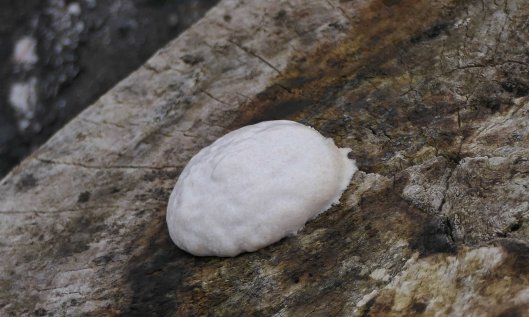
It’s been a while since slime featured here but, as it’s Fungi Friday (yes, I know slime isn’t exactly a fungus) and I happened to spot some slime yesterday, slime it is for today’s post, folks.

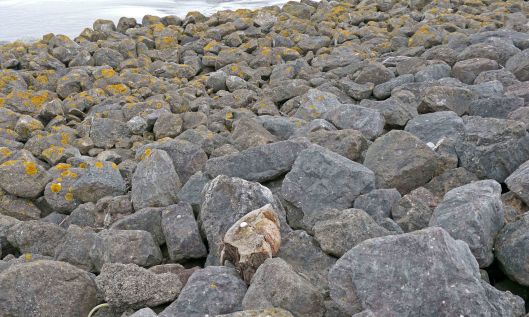
This particularly slime doesn’t really look like your typical example, which is presumably why its common name is False puffball; its scientific name is Reticularia lycoperdon (also known as Enteridium lycoperdon). And I spotted it in rather an odd place, growing on a stump that must have been thrown up on to the outer Barrage rocks in Cardiff Bay during a particularly high tide. You can read more about these intriguing organisms and see examples of the various stages of their life cycle on the excellent NatureSpot website.

Like Loading...

Velvet shanks and a Wych elm

14 Friday Feb 2025

Posted by sconzani in fungi, insects, trees

≈ Leave a comment

Tags

British fungi, Flammulina velutipes, fungi on dead Wych elm, fungi on standing dead wood, Velvet shanks

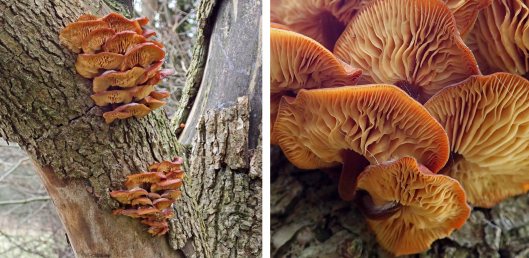
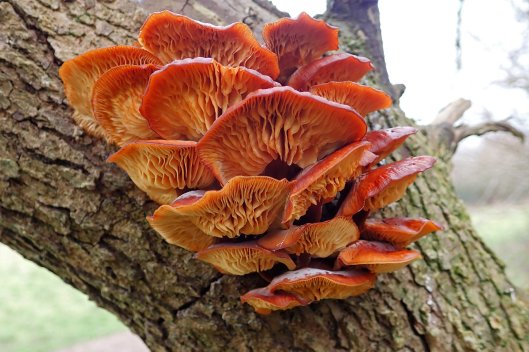
The tree where I found these lush Velvet shanks growing was the Wych elm where, in October 2021, I found my first ever Elm zigzag sawfly larvae (Aproceros leucopoda), the first of this invasive species to be recorded in Wales (see my blog post Zorro comes to Wales). Now, that tree and several other young Wych elms growing in the margins of this field are all dead, presumably as a result of another invasive species, the fungus that causes Dutch elm disease (Ophiostoma novo-ulmi).

The Elm zigzag sawflies have spread well beyond this field now so won’t be affected by the tree’s death, and, though, presumably, the Dutch elm disease fungus dies when its host tree has died, it will continue to spread as it’s carried to new trees by Elm bark beetles (Scolytus species).

Yet, as with all living organisms, the death of one brings life-giving opportunities for others. So, though dead, the Wych elm is now providing sustenance to invertebrates that thrive in decaying wood and to the lovely Velvet shanks (Flammulina velutipes) that are specialists in devouring standing dead wood. Some of the clumps of Velvet shanks had already completed their lifecycle and were themselves rotting away but, as you can see in my photos below, more were oozing from the cracks in the tree’s trunk and branches.

Like Loading...

Fungus vs beetle

07 Friday Feb 2025

Posted by sconzani in fungi, insects

≈ Leave a comment

Tags

beetle infected by fungus, Dingle Park, fungal infection, fungus infected beetle, on park railings

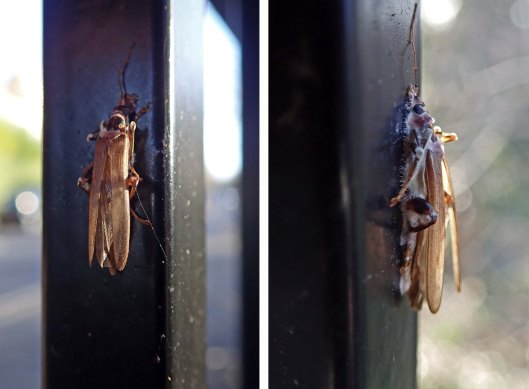
I can’t help but wonder what happened to this beetle. Did it pick up a tiny scrap of fungus during its meanders through the undergrowth, then stayed alive until the day came when the fungus had grown so extensively that the beetle could no longer move? Or did the beetle die, then fungus spores blown by the wind settled on its body and began to devour it? There’s no way to know for sure though, for the beetle’s sake, I hope it was dead before it was attacked. Oh, and as you can perhaps tell by the background, this was yet another find from my local park railings.

Like Loading...

Fluted bird’s nest fungi

31 Friday Jan 2025

Posted by sconzani in fungi, winter

≈ 2 Comments

Tags

Bird's nest fungi, British fungi, Cyathus striatus, Fluted Bird's-nest fungi, woodland fungi

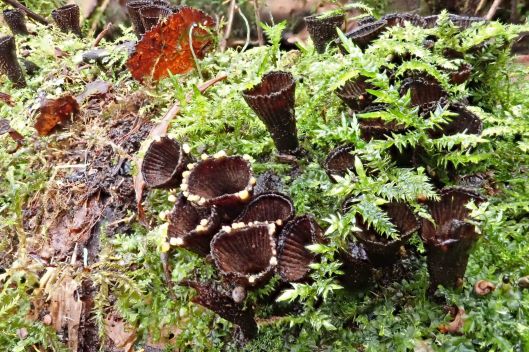
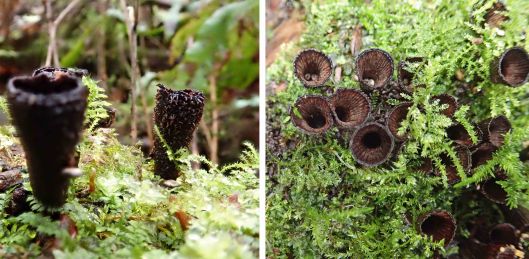
Almost seven and a half years have passed since I first saw these fungi, the perfectly named Fluted bird’s nest fungi (Cyathus striatus) (I blogged about that sighting in More Bird’s-nests with eggs! on 11 September 2017).

Since then, every time I’ve passed this location I’ve cast my eye over the various mossy logs and branches that lie adjacent to the path, hoping to spot them again. I saw nothing until my visit this past Wednesday and, to be honest, I’m amazed I was able to see them then, as the logs were draped in Bramble, through which I had to push my way to get closer. It was worth a couple of scratches though, to see these stunning fungi again.

With their shaggy looking exterior covering and the ribbed interior, they’re very distinctive and so easy to identify, which is always a bonus with fungi. They can be found (if you’re lucky!) growing on wood, usually within woodlands.

Like Loading...

Common grey disco, probably

24 Friday Jan 2025

Posted by sconzani in fungi, winter

≈ Leave a comment

Tags

British fungi, Common grey disco, cup fungi, disco fungi, fungi on rotting logs, Mollisia cinerea

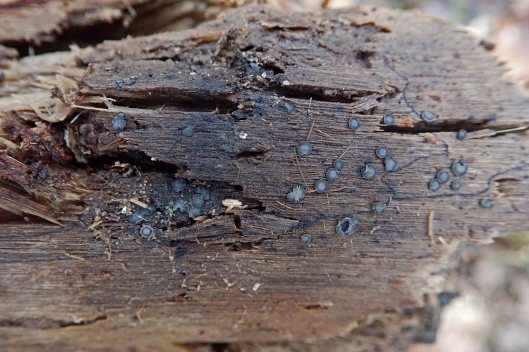
I am very aware that cup fungi like these really need to be confirmed by microscopic examination of their spores but, sticking my neck out and assuming the most common species is most likely the one I’ve found, I’m going to say this is Common grey disco (Mollisia cinerea).

As they are tiny and grey and the white margin to their cups is often not particularly obvious, it is easy to overlook these little beauties. I wasn’t looking for fungi; I simply got lucky while poking about amongst some rotting logs in a local park.

Like Loading...

Elfcups, at last

19 Sunday Jan 2025

Posted by sconzani in fungi, winter

≈ Leave a comment

Tags

British fungi, Elfcups, Sarcoscypha coccinea, Scarlet elfcups, winter colour, winter fungi, woodland fungi

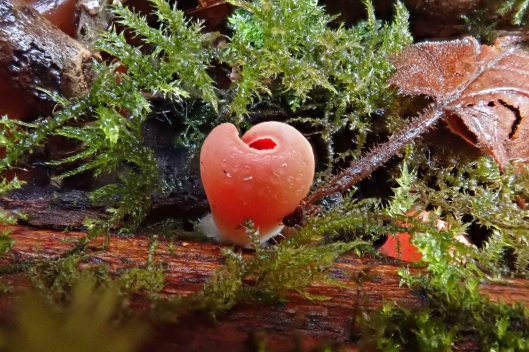
I have no wildflowers for you this Sunday – there are still flowers to be found but I’ve found nothing new or particularly interesting, so today’s colour comes in the form of fungi instead.

I’ve been searching for elfcups since early December, the time of year I’ve begun to see them in the past. I used to see them in abundance at Cwm George in Dinas Powys but I suspect it’s been too wet for them there this winter, with the little stream having flooded the area where the fungi grow.

I had also looked for them in Cardiff’s Bute Park in December but seen no sign. So, I was exceedingly happy, when I visited there last week, to find good numbers had popped up on mossy logs throughout the little area of woodland.

I know from having checked samples under a microscope several years ago that these are Scarlet rather than Ruby elfcups (Sarcoscypha coccinea), and they are gorgeous.

Like Loading...
← Older posts
Newer posts →

About me

sconzani

sconzani

I'm a writer and photographer; researcher and blogger; birder and nature lover; countryside rambler and city strider; volunteer and biodiversity recorder.

View Full Profile →

Follow earthstar on WordPress.com

Enter your email address to follow this blog and receive notifications of new posts by email.

Recent blog posts

  • Scallop shells February 22, 2026
  • Avocet February 21, 2026
  • First large spider February 20, 2026
  • Our celebrity Redshank February 19, 2026
  • My first moth of the year February 18, 2026

From the archives

COPYRIGHT

Unless otherwise acknowledged, the text and photographs on this blog are my own and are subject to international copyright. Nothing may be downloaded or copied without my permission.

Fellow Earth Stars!

  • Unknown's avatar
  • Unknown's avatar
  • Unknown's avatar
  • Unknown's avatar
  • Unknown's avatar
  • Unknown's avatar
  • Unknown's avatar
  • Unknown's avatar
  • Unknown's avatar
  • Unknown's avatar
  • Unknown's avatar
  • Unknown's avatar
  • Unknown's avatar
  • Unknown's avatar
  • Unknown's avatar
  • Unknown's avatar
  • Unknown's avatar
  • Unknown's avatar
  • Unknown's avatar
  • Unknown's avatar
  • Unknown's avatar
  • Unknown's avatar
  • Unknown's avatar
  • Unknown's avatar
  • Unknown's avatar
  • Unknown's avatar
  • Unknown's avatar
  • Unknown's avatar
  • Unknown's avatar
  • Unknown's avatar
  • Unknown's avatar
  • Unknown's avatar
  • Unknown's avatar
  • Unknown's avatar
  • Unknown's avatar
  • Unknown's avatar
  • Unknown's avatar
  • Unknown's avatar
  • Unknown's avatar
  • Unknown's avatar
  • Unknown's avatar
  • Unknown's avatar
  • Unknown's avatar
  • Unknown's avatar
  • Unknown's avatar
  • Unknown's avatar
  • Unknown's avatar
  • Unknown's avatar
  • Unknown's avatar
  • Unknown's avatar

Blog at WordPress.com.

Privacy & Cookies: This site uses cookies. By continuing to use this website, you agree to their use.
To find out more, including how to control cookies, see here: Cookie Policy
  • Subscribe Subscribed
    • earthstar
    • Join 670 other subscribers
    • Already have a WordPress.com account? Log in now.
    • earthstar
    • Subscribe Subscribed
    • Sign up
    • Log in
    • Report this content
    • View site in Reader
    • Manage subscriptions
    • Collapse this bar
 

Loading Comments...
 

You must be logged in to post a comment.

    %d