• ABOUT
  • BIRDING 2018
  • Birding 2019
  • BLOG POSTS
  • Butterflies 2018
  • Resources

earthstar

~ a celebration of nature

earthstar

Category Archives: insects

Lesser thorn-tipped longhorn beetle

04 Saturday Jan 2025

Posted by sconzani in insects, winter

≈ Leave a comment

Tags

British beetles, British insects, Lesser thorn-tipped longhorn beetle, Pogonocherus hispidus

On 9 December, once again on the local park railings (I check them regularly now as I keep finding interesting creatures on them), I found my first ever Lesser thorn-tipped longhorn beetle (Pogonocherus hispidus). It’s thought to resemble a bird-dropping for camouflage, and named ‘thorn-tipped’ because of the thorn-like projections at the tips of its elytra (wing cases). I wondered, on social media, about its presence on the railings, and one of my followers provided the likely reason: ‘I think they get blown out of trees in windy weather. We get them on gravestones under trees in our local cemetery after high winds.’ The specimen I found has its ‘long horns’ tucked in at its sides so I recommend you take a look at the much clearer photos of this odd-looking beetle and read more about it in one of Steven Falk’s Flickr albums here.
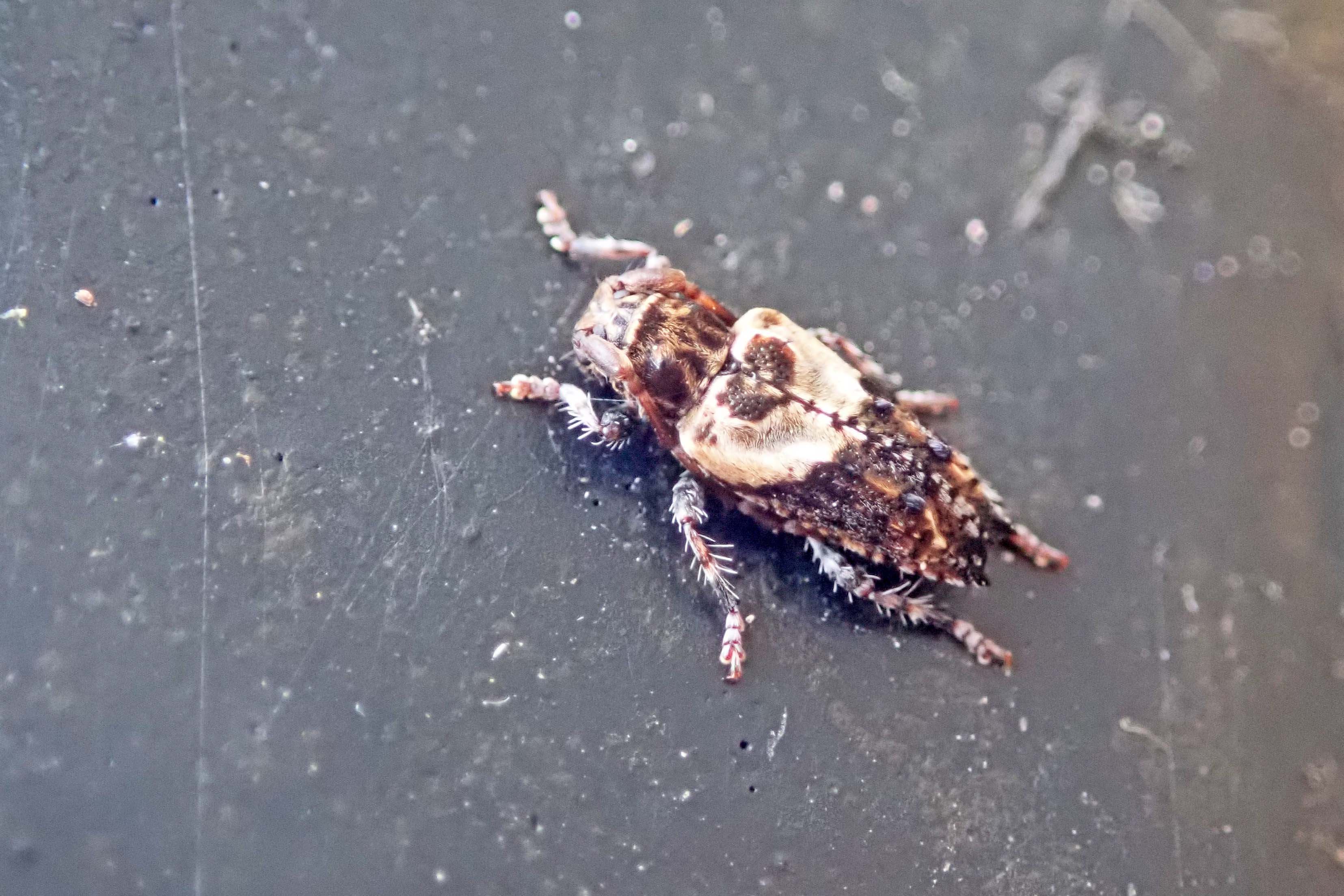
250104 Lesser Thorn-tipped Longhorn Beetle

Like Loading...

Vapourer cocoon and eggs

02 Thursday Jan 2025

Posted by sconzani in insects, winter

≈ Leave a comment

Tags

British moths, moth eggs, moth pupa, Orgyia antiqua, Vapourer, Vapourer cocoon, Vapourer eggs

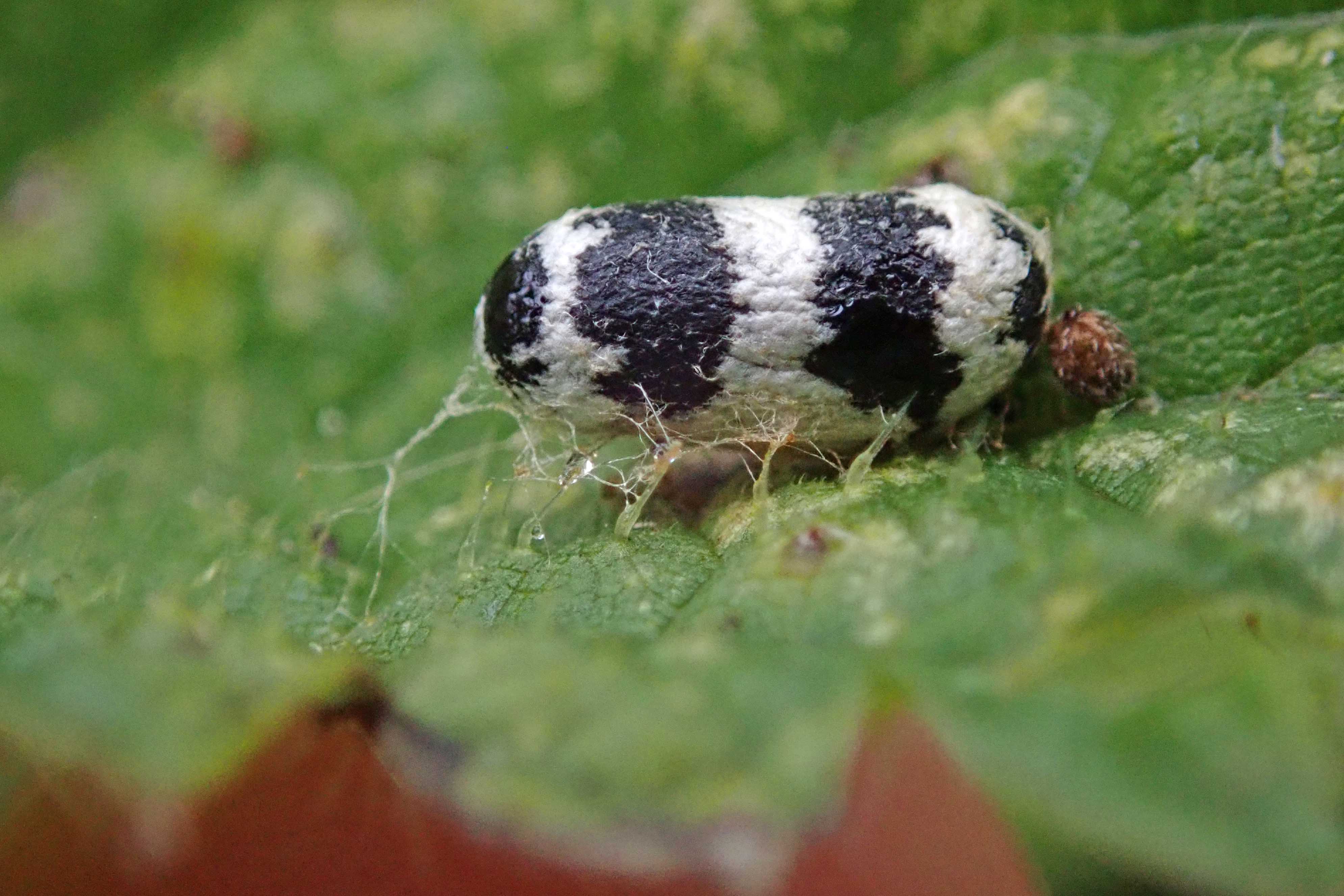
Here’s another find from December, this one attached to the local park railings. It’s the empty cocoon of a Vapourer moth (Orgyia antiqua), covered in the moth’s eggs. (I’ve blogged about finding one of these cocoons before, though that one was very fresh – see A Vapourer cocoon, 13 October 2023, which also included an image of the caterpillar.) Female Vapourers can’t fly (the UK Moths website has a photo of the female, which, at first sight, doesn’t look like a moth at all) – their sole purpose is to attract a mate and lay eggs. Presumably, this female scarcely moved from her cocoon, immediately emitting male-attracting pheromones as soon as she emerged. A male found and mated with her, and her empty cocoon became a very close and convenient place to lay her eggs.

250102 vapourer

Like Loading...

Z is for Zygina flammigera

31 Tuesday Dec 2024

Posted by sconzani in insects

≈ 2 Comments

Tags

British cicadellidae, British leafhoppers, Cicadellidae, leafhopper, Zygina flammigera

And so, the end of the year is near and we’ve reached the final letter of this countdown. I have already covered the Cicadellidae, the leafhoppers that have so delighted me this year but, as its name begins with z, I couldn’t resist saving this species, Zygina flammigera, to be the subject of my final blog of 2024. I found two specimens of this new species in late September in riverside Alder trees. I think you’ll agree it is a very attractive little hopper, and I’m certainly hoping to find more of these and, indeed, more new species of hoppers in 2025.

241231 z is for Zygina flammigera

Thank you all for joining me on this year’s journey of discovery and learning and adventures in Nature. I sincerely appreciate your support, your likes and comments, and I’m excited for what the new year will bring.

Like Loading...

X is for Xanthogramma pedissequum

29 Sunday Dec 2024

Posted by sconzani in insects

≈ Leave a comment

Tags

British hoverflies, hoverfly, Xanthogramma pedissequum

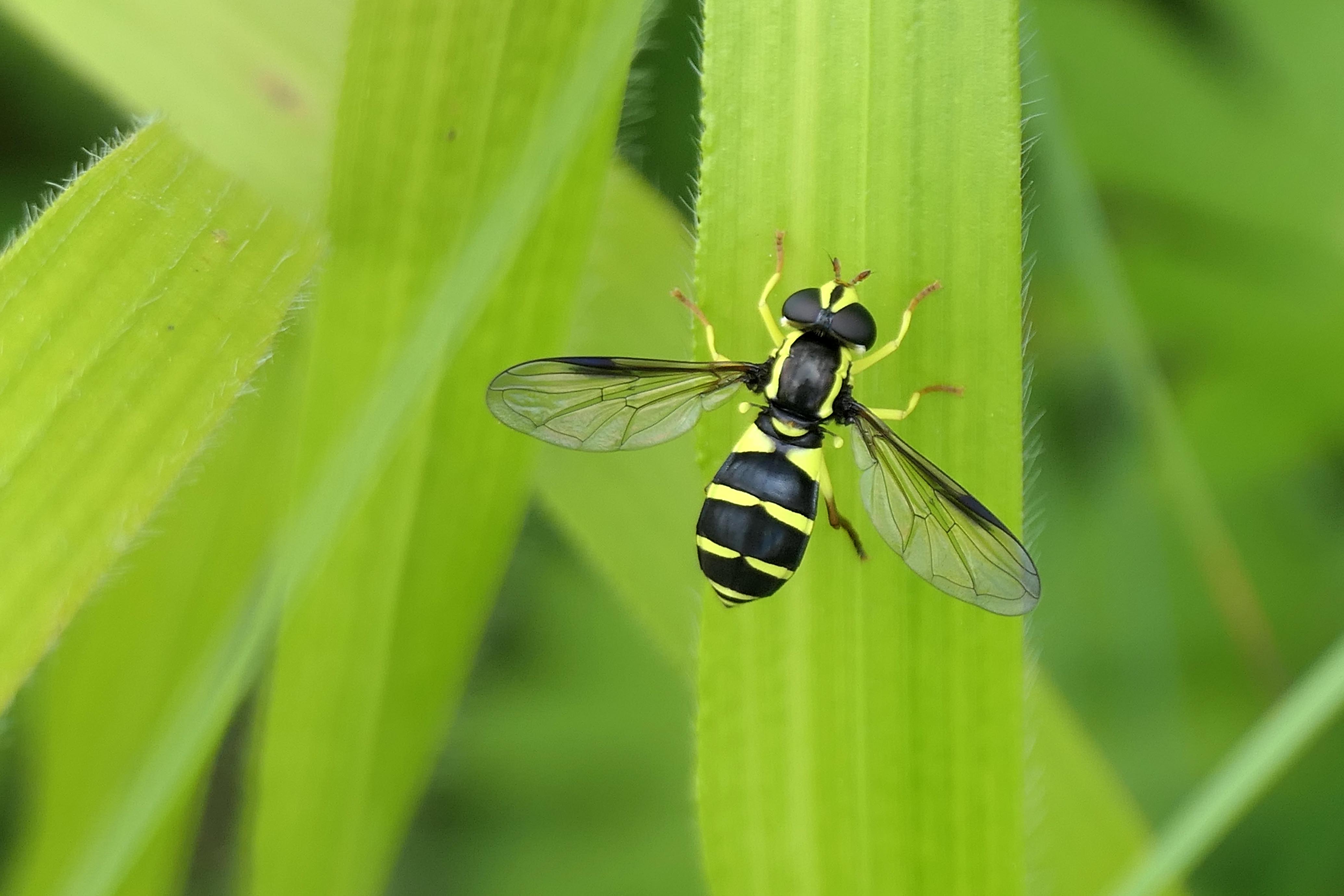
Hoverflies have barely flown in to my blog posts this year. There was a new-to-me species in August (Hoverfly: Melangyna umbellatarum, 3 August), and a hoverfly larva starred in a short video in October (Lucky, unlucky, 16 October) but that’s about the extent of their involvement. I have seen hoverflies, of course, though I often struggle to identify them. Luckily, the Xanthogramma pedissequum shown below is one of the easier species to name, and it fits perfectly in this countdown.

241229 x is for Xanthogramma pedissequum

Like Loading...

R is for Red-eyed damselfly

23 Monday Dec 2024

Posted by sconzani in insects

≈ Leave a comment

Tags

British damselflies, damsefly, Odonata, Red-eyed damselfly

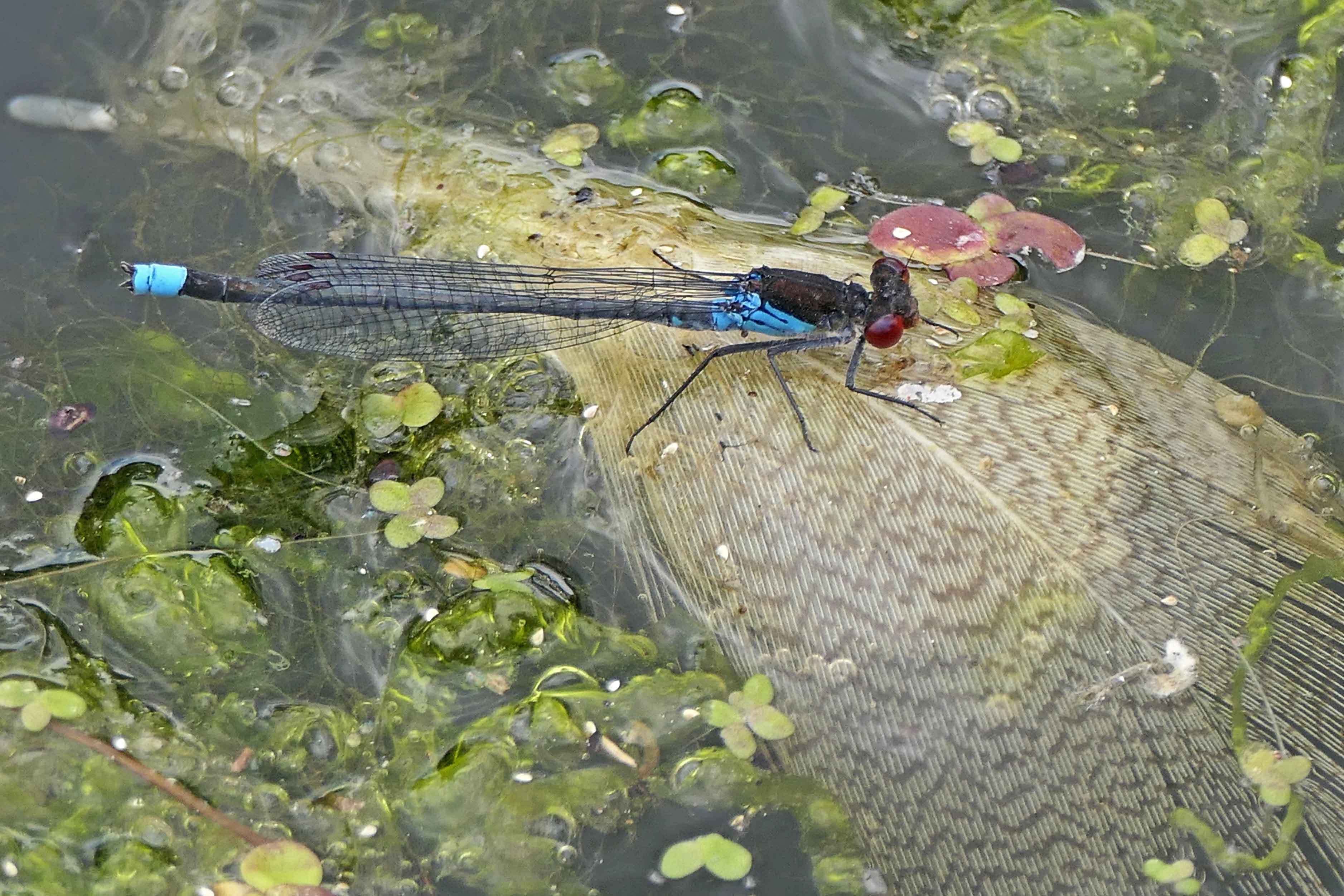
Finding my first-ever Red-eyed damselflies, and at a previously unrecorded local site alongside the River Ely, was another of my most treasured wildlife moments of 2024 (Lifer: Red-eyed damselfly, 24 May). Unfortunately, I’m not going to be able to see them at that location again for at least the next three or four years as the walkway access has recently been closed to pedestrians while adjacent apartment blocks are being re-clad. The good news is that there is another site, along one of Cardiff’s inner city canals (More Red-eyed damsels, 26 June), where I should be able to find them again next summer.

241223 r is for red-eyed damselfly

Like Loading...

Q is for queen

22 Sunday Dec 2024

Posted by sconzani in insects

≈ 2 Comments

Tags

Bombus terrestris, bumblebee, queen bumblebees

Q is a difficult letter in my annual countdown. Quercus, the Latin name for the mighty Oak tree, has featured in my two previous countdowns but this year I thought I’d pay homage to those majestic creatures, the queen bumblebees. They’ve featured several times in this year’s blogs (for example, A bumblebee and its mimic, 11 March, and Early bumblebee, 26 March) but, right now, they’ll mostly be hibernating. Though they do emerge during the winter months when the weather’s unseasonably warm and sunny, it’s not until ground temperatures begin to rise and the warmth of springtime becomes more constant that they will be encouraged to awaken, find a cosy burrow, and lay the eggs that will produce the next generation of beautiful bumblebees.

241222 q is for queen bombus terrestris

Like Loading...

P is for Puss moth larva

21 Saturday Dec 2024

Posted by sconzani in insects

≈ Leave a comment

Tags

moth caterpillar, moth larva, Puss moth, Puss moth caterpillars, Puss moth larvae

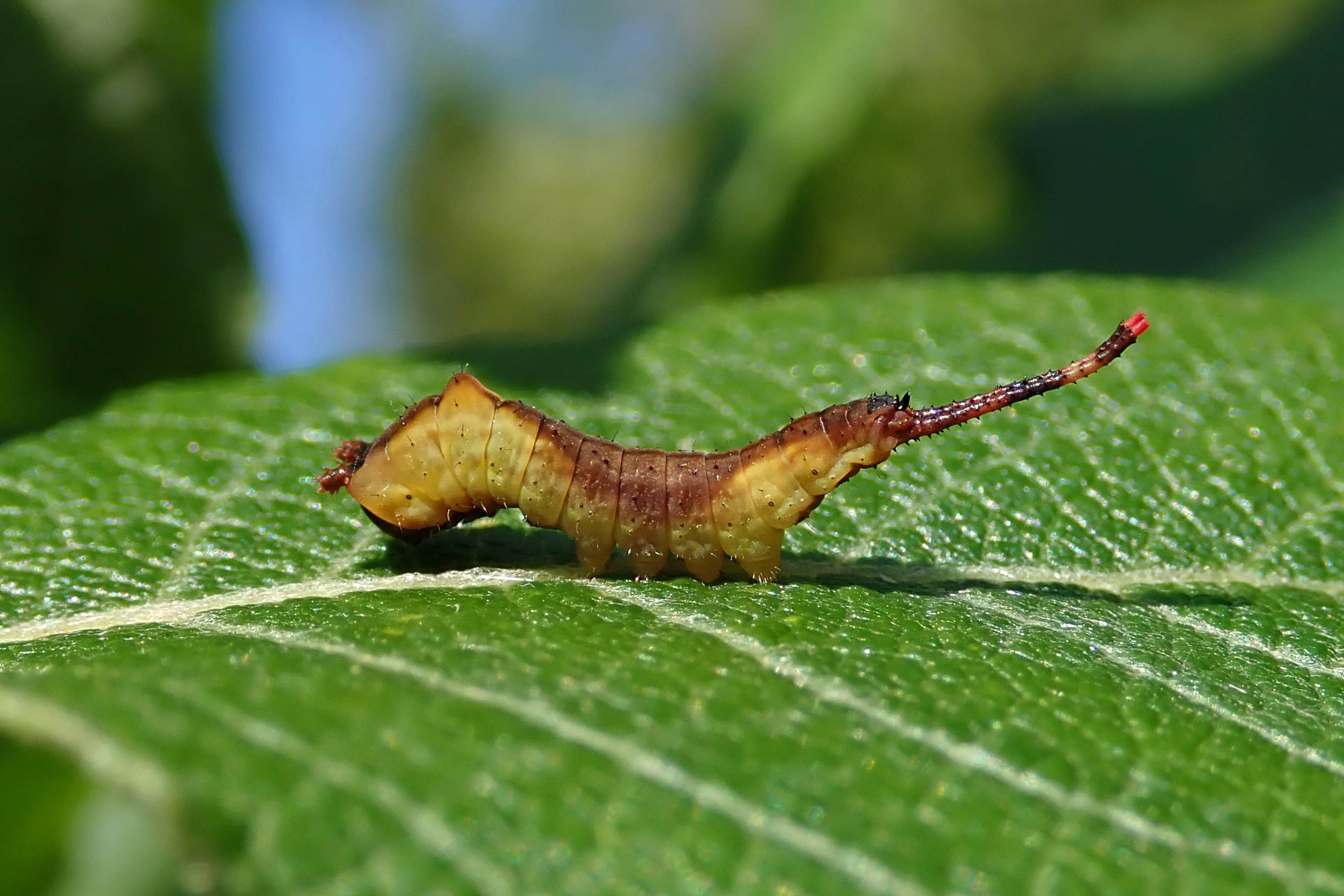
Finding these tiny Puss moth caterpillars was one of the highlights of my wildlife year (Puss moth kittens, 4 June). I’d seen photos of them, and oozed with envy when others posted their finds on social media, so to spot them sitting happily on a scruffy local willow tree was a magical moment. Sadly, I wasn’t able to follow them as they grew: I re-found them the second time I looked, then found one on my third visit, but nothing during any subsequent searches. So, either they wandered higher in the tree or fell victim to hungry birds. I hope the former is true.

241221 p is for puss moth larva

Like Loading...

I is for Ichneumon

14 Saturday Dec 2024

Posted by sconzani in insects

≈ Leave a comment

Tags

ichneumon, ichneumon wasp pupa, Ichneumon wasps, Ischnus inquisitorius, wasp pupa, wasps

I might not have seen many adult Ichneumon wasps this year but I was fascinated by the discovery of my first ever wasp pupa (An Ichneumon wasp pupa, 13 July).

241214 i is for ichneumon

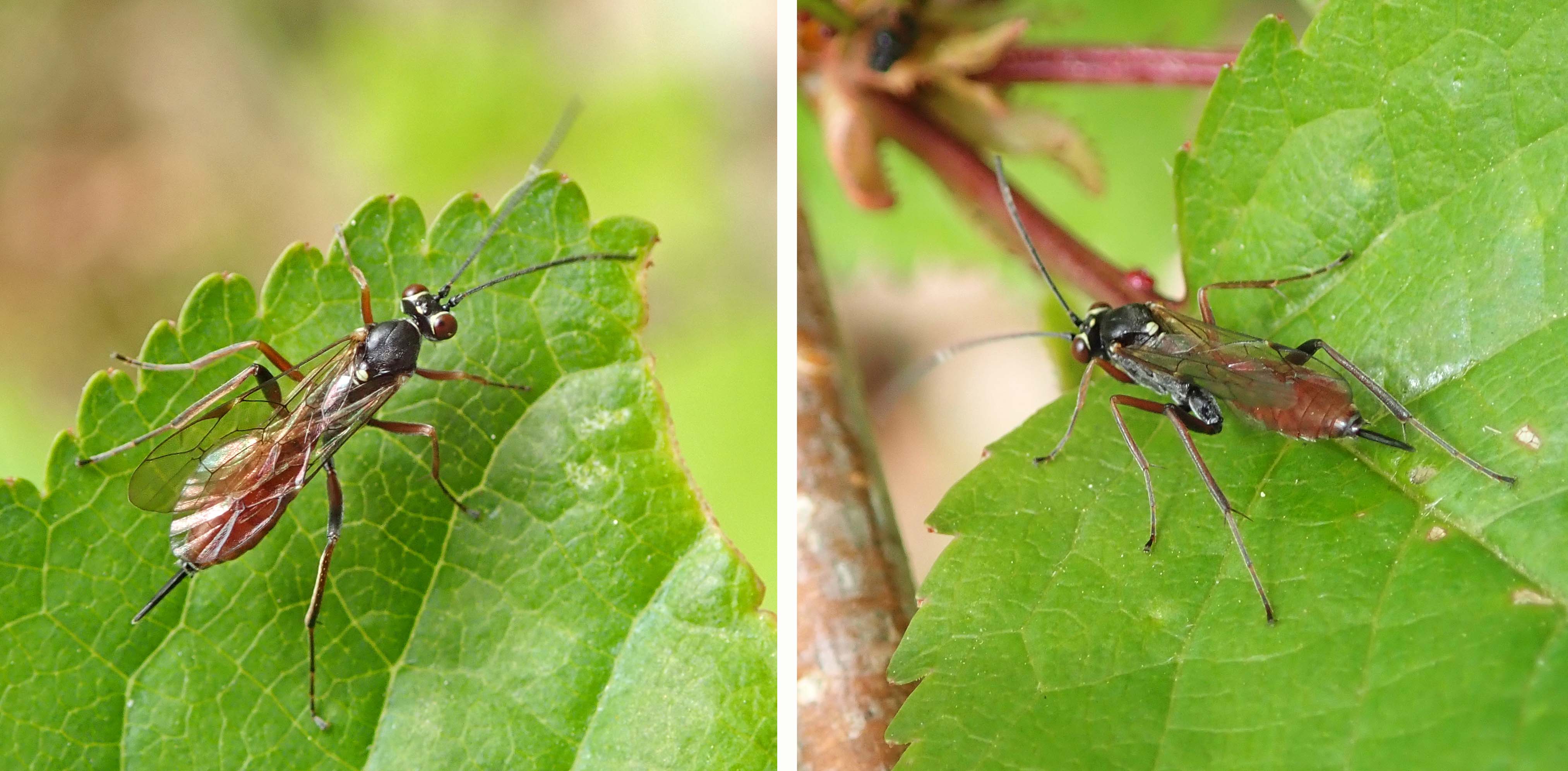
And I’ve only very recently had verification that I did manage to spot one new Ichneumon species back in April this year. This is a female Ischnus inquisitorius, a wasp I’m having difficulty finding much information about. The Nature Conservation Imaging website reports that it’s ‘an ectoparasitoid of tortricid [a family of moths] pupae’ and the Wild Bristol website says it prefers well-vegetated areas like gardens and allotments, parks and cemeteries, presumably because these are the places where Tortricid moth larvae feed and pupate.

241214 i is for ichneumon Ischnus inquisitorius

Like Loading...

H is for horsefly

13 Friday Dec 2024

Posted by sconzani in insects

≈ Leave a comment

Tags

horsefly, horsefly eyes, Tabanidae, Tabanidae eyes

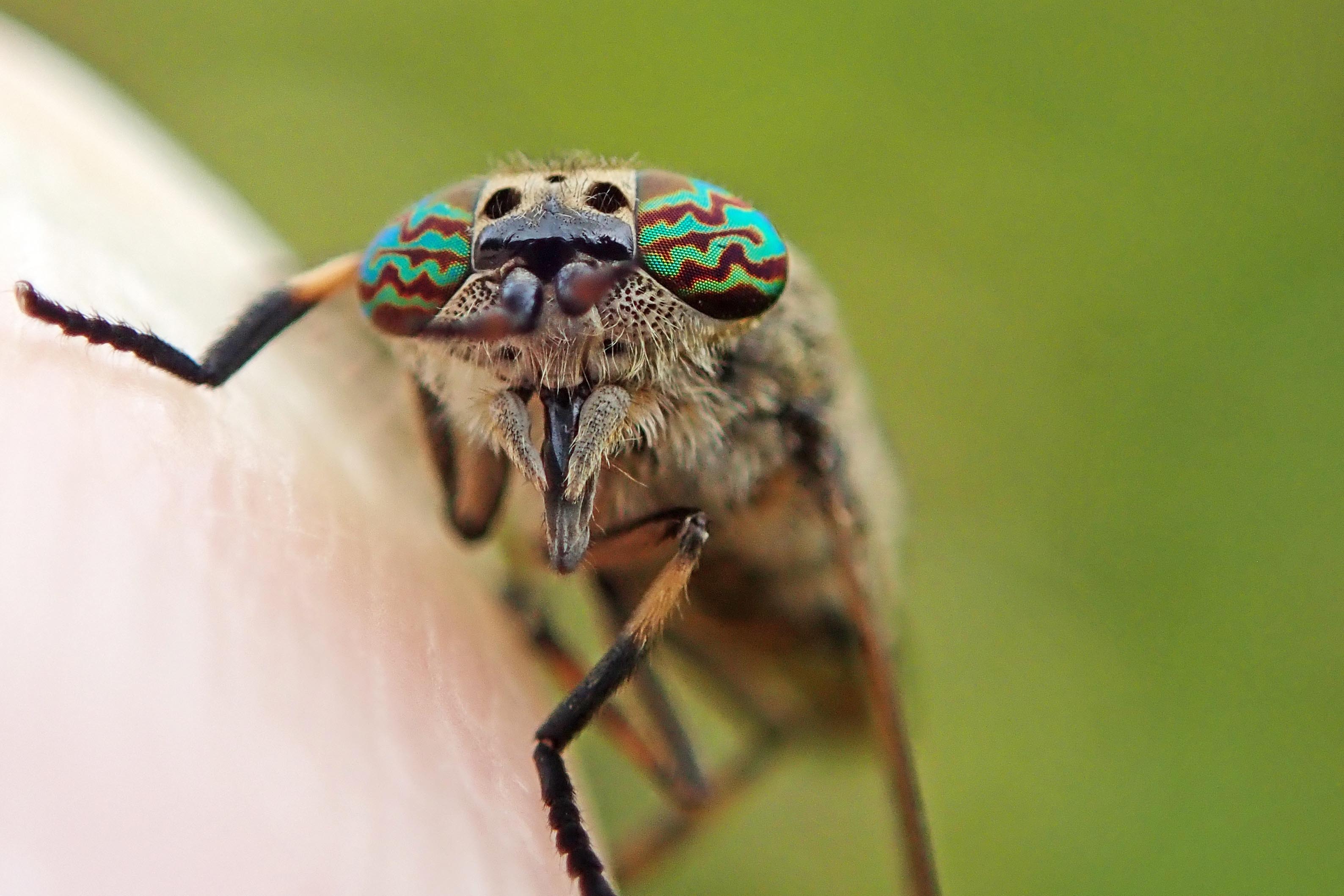
I try to avoid getting close to horseflies as I react quite badly to their bites – in fact, I wear insect repellent for much of the summer to try to keep these little beasties away from me. But, when I got the close up views of A horsefly’s eyes that I blogged about on 14 June, I hadn’t realised the insects were out and about already and was repellent free, so I was doubly lucky – no bites and good photos.

241213 h is for horsefly (1)

I actually enjoyed another close encounter with a horsefly in late June and got the photo shown below. The eyes are very different, and I wonder now if this might have been a male, as it was happily perched on a leaf and didn’t approach me at all.

241213 h is for horsefly (2)

Like Loading...

F is for Figwort weevil

11 Wednesday Dec 2024

Posted by sconzani in insects

≈ 2 Comments

Tags

British weevils, Figwort weevil, Figwort weevil cocoon, weevil, weevils on Figwort

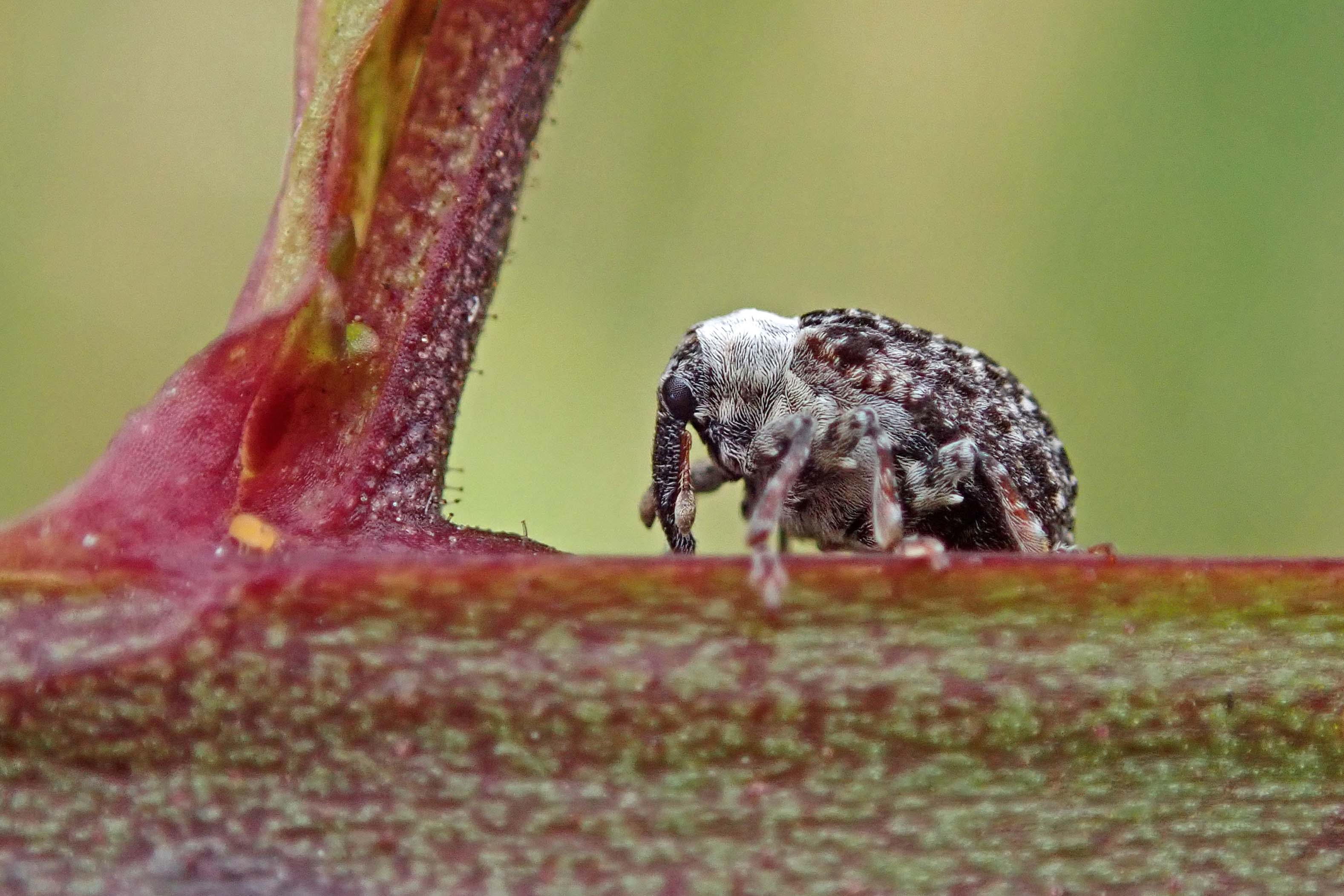
Weevils are some of my favourite insects, and the gorgeous Figwort weevil is, I think, the cutest of them all. Once I discovered where they lived in one of my local parks, I made sure to check their Figwort plants every time I went there and, as a result, I have lots of photos of them and have discovered more about their life cycle.

241211 f is for figwort weevil (1)

You might remember that, in June, I brought home a tiny cocoon. I had an idea what it might be but wasn’t entirely sure, and was fascinated to watch the ‘thing’ moving about within its casing as shown in the video on the blog (There’s an alien in my kitchen, 10 June). And then it hatched, my perfect tiny Figwort weevil, and I was over the moon, like a proud parent, and found great joy in returning it to its Figwort plant to live life amongst its family (The hatchling, and family, 12 June). Moments like these are why I spend so much time in Nature.

241211 f is for figwort weevil (2)

Like Loading...
← Older posts
Newer posts →

About me

sconzani

sconzani

I'm a writer and photographer; researcher and blogger; birder and nature lover; countryside rambler and city strider; volunteer and biodiversity recorder.

View Full Profile →

Follow earthstar on WordPress.com

Enter your email address to follow this blog and receive notifications of new posts by email.

Recent blog posts

  • Distant seabirds March 30, 2026
  • Thrift March 29, 2026
  • The day of the Wheatears March 28, 2026
  • Cetti’s warblers March 27, 2026
  • Goose barnacles March 26, 2026

From the archives

COPYRIGHT

Unless otherwise acknowledged, the text and photographs on this blog are my own and are subject to international copyright. Nothing may be downloaded or copied without my permission.

Fellow Earth Stars!

  • Unknown's avatar
  • Unknown's avatar
  • Unknown's avatar
  • Unknown's avatar
  • Unknown's avatar
  • Unknown's avatar
  • Unknown's avatar
  • Unknown's avatar
  • Unknown's avatar
  • Unknown's avatar
  • Unknown's avatar
  • Unknown's avatar
  • Unknown's avatar
  • Unknown's avatar
  • Unknown's avatar
  • Unknown's avatar
  • Unknown's avatar
  • Unknown's avatar
  • Unknown's avatar
  • Unknown's avatar
  • Unknown's avatar
  • Unknown's avatar
  • Unknown's avatar
  • Unknown's avatar
  • Unknown's avatar
  • Unknown's avatar
  • Unknown's avatar
  • Unknown's avatar
  • Unknown's avatar
  • Unknown's avatar
  • Unknown's avatar
  • Unknown's avatar
  • Unknown's avatar
  • Unknown's avatar
  • Unknown's avatar
  • Unknown's avatar
  • Unknown's avatar
  • Unknown's avatar
  • Unknown's avatar
  • Unknown's avatar
  • Unknown's avatar
  • Unknown's avatar
  • Unknown's avatar
  • Unknown's avatar
  • Unknown's avatar
  • Unknown's avatar
  • Unknown's avatar
  • Unknown's avatar
  • Unknown's avatar
  • Unknown's avatar

Blog at WordPress.com.

Privacy & Cookies: This site uses cookies. By continuing to use this website, you agree to their use.
To find out more, including how to control cookies, see here: Cookie Policy
  • Subscribe Subscribed
    • earthstar
    • Join 642 other subscribers
    • Already have a WordPress.com account? Log in now.
    • earthstar
    • Subscribe Subscribed
    • Sign up
    • Log in
    • Report this content
    • View site in Reader
    • Manage subscriptions
    • Collapse this bar
 

Loading Comments...
 

You must be logged in to post a comment.

    %d