• ABOUT
  • BIRDING 2018
  • Birding 2019
  • BLOG POSTS
  • Butterflies 2018
  • Resources

earthstar

~ a celebration of nature

earthstar

Category Archives: insects

A good year for Jersey tigers

30 Saturday Aug 2025

Posted by sconzani in insects

≈ Leave a comment

Tags

British moths, climate change affecting wildlife, Euplagia quadripunctaria, Jersey tiger, Jersey tiger moth, moth

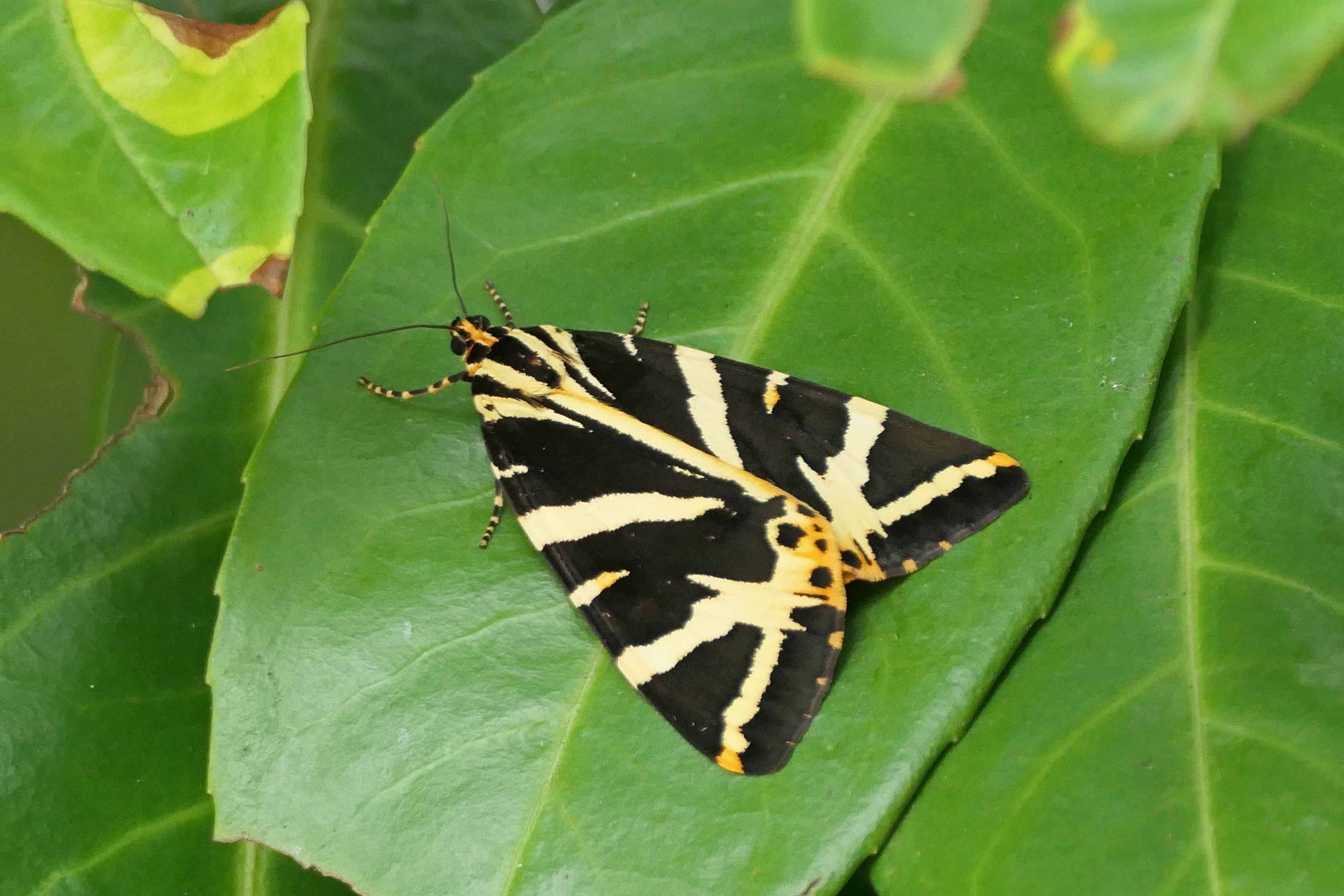
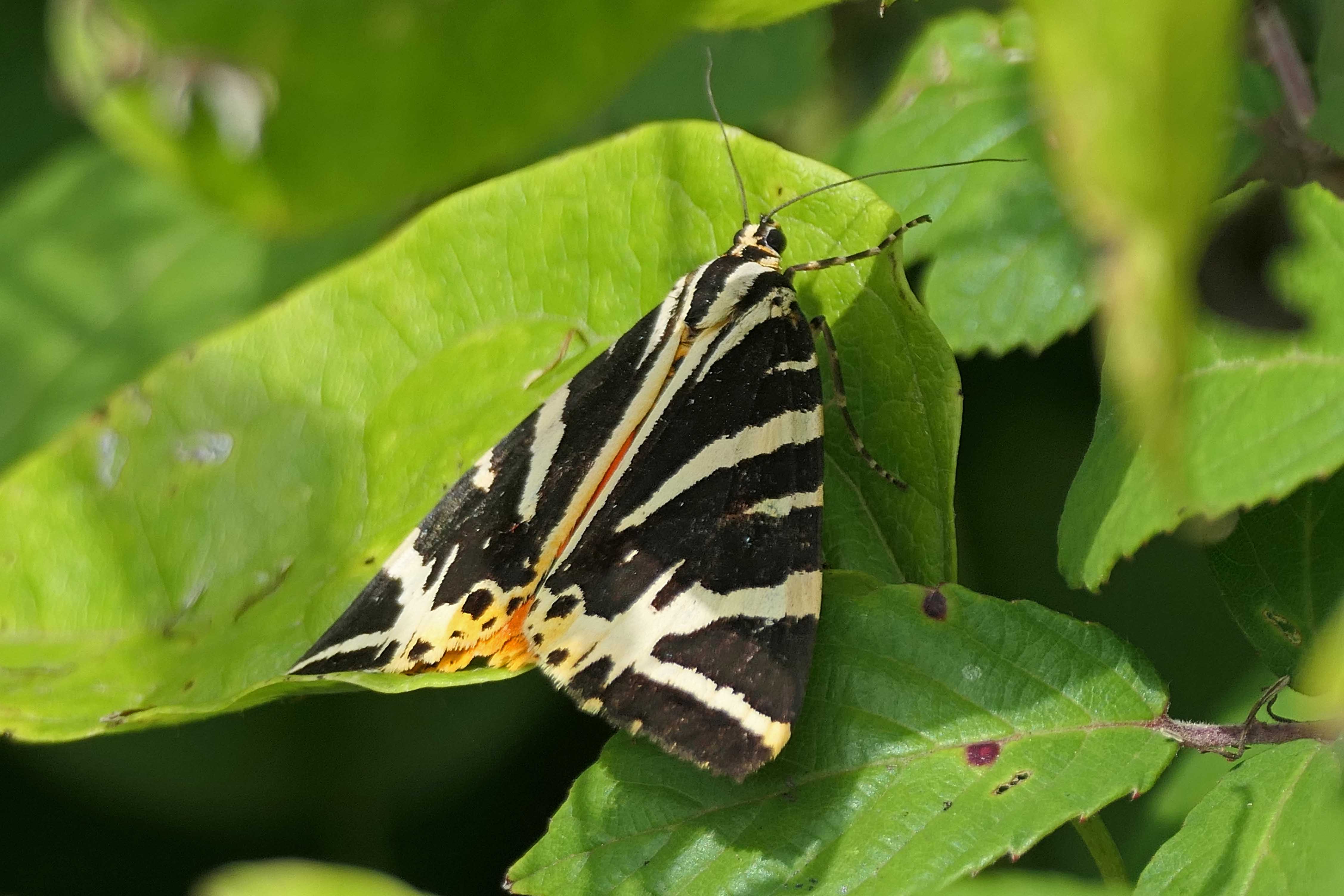
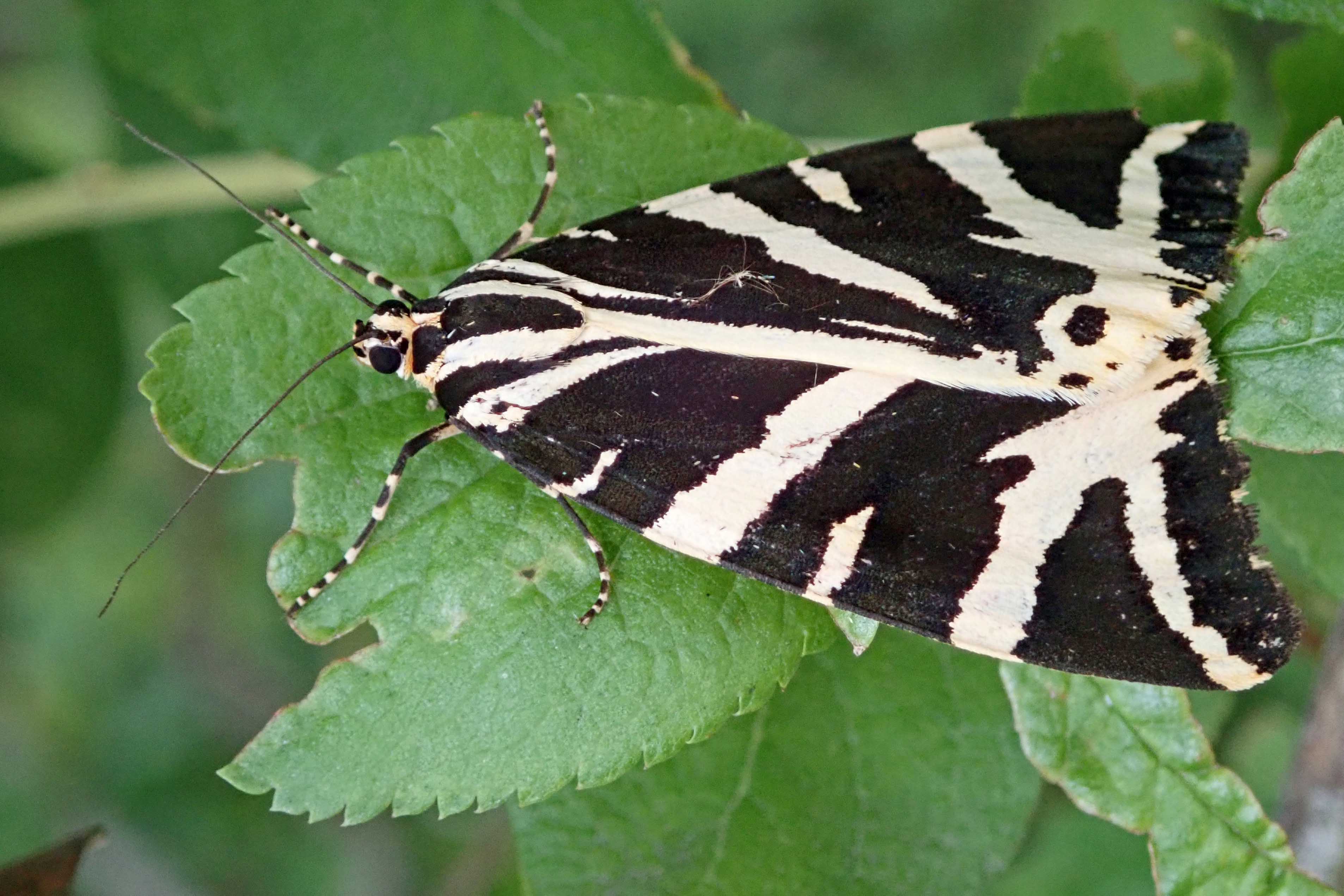
In the summers of 2018, 2019 and 2020 one of the local nature reserves near me held what seemed like a healthy population of Jersey tiger moths (Euplagia quadripunctaria), then they vanished. I don’t know why this was but several people have looked for them at the reserve in the intervening years and, though the occasional single moth has been sighted, the healthy population is no more. Away from that reserve, I would struggle to see any Jersey tigers, and saw none at all in 2021 and 2022.

So, this year, it has been an absolute delight for me to have enjoyed many, seemingly random sightings of these beautiful moths. By random, I mean that there haven’t been any large numbers concentrated in any specific location or area; instead, either I’ve spotted them lurking on trees and bushes, or my passing has disturbed them, there’s been a flash of their vibrant orange underwings as they’ve fluttered out and I’ve seen them once they’ve resettled.

And it seems my experience of seeing greater numbers of Jersey tigers this year has not been unique. This is a species that is included in Butterfly Conservation’s Big Butterfly Count, and, even before the count had ended, with 7 of the count’s 24 days remaining, that organisation had noted a ‘whopping 78%’ increase in reported Jersey tigers this year compared to last year. Butterfly Conservation’s blog post speculates that the dramatic increase was due to this summer’s record-breaking high temperatures.

As Dr Richard Fox, BC’s Head of Science is quoted as saying

The increase we’re seeing in Jersey Tiger moth sightings is a striking example of how climate change is reshaping the distribution of wildlife.
While it’s a delight to spot such a vibrant moth in gardens, parks and green spaces, it’s also a reminder of how rising temperatures are altering our natural environment.

Like Loading...

Emerald damsels

27 Wednesday Aug 2025

Posted by sconzani in insects

≈ Leave a comment

Tags

British damselflies, British dragonflies, damselfly, dragonfly, Emerald damsefly, Lestes sponsa, Odonata

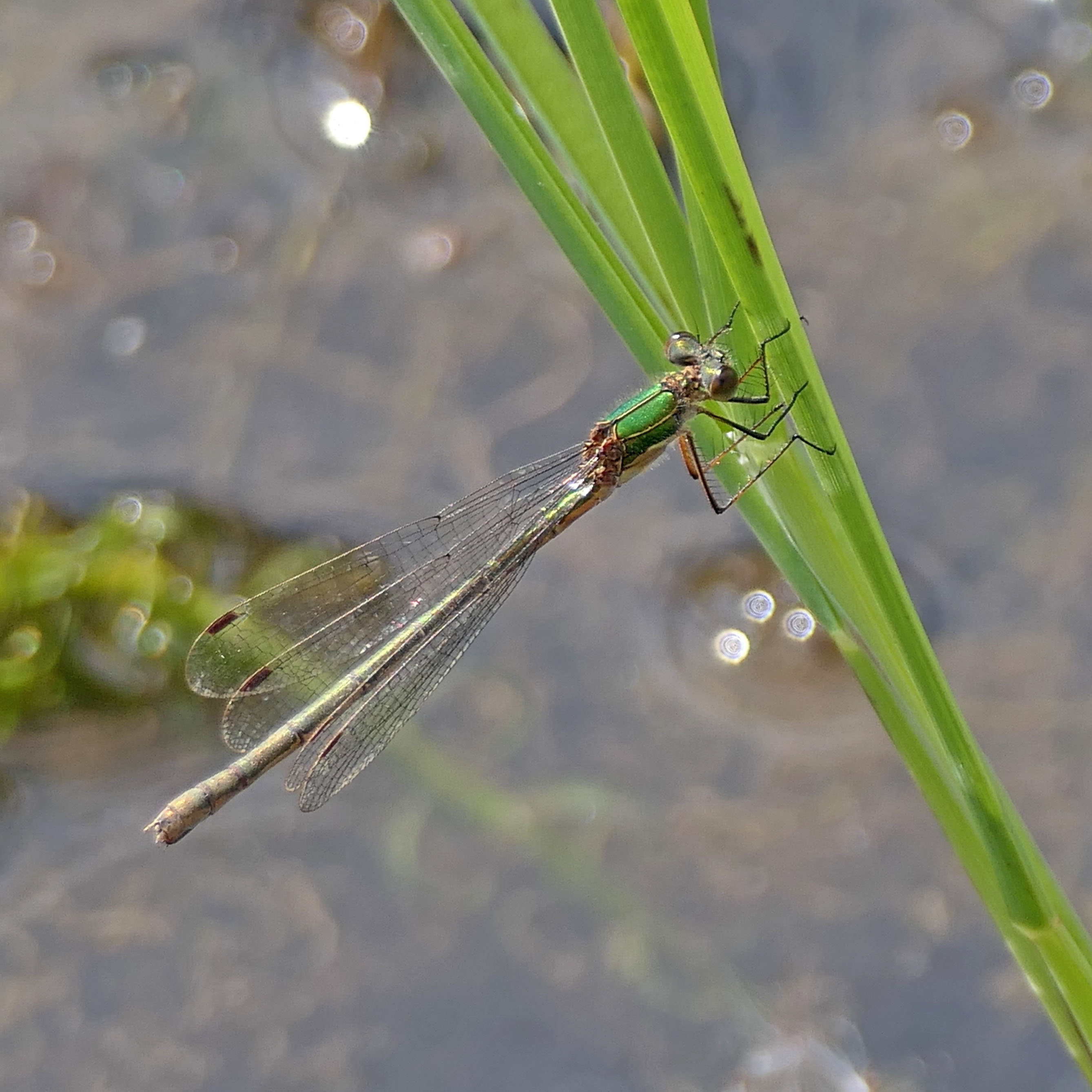
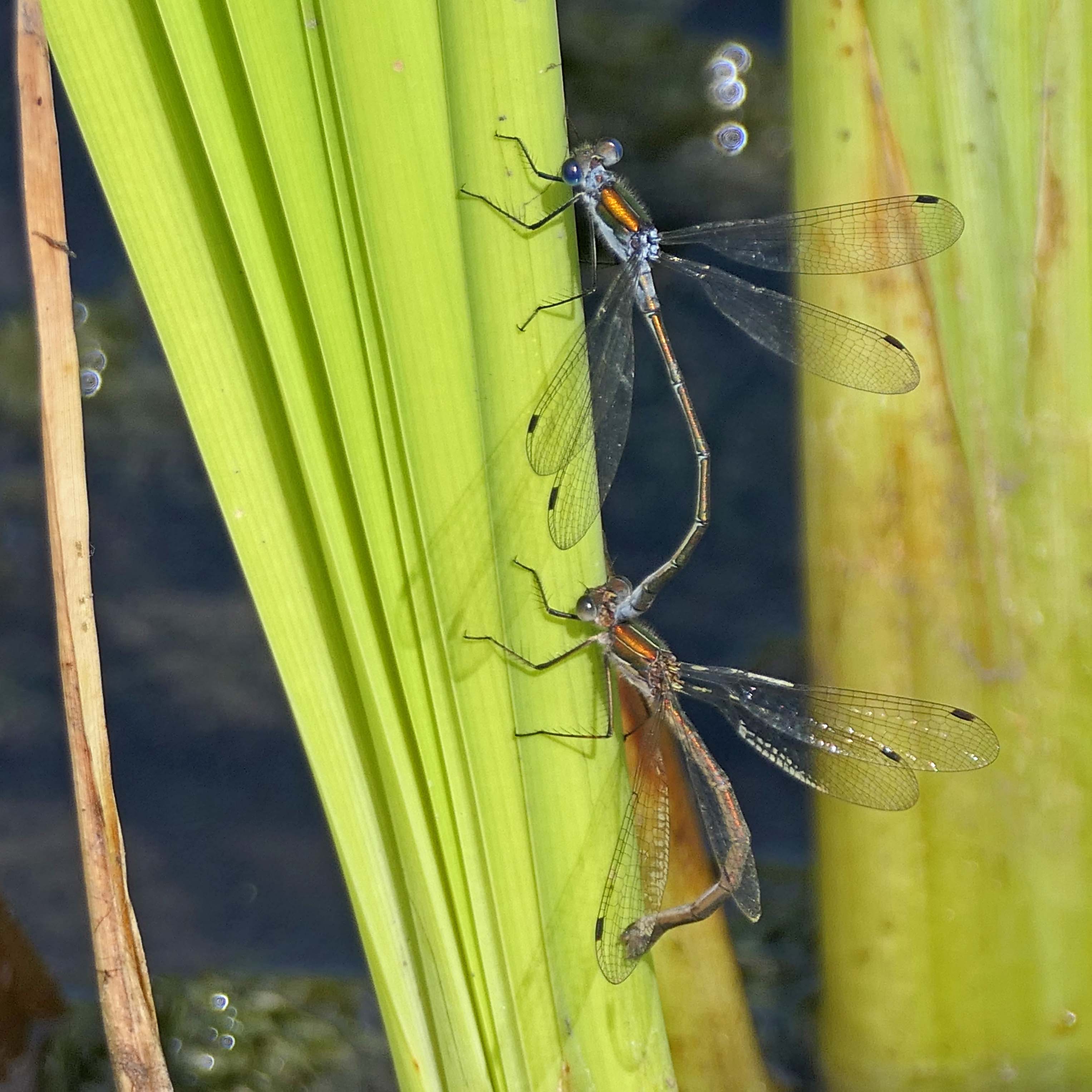
This is the final blog in my short series about the dragonflies I saw during last week’s rail journey up the south Welsh valleys to Maesteg. Today’s subject is the Emerald damselfly (Lestes sponsa), a species I’ve seen only twice before, in August 2017 and in September 2021. I’ve looked for them a couple of times at the 2021 location, Parc Penallta, but the small ponds there quickly dry out in hot summers and dog walkers allow their charges to splash about in them, displacing more water and polluting the water with the dogs’ chemical flea treatments. These are probably some of the reasons why the population of this damselfly species has been in steady decline since the 1990s.

Emeralds are relatively large for damselflies and rest with their wings outspread, hence their European common name, Common spreadwing. Their bodies are metallic green, though the colours of some parts of their abdomens vary depending on whether they are male or female, immature or aging. Emeralds favour shallow standing waters, like bog pools and ponds, especially when these are surrounded by tall grasses, rushes and sedges.

Like Loading...

Keeled skimmers

26 Tuesday Aug 2025

Posted by sconzani in insects

≈ Leave a comment

Tags

British dragonflies, dragonflies of heathlands, dragonflies of peat bogs, dragonfly, Keeled skimmer, male Keeled skimmers, Orthetrum coerulescens

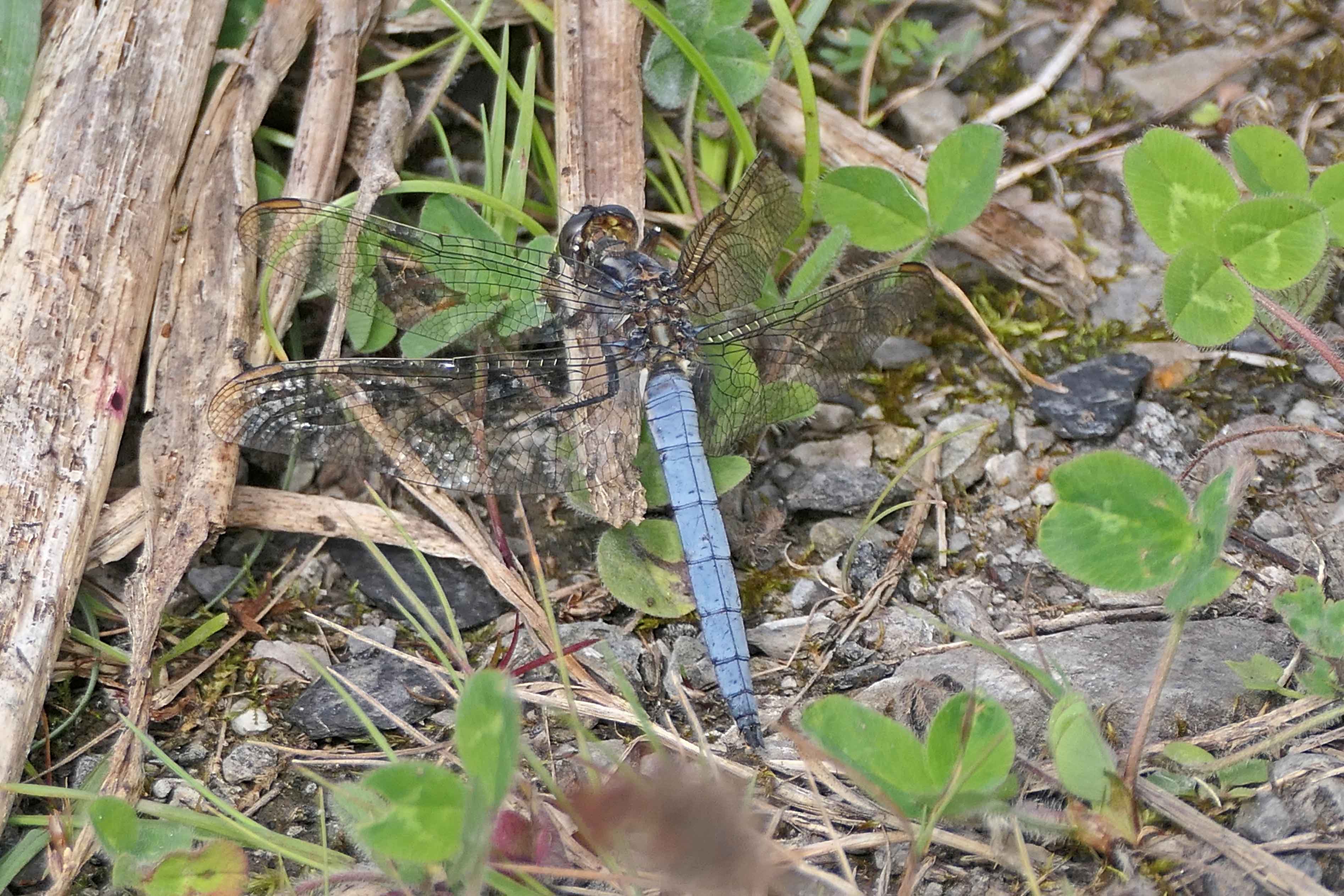
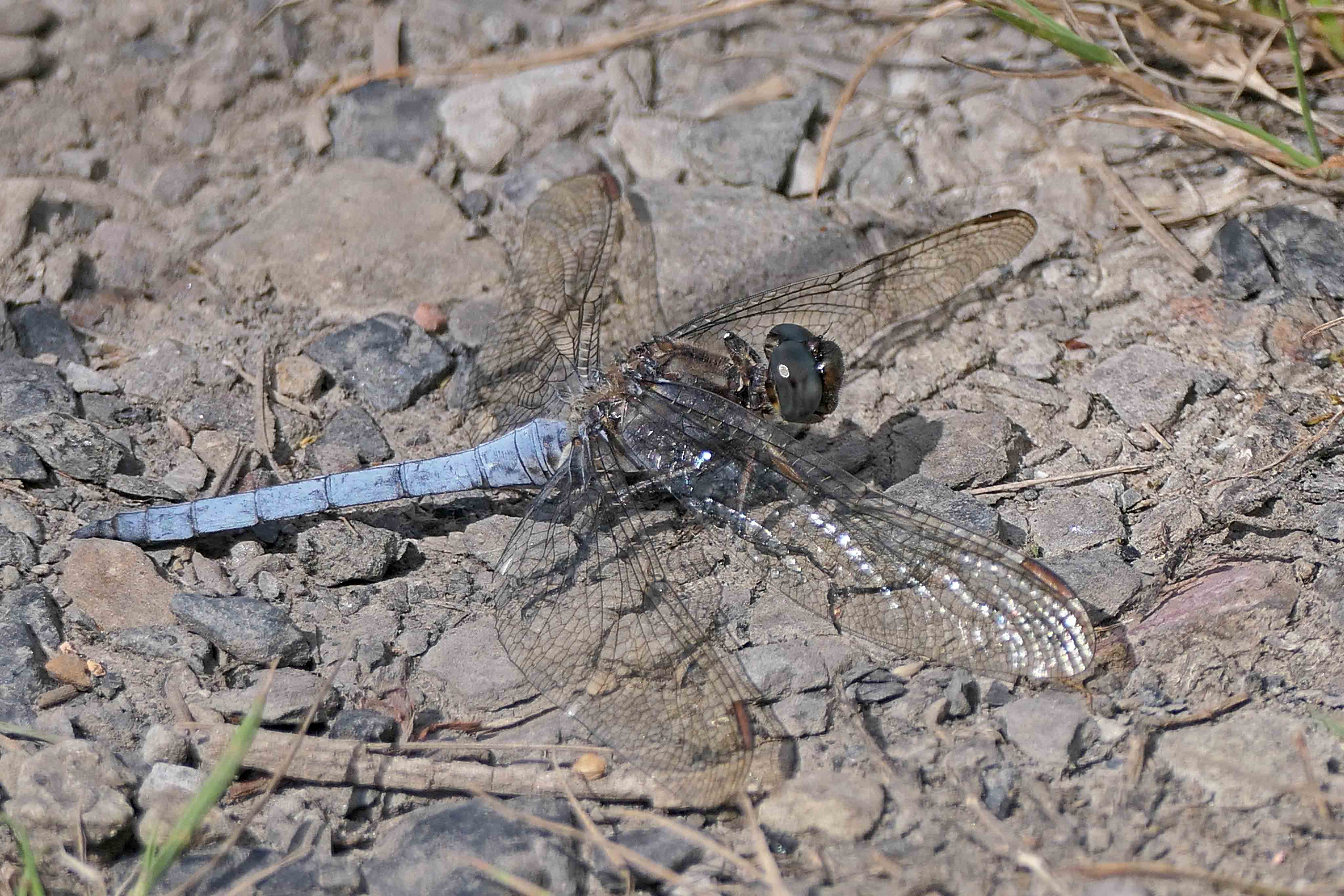
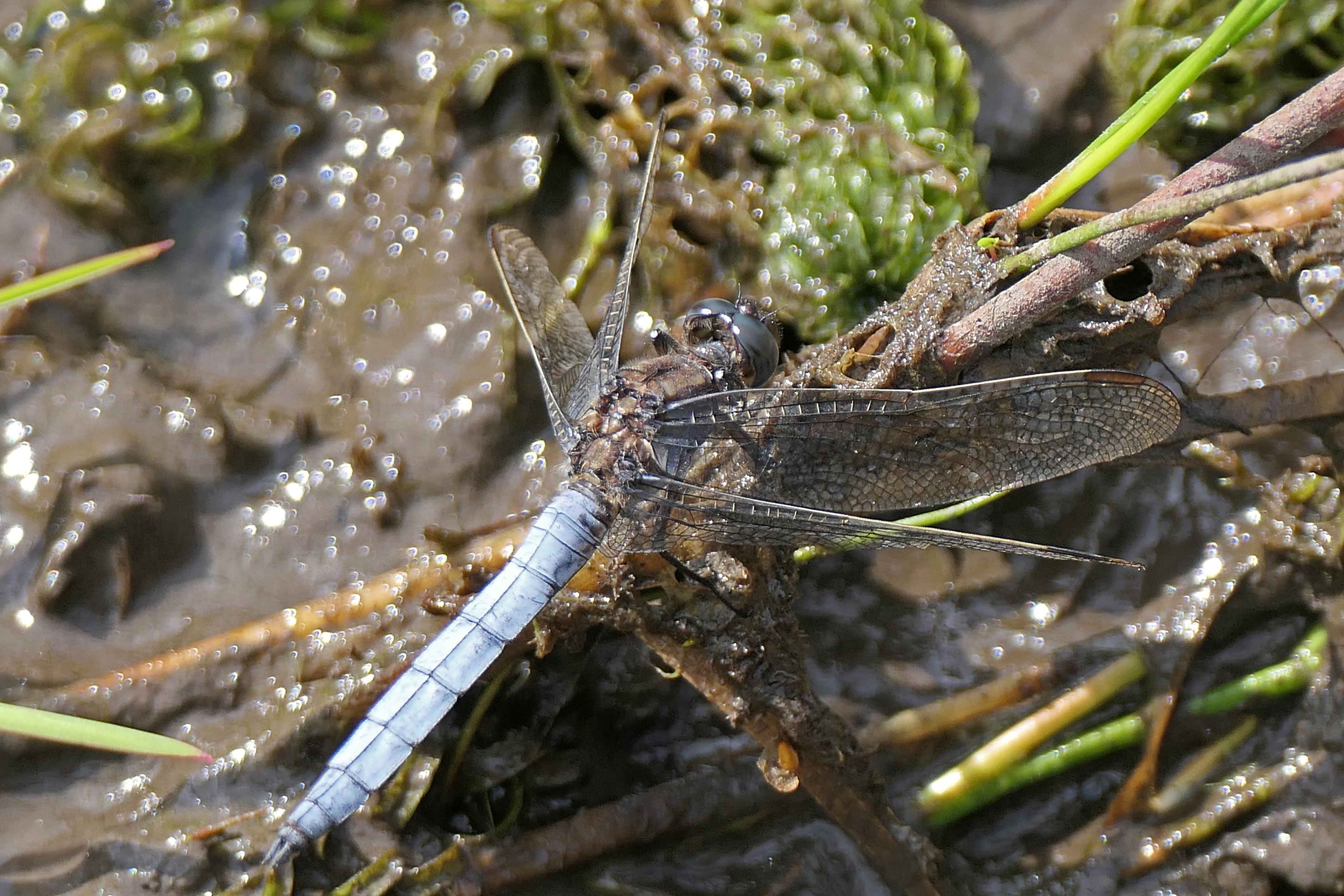
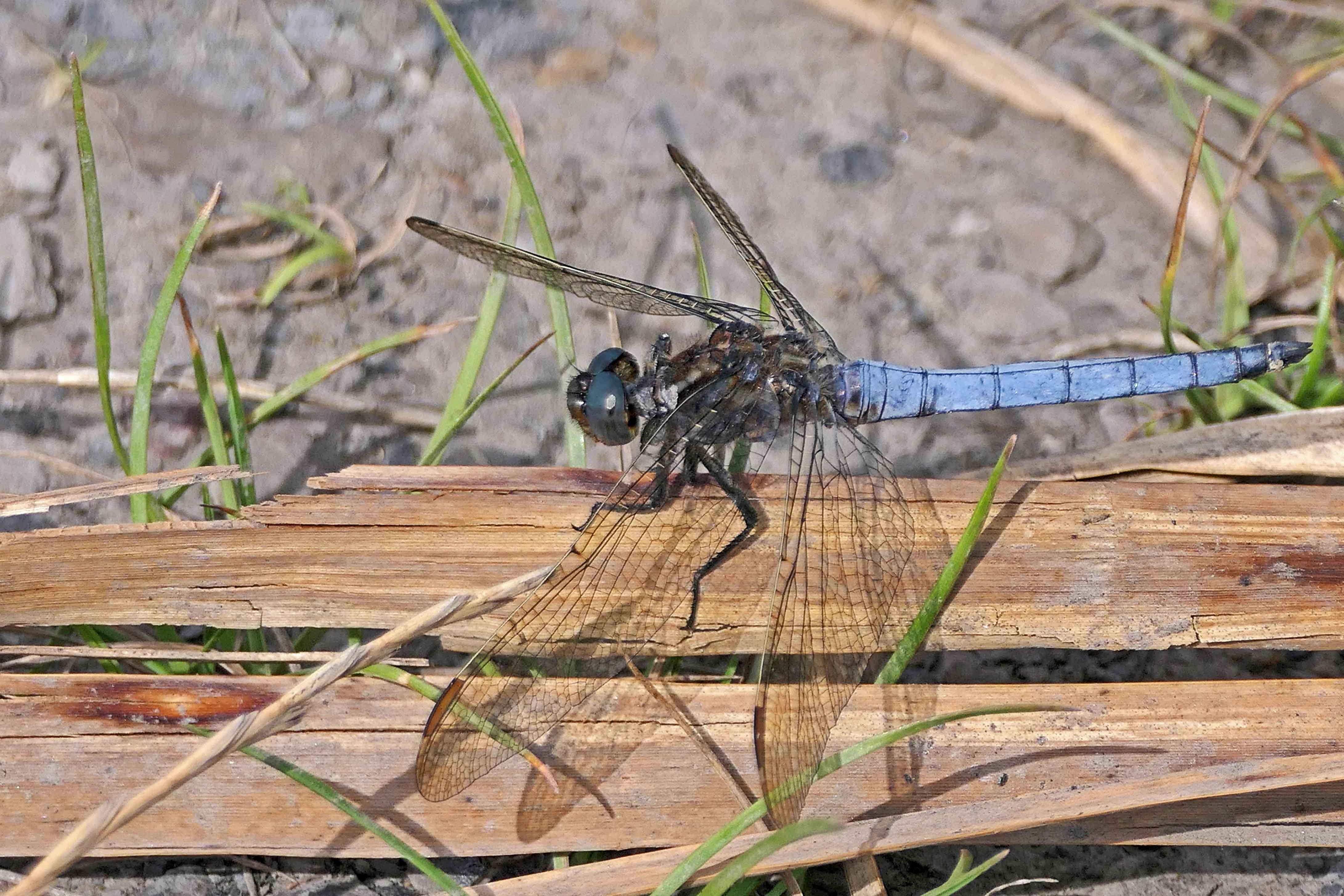
Here’s another of the stunning dragons I saw at the ponds in Maesteg last week. And this is another species I’d only seen once before, back in 2017 on a birding day out to the Lliw Reservoirs north of Swansea.

These gorgeous dragonflies are Keeled skimmers (Orthetrum coerulescens), also known in Europe as Heathland skimmers, which gives a very clear indication of their preference for the acidic conditions of heathland waterways and the drains and ponds of peat bogs. The Maesteg ponds provide the perfect habitat for them, except perhaps for the locals who allow their dogs to swim there.

These beauties were quite easy to find when I wandered around the ponds as, according to my guide book, the males hold quite small territories, with a favourite perch from which they flit out to see off any intruders. So, once I found their perches, I was able to stand a little way off to watch their flights and grab photos once they settled again.

I only saw male Keeled skimmers during this visit to the ponds, so I’ve yet to see one of golden yellow females. These dragonflies are usually active from mid June to mid August so I may have missed seeing the females this year but I will certainly be visiting this location again next year.

Like Loading...

Leafmines: Stigmella lemniscella

25 Monday Aug 2025

Posted by sconzani in insects, trees

≈ Leave a comment

Tags

Beautiful elm dot, British leafminers, leaf-mining moth larvae, leaf-mining moths, leafmines, leafmines on Wych elm, Stigmella lemniscella

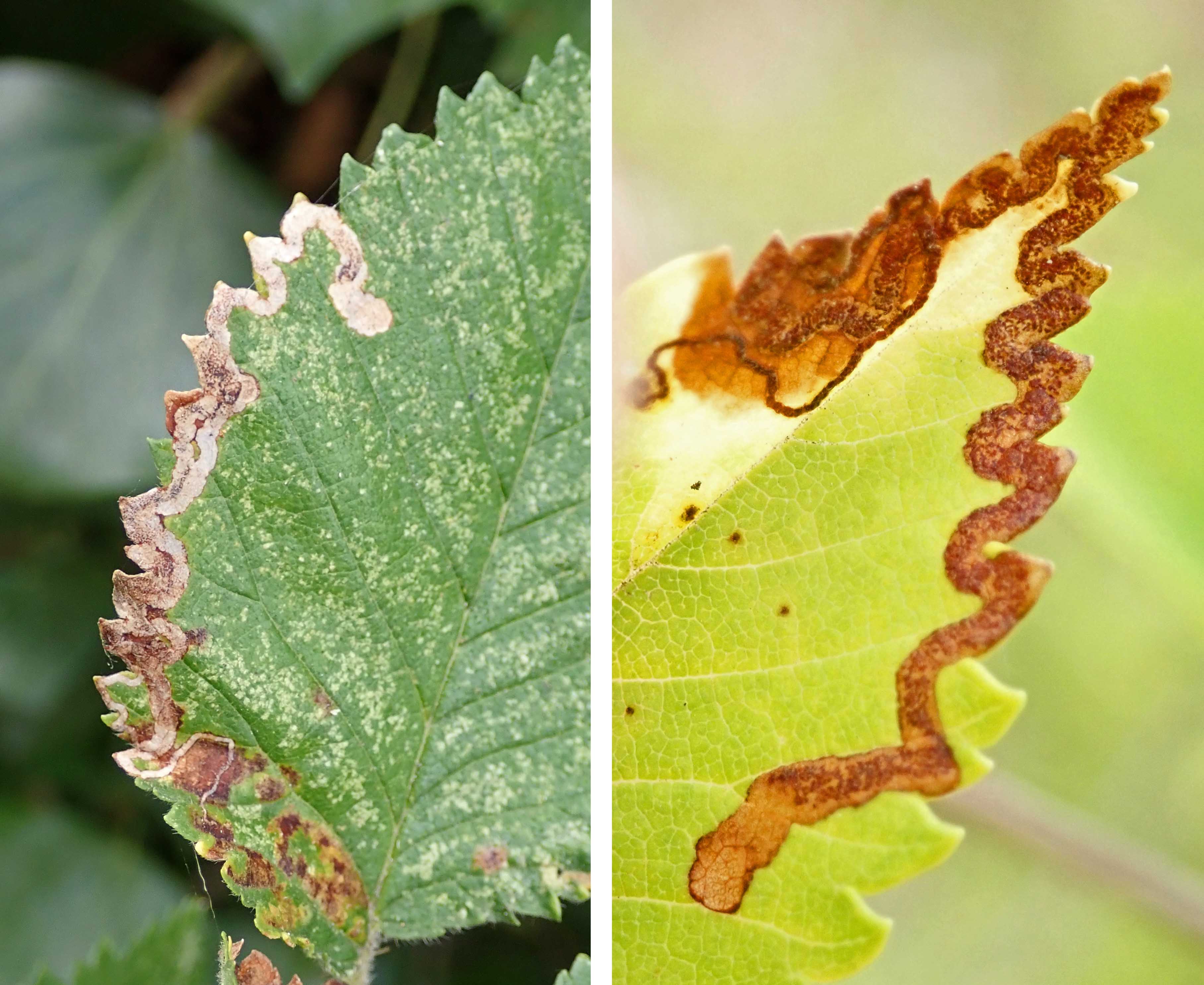
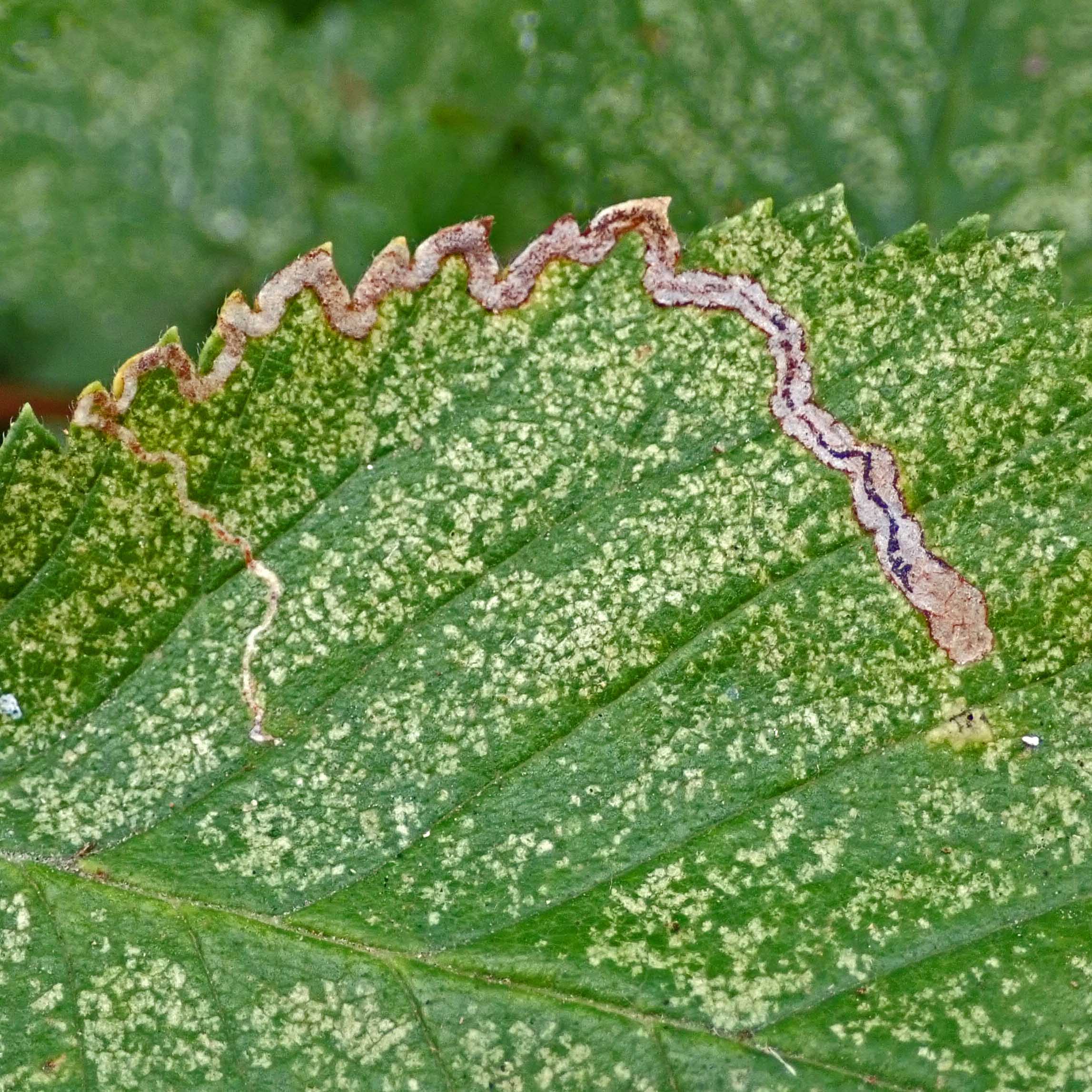
I discovered today’s new leafmines the same day as I found last week’s (Leafmines: Stigmella viscerella) and, considering how much time I spend leaf-fossicking and simply staring at trees, was also amazed I’d not noticed these very distinctive mines before.

The larvae of the moth Stigmella lemniscella munch away within the leaves of Elm trees (Ulmus species), in this case Wych elms (Ulmus glabra), and their galleries often follow the edge of the leaves, looking like a zigzag pattern. These moths are bivoltine so are active during July, and again in September – October. The adult moth is a pretty little thing – there’s a photo on the UK Moths website, which has the common name of Beautiful elm dot.

Like Loading...

Black darter

23 Saturday Aug 2025

Posted by sconzani in insects

≈ Leave a comment

Tags

Black darter, Black darter female, Black darter male, British dragonflies, dragonfly, Odonata, Sympetrum danae

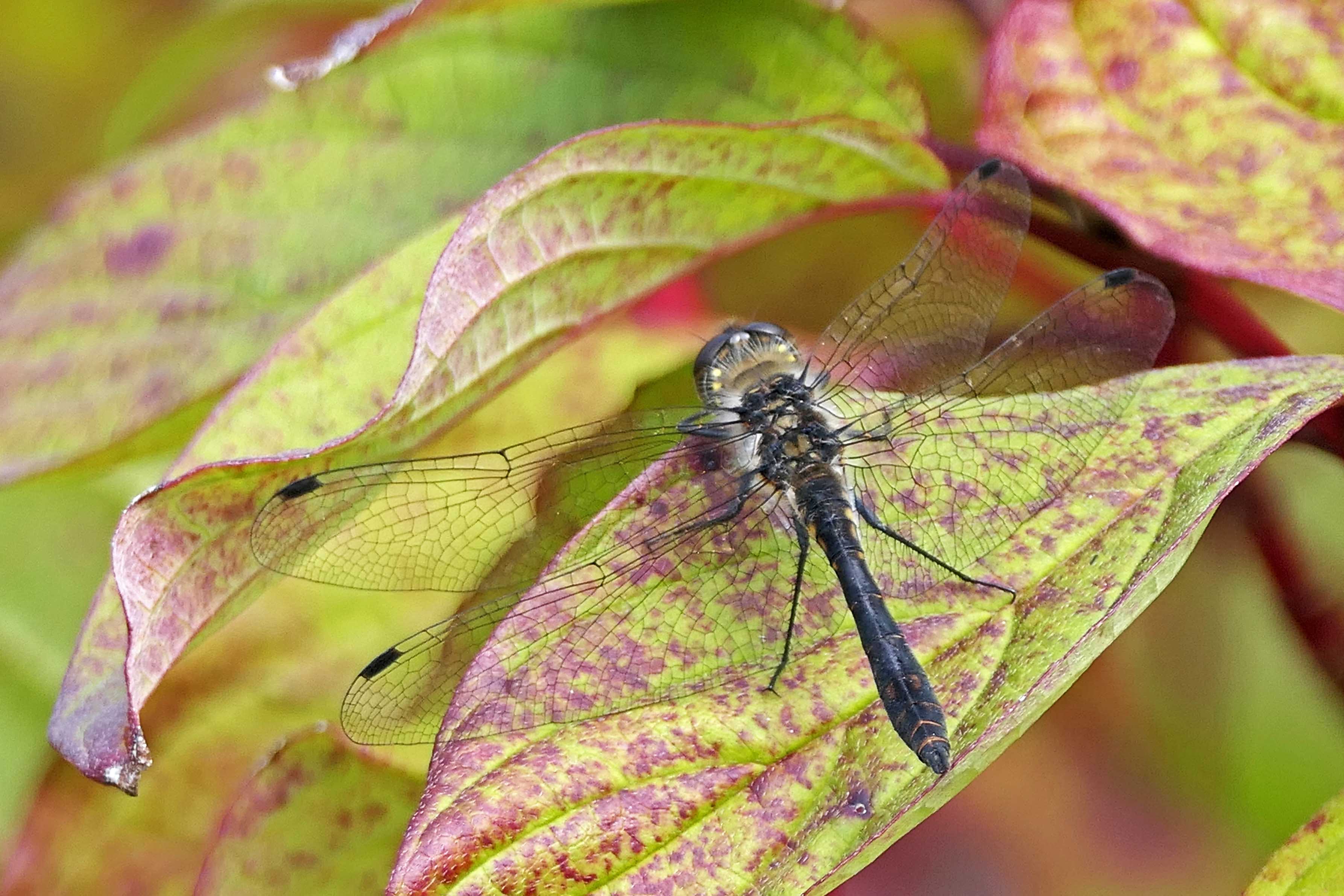
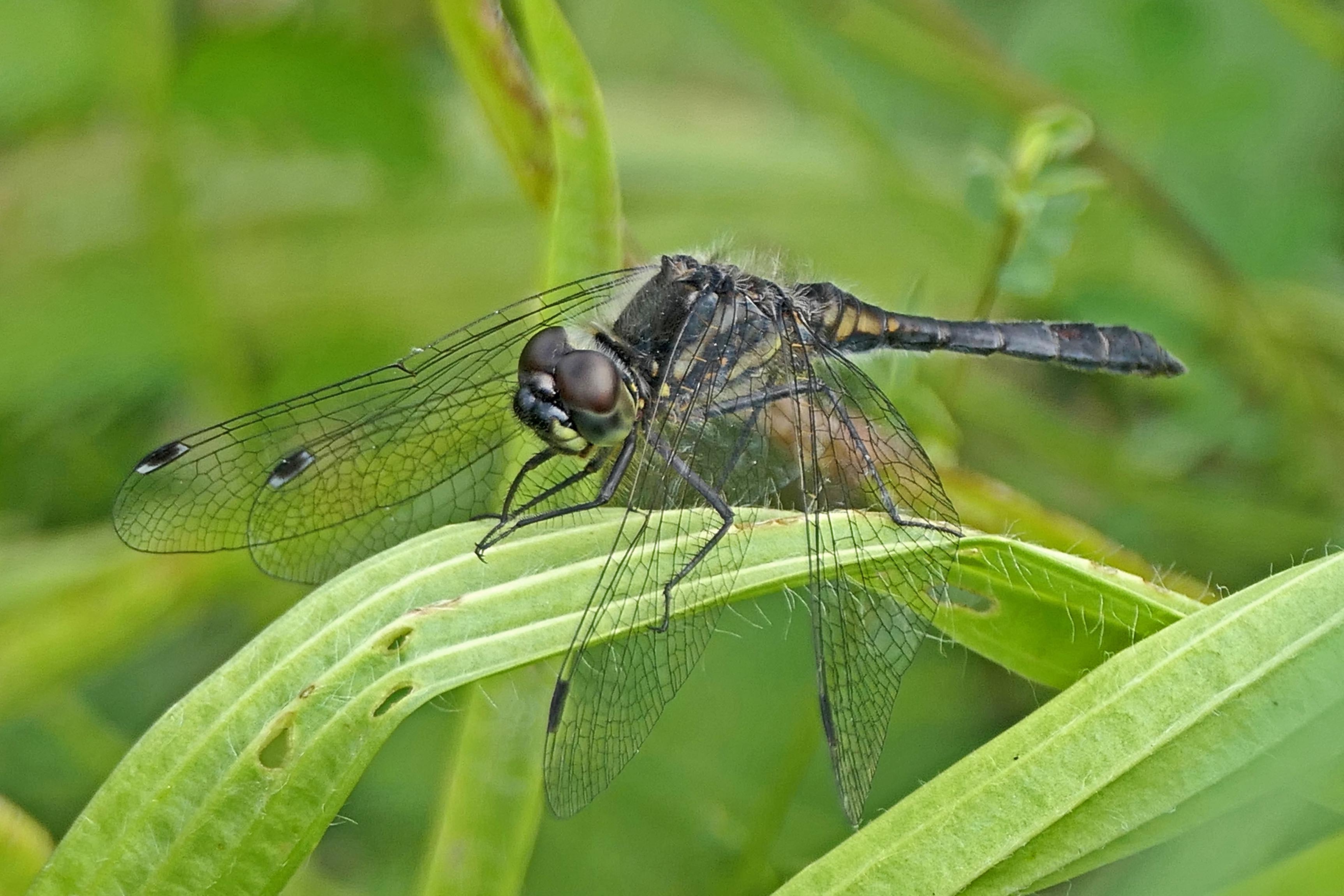
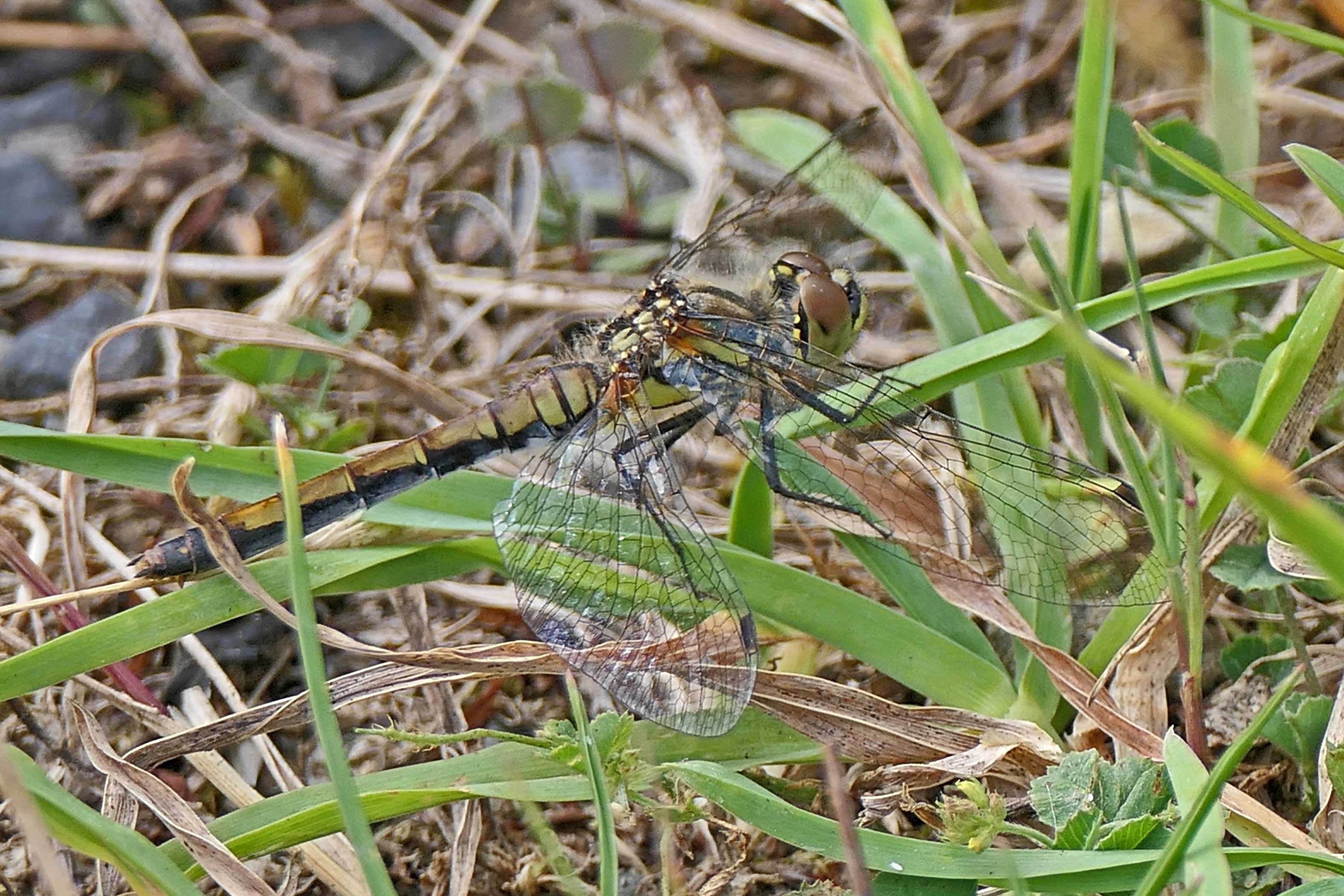
Before Thursday’s trip to Maesteg, I’d only ever seen a Black darter (Sympetrum danae) once before, and that was a fluke sighting at Cosmeston Lakes Country Park back in 2017. I say fluke because, like yesterday’s Common hawker, the Black darter is a dragonfly that prefers the acidic conditions of peat bogs, moorland ponds and ditches. How one got to Cosmeston I have no idea.

I was lucky to find several male Black darters at Maesteg ponds and, as you can see, they really are almost entirely black, with just a few yellow markings on the sides of their thorax and abdomen, and on top of their lower abdomen.

I was also extremely lucky to find a single female, basking on a patch of grass. As the photo below shows, she looks very different from the male, with much more yellow than black. At around 30mm long, both of these darters are quite small, about 10mm smaller than the Common darters that most of us are very familiar with. Now that I know about this location, I’ll be back to visit them again next year.

Like Loading...

Lifer: Common hawker

22 Friday Aug 2025

Posted by sconzani in insects

≈ Leave a comment

Tags

Aeshna juncea, British dragonflies, Common hawker, Common hawker ovipositing, dragonfly, female Common hawker, female dragonfly laying eggs

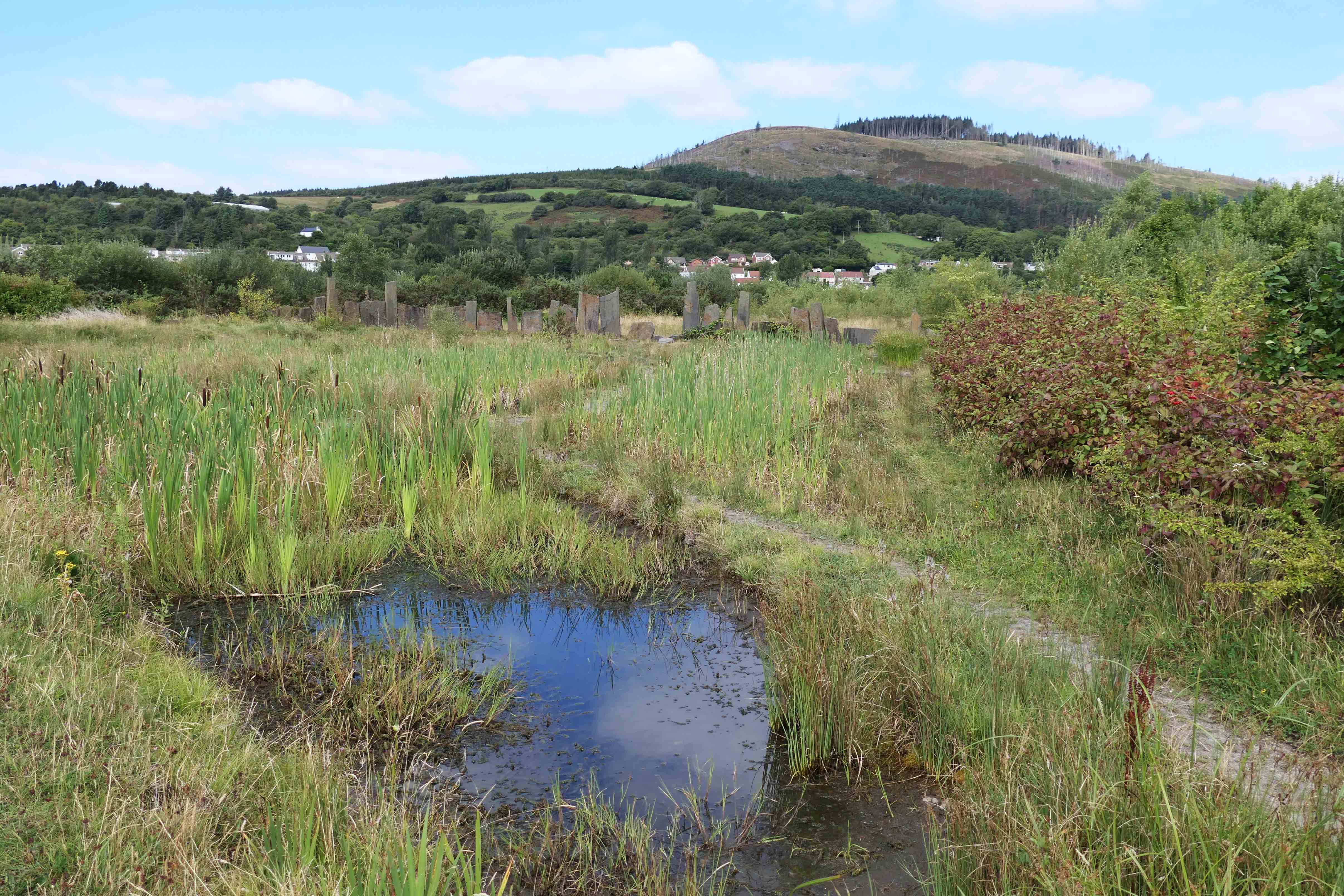
Yesterday I took myself off on a little adventure, on an hour’s train journey from Cardiff to Maesteg, high up in the south Welsh valleys, a place I’d not been before. I decided to go after seeing a post on social media about some ponds in a Maesteg park that held dragonflies that thrive in acidic heathlands and bogs so these are not species I see in my coastal location.

Despite a favourable weather forecast, when I first arrived it was mostly overcast and there was a cool wind blowing – not ideal conditions for seeing dragonflies. Remaining hopeful, I thought I’d use the time until the clouds cleared to explore and try to find dragonflies that might be perched around the area.

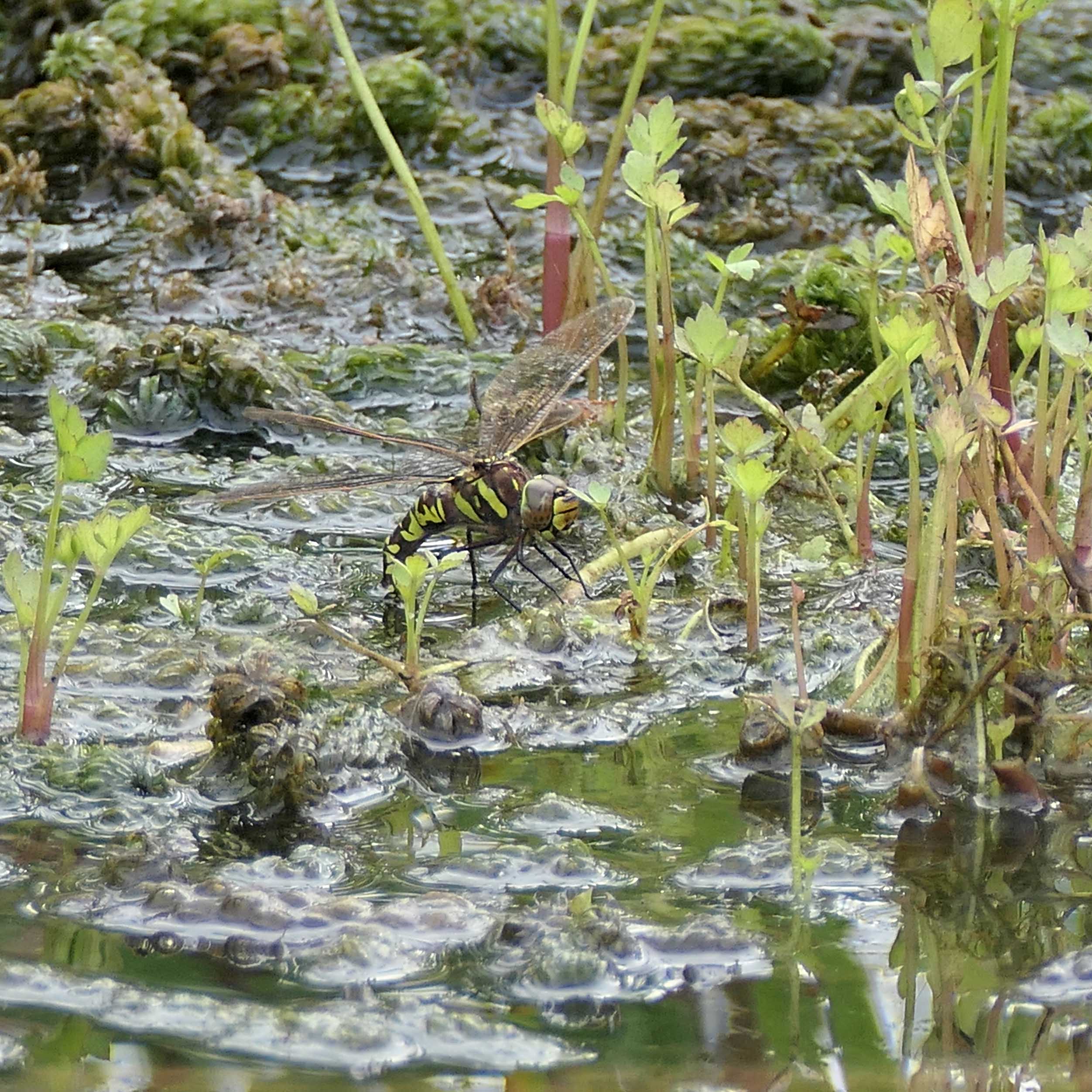
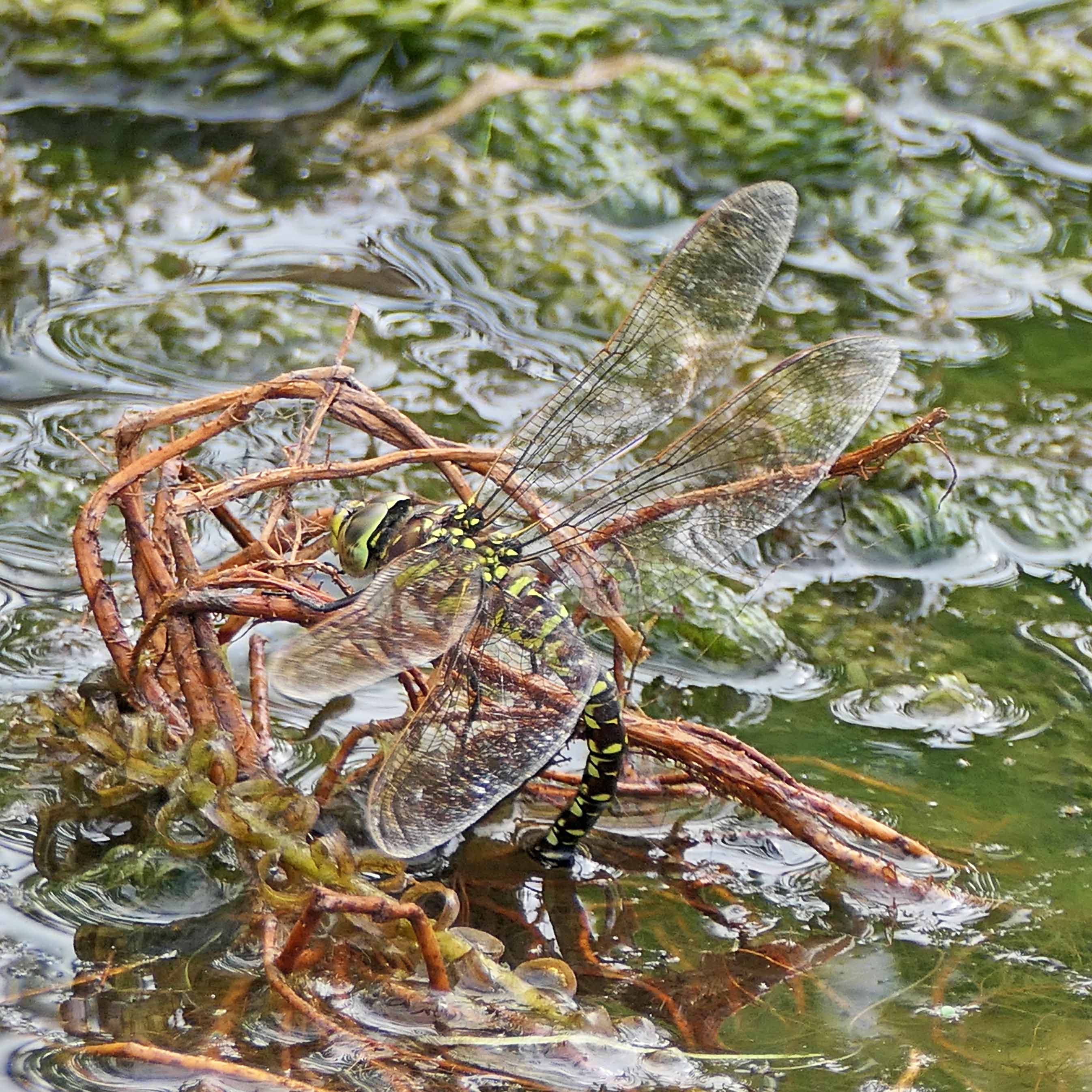
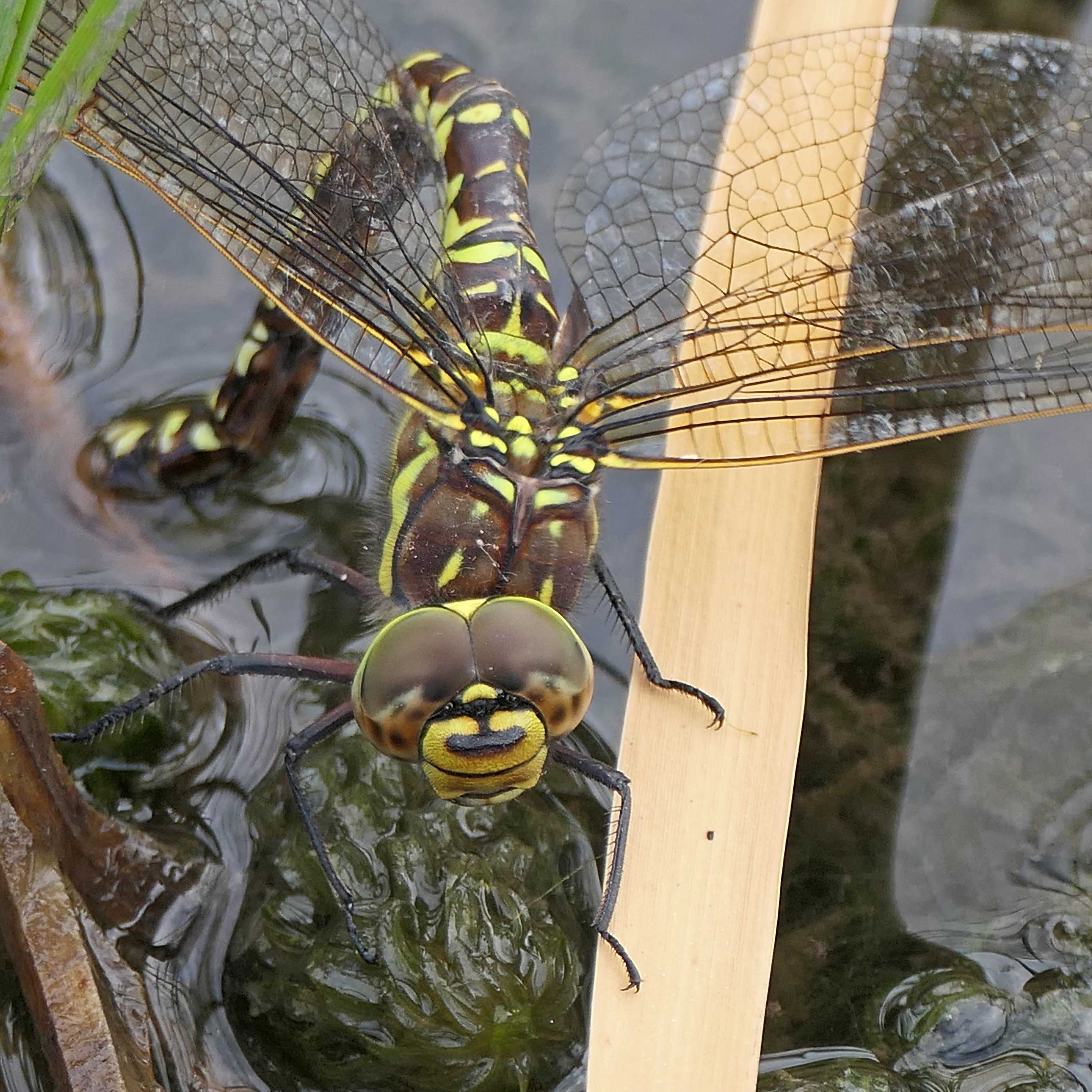
Almost immediately I heard the tell-tale rustle of dragonfly wings and saw movement amongst the reeds in the nearest pond. Dragon! And not just any dragon – this was a female Common hawker (Aeshna juncea), and she was moving slowly around the ponds, stopping here and there to lay her eggs amongst the vegetation. She was my first ever Common hawker, so I was over the moon to have found her so quickly and easily.

Later, when the sun did come out and the dragonfly action got a bit frantic, I saw another large dragonfly cruising back and forth over the ponds. I think it was a male Common hawker but he wasn’t stopping for photos, and soon disappeared. Having enjoyed such excellent views of the female, I wasn’t too disappointed about missing him, and I saw several other dragon and damsel species, which I will feature in forthcoming blogs.

Like Loading...

Leafhopper: Graphocephala fennahi

21 Thursday Aug 2025

Posted by sconzani in insects

≈ Leave a comment

Tags

British leafhoppers, Graphocephala fennahi, leafhopper, leafhoppers in Bute Park, rhododendron leafhopper

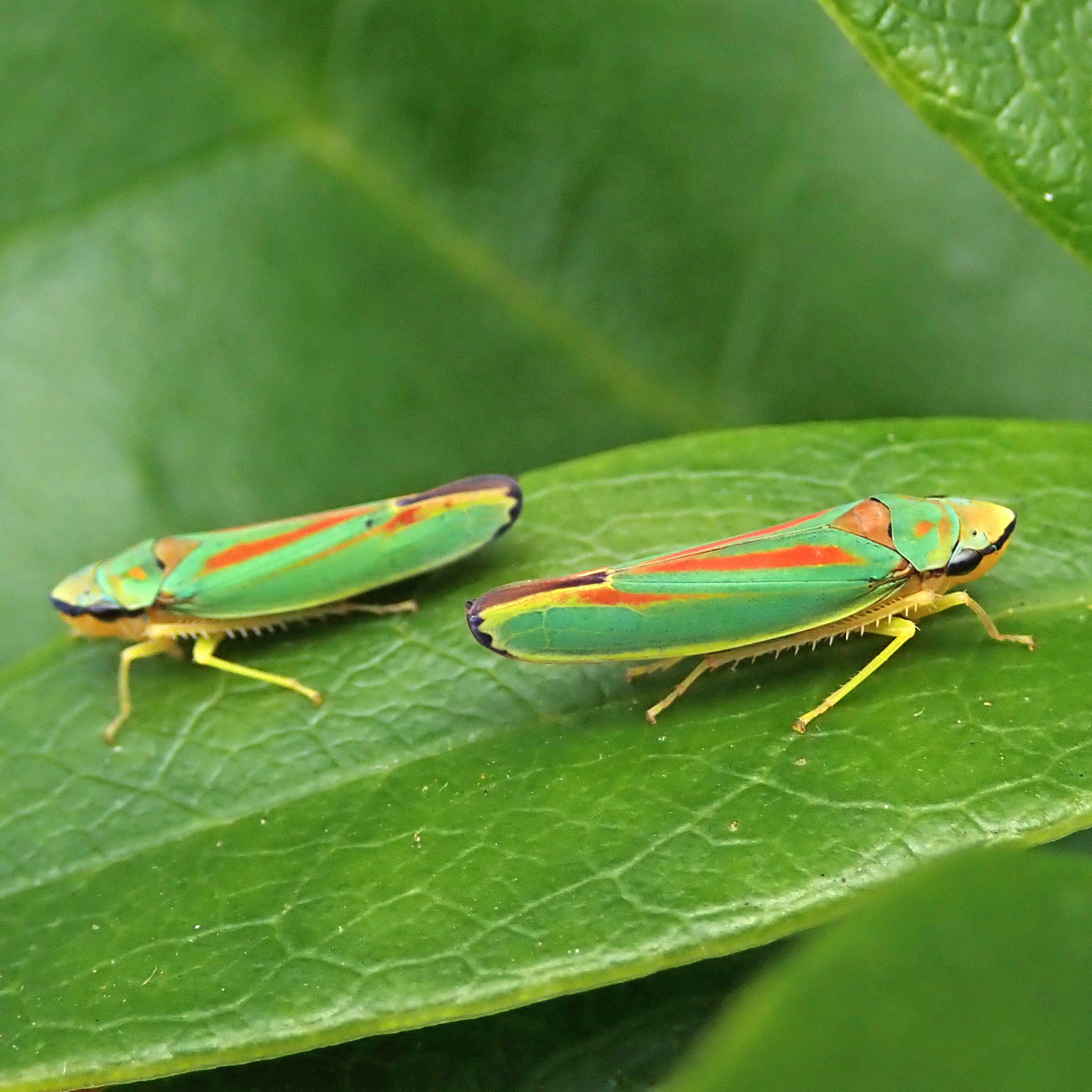
What a stunning leafhopper this is, don’t you think?

This is the Rhododendron leafhopper (Graphocephala fennahi), an immigrant from the USA. After being introduced to Europe in the early 1900s, it somehow made its way across the Channel to the UK (probably on plant matter, as the UK is exceedingly lax with its border controls), and can now be found throughout much of southern Britain.

The only colony I know of is in Cardiff’s Bute Park and, though I’ve looked for it since my interest in leafhoppers has been reignited, I’ve not managed to find it during the past few summers. I’m not sure why that is – the weather perhaps, though last week the day was occasionally overcast, with frequent drizzle, and I still saw them. The wrong time of year? I don’t think so as I had checked when I had seen them in the past and gone looking around the same time – the adults are active from around July through to the middle of autumn. Whatever the reasons for not having found them in the past, suffice to say I was very pleased to find them last week, and spent quite a bit of time watching their antics.

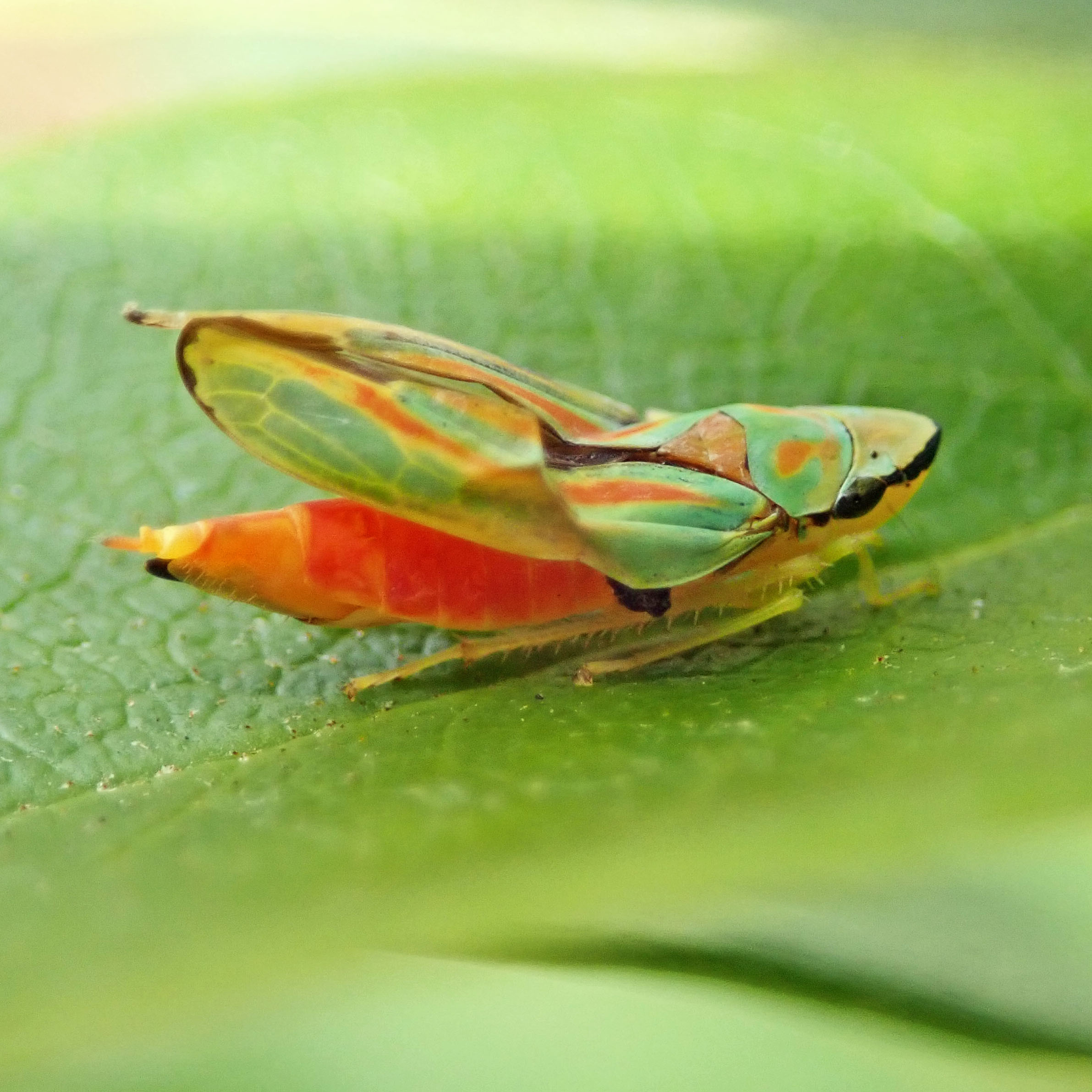
If you’re wondering about that last image, it appears the leafhopper has suffered some damage to its wing cases, which probably means it can’t fly but it certainly had no trouble leaping away when I got a little too close looking at the vibrant orange of its abdomen.

Like Loading...

Three Ichneumon wasps

19 Tuesday Aug 2025

Posted by sconzani in insects

≈ Leave a comment

Tags

British ichneumons, British wasps, Ctenicheumon panzeri, Heteropelma amictum, Ichneumon wasps, Ichneumon xanthorius

Two things:
Firstly, my records of these three Ichneumon wasps have not yet been verified so, although I’m fairly confident of their identification, I’m not 100% certain.
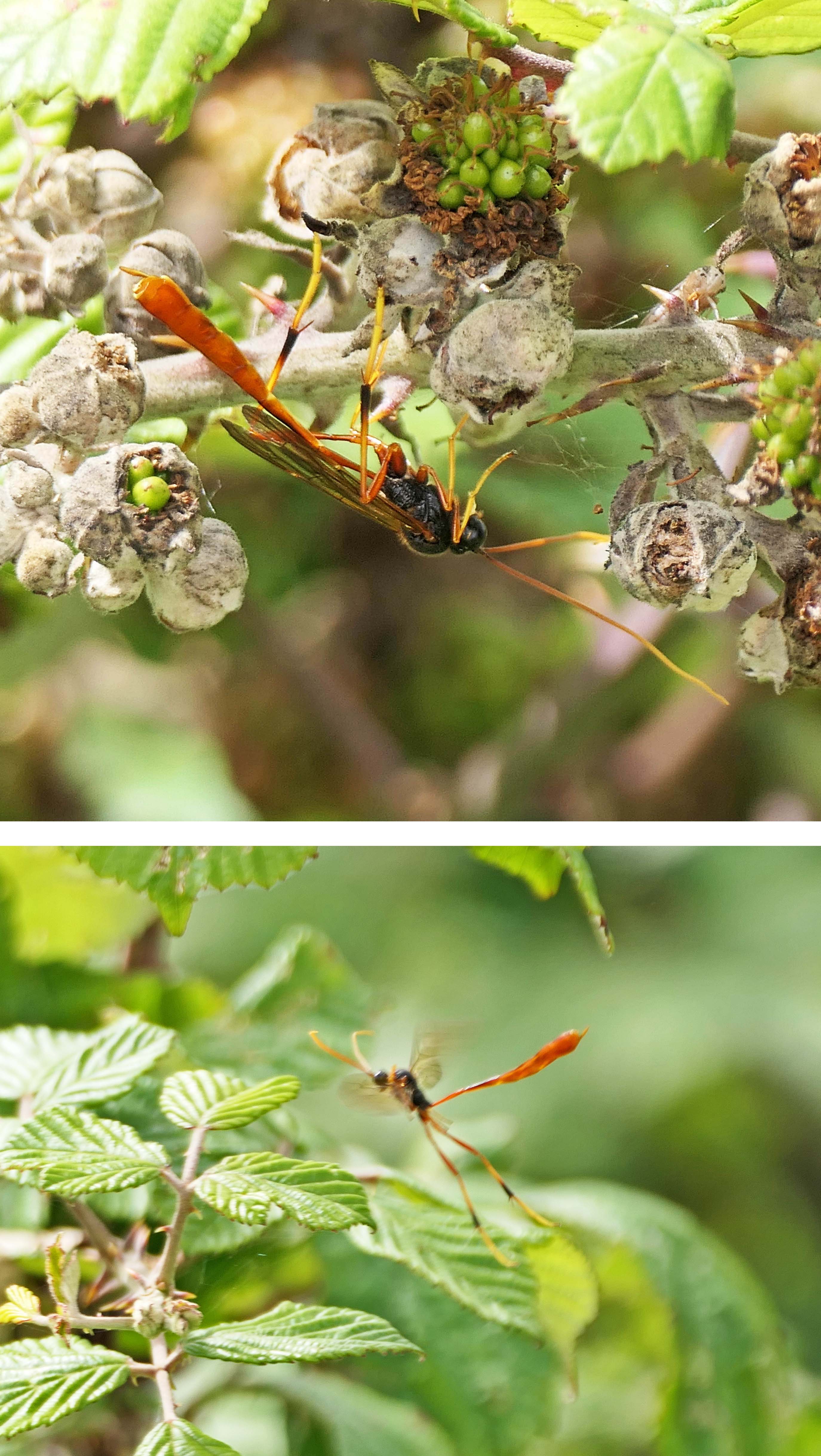
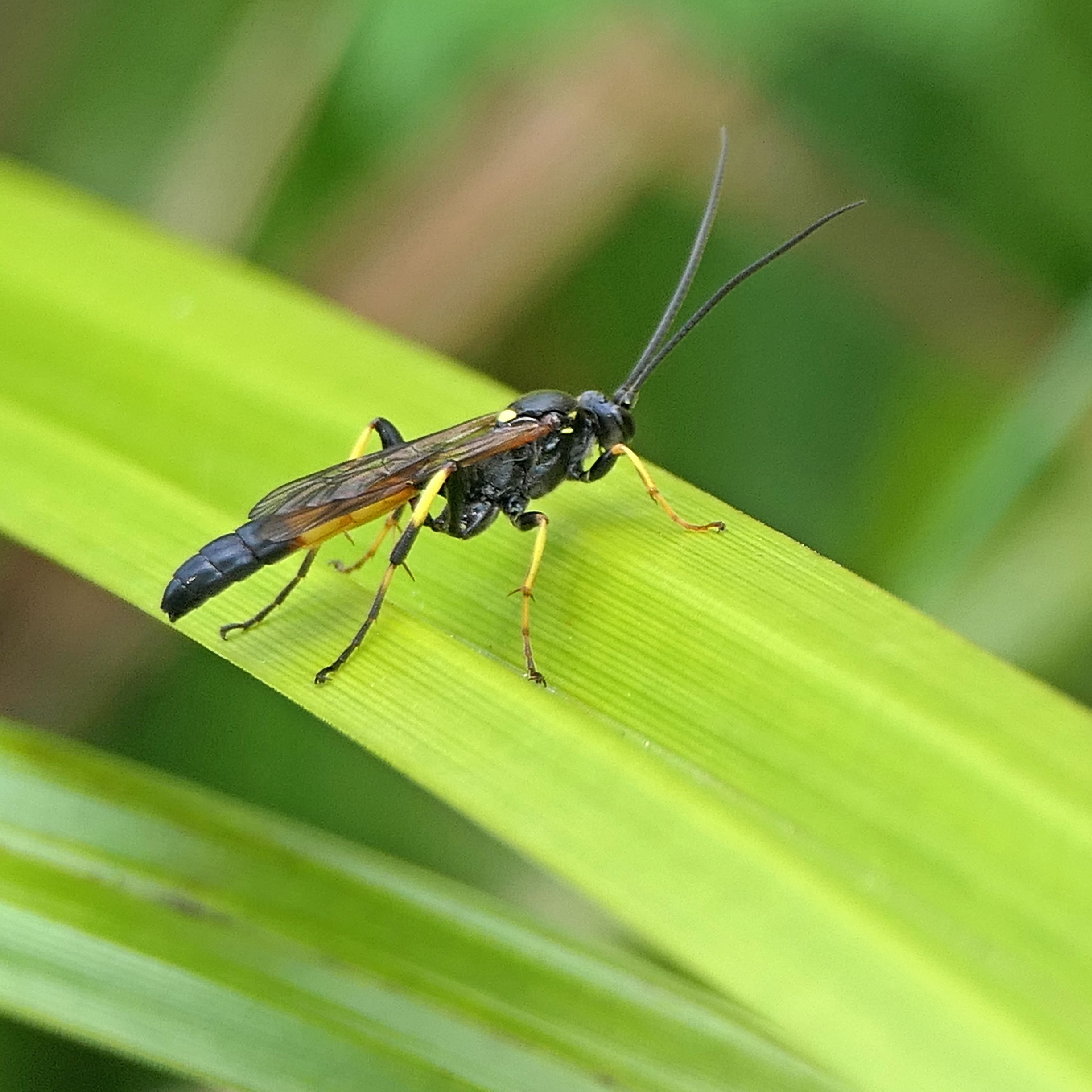
And, secondly, I decided to write this blog after someone replied to one of my social media posts, saying – supposedly jokingly – that they had scurried away after seeing one of these creatures, a female with a prominent ‘stinger’ (the implication being that they were frightened of the wasp). So, just to be clear, these wasps will not harm humans; the ‘stinger’ is an ovipositor, for depositing eggs in to their hosts; and many Ichneumon wasps are large, colourful, and really quite beautiful creatures.

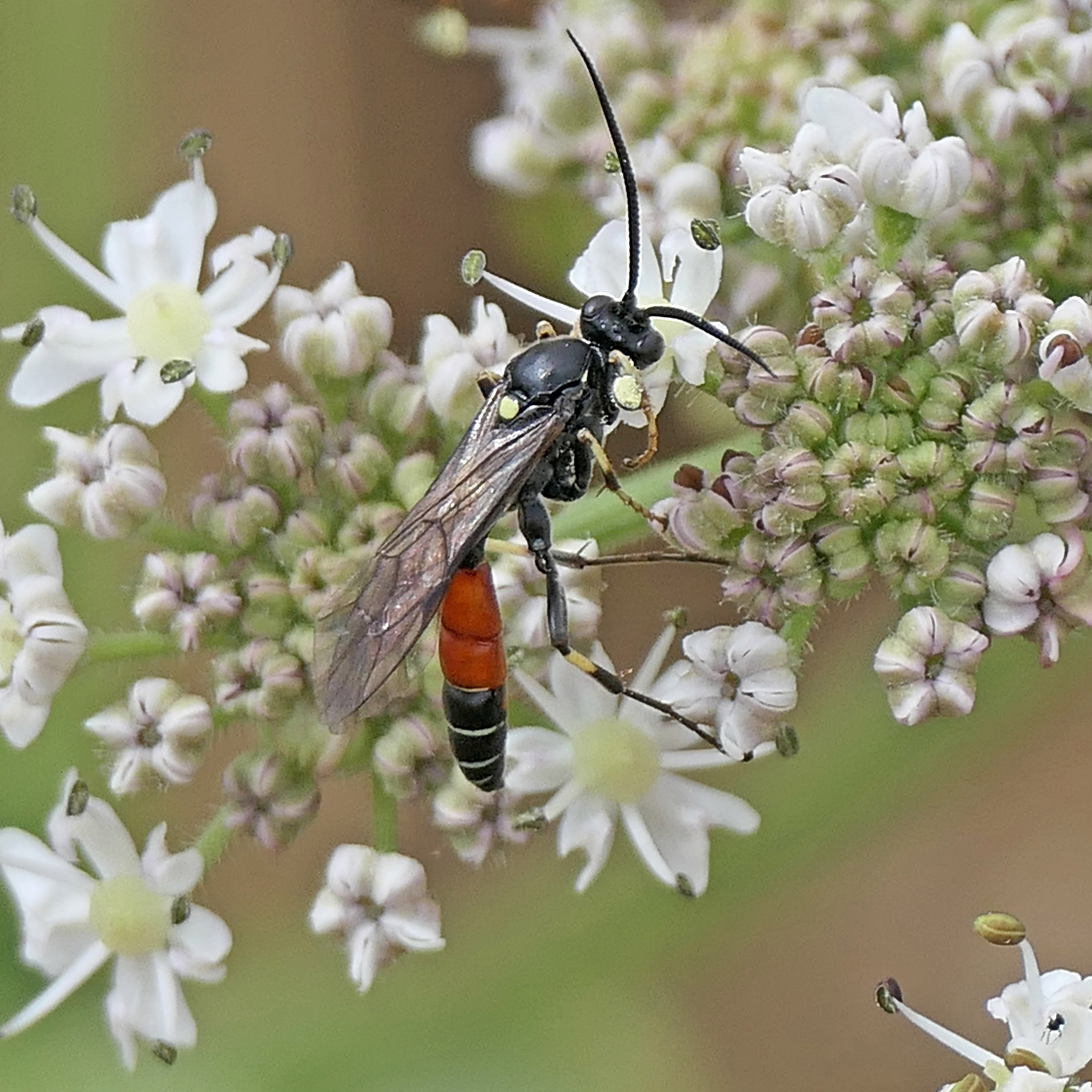
At 10-15mm, Ctenichneumon panzeri is a medium-sized Ichneumon that can often be found on umbellifer flowers, as you can see in my photo. As with all Ichneumon wasps, they are parasitoids; Ctenicheumon panzeri deposits its eggs in the larvae of moths of the Noctuidae family.

Heteropelma amictum is one of the larger (20-30mm) and more spectacular ichneumonids, with a long narrow body and equally long back legs, both of which are very prominent when it flies (my flight photo is blurry but I wanted to show you how it holds its body erect and dangles its legs below). Heteropelma amictum uses moth pupae, rather than larvae, as its larval hosts.

Ichneumon xanthorius is another medium-sized wasp, and one I see more often than other species, when it’s feeding on umbellifer flowers or perching on shrubs and bushes. Its larvae feed on the pupae of both moths and butterflies.

The British Natural History Museum has produced an excellent Beginner’s Guide to identifying British ichneumonids, which you can access and download by clicking on this link.

Like Loading...

Leafmines: Stigmella viscerella

18 Monday Aug 2025

Posted by sconzani in insects, trees

≈ Leave a comment

Tags

British leafmines, leaf-mining moth larvae, leaf-mining moths, leafmines on Wych elm, Stigmella viscerella, Wych elm

I’m often surprised when I find a new leafmine: how is it that I’ve not noticed this one before, and how many different leafmines can there be? The answer to the first question has to be that I haven’t been paying enough attention, and to the second that there are probably hundreds that I haven’t yet found.

Today’s new leafmines were made by larvae of the moth Stigmella viscerella, and the mines can be found on the leaves of Elm trees, in this case Wych elm (Ulmus glabra), during August and September. Now that I’m aware of them, I’ve managed to find the mines in two different locations on two separate days, which is why the elm leaves in the two sets of images look different in colour (one day was brighter than the other).

The epithet viscerella may seem odd – it comes from the Latin viscera, plural of viscus, and refers to the human body’s internal organs – but when I look at these mines, the twisting shapes of the frass-filled galleries do, indeed, remind me of human intestines. I presume that the adult moth is not often seen as the UK Moths website doesn’t have its photo but, if you’re curious to see what emerged from these ‘intestines’, I managed to find an image on the German Lepiforum website.

Like Loading...

Coleophora argentula

16 Saturday Aug 2025

Posted by sconzani in insects, plants, wildflowers

≈ Leave a comment

Tags

case-bearing caterpillar, case-bearing larvae, case-bearing moth larva, Coleophora argentula, moth larvae on Yarrow, Yarrow

These may not look like much – in fact, when looking at these images, you might struggle to see anything but fading flower heads of Yarrow (Achillea millefolium) – but I’ve been checking almost every Yarrow flower I see, looking for these, since I first saw them mentioned on social media a few years ago.

These tiny brown tubes, camouflaged with a plant material covering, are the larval cases of the moth Coleophora argentula. From within their home-made protective covering, the little larvae poke their heads out to munch on the Yarrow flowers and on the seeds when they begin to develop.

According to the British Leafminers website entry on this species, the larvae are usually active from September through to May, so these are a little early; I’m finding many things are early this year, presumably due to the continuing warm weather. You can see the adult moth, a very pretty little thing, with pale brown and white stripes, over on the UK Moths website.

And now, have another look at the first photo. How many of the little brown cases can you find? Answers on a postcard. 🙂

Like Loading...
← Older posts
Newer posts →

About me

sconzani

sconzani

I'm a writer and photographer; researcher and blogger; birder and nature lover; countryside rambler and city strider; volunteer and biodiversity recorder.

View Full Profile →

Follow earthstar on WordPress.com

Enter your email address to follow this blog and receive notifications of new posts by email.

Recent blog posts

  • Three shieldbug species March 6, 2026
  • Toad spawn March 5, 2026
  • Hoverflies and bumblebees March 4, 2026
  • Little gull March 3, 2026
  • A tree full of Siskin March 2, 2026

From the archives

COPYRIGHT

Unless otherwise acknowledged, the text and photographs on this blog are my own and are subject to international copyright. Nothing may be downloaded or copied without my permission.

Fellow Earth Stars!

  • Unknown's avatar
  • Unknown's avatar
  • Unknown's avatar
  • Unknown's avatar
  • Unknown's avatar
  • Unknown's avatar
  • Unknown's avatar
  • Unknown's avatar
  • Unknown's avatar
  • Unknown's avatar
  • Unknown's avatar
  • Unknown's avatar
  • Unknown's avatar
  • Unknown's avatar
  • Unknown's avatar
  • Unknown's avatar
  • Unknown's avatar
  • Unknown's avatar
  • Unknown's avatar
  • Unknown's avatar
  • Unknown's avatar
  • Unknown's avatar
  • Unknown's avatar
  • Unknown's avatar
  • Unknown's avatar
  • Unknown's avatar
  • Unknown's avatar
  • Unknown's avatar
  • Unknown's avatar
  • Unknown's avatar
  • Unknown's avatar
  • Unknown's avatar
  • Unknown's avatar
  • Unknown's avatar
  • Unknown's avatar
  • Unknown's avatar
  • Unknown's avatar
  • Unknown's avatar
  • Unknown's avatar
  • Unknown's avatar
  • Unknown's avatar
  • Unknown's avatar
  • Unknown's avatar
  • Unknown's avatar
  • Unknown's avatar
  • Unknown's avatar
  • Unknown's avatar
  • Unknown's avatar
  • Unknown's avatar
  • Unknown's avatar

Blog at WordPress.com.

Privacy & Cookies: This site uses cookies. By continuing to use this website, you agree to their use.
To find out more, including how to control cookies, see here: Cookie Policy
  • Subscribe Subscribed
    • earthstar
    • Join 669 other subscribers
    • Already have a WordPress.com account? Log in now.
    • earthstar
    • Subscribe Subscribed
    • Sign up
    • Log in
    • Report this content
    • View site in Reader
    • Manage subscriptions
    • Collapse this bar
 

Loading Comments...
 

You must be logged in to post a comment.

    %d