• ABOUT
  • BIRDING 2018
  • Birding 2019
  • BLOG POSTS
  • Butterflies 2018
  • Resources

earthstar

~ a celebration of nature

earthstar

Category Archives: nature

Gulls as kleptoparasites

24 Tuesday Jan 2017

Posted by sconzani in birds, nature, parks

≈ 2 Comments

Tags

bird feeding habits, birding, birdwatching, black-headed gulls, Coot, gulls stealing food, kleptoparasitism, Roath Park Lake, Tufted duck

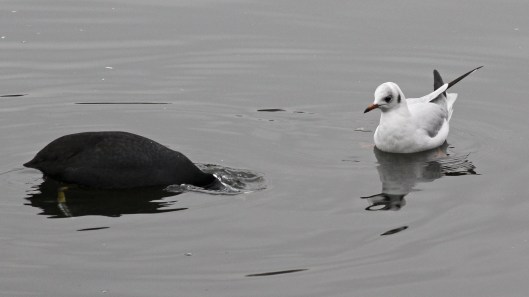
Some time ago at Roath Park Lake I was intrigued to notice Black-headed gulls using Coots as their personal fishers, and I have since noticed this behaviour between the gulls and Tufted ducks as well, though I haven’t yet seen them using this feeding method with the other water bird species at the lake.
170124-coot-and-gull

These gulls eat different food from the coots and ducks – gulls eat insects, worms, scraps, etc whereas the ducks and coots are mostly vegetarian, though the tufties will also eat some insects – so, presumably, the gulls aren’t actually stealing food the other birds would eat themselves.

170124-gull-and-tufted-duck

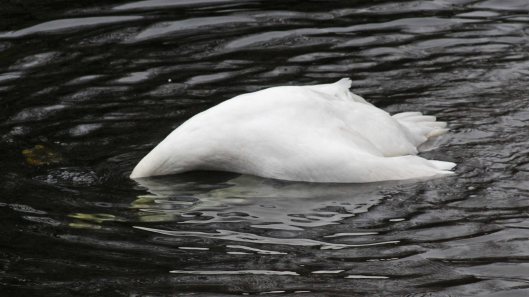
The ducks and coots dive down for food, while the gulls float patiently waiting for them to surface. When they do, the gulls paddle over to see if there’s anything interesting for them to steal. The coots and tufties don’t seem to object to the gulls, even though they’re doing all the work. I guess they would be doing the diving anyway and, if the gulls aren’t actually stealing their food, then they’ve nothing to lose. The official term for creatures that take the food other creatures have caught, prepared or collected is kleptoparasitism, hence my title.

When researching this post, I located an excellent article that goes into much more detail than I have about this and similar bird behaviour: ‘Food usurpation by waterfowl and waders’ by Juan A. Amat can be found here.

Like Loading...

Signs of spring

23 Monday Jan 2017

Posted by sconzani in flowers, nature, spring

≈ 11 Comments

Tags

crocus, Galanthus nivalis, Lesser Celandine, primrose, Primula vulgaris, snowdrop, spring flowers in January

It’s not even the end of January and the spring flowers are starting to open. I saw these Snowdrops (Galanthus nivalis), Crocuses (Crocus sp.), Lesser celandines (Ficaria verna) and Primroses (Primula vulgaris) yesterday during a walk through my local park and cemetery. They’re wonderful to see but I have a feeling winter hasn’t quite finished with us yet.

170122-signs-of-spring-1
170122-signs-of-spring-2
170122-signs-of-spring-3
170122-signs-of-spring-4
Like Loading...

The mallard menagerie

22 Sunday Jan 2017

Posted by sconzani in birds, nature

≈ 5 Comments

Tags

Anas platyrhynchos, birding, birdwatching, domestic ducks, feral domestic duck, feral domestic ducks, Mallard, mallard interbreeding

When is a mallard not a mallard? That may sound like a trick question but the indiscriminate breeding habits of mallard ducks can produce offspring that confuse people who are trying to identify their species.

170121-mallard-menagerie-12

As far as I understand it, the story goes like this. First came the mallard (Anas platyrhynchos). Then, humans decided they would domesticate the mallard to more easily obtain their eggs and meat to eat. Next, humans decided to ‘improve’ on the original mallard genes, using selective breeding to produce larger ducks with various colour variations (Chocolate magpie, Aylesbury, Welsh harlequin, Orphington, Swedish blue are just a few of these more specialised varieties and, if you’re interested in seeing more, there’s an excellent guide to domestic breeds of duck and the results of their various interbreeding here).

170121-mallard-menagerie-6
170121-mallard-menagerie-10

Sometimes, these domestic breeds escape from their captive situation or are illegally released into the wild and, when this happens, they can and do breed with pure mallards, thus producing a wonderfully varied and colourful array of offspring. These ‘mixed’ breeds are sometimes referred to as ‘manky mallards’, which is not meant as a derogatory term but rather as a way to differentiate them from pure-bred mallards. Manky they most certainly are not!

170121-mallard-menagerie-1
170121-mallard-menagerie-2
170121-mallard-menagerie-3
170121-mallard-menagerie-4
170121-mallard-menagerie-5
170121-mallard-menagerie-7
170121-mallard-menagerie-8
170121-mallard-menagerie-9
170121-mallard-menagerie-11
Like Loading...

Morning has broken

21 Saturday Jan 2017

Posted by sconzani in nature, parks, winter

≈ 2 Comments

Tags

cold morning, golden hour, Roath Park, Roath Park Recreation Grounds, sunrise

170121-roath-rec-grnds

I think I should get up and out early more often. The mercury didn’t rise over 3°C today and it was -1°C when I took this photo at 8.30am, as I set off for a full day’s wildlife recorders’ forum. There was a light ground mist hovering over the Roath Park Recreation Grounds and the scene was lit by that beautiful light that comes soon after sunrise, the time of day photographers call the golden hour. Sublime!

Like Loading...

From the slime mould, the sublime

20 Friday Jan 2017

Posted by sconzani in nature

≈ 13 Comments

Tags

Arcyria nutans, Ceratiomyxa fruticulosa, Fuligo septica, slime, slime mould, slime mould on the move, Tubifera ferruginosa

Slime mould: NOUN. A simple organism that consists of an acellular mass of creeping jelly-like protoplasm containing nuclei, or a mass of amoeboid cells. When it reaches a certain size it forms a large number of spore cases. Oxford Dictionary

170120-slime

I’ve posted about slime moulds before but they continue to fascinate me and I continue to find more and more of them so I thought I’d share more photos.

170120-slime-2
170120-slime-3
170120-slime-arcyria-nutans
170120-slime-ceratiomyxa-fruticulosa
170120-slime-fuligo-septica
170120-slime-on-the-move
170120-slime-tubifera-ferruginosa
Like Loading...

The bounteous cotoneaster

19 Thursday Jan 2017

Posted by sconzani in birds, nature, winter

≈ 6 Comments

Tags

berries, birding, birdwatching, blackbird, British birds, Cotoneaster berries, Redwing, Roath Park, winter berries for birds, Woodpigeon

They may look luscious and juicy but Cotoneaster berries contain toxins, which means that many people consider them poisonous. (There’s a good article about whether or not they really are poisonous on the Poison Garden website.) Yet the blackbirds, thrushes and woodpigeons seem to enjoy them and, when the more desirable berries like rowan have been consumed, these nutritious berries help to sustain the birds through the lean winter months.

170119-cotoneaster-pigeon

Roath Park has several cotoneaster trees that are covered in bright red and dull yellow berries at the moment so, as I walked home from the train station this afternoon I kept an eye out for feeding birds. And I got lucky.

170119-cotoneaster-blackbird-1
170119-cotoneaster-blackbird-2

The hefty woodpigeons were easy to spot as their clambering made the branches shake a lot. The blackbirds were more delicate but also more entertaining, as they performed their aerial trapeze, clinging to branches and stretching as far sideways or upside down as they could to reach the furthest fruit. The bonus of the day was a group of about five redwings also feeding spasmodically in these trees. They were more skittish, flitting quickly on to the very top branches for some rapid pecking but, always watchful, flitting away again to higher nearby trees as people walked past along the pathway.

170119-cotoneaster-redwing

Like Loading...

Lovely dovey

18 Wednesday Jan 2017

Posted by sconzani in birds, nature, spring

≈ 10 Comments

Tags

Mute swan, Roath Park, Roath Park Lake, swans mating

Spring was in the air at Roath Park Lake yesterday – or maybe in the water. First, I saw this – you might not believe me when I tell you there are two swans there!

170118-spring-swans-1

And breathe!

170118-spring-swans-2

And then it was all kissy wissy, smoochy woochy, lovey dovey!

170118-spring-swans-3
170118-spring-swans-4
170118-spring-swans-5
170118-spring-swans-6
170118-spring-swans-7
Like Loading...

Pick-up sticks

17 Tuesday Jan 2017

Posted by sconzani in fungi, nature, winter

≈ 8 Comments

Tags

Bleeding broadleaf crust, crust fungus, fungus, picking up sticks, Stereum rugosum, weeping crust fungus

Did you play pick-up sticks as a child? Do you still play it, perhaps with your own children or your grandies? Well, I play pick-up sticks quite often too, but not quite the way you might imagine. You see I pick up sticks sometimes to find out what’s scurrying around underneath them or, especially at this rather moist time of year, to see what might be growing on them.

170117-bleeding-broadleaf-crust-1

You might’ve looked at this first stick lying on the ground in my local woodland and thought, ‘Nah! Nothing on that’ but you would’ve been wrong …

170117-bleeding-broadleaf-crust-2

… because if you had looked closer …

170117-bleeding-broadleaf-crust-3

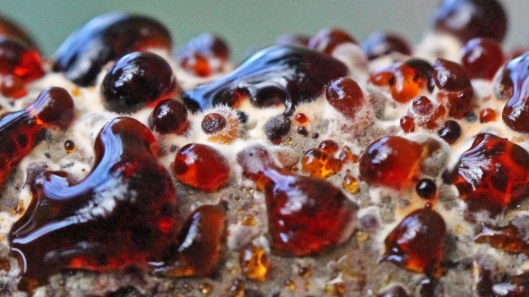
… a little bit closer, you would’ve seen this! Isn’t it gorgeous? This oozing mass of loveliness is a fungus, the Bleeding broadleaf crust fungus (Stereum rugosum) to be precise.

170117-bleeding-broadleaf-crust-4

I admit that I can sometimes spend an hour or more, bending down and examining stick after stick and finding nothing but, when I discover little gems like this, they make the effort totally worthwhile. So, next time you go to the woods, try playing a little game of pick-up sticks. You might get a pleasant surprise! (Oh, and take tissues or wet wipes, as you’ll almost certainly get a bit dirty, as well.)

Like Loading...

A parliament of owls

16 Monday Jan 2017

Posted by sconzani in birds, nature

≈ 11 Comments

Tags

Athene noctua, barn owl, Bubo bubo, Cardiff Castle, eagle owl, Eurasian eagle owl, Falconry pest control, Little owl, Tyto alba

I visited Cardiff Castle for just the second time last week when a friend came to visit and, as part of that, I also got to meet their airborne pest control team again.

170116-eagle-owl-1

Here in Cardiff, sites like the castle, the Millennium Stadium and the Central Library all employ specialist falconry companies who are tasked with deterring gulls and pigeons from feeding and nesting at these places. I blogged about Dexter the Saker falcon and his Harris hawk mates back in September 2015 but this time I met the owl members of the crew. These are not wild birds, they’ve either been rescued or bred in captivity.

170116-barn-owl

~ a Barn owl (Tyto alba) and friend

170116-little-owl

~ a Little owl (Athene noctua)

170116-eagle-owl-2
170116-eagle-owl-3

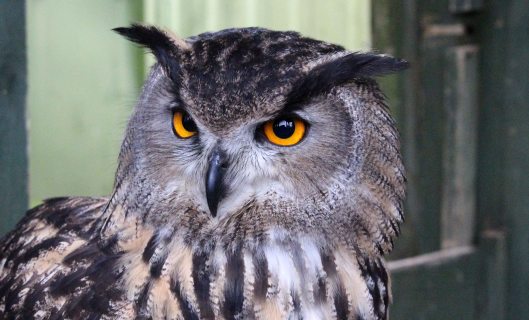
~ and Hector, a Eurasian eagle owl (Bubo bubo) (that’s also Hector at the top)

Like Loading...

Roath Park Bird Walk

15 Sunday Jan 2017

Posted by sconzani in birds, nature, parks

≈ 7 Comments

Tags

birding, birdwatching, British birds, Grey wagtail, Jay, Pied wagtail, Roath Park, Roath Park Lake, robin, Tufted duck

My imminent house-moving was getting to me today and, as I’m already about two-thirds packed with a week still to go, I allowed myself an afternoon off for a long walk around my local parks for a Nature fix.

170115-grey-wagtail

It always amazes me how many species of birds I can see in a walk around Roath Park Lake. Today it was 28: Carrion crow, Magpie, Jay, Robin, Dunnock, Lesser black-backed gull, Black-headed gull, Canada goose, Barnacle goose, Greylag goose, Mallard, Manky mallard and Aylesbury duck, Coot, Moorhen, Pochard, Tufted duck, Teal, Shoveler, Pied wagtail, Grey wagtail, Redwing, Song thrush, Cormorant, Mute swan, House sparrow, Feral pigeon and Woodpigeon (though purists might not count the Aylesbury duck, Manky mallards or Feral pigeons as extra species). Still, I think it’s an impressive total. These are just a very small selection of the photos I took …

170115-jay
170115-pied-wagtail
170115-robin
170115-tufted-duck-female
Like Loading...
← Older posts
Newer posts →

About me

sconzani

sconzani

I'm a writer and photographer; researcher and blogger; birder and nature lover; countryside rambler and city strider; volunteer and biodiversity recorder.

View Full Profile →

Follow earthstar on WordPress.com

Enter your email address to follow this blog and receive notifications of new posts by email.

Recent blog posts

  • Lifer: Box bug April 27, 2026
  • Peak Wild garlic April 26, 2026
  • First damsels of 2026 April 25, 2026
  • NFY: Green-veined white April 24, 2026
  • The return of the Willow warblers April 23, 2026

From the archives

COPYRIGHT

Unless otherwise acknowledged, the text and photographs on this blog are my own and are subject to international copyright. Nothing may be downloaded or copied without my permission.

Fellow Earth Stars!

  • Unknown's avatar
  • Unknown's avatar
  • Unknown's avatar
  • Unknown's avatar
  • Unknown's avatar
  • Unknown's avatar
  • Unknown's avatar
  • Unknown's avatar
  • Unknown's avatar
  • Unknown's avatar
  • Unknown's avatar
  • Unknown's avatar
  • Unknown's avatar
  • Unknown's avatar
  • Unknown's avatar
  • Unknown's avatar
  • Unknown's avatar
  • Unknown's avatar
  • Unknown's avatar
  • Unknown's avatar
  • Unknown's avatar
  • Unknown's avatar
  • Unknown's avatar
  • Unknown's avatar
  • Unknown's avatar
  • Unknown's avatar
  • Unknown's avatar
  • Unknown's avatar
  • Unknown's avatar
  • Unknown's avatar
  • Unknown's avatar
  • Unknown's avatar
  • Unknown's avatar
  • Unknown's avatar
  • Unknown's avatar
  • Unknown's avatar
  • Unknown's avatar
  • Unknown's avatar
  • Unknown's avatar
  • Unknown's avatar
  • Unknown's avatar
  • Unknown's avatar
  • Unknown's avatar
  • Unknown's avatar
  • Unknown's avatar
  • Unknown's avatar
  • Unknown's avatar
  • Unknown's avatar
  • Unknown's avatar
  • Unknown's avatar

Blog at WordPress.com.

Privacy & Cookies: This site uses cookies. By continuing to use this website, you agree to their use.
To find out more, including how to control cookies, see here: Cookie Policy
  • Subscribe Subscribed
    • earthstar
    • Join 642 other subscribers
    • Already have a WordPress.com account? Log in now.
    • earthstar
    • Subscribe Subscribed
    • Sign up
    • Log in
    • Report this content
    • View site in Reader
    • Manage subscriptions
    • Collapse this bar
 

Loading Comments...
 

You must be logged in to post a comment.

    %d