• ABOUT
  • BIRDING 2018
  • Birding 2019
  • BLOG POSTS
  • Butterflies 2018
  • Resources

earthstar

~ a celebration of nature

earthstar

Category Archives: nature

I’m following a tree: month 3

09 Saturday Apr 2016

Posted by sconzani in nature, spring, trees

≈ 9 Comments

Tags

Dawn redwood, I'm following a tree, Metasequoia glyptostroboides, Spring growth, tree following

Spring has sprung, the grass is riz, I wonder where Dawn’s leaf growth is? From a distance, Dawn Redwood looks much the same as she did last month. It’s only when you get closer that you can see the fresh green buds just beginning to open now that the days are getting warmer and brighter.

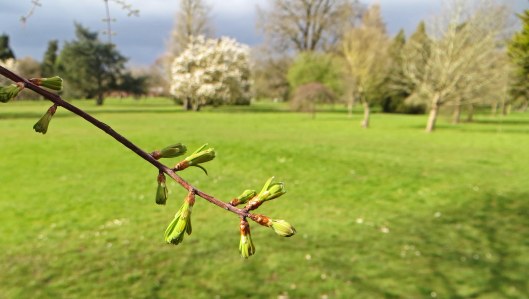
160409 dawn redwood (1)160409 dawn redwood (3)

Having said that, it was blowing a gale when I visited a few days ago, a cold howling wind that prevented me from getting better close up photos of the new growth. That wind did, however, make me admire how well Dawn copes with such conditions. She has her feet well and truly planted in the ground, which is a good thing when you consider how tall and slender she is, and I’m sure her broad strong base helps anchor her when those strong winds are blasting.

160409 dawn redwood (2)

She has a light covering of bright green moss on the lowest metre or so of her trunk but no lichens or fungi that I could see with the naked eye, which is probably a good thing, as they can be indicators of disease or cause a tree to die – and I certainly don’t want that to happen. I’m looking forward to seeing a very different Dawn next month.

Tree following is fun. Why not join in? You can find out more here. https://squirrelbasket.wordpress.com/tree-following/

Like Loading...

Floral Friday

08 Friday Apr 2016

Posted by sconzani in flowers, nature

≈ 4 Comments

Tags

Bute Park, rhododendron, rhododendron hybrid

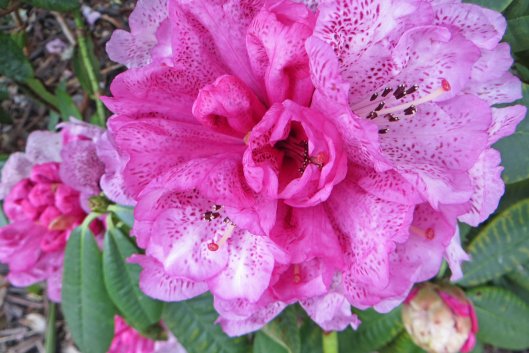
Here in Britain Rhododendron ponticum is a highly invasive species – this is not that species. This is a gorgeous hybrid Rhododendron that graces a woodland garden in Cardiff’s magnificent Bute Park and is currently producing its annual display of stunning blooms. Enjoy!

160508 rhododendron (1)160508 rhododendron (2)160508 rhododendron (3)160508 rhododendron (4)160508 rhododendron (5)

Like Loading...

Four more hoverflies

07 Thursday Apr 2016

Posted by sconzani in insects, nature, nature photography

≈ 8 Comments

Tags

Chequered hoverfly, Episyrphus balteatus, hoverfly, Long hoverfly, Marmalade hoverfly, Melanostoma scalare, Meliscaeva auricollis, Sphaerophoria scripta

Of the 250 different hoverfly species in Britain I now have photos of seven – just a wee way to go yet then. At least it’s still early in the season – hoverflies are normally around from March to November, and numbers tend to peak in the hottest months of summer. Here are my four new finds:

160407 Episyrphus balteatus cathays cem

Episyrphus balteatus
Rather deliciously called the Marmalade hoverfly, presumably not because it tastes good but because of the orange and black bands of colour on its upper abdomen. These give it a wasp-like appearance, which helps to deter predators but can scare people into thinking they’re a swarm of wasps when they group together. It’s the most common hoverfly in Britain, and large numbers also migrate here from Europe.

160407 Meliscaeva auricollis cathays cem

Meliscaeva auricollis
Like that previous one, I found this little guy enjoying the wood anemones at Cathays Cemetery. The cemetery has large numbers of mature trees, which is the perfect environment for Meliscaeva auricollis. This is one of the earliest hoverflies to wake from hibernation, sometimes appearing as early as January if the winter’s been mild.

160407 Melanostoma scalare  merthyr mawr

Melanostoma scalare
Though its name literally means ‘Laddered Black-mouth’, this little creature’s common name is the Chequered hoverfly and you can perhaps just make out the chequerboard pattern on its upper abdomen. I found this one  at Merthyr Mawr National Nature Reserve last weekend. It prefers open grassland, damp rather than dry, and is usually to be found flying and feeding close to ground level.

160407 Sphaerophoria scripta methyr mawr

Sphaerophoria scripta
This was another find from Merthyr Mawr. Its common name is the Long hoverfly, presumably because, as you can see in my photo, the body of the male extends past the end of the wings which is unusual in hoverflies. This critter is a prolific breeder, with the ability to complete a full life cycle (eggs to adult) in just 16 days, which means up to 9 generations can occur in one year. Amazing!

Like Loading...

The rock hyrax

06 Wednesday Apr 2016

Posted by sconzani in animals, nature, nature photography

≈ 6 Comments

Tags

Procavia capensis, rock hyrax, Serengeti National Park, Serengeti Plains, Tanzania

On safari in the Serengeti even the places where we stopped for lunch had amazing wildlife, some of them lazing around in the sun as if just waiting for the animal paparazzi to show up. These critters are Rock hyraxes (Procavia capensis), also known as Cape hyraxes and rock badgers. Incredibly, though they look a bit like huge hamsters, their closest living relatives – cousins many times removed – are elephants and sea cows. Just like their cousins, they have prominent (though obviously much smaller) tusk-like upper incisors, and the males’ testes are permanently enclosed inside their abdomens.

160406 hyrax (4)

Their bodies do not regulate heat very efficiently so, though they look rather fat and lazy, they are more active in the early morning and in the evening but need simply to bask during the hottest hours of the day. Hyraxes live in large social groups, using sentries to warn of danger when foraging for their favourite food plants, and communicating through a series of at least 21 different vocalisations which can, apparently, inform other hyraxes of their age, size, body weight, social status and hormonal condition. They can be found in most of the sub-Saharan countries in Africa, and are just plain cute!

160406 hyrax (1)
160406 hyrax (2)
160406 hyrax (3)
Like Loading...

Not just a load of bullocks!

05 Tuesday Apr 2016

Posted by sconzani in animals, nature

≈ 2 Comments

Tags

bullocks, cattle, land management, Merthyr Mawr National Nature Reserve, sand dunes, Yellow dung fly

I was a little surprised last Saturday to see bullocks grazing in the Merthyr Mawr National Nature Reserve but it’s all part of the Countryside Council for Wales’s management plan. Research and monitoring have shown that the sand dune ecosystem needs to be dynamic – the dunes need to be exposed, the sands able to move with wind, tide and storm, in order to function as effective flood defences and to maintain the right environment for the rare plants and invertebrates that live there.

160405 bullocks (5)

So, some of the grasses and shrubs that had previously stabilised the dunes have been removed by earthmoving equipment and, to prevent the dune system developing into woodland, cattle are being allowed to graze parts of the reserve at certain times of the year. The plan is to maintain sparsely vegetated dunes and open grassland so that the rare species that were being choked towards extinction will be rejuvenated.

160405 bullocks (1)
160405 bullocks (2)
160405 bullocks (3)
160405 bullocks (4)

One additional benefit for the photographer – the bullocks are very photogenic, and I’m sure the Yellow dung flies I saw on Saturday are pretty happy with the plan as well.

160405 Yellow dung fly

Like Loading...

The larva before the worm

04 Monday Apr 2016

Posted by sconzani in insects, nature, nature photography

≈ 7 Comments

Tags

glow worm, glow worm larva, Lampyris noctiluca, Merthyr Mawr National Nature Reserve

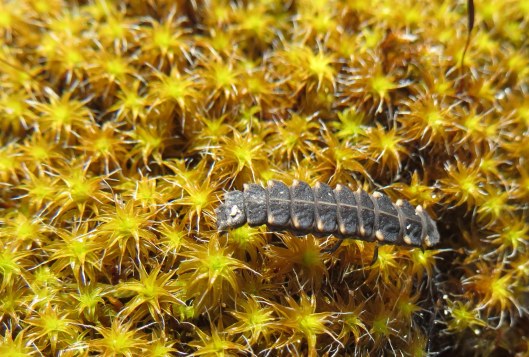
I saw my first Glow worm (Lampyris noctiluca) larva last weekend at the Merthyr Mawr National Nature Reserve, though I admit to thinking it was a caterpillar of some kind at first glance and needed an expert – luckily, I was with one! – to explain my mistake. Even more luckily, my expert Mike has two sons who are wildlife-obsessed and extremely talented young wildlife filmmakers. So, rather than attempt to tell you about this fascinating little insect myself, I am delighted that Rudi and Finn have very kindly agreed to let me link to their video. This is a must watch!

160404 Glow worm larva


Like Loading...

Merthyr Mawr National Nature Reserve

03 Sunday Apr 2016

Posted by sconzani in fungi, nature

≈ 6 Comments

Tags

Merthyr Mawr National Nature Reserve, national nature reserve, sand dunes, SSSI

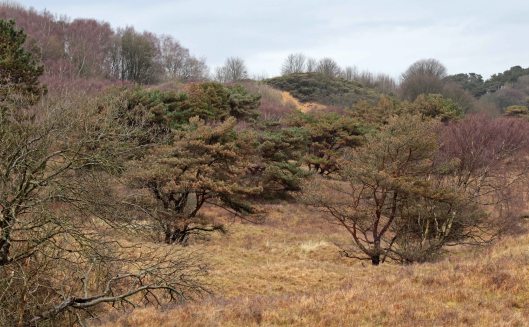
What a marvellous place this is! Yesterday, I joined several of my friends from the Glamorgan Fungi Club for a foray up, down and around the rolling sand dunes of the Merthyr Mawr National Nature Reserve. You might think the words fungi and sand dunes are incompatible but you’d be wrong. Though we didn’t find the somewhat elusive fungi we were seeking, we did find several other interesting species, as well as an assortment of the more common critters: ladybirds and butterflies, hoverflies and bees, a glow worm larva and a lizard.

Auricularia auricula-judae Jelly ear
Daedaleopsis confragosa Blushing bracket (1)
Rickenella fibula Orange mosscap (1)
Taphrina alni Alder tongue
Tulostoma brumale Winter stalkball
Xylaria hypoxylon Candlesnuff

The dunes provide the perfect habitat for some rare insect species (the Dune tiger beetle, a rare weevil, the Solitary wasp, the Cuckoo bee and the Mining bee), and are also home to many rare and endangered plants, including two species of Marsh-orchid.

160403 merthyr mawr (2)

These dunes are the second highest in Europe, and, as well as providing a home to wildlife, they have also seen their fair share of human activity over the millennia: everything from Mesolithic stone axes and Neolithic pottery to Bronze Age burial chambers and Roman coins have been found here. It is a place to explore again and again, with each season offering the visitor something special and superb.

160403 Merthyr Mawr to Porthcawl

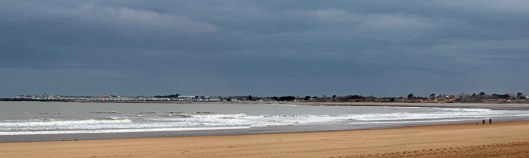
At the end of the trail through the dunes, the sea!

Like Loading...

The return of the bumblebees

02 Saturday Apr 2016

Posted by sconzani in insects, nature

≈ 3 Comments

Tags

Bombus hypnorum, Bombus terrestris, Buff-tailed bumblebee, bumblebee, bumblebee mites, Tree bumblebee

As the Mary Kay Ash quote goes: ‘Aerodynamically, the bumblebee shouldn’t be able to fly but the bumblebee doesn’t know it so it goes on flying anyway.’ And flying they are, now that spring is here. The warmer weather brings the bumblebees – all queens – out of their long sleep, to begin the process of nest building and egg laying. In the past week I’ve seen several in flight and managed to get photos of two different species.

160402 Bombus hypnorum Tree bumblebee

Though it’s common in Europe and Asia, this Tree bumblebee (Bombus hypnorum) is not a British native. In fact, its ancestors only arrived in Britain in 2001. It has, however, made itself right at home and, as far as scientists can tell, is not damaging the native bee populations. It’s important we monitor its spread and population though, so please help by reporting your sightings to the Bees, Wasps and Ants Recording Society (BWARS).

160402 Bombus terrestris Buff-tailed bumblebee

The Buff-tailed bumblebee (Bombus terrestris) is often the first to be seen each year, emerging as early as February if the weather’s warm enough. Its nests, occupying old mouse and vole holes underground, can house as many as 500 individuals.

You will notice in my photo that this bumblebee has some hitchhikers. These are mites but please do not be concerned for this little creature. The mites are normal, they actually help keep bumblebee nests clean, and only in extreme cases do they affect the bumblebee’s health and welfare. You can read more here.

Like Loading...

A collective noun for robins

01 Friday Apr 2016

Posted by sconzani in birds, nature, nature photography

≈ 13 Comments

Tags

birding, birdwatching, British birds, collective noun for robins, robin

There are so many robins around at the moment, gracing our gardens, parks and woodlands with their songs and territorial squabbles and bright bursts of cheery redness, that I couldn’t help but wonder what collective noun is used for the robin. So, I googled, and found two different lists, though both had many of the same words. The British Bird Lovers website says their list was chosen by members of their Facebook page, though I’m not sure when that occurred, and the Bird Guides website reports on a poll conducted by BTO and the Sunday Express in 2011, where members of the public gave their suggestions.

160401 robins (8)

This is the combined list, accompanied, of course, by lots of photos of cute robins because you can never have too many robins! Which name is your favourite?

a round of robins                a breast of robins            a blush of robins
a bobbin of robins              a carol of robins              a gift of robins
a reliant of robins                a riot of robins                a rouge of robins
a ruby of robins                  a rabble of robins            a red of robbins
a squabble of robins           a rash of robins               a hood of robins

160401 robins (1)
160401 robins (2)
160401 robins (3)
160401 robins (4)
160401 robins (5)
160401 robins (6)
160401 robins (7)
160401 robins (9)
Like Loading...

Hoverflies: handsome and harmless

31 Thursday Mar 2016

Posted by sconzani in insects, nature, nature photography

≈ 3 Comments

Tags

Eristalis pertinax, Helophilus pendulus, hoverfly, Platycheirus albimanus, Tapered Drone Fly, The Footballer, The Sunfly, White-footed Hoverfly, Wood anemone

How is it that I am only just discovering hoverflies? Of course, I’ve seen them before, hovering silently over the garden bed and feeding on flower nectar, like the humming birds of the insect world, but I wasn’t aware of all their good qualities. For one thing, they’re clever – they mimic wasps and bees to deter predators, but they don’t sting. For another, because they feed on nectar and pollen, they’re excellent pollinators. And, for a third, many types of hoverfly larvae eat aphids and other plant-suckers so they’re every gardener’s friend and can potentially be used for biological control of those hugely damaging pests.

What I also discovered last weekend was that hoverflies love wood anemones and I found three species feasting on the beautiful drifts of plants currently flowering in my local cemetery. These are they – and I’m sure this is just the start of a beautiful new fascination!

Eristalis pertinax

Meet Eristalis pertinax, otherwise know as the Tapered Drone Fly. It’s a common sight throughout Britain, from March right through to November, and loves hedgerows and woodland trails.

Helophilus pendulus

As it’s a lover of fine sunny days, Helophilus pendulus is commonly known as The Sunfly, though some call it The Footballer because its stripy thorax resembles a team strip. Personally, I prefer its scientific name, which means ‘dangling marsh-lover’, a reference to its liking for watery places.

Platycheirus albimanus

And last and smallest for today is Platycheirus albimanus, the White-footed Hoverfly (though only the swelling on the front foot of the male is, in fact, pale). It’s another to be found throughout Britain, in gardens and hedgerows, from March to November.

Like Loading...
← Older posts
Newer posts →

About me

sconzani

sconzani

I'm a writer and photographer; researcher and blogger; birder and nature lover; countryside rambler and city strider; volunteer and biodiversity recorder.

View Full Profile →

Follow earthstar on WordPress.com

Enter your email address to follow this blog and receive notifications of new posts by email.

Recent blog posts

  • Blood bees April 29, 2026
  • Nesting material April 28, 2026
  • Lifer: Box bug April 27, 2026
  • Peak Wild garlic April 26, 2026
  • First damsels of 2026 April 25, 2026

From the archives

COPYRIGHT

Unless otherwise acknowledged, the text and photographs on this blog are my own and are subject to international copyright. Nothing may be downloaded or copied without my permission.

Fellow Earth Stars!

  • Unknown's avatar
  • Unknown's avatar
  • Unknown's avatar
  • Unknown's avatar
  • Unknown's avatar
  • Unknown's avatar
  • Unknown's avatar
  • Unknown's avatar
  • Unknown's avatar
  • Unknown's avatar
  • Unknown's avatar
  • Unknown's avatar
  • Unknown's avatar
  • Unknown's avatar
  • Unknown's avatar
  • Unknown's avatar
  • Unknown's avatar
  • Unknown's avatar
  • Unknown's avatar
  • Unknown's avatar
  • Unknown's avatar
  • Unknown's avatar
  • Unknown's avatar
  • Unknown's avatar
  • Unknown's avatar
  • Unknown's avatar
  • Unknown's avatar
  • Unknown's avatar
  • Unknown's avatar
  • Unknown's avatar
  • Unknown's avatar
  • Unknown's avatar
  • Unknown's avatar
  • Unknown's avatar
  • Unknown's avatar
  • Unknown's avatar
  • Unknown's avatar
  • Unknown's avatar
  • Unknown's avatar
  • Unknown's avatar
  • Unknown's avatar
  • Unknown's avatar
  • Unknown's avatar
  • Unknown's avatar
  • Unknown's avatar
  • Unknown's avatar
  • Unknown's avatar
  • Unknown's avatar
  • Unknown's avatar
  • Unknown's avatar

Blog at WordPress.com.

Privacy & Cookies: This site uses cookies. By continuing to use this website, you agree to their use.
To find out more, including how to control cookies, see here: Cookie Policy
  • Subscribe Subscribed
    • earthstar
    • Join 642 other subscribers
    • Already have a WordPress.com account? Log in now.
    • earthstar
    • Subscribe Subscribed
    • Sign up
    • Log in
    • Report this content
    • View site in Reader
    • Manage subscriptions
    • Collapse this bar

Loading Comments...

You must be logged in to post a comment.

    %d