• ABOUT
  • BIRDING 2018
  • Birding 2019
  • BLOG POSTS
  • Butterflies 2018
  • Resources

earthstar

~ a celebration of nature

earthstar

Category Archives: nature

Foreign-looking fritillaries

19 Tuesday Apr 2016

Posted by sconzani in nature, wildflowers

≈ 12 Comments

Tags

Fritillaria meleagris, fritillary, Snake’s head fritillary, Vita Sackville West

And then I came to a field where the springing grass
Was dulled by the hanging cups of fritillaries,
Sullen and foreign-looking, the snaky flower,
Scarfed in dull purple, like Egyptian girls
~ from Vita Sackville West, The Land, 1926

Vita was writing about the Snake’s head fritillary (Fritillaria meleagris), also known by a multitude of other common names, including chequered daffodil, chess flower, frog-cup, guinea-hen flower, Lazarus bell, chequered lily, drooping tulip, and leper lily (because its shape resembles the bell once carried by lepers).

fritillary (5)

Perhaps that association with lepers is why the fritillary is considered by some to be a little sinister. Sackville West certainly wrote negatively of it in The Land and, according to the Poison Garden website, she declared the fritillary to be ‘a sinister little flower, in the mournful colour of decay’. I certainly can’t agree with Vita’s negative opinion of this most unusual of flowers, as I find the combination of unusual chequered pattern, delicate elegance and soft magenta colouring simply stunning.

fritillary (8)
fritillary (3)
Like Loading...

Horsetail: pretty, nasty

18 Monday Apr 2016

Posted by sconzani in nature, plants, spring

≈ 8 Comments

Tags

Equisetum arvense, Horsetail, invasive plant

Who would think such a pretty little plant could be considered a nasty invasive monster?

Horsetail Equisetum arvense (4)

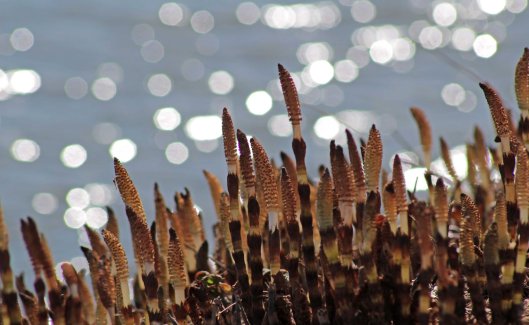
Meet Equisetum arvense, more commonly known as Horsetail or sometimes Mare’s tail. My images show the plant in the springtime, when its sturdy shoots first push their way up through even the most compact ground (I’ve seen them force through a pile of tarmac left by workmen at the side of the road). These shoots grow between 20-50cm (10-20in) tall and that cone-like part at the top opens up to release spores, in a way similar to some fungi. In the summertime, the shoots develop into a miniature version of a fir tree plantation, their dense foliage growing to around 60cm (2ft) tall and crowding out other nearby plants.

Horsetail Equisetum arvense

The Horsetail’s roots are also strong, which is partly why it’s considered so invasive. The roots grow quickly and can dive down as deep as 2m (7ft) into the ground, so are difficult to remove, and they also spread sidewise. If this is growing in your neighbour’s garden, chances are it will soon appear in yours as well. I found whole banks of Horsetail growing along the water’s edge in Cardiff Bay, where it looked very pretty with the water sparkling in the background.

Horsetail Equisetum arvense (5)

Like Loading...

Bute Park wildflowers

17 Sunday Apr 2016

Posted by sconzani in nature, spring, wildflowers

≈ 2 Comments

Tags

Bluebell, Bute Park, Common dog-violet, Daisy, dandelion, Germander speedwell, Golden saxifrage, gorse, Greater stitchwort, Green alkanet, Herb Robert, Lesser Celandine, primrose, Red campion, Sweet violet, White deadnettle, Wild garlic, Wild strawberry, Wood anemone

This weekend I could have paid £12 to see what I’m sure would have been gorgeous flowers and inspirational displays at the Royal Horticultural Society’s Flower Show being held here in Cardiff’s Bute Park but, as I don’t have that kind of cash to splash at the moment, I decided to see what flowers I could find in Bute Park for nothing. With 18 different types of wildflowers currently in bloom I certainly wasn’t disappointed. Enjoy!

160417 bluebell
160417 daisy bellis perennis
160417 dandelion
160417 dead nettle white
160417 geranium robertianum herb robert
160417 germander speedwell
160417 gorse
160417 greater stitchwort Stellaria holostea
160417 Green Alkanet Pentaglottis sempervirens
160417 lesser celandine
160417 opposite leaved golden saxifrage
160417 primrose primula vulgaris
160417 red campion
160417 violet blue
160417 violet white
160417 wild garlic
160417 wild strawberry
160417 wood anemone

There were: Bluebell (mostly Spanish but I found a few natives) (Hyacinthoides non-scripta); Daisy (Bellis perennis); Dandelion (Taraxacum officinale); White deadnettle (Lamium album); Herb Robert (Geranium robertianum); Germander speedwell (Veronica Chamaedrys); Gorse (Ulex europaeus); Greater stitchwort (Stellaria holostea); Green alkanet (Pentaglottis sempervirens); Lesser celandine (Ranunculus ficaria); Opposite-leaved golden saxifrage (Chrysosplenium oppositifolium); Primrose (Primula vulgaris); Red campion (Silene dioica); Common dog-violet (Viola riviniana) and Sweet violet (Viola odorata); Wild garlic (Allium ursinum); Wild strawberry (Fragaria vesca); and Wood anemone (Anemone nemorosa).

Like Loading...

Coed Ty Rhiw critters

16 Saturday Apr 2016

Posted by sconzani in insects, nature

≈ 8 Comments

Tags

Bombus hortorum, Coed Ty Rhiw, Garden bumblebee, Glomeris marginata, Gymnochaeta viridis, Pill millipede, Tachypodoiulus niger, White-legged snake millipede

As well as the wonderful selection of fungi I posted yesterday, my foray with friends to the Coed Ty Rhiw woodland also produced a few small critters – easy to spot when your eyes are focused downward, searching the ground and around trees and rotten logs for fungi. Here are just a few that we found …

160416 Glomeris marginata Pill millipede

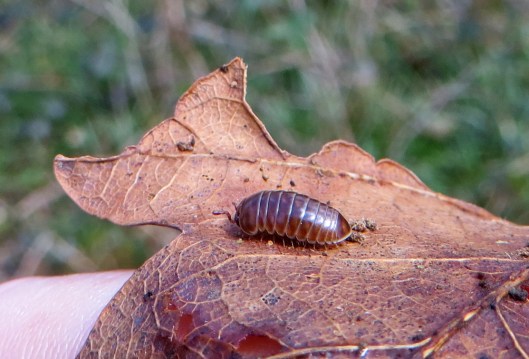
Pill millipede (Glomeris marginata). Like the pill woodlouse, these little creatures can roll into a ball when threatened, and live in damp places below stones and logs or in leaf litter.

160416 Tachypodoiulus niger White legged snake millipede

The White-legged snake millipede (Tachypodoiulus niger) also prefers a moist habitat, under rocks or logs or the bark of trees, and curls up when feeling vulnerable.

160416 Bombus hortorum Garden bumblebee Ty Rhiw

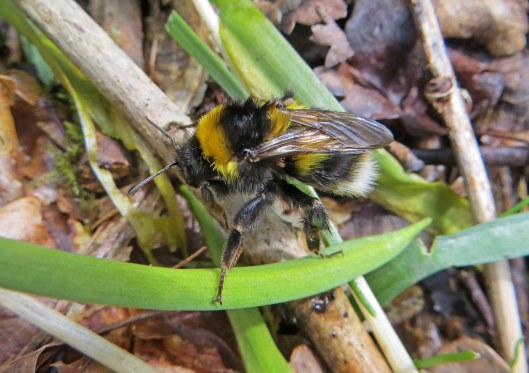
Garden bumblebee queen (Bombus hortorum), newly emerged from hibernation. She has the distinction of having the longest tongue of all British bumblebee species, which means she’s essential for agriculture, for pollinating flowers of the pea, bean and clover families.

160416 Gymnochaeta viridis

Gymnochaeta viridis, a bright metallic-green fly with prominent bristles on its thorax and abdomen that is mostly seen in woodlands in the springtime.

Like Loading...

When we went down to the woods today …

15 Friday Apr 2016

Posted by sconzani in fungi, nature, nature photography

≈ 9 Comments

Tags

Armillaria mellea, Auricularia mesenterica, Coed Ty Rhiw, Coprinellus micaceus, Daedaleopsis confragosa, fungi foray, Hypoxylon multiforme, Lycogala sp., Metatrichia floriformis, Piptoporus betulinus, Polyporus brumalis, Reticularia lycoperdon, Scutellinia scutellata, Terana caerulea, Trametes versicolour, Xylaria hypoxylon

Well, there weren’t any teddy bears in the Coed Ty Rhiw woods today but we did get lots of lovely surprises. Five friends and fellow members of the Glamorgan Fungi Club and I went on a foray, mostly looking for spring fungi but, as we had a ton of other wildlife expertise in our group, we were also drawn to birds and bugs, bees and butterflies.

Here’s a selection of our fungi finds: Piptoporus betulinus Birch polypore; Auricularia mesenterica Tripe Fungus; Daedaleopsis confragosa Blushing bracket; an unidentified crust fungus; Hypoxylon multiforme Birch woodwart; Terana caerulea Cobalt crust; Reticularia lycoperdon False puffball; Metatrichia floriformis – a slime mould; Lycogala sp. – another slime mould; Trametes versicolour Turkey tail and Xylaria hypoxylon Candlesnuff; Polyporus brumalis Winter Polypore; Trametes versicolour Turkey tail (lovely patterns on this one); Scutellinia scutellata Eyelash fungus; Armillaria mellea rhizomorphs Honey fungus bootlaces; and Coprinellus micaceus Glistening inkcap.

160415 Coed Ty Rhiw foray (1)
160415 Coed Ty Rhiw foray (2)
160415 Coed Ty Rhiw foray (3)
160415 Coed Ty Rhiw foray (4)
160415 Coed Ty Rhiw foray (5)
160415 Coed Ty Rhiw foray (9)
160415 Coed Ty Rhiw foray (10)
160415 Coed Ty Rhiw foray (13)
160415 Coed Ty Rhiw foray (14)
160415 Coed Ty Rhiw foray (15)
160415 Coed Ty Rhiw foray (17)
160415 Coed Ty Rhiw foray (18)
160415 Coed Ty Rhiw foray (19)
160415 Coed Ty Rhiw foray (20)
160415 Coed Ty Rhiw foray (21)
Like Loading...

‘Dedicated Naturalist’: Brown rats

14 Thursday Apr 2016

Posted by sconzani in 'Dedicated Naturalist' Project, animals, nature

≈ 4 Comments

Tags

brown rat, Cardiff, Dr Mary Gillham, Rattus norvegicus, volunteering

A snippet from my volunteer work on the ‘Dedicated Naturalist’ Project, helping to decipher and digitise, record and publicise the life’s work of naturalist extraordinaire, Dr Mary Gillham. 

Love them or hate them, you have to admire Mary’s poetic description of the brown rats (Rattus norvegicus) she saw during a walk along the banks of the River Taff, between the Queen and Wood Street bridges in Cardiff city centre, on 27 October 1979.

Sleek brown rats obviously well fed can be viewed from a little riverside grandstand where the human scent above the expected level instigates only momentary peering of beady eyes and twitching of whiskers. Rats have acquired their inauspicious aura only by being carriers of human diseases and frequenters of human sewers. Whose fault? Ours or theirs? Viewed dispassionately here their weavings between the straight sturdy canes of Japanese knotweed resembles that of a jaguar in a primeval forest, their more intricate passage through tall cocksfoot like lions in elephant grass. There are pickings in plenty, both local and river-borne.

I have retraced Mary’s path along this river bank many times in 2016 and not seen any rats. Good thing or bad thing?

160414 brown rat

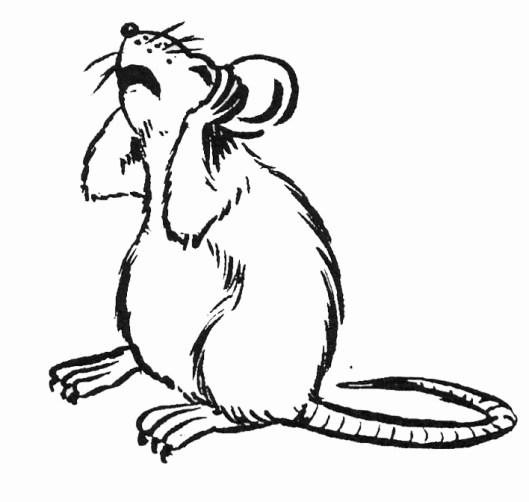
Mary Gillham was also a talented artist – this is one of her drawings

Like Loading...

Black-crowned night heron

13 Wednesday Apr 2016

Posted by sconzani in birds, nature

≈ 5 Comments

Tags

Angkor Centre for Conservation of Biodiversity, birding, birds, birdwatching, Black-crowned night heron, heron, Kuala Lumpur Bird Park, Lincoln Park, Nycticorax nycticorax

For this week’s World Wildlife Wednesday we have a bird that can be found almost everywhere in the world (though it’s neither partial to the cold nor to Australasia), and my images go some way to showing that.

160413 Black crowned night heron cambo ACCB

My first photo of the Black-crowned night heron (Nycticorax nycticorax) was taken at the Angkor Centre for Conservation of Biodiversity (ACCB) not far from Siem Reap in Cambodia. Like so many species of wildlife in poverty-stricken Cambodia, this heron is considered by many locals to be a food item, and hunting has dramatically reduced its numbers. The ACCB operates a captive breeding programme that aims to rebuild the local population.

160413 black crowned night heron chicago

My second set of photos was taken in Chicago and shows immature night herons roosting in the trees in Lincoln Park, just north of the city centre. Due mainly to habitat loss, these herons are endangered in Illinois, so the Chicago Parks, Lincoln Park Zoo and Department of Natural Resources are working together to encourage and support the 400-odd birds that breed in Lincoln Park each year.

160413 black crowned night heron  kl

The location of my third photo is the Kuala Lumpur Bird Park in Malaysia. According to the Malaysian Birds website, the Black-crowned night heron is faring rather better in Malaysia, where the bird is widespread and the populations in local heronries frequently number in the hundreds.

Like Loading...

See it, smell it, record it!

12 Tuesday Apr 2016

Posted by sconzani in nature, plants

≈ 8 Comments

Tags

Allium ursinum, biological recording, Ramsons, SEWBReC, Wild garlic

Perhaps, my title for this post should read smell it, see it, record it, as you usually smell Wild garlic (Allium ursinum) before you see it – that’s how pungent its aroma can be! This cousin to the chive, which grows in many parts of Europe and Asia, is also known as Ramsons, and can be found in parks and woodlands throughout Wales – or can it?

160412 wild garlic (1)

The database for the South East Wales Biodiversity Records Centre (SEWBReC) was only showing 1400 records at the start of this month but they’re certain there must be many many more areas where this prolific plant is growing. So, SEWBReC have nominated Wild garlic as their plant of the month and they’re asking as many people as possible to record their sightings.

160412 wild garlic (2)
160412 wild garlic (3)

So, come on Citizen Scientists of Wales. This is a very easily recognisable plant – no detailed analysis needed, no microscope required – just a good nose (more info here, if you’re not entirely sure). And entering your findings into the SEWBReC database is also easy peasy (instructions here). I expect there’ll be so many records by the end of April that the Welsh national emblem will change from leek to Wild garlic!

160412 wild garlic (4)

Like Loading...

Bottoms up!

11 Monday Apr 2016

Posted by sconzani in animals, nature, nature photography

≈ 13 Comments

Tags

animal bottoms, elephant, giraffe, hippopotamus, lion, quotes about bottoms, sheep, Vervet monkey, zebra

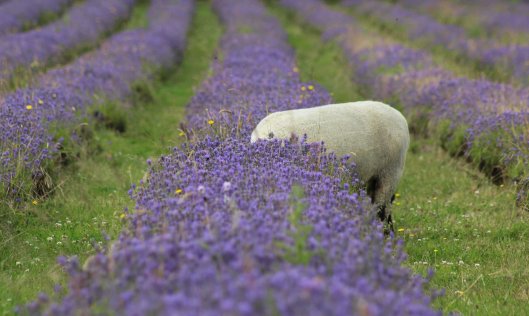
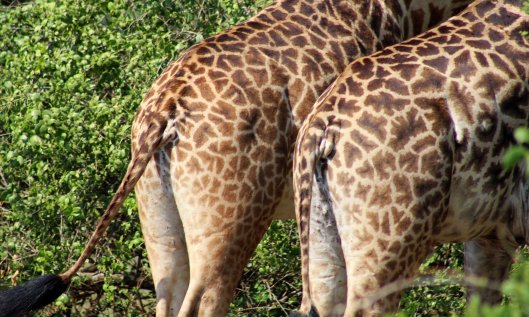
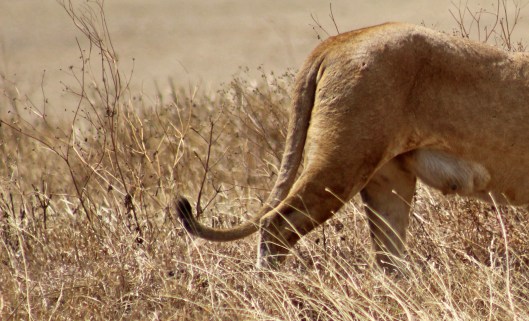
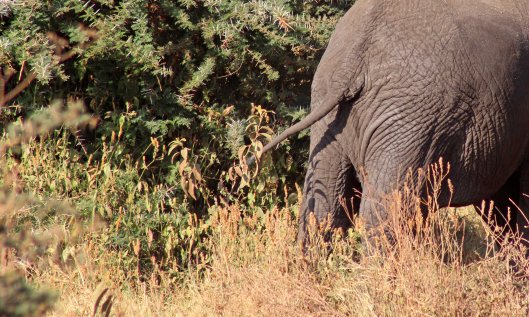
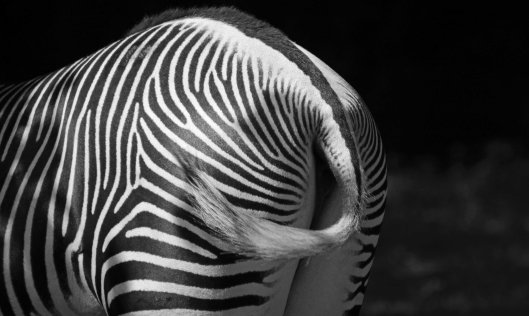
One thing about animal photography: your models don’t always co-operate, and you often end up with photos of the less flattering parts of their anatomy. I thought a selection of my photos of these might at least bring a smile (and, actually, the zebra photo is one of my all-time favourites).

160411 bottoms (1)

‘Froth at the top, dregs at the bottom, but the middle excellent.’ ~ Voltaire

160411 bottoms (2)

‘I know up on the top you are seeing great sights, but down at the bottom we, too, should have rights.’ ~ Dr Seuss, Yertle the Turtle and Other Stories

160411 bottoms (3)

‘Bottoms up or bottoms down, / Either way no one will frown.’ ~ Mike Anderson

160411 bottoms (4)

‘My mind is trouble, like a fountain stirred; / And I myself see not the bottom of it.’ ~ William Shakespeare

160411 bottoms (5)

‘My bottom is so big it’s got its own gravitational field.’ ~ Carol Vorderman

160411 bottoms (6)

‘One mustn’t look at the abyss, because there is at the bottom an inexpressible charm which attracts us.’ ~ Gustave Flaubert

160411 bottoms (7)

‘When you’re average, you’re just as close to the bottom as you are the top.’ ~ Alfred North Whitehead

160411 bottoms (8)

‘The artist needs to understand the truth that lies at the bottom of an enigma.’ ~ John Maeda

Like Loading...

News from the nesting neighbourhood

10 Sunday Apr 2016

Posted by sconzani in birds, nature

≈ 5 Comments

Tags

birding, birdwatching, British birds, Coot, Great Crested Grebe, Mute swan, nesting birds

160410 nesting neighbours (1)

It might not look like much but this is Cardiff’s Nest Central! The white blob in the upper left of my photo is a Mute swan, happily ensconced on her nest platform and very well hidden from passing pedestrians. In the more open areas at the front, we have a Coot perched on top of her well-engineered pile of twigs and assorted rubbish and, at the right, a Great Crested Grebe, sitting on her rather more modest nest creation.

160410 nesting neighbours (2)

This is the Grebe pair’s second nesting attempt of the season – I was lucky enough to see the four eggs they produced first time around and, apparently, the eggs did hatch but the chicks were lost to a predator/s (possibly a large pike). It’s great to see they’re trying again.

160410 nesting neighbours (3)
160410 nesting neighbours (4)
160410 nesting neighbours (5)
160410 nesting neighbours (6)

The Coots have been more successful, at least so far, with two healthy looking, very cute chicks. I guess it helps to have a high nesting platform to keep the chicks out the water until they’re larger.

Please note: These photos are taken at a distance, using a long lens, and then cropped. This site is in a public place, with frequent foot traffic, but I still make sure my visits are brief. At this time of year, it is particularly important not to disturb nesting birds, and it is, in fact, a criminal offence to disturb birds on the Schedule 1 list (see link for more information). Please respect the birds.

Like Loading...
← Older posts
Newer posts →

About me

sconzani

sconzani

I'm a writer and photographer; researcher and blogger; birder and nature lover; countryside rambler and city strider; volunteer and biodiversity recorder.

View Full Profile →

Follow earthstar on WordPress.com

Enter your email address to follow this blog and receive notifications of new posts by email.

Recent blog posts

  • Blood bees April 29, 2026
  • Nesting material April 28, 2026
  • Lifer: Box bug April 27, 2026
  • Peak Wild garlic April 26, 2026
  • First damsels of 2026 April 25, 2026

From the archives

COPYRIGHT

Unless otherwise acknowledged, the text and photographs on this blog are my own and are subject to international copyright. Nothing may be downloaded or copied without my permission.

Fellow Earth Stars!

  • Unknown's avatar
  • Unknown's avatar
  • Unknown's avatar
  • Unknown's avatar
  • Unknown's avatar
  • Unknown's avatar
  • Unknown's avatar
  • Unknown's avatar
  • Unknown's avatar
  • Unknown's avatar
  • Unknown's avatar
  • Unknown's avatar
  • Unknown's avatar
  • Unknown's avatar
  • Unknown's avatar
  • Unknown's avatar
  • Unknown's avatar
  • Unknown's avatar
  • Unknown's avatar
  • Unknown's avatar
  • Unknown's avatar
  • Unknown's avatar
  • Unknown's avatar
  • Unknown's avatar
  • Unknown's avatar
  • Unknown's avatar
  • Unknown's avatar
  • Unknown's avatar
  • Unknown's avatar
  • Unknown's avatar
  • Unknown's avatar
  • Unknown's avatar
  • Unknown's avatar
  • Unknown's avatar
  • Unknown's avatar
  • Unknown's avatar
  • Unknown's avatar
  • Unknown's avatar
  • Unknown's avatar
  • Unknown's avatar
  • Unknown's avatar
  • Unknown's avatar
  • Unknown's avatar
  • Unknown's avatar
  • Unknown's avatar
  • Unknown's avatar
  • Unknown's avatar
  • Unknown's avatar
  • Unknown's avatar
  • Unknown's avatar

Blog at WordPress.com.

Privacy & Cookies: This site uses cookies. By continuing to use this website, you agree to their use.
To find out more, including how to control cookies, see here: Cookie Policy
  • Subscribe Subscribed
    • earthstar
    • Join 642 other subscribers
    • Already have a WordPress.com account? Log in now.
    • earthstar
    • Subscribe Subscribed
    • Sign up
    • Log in
    • Report this content
    • View site in Reader
    • Manage subscriptions
    • Collapse this bar

Loading Comments...

You must be logged in to post a comment.

    %d