• ABOUT
  • BIRDING 2018
  • Birding 2019
  • BLOG POSTS
  • Butterflies 2018
  • Resources

earthstar

~ a celebration of nature

earthstar

Category Archives: nature

Who’s jealous then?

13 Tuesday Nov 2018

Posted by sconzani in birds, nature, winter

≈ 4 Comments

Tags

birding, birdwatching, British birds, Cardiff Bay, Cardiff Bay wetlands, Grey heron

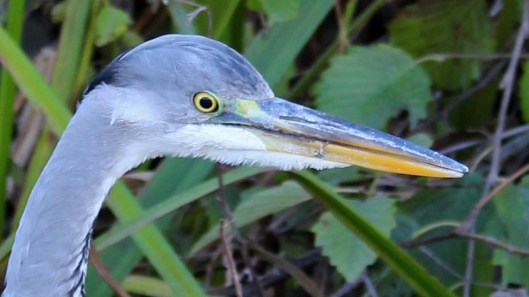
I wasn’t the only one watching the Great crested grebe fishing at Cardiff Bay wetlands on that sublime autumn day. This juvenile Grey heron flew in half way through the fishing session and settled itself first on one side of the small pool, then on the other.


181113 grey heron (1)
181113 grey heron (2)

And the heron watched in awe as the grebe caught fish after fish so effortlessly and in such a short space of time.

181113 grey heron (3)181113 grey heron (4)181113 grey heron (5)181113 grey heron (6)

I’m sure I detected a look of jealousy, and perhaps hunger, on that wide-eyed face!

Like Loading...

Fisher extraordinaire

12 Monday Nov 2018

Posted by sconzani in birds, fish, nature, winter

≈ 3 Comments

Tags

bird fishing, birding, birdwatching, British birds, Cardiff Bay, Cardiff Bay wetlands, Great Crested Grebe, grebe fishing

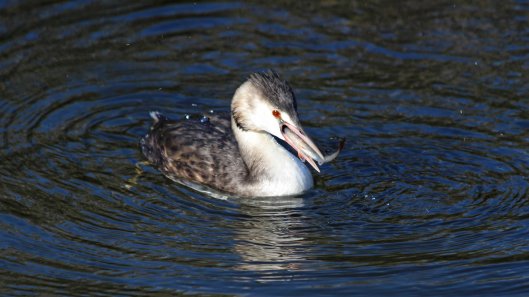
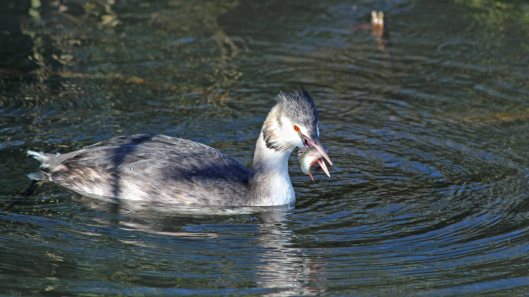
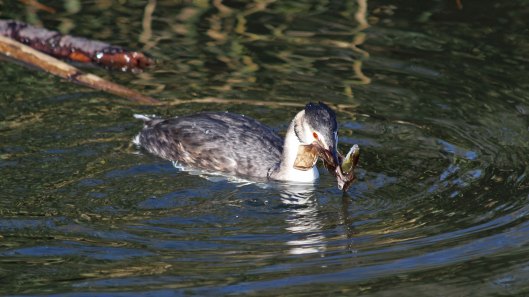
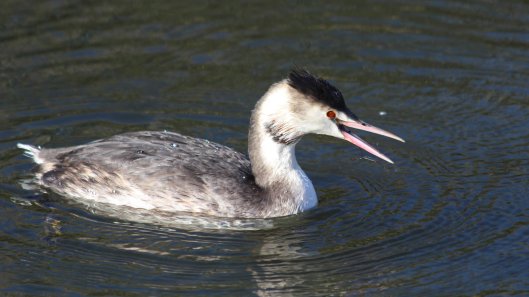
It was a lovely late autumn day, with a bit of a nip in the air but gloriously blue skies overhead and still a little heat in the sun. It was the perfect day, in fact, to stand on the boardwalk at Cardiff Bay Wetlands Reserve and watch this Great crested grebe catching itself breakfast, morning tea, lunch, afternoon tea, dinner and supper, all in the space of just 6 minutes (I can tell from the times on my photographs).

181112 great crested grebe (1)181112 great crested grebe (2)181112 great crested grebe (3)181112 great crested grebe (4)181112 great crested grebe (5)

No wonder this successful little fisher-bird was grinning so broadly as it headed into the reeds for a snooze!

181112 great crested grebe (6)

Like Loading...

Cosmeston colour

11 Sunday Nov 2018

Posted by sconzani in autumn, leaves, nature, seasons, trees

≈ Leave a comment

Tags

autumn colour, autumn leaves, autumn trees, Cosmeston, Cosmeston Lakes Country Park

181111 Cosmeston colour (1)

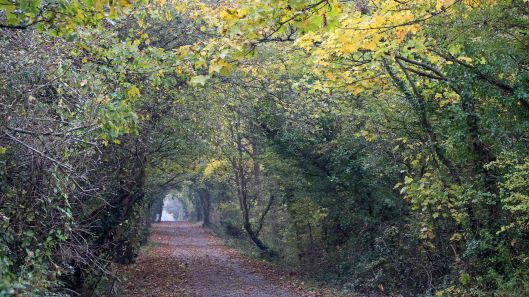
Although it’s now late autumn, as the weather has been so mild, it’s only in the past couple of weeks that I’ve been seeing the change of seasons reflected in the trees around me on my meanders. So, here’s some glorious autumn colour from recent walks at Cosmeston Lakes Country Park.

181111 Cosmeston colour (2)
181111 Cosmeston colour (3)
181111 Cosmeston colour (4)
181111 Cosmeston colour (5)
181111 Cosmeston colour (6)
181111 Cosmeston colour (7)
181111 Cosmeston colour (8)
181111 Cosmeston colour (9)
Like Loading...

The windhover

10 Saturday Nov 2018

Posted by sconzani in birds, nature

≈ Leave a comment

Tags

birding, birdwatching, British birds, hoverhawk, hovering Kestrel, Kestrel, stand hawk, wind bivver, wind fanner, windfucker, windhover

Most of my sightings of Kestrels have been of birds rapidly beating their wings to maintain their incredibly static position in the air as they watch intently for the small mammals they prey on, and this ability to remain almost stationary is the reason for some of their many vernacular names: windhover and windfucker, hoverhawk, wind bivver, wind fanner and stand hawk. (This series of stills was taken recently of a Kestrel doing just that at Lavernock Nature Reserve.)

181110 kestrel (1)
181110 kestrel (2)
181110 kestrel (3)
181110 kestrel (4)

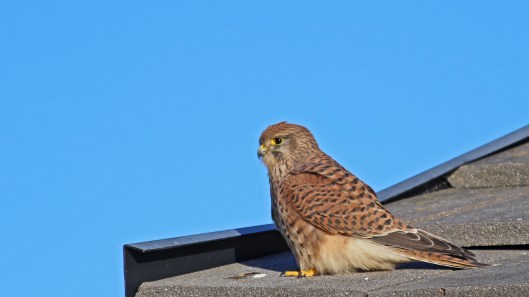
I was particularly delighted, then, during our recent birding trip to Portland, to do a little hovering of my own – albeit at ground level – as I edged ever closer to a Kestrel that was taking a short break from its almost constant hunting and sheltering from the gusting northerlies on a nearby roof top. What a stunning bird it is!

181110 kestrel (5)

Like Loading...

Earpick fungus

09 Friday Nov 2018

Posted by sconzani in fungi, nature

≈ 2 Comments

Tags

Auriscalpium vulgare, British fungi, Cathays Cemetery, Earpick fungus, fungi on conifer cones, fungi on pine cones, rare fungi

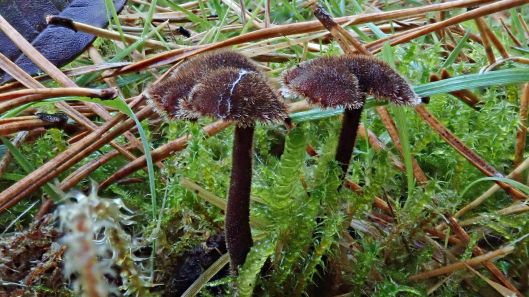
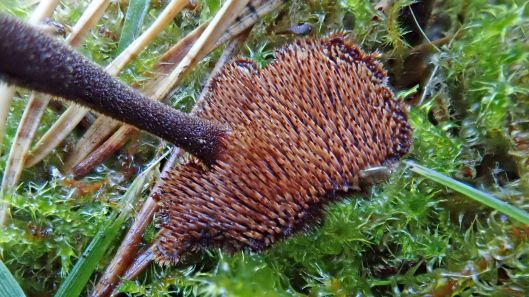
During a wander around Cardiff’s Cathays Cemetery last Friday, I found my first Earpick fungi (Auriscalpium vulgare).

Now, you might think Earpick is a very odd name for a fungus – you certainly wouldn’t want to use them to clean your ears out! – but it’s actually quite logical. Auriscalpium is a combination of the Latin words auris, meaning ear, and scalpare, the verb ‘to scratch’. The stem of the fungus certainly does look quite scratchy, as does the underside of the cap, with its mass of tiny cone-shaped rods. And it’s those rods that are the connection to the word ‘ear’ in the fungi’s name – have you ever seen a magnified photo of the sensory hair cells of the human inner ear?

Vulgare just means common, though this fungus is certainly not that – when I checked the biological database for Wales, I found only 10 previous recorded sightings.

These fungi were growing at the base of a conifer but I didn’t realise until I started reading up about them when I got home that the fungi nearly always grow on the rotting cones of pines and other conifers. I didn’t notice any cones but they must have been there, under the moss and grass. Fascinating!

Like Loading...

A white-headed Ruff

08 Thursday Nov 2018

Posted by sconzani in autumn, birds, nature

≈ 1 Comment

Tags

birding, birdwatching, British birds, Philomachus pugnax, RSPB Lodmoor, Ruff, white-headed ruff

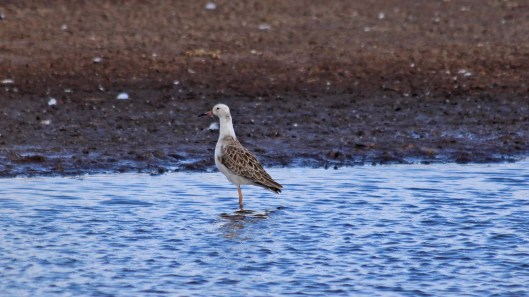
The Ruff is another bird I had only seen at a distance, or through the ’scopes of generous birding friends, before our recent birding weekend on Portland, when we got good views of a single Ruff during our stopover at RSPB Lodmoor.

181108 white-headed ruff (4)

I have to say this was an odd-looking bird, with a head that seemed far too small for its body – especially on the white-headed winter-plumaged bird we saw – though it did have something of the look of an elegant dandy, with its snowy onesie topped by a splendid brown cape of wings.

181108 white-headed ruff (8)

The Ruff (Philomachus pugnax) is a particularly fascinating bird: in the breeding season the males, resplendent in long-feathered collars of red, black or white, perform dance-and-display competitions at specially chosen sites (known as leks) to attract females (known as reeves). And, even more fascinating, there are three different types of male – you can read more about that on the BTO website here. I assume, from its white head that the Lodmoor bird was a ‘satellite’ male but I may be wrong about that. 

181108 white-headed ruff (1)
181108 white-headed ruff (2)

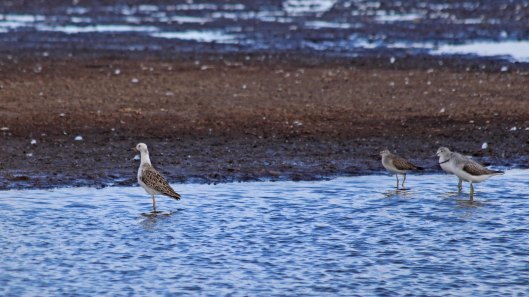
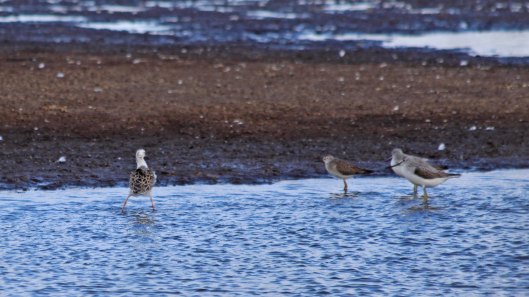
Ruffs can look quite hunched much of the time but will stand tall and alert when alarmed about something, as you can from the bird’s stance in the photo on the right above. I hasten to add that it wasn’t alarmed by the birders watching it but something – probably a bird of prey – had caused many of the nearby birds on the reserve to take flight, so the Ruff was keeping an eye on the skies. It also decided at this point that there was safety in numbers and sidled over to stand closer to the other waders nearby.

181108 white-headed ruff (3)

181108 white-headed ruff (5)

Ruff, on the left, with a Lesser yellowlegs and two Greenshanks

The Ruff used to breed quite extensively in Britain but now seldom does. We mostly see these birds as they migrate from their breeding grounds in Scandinavia to their wintering locations in Africa and vice versa, which is a great pity, as I’d certainly like to witness one of their leks some day.

181108 white-headed ruff (6)

Like Loading...

I’m following a tree: November 2018

07 Wednesday Nov 2018

Posted by sconzani in autumn, leaves, nature, parks, trees

≈ 7 Comments

Tags

#treefollowing, Acer mono, Acer mono ssp pictum, Acer pictum, autumn colour, autumn leaves, Bute Park, I'm following a tree, Mono maple

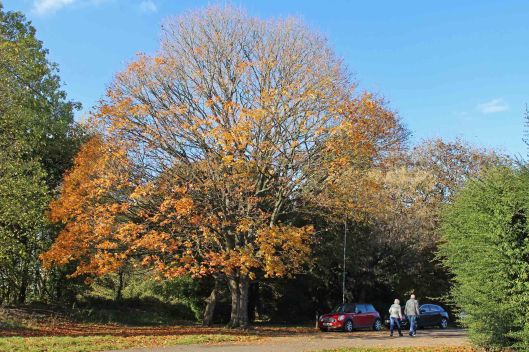
At the end of September, various circumstances combined to prevent me from visiting my Mono (Acer pictum ssp. mono), the tree I’m following this year, but I did manage to pay it a visit on 19 October. And I’m so glad I did, as I managed to get some photos of it in all its autumn glory, before last weekend’s storm-force winds blew most of its leaves off.

181107 Acer mono (1)

So, here it is on 19 October, a blaze of orange loveliness …

181107 Acer mono (2)181107 Acer mono (3)

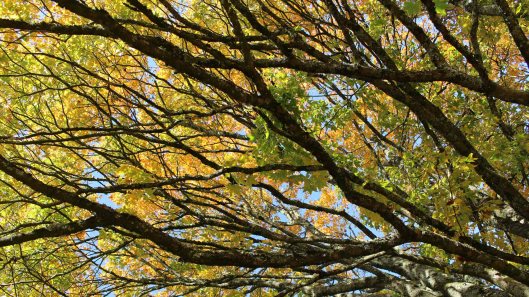
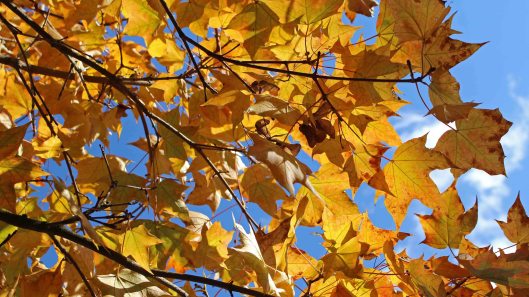
A closer shot of the leaves still on the tree, and another looking up through the canopy from underneath.

181107 Acer mono (4)
181107 Acer mono (5)
181107 Acer mono (6)
181107 Acer mono (7)
181107 Acer mono (8)
181107 Acer mono (9)
181107 Acer mono (10)
181107 Acer mono (11)

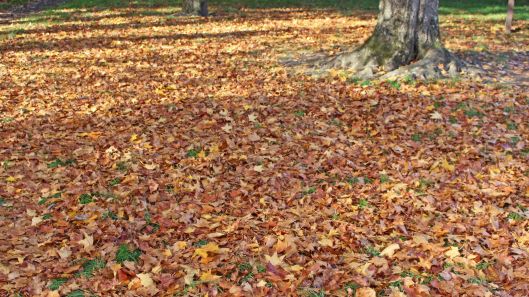
Some close-ups of the leaves on the ground. I love the variety of colours in these.

181107 Acer mono (12)

And here’s Mono on 2 November, a shadow of its former gloriousness, though what remains is a lighter, more yellow colour than before. It’s interesting to note, too, how more leaves remain on the left side of the tree, presumably because that side is a little more shaded and sheltered.

181107 Acer mono (14)

Soon, all that will remain will be this carpet of leaves below the tree and skeletal branches above.

181107 Acer mono (13)

Like Loading...

The doubly muddy godwits

06 Tuesday Nov 2018

Posted by sconzani in birds, coastal fauna, nature

≈ Leave a comment

Tags

birding, birdwatching, Black-tailed godwit, British birds, godwit, Limosa limosa, RSPB Lodmoor

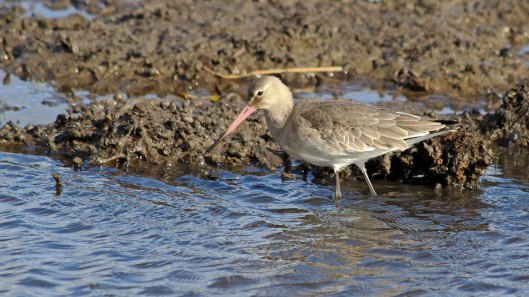
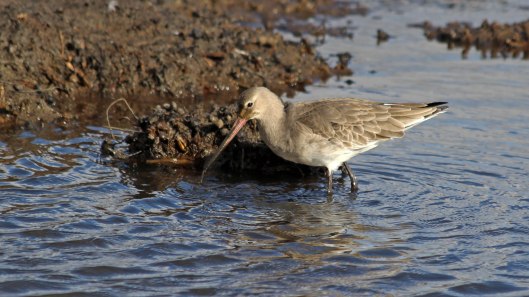
This is the Black-tailed godwit in its winter plumage, a delicate combination of white below and pale beige and grey above, with just a hint of pink from the soft autumn light.

181106 black-tailed godwit (1)

The Black-tailed godwit used to be much more numerous in Britain, with a strong breeding population. But not any more. Now, although as many as 40,000 birds come from Iceland to over-winter on these isles, just 60 pairs breed here.

181106 black-tailed godwit (2)

The Back from the Brink project is trying to change that terrifying statistic. By monitoring the nests of existing birds, by protecting them from predators through the installation of electric fences, by providing more areas where the birds can breed, by collecting eggs from at-risk nests and hand-rearing them, the project hopes to ensure Black-tailed godwits have a future in Britain.

181106 black-tailed godwit (6)

The birds I saw recently at RSPB Lodmoor are almost certainly birds that have bred in Iceland but they all look the same. They are large wading birds, with long beaks they use to probe the mud for snails, worms and insects – the birds I was watching must’ve been hungry as I managed to take a lot of photos with their heads under water! Their scientific name, Limosa limosa, reflects their love of mud – limosa comes from the Latin limus, meaning mud, so these godwits are doubly muddy.

181106 black-tailed godwit (4)
181106 black-tailed godwit (5)

Interestingly, when researching this post I found out that the female Black-tailed godwits have longer beaks than the males, which means they don’t compete for food – a fascinating evolutionary adaption.

181106 black-tailed godwit (3)

Like Loading...

Greenshanks

05 Monday Nov 2018

Posted by sconzani in autumn, birds, nature

≈ 2 Comments

Tags

birding, birdwatching, British birds, green-legged bird, Greenshank, RSPB Lodmoor, Tringa nebularia, wading birds

As they breed in Scotland and mostly migrate to Africa for the winter (some birds do over-winter in coastal estuaries in Britain), I don’t get to see Greenshanks very often in my part of south Wales. So, it was particularly nice to get quite close, prolonged views of this pair at RSPB Lodmoor recently.

181105 greenshanks (1)

Tringa nebularia is the Greenshank’s scientific name, which Wikipedia explains as follows:

The genus name Tringa is … based on [the] Ancient Greek trungas, a thrush-sized, white-rumped, tail-bobbing wading bird mentioned by Aristotle. The specific nebularia is from [the] Latin nebula “mist” [which] … refers to the greenshank’s damp marshy habitat.

181105 greenshanks (2)
181105 greenshanks (3)

I’d like to think nebularia also refers to its winter appearance, a ghostly grey-and-white bird wading through mist-wreathed waterways on a chilly winter morning, uttering its short but evocative teu-teu-teu call, or, as Brett Westwood and Stephen Moss more elegantly write in their treasury of daily wildlife encounters, Wonderland:

… on a misty September morning, they have a pale luminosity, white beneath and lichen-grey above with a longish, slightly retroussé bill and greenish legs.

181105 greenshanks (4)

The greenish legs are, of course, the origin of its common name Greenshank and, though the colour is not always very apparent, you can see the obvious contrast between the Greenshanks’ legs and those of the Lesser yellowlegs in the photo below.

181105 greenshanks (5)

You can also get a good idea of the Greenshanks’ comparative size in this next photo, which shows, from left to right, a Ruff, the Lesser yellowlegs, two Greenshanks and a Dunlin.


181105 greenshanks (6)

Like Loading...

Lesser yellowlegs

04 Sunday Nov 2018

Posted by sconzani in birds, nature

≈ Leave a comment

Tags

American bird, autumn migration, birding, birdwatching, Black-tailed godwit, British vagrant bird, Dunlin, Greenshank, Lesser yellowlegs, RSPB Lodmoor, Tringa flavipes

Its name says it all really – the Lesser yellowlegs (Tringa flavipes) is a slender wader, with long yellow legs, and the smudgy, less defined markings on the breast of this particular bird point to it being a juvenile.

181104 lesser yellowlegs (1)

The Lesser yellowlegs is native to the Americas, spending its summers breeding in the northern forests that lie between Alaska and Quebec and its winters on the United States’ Gulf coast and in parts of South America.

181104 lesser yellowlegs (2)
181104 lesser yellowlegs (3)

The birds we see here in Britain are vagrants, birds that have strayed or been blown off course during their migration. On average, about ten birds are seen in various parts of Britain each year and, amazingly, there was also a Lesser yellowlegs at RSPB Lodmoor when we visited during last year’s Portland trip

181104 lesser yellowlegs (4)
181104 lesser yellowlegs (5)

Two interesting facts about this bird from the Cornell Lab of Ornithology website:

Both the male and female Lesser Yellowlegs provide parental care to the young, but the female tends to leave the breeding area before the chicks can fly, thus leaving the male to defend the young until fledging.

and …

The oldest recorded Lesser Yellowlegs was at least 4 years, 11 months old when it was found in South Dakota in 1965. It had been banded in the Lesser Antilles in 1960.

181104 lesser yellowlegs (6)

Back here in Dorset, it was great to get such close views of the Lodmoor Lesser yellowlegs and particularly to see it in close company firstly with two Greenshanks and a Black-tailed godwit (photo above), and then with the same two Greenshanks and a Dunlin (below). This really helped to see the relative differences in size, shape and plumage.

181104 lesser yellowlegs (7)

Heck, I even managed to get a short video of the lovely little thing. Enjoy!

Like Loading...
← Older posts
Newer posts →

About me

sconzani

sconzani

I'm a writer and photographer; researcher and blogger; birder and nature lover; countryside rambler and city strider; volunteer and biodiversity recorder.

View Full Profile →

Follow earthstar on WordPress.com

Enter your email address to follow this blog and receive notifications of new posts by email.

Recent blog posts

  • Recent Reed buntings April 17, 2026
  • Tiny but feisty April 16, 2026
  • NFY: Large and Small whites April 15, 2026
  • A loveliness of ladybirds April 14, 2026
  • Hairy-footed flower bees April 13, 2026

From the archives

COPYRIGHT

Unless otherwise acknowledged, the text and photographs on this blog are my own and are subject to international copyright. Nothing may be downloaded or copied without my permission.

Fellow Earth Stars!

  • Unknown's avatar
  • Unknown's avatar
  • Unknown's avatar
  • Unknown's avatar
  • Unknown's avatar
  • Unknown's avatar
  • Unknown's avatar
  • Unknown's avatar
  • Unknown's avatar
  • Unknown's avatar
  • Unknown's avatar
  • Unknown's avatar
  • Unknown's avatar
  • Unknown's avatar
  • Unknown's avatar
  • Unknown's avatar
  • Unknown's avatar
  • Unknown's avatar
  • Unknown's avatar
  • Unknown's avatar
  • Unknown's avatar
  • Unknown's avatar
  • Unknown's avatar
  • Unknown's avatar
  • Unknown's avatar
  • Unknown's avatar
  • Unknown's avatar
  • Unknown's avatar
  • Unknown's avatar
  • Unknown's avatar
  • Unknown's avatar
  • Unknown's avatar
  • Unknown's avatar
  • Unknown's avatar
  • Unknown's avatar
  • Unknown's avatar
  • Unknown's avatar
  • Unknown's avatar
  • Unknown's avatar
  • Unknown's avatar
  • Unknown's avatar
  • Unknown's avatar
  • Unknown's avatar
  • Unknown's avatar
  • Unknown's avatar
  • Unknown's avatar
  • Unknown's avatar
  • Unknown's avatar
  • Unknown's avatar
  • Unknown's avatar

Blog at WordPress.com.

Privacy & Cookies: This site uses cookies. By continuing to use this website, you agree to their use.
To find out more, including how to control cookies, see here: Cookie Policy
  • Subscribe Subscribed
    • earthstar
    • Join 642 other subscribers
    • Already have a WordPress.com account? Log in now.
    • earthstar
    • Subscribe Subscribed
    • Sign up
    • Log in
    • Report this content
    • View site in Reader
    • Manage subscriptions
    • Collapse this bar
 

Loading Comments...
 

You must be logged in to post a comment.

    %d