• ABOUT
  • BIRDING 2018
  • Birding 2019
  • BLOG POSTS
  • Butterflies 2018
  • Resources

earthstar

~ a celebration of nature

earthstar

Category Archives: plants

Common broomrape

26 Sunday May 2024

Posted by sconzani in plants, wildflowers

≈ 2 Comments

Tags

British wildflowers, broomrape, Common broomrape, Orobanchaceae, Orobanche minor, parasitic plant

The broomrapes, the Orobanchaceae, are curious plants – as they’re unable to produce their own chlorophyll they get it by parasitising the roots of other plants. Until last week, I had only ever seen Ivy broomrape (Orobanche hederae) but, on my way to Grangemoor Park for a meander, growing amongst wildflowers along a road verge, I found another of the nine native species of broomrape in Britain. This strange beauty is Common broomrape (Orobanche minor), which most often taps in to the roots of members of the pea family (the Fabaceae) and the daisy family (the Asteraceae), but will also parasitise many other plant species.

240526 common broomrape

Like Loading...

Leafmines: Coleophora follicularis

20 Monday May 2024

Posted by sconzani in insects, plants

≈ Leave a comment

Tags

Agrimony case-bearer, British moths, casebearing moth larvae, Coleophora follicularis, Hemp-agrimony, leaf-mining moth larvae, leafminers on Hemp agrimony

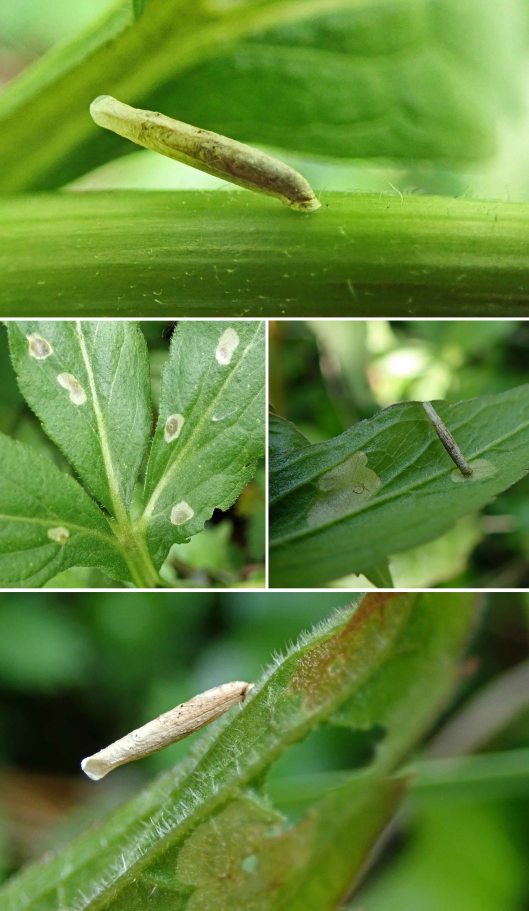
As often happens, I was alerted to the existence of this leafminer by a post on Twitter of someone else finding one. So, in the following days, I pointed my walking shoes in the direction I knew I would find their host plant for a little leaf staring, and Bob’s your uncle (such a strange expression, don’t you think?)! After checking two or three clumps of Hemp-agrimony (Eupatorium cannabinum), I spotted the tell-tale feeding signs (see photos below) and, lurking beneath a leaf, my first Coleophora follicularis (Agrimony case-bearer).

240520 Coleophora follicularis

According to the British Leafminers website, as well as feeding on Hemp-agrimony, these larvae also feed on Common fleabane (Pulicaria dysenterica) and Ploughman’s-spikenard (Inula conyzae), and the times of year of the appearance of the larvae and adults vary depending on the larval food plant. When Hemp-agrimony is used, the mines can be found in April-May and then again in July-August. The UK Moths website shows an adult moth that has a subtle pattern of beige and cream stripes, a smart-looking little flier.

Like Loading...

Box tree moth cats

02 Thursday May 2024

Posted by sconzani in insects, plants

≈ 2 Comments

Tags

Box moth, Box tree moth, Buxus sp, caterpillars on Box, Cydalima perspectalis, invasive non-native, moth caterpillars

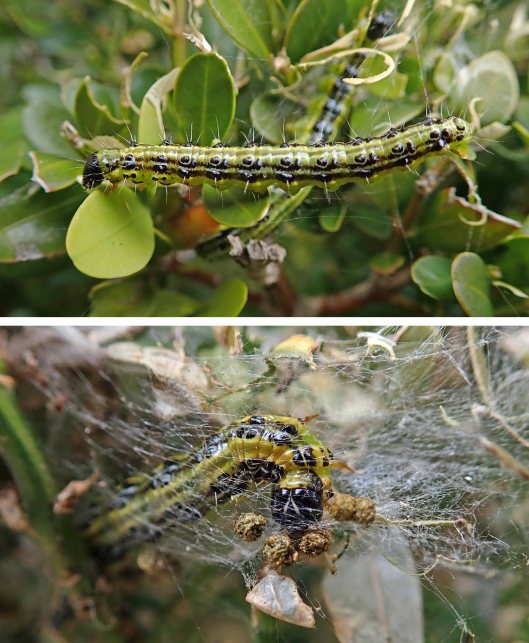
A few days ago, our local moth expert posted a fascinating thread on Twitter/X about the population explosion of the non-native invasive Box tree moth (Cydalima perspectalis) in Cardiff. As George noted, this moth was first recorded in Kent, England in 2007, and spread rapidly across the southern counties of England before arriving in Cardiff in 2018. George runs a regular moth trap in his garden and, though the moth didn’t appear in his trap until 2020, by 2023 it had become the most common species he trapped.

240502 box tree cats (2)

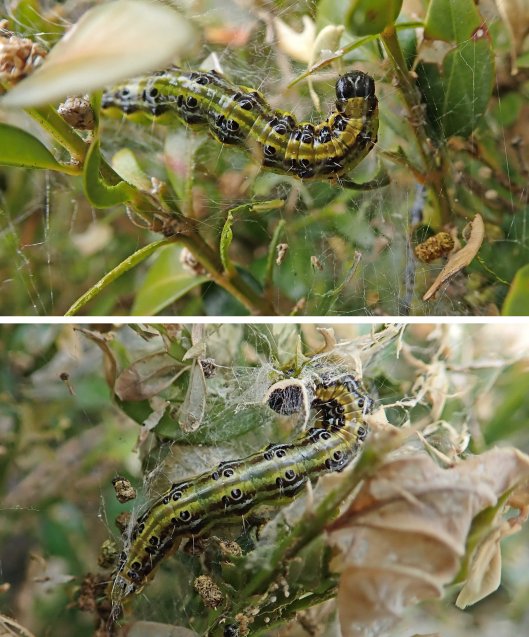
This rapid escalation in adult moths means, of course, that there has also been a huge increase in the numbers of moth caterpillars and, as a result, Box bushes and hedges are being decimated by the caterpillars’ voracious appetites. George talked about ‘widespread defoliation’ in Cardiff so I went looking at a location nearer to home where I knew there was a Box hedge. It wasn’t quite as bad as the reports from north Cardiff and there was quite a lot of new growth on the bushes but there were also huge numbers of caterpillars munching their way through the foliage. I imagine it’s only a matter of time before this hedge has been totally stripped of leaves.

240502 box tree cats (1)

It’s such a shame that the Box tree moth is so destructive as both the adult moth and the caterpillars are very attractive creatures. Apparently, many gardeners are already removing Box from their gardens so any gardeners out there, be aware, your Box (Buxus species) will be targeted by this moth when it spreads to your area.

240502 box tree cats (3)

Like Loading...

Green-flowered wildflowers

17 Sunday Mar 2024

Posted by sconzani in flowers, plants, wildflowers

≈ Leave a comment

Tags

British wildflowers, Dog's mercury, Euphorbia peplus, green flowers, green-flowered wildflowers, Helleborus foetidus, Mercurialis perennis, Petty spurge, Stinking hellebore

As the Wildflower Hour team wrote on social media when announcing this week’s challenge: ‘Some of the loveliest wildflowers are green! Can you find one for this week’s challenge?’. Well, yes, I can. In fact, I found three on yesterday’s meander, and I’m sure there must be more that I missed. My finds are:

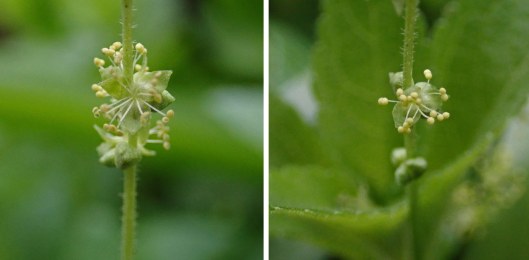
240317 dog's mercury

Dog’s mercury (Mercurialis perennis). I didn’t know until today, when I was reading the First Nature website, that ‘Dog’s Mercury is an extremely poisonous plant and when eaten it has been known to cause vomiting, jaundice and coma.’ Of course, you’d have to be pretty stupid to eat it, but some foragers are pretty stupid!

240317 petty spurge

Petty spurge (Euphorbia peplus), a common sight along the edges of lanes and pavements, and scattered across any patch of waste ground. It’s just getting started again in my area after being knocked back by the cooler winter weather and the interminable rain.

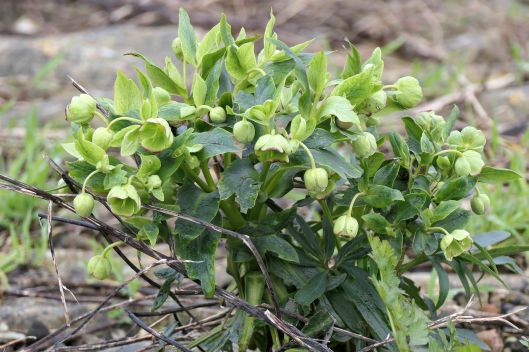
240317 stinking hellebore

Stinking hellebore (Helleborus foetidus). This was a surprise find along a local river embankment and, though Stinking hellebore is a UK native, because of its sudden appearance in that location, I think this particular specimen is probably a garden escapee.

Like Loading...

Name that rosette, 2

03 Sunday Mar 2024

Posted by sconzani in plants, spring, wildflowers

≈ Leave a comment

Tags

British wildflowers, identifying early plant growth, plant identification, plant rosettes

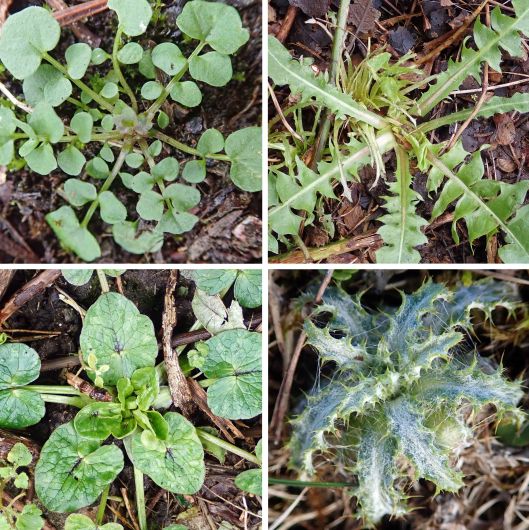
I dipped my toe in to the ‘name that rosette’ waters very briefly back in February 2022 (Name that rosette, 1, 13 February 2022), very quickly realised it was much more difficult than I had anticipated, and yanked my toe rapidly back out again. However, this week’s challenge for #WildflowerHour on social media is about identifying plant rosettes, so I thought I’d have another try. I admit I chose plant’s that are relatively easy and cheated a bit by finding flower-less rosettes next to those with more advanced growth and flowers already beginning to bloom, which helped tremendously. So, I’m fairly confident that these rosettes are Bittercress (Cardamine sp) – not sure if it’s possible to tell at this stage which species this will become; Dandelion (Taraxacum officinale agg.); Lesser celandine (Ficaria verna); and Woolly thistle (Cirsium eriophorum).

240303 rosettes

Like Loading...

First Crocuses

04 Sunday Feb 2024

Posted by sconzani in flowers, plants, wildflowers

≈ Leave a comment

Tags

British wildflowers, croci, crocus, Crocuses

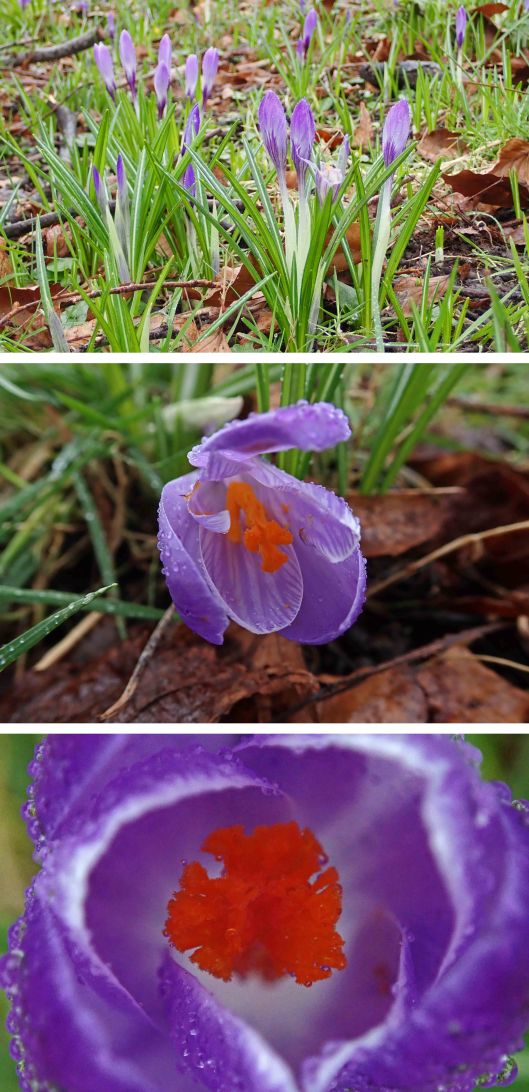
Or should that be Croci, like Hippopotamuses becomes Hippopotami? On a grey damp day, these were a sublime sight.

240204 crocuses

Like Loading...

Alexanders rust and springtails

02 Friday Feb 2024

Posted by sconzani in insects, plants, wildflowers, winter

≈ Leave a comment

Tags

Alexanders, Alexanders rust, Collembola, Puccinia smyrnii, Smyrnium olusatrum, springtail, springtail feeding on Alexanders rust, springtails on Alexanders

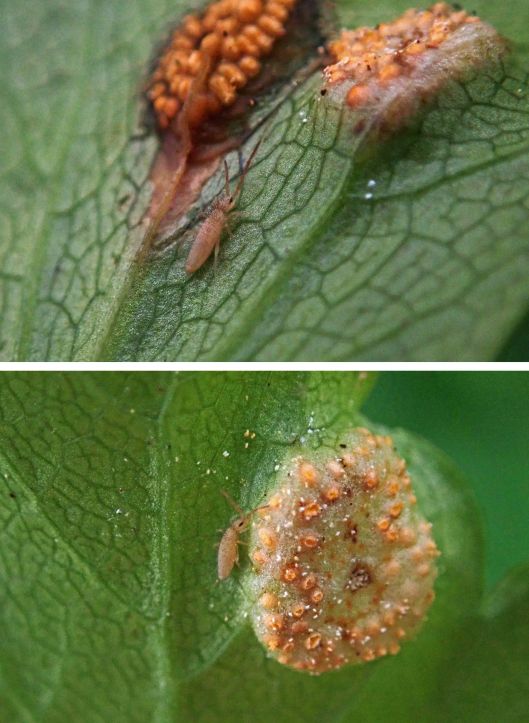
One of the most abundant plants along the South Wales Coastal Path, even in the depths of winter, is Alexanders (Smyrnium olusatrum), and, almost as soon as it breaks ground, it seems to have rust on its stems and leaves. This rust, Alexanders rust (Puccinia smyrnii), is only ever found on this plant species, and when I was examining the rust recently, I noticed it was providing a meal for some tiny springtails. I’m not sure which springtail species these are – they can be tricky to identify, but many species are known to snack on fungi, fungal spores, mould and bacteria so I guess they find the rust spores a tasty meal.

240202 springtail eating alexanders rust

Like Loading...

Bulrushes

25 Thursday Jan 2024

Posted by sconzani in plants, wildflowers, winter

≈ Leave a comment

Tags

Bulrushes, Great reedmace, plants in freshwater, Typha latifoli

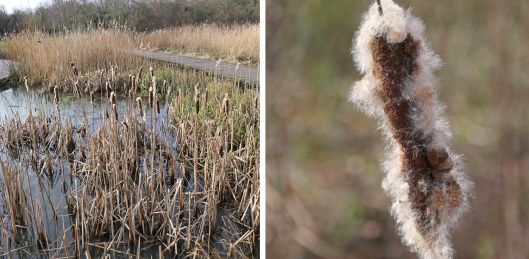
As the weather has now turned unseasonally mild, I had hoped to find a Water vole when I meandered past the dipping pond at Cosmeston but none had ventured out of their holes. So, instead, you get bulrushes – not quite the same, I admit, but I’ve always liked their flowerheads, particularly when, like these, they’re shedding their fluffy seeds.

240124 bulrushes

Though other plants are also called bulrushes, the ones shown here are what most of us recognise when we hear that word. This is Great reedmace (Typha latifoli), a tall, long-leaved plant that typically grows on the margins of freshwater ponds and ditches.

Like Loading...

Berries, still

14 Sunday Jan 2024

Posted by sconzani in plants, trees, winter

≈ Leave a comment

Tags

berries, fruit, haws, hips, winter colour

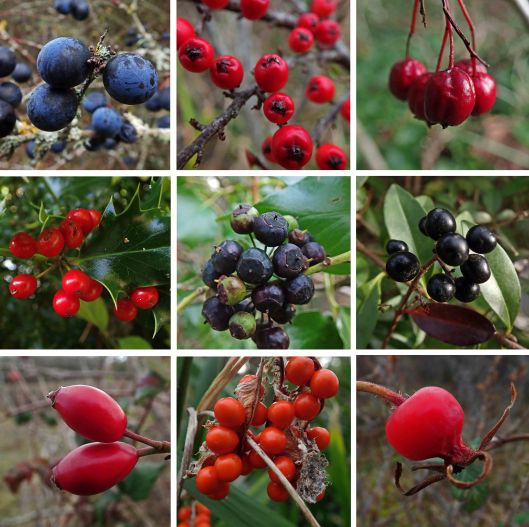
Going, going, soon be gone! Given the voracious appetites of birds in the colder weather, those berries than still remain will soon be gone. So, I thought we’d have a change from wildflowers this week and, instead, enjoy some bright berry colours (and hips and haws and other berry-type fruit) before they all disappear into hungry mouths and beaks.

Like Loading...

Viburnum cushion scale

04 Thursday Jan 2024

Posted by sconzani in insects, plants

≈ Leave a comment

Tags

insects on Ivy, Lichtensia viburni, scale insects, scale insects on Ivy, Viburnum cushion scale

A couple of days ago I brought home two Ivy leaves I’d plucked off a plant on my way home (I’m trying to improve my sketching skills this year and figured these might be an easy leaf to start with). It was only when I got home and was looking more closely at them that I discovered one leaf had some tiny attachments on the underside.

240104 Lichtensia viburni (1)

These are Viburnum cushion scale insects (Lichtensia viburni), which, in southern Europe, are recognised as pests on Olive trees, while, in northern Europe, they are mostly found on Ivy. From looking at photos on the Bladmineerders website, the scale insects I found are male. Beneath their outer shield, they will eventually moult into two-winged adults and fly off to find females to mate with.

240104 Lichtensia viburni (2)

The female scales are the ones some of you may have noticed on your plants – once fertilised in the springtime, their bodies swell with eggs and produce a white woolly covering, which is actually the egg sac. You can read more and see further images on the Bladmineerders website.

Like Loading...
← Older posts
Newer posts →

About me

sconzani

sconzani

I'm a writer and photographer; researcher and blogger; birder and nature lover; countryside rambler and city strider; volunteer and biodiversity recorder.

View Full Profile →

Follow earthstar on WordPress.com

Enter your email address to follow this blog and receive notifications of new posts by email.

Recent blog posts

  • Cuttlebones March 16, 2026
  • No woodland here March 15, 2026
  • Family comes first March 14, 2026
  • Local Little egrets March 13, 2026
  • Cormorants, young and old March 12, 2026

From the archives

COPYRIGHT

Unless otherwise acknowledged, the text and photographs on this blog are my own and are subject to international copyright. Nothing may be downloaded or copied without my permission.

Fellow Earth Stars!

  • Unknown's avatar
  • Unknown's avatar
  • Unknown's avatar
  • Unknown's avatar
  • Unknown's avatar
  • Unknown's avatar
  • Unknown's avatar
  • Unknown's avatar
  • Unknown's avatar
  • Unknown's avatar
  • Unknown's avatar
  • Unknown's avatar
  • Unknown's avatar
  • Unknown's avatar
  • Unknown's avatar
  • Unknown's avatar
  • Unknown's avatar
  • Unknown's avatar
  • Unknown's avatar
  • Unknown's avatar
  • Unknown's avatar
  • Unknown's avatar
  • Unknown's avatar
  • Unknown's avatar
  • Unknown's avatar
  • Unknown's avatar
  • Unknown's avatar
  • Unknown's avatar
  • Unknown's avatar
  • Unknown's avatar
  • Unknown's avatar
  • Unknown's avatar
  • Unknown's avatar
  • Unknown's avatar
  • Unknown's avatar
  • Unknown's avatar
  • Unknown's avatar
  • Unknown's avatar
  • Unknown's avatar
  • Unknown's avatar
  • Unknown's avatar
  • Unknown's avatar
  • Unknown's avatar
  • Unknown's avatar
  • Unknown's avatar
  • Unknown's avatar
  • Unknown's avatar
  • Unknown's avatar
  • Unknown's avatar
  • Unknown's avatar

Blog at WordPress.com.

Privacy & Cookies: This site uses cookies. By continuing to use this website, you agree to their use.
To find out more, including how to control cookies, see here: Cookie Policy
  • Subscribe Subscribed
    • earthstar
    • Join 668 other subscribers
    • Already have a WordPress.com account? Log in now.
    • earthstar
    • Subscribe Subscribed
    • Sign up
    • Log in
    • Report this content
    • View site in Reader
    • Manage subscriptions
    • Collapse this bar
 

Loading Comments...
 

You must be logged in to post a comment.

    %d