• ABOUT
  • BIRDING 2018
  • Birding 2019
  • BLOG POSTS
  • Butterflies 2018
  • Resources

earthstar

~ a celebration of nature

earthstar

Category Archives: reptiles

May at Cosmeston

31 Thursday May 2018

Posted by sconzani in birds, flowers, nature, reptiles, walks, wildflowers

≈ 2 Comments

Tags

Azure damselfly, Bird’s-foot trefoil, Bugle, Common blue butterfly, Common whitethroat, Coot, Cosmeston, Cosmeston Lakes Country Park, cuckoo spit, Dingy Skipper, Flax, Hawthorn blossom, Large Red damselfly, Mallard ducklings, Scarlet pimpernel, Swallow, tadpoles

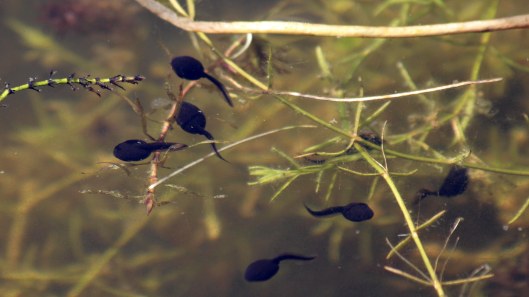
I literally dipped in and out of Cosmeston on 2 May, for a quick look at the dipping pond to see if I could spot any Water voles. I dipped on the voles but I did see Ma Mallard and her two gorgeous ducklings, and a gazillion tadpoles.

180531 1 duckling
180531 2 duckling
180531 3 duckling
180531 4 duckling

180531 5 tadpoles

11 May  I needed to stretch my legs after spending the previous day sorting out after my birding trip so off to Cosmeston I headed. I came in from the north end via Old Cogan farm, where a pair of Swallows was sitting on the wires. I suspect they nest in the old barn as I see them there often over the summer months.

180531 6 swallows

Apart from those Swallows, it was quiet on the bird front and, as a cool wind was blowing, there were no butterflies about either. So, I took lots of photos of newly blooming wildflowers  …
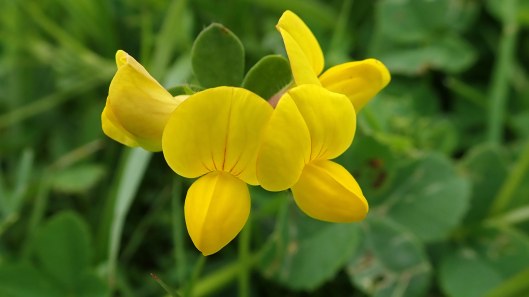
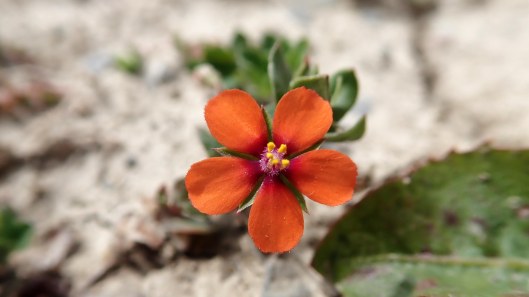
180531 7 Bird's foot trefoil180531 8 Bugle180531 9 Flax180531 10 Scarlet pimpernel

While doing that, I found an interesting little critter mooching around on some leaves (it looked like a weevil without a long snout but I haven’t positively identified it), and I spotted my first cuckoo spit of the season (I just know you’ll be delighted with that find!).

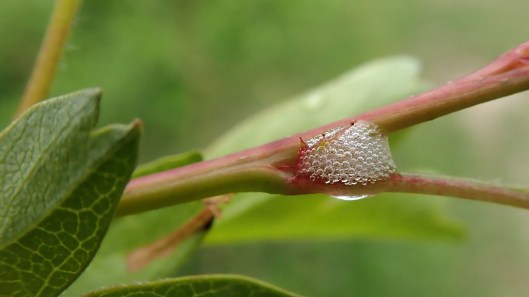
180531 11 snoutless weevil lookalike180531 12 cuckoo spit

15 May  A brief walk through on my way home from Lavernock. I wandered along the edges of Sully brook and then, once again, stopped for a few minutes at the dipping pond. The bad news was that mother Mallard only had one duckling remaining – fingers crossed it makes it to adulthood. The good news was that I saw my first damselflies for the year – both Azure and Large reds were out in numbers.

180531 13 Azure damselfly
180531 14 Large red damselfly

17 May  I passed through Cossie again, this time on my way home from Sully. A Common whitethroat was showing well in the reeds near the cafe, and a Coot was shepherding her three young offspring around the west lake. The chicks were well developed, which bodes well for their survival.

180531 15 Common whitethroat180531 16 Ma Coot and 3 offspring

20 May  This time my 3-hour mooch was all concentrated at Cosmeston. I went early to avoid the Sunday crowds and the scorching sun, and walked the east and west paddocks from one end to the other and back again, along the various trails. I was looking particularly for orchids but saw only leaves, a few with the stalks of flower buds just emerging, and for butterflies. The Dingy skippers and Common blue butterflies were out in good numbers, and it was a pleasure to watch them flitting to and fro.

180531 18 Dingy skipper
180531 17 Common blue

24 May  I went early again to Cosmeston but not early enough, as the rain came in almost as soon as I arrived and I didn’t have a coat with me. I lingered long enough to enjoy the glorious Hawthorn blossom that covers the hedgerows like summer snow, before striding quickly homewards.
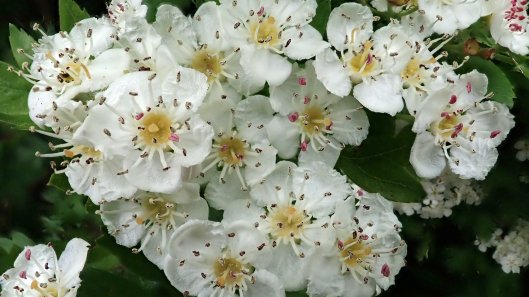
180531 19 Hawthorn blossom

Like Loading...

March at Cosmeston

29 Thursday Mar 2018

Posted by sconzani in birds, flowers, nature, reptiles, spring, wildflowers

≈ 2 Comments

Tags

birding, birdwatching, British birds, Chiffchaff, Common frog, Cosmeston, Cosmeston Lakes Country Park, Gadwall, Great Crested Grebe, Hawfinch, Meadow pipit, primrose, Reed buntin, Sand martin, Scaup, treecreeper

11 March  This visit to Cosmeston started with me being yaffled at by a Green woodpecker – I always think they’re jeering at me, trying to lure me into stalking them for that ever-elusive close-up. I resisted and walked on, then paused to watch a Magpie trying to carry off a very large twig / small branch, proof that nest-building has begun.

180329 1 primroses

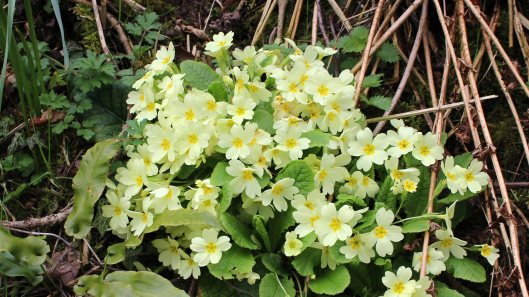
Masses of pale Primroses were flowering prettily along the western boundary path, and the lake was overflowing the boardwalk at the west end due to recent heavy rain.

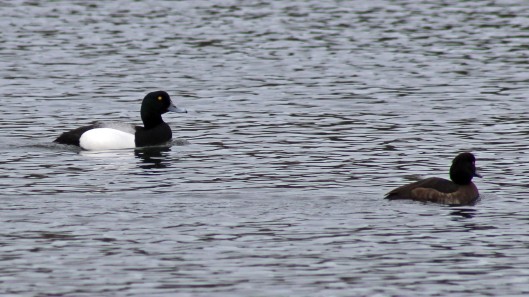
180329 2 drake Scaup

I paused near there, as I always do, to look at the gulls and finally, FINALLY, spotted the drake Scaup that’s been visiting the Cosmeston lakes on and off in recent weeks, this time in company with a female Tufted duck, which could be why some interesting hybrids are occasionally sighted locally.

180329 3 Treecreeper
180329 4 Gadwall & Tufted ducks

I walked up Mile Road and then off the main track to where the bird hide used to be (it was burnt down by vandals last year and has not been rebuilt), and spotted a Treecreeper hopping up a nearby tree, then turned to see a group of five Gadwall on the east lake, much closer in than usual.

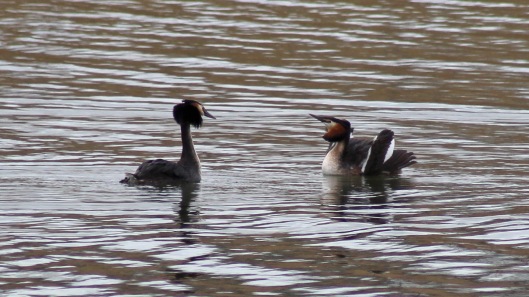
180329 5 Great crested grebes

I watched them a while then was charmed to also watch a pair of Great crested grebes displaying – more on those here. I wandered on, up Mile Road to the top end where I head back in to suburbia, and was farewelled by a large flock of perhaps fifty Fieldfare and Redwing that flew up from the area of Old Cogan Farm and landed in the trees above me.

180329 6 Scaup
180329 7 Common frog

16 March  I only walked through Cosmeston as part of a longer walk from Sully to Penarth, so I didn’t linger long but I did manage to get closer views and better photos of the Scaup, as it was sitting right off the boardwalk and ‘swan feeding area’ near the cafe. And I also detoured past the dipping pond to check out the Common frog eruption – see more on the frogs here.

180329 8 Meadow pipits
180329 9 Meadow pipits

19 March  I stomped off to Cossie with snow still on the ground (but steadily melting) after the ‘Mini-beast from the east’, the second instalment of cold weather to blast us this month. The most notable wildlife effect was in the large numbers of Meadow pipits to be seen, sometimes in singles, at one point a flock of at least 20 grazing together.

180329 10 Chiffchaff

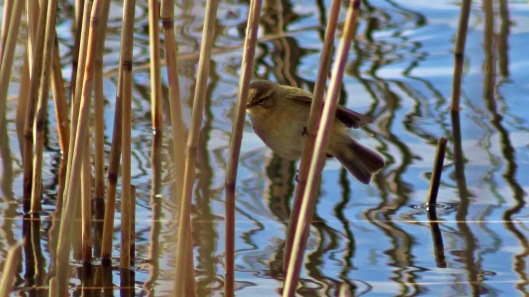
It was also a day of confusing birds: there was a female Blackbird with a pale bib, making me think she might be a Ring ouzel, and two Chiffchaffs pretending to be Reed warblers, presumably because there were more insects to be had close to the water – behaviour also seen at another site in south Wales that day.

180329 11 Sand martin

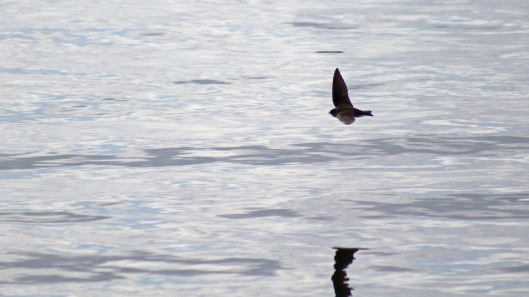
And, another sign of spring, I saw my first Sand martins of the year, three of them, hawking back and forth on the east lake.

180329 12 Reed bunting

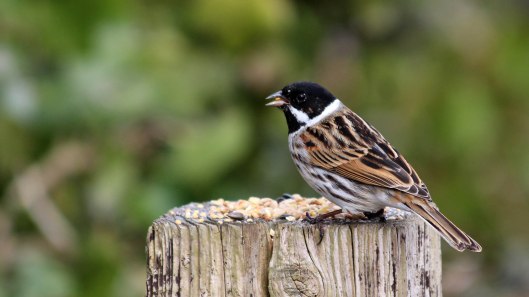
23 March  Once again, this was a walk through rather than around Cosmeston, as I was doing the same walk as a week ago, from Sully back home. As I had recently stocked up on bird seed, I was sprinkling small amounts here and there as I strolled, and was delighted to see three male Reed buntings come down for a snack in one spot – such handsome birds. The other highlight was the Chiffchaffs, at least six crisscrossing the lane between the two lakes, flycatching the multitude of little gnatty things flying about on this sunny day.

180329 13 hawfinch

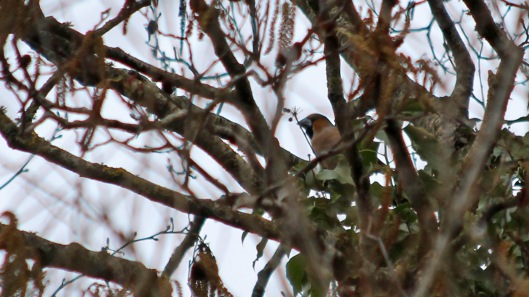
29 March  Well, I wasn’t intending to make another visit to Cossie this month but then one of my birding friends spotted a Hawfinch there on the 27th and I couldn’t let that pass without at least having a look for it. (For non-birders, Hawfinches are usually difficult to find, though they have been having a good winter this year.) So, trying, somewhat unsuccessfully, to dodge heavy rain showers, I headed over to Cosmeston early this morning. I knew the approximate location to look but it certainly wasn’t easy spotting anything in the dense trees. Luckily, I had listened to the bird’s call on the RSPB website before I set off and that’s how I found it … by listening very very carefully and then following that sound. The bird was very high in a tree and almost obscured by intervening branches (my photo is a heavy crop) … but I was very chuffed to find it!

Like Loading...

Frogs, and lots of them

20 Tuesday Mar 2018

Posted by sconzani in nature, reptiles, spring

≈ 1 Comment

Tags

British reptiles, Common frog, Cosmeston, Cosmeston Lakes Country Park, frog, Rana temporaria, signs of spring

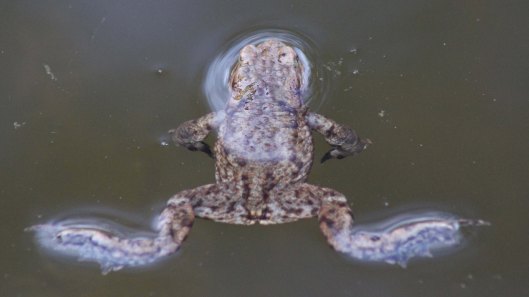
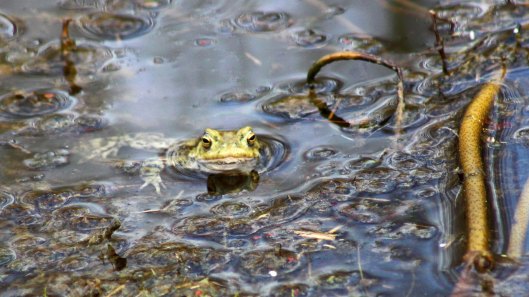
Here’s a sign of spring, if ever there was one – well, hundreds of signs of spring, in fact – as the frogs are out and croaking at Cosmeston’s dipping pond.

180320 Common frog (1)

Though they come in a variety of colours, ranging from light green and yellow through to olive and light brown, these are all Common frogs (Rana temporaria). They’ve long hind legs for hopping and swimming, big eyes for spotting females, and strong front fingers for gripping on to those females once they find them. At dinnertime, they have a preference for small invertebrates like slugs and snails, and they, in turn, are much enjoyed by herons, crows, hedgehogs, otters, and rats.

180320 Common frog (2)180320 Common frog (4)

Frogs have a special place in human culture: they have been used to predict the weather – bright healthy skin foretells fine weather, dull skin rain; they are the subject of numerous superstitions – a frog in the house is a portent of death or something similarly awful, yet frog bones might be worn around the neck as a cure-all; they feature in idioms – if your voice is a bit croaky, you are said to ‘have a frog in your throat’ – and in fairytales – a frog is transformed into a handsome price after being kissed by a beautiful princess. And I haven’t even mentioned one of the most well-known frogs of all, Kermit.

180320 Common frog (3)180320 Common frog (5)

Like Loading...

Rambling with reptiles

03 Monday Jul 2017

Posted by sconzani in 'Dedicated Naturalist' Project, nature, parks, reptiles, walks

≈ Leave a comment

Tags

adder, British reptiles, grass snake, Mary Gillham Archive Project, Parc Slip Nature Reserve, reptile ramble, reptile refugia, slow-worm, volunteering

If you’ve been following my ‘wild’ life for a while, you’ll remember that, in August last year, I went on a reptile ramble at the Wildlife Trust of South & West Wales’s Parc Slip Nature Reserve. Well, last Wednesday our team of trusty Mary Gillham Archives Project staff and volunteers went for another ramble, partly because we enjoyed the last one so much and partly as a way of farewelling the lovely Natalie, a university student who’s been working with us since last September. Though tinged with sadness at saying goodbye to Nat, we had an exciting ramble.

170703 Volunteers (1)
170703 Volunteers (2)

I thought perhaps the persistent drizzle might mean we wouldn’t see many reptiles but I was wrong. In fact, the reverse might actually have been true – the rain may well have encouraged the beasties to stay put under their refugia – except, that is, for one large adder, which I almost stepped on, as it was lying in the grass close to one of the shelters. So, though we didn’t see any lizards this time, we saw more adders, grass snakes and slow-worms than last year. Oh, and the bird’s-nest-shaped dried-grass vole nests under some of the refugia were really cute too.

170703 adder (1)
170703 adder (2)
170703 adder (3)
170703 grass snake
170703 slow-worm (1)
170703 slow-worm (2)
170703 Vole nest under refugia
Like Loading...

On a ‘go slow’

17 Saturday Jun 2017

Posted by sconzani in nature, reptiles

≈ 6 Comments

Tags

Anguis fragilis, British fauna, British reptiles, slow-worm

One of this week’s wildlife highlights happened last Tuesday evening …
I had been in the office volunteering all day and had been too lazy (and the weather had been too hot) to walk home, so I had an early tea then went out for a 90-minute walk. And I am SO glad I did because …

170617 slow worm and cat

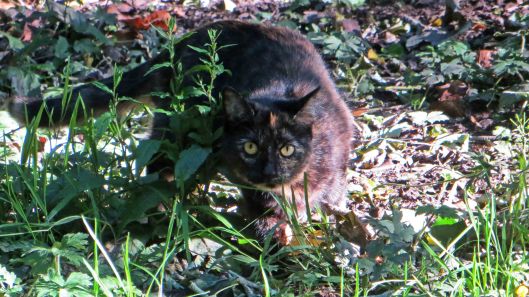
I was walking down an old railway line that’s now a foot- and cycle path when I spotted a cat intently watching something in the long grass at the edge of the path. It was tapping then jumping back, tapping then jumping back. As I approached, the cat slunk off, not pleased it had been interrupted but I’m so glad I scared it off because …

170617 slow worm

What I found in the grass was a Slow-worm (Anguis fragilis) – a young one, I think, from the colour. I only had my point-and-click camera so couldn’t get very good photos and, of course, it wouldn’t stay still. It obviously wanted to escape the cat’s attention so decided to slither across the path but it was having trouble with the asphalt and wasn’t making any headway so …

I picked it up and carried it across to the other side and let it go in the long grass on that side. Good deed done and such a special moment!

Like Loading...

Dressed to impress

03 Friday Mar 2017

Posted by sconzani in nature, reptiles

≈ 6 Comments

Tags

Agama, Agama lizards, colour-changing lizards, lizards, Tanzania

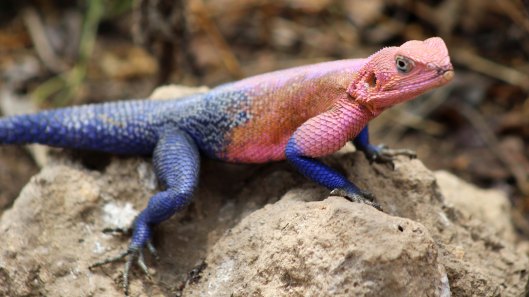
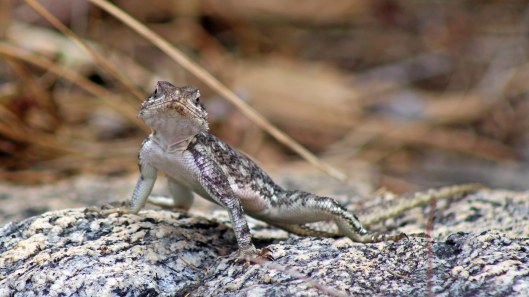
As Wednesday was St David’s Day and yesterday was World Book Day, this week’s World Wildlife Wednesday has shuffled over into Friday. And this week we have the male of the lizard species I blogged about last Wednesday, the Agama.

170302-male-agama-lizard-1

It must have been lizard mating season when I visited Tanzania in 2014 as these Agamas are usually mottled shades of brown and grey, like the females I showed last week. But when the mating season rolls around, they need to impress and attract the ladies, so their skin changes to vibrant attractive hues of red and blue. No wonder they’re sometimes known as ‘Rainbow lizards’ or (love this!) ‘Spiderman lizards’. Apparently, the males gather themselves small harems of six, sometime more females and will fight, often quite aggressively, to defend their harem from incursions by other males.

170302-male-agama-lizard-2
170302-male-agama-lizard-3

As well as much of sub-Saharan Africa, Agamas can also be found in the Indian sub-continent and even in some areas of southern Europe. They’re sun-lovers but don’t like it too hot, shuffling off to rocky crevices when the temperatures hit the high thirties Celsius (around 100° Fahrenheit). Though they are most partial to insects, they will also devour fruit, seeds and grasses, and are even known to pinch the eggs of other reptiles.

170302-male-agama-lizard-4

Like Loading...

Lizards of Tanzania

22 Wednesday Feb 2017

Posted by sconzani in nature, reptiles

≈ 7 Comments

Tags

female Agama lizard, lizard, lizards of Tanzania, Serengeti National Park, Tanzania

170222-tanzania-lizard-1

I’ve been going through my travel albums (always fun) to see what other creatures I’ve encountered in foreign parts that I can share with you and I found some of the many lizards I saw during my trip to Tanzania in August 2014.

170222-tanzania-lizard-2

My photos show two different individuals, photographed several hours apart, and I think these may be female Agama lizards, of which there are some 37 species in Africa, but I don’t know that for sure. So if anyone does know, please do add a comment below. I also have some photos of the males but they deserve a post of their own!

170222-tanzania-lizard-3

Like Loading...

‘Dedicated Naturalist’: Horace and other tuataras

30 Wednesday Nov 2016

Posted by sconzani in 'Dedicated Naturalist' Project, nature, reptiles

≈ 4 Comments

Tags

A Naturalist in New Zealand, Dr Mary Gillham, Horrible Horace, living dinosaur, Mary Gillham Archive Project, Rodger Blanshard, Sphenodon punctatus, Stephens Island, tuatara, Unique New Zealand fauna

A snippet from my volunteer work on the ‘Dedicated Naturalist’ Project, helping to decipher and digitise, record and publicise the life’s work of naturalist extraordinaire, Dr Mary Gillham.

On 13 May 1957, the day I turned one, Mary Gillham wrote in her New Zealand diary:

The 13th, not perhaps the most auspicious day on which to undertake the most hazardous voyage of my stay in NZ, but it proved a perfect day.

161130-mary-gillhams-tuatara-drawing

Mary was sailing to Stephens Island through the often turbulent waters of Cook Strait to spend a week with lighthousekeeper Rodger Blanshard and family, to continue her studies into the flora and fauna of New Zealand’s many islands. On this day, too, Mary met her very first dinosaurs, though she went on to write:

Horace, the lighthouse tuatara or dinosaural lizard for which these islands are famous, was not at home but we found plenty more up to 2’ 6” long, some of which we took inside and put in the sink to photograph next day.

And the next day:

… Then back to the house for Rodger to photograph me festooned about with tuataras which had spent an uneventful night in the sink.

161130-tuatara

So, what is a tuatara? Here’s a little of what Mary later wrote in her book A Naturalist in New Zealand:

The reptile, whose full title is Sphenodon punctatus …
Its ancestors were Triassic and Jurassic saurians which, with the exception of Sphenodon, are thought to have died out 150 million years ago … a living fossil …
Its chief claim to fame is the vestigial third eye lying in a cavity in the top of the skull. This retains both retina and lens, but the retina is no longer able to reflect an image and its nerve supply degenerates as the animal grows. …
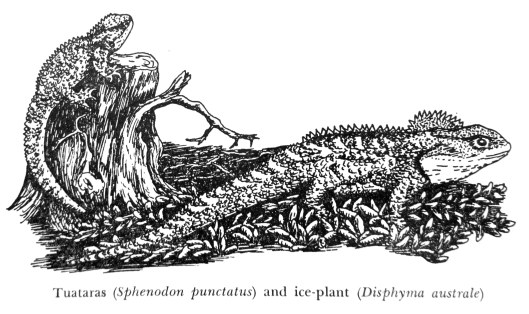
The lighthousekeepers of the various tuatara islands I visited took a proprietary interest in their tuataras and vied with each other to produce the biggest measurements – almost as if they were fish!
… live to a ripe old age; to such a ripe age in fact, that we mortals in our transience can barely keep account of it. Anyone who marks a young tuatara is unlikely to live long enough to record its decease.
… so the Blanshard family, who were on especially good terms with “Horrible Horace” the tuatara who lived in their woodpile. Numbers of Horace’s cronies dwelt within a few yards of the house …
I was surprised to learn that the dark warts with which they were beset were actually their own private brand of tick, Aponomma sphenodonti, and that the rusty patches on their flanks were untold numbers of minute red mites. Even these ancients are subject to the law that “great fleas have little fleas …”

161130-mary-gillham-and-tuatara
161130-mary-gillhams-tuataras

Above left, a newspaper clipping of Mary and a tuatara, and, right, Mary’s photos of tuataras – and Rodger Blanshard – on Stephens Island.

For the full story about the Mary Gillham Archive Project, check out our website, and follow our progress on Facebook and on Twitter.

Like Loading...

Lizards of Machu Picchu

26 Wednesday Oct 2016

Posted by sconzani in nature, reptiles

≈ Leave a comment

Tags

Cusco region, Machu Picchu, Peru, reptiles of Peru, Spiny whorltail iguana, Stenocercus crassicaudatus

When most tourists explore the magnificent Inca city of Machu Picchu in Peru, they focus on the breathtaking mountain-top location, the stomach-churning near-vertical drops on every side, the precision of the stone work, the enormity of the human effort involved in the city’s construction, the hundreds of steep potentially ankle-turning steps, the cuteness of the grazing llamas …

161026 MachuPicchu (1)
161026 MachuPicchu (2)

161026-spiny-whorltail-iguana-1

I saw all those things but I also saw lizards! As far as I can work out, these are Spiny whorltail iguanas (Stenocercus crassicaudatus), a species of lizard that is only found in the 13,000 km2 region around Cusco. According to the ICUN Redlist website, it is a species of least concern ‘because the agricultural activities that are taking place in its distribution do not fragment or affect in major ways its population’, understandable when the land in this region ranges from 1060m to 6260m above sea level. Very wisely, the Spiny whorltail is not known to venture above 2500m. I found them basking in sunny spots on the stones of Machu Picchu – I imagine they spend most of their days sun-basking as it can get very very cold there, even in the summer months!

161026-spiny-whorltail-iguana-2
161026-spiny-whorltail-iguana-3
Like Loading...

Parc Slip Reptile ramble

18 Thursday Aug 2016

Posted by sconzani in 'Dedicated Naturalist' Project, nature, reptiles

≈ 7 Comments

Tags

adder, British reptiles, Common lizard, grass snake, Mary Gillham Archive Project, Parc Slip, Parc Slip Nature Reserve, slow-worm, volunteering, Wildlife Trust, Wildlife Trust for South & West Wales, WTSWW

Partly as a training exercise in wildlife identification, partly as a reward for all our hard work to date, and partly as a fun way for our team to get together, our Mary Gillham Archive Project volunteers were treated to a reptile ramble at Parc Slip Nature Reserve yesterday. And it was fantastic!

160818 reptile ramble (4)

Led by friendly and knowledgeable Wildlife Trust officer Lorna, we explored the research and conservation areas where members of the public don’t normally get to wander. With the excitement palpable and a huge sense of anticipation from us onlookers, Lorna used her trusty snake stick to lift up the reptile refugia (sheets of corrugated iron or heavy plastic under which the reptiles frequently shelter) to see what we could find. Though her initial efforts proved unsuccessful, we did eventually get lucky and were very excited to see one very small, young Common lizard (which scuttled away far too quickly for a photo so my lizard photo here is from another day), a Grass snake (which also slithered away far too quickly to photograph), an Adder and 4 Slow-worms. Success! And a great day out, thanks to the conservation efforts of the wonderful folks who work and volunteer at the Wildlife Trust of South & West Wales.

160818 reptile ramble (2)
160818 reptile ramble (5)
160818 reptile ramble (1)
160818 reptile ramble (7)
160818 reptile ramble (3)
160818 reptile ramble (6)
Like Loading...
← Older posts
Newer posts →

About me

sconzani

sconzani

I'm a writer and photographer; researcher and blogger; birder and nature lover; countryside rambler and city strider; volunteer and biodiversity recorder.

View Full Profile →

Follow earthstar on WordPress.com

Enter your email address to follow this blog and receive notifications of new posts by email.

Recent blog posts

  • Blackthorn in bloom January 11, 2026
  • Weevil: Mecinus pyraster January 10, 2026
  • Red in beak and claw January 9, 2026
  • Who’s watching who? January 8, 2026
  • Springtail: Orchesella cincta January 7, 2026

From the archives

COPYRIGHT

Unless otherwise acknowledged, the text and photographs on this blog are my own and are subject to international copyright. Nothing may be downloaded or copied without my permission.

Fellow Earth Stars!

  • Unknown's avatar
  • Unknown's avatar
  • Unknown's avatar
  • Unknown's avatar
  • Unknown's avatar
  • Unknown's avatar
  • Unknown's avatar
  • Unknown's avatar
  • Unknown's avatar
  • Unknown's avatar
  • Unknown's avatar
  • Unknown's avatar
  • Unknown's avatar
  • Unknown's avatar
  • Unknown's avatar
  • Unknown's avatar
  • Unknown's avatar
  • Unknown's avatar
  • Unknown's avatar
  • Unknown's avatar
  • Unknown's avatar
  • Unknown's avatar
  • Unknown's avatar
  • Unknown's avatar
  • Unknown's avatar
  • Unknown's avatar
  • Unknown's avatar
  • Unknown's avatar
  • Unknown's avatar
  • Unknown's avatar
  • Unknown's avatar
  • Unknown's avatar
  • Unknown's avatar
  • Unknown's avatar
  • Unknown's avatar
  • Unknown's avatar
  • Unknown's avatar
  • Unknown's avatar
  • Unknown's avatar
  • Unknown's avatar
  • Unknown's avatar
  • Unknown's avatar
  • Unknown's avatar
  • Unknown's avatar
  • Unknown's avatar
  • Unknown's avatar
  • Unknown's avatar
  • Unknown's avatar
  • Unknown's avatar
  • Unknown's avatar

Blog at WordPress.com.

Privacy & Cookies: This site uses cookies. By continuing to use this website, you agree to their use.
To find out more, including how to control cookies, see here: Cookie Policy
  • Subscribe Subscribed
    • earthstar
    • Join 669 other subscribers
    • Already have a WordPress.com account? Log in now.
    • earthstar
    • Subscribe Subscribed
    • Sign up
    • Log in
    • Report this content
    • View site in Reader
    • Manage subscriptions
    • Collapse this bar
 

Loading Comments...
 

You must be logged in to post a comment.

    %d