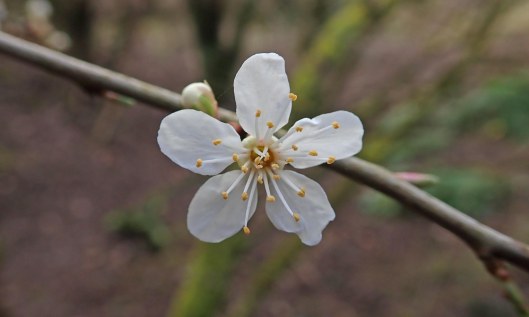
Merrily, merrily shall I live now
Under the blossom that hangs on the bough.
~ from the song ‘Where the bee sucks’, William Shakespeare, The Tempest, Act V

19 Sunday Feb 2023
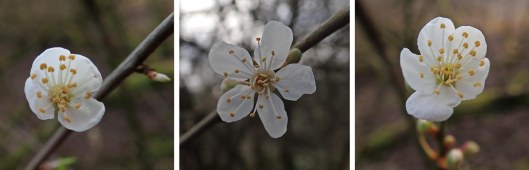
Merrily, merrily shall I live now
Under the blossom that hangs on the bough.
~ from the song ‘Where the bee sucks’, William Shakespeare, The Tempest, Act V
09 Thursday Feb 2023
My Field Studies Council Guide to plant galls in Britain explains that the gall midge Taxomyia taxi actually causes two types of gall on Yew trees. The least common, which looks just like a swollen bud, completes its life cycle in one year – I’ve yet to find any of these. But I was very pleased earlier this week to locate several examples of the artichoke gall, in which the same midge completes a two-year life cycle. Eggs are laid in May/June, the larvae crawl in to a leaf bud and stay there, barely growing, until the following summer. At that point, they grow rapidly, over-winter again as larvae, before pupating and hatching the following May. I couldn’t find any explanation for the different life cycles.
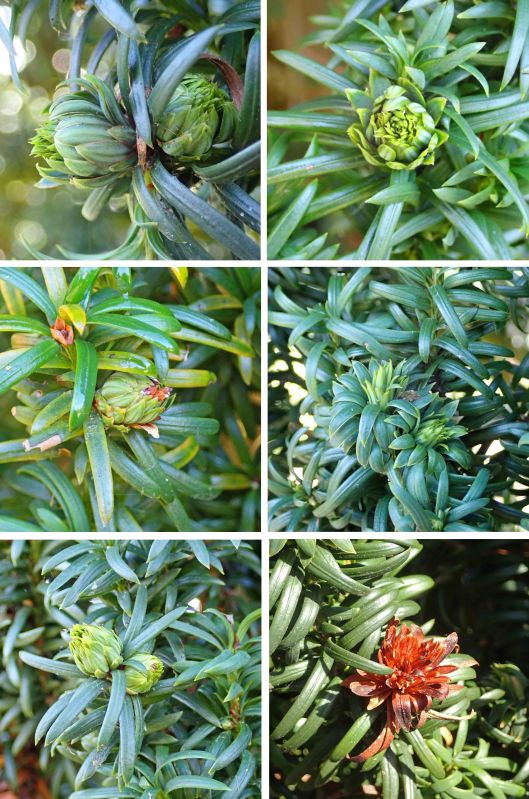
Not wanting to kill the creatures inside, I haven’t opened up any of the galls I’ve found but, if you’re curious, as I was, about what’s inside the artichoke, the Plant Parasites of Europe website has some excellent images of the larva, the pupa and the adult fly.
20 Friday Jan 2023
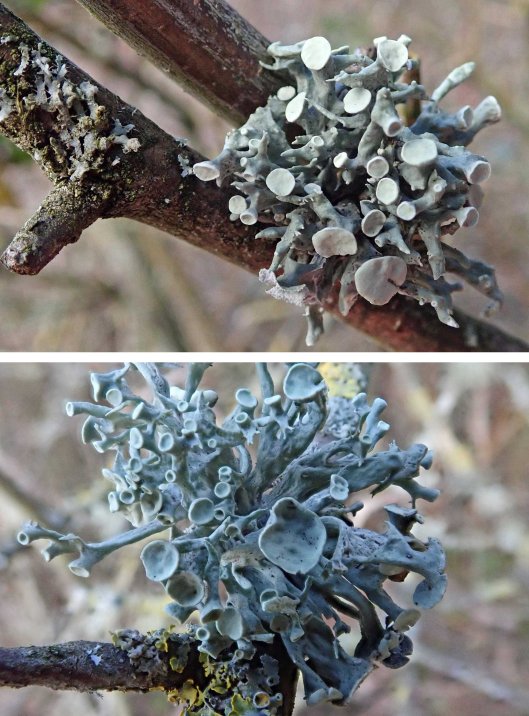
I’ve seen this lichen described as a fanfare of trumpets, which is just the most perfect description for a lichen that can be found adorning the branches and trunks of trees throughout the year almost everywhere in Britain. Meet Ramalina fastigiata.
15 Sunday Jan 2023
Posted in trees
On most of the Hazels I’ve checked, the male catkins look almost fully formed but are still tightly closed and the female flowers are mere buds but, during Friday’s meander, I found one Hazel that’s ahead of the rest in its development. The male catkins were open and shedding cloud-like bursts of yellow pollen when the wind caught them, and the tiny crimson-pink female flowers, looking for all the world like miniscule sea anemones, were open and receptive. Hazel nuts in the making!
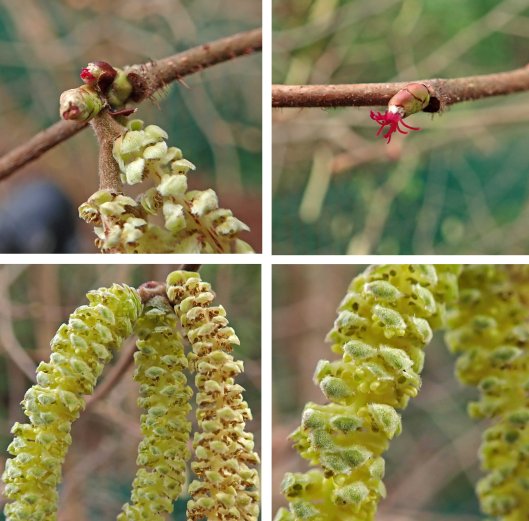
26 Monday Dec 2022
Tags
Aculus tetanothrix, Euura proxima, hoverfly larva, insects on narrow-leaved willow, ladybird pupa, leafmines on narrow-leaved willow, mite galls, moth eggs, Phyllonorycter viminiella, rust on willow, sawfly galls
In early October I, and others, began a new leafmine search, for mines on narrow-leaved willows (see Leafmines: Phyllocnistis saligna, 3 October). In the months since, I’ve only found these mines in two locations, partly due to a lack of the host plants and partly, probably, because the moths have yet to spread very far (which may be because of a lack of host plants). I’ll continue the search next autumn but, in the course of my search – and this is one of the brilliant things about staring at leaves – I’ve found many other life forms that were making these leaves their home.
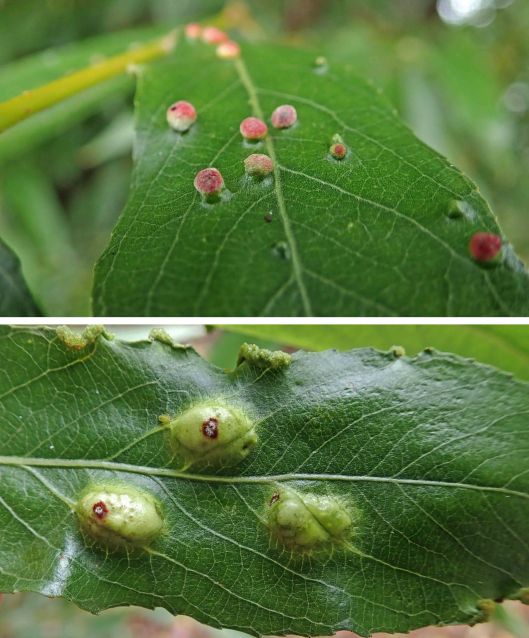
I found two types of galls: the first, above top, have been made by a species of mite, Aculus tetanothrix, and those immediately above are home to the larvae of the sawfly species, Euura proxima.
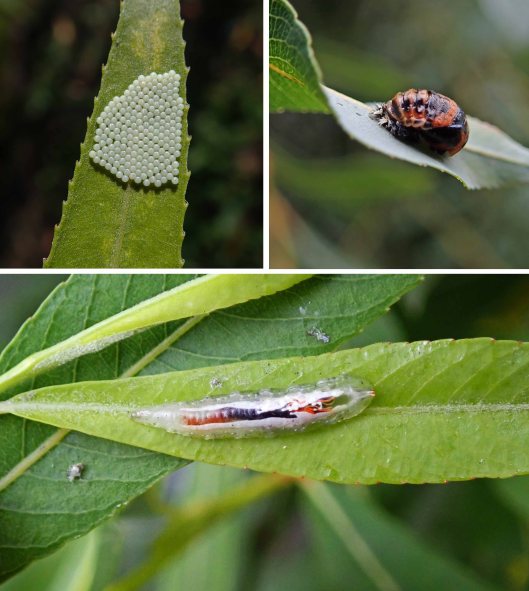
On the underside of one leaf I found this array of what I think are moth eggs and, on the right, is the pupa of a ladybird, and, below those, is a hoverfly larva.
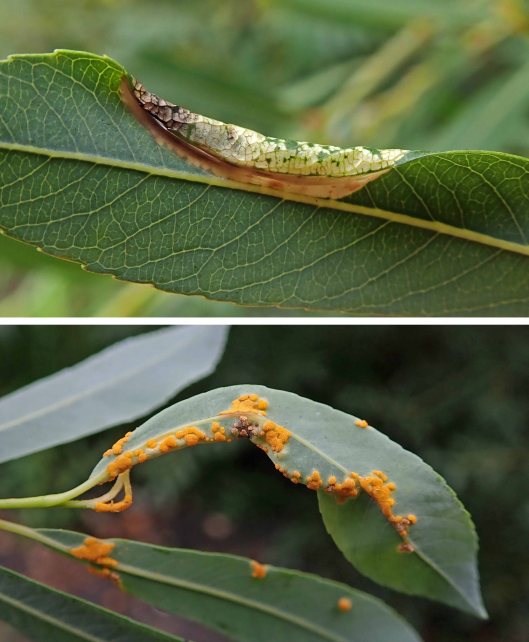
There was also a different species of leafminer, the tiny moth Phyllonorycter viminiella, and I found a rust, which might be Melampsora caprearum.
18 Sunday Dec 2022
Tags
There seems to me no better example of our changing climate and the confusion it’s causing in the natural world than this: finding one Holly tree in flower and others carrying berries all at the same time. In fact, the photo of the flowers, which are supposed to bloom during the spring and early summer, was taken at the beginning of this month, two weeks after that of the berries.

11 Sunday Dec 2022
I’ve shown you this beautiful location several times before – this is Cwm George, in the small south Wales town of Dinas Powys – but I simply can’t resist sharing this year’s late autumn splendour. I couldn’t decide which view I liked best, so I’ve included three images, each one zooming in to the scene a little further. I hope you have somewhere magical like this to enjoy, to wander through, to escape into.

05 Monday Dec 2022
Tags
British leafminers, Bucculatrix ulmella, cocoon on Oak leaf, leaf-mining moth, leafmining moth larvae, moth cocoon
This new-to-me species was the result of a recent session turning over Oak leaves to see what might be lurking beneath. I didn’t actually find the leafmines for this creature but rather, on adjacent trees, two empty cocoons – the tiny moths (pictured on the UK Moths website) that were metamorphosing inside had already hatched and flown (you can see part of the pupal case poking out of one cocoon). The ribbing on the cocoon points to this being one of Bucculatrix genus of moths and the fact that these were on Oak gives a positive identification of Bucculatrix ulmella (don’t be fooled by the specific name ulmella, which would appear to indicate the larvae feed on Elm – the species has apparently been misnamed).

28 Monday Nov 2022
Tags
leaf-mining moth larvae, leaf-mining moths, leafminers, leafmines on willow, moth leafmines, Stigmella obliquella, Willow pygmy, Willow pygmy larval leafmines
As part of my continuing search for the leafmines of the moth Phyllocnistis saligna, I spent part of a recent walk checking the narrow-leaved willows in a Cardiff Park. Though most of the leaves had already fallen, I noticed a lot of leaves with ‘green islands‘, a likely sign of a leafminer but probably not the one I was looking for and, indeed, not one I was familiar with. I took some photos and posted a selection that evening on Twitter.

Leafminerman Rob Edmunds, of the superb British Leafminers website, quickly identified them as the ‘very variable’ work of the larvae of the moth Stigmella obliquella, also known as the Willow pygmy, a rather cute micro moth with an orange top knot. You can find out more about the leafmines on the British Leafminers website, and see the adult moth on the UK Moths website; just click on the links.

27 Sunday Nov 2022
As today is the last Sunday of autumn I thought I’d pull together a little video of this year’s display of trees and their leaves, from the brown and bland to the rosy red and spectacular. Come scuff some leaves with me …
 earthstar
You must be logged in to post a comment.