• ABOUT
  • BIRDING 2018
  • Birding 2019
  • BLOG POSTS
  • Butterflies 2018
  • Resources

earthstar

~ a celebration of nature

earthstar

Category Archives: wildflowers

Winter 10 again

02 Sunday Dec 2018

Posted by sconzani in autumn, flowers, nature, wildflowers, winter

≈ 2 Comments

Tags

#WildflowerHour, #winter10, British wildflowers, wildflowers, winter wildflower challenge

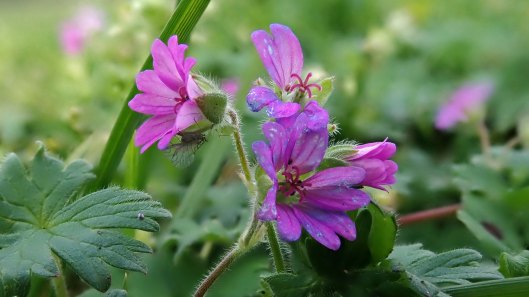
181202 Dove's-foot crane's-bill

Here are this week’s still-flowering wildflowers for Wildflowerhour’s #Winter10 challenge, found during my perambulations around my local patch. These are (I think): Dove’s-foot crane’s-bill (above), Bush vetch, Common chickweed, Daisy, Herb Robert, Ivy-leaved toadflax, Petty spurge, Red campion, a sowthistle (possibly Smooth sowthistle) (must pay more attention to the leaves next time), and Yellow corydalis.

181202 bush vetch
181202 common chickweed
181202 daisy
181202 herb robert
181202 ivy-leaved toadflax
181202 petty spurge
181202 red campion
181202 smooth sowthistle maybe
181202 yellow corydalis
Like Loading...

Winter 10

25 Sunday Nov 2018

Posted by sconzani in autumn, flowers, nature, plants, wildflowers

≈ 2 Comments

Tags

#WildflowerHour, #winter10, British wildflowers, wildflowers, winter wildflower challenge

If you’ve been following for a while, you’ll know I’ve been trying on and off to learn the names of, and a bit more about, the British wildflowers I find on my meanderings. And, to that end, I follow a weekly happening on Twitter called #wildflowerhour. You can read more about that in my previous blog here. During winter they run a challenge to find and name at least 10 wildflowers each week and share them on social media using the hashtag #winter10.

Blue fleabane

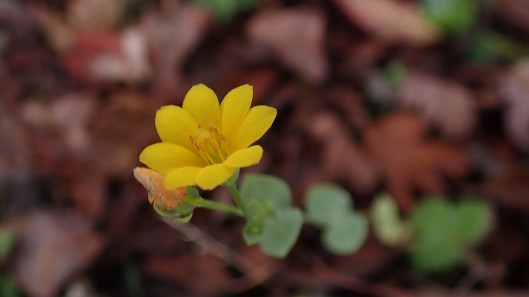
Earlier this week, I decided to see what I could find as I walked firstly through Lavernock Nature Reserve and then homeward through Cosmeston Lakes Country Park. And, er, actually, for this week my hashtag needs to be #winter11. These are they: Blue fleabane, Bramble species, maybe a Hawkbit species, some kind of Buttercup, a Dandelion species, a Daisy and Devil’s-bit scabious, Yellow-wort, a thistley thing and Red clover, and Common ragwort. You can see I’ve still got some learning to do!

Bramble species

181125 some kind of chickweed
181125 some kind of buttercup

181125 dandelion sp

181125 daisy
181125 devils-bit scabious

OLYMPUS DIGITAL CAMERA

181125 knapweed maybe
181125 red clover

181125 common ragwort

Like Loading...

Glistening silver and gold

22 Thursday Nov 2018

Posted by sconzani in autumn, flowers, nature, wildflowers

≈ 4 Comments

Tags

British flora, Carlina vulgaris, Carline thistle, everlasting flowers, seedheads, seeds, thistle, thistle seeds

181122 carline thistle (2)

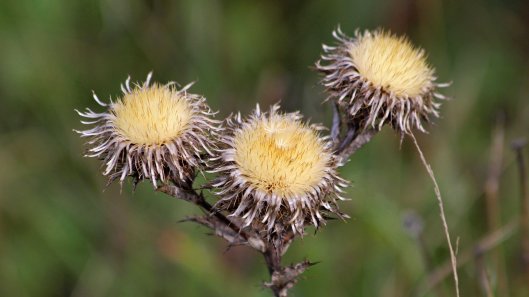
They glisten silver and gold in the late autumn sunshine these Carline thistles, with their thick fringe of papery bracts and heads of soft golden down. I blogged about the flowers last year; now here are the ‘everlasting’ seed heads that can be seen all through the chilly months of winter.

181122 carline thistle (1)

Like Loading...

Variations on a theme

15 Thursday Nov 2018

Posted by sconzani in autumn, nature, wildflowers

≈ 2 Comments

Tags

dandelion, dandelion seedhead, plant seeds, round seedheads, seed dispersal methods, seed dissemination, seeds

181115 seed dispersal (1)

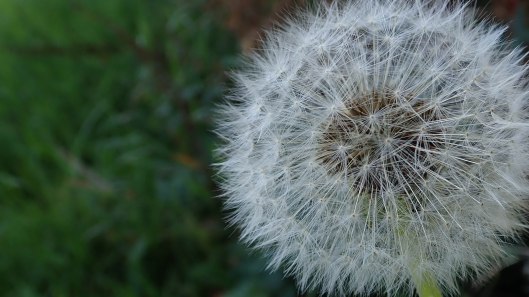
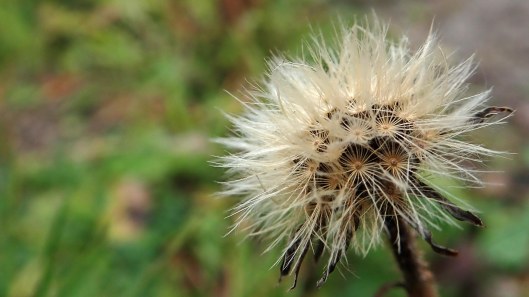
With its seeds attached to tiny botanical parachutes that can be distributed far and wide by the wind, the Dandelion (Taraxacum officinale agg.) has evolved an extremely efficient method of disseminating its seed. It’s not surprising, then, that many other species use a very similar method to disperse their seeds.

181115 seed dispersal (2)181115 seed dispersal (3)181115 seed dispersal (4)181115 seed dispersal (5)

I don’t think I’m getting my wish this time around!

181115 seed dispersal (6)

Like Loading...

Happy #FloralFriday!

26 Friday Oct 2018

Posted by sconzani in insects, nature, wildflowers

≈ 3 Comments

Tags

#FloralFriday, bumblebee, bumblebee on flower, lilac wildflower

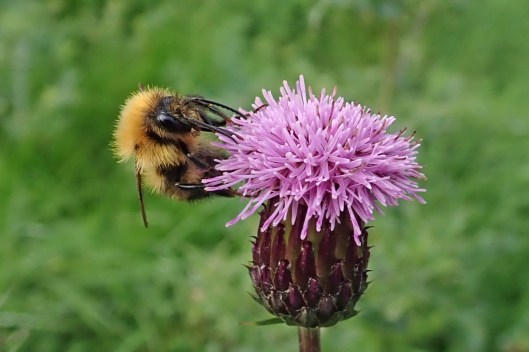
From me and the bee …

181026 bumble on wildflower

Like Loading...

Zigzag wildflowers

19 Friday Oct 2018

Posted by sconzani in autumn, flowers, nature, wildflowers

≈ 4 Comments

Tags

#FloralFriday, autumn colour, British flora, British native flowers, British wildflower, Penarth, Penarth zigzag path, Zigzag path

Back in June, I wrote a blog post about the insects I’d found when out walking along one of my local trails, the zigzag path that runs down to the marina from upper Penarth. I was critical in that blog of the man-made wildflower patch I’d found, a rectangular area adjacent to the path, where perfectly good local wildflowers had been ploughed up and the area sown with some artificial wildflower mix.

181019 yellow flowers (1)
181019 yellow flowers (2)
181019 yellow flowers (3)
181019 yellow flowers (4)
181019 yellow flowers (6)
181019 yellow flowers (5)

I had some contact following that post with the Vale of Glamorgan Council’s Parks and Open Spaces Officer, who was pleased to learn the insects were doing well on the site and said he was ‘surprised if they [the landscape team] didn’t try and use native wildflowers. Hopefully they will spread out and add to the seed-bank all over the site in time.’ I haven’t had the heart to tell him that Council operatives strimmed that wildflower patch a couple of months later, before the plants had even had time to flower, let along spread their seed. What an incredible waste of money that planting scheme was!

181019 zigzag wildflowers (1)
181019 zigzag wildflowers (2)
181019 zigzag wildflowers (9)
181019 zigzag wildflowers (8)
181019 zigzag wildflowers (3)
181019 zigzag wildflowers (7)
181019 zigzag wildflowers (15)
181019 zigzag wildflowers (13)

Luckily, the Council operatives haven’t yet strimmed or mown the rest of the vegetation growing alongside the path, and the steep banks have been awash with wonderful colour over the summer months. Even as recently as this Wednesday, when I decided to photograph all the different flower species I could find, there was still a lovely variety as you can see.

181019 zigzag wildflowers (4)
181019 zigzag wildflowers (5)
181019 zigzag wildflowers (18)
181019 zigzag wildflowers (10)
181019 zigzag wildflowers (17)
181019 zigzag wildflowers (6)
181019 zigzag wildflowers (16)
181019 zigzag wildflowers (11)


Like Loading...

Hovering no more

17 Wednesday Oct 2018

Posted by sconzani in autumn, insects, nature, wildflowers

≈ 4 Comments

Tags

British hoverflies, hoverflies

What a difference a week makes! Seven days ago I was still seeing quite a few hoverflies, feeding on the remaining wildflowers and basking on leaves in the occasional sunshine.

181017 hoverflies (7)

Since then, we’ve had a couple of much cooler nights and the blast of wild, wet and windy weather that was Storm Callum, and the hoverflies seem mostly to have disappeared.

181017 hoverflies (1)
181017 hoverflies (2)
181017 hoverflies (3)
181017 hoverflies (4)
181017 hoverflies (5)
181017 hoverflies (6)

Is that the last I’ll see of them till 2019? Only time will tell.

181017 hoverflies (8)

Like Loading...

Birding at Ogmore and Pant Norton

11 Thursday Oct 2018

Posted by sconzani in birds, insects, nature, walks, wildflowers

≈ 2 Comments

Tags

birding, birdwatching, British birds, Buttonweed, Cormorant, Curlew, Glamorgan Bird Club, Kestrel, Musk thistle, Ogmore, Pant Norton, Portobello House, Stonechat, The Pant, Wall butterfly, Wigeon

Though a cool wind was blowing in off the sea, yesterday was a gloriously sunny day for our Glamorgan Bird Club outing to Ogmore. The fine weather also meant we had a great turn out of 26 people, more than usual for our field trips.
181011 Ogmore birding (1)

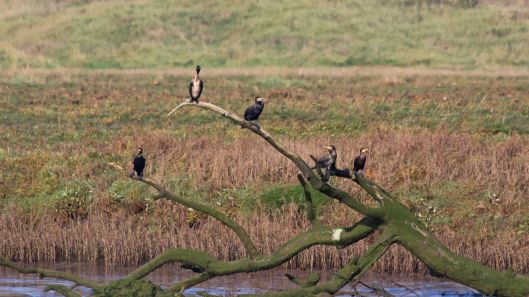
We started off near Portobello House, scanning the dunes of Merthyr Mawr and checking the River Ogmore, where the ubiquitous Cormorants were adorning this big dead tree in the water.
181011 Ogmore birding (2)

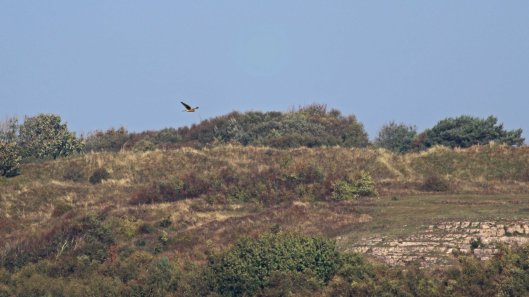
A Kestrel hovered over the dunes, and we witnessed a spectacular chase by a Sparrowhawk after a Meadow pipit – only very blurry photos of that, unfortunately. (The mipit escaped.)

181011 Ogmore birding (3)
181011 Ogmore birding (4)

Two Wigeon flew in to join the Canada geese, Mallards and gulls up river.

181011 Ogmore birding (5)

After grazing along the muddy banks down river for a time, this Curlew flew upstream to find another place to feed.

181011 Ogmore birding (6)
181011 Ogmore birding (7)

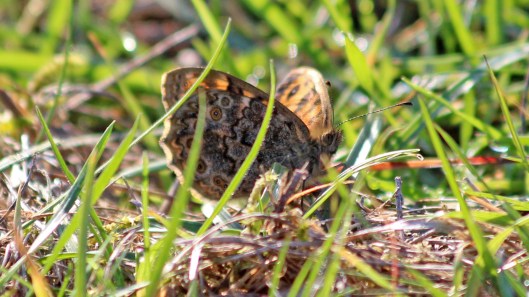
As I’ve mentioned in previous posts, our birding trips are not just about birds. Many birders are also interested in flora and other fauna so, yesterday, Dave was able to point out to us the invasive Buttonweed (Cotula coronopifolia) (he was the first to spot this plant in Wales!) and a Musk thistle (Carduus nutans). And another of our keen-eyed birders spotted this Wall butterfly, only the second time I’ve seen one of these beauties.
181011 Ogmore birding (8)181011 Ogmore birding (9)

After a wander up and down the riverbank we headed across the road and up a track into a series of small valleys, an area known locally as The Pant. As well as many other small birds, there were several Stonechats popping up and down in the shrubs and bracken.

181011 Ogmore birding (10)

And then, what for me was the highlight of the day, really close views of a Kestrel hunting for its lunch. This handsome young male caught three creatures – probably voles or other small mammals – in the space of 10 minutes or so. It was incredible to watch how this bird’s amazing eyesight enabled it to hone in so accurately on its prey and, though I can’t help but have some sympathy for its victims, to see what an efficient hunter the Kestrel truly is.

181011 Ogmore birding (11)181011 Ogmore birding (12)

My total number of species for the day was 41: Mute Swan, Canada Goose, Eurasian Wigeon, Mallard, Little Grebe, Little Egret, Cormorant, Sparrowhawk, Common Buzzard, Kestrel, Eurasian Curlew, Greenshank, Common Redshank, Black-headed Gull, Lesser Black-backed Gull, Herring Gull, Woodpigeon, Magpie, Carrion Crow, Blue Tit, Great Tit, Coal Tit, Skylark, Long-tailed Tit, Common Chiffchaff, Wren, Nuthatch, Blackbird, Song Thrush, Robin, European Stonechat, House Sparrow, Grey Wagtail, Pied Wagtail, Meadow Pipit, Chaffinch, Goldfinch, Siskin, Linnet, Bullfinch and Willow Warbler.
I must have wandered off when these birds were seen: Greenfinch, Stock Dove, Jay, Jackdaw, Rook, Raven, Goldcrest and Dunnock.

Like Loading...

Eyecatching blue

05 Friday Oct 2018

Posted by sconzani in flowers, nature, wildflowers

≈ 2 Comments

Tags

blue flowers, British wildflowers, Chicory, Cichorium intybus, Penarth Docks, Penarth Marina Park, Succory

There’s just something about a blue-coloured flower that catches my eye and this Chicory grabbed me by the eyeballs as I walked home from Penarth Marina yesterday.

Although Chicory (Cichorium intybus) is a native British wildflower, these particular plants were not truly wild; they’re growing in a series of large wildflower beds planted around the edges of Penarth Marina Park. (Interestingly, the park itself is also artificial – it was once part of the inner basin of Penarth Docks, then became a rubbish dump, before being repurposed as a park in the 1980s – details and photos here.)

Chicory, also known as Succory, used to be widely cultivated. Its spears (buds) and leaves were eaten, and the dried and ground root has been used as a substitute for coffee. I think I’ll stick with my cup of tea, thanks.

Like Loading...

I found a new plant!

03 Wednesday Oct 2018

Posted by sconzani in flowers, nature, wildflowers

≈ 1 Comment

Tags

Blue fleabane, British flora, British wildflowers, Cosmeston, Cosmeston Lakes Country Park, Erigeron acris

In case you think I’ve made a profoundly important botanical discovery, perhaps I should clarify that title: although I have noticed this plant growing in one particular place at Cosmeston Lakes Country Park during my walks in the past couple of weeks, Monday was the first time I had a close look at it, took some photos and worked out what it was, and it is a plant I had not previously seen.

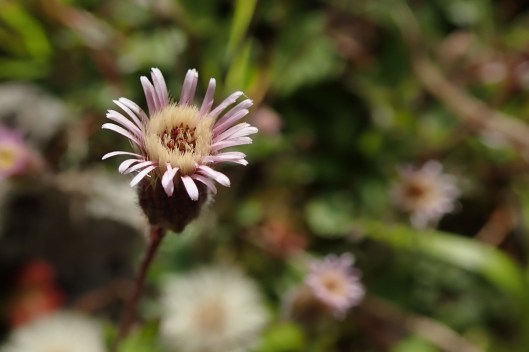
This is Blue fleabane (Erigeron acris), a member of the daisy family, though why it is called Blue fleabane I have no idea as the flower petals I’ve seen are pink, and both my plant ID guidebook and the various online sites I’ve looked at describe them as lilac or purplish.

181003 blue fleabane (4)
OLYMPUS DIGITAL CAMERA

This is a coastal plant, which usually grows in dry areas of grassland, on sand dunes or on stone walls. That fits with the site at Cosmeston, where it’s growing in a very dry, stony location and it’s probably only a mile to the sea as the crow flies. As you can see from the fluffy seed heads in my photos, it’s actually at the end of its flowering period – usually between July and September – so I have been very remiss in not noticing it before now.

181003 blue fleabane (6)

Like Loading...
← Older posts
Newer posts →

About me

sconzani

sconzani

I'm a writer and photographer; researcher and blogger; birder and nature lover; countryside rambler and city strider; volunteer and biodiversity recorder.

View Full Profile →

Follow earthstar on WordPress.com

Enter your email address to follow this blog and receive notifications of new posts by email.

Recent blog posts

  • Blood bees April 29, 2026
  • Nesting material April 28, 2026
  • Lifer: Box bug April 27, 2026
  • Peak Wild garlic April 26, 2026
  • First damsels of 2026 April 25, 2026

From the archives

COPYRIGHT

Unless otherwise acknowledged, the text and photographs on this blog are my own and are subject to international copyright. Nothing may be downloaded or copied without my permission.

Fellow Earth Stars!

  • Unknown's avatar
  • Unknown's avatar
  • Unknown's avatar
  • Unknown's avatar
  • Unknown's avatar
  • Unknown's avatar
  • Unknown's avatar
  • Unknown's avatar
  • Unknown's avatar
  • Unknown's avatar
  • Unknown's avatar
  • Unknown's avatar
  • Unknown's avatar
  • Unknown's avatar
  • Unknown's avatar
  • Unknown's avatar
  • Unknown's avatar
  • Unknown's avatar
  • Unknown's avatar
  • Unknown's avatar
  • Unknown's avatar
  • Unknown's avatar
  • Unknown's avatar
  • Unknown's avatar
  • Unknown's avatar
  • Unknown's avatar
  • Unknown's avatar
  • Unknown's avatar
  • Unknown's avatar
  • Unknown's avatar
  • Unknown's avatar
  • Unknown's avatar
  • Unknown's avatar
  • Unknown's avatar
  • Unknown's avatar
  • Unknown's avatar
  • Unknown's avatar
  • Unknown's avatar
  • Unknown's avatar
  • Unknown's avatar
  • Unknown's avatar
  • Unknown's avatar
  • Unknown's avatar
  • Unknown's avatar
  • Unknown's avatar
  • Unknown's avatar
  • Unknown's avatar
  • Unknown's avatar
  • Unknown's avatar
  • Unknown's avatar

Blog at WordPress.com.

Privacy & Cookies: This site uses cookies. By continuing to use this website, you agree to their use.
To find out more, including how to control cookies, see here: Cookie Policy
  • Subscribe Subscribed
    • earthstar
    • Join 642 other subscribers
    • Already have a WordPress.com account? Log in now.
    • earthstar
    • Subscribe Subscribed
    • Sign up
    • Log in
    • Report this content
    • View site in Reader
    • Manage subscriptions
    • Collapse this bar

Loading Comments...

You must be logged in to post a comment.

    %d