• ABOUT
  • BIRDING 2018
  • Birding 2019
  • BLOG POSTS
  • Butterflies 2018
  • Resources

earthstar

~ a celebration of nature

earthstar

Category Archives: wildflowers

The miracle of the seed

08 Thursday Sep 2016

Posted by sconzani in autumn, nature, wildflowers

≈ 4 Comments

Tags

Anne's House of Dreams, flower seeds, L. M. Montgomery, plant seeds, seeds

“It always amazes me to look at the little, wrinkled brown seeds and think of the rainbows in ’em,” said Captain Jim. “When I ponder on them seeds I don’t find it nowise hard to believe that we’ve got souls that’ll live in other worlds. You couldn’t hardly believe there was life in them tiny things, some no bigger than grains of dust, let alone colour and scent, if you hadn’t seen the miracle, could you?” ~ L. M. Montgomery, Anne’s House of Dreams

(Lucy Montgomery was the author of Anne of Green Gables; the House of Dreams is the fifth in her series of nine books about Anne Shirley. Captain Jim was the lighthouse keeper.)

160908-seeds-1
160908-seeds-2
160908-seeds-3
160908-seeds-4
160908-seeds-5
160908-seeds-6
Like Loading...

A new wildflower meadow

02 Friday Sep 2016

Posted by sconzani in nature, wildflowers

≈ 8 Comments

Tags

Corncockle, Cornflower, Field bindweed, Gypsywort, Radyr Weir, Sopawort, Taff Trail, Tansy, White campion, wildflower meadow

Last Monday was a holiday here in Britain so I took myself off for a long walk along Cardiff’s River Taff, starting at the new hydro-electric scheme at Radyr Weir. While the Archimedes Screw turbines that power the scheme were impressive to see in action, it was the adjacent wildflower meadow that I loved best. It appears newly planted so was perhaps part of the reinstatement plan following the hydro scheme’s construction.

160902 wildflower meadow (2)

Though late in the season, the flowers were in full bloom, providing a welcome feast for bees, wasps, flies and hoverflies. I imagine the flowers were an off-the-shelf wildflower seed mix but they were still lovely, especially my favourites, the eye-popping red of the poppies and blue of the cornflowers.

160902 wildflower meadow (1)

Strolling along the adjacent, much older pathways I also found other beautiful wildflowers so today’s Floral Friday photos include the Corncockle (Agrostemma githago), Cornflower (Centaurea cyanus), Field bindweed (Convolvulus arvensis), Gypsywort (Lycopus europaeus), Soapwort (Saponaria officinalis), Tansy (Tanacetum vulgare) and White campion (Silene latifolia sub alba).

160902 Corncockle
160902 Cornflower
160902 Field bindweed
160902 Gypsywort
160902 Soapwort
160902 Tansy
160902 White campion
Like Loading...

Bioblitzing Cwm Saerbren

27 Saturday Aug 2016

Posted by sconzani in birds, fungi, insects, nature, plants, wildflowers

≈ 5 Comments

Tags

bioblitz, biological diversity, biological recording, biological recording centre, Cwm Saerbren Woodland, Cwmsaerbren, SEWBReC

Each summer my local biological records centre, SEWBReC, runs a series of biological recording field days, partly to introduce members of the public to the world of biological recording, allowing them to rub shoulders with wildlife experts and learn species identification skills, and partly to record the biodiversity of particular areas. Last Thursday I went along to the field day-come-bioblitz at the Cwm Saerbren Woodland, adjacent to the small town of Treherbert at the top of the Rhondda Fawr Valley.

160827 Cwmsaerbren bioblitz (12)

This assumed unicorn was the star of the show!

Though the turnout from the locals was disappointing (not a single person!) and despite the sometimes heavy rain (a common feature up the Valleys), we had a great day. With the SEWBReC crew, a couple of guys from Natural Resources Wales, and a few of us volunteers from the Mary Gillham Archives Project, we stomped around the trails of Cwm Saerbren, recording all we saw. And, after meeting up back at the town to identify and write up our afternoon list and then filling up on hot chips from the local takeaway shop, we also got out with the bat recorder and had moth-attracting lights running to see what flying critters we might find. All up, once everything is IDed, I reckon our list will be well over 200 species. Not bad for a day’s work!

160827 Cwmsaerbren bioblitz (2)
160827 Cwmsaerbren bioblitz (1)
160827 Cwmsaerbren bioblitz (5)
160827 Cwmsaerbren bioblitz (3)
160827 Cwmsaerbren bioblitz (7)
160827 Cwmsaerbren bioblitz (11)
160827 Cwmsaerbren bioblitz (15)
160827 Cwmsaerbren bioblitz (16)
160827 Cwmsaerbren bioblitz (9)
160827 Cwmsaerbren bioblitz (10)
160827 Cwmsaerbren bioblitz (4)
160827 Cwmsaerbren bioblitz (6)
160827 Cwmsaerbren bioblitz (8)
160827 Cwmsaerbren bioblitz (13)
160827 Cwmsaerbren bioblitz (17)
Like Loading...

Bramble or blackberry?

26 Friday Aug 2016

Posted by sconzani in flowers, nature, plants, wildflowers

≈ 5 Comments

Tags

autumn fruit, blackberry, bramble, Rubus fruticosus agg, Rubus species, wild fruit

First, the glorious flowers: some look like crushed paper tissue, others like crinkled pieces of silk. They range in colour from bleached white through parchment with the merest blush of pink to a pink that reminds me of the sticky candyfloss I ate as a child at the local fair.

160826 Rubus fruticosus agg (1)
160826 Rubus fruticosus agg (2)
160826 Rubus fruticosus agg (3)
160826 Rubus fruticosus agg (4)
160826 Rubus fruticosus agg (5)
160826 Rubus fruticosus agg (6)

Once the busy little pollinators have done their work, the fruit begins to develop and my taste buds start to stir as I look forward to the delicious juicy treats to come. First, the clusters of little green globes and then, as they ripen in the summer sun, the tinges of red appear, hinting at the lusciousness to come.

160826 Rubus fruticosus agg (7)
160826 Rubus fruticosus agg (8)

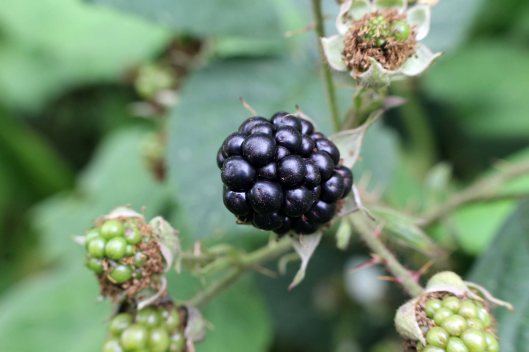
And then one day, when I’m out on one of my wanders, I spot it, the very first black berry. Will it still be a little sour and will it flood my mouth with those delectable full fruit flavours of perfect ripeness?
160826 Rubus fruticosus agg (9)

Here in Britain they are called brambles, in my New Zealand homeland we called them blackberries and, in scientific terms, they are all grouped together under the unprepossessing name of Rubus fruticosus agg. Agg stands for aggregate, as in a grouping together of a range of very closely related biological organisms, because Rubus fruticosus includes a myriad of hybridisations. But, whatever you call them, for me they are one of the things I most love about late summer and, yes, I have already eaten my first yummy blackberries of 2016.

Like Loading...

A wealth of wildflowers

19 Friday Aug 2016

Posted by sconzani in flowers, nature, wildflowers

≈ 2 Comments

Tags

Creeping jenny, Devil's-bit scabious, Dock, Meadowsweet, Narrow-leaved everlasting pea, Ragged robin, Ribwort plantain, Rosebay willowherb, Sneezewort, Tall Melilot

It’s Friday! It’s Floral Friday! It must be time for more wildflowers. Here’s the latest selection from my wanderings around parks, meadows and reserves:

Creeping jenny (Lysimachia nummularia), Devil’s-bit scabious (Succisa pratensis), Dock (Rumex sp), Meadowsweet (Filipendula ulmaria), Narrow-leaved everlasting pea (Lathyrus sylvestris), Ragged robin (Lychnis flos-cuculi), Ribwort plantain (Plantago lanceolata), Rosebay willowherb (Chamerion angustifolium), Sneezewort (Achillea ptarmica) and Tall Melilot (Melilotus altissimus).

Creeping jenny Lysimachia nummularia
Devil's-bit scabious Succisa pratensis
Dock Rumex sp
Meadowsweet Filipendula ulmaria
Narrow-leaved everlasting pea Lathyrus sylvestris
Ragged robin Lychnis flos-cuculi
Ribwort plantain Plantago lanceolata
Rosebay willowherb Chamerion angustifolium
Sneezewort Achillea ptarmica
Tall Melilot Melilotus altissimus
Like Loading...

Seven Sisters Country Park

16 Tuesday Aug 2016

Posted by sconzani in birds, insects, nature, parks, wildflowers

≈ 8 Comments

Tags

birding, birdwatching, British birds, chalk cliffs, Cuckmere River, East Sussex, Seven Sisters Country Park

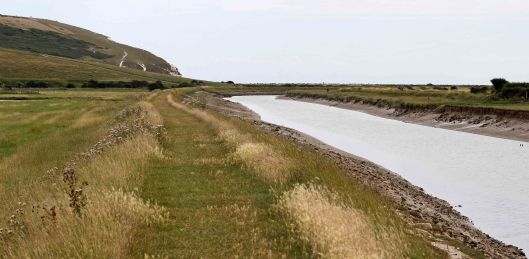
Last Wednesday Jill and I walked the full length of the Seven Sisters Country Park in East Sussex twice, down to the sea and back on one side of the river, followed by a break for a delicious lunch at the Cuckoo Inn, and then down to the sea and back on the other side of the river.

160816 7 sisters (1)

We did the same walk on 13 August 2014 and it was top of my list to do again on this visit. Rather than the cloudless, bright blue sky of two years ago, this time it was quite overcast though no less beautiful as the clouds lent a different atmosphere to the landscape, creating a more moody feel that I almost prefer.

160816 7 sisters (11)

The huge chalk cliffs were just as awe-inspiring, the cliff tops were covered with luxuriant wildflower growth, and we delighted in sightings of birds and insects. It was a magical day!

To walk the landscapes of the Seven Sisters Country Park, check out my Sconzani blog posts: this was on a blue-sky day in 2014 and this was last week.

160816 7 sisters (4)
160816 7 sisters (14)
160816 7 sisters (15)
160816 7 sisters (7)
160816 7 sisters (3)
160816 7 sisters (10)
160816 7 sisters (2)
160816 7 sisters (9)
160816 7 sisters (16)
160816 7 sisters (12)
160816 7 sisters (13)
160816 7 sisters (8)
160816 7 sisters (5)
160816 7 sisters (6)
Like Loading...

Rye Harbour Nature Reserve

14 Sunday Aug 2016

Posted by sconzani in birds, insects, nature, wildflowers

≈ 4 Comments

Tags

largest coastal shingle area in Europe, Rye Harbour Nature Reserve, shingle beach

On the first full day of my short break in East Sussex, my friend Jill and I enjoyed a long walk around the fabulous Rye Harbour Nature Reserve, which, along with Dungeness, encompasses the largest coastal shingle area in Europe. Former gravel pits now filled with fresh water together with salt-marshes and saline lagoons provide the perfect habitats for a huge number of birds, as well as both common and rare species of plants and insects. I was in biological heaven!

160814 Rye Harbour (18)

The species in my photos are just a very small selection of what you can see: Black-headed gulls (Chroicocephalus ridibundus) and an unidentified small brown wader; Geranium sp; Viper’s bugloss (Echium vulgare); Little egret (Egretta garzetta); Great mullein (Verbascum thapsus); Curlew (Numenius arquata); Pied wagtail (Motacilla alba); Large white butterfly (Pieris brassicae); Field Grasshopper (Chorthippus brunneus); a plant that looks like a dandelion but isn’t (!); Wild teasel (Dipsacus fullonum); Cormorants (Phalacrocorax carbo); Yellow horned poppy (Glaucium flavum); Coots (Fulica atra); Gatekeeper (Pyronia tithonus) and rather raggedy Red admiral (Vanessa atalanta) butterflies; Lapwings (Vanellus vanellus); and Marsh mallow (Althaea officinalis).

For a wander around the landscapes of Rye Harbour Nature Reserve, check out my Sconzani blog post here.

160814 Rye Harbour (1)
160814 Rye Harbour (2)
160814 Rye Harbour (3)
160814 Rye Harbour (4)
160814 Rye Harbour (5)
160814 Rye Harbour (6)
160814 Rye Harbour (7)
160814 Rye Harbour (8)
160814 Rye Harbour (9)
160814 Rye Harbour (10)
160814 Rye Harbour (11)
160814 Rye Harbour (12)
160814 Rye Harbour (13)
160814 Rye Harbour (14)
160814 Rye Harbour (15)
160814 Rye Harbour (16)
160814 Rye Harbour (17)
Like Loading...

A bewilderment of thistles

12 Friday Aug 2016

Posted by sconzani in flowers, nature, wildflowers

≈ 6 Comments

Tags

Common knapweed, Creeping thistle, Lesser burdock, Spear thistle, thistle, thistle lookalikes

Last Floral Friday I was confused about geraniums; this week it’s thistles and things that look like thistles that are causing my befuddlement.

160812 thistles (14)

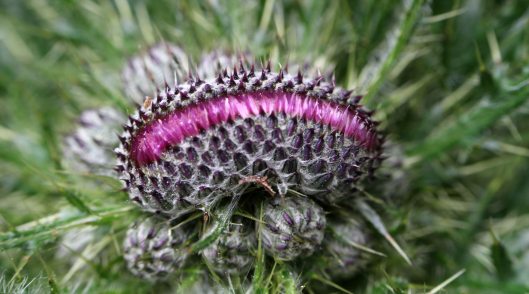
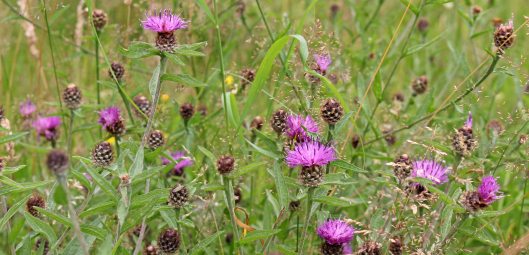
It seems there are thistle lookalikes, like Lesser burdock (Arctium minus agg.) and Common Knapweed (Centaurea nigra), though admittedly, they don’t have thorns but the flowers are very similar. And then there are plants that have ‘thistle’ in their names that don’t look a bit like thistles to me: Smooth sow thistle (Sonchus oleraceus), for example, that looks more like a dandelion, and Globe thistle (Echinops sp.), which looks like a cross between a thistle, a teasel and an allium. And then there are the numerous varieties of actual thistles to decipher. Which genus is it: Cirsium, Carduus (Latin for ‘a kind of thistle’), Silybum (yes, really!) or Onopordum? And is it Spear thistle (Cirsium vulgare) or Creeping thistle (Cirsium arvense) or Milk thistle (Silybum marianum) or Scotch thistle (Onopordum acanthum)?

160812 thistles (13)

I think you can see why I’m not even going to try to identify these photos. I’m going to remain bewildered and simply enjoy their wonderful structures and gorgeous colours.

160812 thistles (1)
160812 thistles (2)
160812 thistles (3)
160812 thistles (4)
160812 thistles (5)
160812 thistles (6)
160812 thistles (7)
160812 thistles (8)
160812 thistles (9)
160812 thistles (10)
160812 thistles (11)
160812 thistles (12)
Like Loading...

A confusion of geraniums

05 Friday Aug 2016

Posted by sconzani in flowers, nature, wildflowers

≈ 10 Comments

Tags

Cut-Leaved crane’s-bill, Druce’s crane’s-bill, geranium, Geranium dissectum, Geranium pratense, Geranium x oxonianum, Meadow crane's-bill

I’ve always loved geraniums, of the easy-to-grow vibrant-colour-in-a-terracotta-pot pretend-you’re-in-the-Mediterranean variety, but here in Britain there are wild native geraniums that are just as gorgeous but rather tricky to identify. This seems partly to be because you can’t always tell those that are truly wild from those that are garden escapees, cultivated from birds’ droppings or windblown seeds. And the local geraniums also seem to hybridise easily – check out this chart – so, when I look up the various identification guides, the flowers and leaves I see don’t quite fit with what the books and websites show.

Here, then, are some photos of geraniums, which may or may not include Meadow crane’s-bill (Geranium pratense) and Cut-Leaved crane’s-bill (Geranium dissectum) and Druce’s crane’s-bill (Geranium x oxonianum), or possibly something else entirely!

160805 Geranium (1)
160805 Geranium (2)
160805 Geranium (3)
160805 Geranium (4)
160805 Geranium (5)
160805 Geranium (6)
160805 Geranium (7)
160805 Geranium (8)
Like Loading...

Floral Friday: Orchids

15 Friday Jul 2016

Posted by sconzani in flowers, nature, wildflowers

≈ 7 Comments

Tags

British orchids, Common spotted orchid, Common twayblade, Early purple orchid, native orchids, Southern marsh orchid

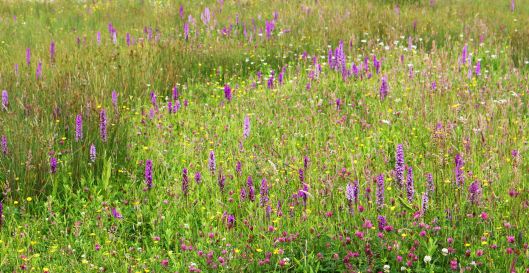
In the past, when I heard the word orchid, I would think of the exotic tropical species to be found in places like Singapore and other Asian countries. Now I know there is an entirely different kind of orchid that is a British native and, while not as spectacular in appearance as some of the exotics, these natives are, I think, even more beautiful.

160715 orchids (1)

The flower spikes stand tall, like sentinels, amongst the more flippant flora of the meadows and chalk grasslands, though the individual flowers are delicate little poppets, with a surprising range of patterns and hues. This is partly because they hybridise easily which can make them difficult to identify. I think I have here examples of the Common twayblade, Early purple, Southern marsh and Common spotted orchids.

160715 orchids (2)
160715 orchids (3)
160715 orchids (4)
160715 orchids (5)
160715 orchids (6)
160715 orchids (7)
160715 orchids (8)
160715 orchids (9)
160715 orchids (10)
Like Loading...
← Older posts
Newer posts →

About me

sconzani

sconzani

I'm a writer and photographer; researcher and blogger; birder and nature lover; countryside rambler and city strider; volunteer and biodiversity recorder.

View Full Profile →

Follow earthstar on WordPress.com

Enter your email address to follow this blog and receive notifications of new posts by email.

Recent blog posts

  • Blood bees April 29, 2026
  • Nesting material April 28, 2026
  • Lifer: Box bug April 27, 2026
  • Peak Wild garlic April 26, 2026
  • First damsels of 2026 April 25, 2026

From the archives

COPYRIGHT

Unless otherwise acknowledged, the text and photographs on this blog are my own and are subject to international copyright. Nothing may be downloaded or copied without my permission.

Fellow Earth Stars!

  • Unknown's avatar
  • Unknown's avatar
  • Unknown's avatar
  • Unknown's avatar
  • Unknown's avatar
  • Unknown's avatar
  • Unknown's avatar
  • Unknown's avatar
  • Unknown's avatar
  • Unknown's avatar
  • Unknown's avatar
  • Unknown's avatar
  • Unknown's avatar
  • Unknown's avatar
  • Unknown's avatar
  • Unknown's avatar
  • Unknown's avatar
  • Unknown's avatar
  • Unknown's avatar
  • Unknown's avatar
  • Unknown's avatar
  • Unknown's avatar
  • Unknown's avatar
  • Unknown's avatar
  • Unknown's avatar
  • Unknown's avatar
  • Unknown's avatar
  • Unknown's avatar
  • Unknown's avatar
  • Unknown's avatar
  • Unknown's avatar
  • Unknown's avatar
  • Unknown's avatar
  • Unknown's avatar
  • Unknown's avatar
  • Unknown's avatar
  • Unknown's avatar
  • Unknown's avatar
  • Unknown's avatar
  • Unknown's avatar
  • Unknown's avatar
  • Unknown's avatar
  • Unknown's avatar
  • Unknown's avatar
  • Unknown's avatar
  • Unknown's avatar
  • Unknown's avatar
  • Unknown's avatar
  • Unknown's avatar
  • Unknown's avatar

Blog at WordPress.com.

Privacy & Cookies: This site uses cookies. By continuing to use this website, you agree to their use.
To find out more, including how to control cookies, see here: Cookie Policy
  • Subscribe Subscribed
    • earthstar
    • Join 642 other subscribers
    • Already have a WordPress.com account? Log in now.
    • earthstar
    • Subscribe Subscribed
    • Sign up
    • Log in
    • Report this content
    • View site in Reader
    • Manage subscriptions
    • Collapse this bar

Loading Comments...

You must be logged in to post a comment.

    %d