• ABOUT
  • BIRDING 2018
  • Birding 2019
  • BLOG POSTS
  • Butterflies 2018
  • Resources

earthstar

~ a celebration of nature

earthstar

Category Archives: wildflowers

Midsummer wildflowers

21 Sunday Jul 2024

Posted by sconzani in flowers, wildflowers

≈ 4 Comments

Tags

British wildflowers, midsummer wildflowers

I’ve made it my mission since the start of July to photograph as many blooming wildflowers as possible as I walk all the various habitats within my local patch, from coastal path to country park, former farm fields to city pavements. When I’ve tried this before I’ve counted over 50 species so even I am amazed at the total shown in today’s video – 126, and I’m sure I’ve missed some along the way. I was originally going to compile a collage of flower close-ups, hence the portrait-shaped photographs of each but, when the numbers kept on growing, I decided this slideshow video was the easiest option. I hope you enjoy the cacophony of colour!

Like Loading...

Heather or Ling

14 Sunday Jul 2024

Posted by sconzani in wildflowers

≈ Leave a comment

Tags

British wildflowers, Calluna vulgaris, Heather, Heather flowers, Ling

Many of you will, I’m sure, be familiar with this plant, with the way it paints hillsides, heaths and moorlands in subtle shades of pink, lilac and purple when flowering, but have you looked more closely at its flowers? They are really quite beautiful. This is, of course, Calluna vulgaris, commonly known as Heather, and also Ling. As the Wildlife Trusts website reminds us

Historically, heather has been used for many purposes, such as fuel, fodder, building materials, thatch, packing and ropes. It was also used to make brooms, which is how it got its Latin name – Calluna is derived from the Greek word meaning ‘to brush’.

240714 heather

Like Loading...

Selfheal

07 Sunday Jul 2024

Posted by sconzani in plants, wildflowers

≈ Leave a comment

Tags

British wildflowers, herbal medicine, Large skipper, medicinal plants, Prunella vulgaris, Selfheal

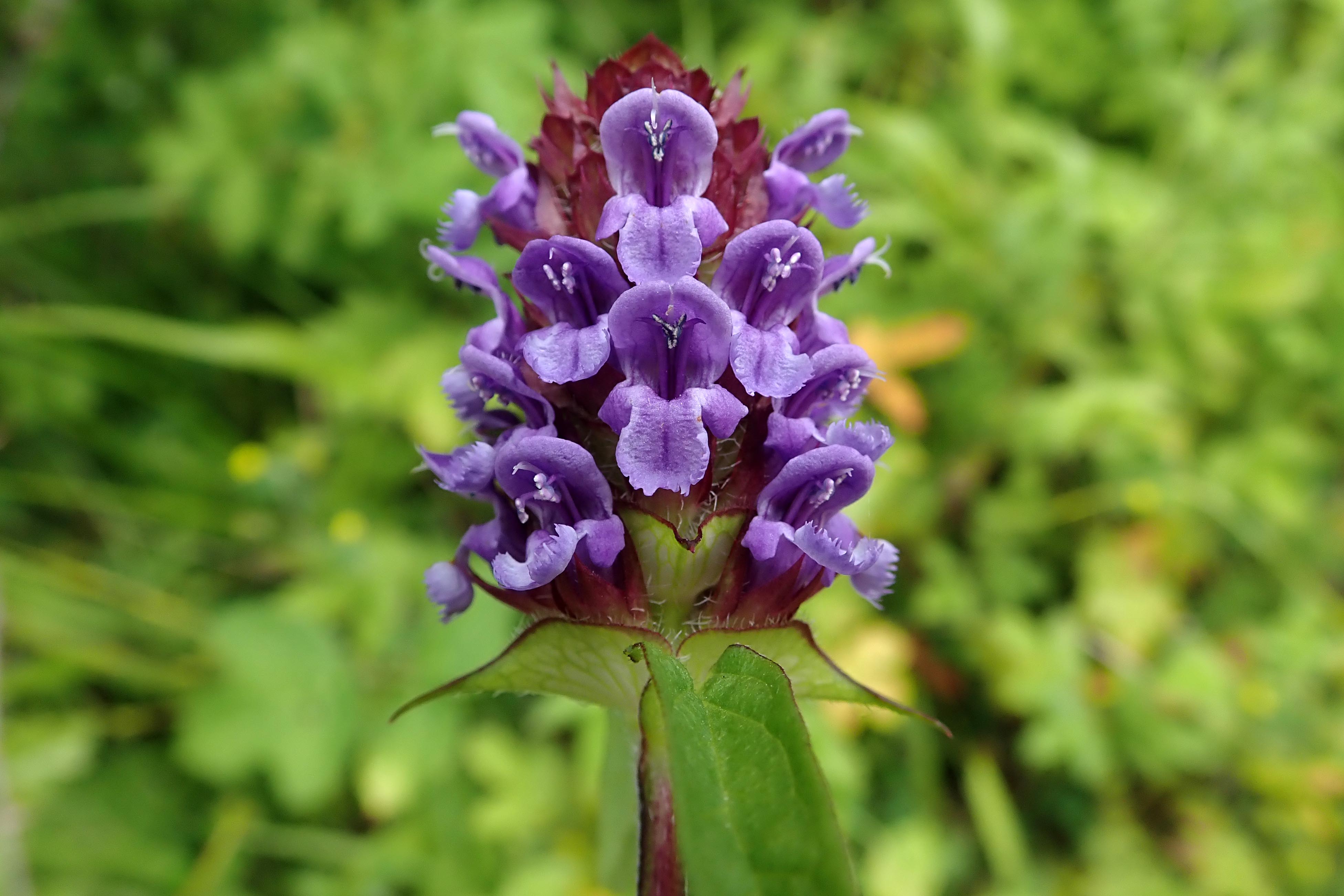
The bluish-violet flowers of Selfheal (Prunella vulgaris) are very common in the summer months, sometimes as short plants popping up in grass and gardens, yet also growing up to a foot tall in the less managed areas provided by woodland rides and wildflower meadows. Bees love to feed on its nectar, and I also spotted a cute Large skipper butterfly slurping away with its amazingly long tongue.

240707 selfheal (2)

As its name implies, Selfheal has long had a reputation as a herbal medicine, used for a variety of purposes from treating wounds and sore throats to stopping a cut from bleeding. I can’t personally attest to its efficacy but I do really enjoy the pop of colour this lovely little plant provides in the warmer months.

240707 selfheal (1)

Like Loading...

Variations on a theme

30 Sunday Jun 2024

Posted by sconzani in flowers, wildflowers

≈ Leave a comment

Tags

British orchids, British wildflowers, Common spotted-orchid, native orchids, orchids

Presumably because of our very wet Spring, the orchids are enjoying a magnificent season hereabouts, with more Bee and Pyramidal orchids than I’ve ever seen before. The beautiful blooms collaged below were all growing within a metre of each other at a local park and, in theory, they’re all Common spotted-orchids. You can see what a wide variation of hues and patterns they exhibit, though I suspect a couple of these may have a few grains of Southern marsh-orchid mixed in to their DNA. Both species grow at this park and are known, sometimes, to cross-pollinate.

240630 common spotted orchids

Like Loading...

Brooklime

23 Sunday Jun 2024

Posted by sconzani in wildflowers

≈ Leave a comment

Tags

British wildflowers, Brooklime, speedwell family, Veronica beccabunga

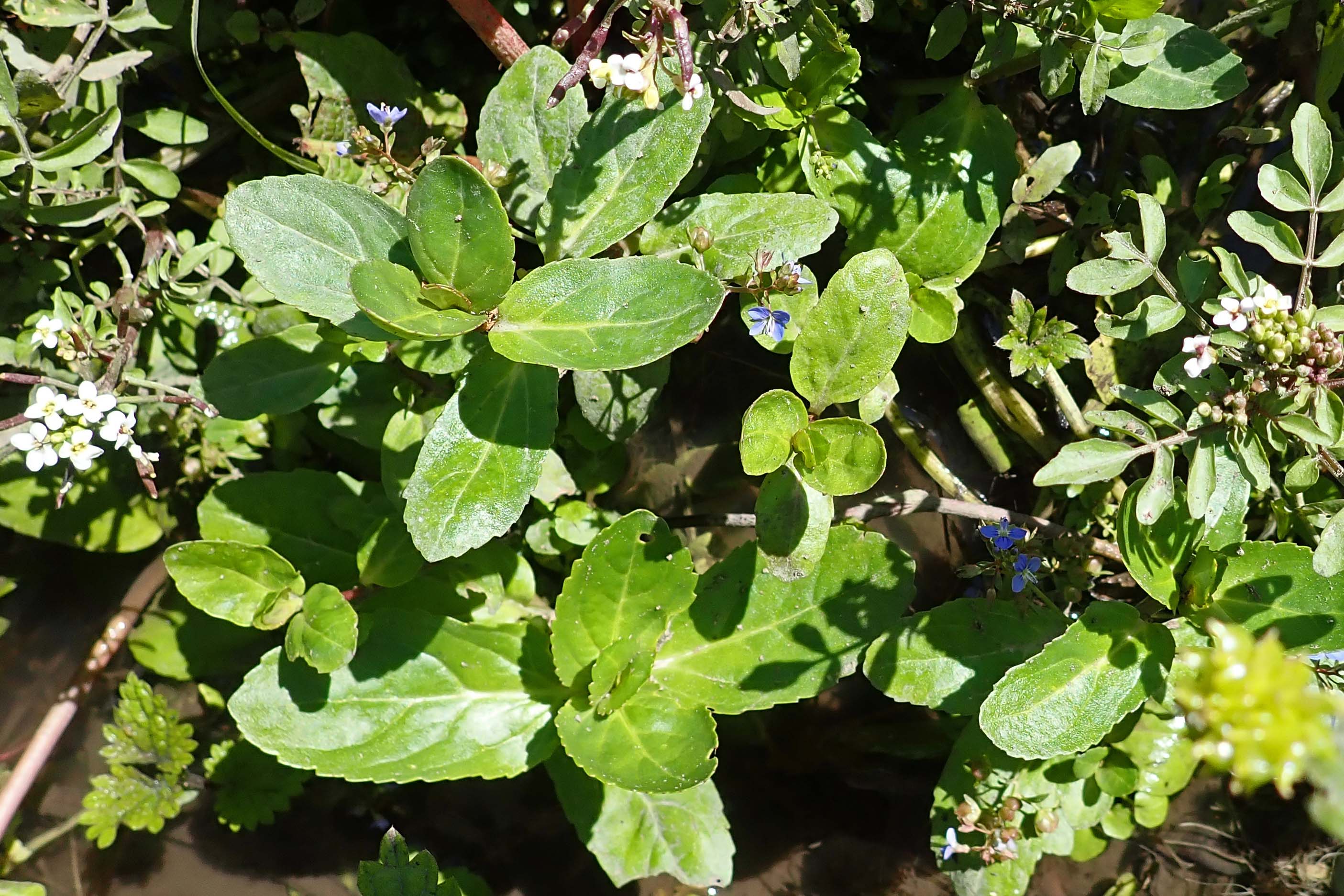
I’ve probably walked past this plant many many times but last Sunday was the first time I knowingly thought ‘Oooo, that must be Brooklime’.

240623 brooklime (1)

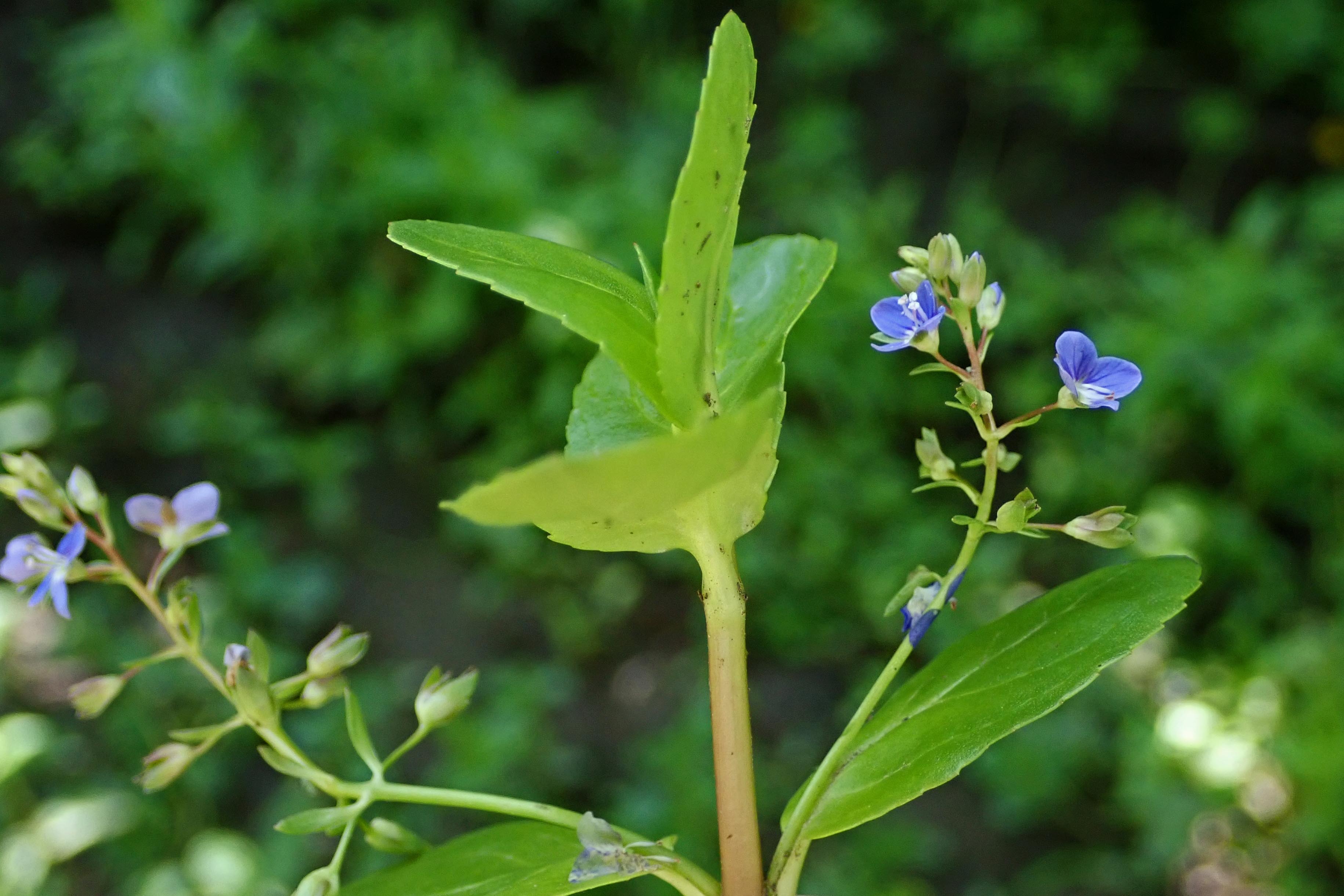
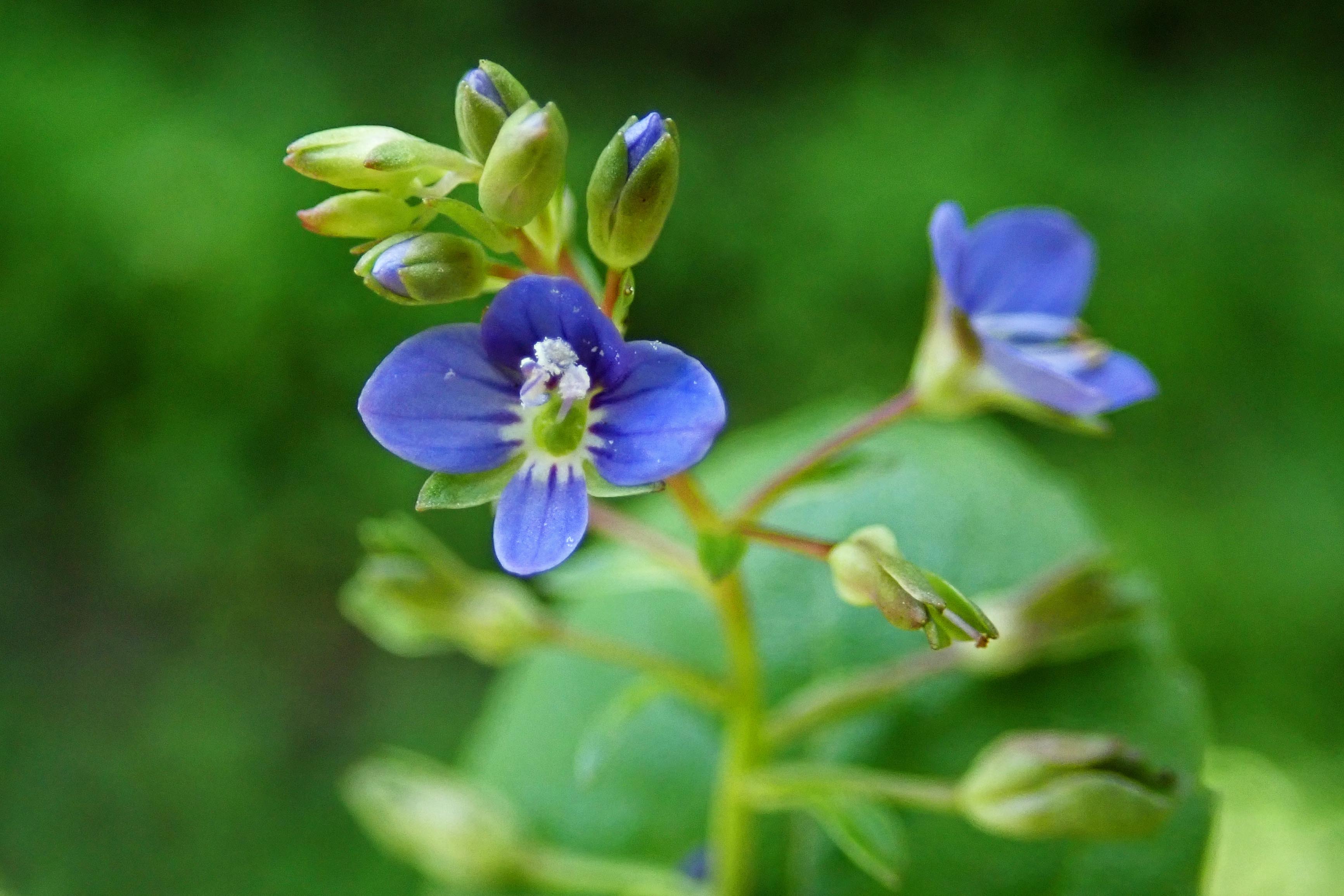
It was the tiny blue flowers that gave it away, and the fleshy succulent-like leaves, and the fact it was growing in the wet muddy area of a local horse field (that has a public footpath running through it, which I often use to get to a favourite local woodland). The flowers of Brooklime (Veronica beccabunga) are the clearest indicator that this is a member of the speedwell family, just one that prefers to live in damp habitats.

240623 brooklime (3)

The Plantlife website has an interesting section on this plant, entitled ‘Things you might not know’:

  • Brooklime was used as a salad plant in much of northern Europe in the past.
  • It used to be eaten with watercress and oranges to help prevent scurvy.
  • Although edible, the leaves are bitter and the same precautions should be taken with them, as with watercress, in order to avoid liver fluke.

240623 brooklime (2)

Like Loading...

Milkwort

16 Sunday Jun 2024

Posted by sconzani in wildflowers

≈ Leave a comment

Tags

British wildflowers, Common milkwort, milkwort, Polygala vulgaris

It’s always a delightful surprise to spot the tiny blue flowers of Milkwort in amongst the grasses and other wildflowers. Apparently, the flowers, which bloom from May right through to September in some locations, can also be deep purple and white but I’ve only ever seen this wonderful bright blue hue.

240616 milkwort (1)

Wikipedia reports that Classical and Renaissance writers stated ‘common milkwort was used medicinally as an infusion to increase the flow of a nursing mother’s milk’.

240616 milkwort (2)

I have assumed until now that the Milkwort plants I’ve seen, in various locations from grasslands to a coal spoil tip, have all been Common milkwort (Polygala vulgaris) but I admit that I have been so taken with the flowers that I haven’t paid much attention to the leaves. It seems that Heath Milkwort (Polygala serpyllifolia) is another possibility and, in future, I need to check whether the lower leaves are opposite each other on the stems (Heath milkwort) or alternate (Common milkwort).

240616 milkwort (3)

Like Loading...

The hatchling, and family

12 Wednesday Jun 2024

Posted by sconzani in insects, wildflowers

≈ Leave a comment

Tags

British weevils, British wildflowers, Cionus scrophulariae, Common figwort, Figwort weevil, Scrophularia nodosa

My little alien has hatched. As I had begun to suspect, it’s the most gorgeous Figwort weevil (Cionus scrophulariae).

240612 figwort weevil (1)

I’ve just returned from delivering my tiny miracle to the small group of Figwort (Scrophularia nodosa) plants near where I first found its cocoon.

240612 figwort weevil (2)

These are two other Figwort weevils I found on those plants; they are probably some of its siblings. Aren’t they just delightful creatures?

240612 figwort weevil (3)240612 figwort weevil (4)

Like Loading...

On the Oxeyes

09 Sunday Jun 2024

Posted by sconzani in insects, wildflowers

≈ 2 Comments

Tags

British insects, British wildflowers, insects on Oxeye daisies, Oxeye daisy

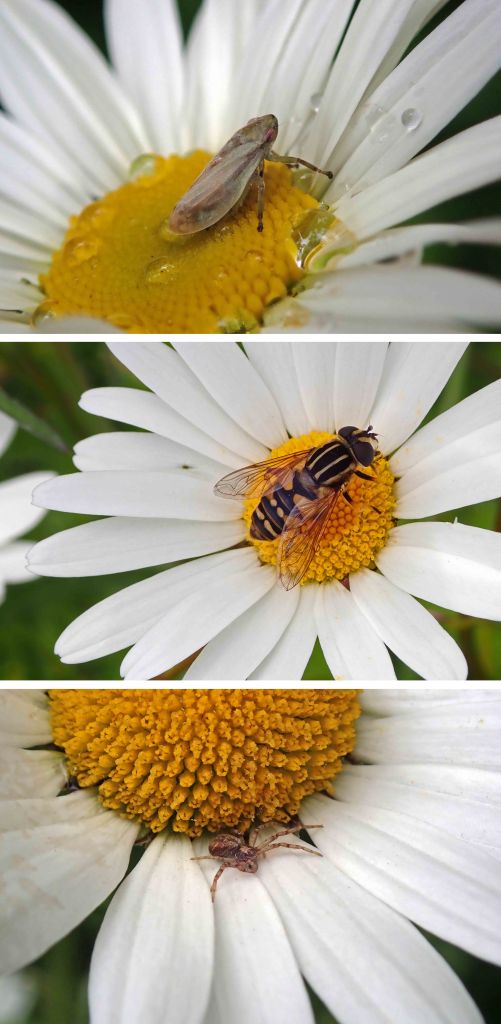
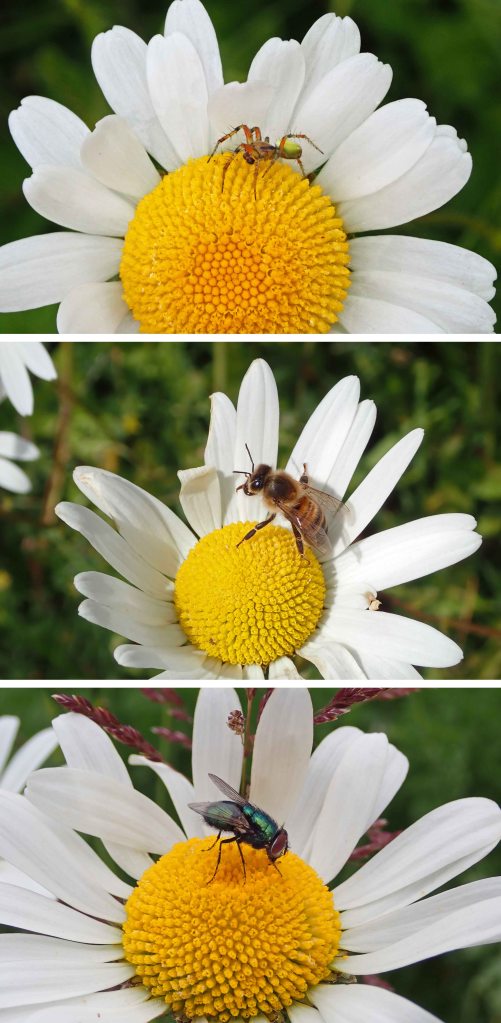
Perhaps because they are so common and abundant I am guilty of ignoring both the beauty and the usefulness of Oxeye daisies.

So, during my walks over the past few days I have been taking more notice and taking photos of the creatures either using the daisies as perches or feeding on their pollen.

If the weather had been more cooperative, without the constant breezy conditions, I probably would have got more photos.

Still, it was nice to see such a variety of invertebrates: bees and hoverflies, ladybirds and their larvae, several species of spider, grasshoppers and froghoppers and tiny beetles.

Like Loading...

Grangemoor’s orchids

02 Sunday Jun 2024

Posted by sconzani in wildflowers

≈ Leave a comment

Tags

#WildflowerHour, Bee orchid, British orchids, Common spotted-orchid, Grangemoor Park, native orchids, Pyramidal orchid, Southern marsh orchid

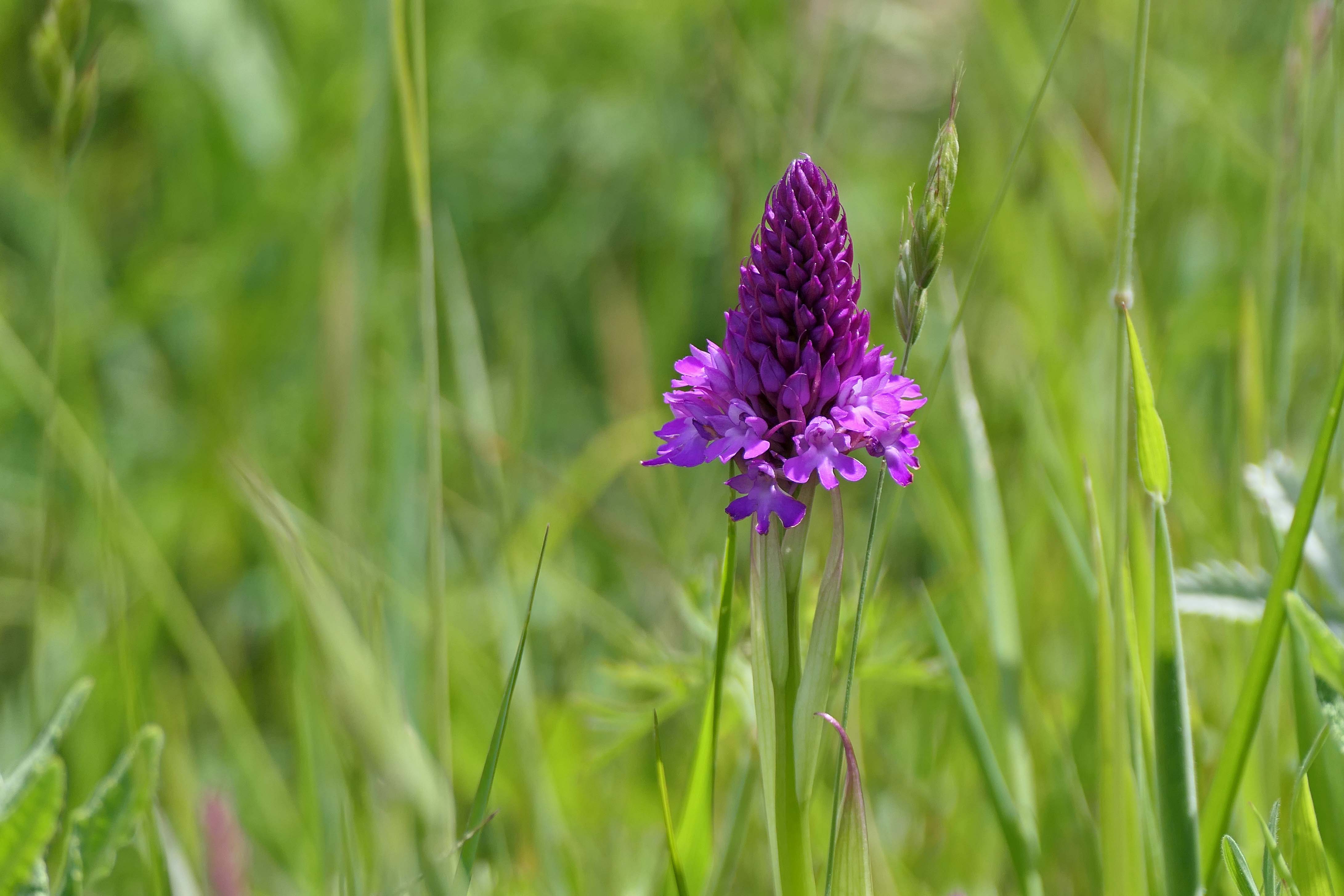
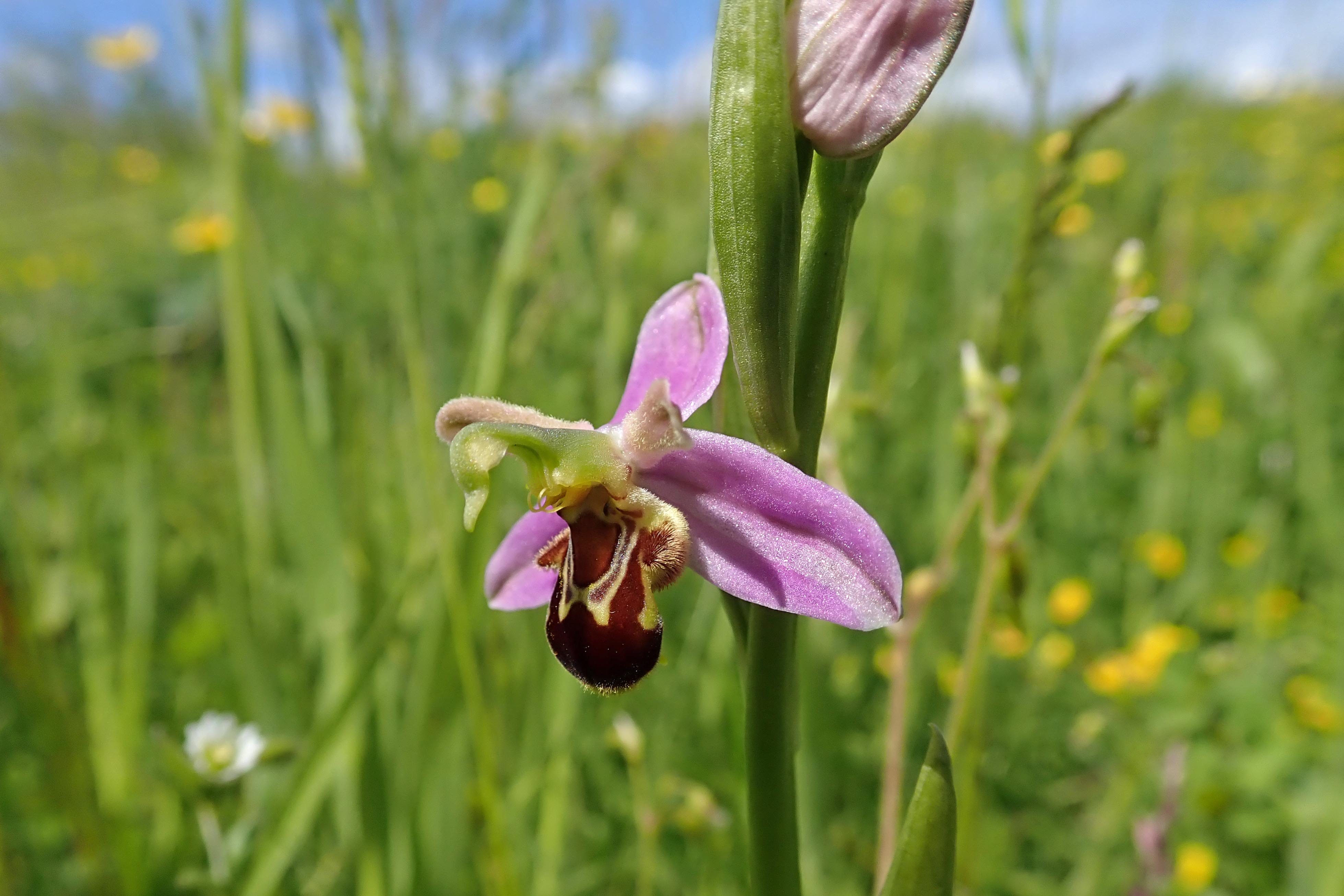
This week’s Wildflower Hour challenge was to find orchids in flower. I love these gorgeous native plants so was very happy to include orchid spotting in a walk to Cardiff’s Grangemoor Park. And I was not disappointed, finding these four species currently in flower.

240602 southern marsh

Southern marsh-orchid (Dactylorhiza praetermissa)

240602 common spotted

Common spotted-orchid (Dactylorhiza fuchsia)

240602 pyramidal

Pyramidal orchid (Anacamptis pyramidalis)

240602 bee

Bee orchid (Ophrys apifera)

Like Loading...

Common broomrape

26 Sunday May 2024

Posted by sconzani in plants, wildflowers

≈ 2 Comments

Tags

British wildflowers, broomrape, Common broomrape, Orobanchaceae, Orobanche minor, parasitic plant

The broomrapes, the Orobanchaceae, are curious plants – as they’re unable to produce their own chlorophyll they get it by parasitising the roots of other plants. Until last week, I had only ever seen Ivy broomrape (Orobanche hederae) but, on my way to Grangemoor Park for a meander, growing amongst wildflowers along a road verge, I found another of the nine native species of broomrape in Britain. This strange beauty is Common broomrape (Orobanche minor), which most often taps in to the roots of members of the pea family (the Fabaceae) and the daisy family (the Asteraceae), but will also parasitise many other plant species.

240526 common broomrape

Like Loading...
← Older posts
Newer posts →

About me

sconzani

sconzani

I'm a writer and photographer; researcher and blogger; birder and nature lover; countryside rambler and city strider; volunteer and biodiversity recorder.

View Full Profile →

Follow earthstar on WordPress.com

Enter your email address to follow this blog and receive notifications of new posts by email.

Recent blog posts

  • Busy Blue tits March 17, 2026
  • Cuttlebones March 16, 2026
  • No woodland here March 15, 2026
  • Family comes first March 14, 2026
  • Local Little egrets March 13, 2026

From the archives

COPYRIGHT

Unless otherwise acknowledged, the text and photographs on this blog are my own and are subject to international copyright. Nothing may be downloaded or copied without my permission.

Fellow Earth Stars!

  • Unknown's avatar
  • Unknown's avatar
  • Unknown's avatar
  • Unknown's avatar
  • Unknown's avatar
  • Unknown's avatar
  • Unknown's avatar
  • Unknown's avatar
  • Unknown's avatar
  • Unknown's avatar
  • Unknown's avatar
  • Unknown's avatar
  • Unknown's avatar
  • Unknown's avatar
  • Unknown's avatar
  • Unknown's avatar
  • Unknown's avatar
  • Unknown's avatar
  • Unknown's avatar
  • Unknown's avatar
  • Unknown's avatar
  • Unknown's avatar
  • Unknown's avatar
  • Unknown's avatar
  • Unknown's avatar
  • Unknown's avatar
  • Unknown's avatar
  • Unknown's avatar
  • Unknown's avatar
  • Unknown's avatar
  • Unknown's avatar
  • Unknown's avatar
  • Unknown's avatar
  • Unknown's avatar
  • Unknown's avatar
  • Unknown's avatar
  • Unknown's avatar
  • Unknown's avatar
  • Unknown's avatar
  • Unknown's avatar
  • Unknown's avatar
  • Unknown's avatar
  • Unknown's avatar
  • Unknown's avatar
  • Unknown's avatar
  • Unknown's avatar
  • Unknown's avatar
  • Unknown's avatar
  • Unknown's avatar
  • Unknown's avatar

Blog at WordPress.com.

Privacy & Cookies: This site uses cookies. By continuing to use this website, you agree to their use.
To find out more, including how to control cookies, see here: Cookie Policy
  • Subscribe Subscribed
    • earthstar
    • Join 668 other subscribers
    • Already have a WordPress.com account? Log in now.
    • earthstar
    • Subscribe Subscribed
    • Sign up
    • Log in
    • Report this content
    • View site in Reader
    • Manage subscriptions
    • Collapse this bar
 

Loading Comments...
 

You must be logged in to post a comment.

    %d