• ABOUT
  • BIRDING 2018
  • Birding 2019
  • BLOG POSTS
  • Butterflies 2018
  • Resources

earthstar

~ a celebration of nature

earthstar

Category Archives: winter

Birding at Dryslwyn, Cilsan Bridge and Tregaron Bog

02 Friday Mar 2018

Posted by sconzani in birds, nature, walks, winter

≈ 3 Comments

Tags

birding, birdwatching, British birds, Cors Caron, Dryslwyn Castle, Glamorgan Bird Club, Green sandpiper, Lapwing, Red kite, Tregaron Bog, Tywi Valley, Whooper swan

Up at 6, collected at 7 and off we headed, west along the M4 for a 9 o’clock meet up with our other Glamorgan Bird Club buddies at the foot of Dryslwyn Castle in mid Wales. This was unexplored territory for me and the scenery of the Tywi (or Towy) Valley was simply stunning, with castles and monuments seemingly on every hill top and the beautiful River Tywi meandering through the valley below them. It was clear but cold, with a bitter wind, and heavy frost and thick ice still blanketing those spots the sun could not reach. Later, we moved on to Tregaron Bog, also known as Cors Caron National Nature Reserve, a fabulous area of marsh and wetland. And what a superb day’s birding we had!
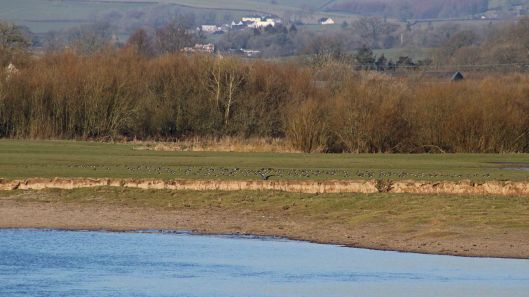
180302 Tywi Valley (1)

A large flock of Lapwing on the fields next to the River Tywi, and a Grey heron flying in.

180302 Tywi Valley (2)

Ducks, geese and Little grebes in the river.

180302 Tywi Valley (3)

A Red kite looks for lunch from its perch on this big old dead tree.

180302 Tywi Valley (4)

Looking towards Dinefwr Castle, with two swans flying off (possibly Mute but we also saw Whooper).

180302 Tywi Valley (5)

A thrush checks through a mole hill for potential food.
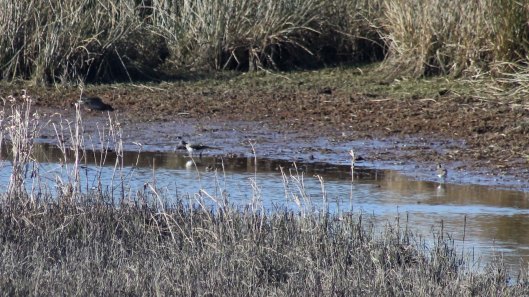
180302 Tregaron Bog (1)

Too distant for clear shots, two Green sandpipers (and a Teal), from one of the hides at Tregaron Bog.
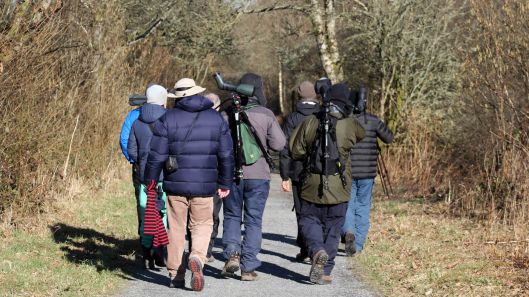
180302 Tregaron Bog (2)

Intrepid birders, well rugged up against the chill.
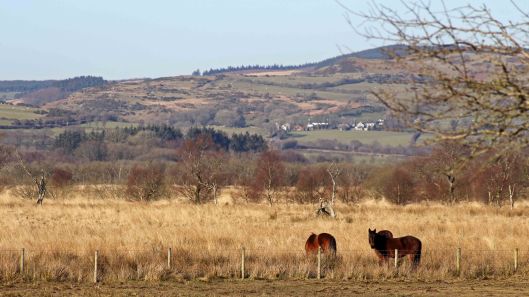
180302 Tregaron Bog (3)

Beautiful countryside around Tregaron Bog, where grazing ponies help to manage the wetland environment.

180302 Tregaron Bog (4)

A Red kite; one of several seen this day and spectacular birds to watch.

My species list for the day was: Mute Swan, Whooper Swan, Pink-footed Goose, Greylag Goose, Canada Goose, Wigeon, Teal, Mallard, Goosander, Little Grebe, Grey Heron, Great White Egret, Little Egret, Cormorant, Red Kite, Hen Harrier, Buzzard, Lapwing, Snipe, Curlew, Green Sandpiper, Black-headed Gull, Herring Gull, Lesser Black-backed Gull, Woodpigeon, Great Spotted Woodpecker, Magpie, Jackdaw, Carrion Crow, Raven, Blue Tit, Great Tit, Coal Tit, Wren, Treecreeper, Starling, Blackbird, Fieldfare, Song Thrush, Redwing, Mistle Thrush, Robin, Stonechat, Dunnock, House Sparrow, Tree Sparrow, Pied Wagtail, Chaffinch, Goldfinch and Bullfinch. A further 7 species were seen by other members of our group but not by me: Peregrine, Common Gull, Rook, Long-tailed Tit, Goldcrest, Nuthatch, and Greenfinch.

Like Loading...

Wild words: icicle

28 Wednesday Feb 2018

Posted by sconzani in nature, weather, winter

≈ 3 Comments

Tags

#WildWords, Cardiff Bay, Ely embankment, ice, icicle, ickel, winter chill

Icicle: noun; a hanging, tapering piece of ice formed by the freezing of dripping water (Oxford Dictionary). The word comes from the Old English word gicel, which morphed into ikyl or ikel, and later ickle, a word which is still used in parts of Yorkshire.

180228 icicle (1)

My photos were taken on the Ely embankment in Cardiff Bay yesterday, as Britain shivers its way through a blast of chilly Siberian air. The combination of freezing temperatures and the constant lapping of the water on to the branches that litter the shoreline resulted in some beautiful icicles.

180228 icicle (2)

Like Loading...

Fluffing up

13 Tuesday Feb 2018

Posted by sconzani in birds, nature, winter

≈ 4 Comments

Tags

bird behaviour, birding, birdwatching, British birds, feathers, feathers as insulation, fluffing up feathers, how birds keep warm, robin

180213 robin (2)

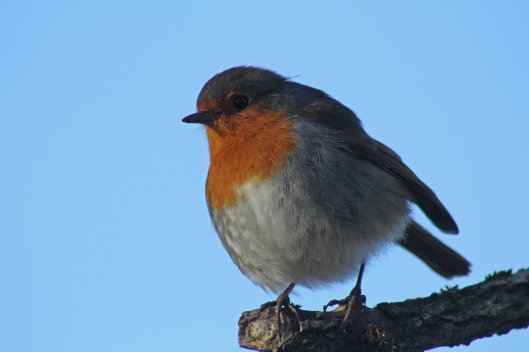
The biting wind seems to find the smallest crack in your several layers of clothing to nip at exposed flesh, your hands feel frost-bitten even though you’ve got your thickest gloves on, and the tip of your nose is so cold that you can no longer feel it. Yet there on a fence post directly in front of you, equally exposed to the wintery weather, is a chirpy wee Robin, singing its heart out, seemingly oblivious to the chill. How does it do it?

180213 robin (1)

Well, the answer is in the fluffing up of its feathers. If you’ve ever slept under a down- or feather-filled duvet, you’ll know how incredibly warm feathers can be, and that’s especially true for our wee Robin. You see, feathers are a brilliant form of insulation material – feathers trap air close to the bird’s body so, in winter, they trap the warmth of the bird’s body heat. The more fluffed up the feathers are, the more warm air they trap, the more cosy is our little Robin.

180213 robin (3)

Like Loading...

Wild words: apricity

07 Wednesday Feb 2018

Posted by sconzani in birds, nature, winter

≈ 2 Comments

Tags

#WildWords, apricity, Black-headed gull, gull, warmth of sun in winter, winter sunshine

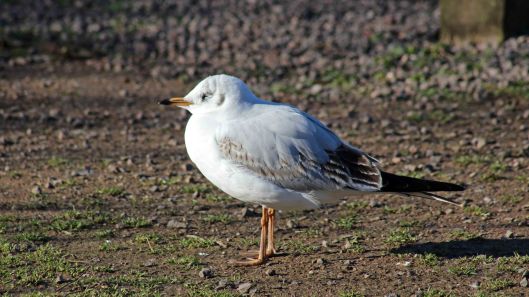
This wonderful old word doesn’t appear in the Oxford Dictionary online, presumably because they’ve replaced it with something trendy like ‘mansplain’ and ‘youthquake’. Well, call me old-fashioned but I much prefer something old and meaningful to these modern inventions.

So, then, apricity (thanks to the Merriam-Webster) ‘appears to have entered our language in 1623, when Henry Cockeram recorded (or possibly invented) it for his dictionary The English Dictionary; or, An Interpreter of Hard English Words.’ And it means ‘the warmth of the sun in winter’, something even this gull was seen, last week, to enjoy and appreciate.

180207 apricity

Like Loading...

Wild words: catkin

31 Wednesday Jan 2018

Posted by sconzani in nature, spring, trees, winter

≈ Leave a comment

Tags

catkin, Corylus avellana, female Hazel flower, Hazel catkin, Hazel tree, wild words

Catkin: According to the Oxford Dictionary, a late 16th century noun, from the now-obsolete Dutch word katteken for kitten (how sweet is that?), meaning a downy, hanging flowering spike of trees such as willow and hazel, pollinated by the wind.

And now is the time to see catkins, at least where I live in south Wales. I took these photos of male Hazel catkins (Corylus avellana) earlier this week, the gusty breeze helping to spread their yellow pollen, hopefully to fall on the tiny pink female flowers of neighbouring trees, there to develop into fruit and later nuts.

180131 Hazel male catkins (2)
180131 Hazel male catkins (1)

180131 Hazel female flower

Like Loading...

Another winter ten

28 Sunday Jan 2018

Posted by sconzani in flowers, nature, wildflowers, winter

≈ Leave a comment

Tags

#theWinter10, British flora, January flowers, wildflowers, winterf-flowering wildflowers

It was about time I had another go at WildflowerHour’s current challenge: ‘our weekly winter challenge is #thewinter10 which is to find ten different wild flowers in bloom each week. Once you’ve found them, work out what they are, and post them for the rest of us to see.’

So, on Thursday’s walk, though I was really looking for birds, I also remembered to cast my eyes downwards for flowers. And, on one relatively short stretch along the western edge of Cardiff Bay, I found my ten: Creeping buttercup (I think). a Dandelion species, Nipplewort, Petty spurge, possibly Common mouse-ear, Red dead nettle, Groundsel, Sweet meadow grass, Gorse, and Red clover.

180128 Winter ten (1)
180128 Winter ten (2)
180128 Winter ten (3)
180128 Winter ten (5)
180128 Winter ten (6)
180128 Winter ten (8)
180128 Winter ten (9)
180128 Winter ten (10)
180128 Winter ten (11)
180128 Winter ten (12)
Like Loading...

Heads up for Big Garden Birdwatch

23 Tuesday Jan 2018

Posted by sconzani in birds, nature, winter

≈ 4 Comments

Tags

Big Garden Birdwatch, birding, birdwatching, British birds, counting the birds in your garden, RSPB birdwatch

180123 1 blackbird
180123 2 blue tit
180123 3 chaffinch

I don’t have a garden but that doesn’t mean I can’t take part in this weekend’s RSPB Big Garden Birdwatch ’cause you can also do your count in your local park.

180123 4 coal tit
180123 5 collared dove
180123 6 dunnock

All it takes is an hour of your time on either the 27th, 28th or 29th of January, a pen and paper so you can make a note of the birds you see, and maybe a cup of tea and a couple of biscuits to keep you going.

180123 7 Goldfinch
180123 8 great tit
180123 9 house sparrow

The specific list of birds to be counted is Blackbird, Blue tit, Chaffinch, Coal tit, Collared dove, Dunnock, Goldfinch, Great tit, House sparrow, Greenfinch, Long-tailed tit, Magpie, Robin, Starling and Woodpigeon. Of course, the RSPB is also interested in any other birds you see in your garden (not flying overhead), and any other creatures that have visited your garden in the past year – a mole or a hedgehog or maybe a fox?

180123 10 greenfinch
180123 11 long-tailed tit
180123 12 magpie

Here’s the link so all you Brits out there can check the details and get involved.

180123 13 robin
180123 14 Starling
180123 15 woodpigeon


Like Loading...

Yellow-legged gull

15 Monday Jan 2018

Posted by sconzani in birds, nature, winter

≈ 2 Comments

Tags

birding, birdwatching, British birds, gull identification, Larus michahellis, Yellow-legge gull 2w, Yellow-legged gull

Back in November, I thought I’d found my first Yellow-legged gull (Larus michahellis) – and it still might have been – though I’m really not convinced about it. But, this gull, the one pictured here, is absolutely, one-hundred-percent definitely a Yellow-legged gull … even though its legs are not yellow. Have I not written previously that gulls are tricksy?!

180115 Yellow-legged Gull 2w (1)

As you might guess from looking at it, this is not an adult gull. I’m reliably informed, by the expert birding friend who identified it for me, that this gull is in its second winter. My bird guide book tells me these gulls take four years to reach adult plumage so it’s half way there. Its age is the reason its legs are not yet yellow.

180115 Yellow-legged gull 2w (2)
180115 2nd winter Herring gull

One of the main keys to its identification is the colour of the feathers on its back: Yellow-legged gulls are about mid way between the light grey of Herring gulls and the darker grey of Lesser black-backeds. The two photos above show my Yellow-legged gull, on the left, and, on the right, a Herring gull of the same age. I can see the difference in the feather colour and, to my eye, the shape of the head and bill look slightly different but I’m not sure I’d be confident of IDing one of these gulls without expert help.

180115 Yellow-legged gull 2w (3)
180115 Yellow-legged gull 2w (4)

180115 Yellow-legged gull 2w (5)

Like Loading...

This crisp winter air

09 Tuesday Jan 2018

Posted by sconzani in leaves, nature, weather, winter

≈ 3 Comments

Tags

fire of the frost, frost, frosty leaves, ice, winter weather

180109 frosty leaves (1)

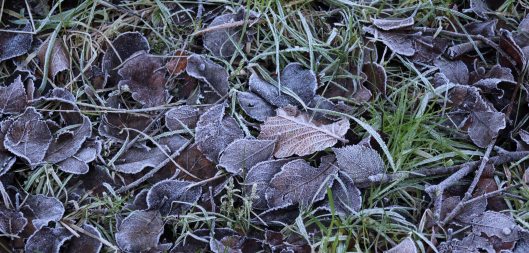
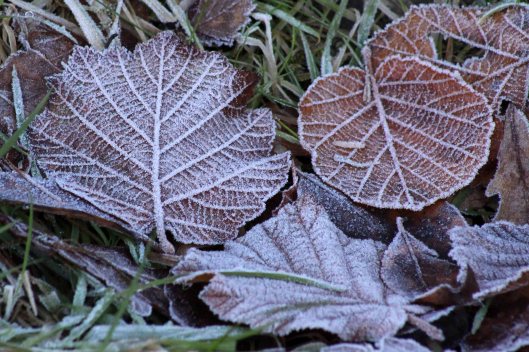
‘It is the life of the crystal, the architect of the flake, the fire of the frost, the soul of the sunbeam. This crisp winter air is full of it.’ ~ John Burroughs (1837-1921), Winter Sunshine, 1875

180109 frosty leaves (2)180109 frosty leaves (3)180109 frosty leaves (4)

Like Loading...

New Year Plant Hunt

02 Tuesday Jan 2018

Posted by sconzani in flowers, nature, plants, winter

≈ Leave a comment

Tags

#NewYearPlantHunt, British wildflowers, BSBI, New Year Plant Hunt, wildflowers in bloom, winter-blooming wildflowers

Did you do the New Year Plant Hunt?

180102 New Year Plant Hunt (1)
180102 New Year Plant Hunt (2)
180102 New Year Plant Hunt (3)

 
Running from Saturday 30 December until today, Tuesday 2 January, this was the BSBI’s (Botanical Society of Britain and Ireland) seventh annual plant hunt event. The idea is to spend three hours on one of those days (or every day, if you’re as keen as Hoary mustard), in one location (or several, if you like to roam like Ivy), trying to find as many wild or naturalised plants that are flowering as you can. You then share your finds on social media and, most importantly, you also need to send your records in to the BSBI team so they can analyse the results (full details on their website here).

180102 New Year Plant Hunt (4)
180102 New Year Plant Hunt (5)
180102 New Year Plant Hunt (6)

On the last day of 2017 I took myself off on a wander around Penarth township and marina – basically, within the square kilometre that is ST1872 – and was delighted to find 15 different wild plants in bloom. The Field scabious was a particular highlight!

180102 New Year Plant Hunt (7)
180102 New Year Plant Hunt (8)
180102 New Year Plant Hunt (9)
180102 New Year Plant Hunt (10)
180102 New Year Plant Hunt (11)
180102 New Year Plant Hunt (12)
180102 New Year Plant Hunt (13)
180102 New Year Plant Hunt (14)
180102 New Year Plant Hunt (15)
Like Loading...
← Older posts
Newer posts →

About me

sconzani

sconzani

I'm a writer and photographer; researcher and blogger; birder and nature lover; countryside rambler and city strider; volunteer and biodiversity recorder.

View Full Profile →

Follow earthstar on WordPress.com

Enter your email address to follow this blog and receive notifications of new posts by email.

Recent blog posts

  • A surprise Slow-worm April 11, 2026
  • My first Holly blue April 10, 2026
  • Alder flies April 9, 2026
  • Lily beetle April 8, 2026
  • First bee-flies April 7, 2026

From the archives

COPYRIGHT

Unless otherwise acknowledged, the text and photographs on this blog are my own and are subject to international copyright. Nothing may be downloaded or copied without my permission.

Fellow Earth Stars!

  • Unknown's avatar
  • Unknown's avatar
  • Unknown's avatar
  • Unknown's avatar
  • Unknown's avatar
  • Unknown's avatar
  • Unknown's avatar
  • Unknown's avatar
  • Unknown's avatar
  • Unknown's avatar
  • Unknown's avatar
  • Unknown's avatar
  • Unknown's avatar
  • Unknown's avatar
  • Unknown's avatar
  • Unknown's avatar
  • Unknown's avatar
  • Unknown's avatar
  • Unknown's avatar
  • Unknown's avatar
  • Unknown's avatar
  • Unknown's avatar
  • Unknown's avatar
  • Unknown's avatar
  • Unknown's avatar
  • Unknown's avatar
  • Unknown's avatar
  • Unknown's avatar
  • Unknown's avatar
  • Unknown's avatar
  • Unknown's avatar
  • Unknown's avatar
  • Unknown's avatar
  • Unknown's avatar
  • Unknown's avatar
  • Unknown's avatar
  • Unknown's avatar
  • Unknown's avatar
  • Unknown's avatar
  • Unknown's avatar
  • Unknown's avatar
  • Unknown's avatar
  • Unknown's avatar
  • Unknown's avatar
  • Unknown's avatar
  • Unknown's avatar
  • Unknown's avatar
  • Unknown's avatar
  • Unknown's avatar
  • Unknown's avatar

Blog at WordPress.com.

Privacy & Cookies: This site uses cookies. By continuing to use this website, you agree to their use.
To find out more, including how to control cookies, see here: Cookie Policy
  • Subscribe Subscribed
    • earthstar
    • Join 642 other subscribers
    • Already have a WordPress.com account? Log in now.
    • earthstar
    • Subscribe Subscribed
    • Sign up
    • Log in
    • Report this content
    • View site in Reader
    • Manage subscriptions
    • Collapse this bar
 

Loading Comments...
 

You must be logged in to post a comment.

    %d