Leafmines: Coleophora lineolea

Tags

, , , , ,

When I spotted the spiders I blogged about on Saturday (Spiders: Metellina segmentata), they were spinning their webs on two adjacent plants of Hedge woundwort (Stachys sylvatica) (I was actually looking for Woundwort shieldbugs, which I haven’t seen this year). In the process of photographing those spiders, I spotted some leafmines, something I’d not seen previously on these particular plants.

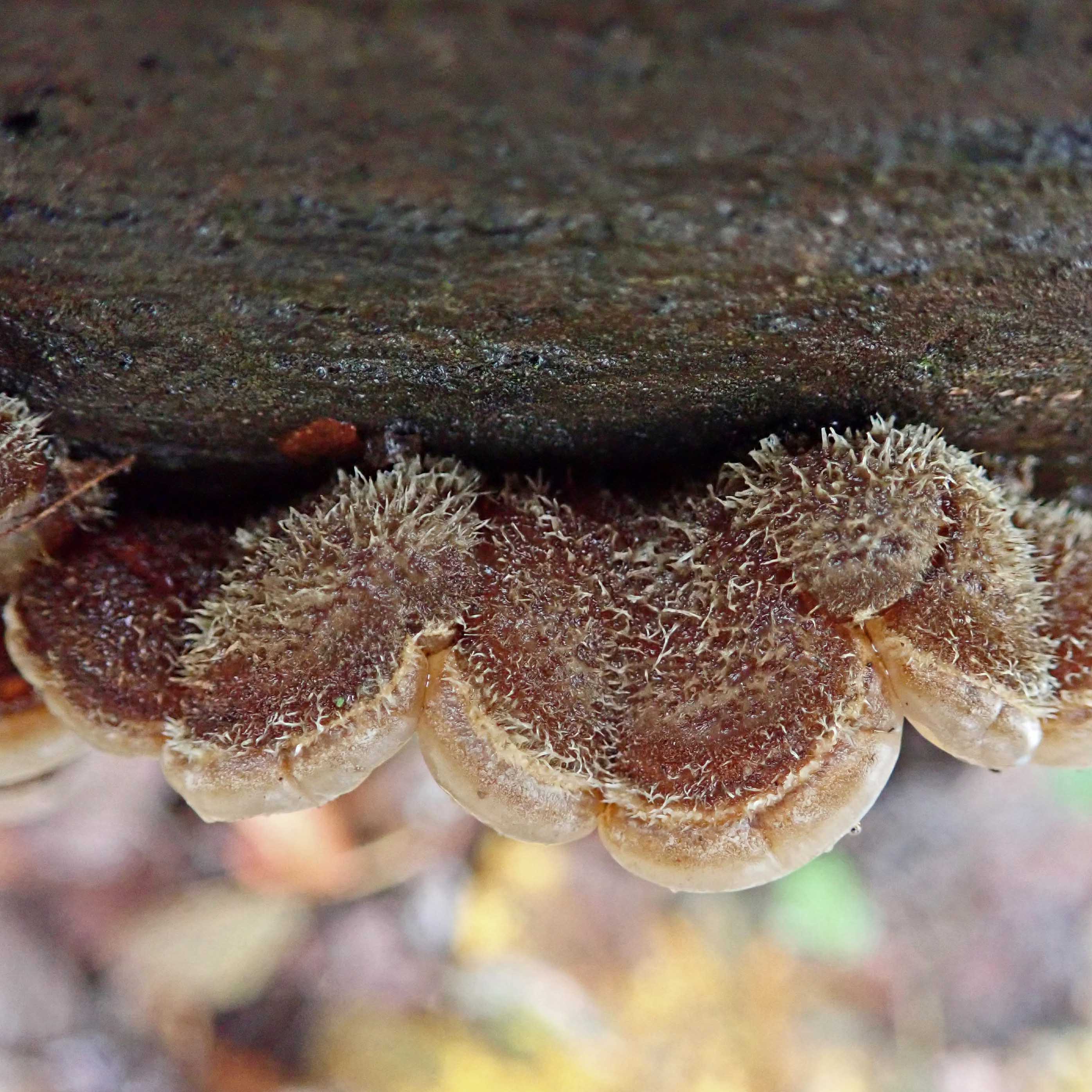
Noticing what looked like tiny holes in the blotch mines, I suspected the miners must be a species of Coleophora moth and, sure enough, when I turned the leaves over, I found two of the little cases that Coleophora larvae construct to shelter in. There is only one Coleophora moth species whose larvae eat Hedge woundwort so, for once, identification was straight forward: these were Coleophora lineolea. The adult moth is a little cracker, a pale orange-and-white striped beauty, a photo of which you can see on the UK Moths website.

As they’re made from the hairy leaves of the woundwort, the tiny larval cases were themselves very hairy, and rather attractive. This moth uses several other larval plant species – Black and White horehound, Lamb’s ear, and a couple of sages – as well as Hedge woundwort, and the mines and cases can be found between September and May, as they overwinter as larvae, snug in their little cases.

Sea aster

Tags

, , , , ,

According to Richard Mabey in Flora Britannica, Michaelmas-daisies were introduced to Britain in the early 1700s from their native North America, and many of those introduced species have now escaped their garden settings to become naturalised in the wider countryside. Not so the Sea aster (Aster tripolium), as this is a native British species of Michaelmas-daisy.

I had noticed some Sea asters in flower during my previous visit to Weymouth in late July but not many were in bloom. During my most recent visit, the flowers were much more abundant, which I’ve now discovered is because the peak flowering period for most species of Michaelmas-daisy coincides with Michaelmas Day on 29 September; I guess that should have been obvious from their name.

As the common name of our native species implies, the Sea aster is most at home in salty conditions, flourishing in coastal saltmarshes, though, apparently, it will sometimes appear alongside roads that have been heavily salted for de-icing purposes during the winter months.

Spider: Metellina segmentata

Tags

, , ,

I’m rather chuffed with how many new spiders I’ve managed to find this year; this is the latest of them, two found close together on vegetation along a quiet local footpath just before my mini break in Weymouth, and now verified by our Welsh spider recording expert.

There are three species of Metellina orb web spiders in Britain, all of which are common and quite difficult to tell apart – my guide book includes the dreaded ‘microscopic examination of the genitalia is necessary to confirm identification‘ phrase. The two species most easily confused are Metellina mengei and Metellina segmentata but, fortunately, they can be seen at different times of the year, M. mengei in spring and early summer, M. segmentata in late summer and autumn. As I found these a couple of weeks ago, in early autumn, that has helped to confirm them as Metellina segmentata.

Sandwich terns

Tags

, , , , , , ,

These beauties are the last of the birds I’ll share from my recent trip to Weymouth: Sandwich terns (Sterna sandvicensis). Though some tern species can be tricky to tell apart (Common and Arctic, in particular), with their yellow-tipped black beaks, black legs and black-capped heads, Sandwich terns are a bit more straight forward to identify.

~  Sandwich terns seen here with mostly Mediterranean gulls, Dunlin & Ringed plover

As you can perhaps see in my photos, the black cap on its head is not a permanent feature; it is fully black at the beginning of the breeding season but then quickly begins to develop white speckles above the eyes and, by the end of the summer, the whole of the forehead is white, making the ‘hair do’ resemble more of a monk’s tonsure. I guess the stress of raising young will do that, even to terns!

I didn’t know much about these birds but my guide book tells me that Sandwich terns breed in northern Europe (including in colonies around the coast of Britain), Russia and North America, then move south, which is when they can be seen in southern Britain, on passage to their wintering locations, mostly on the west coast of Africa.

If you’re wondering, as I was, about the origin of its name, in Fauna Britannica, Stefan Buczacki tells that ‘Its association with the town of Sandwich on the Kent coast dates back to 1785, when the naturalist John Latham was sent specimens collected from there by some local boys’.

The sea mouse

Tags

, , , , ,

Having blogged twice already about my recent afternoon at Ferrybridge, between Weymouth and the Isle of Portland, it occurred to me to show you what it looks like. This photo was taken at the end of the couple of hours I spent there, by which time the tide was well out and the weather that was rolling in was looking quite ominous: time to beat a hasty retreat!

Today’s blog is about the third species I managed to get reasonably close to and spent quality time watching that afternoon, a cousin to the Sanderling and Knot, with which it shares the sandy shores and mud flats, the Dunlin (Calidris alpina).

The Dunlin has some wonderfully evocative vernacular names, according to my Fauna Britannica: ebb cock (by the Shetlanders), pickerel (Scotland, in general), sandy (Northumberland), sand mouse (Westmorland), and sea mouse (Dumfries and Lancashire), amongst many others. Each name suggests an image of the bird’s habit of scurrying back and forth along the sandy shores as it forages for tiny sea creatures.

Luckily for me, there were several Dunlin and Ringed plover foraging along the top of the beach when I arrived, and I managed to find a spot, crouched in the lee of a shed out of the blasting wind and camouflaged by some scrubby vegetation where I could spend time watching these wonderful little waders going about their business.

Though the Dunlin seems common and ubiquitous around the British coastline, its numbers are in serious decline here, with the BTO reporting a 24% decline in the over-wintering population between 1997 and 2022. So, although the bird is listed as of ‘least concern’ internationally, here in Britain it is red-listed. It would be a tragedy to lose this sublime little sea mouse so let’s hope its population somehow manages to recover.

King Canut’s favourite bird?

Tags

, , , , , ,

My afternoon being battered by the strong winds at Ferrybridge also provided several other nice bird sightings, including these Knot (Calidris canutus).

I was intrigued by the epithet canutus in the bird’s scientific name; fortunately, Stefan Buczacki provides the answer in Fauna Britannica:

The name ‘Knot’ imitates the rather low, grunt-like call and dates back to the fifteenth century … there is a poorly founded belief that the name ‘Knot’ has some connection with King Canut and that the Knots were his favourite birds (hence Calidris canutus), presumably on the basis that they behave much as he did, foolishly playing around the tide-line.

The Knot is a relatively large wading bird – you can see a size comparison with a Dunlin in my first photograph. Both birds belong to the genus Calidris, a long list of waders that look rather alike and all breed in the high Arctic. We are fortunate to enjoy their presence during the winter months, when large flocks often form around parts of the British coastline. You can read more about the Knot on the BTO website.

Sanderlings, sand runners

Tags

, , , , , , ,

My plans for my days in and around Weymouth last week didn’t quite go as I expected due to the weather: we had a lot of heavy rain showers, and the westerly winds, especially on Thursday, were gale-force and relentless. Luckily, I had gone prepared, with full wet weather gear – I wasn’t going to let rain spoil my birding plans.

I knew from previous visits that the area in front of the Wild Chesil Centre, at Ferrybridge, on the causeway between Weymouth and the Isle of Portland, was a good place to look for birds, especially as autumn migration is well underway now in Britain. I checked that area on Tuesday afternoon, but the tide was already well out so the birds were too distant for me to see with binoculars.

So, on Thursday, after spending the morning at RSPB Lodmoor, I caught the bus to Ferrybridge around noon. Though I could barely stand up in the wind, my tide timing was perfect; as I walked from the bus stop to the Wild Chesil Centre, water was just starting to recede from the mud flats below the footpath, and already a little flock of 12 Turnstones and 2 Sanderling were foraging for any tiny sea creatures that were being exposed by the receding waters.

I admit to being a big fan of waders, which I seldom see in my local area, and I find the Sanderling (Calidris alba) especially attractive, both in looks and in habits; they forage by scurrying rapidly back and forth across the sand and mud. Though photographing these birds was a challenge – I had to wrap my arms around the railing adjacent to the footpath for stability, I managed to get some reasonably decent images of this pair and, though I was very close to them and they were certainly aware of my presence, they were intent on feeding and my photography didn’t disturb them. I clung to those railings for a good 15 minutes, watching their antics, their interaction with the Turnstones and each other, their feeding methods. It was quite magical!

Leafmines: Coptotriche marginea

Tags

, , , , ,

Today’s leafminer is one of two I found before I went away on my latest little mini break (I’ll feature the second in next Monday’s blog post). These bright white blotches, shown here on Bramble, but also found on other Rubus species, were made by the larvae of the moth Coptotriche marginea. Here’s a link to the UK Moth website’s entry on this moth, if you want to see what the adult looks like.

The female moth lays her egg on the upper side of a leaf, then, when the larva hatches, it chews into the leaf and initially creates a linear, gallery mine (you can see this in the third of my images, below), before the mine widens out to form a blotch. My photos below show the upper and under sides of each leaf.

This species is bivoltine; the first leafmines can be seen during July, while the second brood feed right through the winter months, from September to March. I guess staying inside a leaf is a cosy enough place to spend the winter, as long as your leaf doesn’t wither and die during the colder months.

Reddening Glasswort

Tags

, , , , , ,

You may have noticed, in a couple of yesterday’s Ruff photos – as in the photo below (which includes Lapwings, Starlings, a Cormorant drying its wings, with a Grey heron lurking in the background) – the birds are moving around amongst a reddish-coloured plant.

This is Glasswort, one of the Salicornia species, though I don’t which of several species this might be. For one thing, due to the watery environment in which Glassworts thrive, I couldn’t get close to any of the plants, but also these plants can be tricky to distinguish one from the other. If you see Glasswort and want to give it a try, the Wildflower Society website has a downloadable pdf ‘A Guide to the Identification of the Glassworts of the British Isles’.

The Glassworts are plants of seasides and saltmarshes, and are common all around the British coastline. Until this latest visit to RSPB Lodmoor, I hadn’t particularly noticed these plants but this time, as the season is changing from summer to autumn, the Glassworts begin to change colour, and, I think, look stunning. I’m sure the photographers amongst you will also appreciate what a wonderful backdrop this colour provides for images of the local birds.

Ruffing it

Tags

, , , , , , , ,

I’ve just returned from another few days on England’s south coast, in Weymouth and on the Isle of Portland, this time, due to its being migration season and the often inclement weather, mostly birding. And, despite the blasting westerly winds and the frequent heavy rain, it was wonderful!

After arriving mid afternoon on Monday, I took myself on a walk – to stretch my old body after five hours’ train travel and to get some fresh air in my lungs – to RSPB Lodmoor. It’s such a convenient distance from Weymouth town centre and always has something to delight my birding senses. And Monday’s visit did not disappoint, providing my first sighting this year of Ruff (Philomachus pugnax).

The story of the Ruff in Britain is a sad one. My guide book recounts that Ruff became extinct as a breeding bird in Britain around 1850, though it managed to re-establish itself in East Anglia for a time in the 1960s. Now, few if any young are raised in Britain, with the bird’s main breeding grounds ranging from Scandinavia as far east as Siberia, and south as far as the Netherlands. Though some Ruff are present throughout the year in Britain, and several hundred over-winter here, most are seen during autumn migration when the birds pass through on their way to Africa, some flying as far as South Africa.

The Ruff is red-listed in Britain and is globally threatened, as its population has declined dramatically and its breeding and non-breeding ranges have also declined. The two birds I saw are female (though the species name is Ruff, the male bird is known as Ruff due to its extraordinary breeding plumage, while the female is known as Reeve). I felt very privileged to enjoy reasonably close sightings of these large waders and spent quite a lot of time watching them feeding up for their long journey south.