Iridescent Starlings

Tags

, , ,

211013 starling (3)

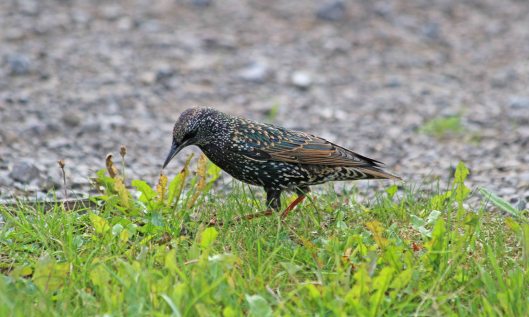
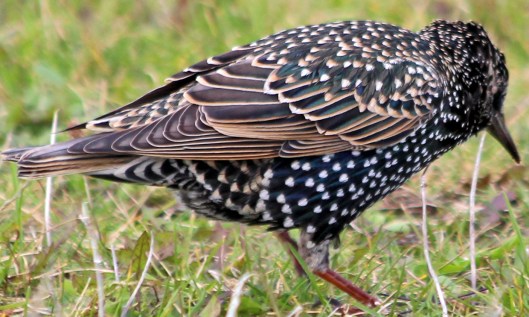
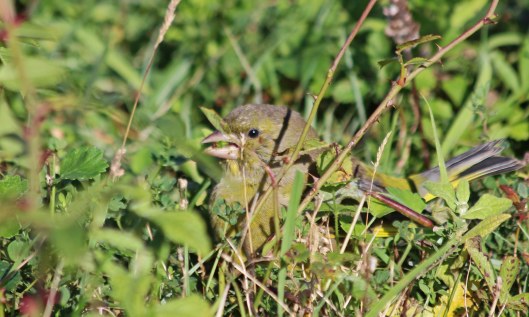
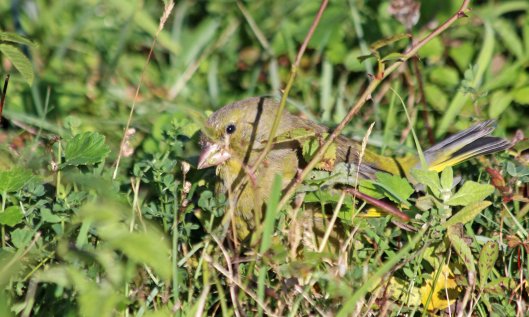
Wire-dotter, pylon-swarmer, dusk-dancer, aerial-clinger … these are just some of author and poet Rob Cowen’s descriptions of these shimmering birds, the Starlings, in his poem ‘Starling’ from his recently published book The Heeding (Elliott and Johnson, London, 2021). I’m not a great reader of poetry but this work is magical, and includes the stunning illustrations of Nick Hayes – I highly recommend their work.

211013 starling (2)

And Starlings are also magical: musicians that entertain with their broad repertoire of trills and whistles, flutes and warbles; murmuraters that fly en masse with remarkable precision; fashionistas that dazzle with the greens, purples and blues of their iridescent plumage.

211013 starling (1)

In Sycamore seeds

Tags

, , , , ,

This is the sequel to yesterday’s post …

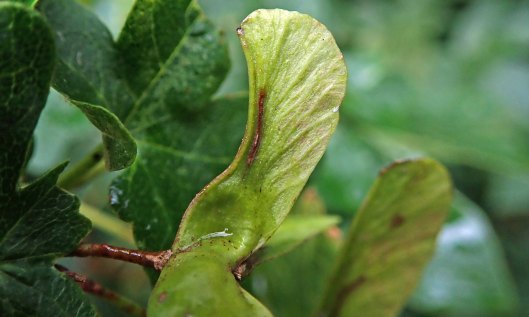
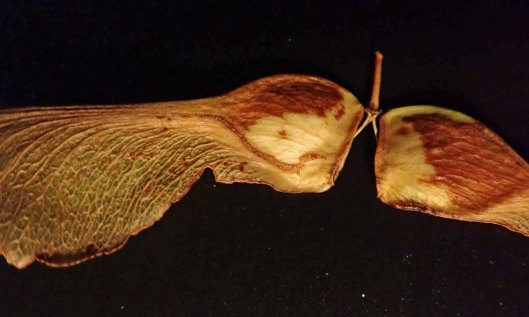
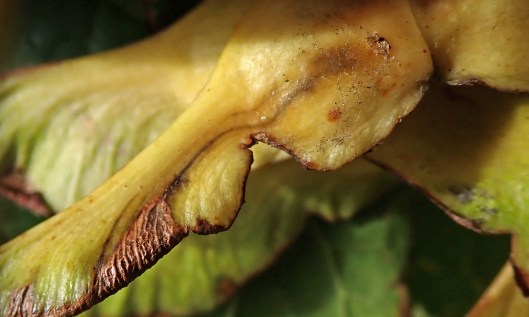
30 September: While I was searching for the larval mines of the moth Ectoedemia decentella on the few Sycamore seeds I could reach, I found one seed with a hole in it. Thinking it might be relevant, I brought it home and later posted a photo and query on Twitter. Butterfly Conservation senior moth ecologist George replied that this is ‘the exit hole made by a tortrix [moth] larva – likely Pammene aurita, though Pammene regiana also feeds on Sycamore seeds’. Then followed a discussion, prompted by George, between he and 3 other moth-ers about whether Pammene regiana makes an exit hole like this. No one knew for sure.

211012 pammene larval mine (1)

1 October: The next morning, when I picked up the little group of three joined seeds, I noticed what looked like frass sitting below. I mentioned this on Twitter and was advised to put the seeds on tissue in a jar in case the larva was still inside.

211012 pammene larval mine (2)

2 October: My tweet: ‘Exciting news: we have a larva! Not from the original hole. I put that seed, with 2 attached, in a jar, and a larva has emerged from one of the other seeds. It’s currently doing a circuit of the tissue – hoping it will pupate.’ It wasn’t until later, when I was looking at the photos I had taken, that I realised the photo above shows where that larva had begun to eat its way out of the seed (indicated by the yellow arrow).

211012 pammene larval mine (3)211012 pammene larval mine (4)

3 October: The larva pupated. I haven’t been able to get a good image as it’s under the tissue and seems partly stuck to the glass jar. And I realised that I’ll now need to wait until at least next May, maybe later to see which moth emerges. What’s that about patience being a virtue?!


211012 pammene larval mine (5)

Moth mines in Acer seeds

Tags

, , , , , , ,

On 29 September, SEWBReC (the South East Wales Biodiversity Records Centre) posted the following tweet:

Calling keen members of #TeamLeafmine. [The county moth recorder] is hoping for Glamorgan records of seed miners of Acer species this year: Etainia louisella on Field Maple / Ectoedemia sericopeza on Norway Maple / Ectoedemia decentella on Sycamore.

Being a keen member of Team Leafmine, I had to take up the challenge. Field maples are quite common locally so the mines in their seeds have been the easiest to find, though they’re by no means common. I’ve managed to find them in two locations so far.

211011 Ectoedemia louisella on Field maple (1)OLYMPUS DIGITAL CAMERA

There are not so many Norway maples in my area – they’re not native, of course, and seem mostly to have been planted in parks, in housing developments, along roadside verges. So far, I’ve found Ectoedemia sericopeza mines on Norway maples at two sites.

OLYMPUS DIGITAL CAMERA211011 Ectoedemia sericopeza on norway maple (2)

As for the mines in Sycamore seeds, well, I quickly realised that most of the local trees are quite tall so the seeds are unreachable. And trees planted in parks and gardens often have their lower branches trimmed off, which also doesn’t help. The solution I’ve found is to search through seeds once they’re fallen off the trees, though they are then very brown, often dirty and sometimes damaged so the mines are not easy to spot. I’ve failed in this search so far but I have found something else in Sycamore seeds … more on that tomorrow.

Finding tongues in trees

Tags

, , , ,

‘And this our life, exempt from public haunt,
Finds tongues in trees, books in the running brooks,
Sermons in stones, and good in everything.’
~ William Shakespeare, As You Like It, Act II, scene I, lines 15-17

When the Duke in As You Like It referred to finding tongues in trees, I think Shakespeare was probably thinking more of the whispers of rustling leaves that finding Alder tongue fungi on the cones of Alder trees, but I like the quote and the way Shakespeare highlights how eloquently Nature speaks to so many of us. And it fits well with all the Alder tongues (Taphrina alni) I’ve been finding lately.

The return of the Ring-necked duck

Tags

, , , ,

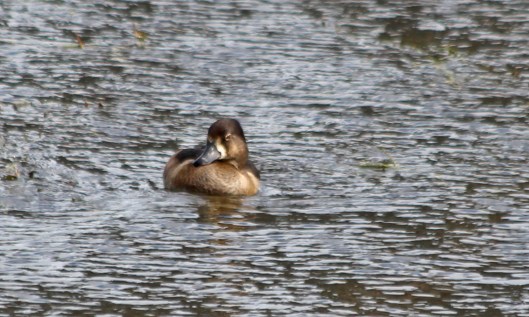
Many local birders, including our county bird recorder, seem to agree that this Ring-necked duck is the same bird that spent much of last winter in Cardiff Bay in the company of the large Tufted duck flock. She appears to have remained in the company of those ducks over the summer and now returned with them to over-winter in the Bay and on other local lakes and reservoirs. Long may she linger!

211007 ring-necked duck (1)

211007 ring-necked duck (4)

Moth hot spot

Tags

, , , , , ,

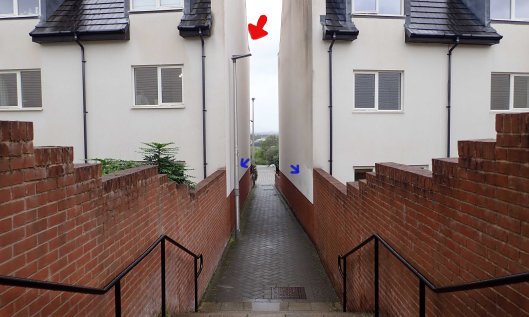
As I’ve mentioned before, my living situation doesn’t lend itself to having a moth trap but there is a local site where I often see moths if I’m out walking in the early mornings. As you can see from the photo below, a streetlight (red arrow) sits above a footpath between two blocks of terraced houses. The light attracts the moths, which then sometimes shelter on the walls (blue arrows) during the day.

211006 mothing spot

As well as the Early grey and Early thorn found back in 2018, I’ve since discovered several more beautiful moths on these walls. The first three, seen last year, are Mottled umber (Erannis defoliaria), the Peppered moth (Biston betularia), and the Winter moth (Operophtera brumata) – you might remember I blogged about the larva of this last moth earlier in the year (Caterpillar in a tent, May 2021).

These next two are more recent sightings, both spotted in the past month. The first is Small dusty wave (Idaea seriata), the second Large ranunculus (Polymixis flavicincta).

211006 4 Small Dusty Wave211006 5 Large Ranunculus

Humbug

Tags

, , , , , ,

It seems late in the season to be seeing a juvenile Great crested grebe that’s still constantly nagging its parent for food and still sporting the head stripes that have earned these birds the nickname ‘Humbug’ (for those unfamiliar with the word, it’s a black-and-white-striped boiled sweet) but there are still a couple in my area.

211005 great crested grebe (1)

I presume these juveniles are the result of second breeding attempts by the adult birds after their first attempts have failed. Their parents may not agree but I think they’re incredibly cute!

211005 great crested grebe (2)

Leafmines: Stigmella plagicolella

Tags

, , , , , ,

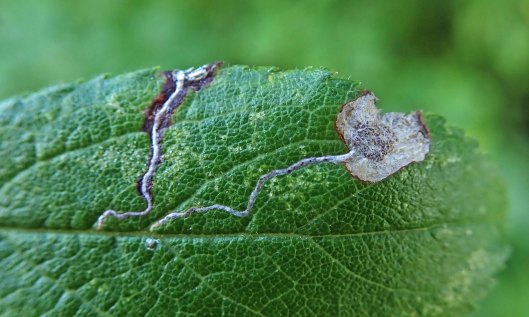
Rob Edmunds, one of the people behind the British Leafminers website, labelled these leafmines ‘tadpoles’ and, as you can see, it’s a very apt description. They are also tiny, as these mines appear on Blackthorn or Sloe (Prunus spinosa), the leaves of which are only 2 – 4cms long.

211004 Stigmella plagicolella (1)

The adults of the moth Stigmella plagicolella, also known as the Scrubland Pigmy, are active twice each year, firstly in May and June, and then again in August, so their larval mines can be seen soon after those periods, in July and then again during September and October. So, this is a mine to look out for when all you gin drinkers out there are collecting the fruit to make Sloe gin.