An inedible dessert

Tags

, , , , ,

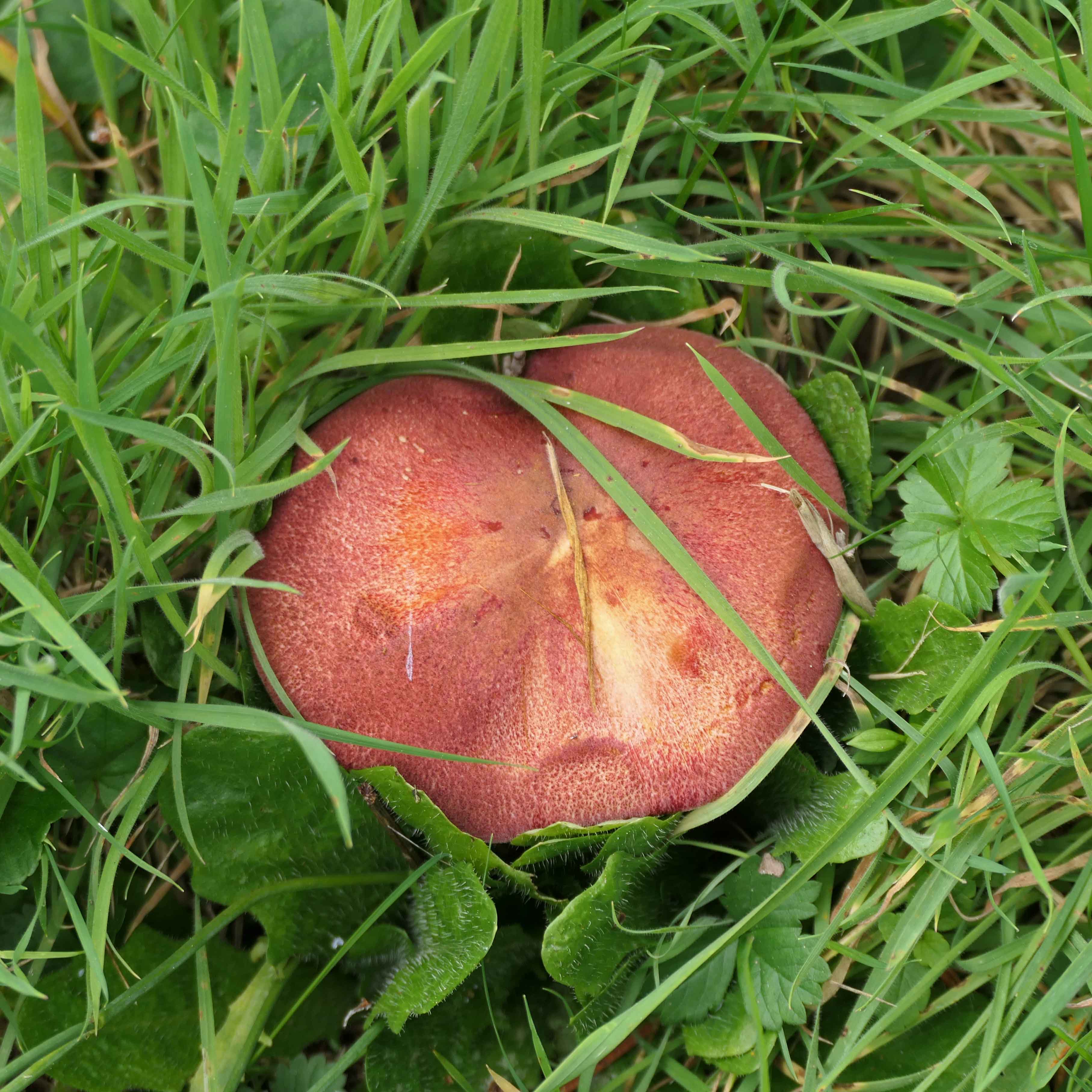
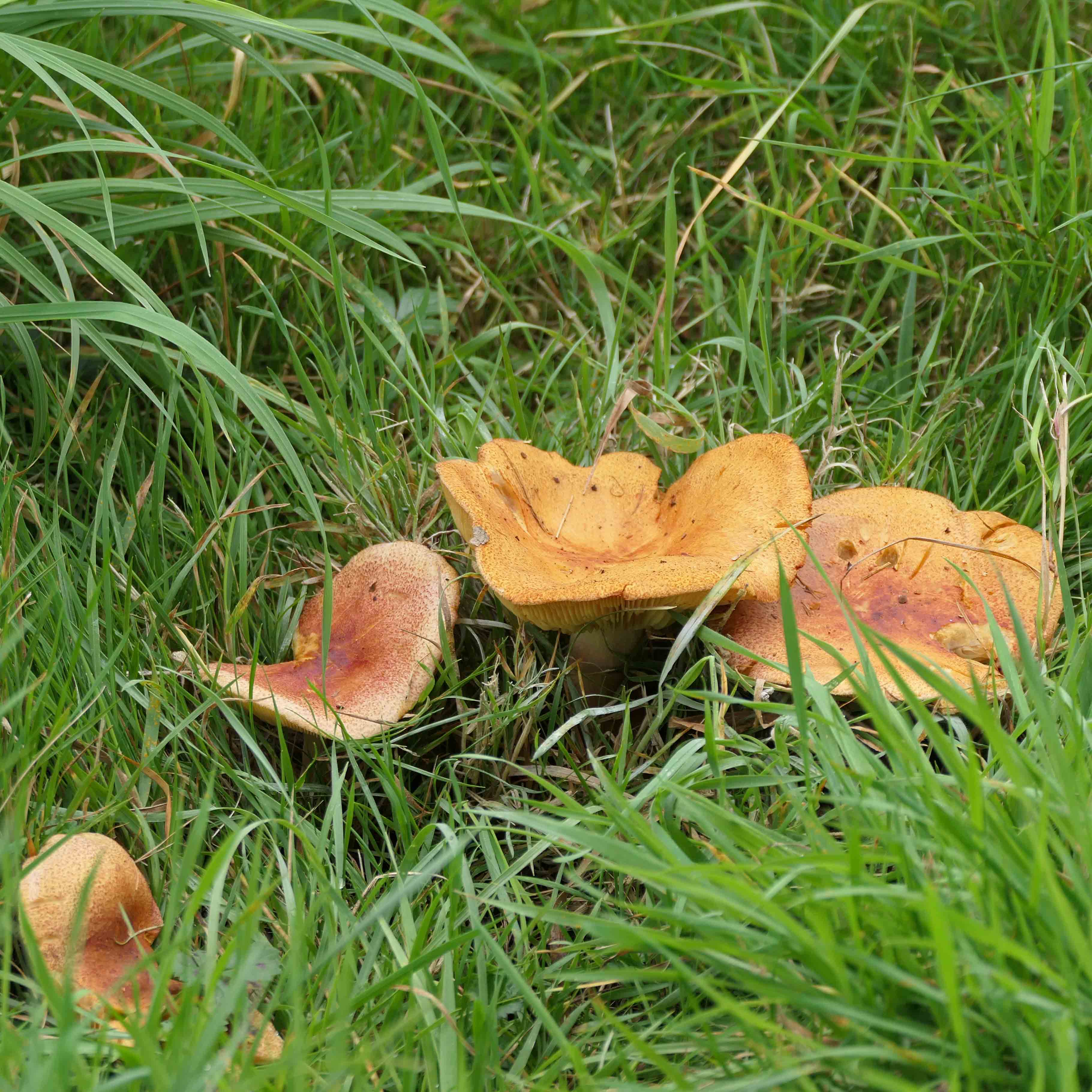
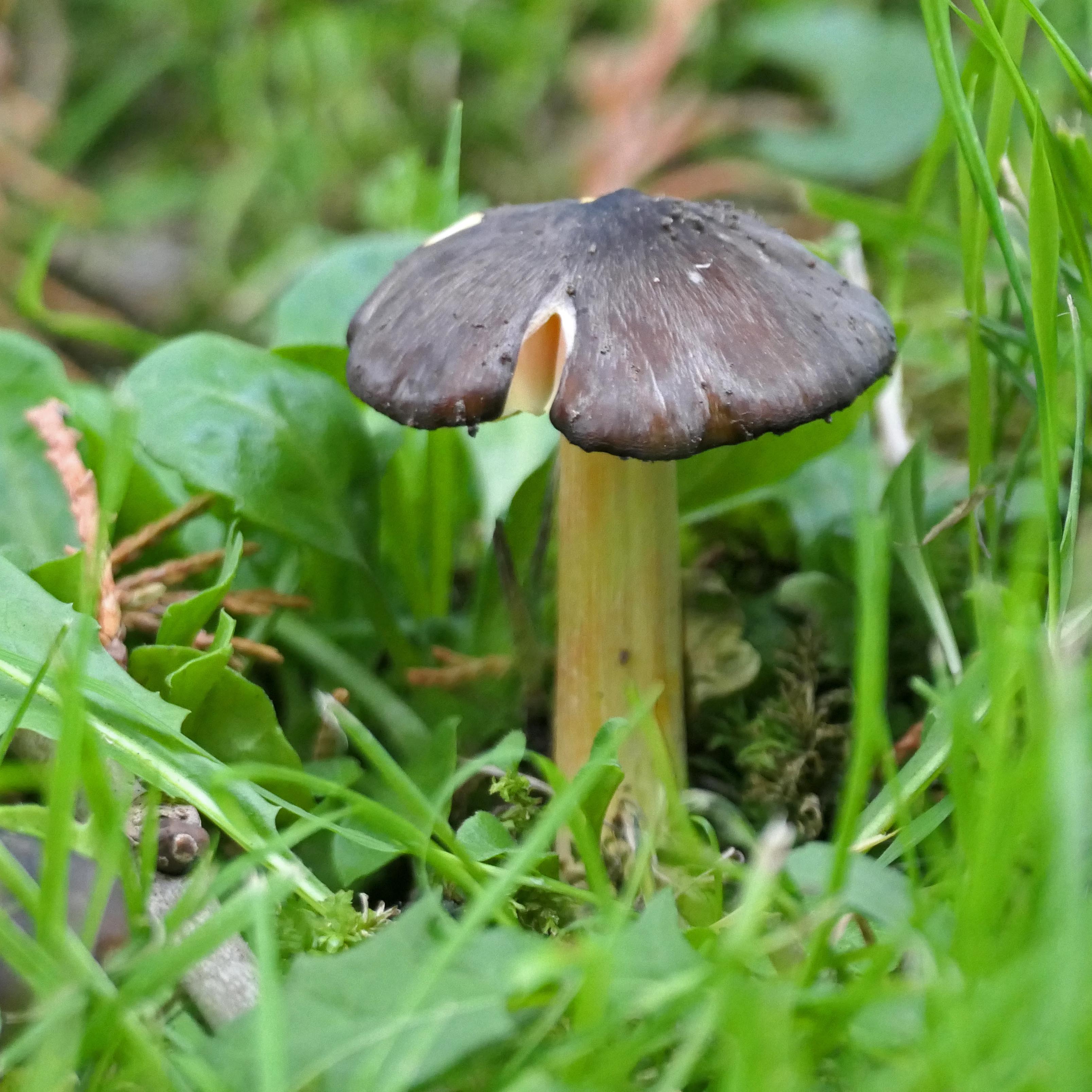
When you read the name Plums and Custard, you might well think, as I always do, that it sound like a delicious dessert. If only!

In this instance, Plums and Custard is not your Friday night after-dinner delight but a fungus, also known as Tricholomopsis rutilans. The two parts of the name come from the cap, which starts off a rich plum colour but fades over time, and the custard yellow colour of the gills. And, no, you shouldn’t eat it, no matter how edible it looks.

Though you can’t always see this – and you certainly can’t in my photos, these fungi grow on wood, specifically decayed conifers, usually pine. They’re often found in large groups, and are common throughout the UK.

A drake Mandarin

Tags

, , , , , ,

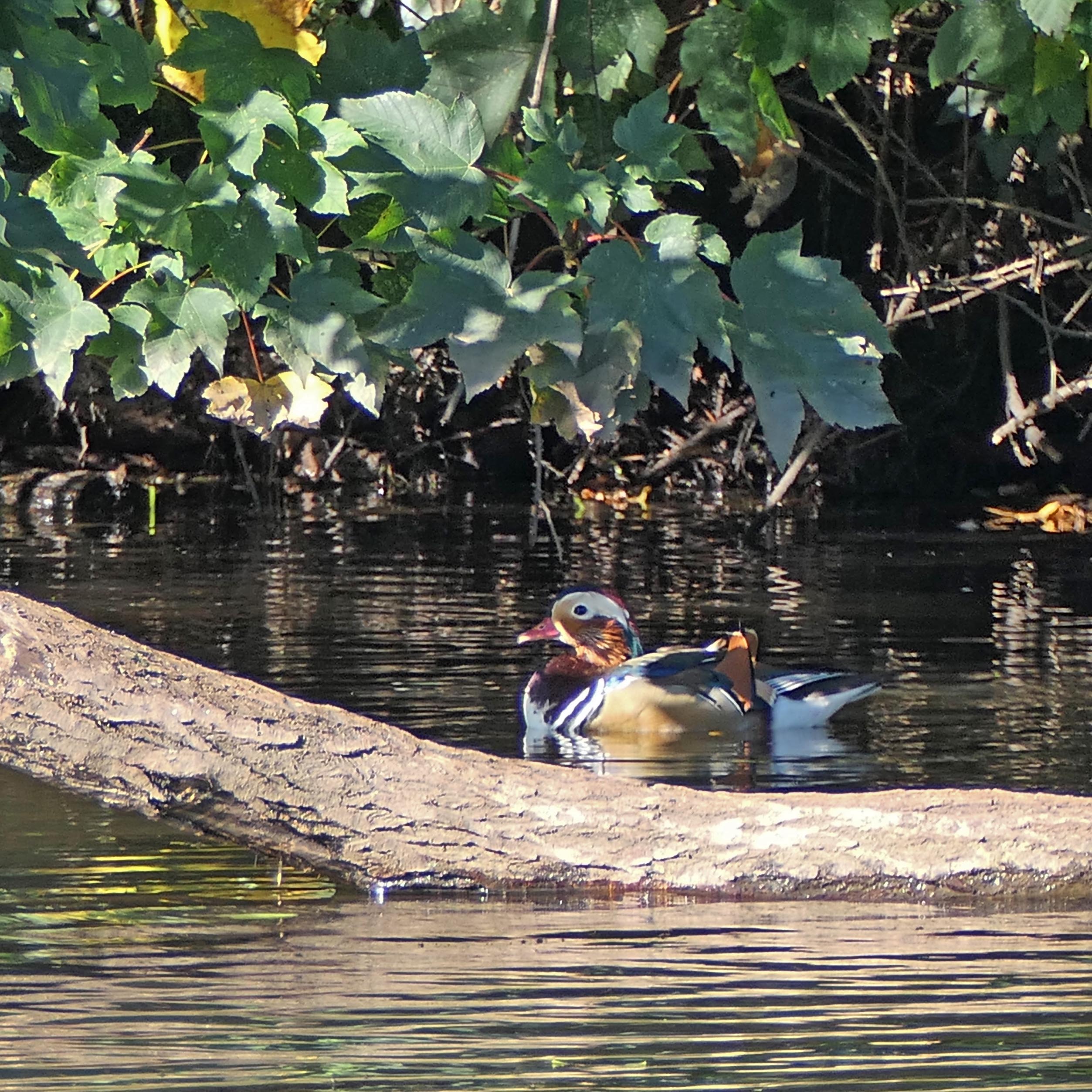
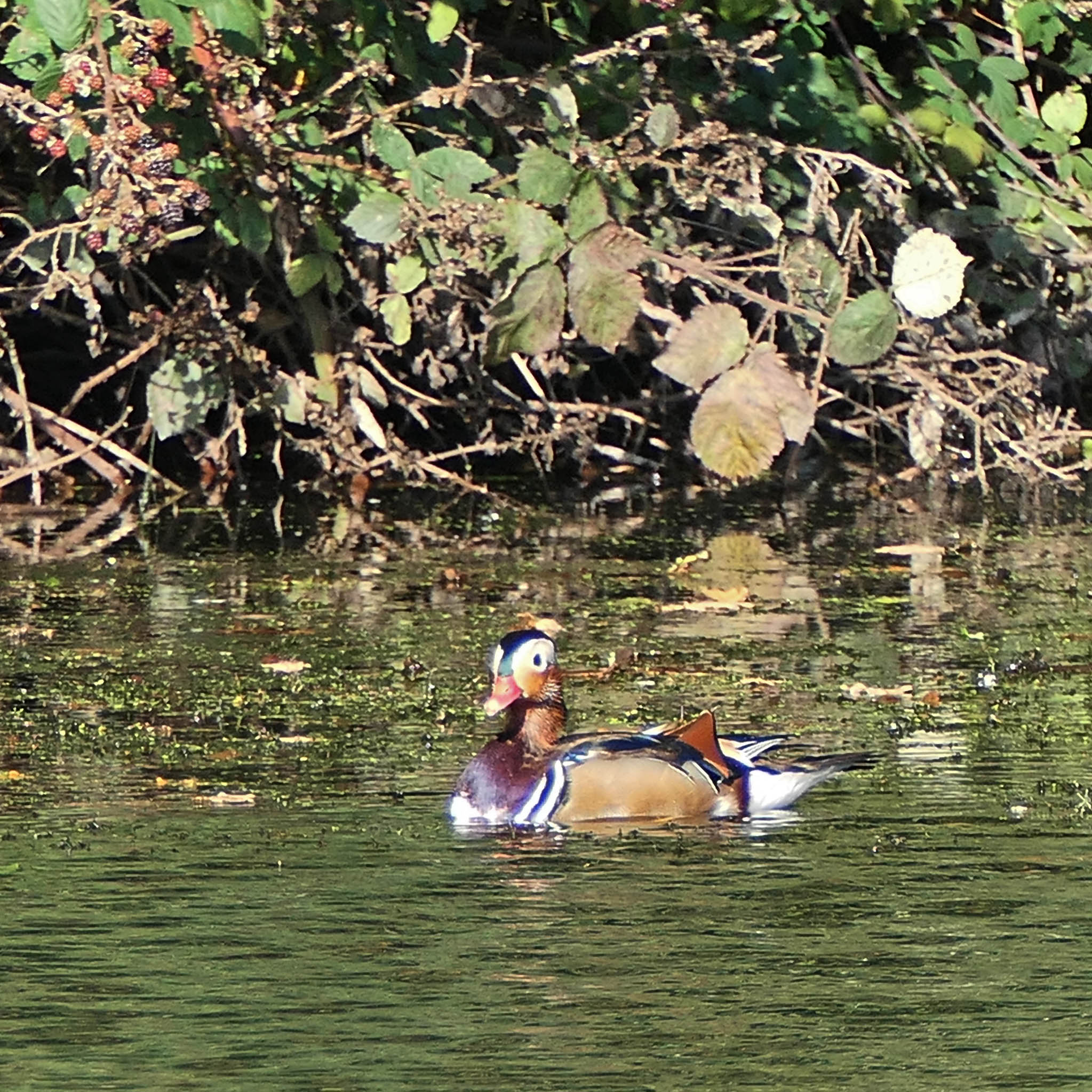
I’ve been holding off posting about this handsome drake Mandarin duck, hoping to get better photos. He was first spotted on the River Ely in Cardiff a few days before the Hobbies appeared – I saw him on 25 September – but he has subsequently proved to be very elusive, frequently disappearing in amongst the reed beds, especially when there were quite a few birders on the opposite bank watching the Hobbies’ aerial displays.

Thinking he might reappear once the Hobbies flew south and activity in the area died down, I went for another look a couple of days ago, but failed to find him. He was associating with a group of Mallards, and his provenance may well be dubious – Mandarins often escape from wildfowl collections in parks – but he wasn’t ringed, and there is a wild population in the Forest of Dean, in Gloucestershire, not too far from Cardiff as the duck flies.

Date waxcaps

Tags

, , , , , , ,

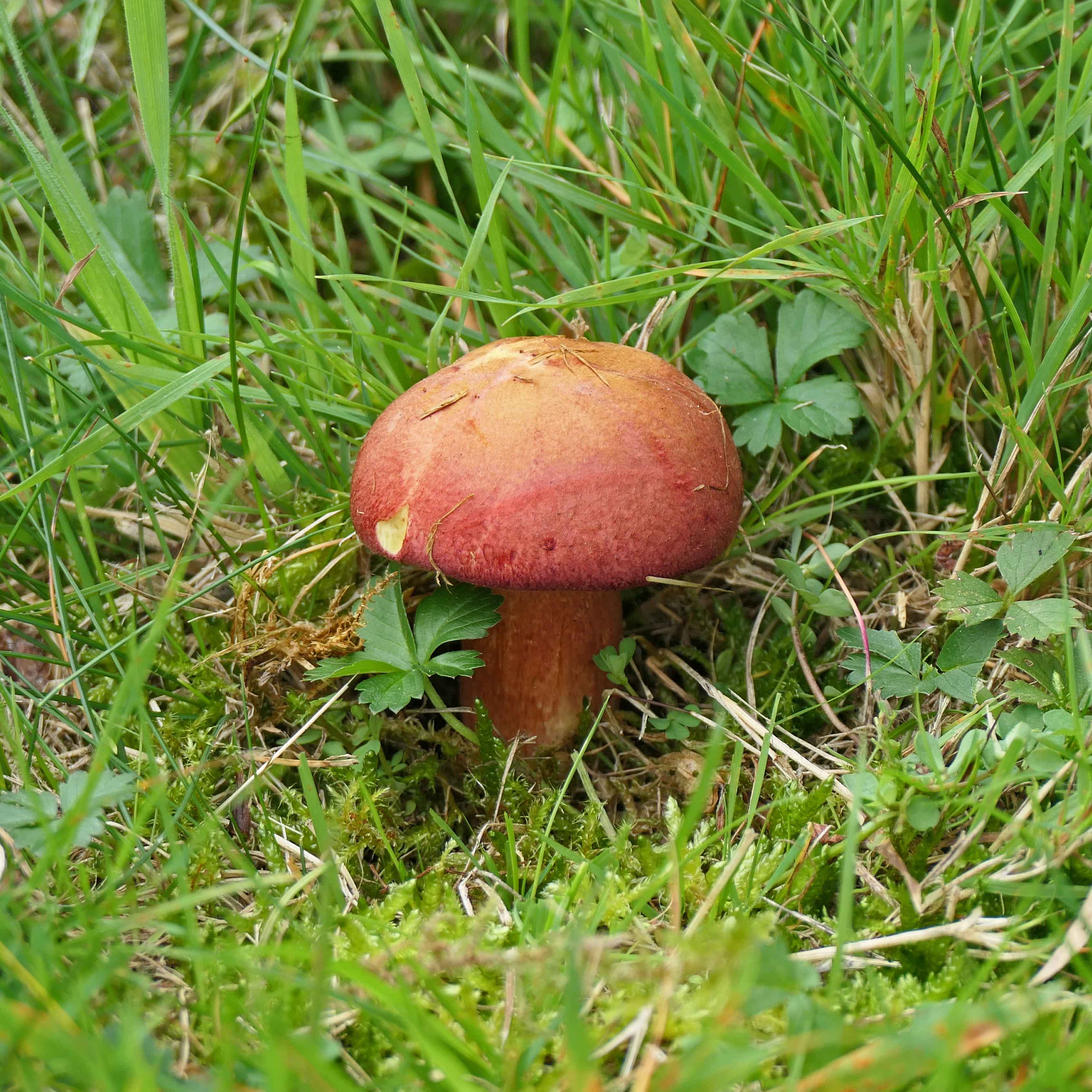
During last Sunday’s local meander, I couldn’t help but notice how the recent rains have triggered autumnal fungi to begin fruiting and so, as I often find fungi very photogenic, I took rather a lot of photos. Of course, when I got home and thought I’d try to put names to those I’d photographed, I was reminded, as happens every year, of how tricky they can be to identify and of how many require microscopic analysis to determine their exact species. I, almost literally, threw my hands in the air, filed the photos in a temp folder, and didn’t look at them again until yesterday.
And then, when I went through the images more carefully and looked more closely, I realised that I might just have found something rather good, something I’d never seen before, something quite rare. I sought opinions from a couple of fungi experts and both agreed with me – you could’ve knocked me over with a feather … or a fungus!
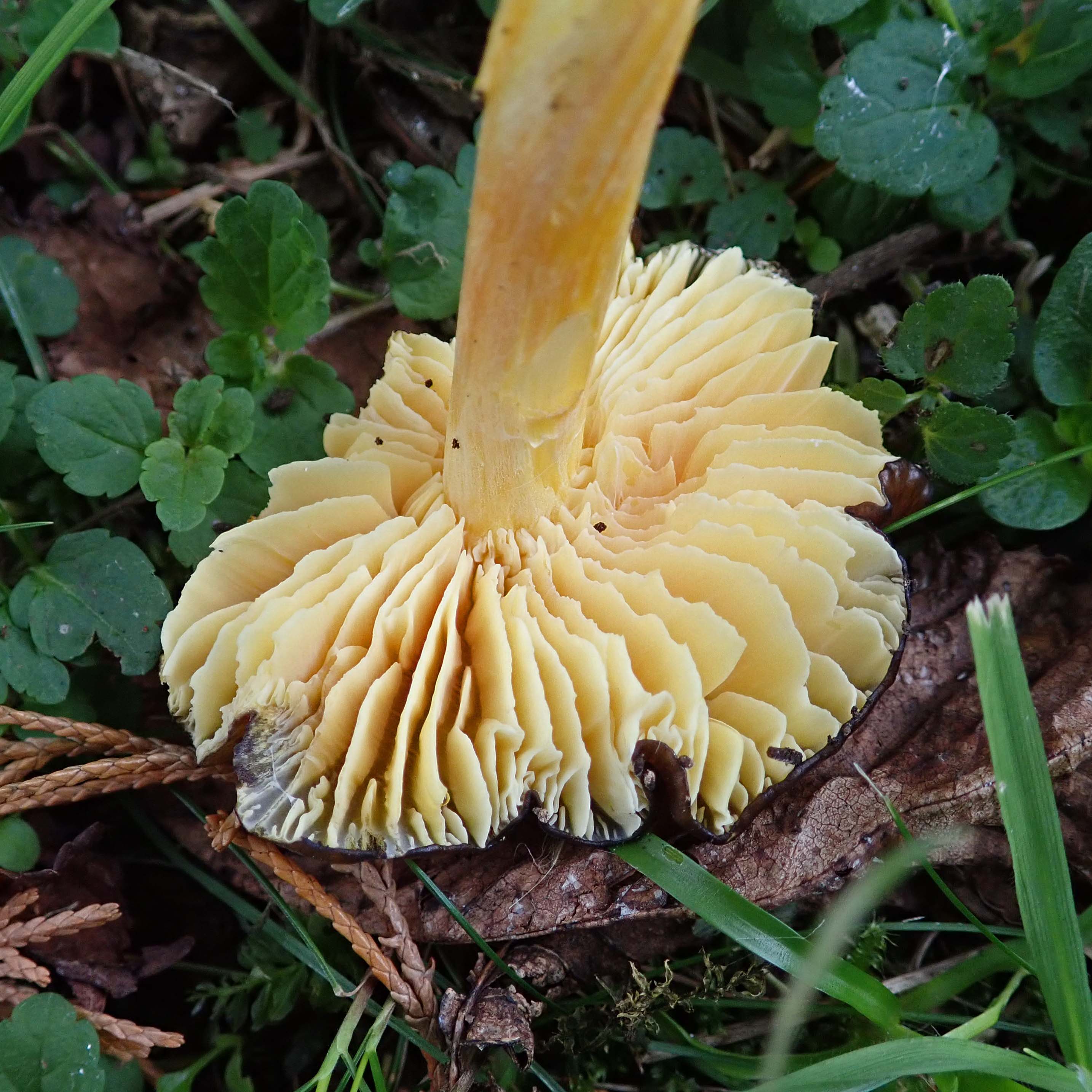
These are Date waxcaps, also known as Date-coloured waxcaps, Hygrocybe spadicea. There are fewer than 100 British records of these beauties showing on iRecord but, luckily for those of us who live here, Wales has enjoyed the majority of those sightings. I understand they are found most years at Kenfig National Nature Reserve and, in the past, there have been one-off sightings in a couple of places around Cardiff but none since 2018.
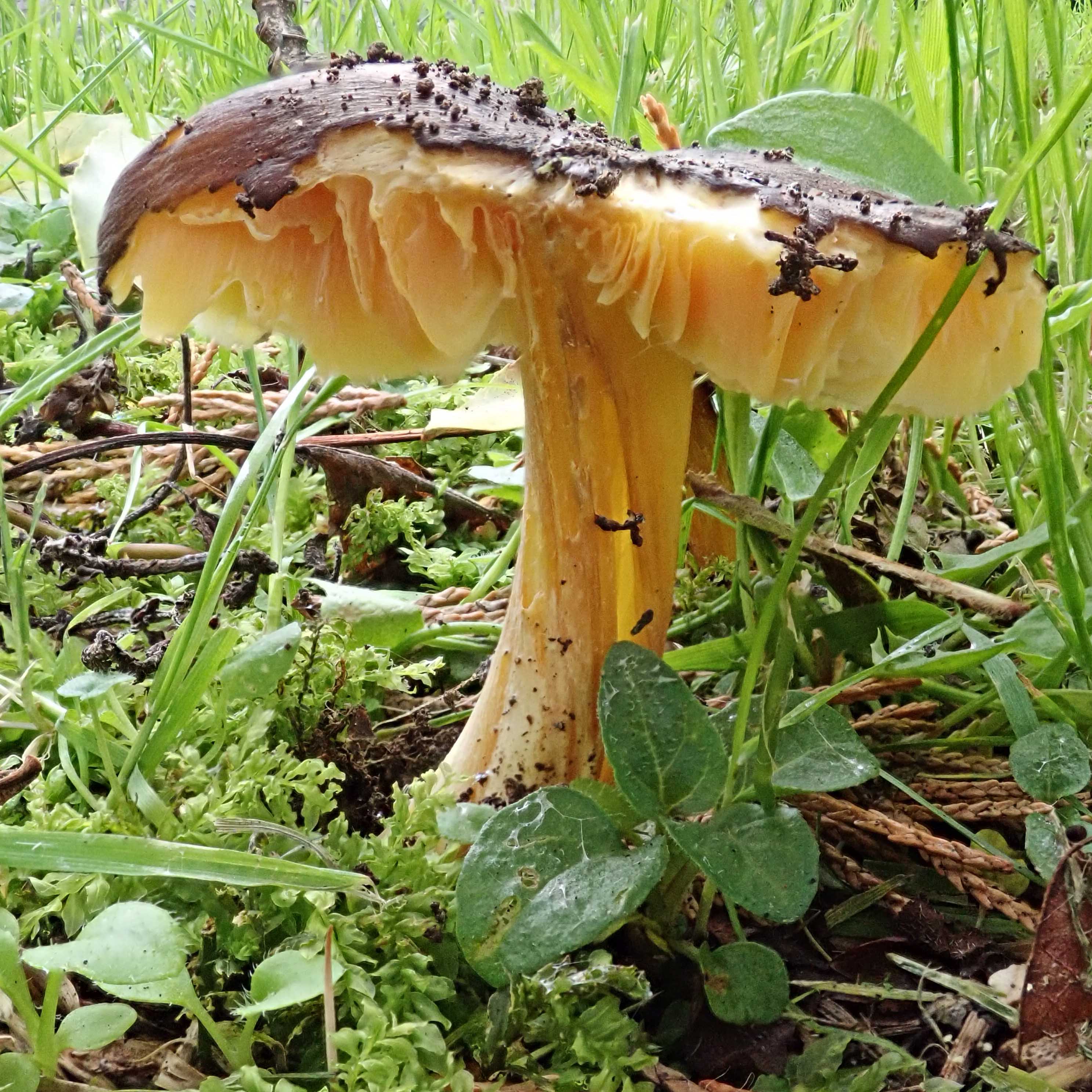
Like most waxcap species, Hygrocybe spadicea grows mostly on unimproved calcareous grasslands but fungi don’t always follow what we humans think we know about them. Mine were growing on a road verge, under an Ash tree. Perhaps they have survived from the time when the area was unimproved grassland, before roads and houses were built all around them.
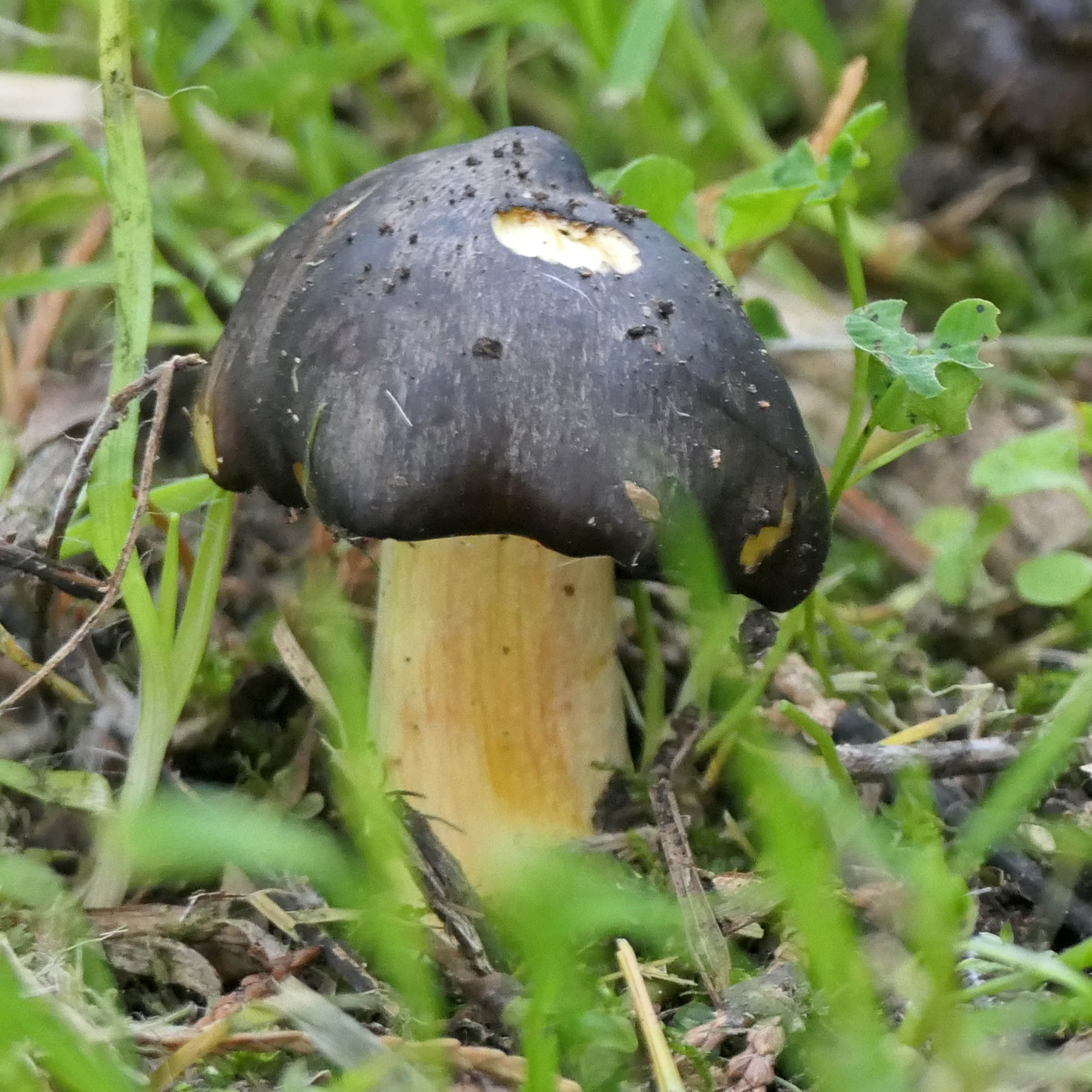
I revisited the site today, for a better look and to take more images. Amazingly, the waxcaps were more abundant than I had initially thought, with many still just emerging brown bumps barely visible amongst the grass. I’m still buzzing from the find.

Herons at the lake

Tags

, , , , , ,

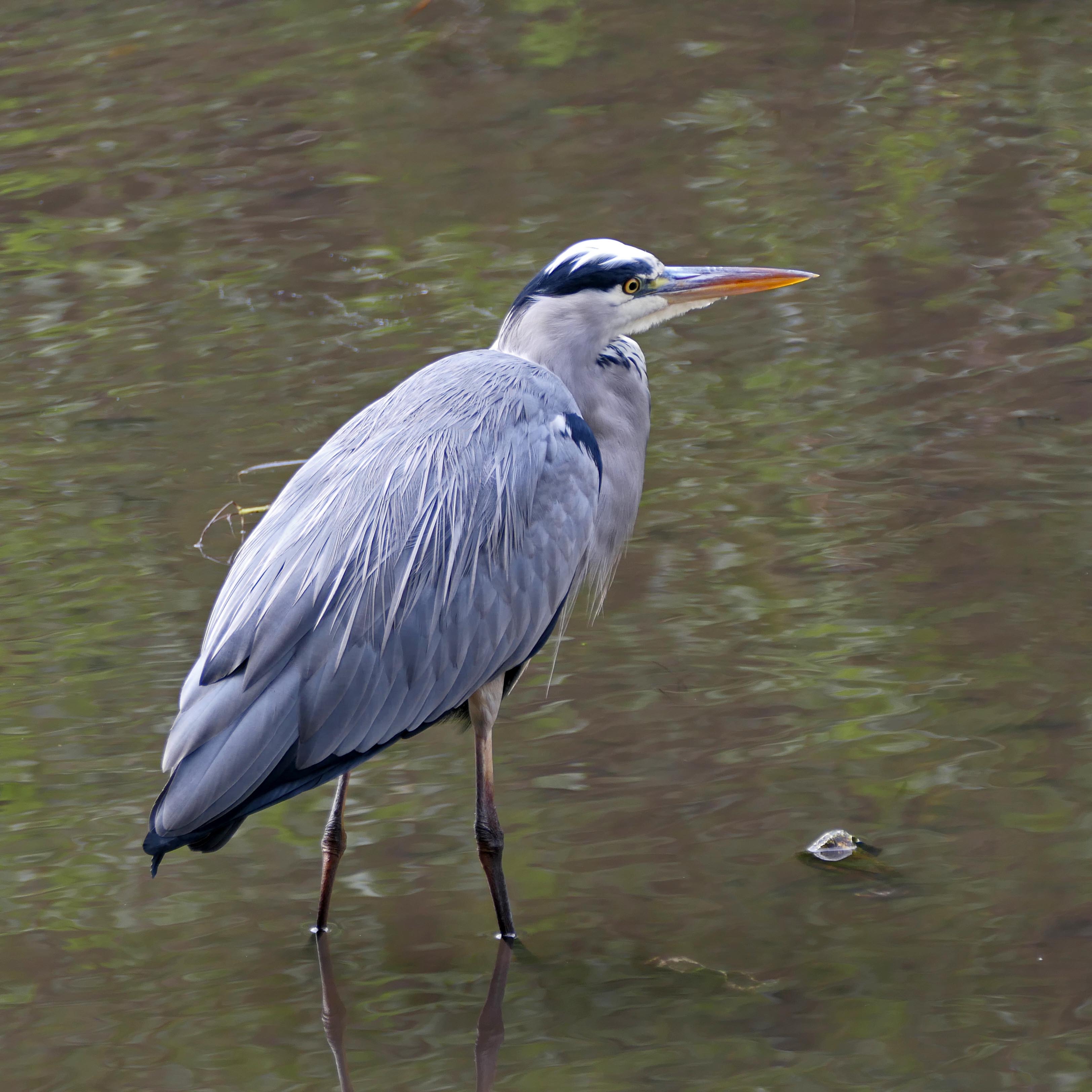
The Grey heron family was well represented yesterday at Cardiff’s Roath Park Lake, with at least two, that I saw, either wading slowly through the shallow muddy water, using their feet to disturb potential edible snacks, or standing stock still, a perfect example of intense concentration, as they waited for a fish to swim by.

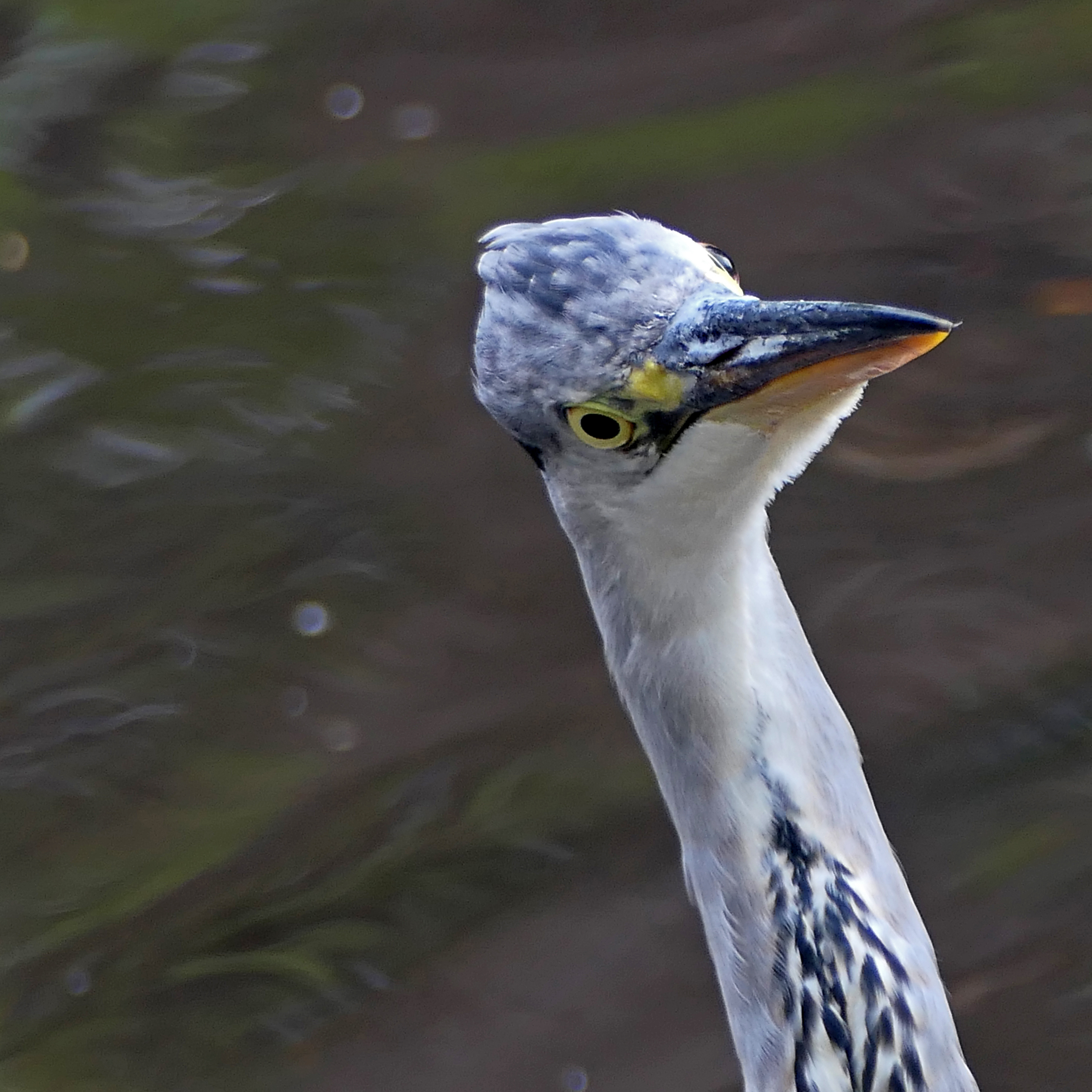
The second Grey heron, which looked to be a juvenile, seemed very concerned about something, turning its head to one side then the other to watch the sky above.

That led me check what it was looking at and it seemed to be a Goshawk (too big for a Sparrowhawk) chasing a flock of panicking Feral pigeons across the sky. I didn’t see if it was successful as they were obscured by a stand of tall trees, and the Grey heron went back to its fishing and I went back to watching the Grey heron at its fishing.

Spider: Eratigena species

Tags

, , , ,

The day I saw the Choughs (see last Friday’s blog Choughed), I was actually in Barry looking for a rare spider. Our local spider expert had found them in the garden centre attached to a local department store so I figured it was worth a look. I did manage to find lots of that particular spider’s webs (the spider was Badumna longinqua; an example of its lace-like web is shown below) but the beasties themselves proved more elusive.

I thought I would buy some potting mix while I was there but, as I had a one mile uphill walk from the train to where I live, I didn’t want to carry anything too heavy, so I tried to pick up one of the 10-litre bags to check its weight. In doing so I uncovered a large spider that had been lurking unseen between two stacks of bags. I thought I’d finally found my target and got as many photos as I could before it scurried back under the pile.

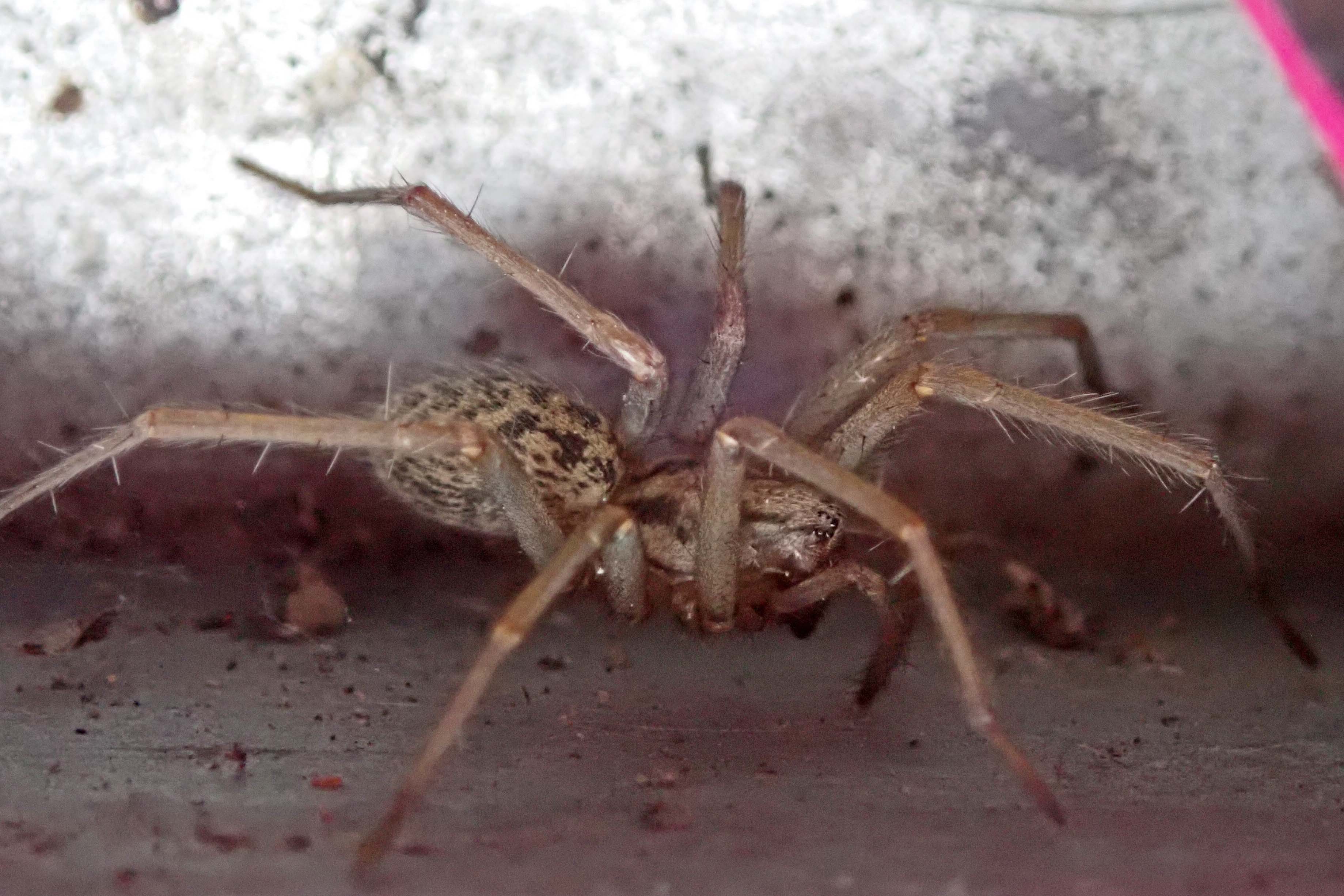
Unfortunately, once I had a closer look at my images, I could see it wasn’t the right spider. What I had found was a Giant house-spider, one of the Eratigena species that can only be positively identified by microscopic examination of the spider’s genitals – and that definitely was not going to happen. As their common name infers, these beauties like to live in our houses, tucked away somewhere you’d probably never see them except when you’re having a spring clean … though I’ve just been reading that the males like to go wandering in search of a female in the late summer/early autumn.

The ones I missed

Tags

, , ,

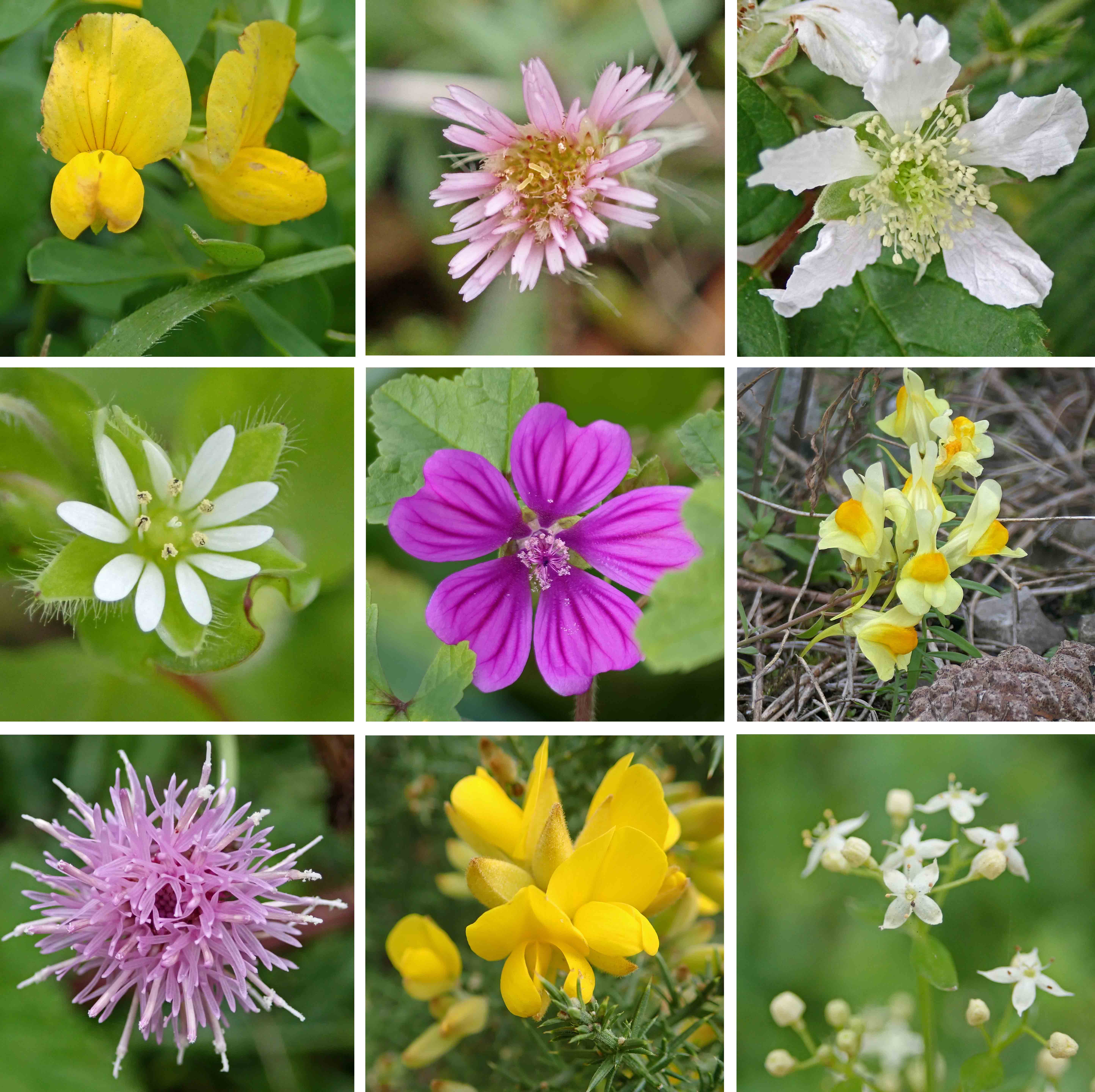
Despite finding a respectable 60 wildflowers still in bloom during last week’s walk, I knew I could find even more so I’ve kept my eyes peeled during this week’s walks. These are the ones I missed last week …

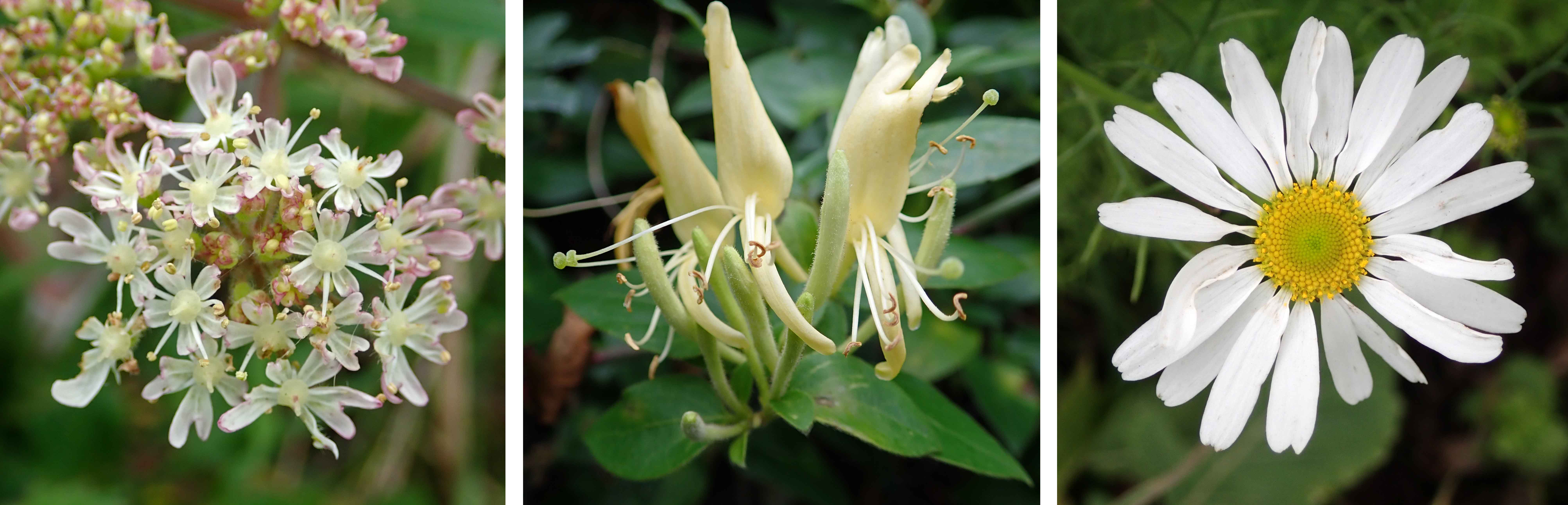
Bird’s-foot trefoil, Blue fleabane, Bramble, Common chickweed, Common mallow, Common toadflax, Creeping thistle, Gorse, and Hedge bedstraw.

Hogweed, Honeysuckle, and Mayweed.

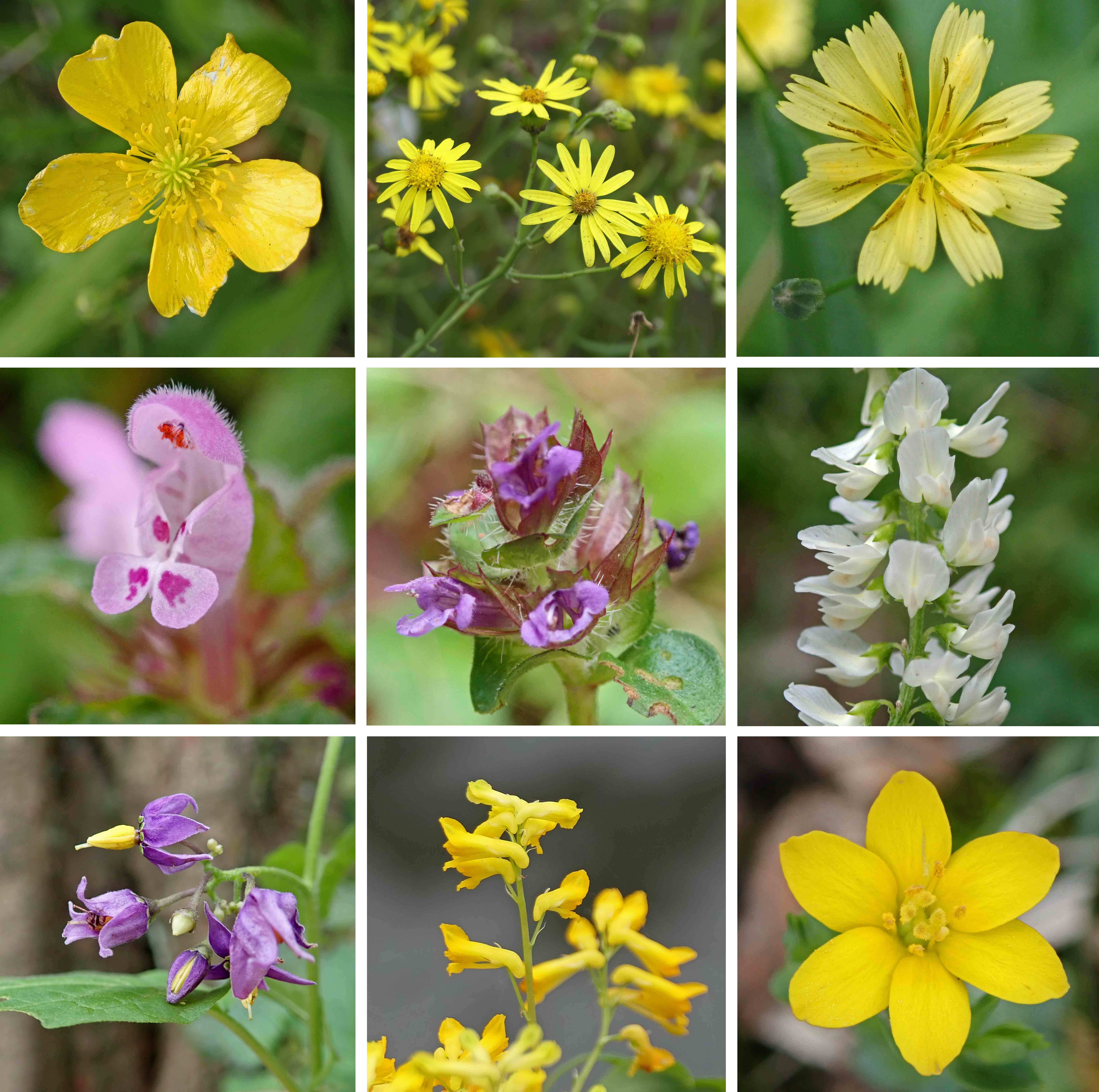
Meadow buttercup, Narrow-leaved ragwort, Nipplewort, Red dead-nettle, Selfheal, White melilot, Woody nightshade, Yellow corydalis, and Yellow-wort.

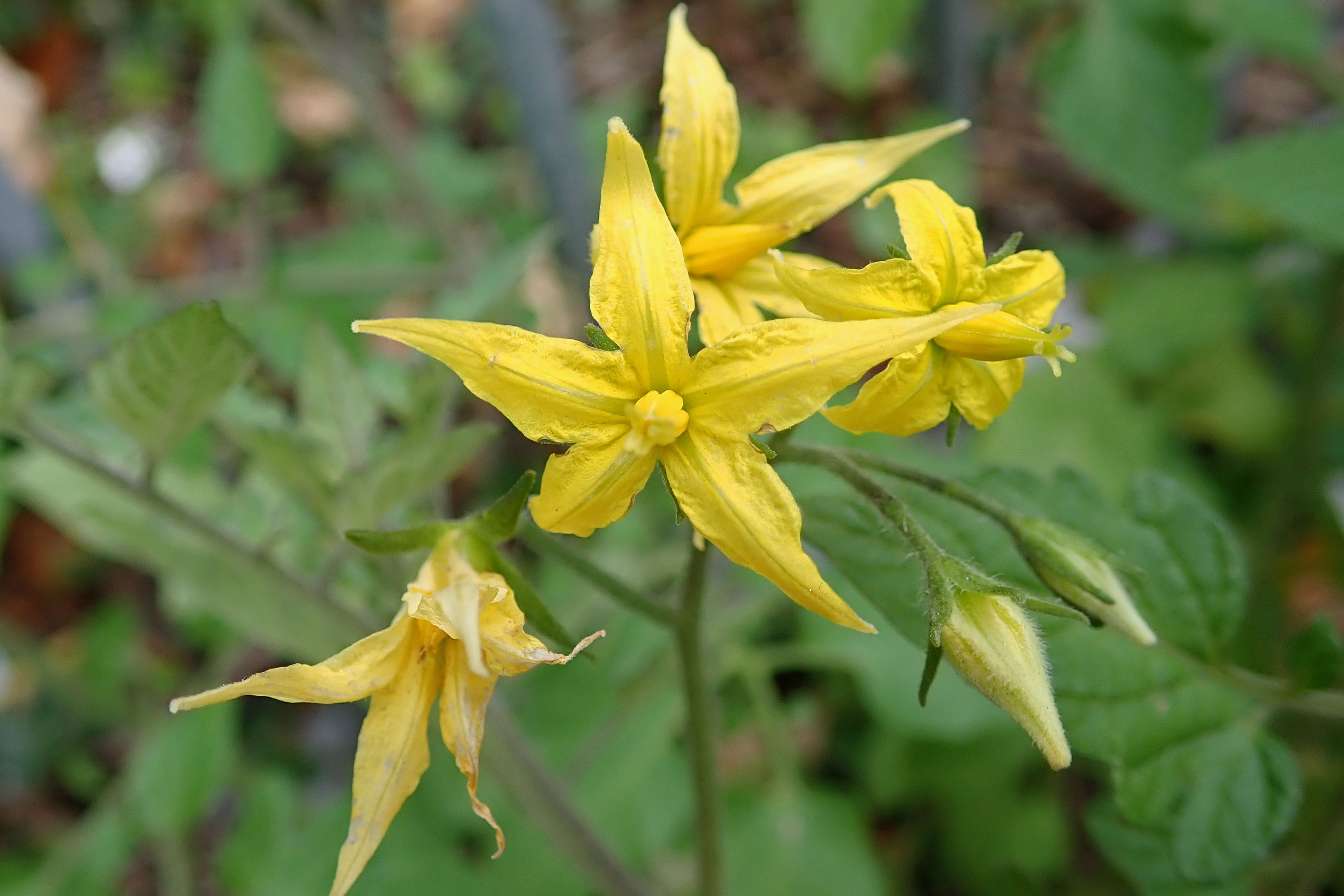
I had to add this last one – not a wildflower, but a random Tomato that had somehow self-seeded along the edge of one of the local back lanes. I admire its tenacity.

Blending in

Tags

, , ,

Some days I go out hoping for new and exciting birds, especially during autumn migration … and see nothing, and feel a little disappointed. Then Nature sends me a little reminder that the ‘ordinary’ can be just as exciting, and often more beautiful, than the passers-by. On this particular day, my reminder came in the form of a Grey wagtail that seemed perfectly in tune with its surroundings.

Choughed

Tags

, , , , , ,

I heard them before I saw them and, the first time, I only saw them circle overhead before they flew west along the beach and adjacent cliffs, quickly out of sight.

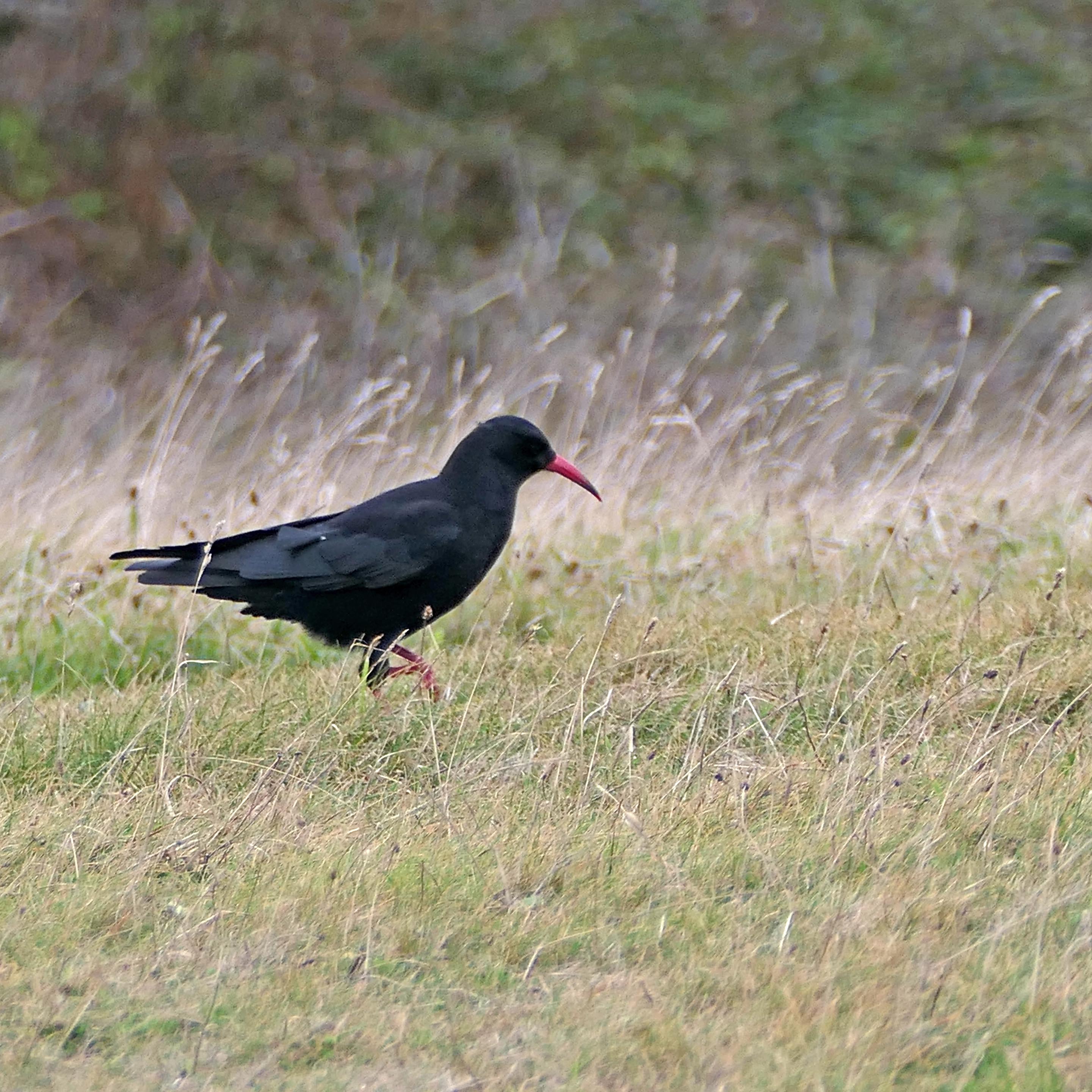
But then I walked around the old harbour and out to the tip of the neighbouring headland, where, amazingly, I heard them calling again. And, incredibly, moments later they flew in and landed on the rough grass not far in front of me.

I managed to get a little closer and quickly snapped off as many photos as I was able, as I could see a couple with two dogs approaching along the headland and knew the birds would fly once they got closer. And that’s exactly what happened, with the birds following the same flight line as when I first saw them.

These are Choughs (Pyrrhocorax pyrrhocorax), Britain’s rarest corvid and the only member of the crow family to have a red beak and legs. Choughs are only found in the western parts of Britain and they’re not a bird I usually see – in fact, it must be several years since I last saw one, so this was a real treat, and most unexpected.

Though I was having a wander around the seaside town of Barry, half an hour’s train ride west of where I live, that is still outside the area where Choughs are normally seen. Maybe their population has expanded, meaning this pair are now venturing outside their usual territory. Whatever the reason, I was absolutely chuffed/Choughed to see them.

A young squirrel

Tags

, , , , ,

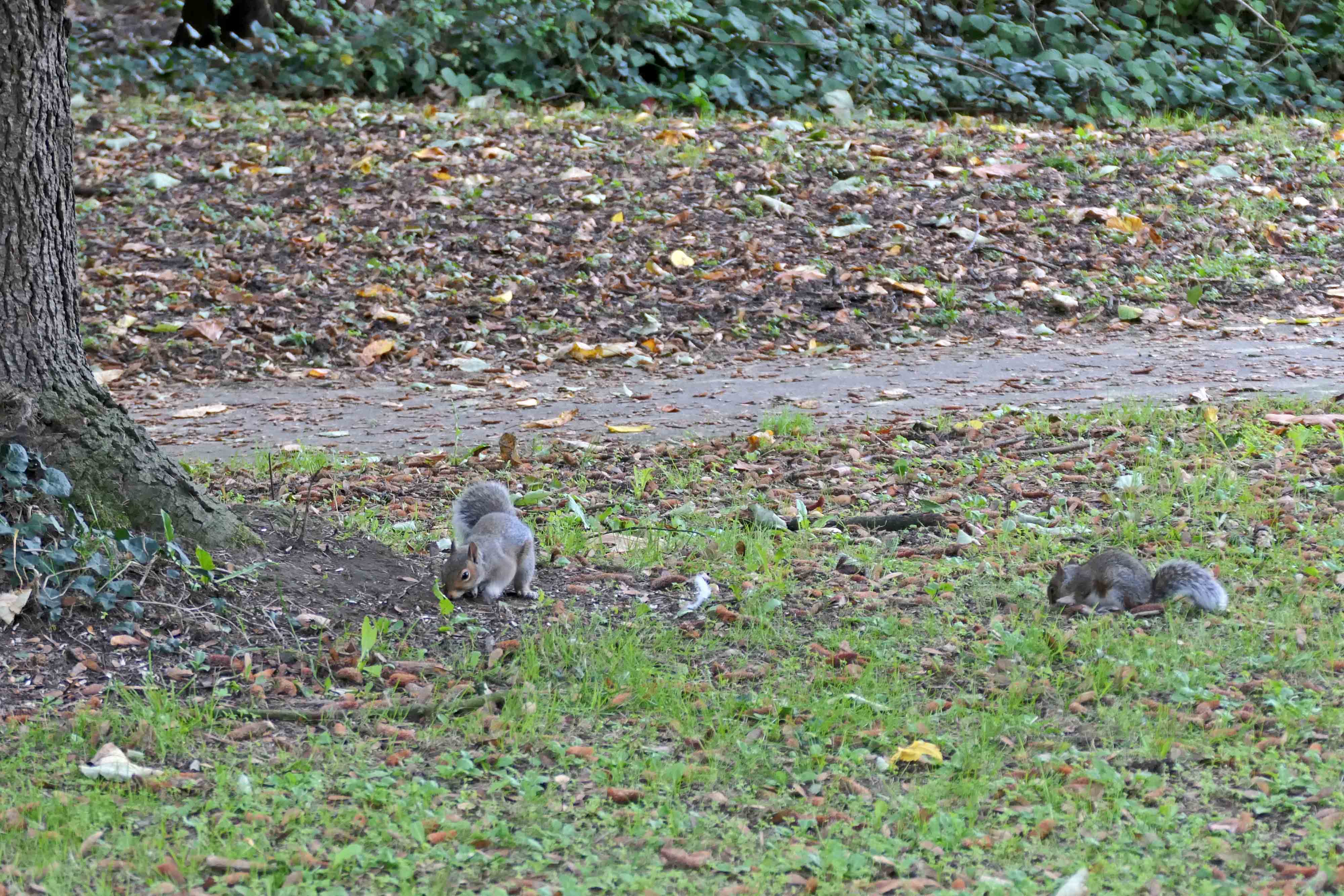
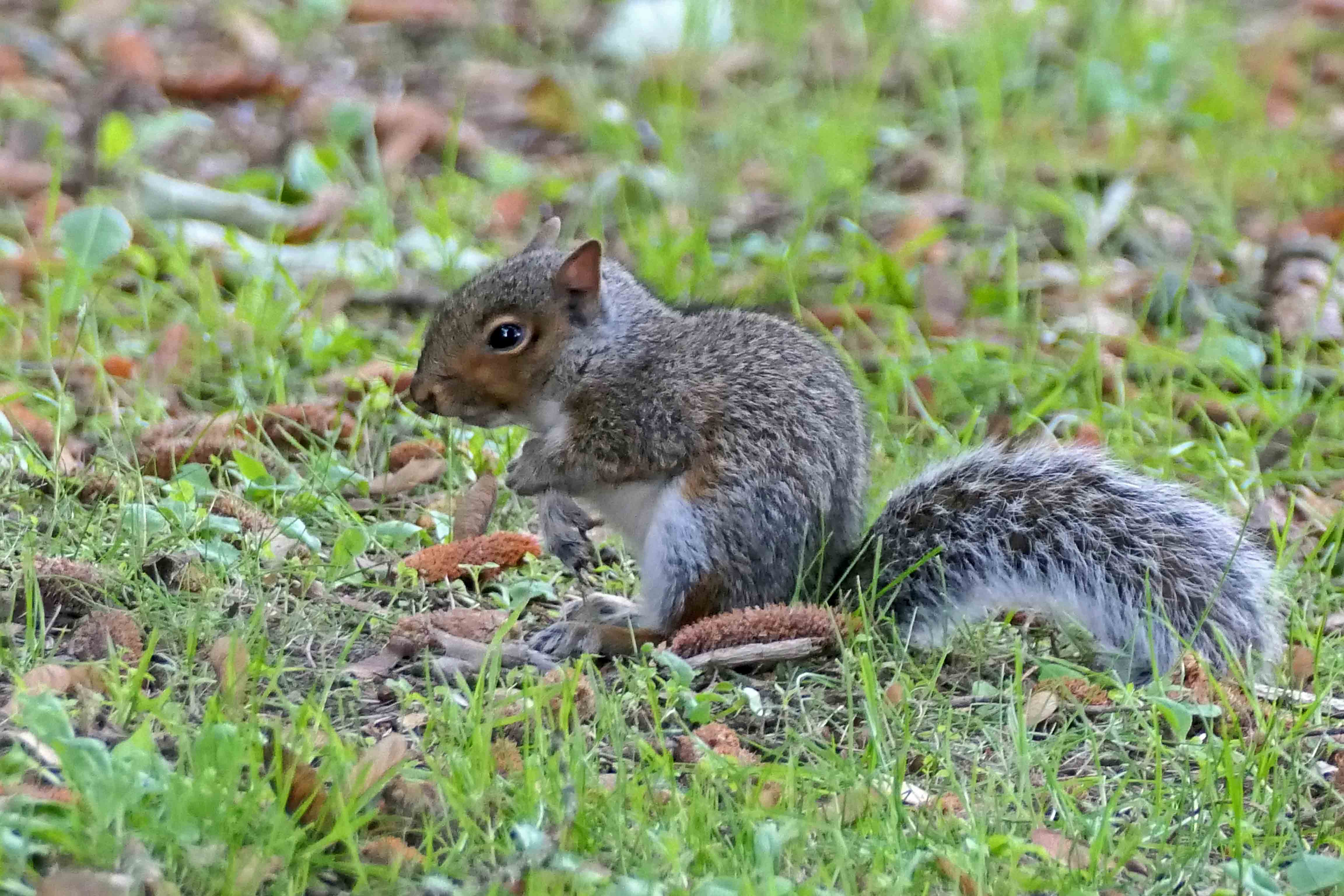
I’d never knowingly seen a juvenile Grey squirrel, until yesterday.

First one adult, then a second came hurtling down a tree trunk to forage on the grass beneath the tree, followed more slowly, more hesitatingly by a much smaller squirrel. It looked like a littler version of the adults so I’m fairly sure this was a young one.

Hobbies!!

Tags

, , , , , , , ,

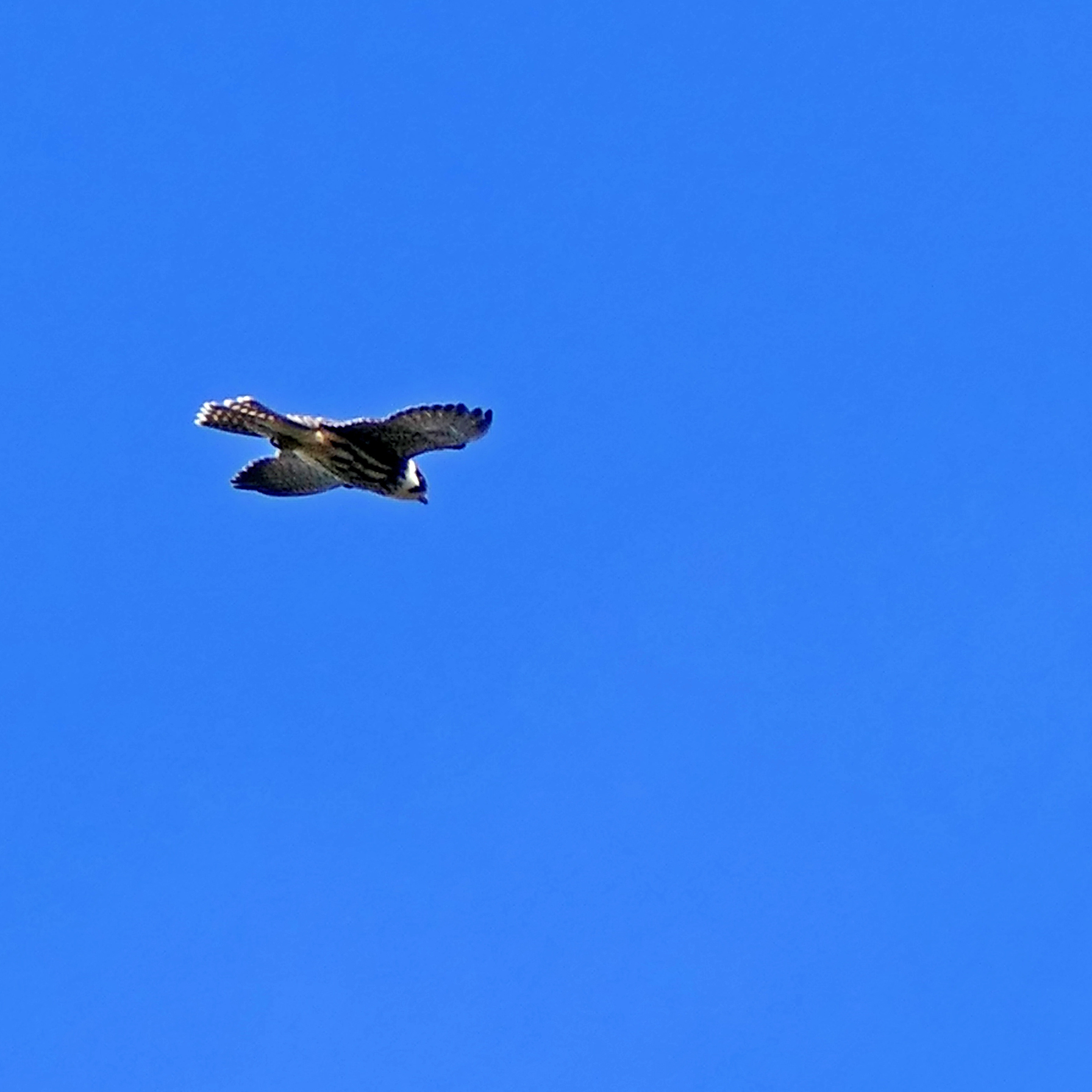
In recent days, birders and passers-by, who have noticed the birders and asked what they’re looking at, have been treated to the incredible aerial displays of two juvenile Hobbies, expertly catching dragonflies along the River Ely in Cardiff.

I’ve seen Hobbies before but never as close as these birds so watching them has been truly amazing. With their scythe-like wings, they resemble Swifts in flight, though they’re a little larger, more the size of a Kestrel. And they are super speedy; I found it difficult to capture photographs of them in flight. In the end, I put the camera down and just watched, spellbound, as they wove their aerial magic.

The Hobby (Falco subbuteo) used to be quite scarce in the UK but their population has increased in recent years. The fact that these two are juvenile birds means we can probably assume they have bred nearby, possibly in the woodland adjacent to where they have been flying. Fortunately, it is privately owned land, with no footpaths, so wildlife is left in peace amongst the trees, a rare situation these days.

Hobbies are long-distance migrants that arrive here around April and depart again around September-October, heading to Africa to over-winter in warmer climes. Fortunately for them (though not for the dragonflies), these two young birds were finding plenty of prey to fuel the long flight to come.