71/365 Growing an avocado

Tags

, , ,

I’d tried growing an avocado from seed several times before but this is the first time I’ve succeeded, at least so far so good. It’s been a very slow process: I first put the seed into water on 30 August last year. It was three weeks later, on 20 September, that the seed split open and I could see something was stirring.

By 11 November 2018 a root had begun to emerge but it has taken another 4 months to get to where it is now, in my third and fourth photos below, which were taken on 5 March. Let’s hope it continues to flourish.

70/365 Like orange teardrops

Tags

, , , , , ,

According to Pat O’Reilly’s brilliant First Nature website, the scientific name for Common jellyspot, which is Dacrymyces stillatus, is ‘named from Dacry- meaning a tear (as in weeping) and –myces meaning fungus, while the specific epithet stillatus means poured or dripped. Hence Dacrymyces stillatus means teardrop-like fungi that look as though they have dripped on to the substrate.’ In this particular case the substrate is a series of fence posts at Cosmeston, where I’ve seen this jellyspot growing for several months now.

69/365 The sex life of Hazels

Tags

, , , , , ,

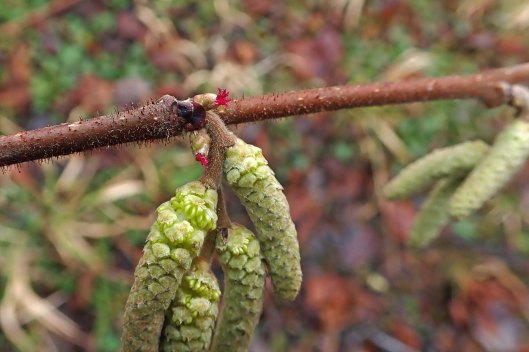
The catkins of the Hazel tree (Corylus avellana) have almost finished now, which is shame as they are such lovely things, such a pretty symbol of springtime. The catkins, often known as ‘lambs’ tails’, are the male flowers, shedding their pollen as a fine yellow dust as they blow in the wind. The female flowers are less conspicuous, tiny compared to the catkins but also very pretty, a bright lipstick pink. Although the Hazel is monoecious, which means both male and female flowers can be found on the same tree, the female flowers must be pollinated by pollen from a different tree if they are to go on and produce Hazel nuts.


68/365 Leaf skeleton

Tags

, , , , ,

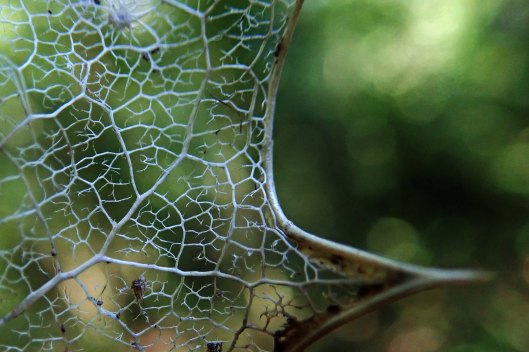
190309 leaf skeleton

I find leaf skeletons fascinating. The structure of a leaf, in particular its veins and midrib, are usually hidden, or at least made less obvious by the tissue of the leaf. But, when the leaf has detached from its tree and the tissue has disintegrated, the structure that remains is wonderfully sculptural, like this Holly leaf I discovered in a local park.

67/365 Small bird, big voice

Tags

, , , ,

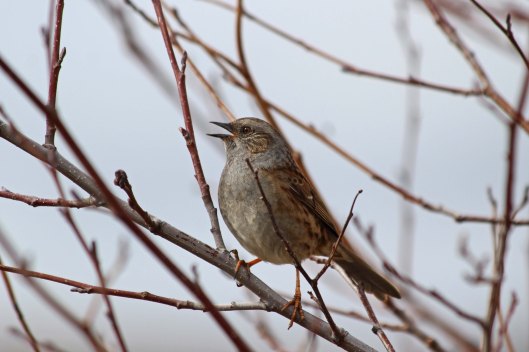
You might remember the ‘Tiny bird, huge voice’ blog a week ago, about the sound being blasted out by a male Wren. Well, another bird, though not so small, can currently be seen, sitting high on tree branches and hedge tops, also blasting out its ‘Look at me’ song, though not as loudly as the tiny Wren. This small brown bird, once known as the Hedge sparrow, is the Dunnock, and he too sings a merry tune.

190308 dunnock

66/365 Singing in the dead of night

Tags

, , , , , ,

190307 blackbird

Actually, my Blackbird’s not been singing in the dead of night but just after six most mornings, and it’s getting earlier as the days grow longer. Soon, I shall probably be cursing it but for now I love being woken up by the dulcet tones of a Blackbird’s song.

65/365 Birding in the Forest of Dean

Tags

, , , , , ,

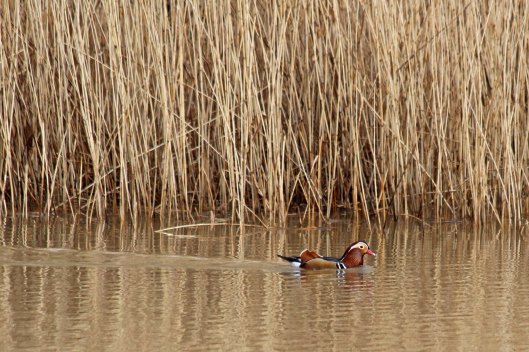
It was wet – leaving Cardiff, heading east the downpours were torrential! But that didn’t stop 16 of us hardy souls spending a day checking out various birding hotspots in the beautiful Forest of Dean. We dipped on Goshawks at New Fancy View and Hawfinches at Parkend – and I don’t blame the birds for trying to find shelter from the frequent heavy showers, but we came up trumps with the Marsh tits (two) and the gorgeous Mandarin ducks at Cannop Ponds (and I was chuffed to spot a Redpoll there too), and we had a lovely walk through the majestic towering trees at RSPB Nagshead. We may have got a bit damp around the edges but the rain certainly didn’t dampen our spirits.

190306 Mandarin duck

63/365 Sweet violets

Tags

, , , , ,

OLYMPUS DIGITAL CAMERA

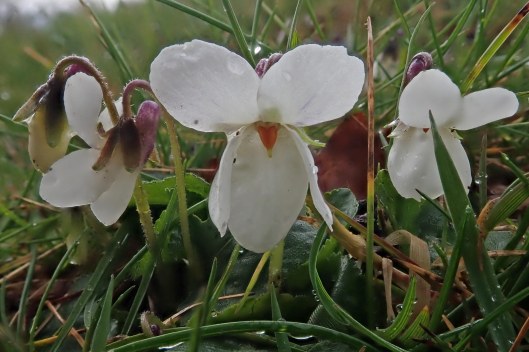
When I see violets, I always think of my nana Johno, my mother’s mother. She always had violets growing in her garden and would often pick a few to bring inside so she could enjoy their sweet scent. I spotted these particular violets on my way to Cosmeston this morning, growing wild on a grassy bank. I wasn’t able to smell them but I’m fairly sure these are Sweet violets (Viola odorata), which, as well as the traditional purple colour, can also be found in this pretty white variation.

62/365 Moist moss

Tags

, , ,

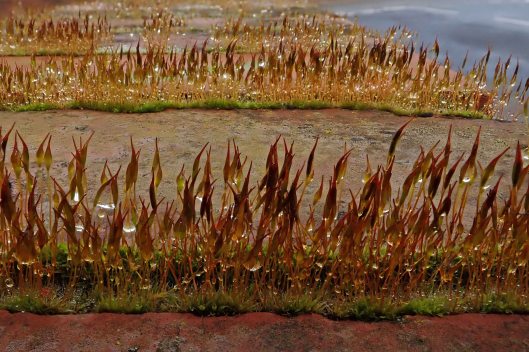
With Storm Freya blasting us today, I only managed an hour’s stomp between rain bands but even that was difficult, trying to walk back up the hill from the marina into a 25mph head wind. My head was down, which was probably how I spotted these lovely bands of moss on top of a brick wall. It was interesting how the moss was only growing in strips where the mortar butted up against the terracotta bricks, not on the mortar or the bricks themselves. It sure looked pretty covered in rain drops.

190303 moist moss