61/365 From food to frass

Tags

, , , , , , ,

First I noticed the frass (that’s pooh, to most of us). Then I thought ‘Something fairly big must be in these Alexanders’ flower heads somewhere’. And, sure enough, with a little gentle pulling aside of leaves and flowers, I found the frass creator, very well camouflaged by its light green colouring. And then I thought, ‘There might be more’. And, sure enough, I found three caterpillars on three different plants, and frass on several more plants. These are the larvae of the Angle Shades moth (Phlogophora meticulosa). I thought it seemed rather early for them but my local Butterfly Conservation expert George tells me you can find them pretty much any time of year. 

60/365 Wild, but not

Tags

, , ,

190301 chinese geese (1)

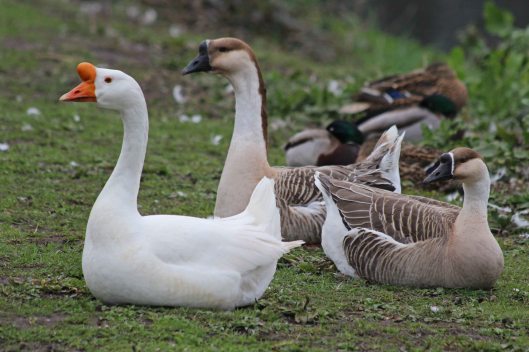
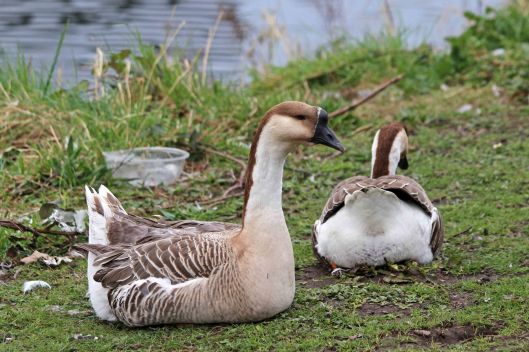
These are Chinese geese, I think, a breed of domestic goose, but they have escaped from whoever owned them and have taken to hanging out with a large flock of Mute swans that live on the banks of the River Taff in central Cardiff. People regularly feed the birds in this area, so the geese and swans are joined by Mallards, big groups of Feral pigeons and scavenging gulls.

Apparently, Chinese geese have been domesticated for their eggs and their meat, and the knob above their beaks is larger in ganders, so the white goose must be a male and the three brown birds females.

190301 chinese geese (2)

59/365 The stone-turners

Tags

, , , , , ,

190228 turnstone

As their name suggests, the Turnstones that frequent the stony embankments around Cardiff Bay spend their time turning over loose stones, looking for the tiny insects, molluscs and crustaceans they like to eat. And it’s that stone-turning that has led to some of their regional vernacular names: stanepecker, in Shetland, and stone raw, in Armagh. I also rather like ebb pecker, another from Shetland, and tangle picker, from Norfolk. I haven’t been able to find a Welsh name for this bird so if there is one and you know it, please do let me know.

p.s. Thanks to my friend Ceri, I can now tell you the Welsh name for Turnstone is Cwtiad y Traeth, which translates as Beach plover (Traeth means beach and Cwtiad is plover).

58/365 Tiny bird, huge voice

Tags

, , , ,

190227 wren displaying

I’m not sure whether this male Wren’s posturing was a threat display – ‘This is my territory. Enter at your own risk!’ – or whether he was trying to impress the other Wren that was dotting about in the tree nearby – ‘Look at me! I’m a big healthy tough male and I’d make a good mate.’ He sure was giving it his all though – it always amazes me how much sound can be produced by such a small bird.

57/365 Buzzing

Tags

, , , , , ,

For the second day in a row, places in north Wales have posted record high winter temperatures and, though a chilly breeze has kept things a bit cooler here in the south, it’s still much warmer than it should be. And these unseasonable highs have been responsible for the early awakening of much insect life. On today’s wander I spotted several hoverflies and bumblebees, a Brimstone butterfly flew past my house earlier, and the cherry tree outside my window has been buzzing with bees all day. It’s wonderful to see all these critters out and about again but it’s also a worry as winter’s probably not finished with us yet.

56/365 Frog spawn

Tags

, , , , ,

190225 frog spawn (1)

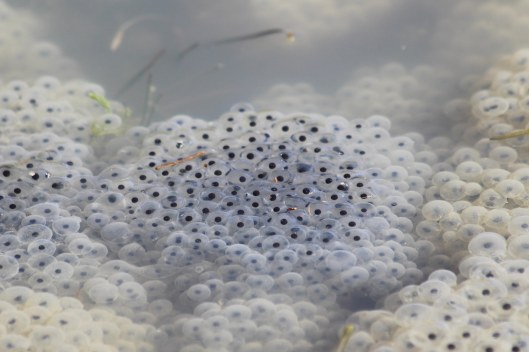
Plenty of sunshine in recent days means lots of light and warmth, which means the Common frogs (Rana temporaria) have been doing their thing in the pond at Lavernock Nature Reserve, and there are now huge clumps of spawn. Some of the little black dots already look to be developing, though, apparently, only 1 in 50 of these eggs will grow to frog-hood. I’ll be keeping an eye on them whenever I pass through this way.

190225 frog spawn (2)

55/365 Lovely-dovey swans

Tags

, , , , , ,

190224 swan courtship (1)

As the thick fog began to lift from the lakes at Cosmeston this morning, I caught sight of these two Mute swans engaged in their delightful slow-motion courtship dance, gracefully moving their necks from one side to the other and confirming their connection with quiet grunts and hissing sounds. I didn’t quite capture their necks making the classic heart shape but it was a delight to watch them.

This slideshow requires JavaScript.

54/365 The lion’s tooth

Tags

, , , ,

The French dent-de-lion, lion’s tooth (from the shape of its leaves), became, in English, Dandelion, that wonderful burst of wildflower yellow that lights up grassy meadows and roadside verges, and provides an important early source of pollen to emerging insects. I couldn’t go past this particularly lush flower as I stomped down the zigzag path this afternoon.

OLYMPUS DIGITAL CAMERA

53/365 Curlews

Tags

, , , , , , , ,

190222 Curlew

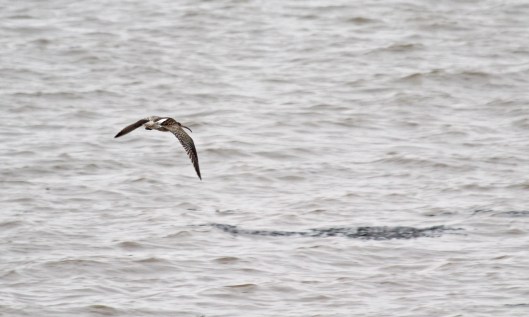
Most of the Curlews that graze on Sully’s playing fields during the winter months seem now to have moved on, motivated by thoughts of breeding to head to the uplands perhaps. I only saw four on the fields this morning through the fog and they soon flew down to the shore. Others were lurking amongst the rocks and seaweeds, though you could only really find them out if they called or when they moved – they are incredibly well camouflaged, even without today’s fog shroud.

52/365 Nesting

Tags

, , , , , ,

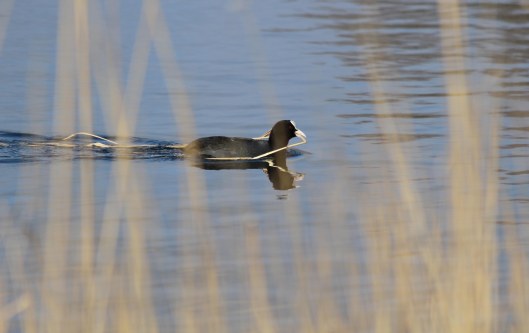
190221 Coot nest building

As we’ve had a very unseasonal high of 14°C today (this is still meant to be winter remember), it’s not surprising that birds’ thoughts are turning to nest building. Today, at Cosmeston, I saw Magpies and Carrion crows stick-carrying, a Blue tit with moss in its beak perched on the entrance hole of a conveniently placed nest box, and this Coot transporting bits of reed to a secretive location.