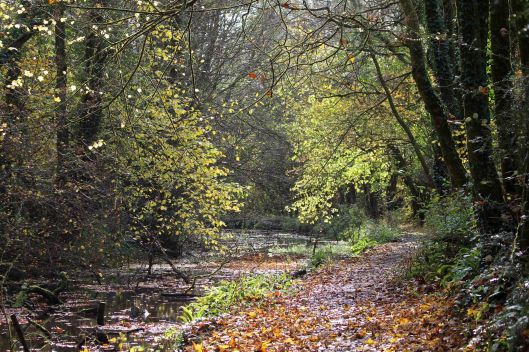
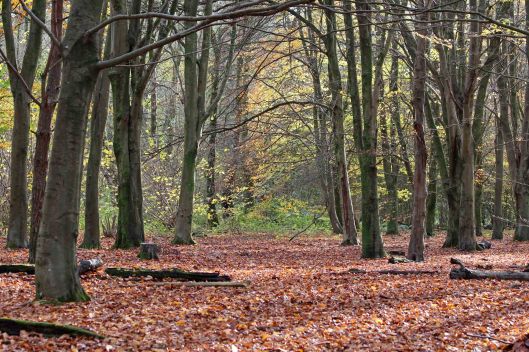
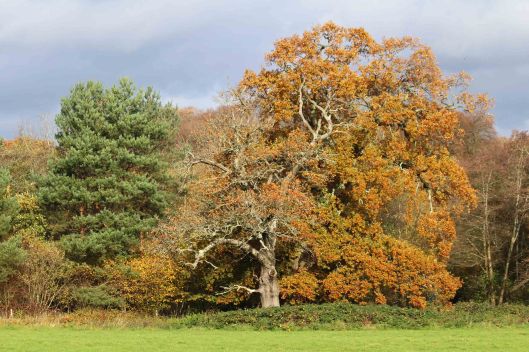
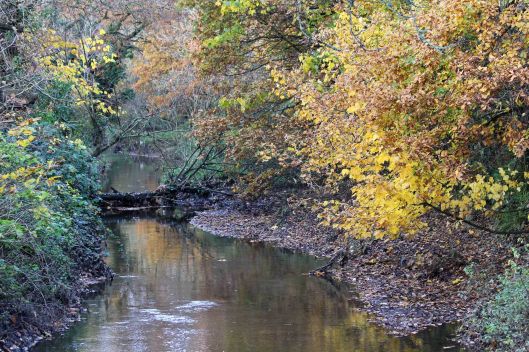
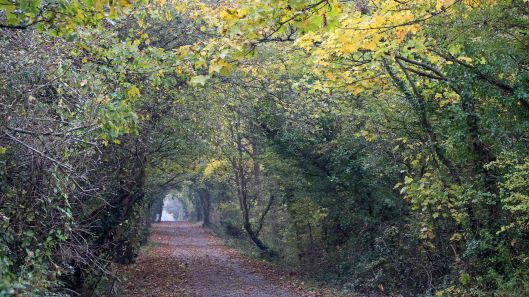
Late autumn at Forest Farm

Tags

, , , , ,

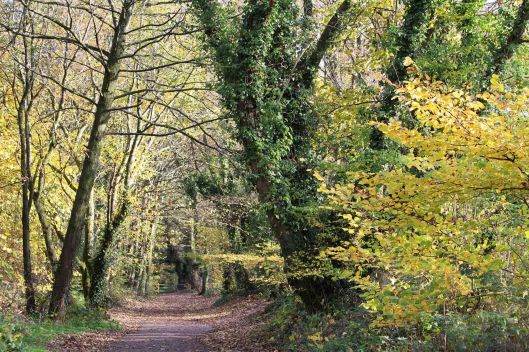
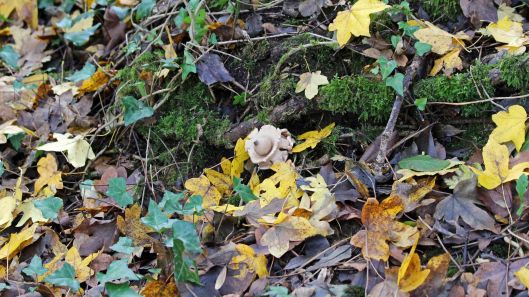
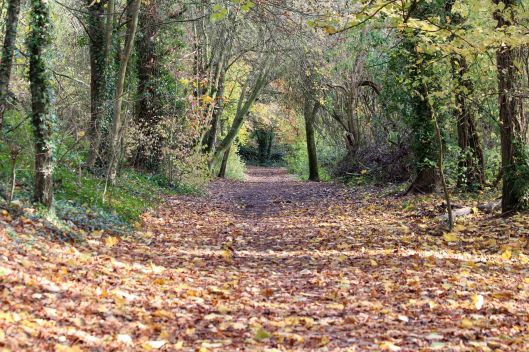
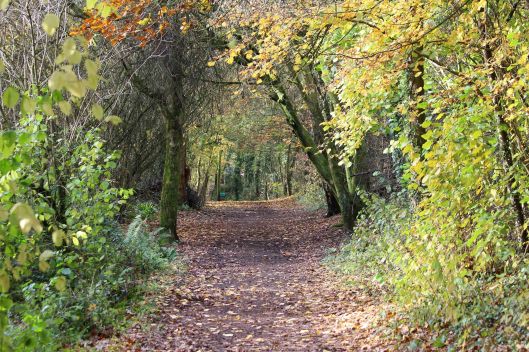
When anyone asks me what my favourite season is I can never decide because they each have their good points but, this year, our late-arriving autumn has certainly been magnificent. On Wednesday I caught the train to Radyr for a meander around Forest Farm Nature Reserve and it was sublime. From bright golden yellows to rustling red-browns, with some leaves still decorating spreading branches above my head and others carpeting the woodland floor beneath my feet, I spent a marvellous day, my eyes admiring, my feet kicking, my neck craning and all my senses spilling over. Ah, autumn!
181118 Forest Farm (1)181118 Forest Farm (2)181118 Forest Farm (3)181118 Forest Farm (4)181118 Forest Farm (5)181118 Forest Farm (6)181118 Forest Farm (7)

A Meadow pipit ablutes

Tags

, , , , , , ,


181117 meadow pipit (5)

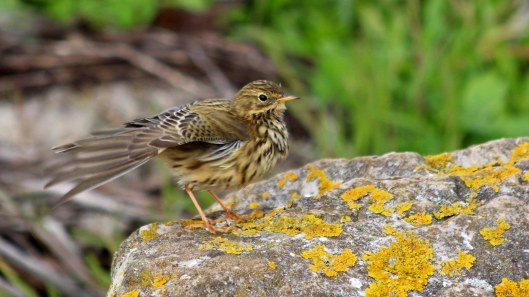
It was while watching this delightful little Meadow pipit at its bath and preening session a couple of weeks ago that I noticed another small bird dotting around on the grass nearby.

That bird turned out to be my mega find, a Lapland bunting. But, in all honesty, this little Meadow pipit was just as lovely and, as I was being very quiet and moving very slowly forward, and it was taking great pains over its toilette, it let me get quite close.

Meadow pipits have such pretty markings and, at this time of year, when they’ve recently completed their moult, their colouring is rich and warm. I thought this little sweetie deserved its moment in the spotlight as much as the vagrant bunting.

181117 meadow pipit (6)

A new Earthstar

Tags

, , , , ,

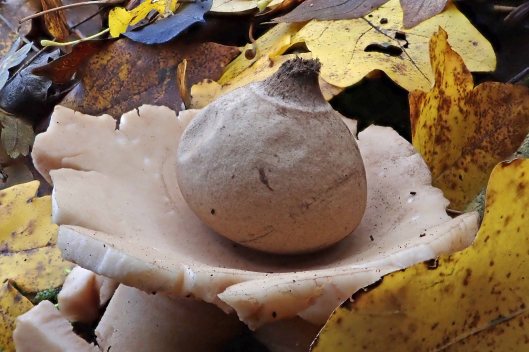
You can’t have a blog called Earthstar without occasionally having a post about an Earthstar, so here it is.

181116 earthstar (3)

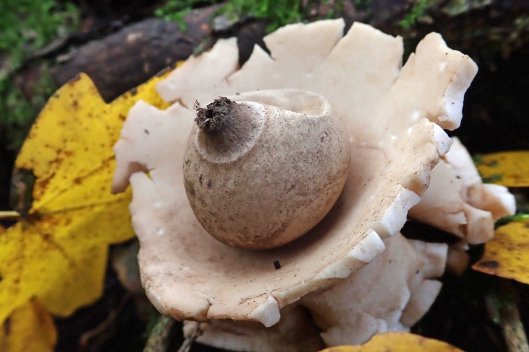
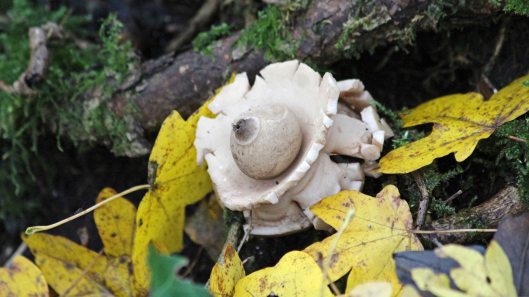
Though I searched for these amazing little fungi at a known location in Cathays Cemetery a couple of weeks ago, I couldn’t find any. So, I was delighted when a birding acquaintance showed me this solitary Earthstar at a completely new location earlier this week.

181116 earthstar (2)

This is Geastrum triplex, a Collared earthstar. I’ve previously only found them under conifers but the experts say they are most often found, like this one, under hardwood trees.

181116 earthstar (1)

I gave its sac a poke to show my friend how the spores are released – let’s hope that also helped to spread the spores so we see more of these little stunners in future.

181116 earthstar (4)

Variations on a theme

Tags

, , , , , ,

181115 seed dispersal (1)

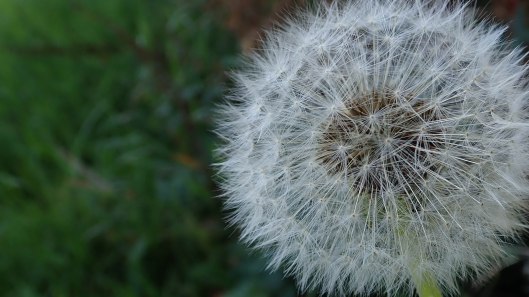
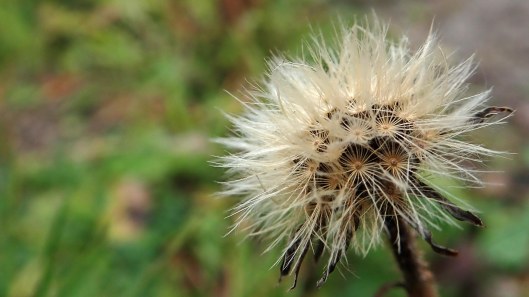
With its seeds attached to tiny botanical parachutes that can be distributed far and wide by the wind, the Dandelion (Taraxacum officinale agg.) has evolved an extremely efficient method of disseminating its seed. It’s not surprising, then, that many other species use a very similar method to disperse their seeds.

181115 seed dispersal (2)181115 seed dispersal (3)181115 seed dispersal (4)181115 seed dispersal (5)

I don’t think I’m getting my wish this time around!
181115 seed dispersal (6)

LBJ

Tags

, , , , , , ,

In birder-speak (and, actually, also in mycologist-speak), there’s an oft-used abbreviation for those small brown birds that look very much alike and so can sometimes be difficult to identify: LBJ (Little Brown Job). I think you can see why.

(To be completely honest, not all of these images are from LBJs; some are from BBJs. I won’t ask you to guess what they are.)

Who’s jealous then?

Tags

, , , , ,

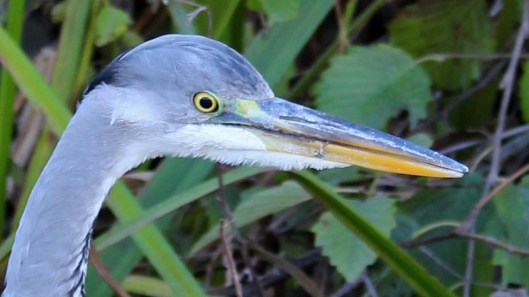
I wasn’t the only one watching the Great crested grebe fishing at Cardiff Bay wetlands on that sublime autumn day. This juvenile Grey heron flew in half way through the fishing session and settled itself first on one side of the small pool, then on the other.


And the heron watched in awe as the grebe caught fish after fish so effortlessly and in such a short space of time.

181113 grey heron (3)181113 grey heron (4)181113 grey heron (5)181113 grey heron (6)

I’m sure I detected a look of jealousy, and perhaps hunger, on that wide-eyed face!

Fisher extraordinaire

Tags

, , , , , , ,

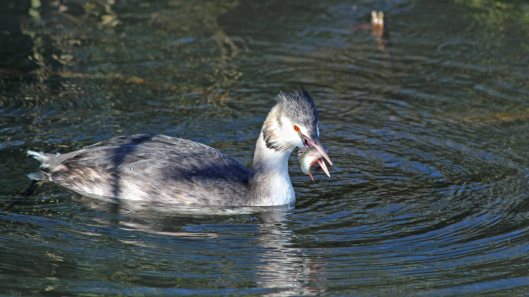
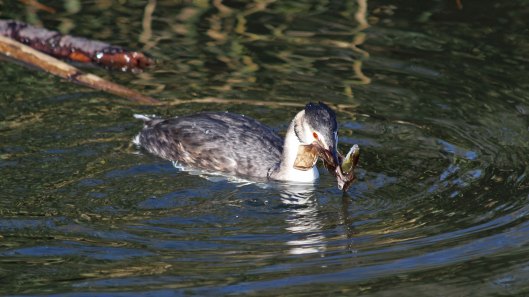
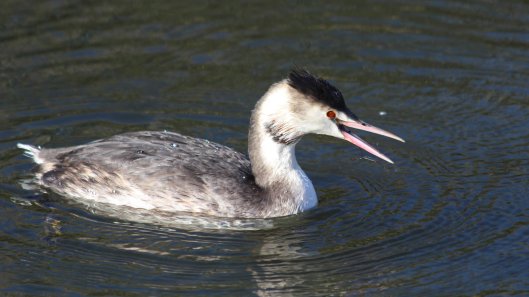
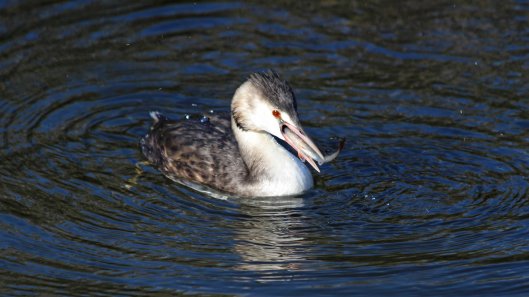
It was a lovely late autumn day, with a bit of a nip in the air but gloriously blue skies overhead and still a little heat in the sun. It was the perfect day, in fact, to stand on the boardwalk at Cardiff Bay Wetlands Reserve and watch this Great crested grebe catching itself breakfast, morning tea, lunch, afternoon tea, dinner and supper, all in the space of just 6 minutes (I can tell from the times on my photographs).

181112 great crested grebe (1)181112 great crested grebe (2)181112 great crested grebe (3)181112 great crested grebe (4)181112 great crested grebe (5)

No wonder this successful little fisher-bird was grinning so broadly as it headed into the reeds for a snooze!

181112 great crested grebe (6)

Cosmeston colour

Tags

, , , ,

181111 Cosmeston colour (1)

Although it’s now late autumn, as the weather has been so mild, it’s only in the past couple of weeks that I’ve been seeing the change of seasons reflected in the trees around me on my meanders. So, here’s some glorious autumn colour from recent walks at Cosmeston Lakes Country Park.

The windhover

Tags

, , , , , , , , , ,

Most of my sightings of Kestrels have been of birds rapidly beating their wings to maintain their incredibly static position in the air as they watch intently for the small mammals they prey on, and this ability to remain almost stationary is the reason for some of their many vernacular names: windhover and windfucker, hoverhawk, wind bivver, wind fanner and stand hawk. (This series of stills was taken recently of a Kestrel doing just that at Lavernock Nature Reserve.)

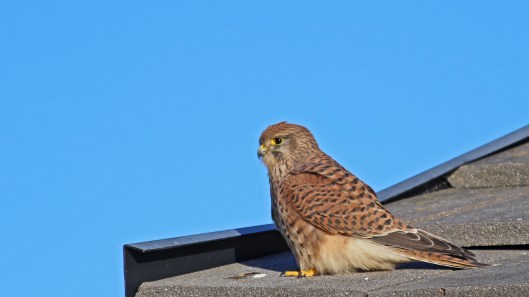
I was particularly delighted, then, during our recent birding trip to Portland, to do a little hovering of my own – albeit at ground level – as I edged ever closer to a Kestrel that was taking a short break from its almost constant hunting and sheltering from the gusting northerlies on a nearby roof top. What a stunning bird it is!

181110 kestrel (5)

Earpick fungus

Tags

, , , , , ,

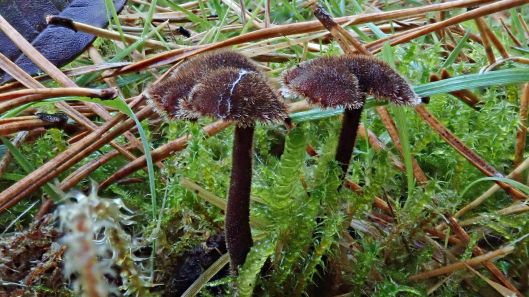
During a wander around Cardiff’s Cathays Cemetery last Friday, I found my first Earpick fungi (Auriscalpium vulgare).

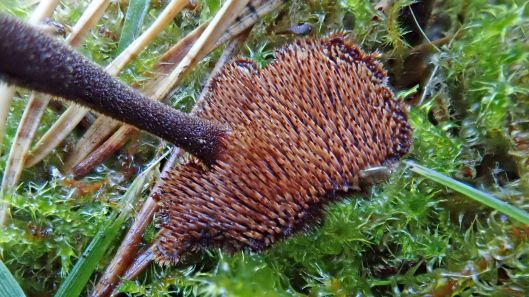
Now, you might think Earpick is a very odd name for a fungus – you certainly wouldn’t want to use them to clean your ears out! – but it’s actually quite logical. Auriscalpium is a combination of the Latin words auris, meaning ear, and scalpare, the verb ‘to scratch’. The stem of the fungus certainly does look quite scratchy, as does the underside of the cap, with its mass of tiny cone-shaped rods. And it’s those rods that are the connection to the word ‘ear’ in the fungi’s name – have you ever seen a magnified photo of the sensory hair cells of the human inner ear?

Vulgare just means common, though this fungus is certainly not that – when I checked the biological database for Wales, I found only 10 previous recorded sightings.

These fungi were growing at the base of a conifer but I didn’t realise until I started reading up about them when I got home that the fungi nearly always grow on the rotting cones of pines and other conifers. I didn’t notice any cones but they must have been there, under the moss and grass. Fascinating!