A slimy Monday

Tags

, , , , ,

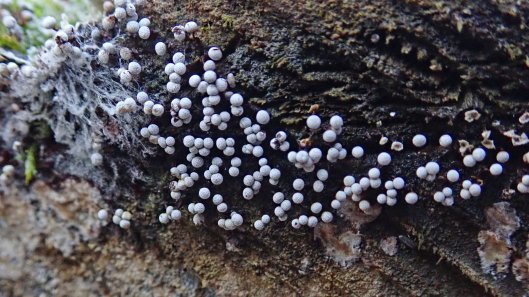
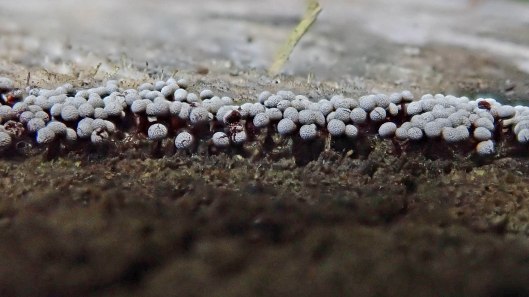
Cosmeston was relatively quiet yesterday. A few Redwings flashed their rusty flanks at me, indignant that I had interrupted their grazing in the west paddock, and a pair of Mistle thrushes screeched their football-rattle call from the tree tops as the Redwings flew up to join them. Carrion crows and Grey squirrels hovered on the periphery, watching as I fed seed to a posse of passerines in Cogan Wood, but the hoped-for Marsh tit did not appear. So, I abandoned the birds, headed up and along the muddy woodland tracks where few people venture, eyes down and searching for fungi. Within minutes, my hand was scratched from reaching too carelessly through brambles, my fingers were filthy from picking up rotting wood to examine more closely, my camera was speckled with dirt from being plonked on the ground for better close-ups, but my reward was this most wonderful slime mould. I don’t know its name but I am a huge admirer of these enigmatic organisms, and this one was a beauty!

181127 slime (1)181127 slime (2)181127 slime (3)181127 slime (4)181127 slime (5)

It’s National Tree Week

Tags

, , ,

Brain child of one of Britain’s leading tree charities the Tree Council, National Tree Week is an annual celebration of trees and their importance to the wellbeing of everything and everyone on planet Earth. Events are held throughout Britain, with an estimated 250,000 people getting digging and dirty to plant trees. You can find out more on the Tree Council’s website.

181126 national tree week

Winter 10

Tags

, , , ,

If you’ve been following for a while, you’ll know I’ve been trying on and off to learn the names of, and a bit more about, the British wildflowers I find on my meanderings. And, to that end, I follow a weekly happening on Twitter called #wildflowerhour. You can read more about that in my previous blog here. During winter they run a challenge to find and name at least 10 wildflowers each week and share them on social media using the hashtag #winter10.

Blue fleabane

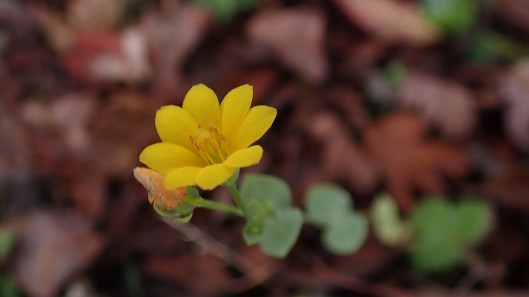
Earlier this week, I decided to see what I could find as I walked firstly through Lavernock Nature Reserve and then homeward through Cosmeston Lakes Country Park. And, er, actually, for this week my hashtag needs to be #winter11. These are they: Blue fleabane, Bramble species, maybe a Hawkbit species, some kind of Buttercup, a Dandelion species, a Daisy and Devil’s-bit scabious, Yellow-wort, a thistley thing and Red clover, and Common ragwort. You can see I’ve still got some learning to do!

Bramble species

181125 dandelion sp

OLYMPUS DIGITAL CAMERA

181125 common ragwort

My bogey bird

Tags

, , , , ,

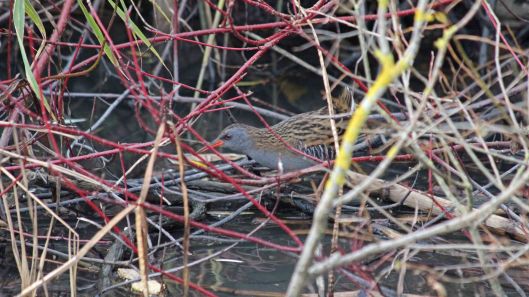
On Thursday, at long last, I saw and got photos of my bogey bird – not great photos, because it didn’t stop still for a single moment and was mostly obscured as it poked and prodded its way along the shrubby water’s edge at Cardiff Bay Wetlands Reserve – but I’m still absolutely delighted to have seen the bird.

181124 water rail (3)

Though I’ve heard these birds in various locations, I’ve only ever seen a Water rail (Rallus aquaticus) once previously, at Forest Farm Nature Reserve, back in February 2016. At the time, I didn’t realise how lucky I was to have good views of it as it did a circuit of the pond in front of one of the hides. Now I know better.

181124 water rail (4)

My failure to see a Water rail during the intervening 2 years 9 months was not simply down to bad luck or bad field craft. These are notoriously secretive birds, seemingly relishing concealment and a quiet life in the very thickest of wetland vegetation, though quiet they are not.

181124 water rail (5)

Various adjectives have been used to describe their call: squealing, grunting, snorting, piglet-like. (You can listen for yourself here.) Though it was constantly chattering away to itself, this particular Water rail made none of those more raucous sounds: its one-sided conversation was more of a sharp-voiced running commentary on the chilliness of the weather, the lack of insects, the number of pesky mallards.

181124 water rail (7)

This Water rail was smaller than I remembered, about half the size of the more numerous and extrovert Moorhen, and, to my eye, it was much more handsome. Its head, chest and underbelly have the rich blues of the Moorhen but its brown-and-black back is mallard-like, and it has a lovely blue-and-white stripey area on each flank. The cheeky white bobbing under-tail  is the same as its bigger cousin though.

Crepidotus calolepis

Tags

, , , ,

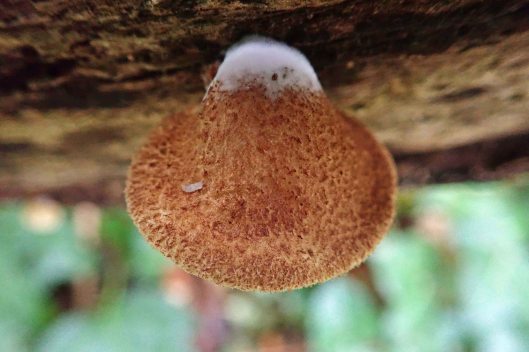
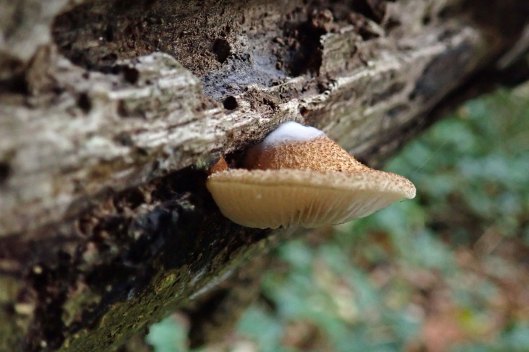
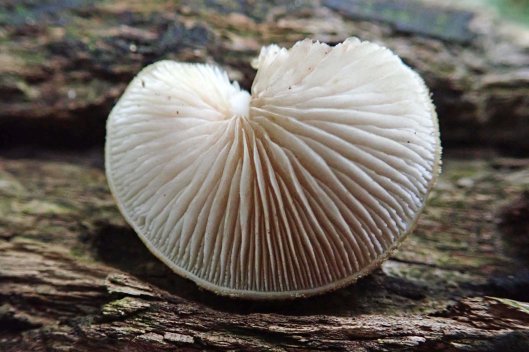
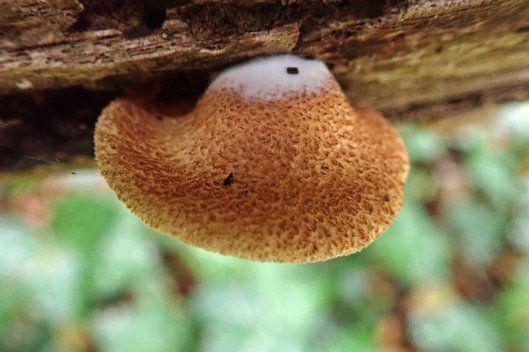
Happy #FungiFriday! I actually found these little oysterling fungi a few weeks ago but forgot to share them at the time.

181123 Crepidotus calolepis (1)

Crepidotus calolepis is a bit of a mouthful but these little beauties don’t have a common name. Here’s what fungi expert Pat O’Reilly says about its scientific name:

The generic name Crepidotus comes from crepid- meaning a base such as a shoe or a slipper (although some sources state that it means ‘cracked’), and otus, meaning an ear – hence it suggests a ‘slipper-like ear’. In the past mushrooms in this genus were sometimes referred to as slipper mushrooms. The specific epithet calolepis may come from the roots calo- meaning beautiful and lepis, meaning with scales.

181123 Crepidotus calolepis (2)


181123 Crepidotus calolepis (6)

O’Reilly is doubtful about the presence of Crepidotus calolepis in Britain, suggesting that the British records are, in fact, scaly forms of Crepidotus mollis, the Peeling oysterling, but my find was confirmed from photos by two other British experts so C. calolepis it is!

181123 Crepidotus calolepis (5)

Glistening silver and gold

Tags

, , , , , , ,

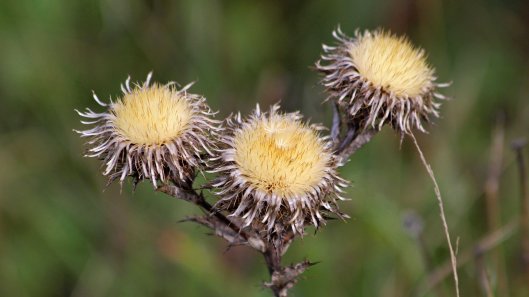
181122 carline thistle (2)

They glisten silver and gold in the late autumn sunshine these Carline thistles, with their thick fringe of papery bracts and heads of soft golden down. I blogged about the flowers last year; now here are the ‘everlasting’ seed heads that can be seen all through the chilly months of winter.

181122 carline thistle (1)

A goose roost

Tags

, , , , ,

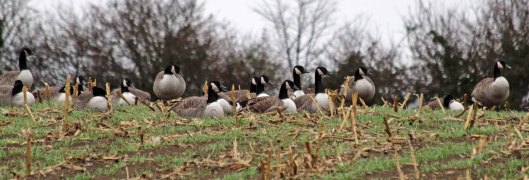
181121 canada geese (1)

Have I gone from the sublime (yesterday’s Hen harrier) to the ridiculous (today’s Canada geese)? Maybe. But to me all birds are interesting so geese today it is!

181121 canada geese (2)

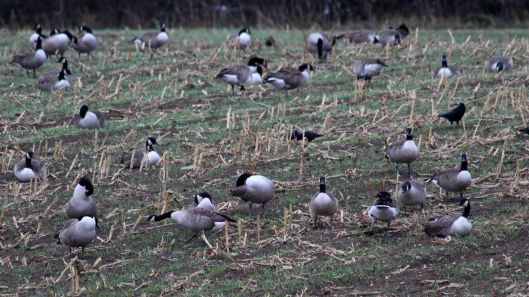
With their constant honking conversation, I could hear these birds before I saw them, sitting, standing, arguing with their neighbours, walking about, feeding on excess seeds from the farmer’s recent planting.

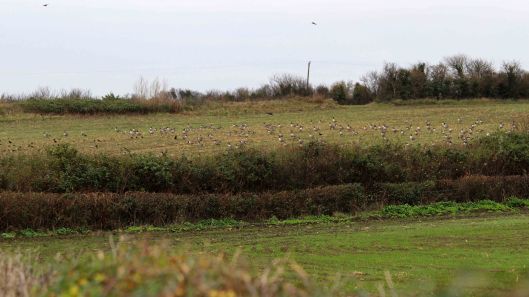
181121 canada geese (3)

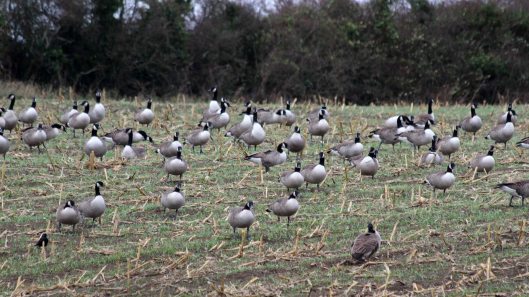
A local birder recently reported 280 Canada geese on the lakes at Cosmeston, which is just a short distance as the goose flies from where these birds were resting at Lavernock, and by my reckoning there were over 200 in this field yesterday.

181121 canada geese (4)

I have walked this way on two consecutive mornings this week and have seen the geese both times but, even as I watched them, I doubted that the farmer would let them stay much longer.

181121 canada geese (5)

As I was leaving the area yesterday, I heard shooting, saw geese flying off in small groups and also saw large flocks of Woodpigeons and Jackdaws take to the air, so I assume the farmer is now actively chasing all potential seed-eaters off his fields.

181121 canada geese (6)

181121 canada geese (7)

Just a few Woodpigeons!

Hen harrier!

Tags

, , , , , , , ,

‘It flies so low that sometimes it seems to be stirring the grass, its long legs trailing through the heather like a keel. A slow tacking flight: float then flap.’ This description of a Hen harrier’s flight pattern is from the library book I’m currently reading, Raptor: A journey through birds by James Macdonald Lockhart (4th Estate, London, 2016) and, by sheer coincidence, I watched a Hen harrier fly just like this yesterday.

181120 hen harrier (1)

I was at Cosmeston Lakes Country Park, walking along the central hedgerow in the west paddock, on the lookout for winter thrushes, and had just walked down into a dip in the field when, with a loud whooshing sound, a large bird flew almost over my head.

181120 hen harrier (2)

I immediately turned and looked up, swung up the camera and clicked as many times as I could before the hedgerow blocked my view. Walking quickly up out of the dip, I watched the bird, pursued by a couple of Carrion crows, dodge eastwards, then veer back west and head down over the west lake reed beds and on towards the coast.

181120 hen harrier (3)

But what was it? It seemed quite large but I didn’t think it was a Buzzard. There had been a Sparrowhawk harassing the smaller birds a couple of days previously, but the flight didn’t seem right for that – not the flap, flap, glide that Sprawks are known for. This bird had been flying very low and relatively slowly.

181120 hen harrier (4)

I had been out walking for about 5 hours by this time and was getting cold, so decided to head home. Hot cuppa in hand, I grabbed by trusty RSPB Handbook of British Birds, transferred my photos on to my laptop and opened up Photoshop. As the day had been gloomy, the shots all needed lightening and heavy cropping to get a better look at the bird. When I consulted my handbook, I found a bird that matched but couldn’t believe it was right. Luckily, my birding friend John was online so I flicked him a message with four photos … and waited.

Yay! He confirmed the match, a Hen harrier (Circus cyaneus), from its colouring either a female or a juvenile – it certainly looks exactly like the juvenile image in my book. This is quite a rare bird locally so I was absolutely over the moon to have seen this beauty.

Birding at Garwnant and Rhaslas

Tags

, , , , , , , , , , , ,

Clear blue skies, stiff  breeze and freezing cold, star birds and great company, long walk, Welsh upland scenery … it doesn’t get much better than yesterday’s Glamorgan Bird Club’s field trip to the forestry at Garwnant and Rhaslas pond, with a quick stop at the Llwyn-onn reservoir in between.
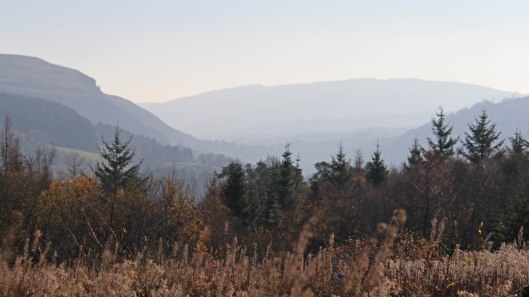
181119 birding at garwnant and rhaslas (1)

It took us a while to leave the car park at the Forestry Centre as the birding got off to a cracking start with lots of Common crossbills coming in to feed on the cones of the tall conifers all around us.

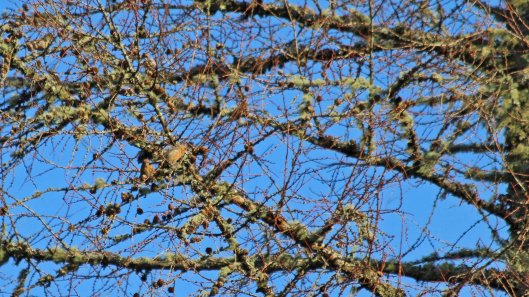
181119 birding at garwnant and rhaslas (2)181119 birding at garwnant and rhaslas (3)

We headed out along one of the many walking trails, hoping for views of Willow tits. One person heard one but the bird didn’t reappear so we carried on a bit further to a high vantage point. From there we were rewarded with views of Kestrel, Buzzard and this magnificent Red kite.

181119 birding at garwnant and rhaslas (4)

Retracing our steps, a couple of us who’d lingered behind heard the Willow tit calling, waved frantically to the birders ahead, and managed some good views of this increasingly uncommon little bird.

181119 birding at garwnant and rhaslas (5)

We then walked a rectangular path, taking us out around more of the forest trails, seeing even more Crossbills and another couple of Willow tits, as well as many other species. After lunch back at the car park, we drove down to nearby Llwyn-onn dam for a quick scan for any interesting birds. The reservoir was looking gorgeous, with much more water than on our last visit.
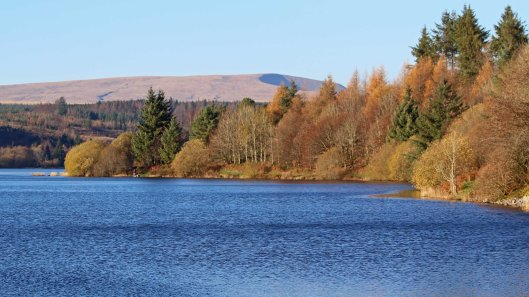
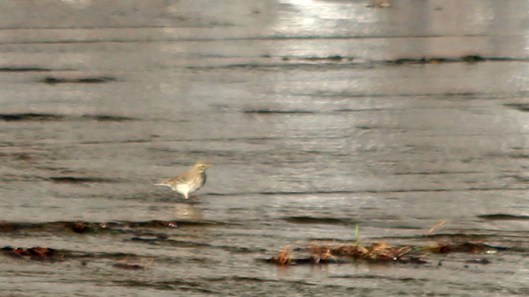
181119 birding at garwnant and rhaslas (6)

We’d hoped for a Water pipit … and there it was, though a very flighty bird that scarcely stayed still and kept flying off in various directions. I was pretty happy though as this was a lifer for me, and it was a year tick for several other birders.
181119 birding at garwnant and rhaslas (7)

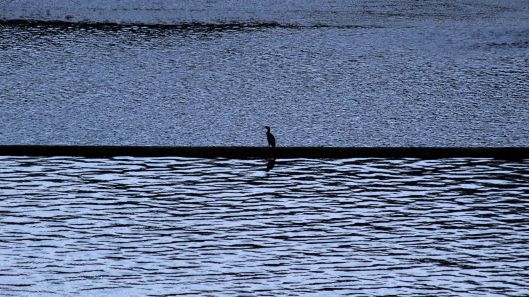
I really like how this photo of the Cormorant turned out. And there was a Common sandpiper just along the pipe from where it was perched.
181119 birding at garwnant and rhaslas (8)

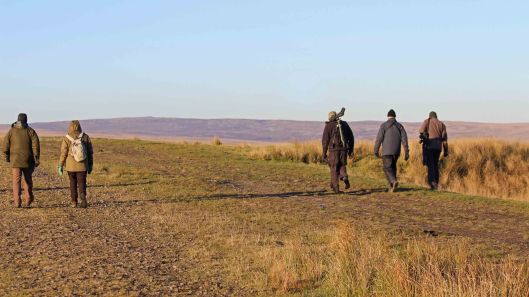
Then it was on for a quick check of Rhaslas pond before the light faded – sunset is around 4.15pm at the moment. It was bitterly cold up on the open moorland as you tell from how rugged up everyone was.
181119 birding at garwnant and rhaslas (9)

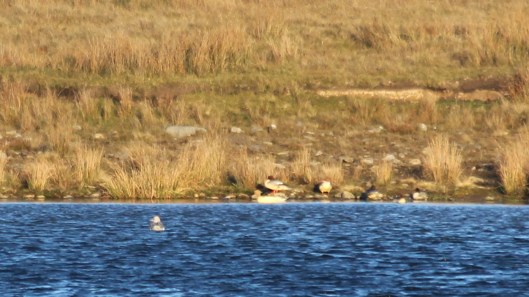
Though there weren’t a huge number of birds on the pond, we did see several Goosanders, Wigeon, Tufted ducks and a solitary Goldeneye. It was a smashing end to an excellent day!
181119 birding at garwnant and rhaslas (10)

Here’s my list of birds seen: Wigeon, Teal, Mallard, Tufted Duck, Goldeneye, Goosander, Grey Heron, Cormorant, Red Kite, Buzzard, Kestrel, Common Sandpiper, Black-headed Gull, Lesser Black-backed Gull, Herring Gull, Woodpigeon, Great Spotted Woodpecker, Magpie, Jay, Carrion Crow, Raven, Blue Tit, Great Tit, Coal Tit, Willow Tit, Goldcrest, Wren, Nuthatch, Treecreeper, Blackbird, Mistle Thrush, Robin, Pied Wagtail, Water Pipit, Chaffinch, and Common Crossbill. And somehow I missed the Starling, Song Thrush, Redwing and Fieldfare.

Late autumn at Forest Farm

Tags

, , , , ,

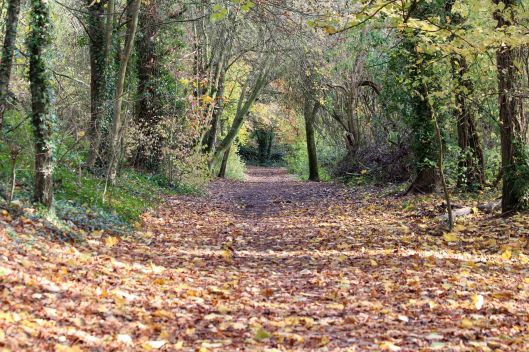
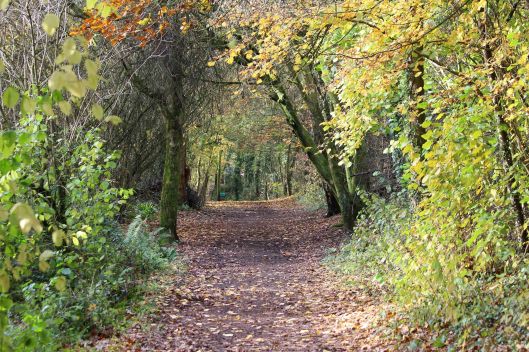
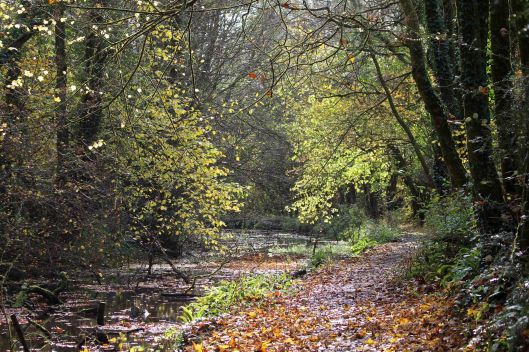
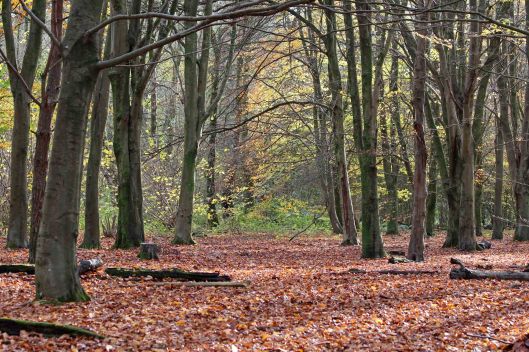
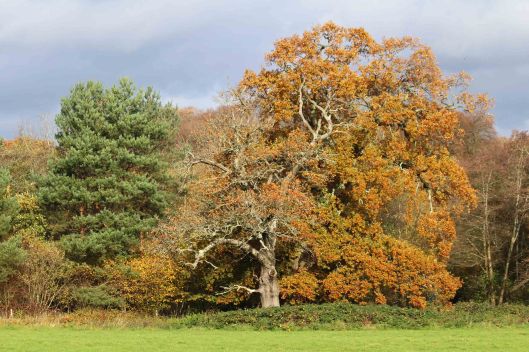
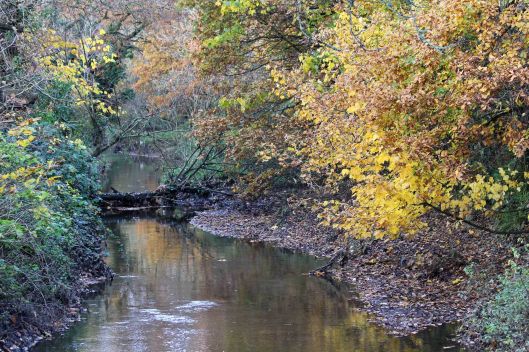
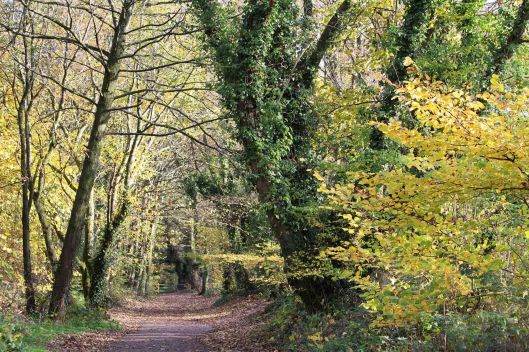
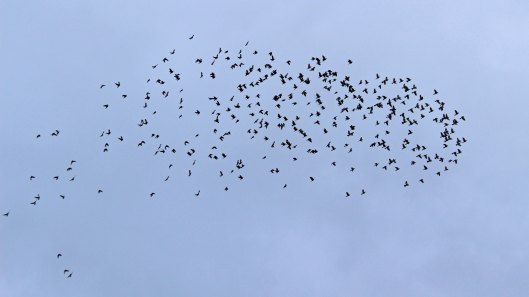
When anyone asks me what my favourite season is I can never decide because they each have their good points but, this year, our late-arriving autumn has certainly been magnificent. On Wednesday I caught the train to Radyr for a meander around Forest Farm Nature Reserve and it was sublime. From bright golden yellows to rustling red-browns, with some leaves still decorating spreading branches above my head and others carpeting the woodland floor beneath my feet, I spent a marvellous day, my eyes admiring, my feet kicking, my neck craning and all my senses spilling over. Ah, autumn!
181118 Forest Farm (1)181118 Forest Farm (2)181118 Forest Farm (3)181118 Forest Farm (4)181118 Forest Farm (5)181118 Forest Farm (6)181118 Forest Farm (7)