• ABOUT
  • BIRDING 2018
  • Birding 2019
  • BLOG POSTS
  • Butterflies 2018
  • Resources

earthstar

~ a celebration of nature

earthstar

Tag Archives: berries

Nature’s Christmas tree

17 Saturday Dec 2016

Posted by sconzani in flowers, nature, trees

≈ 9 Comments

Tags

berries, Callicarpa, Christmas baubles, Christmas tree, fruit, Holly, Mahonia

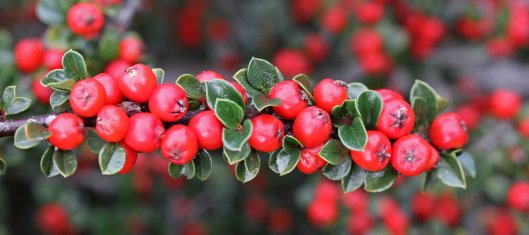
You’d think with the shortest day fast approaching that the landscape would be dull and grey and completely lacking in colour. But it’s not! If you look around, you’ll find the cotoneaster trees loaded with red berries, and holly trees, too, bursting with shiny red fruit. In my local park, the Mahonia bushes are flowering in brilliant yellow starbursts, and the Callicarpa shrubs are covered in stunning lilac berries that seem almost unreal and man-made, rather than something Ma Nature created. I thought I’d put some of Nature’s beautiful baubles together to make my very own ‘unreal’ Christmas tree!

161217-christmas-tree-1
161217-christmas-tree-2
161217-christmas-tree-3
161217-christmas-tree-1
161217-christmas-tree-4
161217-christmas-tree-5
161217-christmas-tree-3
161217-christmas-tree-6
161217-christmas-tree-7
161217-christmas-tree-8
Like Loading...

Where the fruits were jewels …

29 Saturday Oct 2016

Posted by sconzani in autumn, nature, plants

≈ 2 Comments

Tags

autumn fruit, berries, fruit, haws, hips, rose hips, wild fruit

‘On the motionless branches of some trees, autumn berries hung
like clusters of coral beads, as in those fabled orchards where the fruits were jewels …’
~ Charles Dickens, Life and Adventures of Martin Chuzzlewit, chapter 2

161029-berries-1
161029-berries-2
161029-berries-3
161029-berries-4
161029-berries-5
161029-berries-6
161029-berries-7
161029-berries-8
161029-berries-9
Like Loading...

A berry by any other name …

18 Tuesday Oct 2016

Posted by sconzani in autumn, nature, plants, trees

≈ 8 Comments

Tags

berries, berry, drupes, fruit, haws, hips, pomes, red berries, red fruit

161018-berries-1

I’ve been planning a ‘berry’ blog for a while and have been photographing all the lovely berries I’ve seen while out on my wanders but then, in the process of collecting together my various photos for this blog, I began to wonder what actually is a berry? Is a berry a fruit? Should I include hips and haws? Should I only include the fruits of those plants that have berry in their name? At that point, I gave up and decided a berry by any other name would look as pretty and I would include all the lovely reddish-coloured things I’ve seen growing on assorted trees, bushes and plants, whether they be berries, drupes, hips, haws, pomes, or just plain fruit. So here you go …

161018-berries-2
161018-berries-3
161018-berries-4
161018-berries-5
161018-berries-6
161018-berries-7
161018-berries-8
161018-berries-9
161018-berries-10
Like Loading...

Don’t poke this weed!

23 Friday Sep 2016

Posted by sconzani in nature, plants

≈ 8 Comments

Tags

American nightshade, American pokeweed, berries, berry, Bute Park, Phytolacca americana, pokeweed

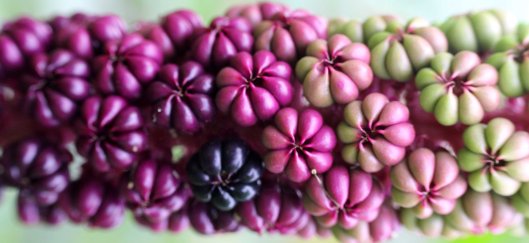
It’s toxic! If the sap touches your skin, it can burn. If you ingest the leaves, you might suffer a severe reaction. If you think these berries look delicious, think again – they will poison you. I think you get the picture – but what a beautiful picture it is, don’t you think? I am just entranced by the colours and shapes of the berries.

160923-american-pokeweed-1

This is Phytolacca americana, the American pokeweed or American nightshade or just plain pokeweed, and I found it growing alongside the hydrangeas and rhododendrons in Cardiff’s Bute Park. It’s a herbaceous perennial that grows to a height of about 8 feet (2 metres) and is native to the USA, where it’s apparently considered a weed by the agricultural community. However, several species of bird and some small beasties are unaffected by its toxicity so enjoy an autumn feast on the berries. And, according to Mrs M. Grieve’s 1931 A Modern Herbal, various parts of the plant can be used for a range of natural remedies, from drenching cattle to treating chronic rheumatism and haemorrhoids. I think I’ll stick to admiring the berries!

160923-american-pokeweed-3
160923-american-pokeweed-2
160923-american-pokeweed-6
160923-american-pokeweed-4
160923-american-pokeweed-5
Like Loading...

The wizard’s tree

18 Sunday Sep 2016

Posted by sconzani in autumn, nature, trees

≈ 3 Comments

Tags

berries, berry, Celtic beliefs, Greek mythology, Hebe, Mountain Ash, Norse mythology, Rowan, Rowan tree, Sorbus aucuparia

It’s berry time, and some of the loveliest berries to be seen at this time of year are those of the enigmatic Rowan tree (Sorbus aucuparia) or Mountain Ash, as it’s also commonly known.

160918-rowan-1

Why enigmatic? Well, the Rowan is surrounded by millenia of myths and legends. In Ancient Greek myth, Hebe, the beautiful young goddess who served ambrosia to the gods, lost her cup to demons and, when the gods sent an eagle to recover the cup, each one of the eagle’s feathers and drops of blood that fell to earth during the ensuing battle produced a Rowan tree. This also explains the Rowan’s red berries and its feather-shaped leaves.

The ancient Norse people believed the first woman was created from a Rowan tree, and a Rowan rescued the god Thor from drowning in a river in the Underworld. The Rowan also features in the ancient wisdom of the Celtic people. Fid na ndruad, its ancient Celtic name, means wizard’s tree; the Irish planted the Rowan near houses for protection against evil; the Scots believed that felling a Rowan would bring bad luck; and the Welsh planted Rowans in their graveyards to keep evil spirits at bay.

160918-rowan-2
160918-rowan-4
160918-rowan-3
Like Loading...

It’s ivy berry time

05 Tuesday Jan 2016

Posted by sconzani in birds, insects, nature, nature photography, winter

≈ Leave a comment

Tags

berries, birds, ivy, winter

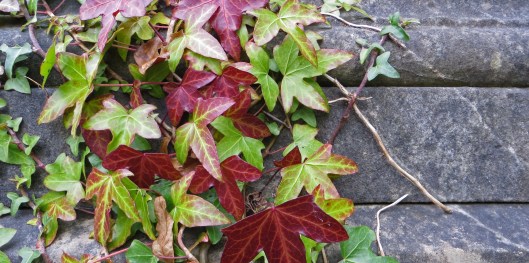
Though its roots can creep between gaps in stonework causing severe damage to ancient ruins, stone walls, grave monuments and the like, ivy (Hedera helix, also known as English ivy, common ivy or just plain ivy) is of great importance to wildlife. Not only does it provide shelter and nesting places for insects, birds, bats and other beasties, it is also an important food source.

english ivy 1

Ivy’s flowering period begins in August and continues right through to November, sometimes later, and the flowers produce plentiful quantities of nectar and pollen. Over 70 species of nectar-loving insects feast on the flowers, including wasps and bumblebees, Red admiral, Small tortoiseshell and Peacock butterflies.

English ivy

Once the berries begin to ripen, they turn a deep purple-black colour, and provide an important winter source of food when most other berries are finished. At this time, the ivy becomes a favourite snacking place for lots of berry-eating birds, blackbirds and thrushes in particular, but also starlings and jays, finches and wood pigeons.

english ivy 2

Like Loading...
Newer posts →

About me

sconzani

sconzani

I'm a writer and photographer; researcher and blogger; birder and nature lover; countryside rambler and city strider; volunteer and biodiversity recorder.

View Full Profile →

Follow earthstar on WordPress.com

Enter your email address to follow this blog and receive notifications of new posts by email.

Recent blog posts

  • Weevil: Mecinus pyraster January 10, 2026
  • Red in beak and claw January 9, 2026
  • Who’s watching who? January 8, 2026
  • Springtail: Orchesella cincta January 7, 2026
  • A good year for Redwings January 6, 2026

From the archives

COPYRIGHT

Unless otherwise acknowledged, the text and photographs on this blog are my own and are subject to international copyright. Nothing may be downloaded or copied without my permission.

Fellow Earth Stars!

  • Unknown's avatar
  • Unknown's avatar
  • Unknown's avatar
  • Unknown's avatar
  • Unknown's avatar
  • Unknown's avatar
  • Unknown's avatar
  • Unknown's avatar
  • Unknown's avatar
  • Unknown's avatar
  • Unknown's avatar
  • Unknown's avatar
  • Unknown's avatar
  • Unknown's avatar
  • Unknown's avatar
  • Unknown's avatar
  • Unknown's avatar
  • Unknown's avatar
  • Unknown's avatar
  • Unknown's avatar
  • Unknown's avatar
  • Unknown's avatar
  • Unknown's avatar
  • Unknown's avatar
  • Unknown's avatar
  • Unknown's avatar
  • Unknown's avatar
  • Unknown's avatar
  • Unknown's avatar
  • Unknown's avatar
  • Unknown's avatar
  • Unknown's avatar
  • Unknown's avatar
  • Unknown's avatar
  • Unknown's avatar
  • Unknown's avatar
  • Unknown's avatar
  • Unknown's avatar
  • Unknown's avatar
  • Unknown's avatar
  • Unknown's avatar
  • Unknown's avatar
  • Unknown's avatar
  • Unknown's avatar
  • Unknown's avatar
  • Unknown's avatar
  • Unknown's avatar
  • Unknown's avatar
  • Unknown's avatar
  • Unknown's avatar

Blog at WordPress.com.

Privacy & Cookies: This site uses cookies. By continuing to use this website, you agree to their use.
To find out more, including how to control cookies, see here: Cookie Policy
  • Subscribe Subscribed
    • earthstar
    • Join 669 other subscribers
    • Already have a WordPress.com account? Log in now.
    • earthstar
    • Subscribe Subscribed
    • Sign up
    • Log in
    • Report this content
    • View site in Reader
    • Manage subscriptions
    • Collapse this bar
 

Loading Comments...
 

You must be logged in to post a comment.

    %d