• ABOUT
  • BIRDING 2018
  • Birding 2019
  • BLOG POSTS
  • Butterflies 2018
  • Resources

earthstar

~ a celebration of nature

earthstar

Tag Archives: birding

The elegant Eider

30 Wednesday May 2018

Posted by sconzani in birds, nature

≈ 1 Comment

Tags

birding, birdwatching, British birds, Eider, Eider duck, Farne Islands, nesting Eiders

I am now almost ashamed to admit that, as a child, I had an eiderdown on my bed, to keep me warm during the frosty Waikato nights. If you don’t recognise the name, an eiderdown is a quilt stuffed full with the breast down of the female Eider duck. It was certainly very warm and cosy but these days I couldn’t even contemplate owning such a thing, especially after enjoying my first Eider encounters recently in Northumberland.
180604 Eider (4)

I saw my first while enjoying a fish-and-chip-supper-by-sunset by the harbour in Seahouses, where Eiders were just metres away. That’s also where I first heard their fantastic call – so that’s where comedian Frankie Howerd got his inspiration! (Here’s a link to a youtube video – not mine – if you don’t know what I mean.)

180604 Eider (5)
180604 Eider (6)

180604 Eider (2)

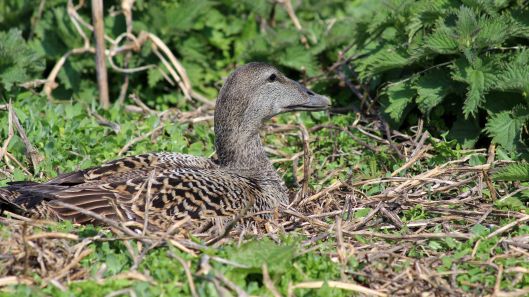
We also encountered Eiders during our trip to the Farne Islands, some so perfectly camouflaged / hidden amongst the vegetation that the local rangers had marked their nesting sites with sticks.
180604 Eider (3)

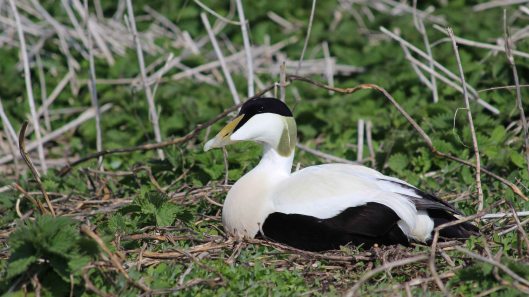
As usual in the bird world, the male birds are the most colourful, and look very handsome in their black, white (with a pink blush) and light green, but, personally, I prefer the delicate hues and intricate patterning of the females. They are both very elegant birds.

180604 Eider (1)

Like Loading...

First, soak your pellet

29 Tuesday May 2018

Posted by sconzani in birds, mammal, nature

≈ Leave a comment

Tags

Barn owl pellets, bird pellets, birding, British birds, dissecting pellets, Field voles, mammal bones, voles bones

If you’d told me 5 years ago that I would one day google ‘How to dissect owl pellet’, I would’ve laughed in your face, but guess what I did today? Three pellets were very kindly sent to me, at my request, by an understanding friend. What can I say? I was curious! I was curious to see what the owl had been eating. (And I must ask my friend what his reply was when the Post Office staff asked what was in his parcel.)

180529 owl pellets (2)180529 owl pellets (3)

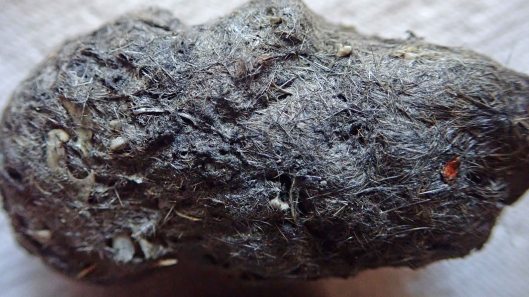
Here is what I received, and a look at the external features. Are they tiny teeth? What is that bone? The pellets have been dried and are very light and look to be full of fur.

180529 owl pellets (5)
180529 owl pellets (7)

Just to be clear, an owl pellet is not pooh. Owls usually swallow their prey whole or, if it’s too large, then in big chunks. The food gets broken down in the gizzard, then digested in the stomach but the more solid, indigestible bits like fur and bone get compacted into pellets in the gizzard and are then ejected. So, a pellet will usually contain whole bones, sometimes whole skulls, which can be used to find out what the bird has been eating.

180529 owl pellets (4)

According to the instructions I found on Discover Wildlife.com:

  • To see what is in an owl pellet, soak it in water. When soft, gently tease it apart with forceps.
  • Slowly pick out all of the bones and bits of insect and put to one side for identification.
  • Count everything – you may only have one skull but three lower jaws, so check carefully to see how many animals are represented in the pellet.

180529 owl pellets (8)

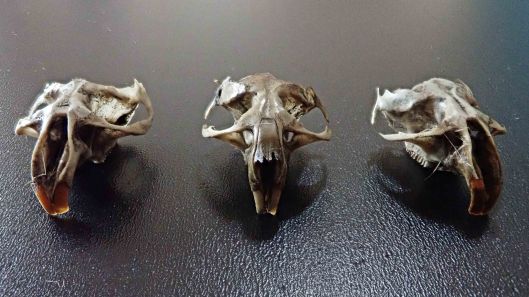
I have now dissected all three pellets, leaving me with a pile of fur and a ton of tiny bones. It was fascinating stuff and I felt a bit like an archaeologist, teasing away the unwanted material from around the fragile bones. Everything has now gone in to soak in biological washing power (as per another website I found) (the enzymes in biological powder should help remove the small bits of fur and ‘other matter’) to clean the bones (bone collectors would probably use hydrogen peroxide at this point but I don’t plan on making a hobby of this so haven’t bought any chemicals). At a glance, I think the bones are mostly of Field voles but there is also one Common shrew. I’ll report back on the findings, with photos of the bones, in a few weeks.

Field vole skulls

Like Loading...

My favourite Sedge warbler

28 Monday May 2018

Posted by sconzani in birds, nature

≈ Leave a comment

Tags

Acrocephalus schoenobaenus, birding, birdwatching, British birds, Sedge warbler

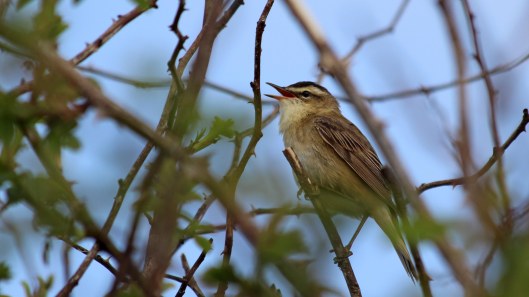
A friend asked me recently what my three favourite birds were from my recent birding trip: I think she was a little surprised by my answer. Number one, not surprisingly, was the Puffin – so beautifully marked, so much character; number two was the Glossy ibis – I loved that we got such close views and were able to observe its behaviour; and number three was this little bird, the Sedge warbler (Acrocephalus schoenobaenus).

180528 sedge warbler (1)

Though usually very vocal, often loudly so, they are more often heard than seen, and I’d only had brief glimpses of Sedge warblers hiding amongst reed beds before this trip.

180528 sedge warbler (2)
180528 sedge warbler (3)
180528 sedge warbler (4)
180528 sedge warbler (5)
180528 sedge warbler (6)
180528 sedge warbler (7)

So, having the opportunity to see this little bird at very close quarters and listen to him belting out his song, intent on advertising himself to any potential mates and stake his claim on his little bit of the planet, oblivious to the likes of me and others taking his photo, and watching and listening intently to him, was pure dead brilliant!

180528 sedge warbler (8)

Like Loading...

Birding at St David’s Vale

26 Saturday May 2018

Posted by sconzani in birds, insects, nature

≈ Leave a comment

Tags

birding, birdwatching, British birds, Broad-bodied Chaser, Cockchafer, Common heath moth, Glamorgan Bird Club, Meadow pipit, Skylark, Small heath butterfly, St David's Vale, Stonechat, Tree pipit, Whinchat, Willow warbler

I might also have called this blog post ‘One hundred and eighty!’. Let me explain …

180525 St Davids Vale (1)

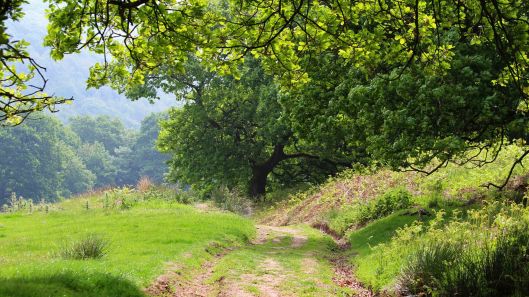
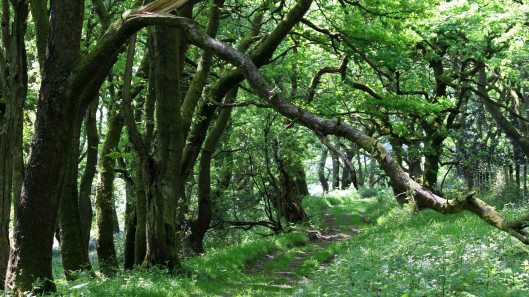
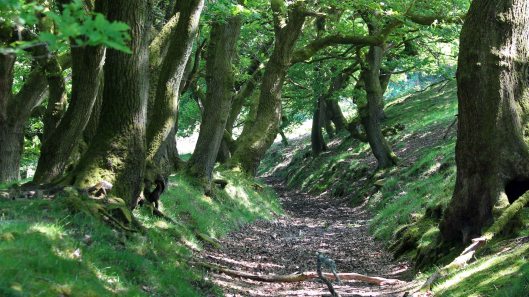
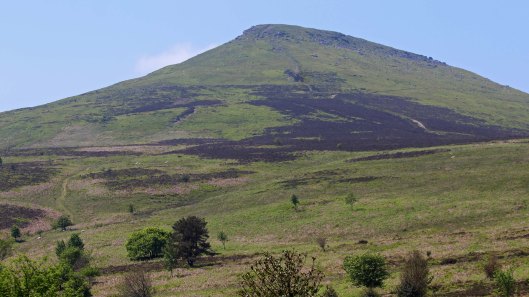
Last Wednesday I joined fourteen other members of the Glamorgan Bird Club for a day’s birding in the stunning scenery of St David’s Vale, near Abergavenny. We walked part of an ancient hollow way …

180525 St Davids Vale (4)180525 St Davids Vale (6)

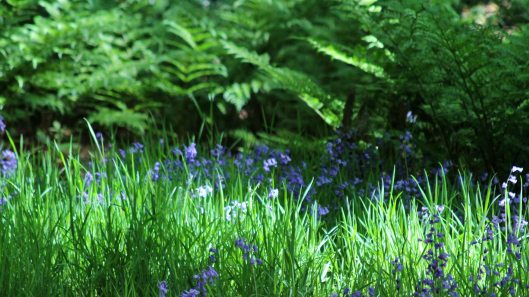
Beneath mighty oaks in an equally ancient woodland carpeted with bluebells …

180525 St Davids Vale (2)180525 St Davids Vale (3)

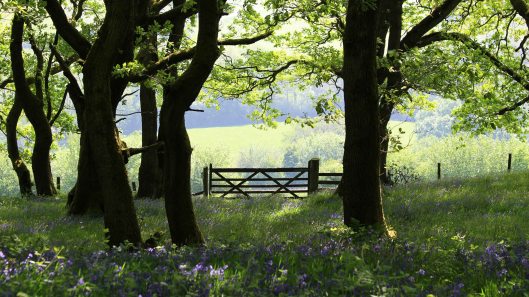
And then, as the sun broke through the low cloud that had earlier floated across the border from England, we climbed up on to the broad open moorland, with panoramic views all around and the impressive peak of Sugarloaf looming to our right.

180525 St Davids Vale (5)

Most of the birds mocked my photographic skills and no-so-long lens as they perched on distant tree tops and bushes but I was delighted to hear and then see my very first Wood warbler, and then, on the moorland, several beautiful Whinchats. And those two sightings brought my year list to – yes, you guessed it – one hundred and eighty!

180525 b willow warbler
180525 b stonechat
180525 b whinchat
180525 b tree pipit
180525 b meadow pipit
180525 b skylark

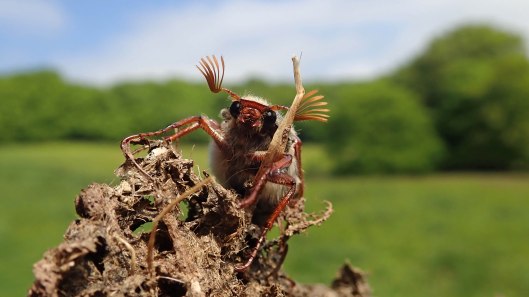
Our keen amateur naturalists also spotted a Small heath butterfly and two Common heath moths (this is the male; the female landed on my trouser leg so another birder got that picture), and a Broad-bodied chaser dragonfly. And we were entertained by the bumbling flights of several Cockchafers (I’ll cover those in a future post.)

Small heath butterfly
Common heath moth
Common heath moth
Broad-bodied chaser
Broad-bodied chaser

Cockchafer

My bird list for the today was: Mistlethrush, Robin, Goldfinch, Blackbird, Great tit, Carrion crow, Meadow pipit, Willow warbler, Swallow, Woodpigeon, Blue tit, Blackcap, Skylark, Buzzard, Chaffinch, Garden warbler, Long-tailed tit, Wood warbler, Stonechat, Raven, Tree pipit, Linnet, Whinchat, Wren, Cuckoo, House sparrow, Pied wagtail, Dunnock, Magpie and Jackdaw. It was a perfectly wonderful day!

Like Loading...

Razorbills

24 Thursday May 2018

Posted by sconzani in birds, nature

≈ Leave a comment

Tags

Alca torda, birding, birdwatching, British birds, Farne Islands, Razorbill, seabirds

180524 Razorbills (1)

Though it’s darker in colour, the Razorbill (Alca torda) looks, at first glance, a lot like the Guillemot but then you notice that beak, the sharpness of which is how the bird got its name. It’s a fish eater, which is why its population has been steadily declining – there just aren’t the numbers of sprats, herrings and sandeels in the ocean any more to feed these beautiful creatures.

180524 Razorbills (2)

Like the Guillemot, the Razorbill only comes ashore to breed, which is how I got to see them close up, on my recent trip to the Farne Islands.

180524 Razorbills (3)

Razorbills partner for life – I wonder how long these two have been together?

180524 Razorbills (4)180524 Razorbills (5)

Like Loading...

Wild word: mnemonic

23 Wednesday May 2018

Posted by sconzani in birds, nature

≈ 4 Comments

Tags

#WildWords, birding, birdwatching, British birds, mnemonic, mnemonic for bird song, ways to remember bird songs, wild words

Mnemonic: Noun; a system such as a pattern of letters, ideas, or associations which assists in remembering something; from the Greek mnēmonikos, from mnēmōn, meaning ‘mindful’ (Oxford Dictionary).

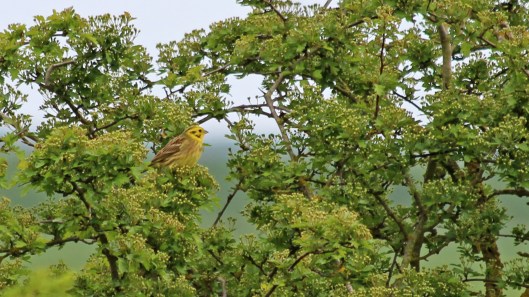
I’ve found mnemonics particularly useful when trying to remember bird songs. Apart from the very obvious sounds, where the bird is, in fact, named for its song – I’m thinking here of the Chiffchaff and the Kittiwake – there are also some well-known phrases that many birders know, like ‘a little bit of bread and no cheeeeese’ for the song of the Yellowhammer, ‘chissick’ for the Pied wagtail, and ‘teacher, teacher’ for the Great tit. Do you have any bird song mnemonics you can share?
yellowhammer

The yellowhammer: ‘a little bit of bread and no cheeeeese’

Like Loading...

Gorgeous Guillemots

21 Monday May 2018

Posted by sconzani in birds, nature

≈ 2 Comments

Tags

birding, birdwatching, Bridled form of Guillemot, British birds, dimorphism in Guillemot, Farne Islands, Guillemot

180521 Guillemot (10)

What gorgeous birds the Guillemots are! A delicious combination of crisp white and rich chocolate brown, a smile that beams contentment, a look of gentleness despite that fierce-looking beak….

180521 Guillemot (1)180521 Guillemot (4)

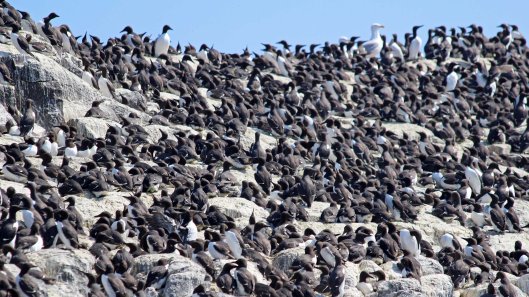
Guillemots spend most of their lives at sea, only moving on to land to breed, so May was the perfect time to see them on the Farne Islands, where they breed in their thousands each year. The densely packed breeding colonies are called loomeries.

180521 Guillemot (2)

180521 Guillemot (8)
180521 Guillemot (9)

Reciprocal grooming is part of their bonding process and was delightful to watch.

180521 Guillemot (3)

Some Guillemots have an additional white marking around their eyes, like the two you can see in this photo. These are officially known as the ‘bridled’ form, though they look like they’re wearing glasses to me. The bridling is, apparently, caused by a genetic mutation, and there seems to be a correlation with temperature – the bridled form is more common in cooler areas.

180521 Guillemot (5)

I’m not sure what was happening in the top of this photo: bouncing for joy? Jumping off the cliff? Coming in to land?

180521 Guillemot (7)
180521 Guillemot (6)

Sleepy in the sunshine. Just beautiful!

Like Loading...

Shags are surprising

19 Saturday May 2018

Posted by sconzani in birds, nature

≈ 6 Comments

Tags

birding, birdwatching, British birds, Farne Islands, Phalacrocorax aristotelis, Shag, Shag behaviour, Shag nesting

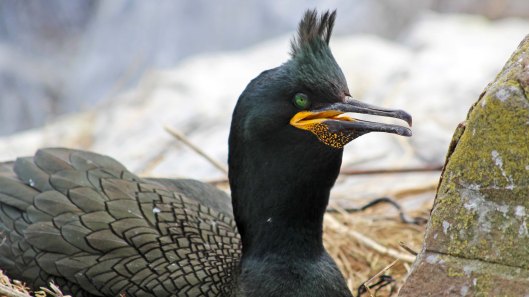
I always thought the Shag was all black, but I was wrong: its adult plumage is an intricate combination of vibrant metallic greens, browns and black, and it has beautiful patterning on its wings. As you can see, the Shag also has soulful green eyes, and, during the breeding season, the adult birds have a very punky crest on the tops of their heads, a combination which, obviously, makes them irresistible …. to other Shags.

180519 shag (1)
180519 shag (2)
180519 shag (3)
180519 shag (4)

Shags have a superb Latin name too, Phalacrocorax aristotelis, which is derived from Ancient Greek. Phalacrocorax is a combination of φαλακρός (phalakros) meaning bald and κόραξ (korax) meaning raven, and the epithet commemorates Aristotle. Did that Greek philosopher look like a bald raven, I wonder?

180519 shag (5)180519 shag (9)

Shags build their stick nests on rocks, sometimes on top of very high cliffs, and, on the Farne Islands, separated only by a rope barrier and monitored by a local ranger, we were able to get very very close to a couple of Shags that had chosen to nest right next to the path.

180519 shag (6)

One of the Shags was making odd motions with its head and puffing out its neck as if breathing heavily (I should’ve taken a video!). The ranger said this was to warn people off getting too close, and I’ve since found a paper that explains some aspects of the displays Shags make:

At the lowest intensity of stationary aggressiveness, the bird on the nest or nest-site points its bill at the object of aggression with gular pouch slightly distended, and at the same time makes slight lateral head-shakes without taking its eyes off the intruder.

180519 shag (8)

It was being close enough to observe such behaviour, as well as get a better look at the physical characteristics of the birds that made our visit to the Farnes so special for me.

180519 shag (7)

Like Loading...

I love Puffins!

15 Tuesday May 2018

Posted by sconzani in birds, nature

≈ 6 Comments

Tags

birding, birdwatching, British birds, Farne Islands, Puffin, Puffins guarding burrows, Puffins in the water, Puffins on cliff tops, Puffins on Farne Islands

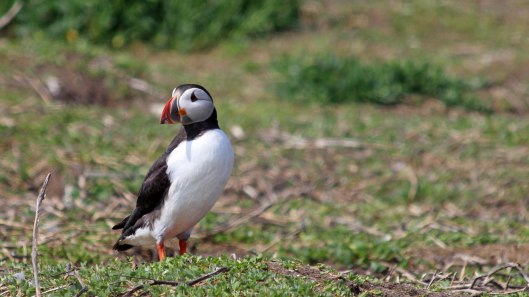
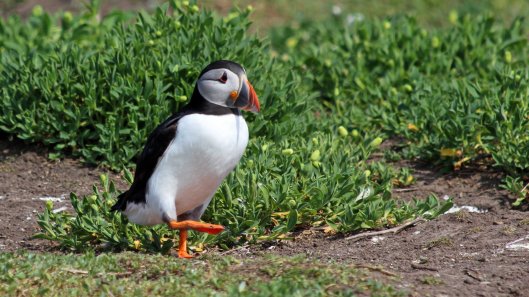
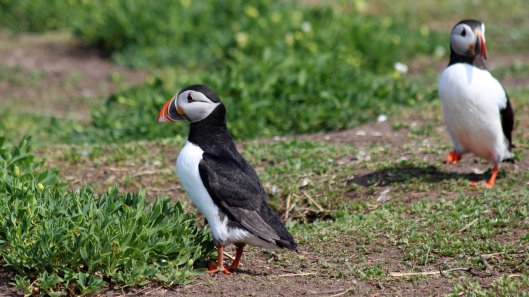
It’s taken me almost 62 years to see my first Puffins (yes, I am that old!) but they were worth the wait. What magnificent little characters they are!
First I saw them in the water, from the boat en route to the Farne Islands …

180515 puffins in the water (2)
180515 puffins in the water (1)

Next I saw them on the cliff tops, craning my neck and lens to look up from the boat …

180515 puffins on the cliff tops (1)180515 puffins on the cliff tops (2)

Then we were on the island, for a very brief 60 minutes that went by so very quickly, and I saw them marching around defending their burrows, trying ever so hard to look stern and menacing …

180515 puffins protecting their burrows (1)180515 puffins protecting their burrows (2)180515 puffins protecting their burrows (3)180515 puffins protecting their burrows (4)180515 puffins protecting their burrows (5)

I also saw them – well, one of them – trying very hard to impress the Puffin of his dreams, but she was having none of it …

180515 puffin trying to impress (1)180515 puffin trying to impress (2)180515 puffin trying to impress (3)

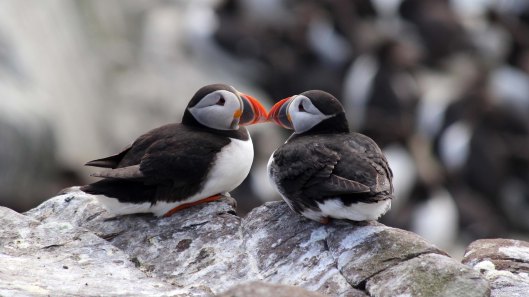
And, finally, I saw a couple in love. So very sweet!

180515 puffins in love

Like Loading...

Glossy ibis

13 Sunday May 2018

Posted by sconzani in birds, nature

≈ 3 Comments

Tags

birding, Birding in Druridge Bay, birdwatching, British birds, Druridge Pools, Glamorgan Bird Club, Glossy ibis, Northumberland birding, Plegadis falcinellus

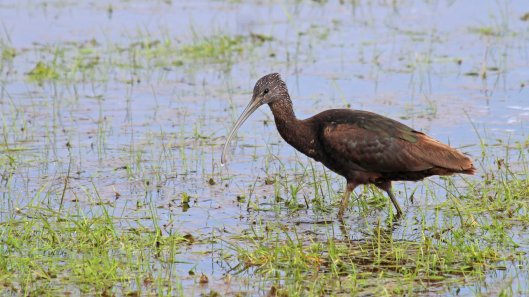
One of the nearest and clearest avian encounters on my recent birding trip to England’s north east was our sighting of a Glossy ibis (Plegadis falcinellus) at Druridge Pools.

180512 glossy ibis (2)

This is a large bird, similar in many ways to a heron, but the Glossy ibis has a beautifully rich plumage in vibrant shades of bronze and green. The Glossy is not strictly speaking a British bird – it can be found in the warmer parts of Europe, Asia and the Americas – but these birds have been visiting Britain more frequently in recent years (I saw my first at RSPB Ham Wall last year).

180512 glossy ibis (1)

This particular Glossy ibis eluded us when we first arrived at Druridge – it had been scared off by photographers getting too close and a tractor driving by – but, luckily for us, it later returned to the site and was grazing within a few yards of the fence so we had outstanding views of it. I even managed to take a short video.

Like Loading...
← Older posts
Newer posts →

About me

sconzani

sconzani

I'm a writer and photographer; researcher and blogger; birder and nature lover; countryside rambler and city strider; volunteer and biodiversity recorder.

View Full Profile →

Follow earthstar on WordPress.com

Enter your email address to follow this blog and receive notifications of new posts by email.

Recent blog posts

  • The day of the Wheatears March 28, 2026
  • Cetti’s warblers March 27, 2026
  • Goose barnacles March 26, 2026
  • Black-tailed godwits fighting March 25, 2026
  • Singing from every tree top March 24, 2026

From the archives

COPYRIGHT

Unless otherwise acknowledged, the text and photographs on this blog are my own and are subject to international copyright. Nothing may be downloaded or copied without my permission.

Fellow Earth Stars!

  • Unknown's avatar
  • Unknown's avatar
  • Unknown's avatar
  • Unknown's avatar
  • Unknown's avatar
  • Unknown's avatar
  • Unknown's avatar
  • Unknown's avatar
  • Unknown's avatar
  • Unknown's avatar
  • Unknown's avatar
  • Unknown's avatar
  • Unknown's avatar
  • Unknown's avatar
  • Unknown's avatar
  • Unknown's avatar
  • Unknown's avatar
  • Unknown's avatar
  • Unknown's avatar
  • Unknown's avatar
  • Unknown's avatar
  • Unknown's avatar
  • Unknown's avatar
  • Unknown's avatar
  • Unknown's avatar
  • Unknown's avatar
  • Unknown's avatar
  • Unknown's avatar
  • Unknown's avatar
  • Unknown's avatar
  • Unknown's avatar
  • Unknown's avatar
  • Unknown's avatar
  • Unknown's avatar
  • Unknown's avatar
  • Unknown's avatar
  • Unknown's avatar
  • Unknown's avatar
  • Unknown's avatar
  • Unknown's avatar
  • Unknown's avatar
  • Unknown's avatar
  • Unknown's avatar
  • Unknown's avatar
  • Unknown's avatar
  • Unknown's avatar
  • Unknown's avatar
  • Unknown's avatar
  • Unknown's avatar
  • Unknown's avatar

Blog at WordPress.com.

Privacy & Cookies: This site uses cookies. By continuing to use this website, you agree to their use.
To find out more, including how to control cookies, see here: Cookie Policy
  • Subscribe Subscribed
    • earthstar
    • Join 642 other subscribers
    • Already have a WordPress.com account? Log in now.
    • earthstar
    • Subscribe Subscribed
    • Sign up
    • Log in
    • Report this content
    • View site in Reader
    • Manage subscriptions
    • Collapse this bar
 

Loading Comments...
 

You must be logged in to post a comment.

    %d