• ABOUT
  • BIRDING 2018
  • Birding 2019
  • BLOG POSTS
  • Butterflies 2018
  • Resources

earthstar

~ a celebration of nature

earthstar

Tag Archives: birding

February on the Ely embankment

03 Saturday Mar 2018

Posted by sconzani in birds, nature, walks, winter

≈ Leave a comment

Tags

birding, birdwatching, British birds, Coot, Ely embankment, Grey wagtail, Redshank, Rock pipit, Turnstone

My first February wander alongside the River Ely was in the late afternoon of Saturday the 3rd. It was quiet – were the birds all watching Wales thump Scotland in the 6 Nations rugby, I asked myself? A faint peep alerted me to a Rock pipit tootling along the embankment path towards me. It had been minding its own business, looking for a lunchtime snack, when it suddenly realised there was a stonking great human standing on the path in front of it … at which point it flew off to the relative safety of the water’s edge.

180303 180203 rock pipit (1)180303 180203 rock pipit (2)180303 180203 rock pipit (3)

Shortly afterwards, I could see a roundish form that might’ve been a rock but was, in fact, a Turnstone, the only one seen that day. And, as well as those two birds, one Pied wagtail and two Grey wagtails were in residence. One of the Greys had an interesting plumage aberration, as you can see below.

180303 180203 Grey wagtail (1)
180303 180203 Grey wagtail (2)

I was away for a week mid February so my next visit to the embankment was on Tuesday 20 February. A strong cold wind was blowing small waves on to the stony shore and, initially, there were no birds to be seen. But, about half way along the embankment path, I spotted a huddle of seven Turnstones, looking sleepy, enjoying a little bit of warmth from a shaft of sunlight that had reached their roosting spot from between the nearby houses. And, a minute or two later, I noticed one further Turnstone who was already meandering along, turning stones as it searched for breakfast bugs. Two Grey wagtails, hardy creatures, were also dotting about.

180303 180220 turnstones

The twenty-seventh of February was a bitterly cold day, as Britain was in the grip of a severe blast of polar weather, blown across Europe from Siberia, and even Cardiff had a few snow showers that day (quite unusual in recent years). Hopefully, the birds had found somewhere more sheltered than the embankment, as the stiff easterly was so cold that icicles were forming on branches that littered the shoreline and there was a slab of ice at least a foot wide coating the rocks along the water’s edge.

180303 180227 (3) turnstone180303 180227 (2) coot

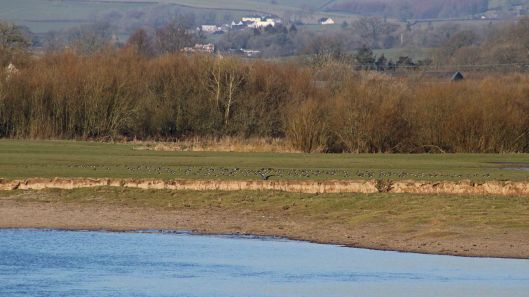
In spite of those bitter conditions, I spied one Grey wagtail, one Turnstone, a pair of Coots, and a solitary Redshank. It made me feel cold just looking at that lovely bird standing in the icy water!

180303 180227 (1) redshank

Like Loading...

Birding at Dryslwyn, Cilsan Bridge and Tregaron Bog

02 Friday Mar 2018

Posted by sconzani in birds, nature, walks, winter

≈ 3 Comments

Tags

birding, birdwatching, British birds, Cors Caron, Dryslwyn Castle, Glamorgan Bird Club, Green sandpiper, Lapwing, Red kite, Tregaron Bog, Tywi Valley, Whooper swan

Up at 6, collected at 7 and off we headed, west along the M4 for a 9 o’clock meet up with our other Glamorgan Bird Club buddies at the foot of Dryslwyn Castle in mid Wales. This was unexplored territory for me and the scenery of the Tywi (or Towy) Valley was simply stunning, with castles and monuments seemingly on every hill top and the beautiful River Tywi meandering through the valley below them. It was clear but cold, with a bitter wind, and heavy frost and thick ice still blanketing those spots the sun could not reach. Later, we moved on to Tregaron Bog, also known as Cors Caron National Nature Reserve, a fabulous area of marsh and wetland. And what a superb day’s birding we had!

180302 Tywi Valley (1)

A large flock of Lapwing on the fields next to the River Tywi, and a Grey heron flying in.

180302 Tywi Valley (2)

Ducks, geese and Little grebes in the river.

180302 Tywi Valley (3)

A Red kite looks for lunch from its perch on this big old dead tree.

180302 Tywi Valley (4)

Looking towards Dinefwr Castle, with two swans flying off (possibly Mute but we also saw Whooper).

180302 Tywi Valley (5)

A thrush checks through a mole hill for potential food.

180302 Tregaron Bog (1)

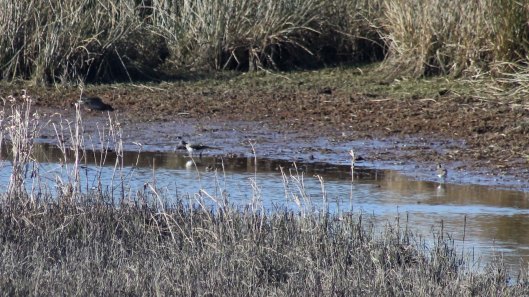
Too distant for clear shots, two Green sandpipers (and a Teal), from one of the hides at Tregaron Bog.

180302 Tregaron Bog (2)

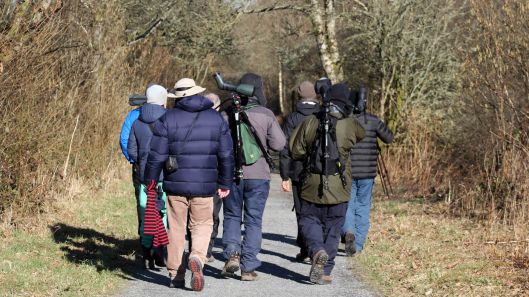
Intrepid birders, well rugged up against the chill.

180302 Tregaron Bog (3)

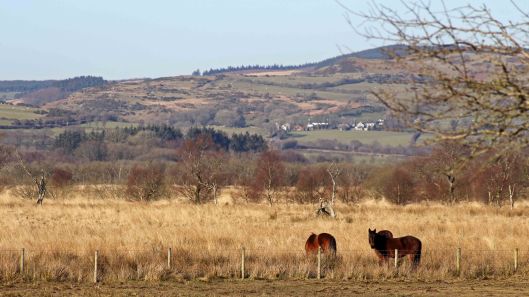
Beautiful countryside around Tregaron Bog, where grazing ponies help to manage the wetland environment.

180302 Tregaron Bog (4)

A Red kite; one of several seen this day and spectacular birds to watch.

My species list for the day was: Mute Swan, Whooper Swan, Pink-footed Goose, Greylag Goose, Canada Goose, Wigeon, Teal, Mallard, Goosander, Little Grebe, Grey Heron, Great White Egret, Little Egret, Cormorant, Red Kite, Hen Harrier, Buzzard, Lapwing, Snipe, Curlew, Green Sandpiper, Black-headed Gull, Herring Gull, Lesser Black-backed Gull, Woodpigeon, Great Spotted Woodpecker, Magpie, Jackdaw, Carrion Crow, Raven, Blue Tit, Great Tit, Coal Tit, Wren, Treecreeper, Starling, Blackbird, Fieldfare, Song Thrush, Redwing, Mistle Thrush, Robin, Stonechat, Dunnock, House Sparrow, Tree Sparrow, Pied Wagtail, Chaffinch, Goldfinch and Bullfinch. A further 7 species were seen by other members of our group but not by me: Peregrine, Common Gull, Rook, Long-tailed Tit, Goldcrest, Nuthatch, and Greenfinch.

Like Loading...

Rye birds

27 Tuesday Feb 2018

Posted by sconzani in birds, nature, seaside, weather

≈ Leave a comment

Tags

birding, birdwatching, British birds, Cormorant, Great black-backed gull, Lapwing, Redshank, Rye Harbour Nature Reserve, shoveler, Wigeon

My original title for this blog was ‘A mad Kiwi and an Englishwoman go birding in a howling gale’. I decided that was a trifle long but it was certainly an accurate reflection of our day at Rye Harbour Nature Reserve. Nevertheless, we persevered, though we did put off walking the beach-top path – I think we would’ve been blown all the way back to Rye township if we’d tried that.

180227 Rye Harbour birds (4)

As you might expect, the birds were mostly hunkered down, sheltering where possible behind clumps of grass or huddled alongside sandy banks. Still, with brief stops here and there to scan the shingle and reeds with constantly watering eyes through fogging-up binoculars and short pops into hides (as much to warm up as to look out), we managed to clock up a total of 35 species. They were: Kestrel, House sparrow, Herring gull, Lesser black-backed gull, Black-headed gull, Mallard, Shelduck …

180227 Rye Harbour birds (3)

Shoveler (above, seen through a netting fence), Brent goose …

180227 Rye Harbour birds (5)

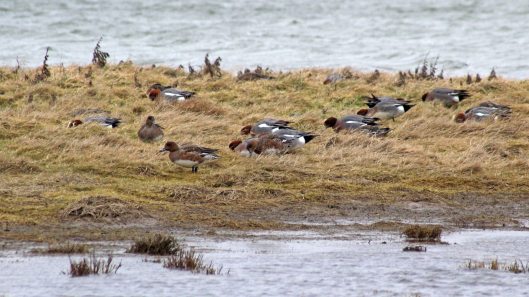
Wigeon (those handsome birds above), Oystercatcher, Carrion crow, Tufted duck …

180227 Rye Harbour birds (1)

Redshank (always a favourite of mine), Coot …

180227 Rye Harbour birds (6)

Cormorant (already beginning to nest in trees near Castle Water) …

180227 Rye Harbour birds (2)

Great black-backed gull and Lapwing (both above), Little grebe, Mute swan, Teal, Little egret, Goldfinch, Woodpigeon, Blackbird, Green woodpecker, Great tit, Coal tit, Magpie, Mistle thrush, Pied wagtail, Greylag goose, Egyptian goose, Pheasant, and Starling.

Like Loading...

The 18-buzzard bus

26 Monday Feb 2018

Posted by sconzani in animals, birds, nature

≈ 4 Comments

Tags

birding, birdwatching, British birds, Buteo buteo, Buzzard, killing time on bus journeys

What do you do to help pass the time on a long bus journey? Read, sleep, listen to music, do crosswords or puzzles? I had taken along my knitting for the three-and-a-half-hour bus ride from Cardiff to London, but I didn’t knit a single stitch.

180226 buzzards (1)
180226 buzzards (2)

I spent the 15 minutes waiting for the bus watching the earth of a molehill moving as the little mole tidied up its tunnel (and, of course, I was hoping it might poke its head out, but no such luck). And, once we were underway, we hadn’t cleared Cardiff’s suburbs before I spotted my first buzzard hovering over a park so, after that, I decided to abandon my knitting and keep my eyes on the countryside that was whizzing past outside the window.

180226 buzzards (5)

And what did I see? My list reads as follows: Lesser black-backed gulls, Herring gulls and Black-headed gulls, Carrion crows, Robins, Jackdaws, Pied wagtails, Feral and Woodpigeons, Magpies, Starlings, Mallards and Mute swans, Mistle thrushes and Blackbirds, a Rookery, lots of rabbits and Pheasants, and two small groups of deer, plus, of course, the 18 Buzzards alluded to in the title of this blog. I was very impressed to see so many of them.

180226 buzzards (3)
180226 buzzards (4)
Like Loading...

Little egrets, again

22 Thursday Feb 2018

Posted by sconzani in birds, nature

≈ Leave a comment

Tags

birding, birdwatching, British birds, Cuckmere Haven, Egretta garzetta, Little egret, Rye Harbour Nature Reserve, Winchelsea Beach

It seems Little egrets (Egretta garzetta) are rather partial to southern England as I saw several during my holiday in East Sussex last week, at Rye Harbour Nature Reserve and in the fields behind Winchelsea Beach.

180222 Little egrets (1)

We also get Little egrets in Wales, of course, and I’ve blogged about them before, when there were two visiting a Cardiff lake last July, but I was delighted to get much closer to one particular bird last Saturday at Cuckmere Haven. The weather was glorious, and people were out in droves to enjoy the almost-summery day, but this lovely little bird simply moved slightly further away as they passed, then returned to the well-trodden grassy path to continue probing for earthworms and miscellaneous insects.

180222 Little egrets (2)
180222 Little egrets (4)

180222 Little egrets (5)

180222 Little egrets (6)
180222 Little egrets (3)


Like Loading...

Drake domination

20 Tuesday Feb 2018

Posted by sconzani in birds, nature

≈ Leave a comment

Tags

Aythya ferina, birding, birdwatching, British birds, Pochard

180220 Pochard (1)

So it’s not just in the world of human beings that males dominate females. No, I’m not climbing on my soapbox – I’m referring to the recently published results of surveys of European and North African populations of Pochard (Aythya ferina), which have indicated that, over a 16-year period, the proportion of males to females has increased significantly in favour of the males. You can read more about the research here.

180220 Pochard (3)

180220 Pochard (4)
180220 Pochard (2)

180220 Pochard (5)

Like Loading...

Goosie, goosie, goosander

18 Sunday Feb 2018

Posted by sconzani in birds, nature

≈ 2 Comments

Tags

birding, birdwatching, British birds, Goosander, Merganser, Mergus merganser

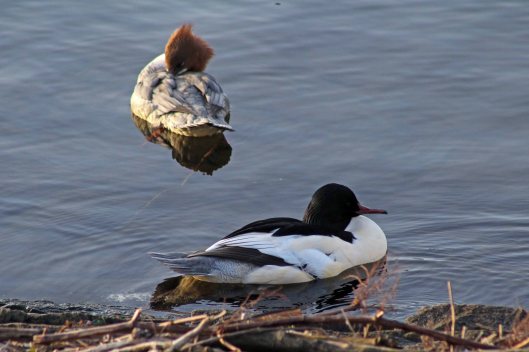
Officially Mergus merganser – the name merganser is a hybrid eighteenth-century word obtained from the Latin root merg-, meaning ‘diving’, and anser, meaning ‘goose’, this beautiful bird is the Goosander. It used to be known as the Common merganser, and I’ve noticed some birders still call it that – old habits…. The bird has a ton of other vernacular names, like, from Sussex, dun diver; green-headed goosander, harle, and jacksaw, in Yorkshire; land cormorant (in Dublin); in Shropshire, pied wigeon; and, in Orkney, rantock. And then there are the understandable references to that long serrated ‘all the better to catch fish with’ bill: sawbill, in Stirlingshire; sawneb, from Aberdeenshire; and, from Suffolk, sawyer.

180218 Goosander (1)

Female above, male below

Their fish-catching habit is why Goosanders have often been persecuted, particularly by the fishermen who think the birds are theirs for the catching. Fortunately, the bird’s population has, thus far, not suffered unduly from this persecution and, from 1871, the year they were first known to have bred in Britain, the Goosander has gradually colonised most of Scotland and spread through much of England and Wales.

Male
Male
Female
Female

Britain has another merganser, Mergus serrator, the Red-breasted merganser, and the two species can be hard to tell apart. But the main thing to note is location – Goosanders are mostly freshwater birds and can be seen year round on rivers and lakes in many parts of Britain, whereas Red-breasted mergansers, although equally at home in fresh- and salt-water locations, are mostly seen in the winter months in coastal areas.

180218 Goosander (4)
180218 Goosander (5)
Like Loading...

The turnstone and the redshank

15 Thursday Feb 2018

Posted by sconzani in birds, nature

≈ Leave a comment

Tags

birding, birdwatching, British birds, Cardiff Bay, Redshank, Turnstone

180215 turnstone and redshank (1)

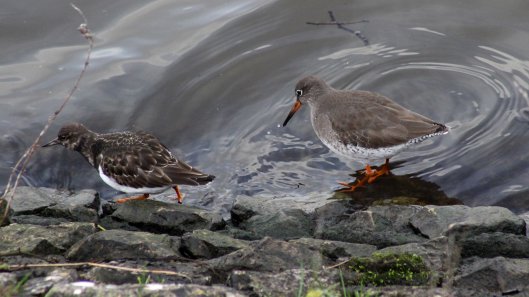
T: ‘Found anything tasty?’

180215 turnstone and redshank (2)

R: ‘Nothing to see here. Move along.’

180215 turnstone and redshank (3)

Like Loading...

Fluffing up

13 Tuesday Feb 2018

Posted by sconzani in birds, nature, winter

≈ 4 Comments

Tags

bird behaviour, birding, birdwatching, British birds, feathers, feathers as insulation, fluffing up feathers, how birds keep warm, robin

180213 robin (2)

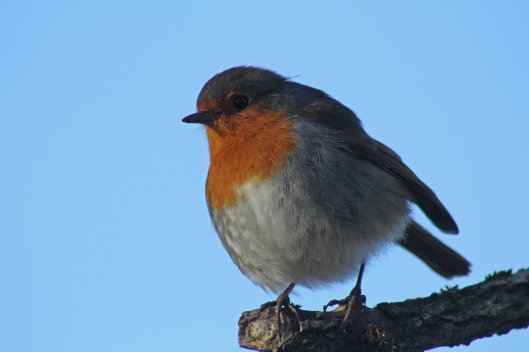
The biting wind seems to find the smallest crack in your several layers of clothing to nip at exposed flesh, your hands feel frost-bitten even though you’ve got your thickest gloves on, and the tip of your nose is so cold that you can no longer feel it. Yet there on a fence post directly in front of you, equally exposed to the wintery weather, is a chirpy wee Robin, singing its heart out, seemingly oblivious to the chill. How does it do it?

180213 robin (1)

Well, the answer is in the fluffing up of its feathers. If you’ve ever slept under a down- or feather-filled duvet, you’ll know how incredibly warm feathers can be, and that’s especially true for our wee Robin. You see, feathers are a brilliant form of insulation material – feathers trap air close to the bird’s body so, in winter, they trap the warmth of the bird’s body heat. The more fluffed up the feathers are, the more warm air they trap, the more cosy is our little Robin.

180213 robin (3)

Like Loading...

Birding at Ogmore and Kenfig

10 Saturday Feb 2018

Posted by sconzani in birds, nature, seaside, walks

≈ 2 Comments

Tags

birding, birdwatching, Glamorgan Bird Club, Goldeneye, Greenfinch, Kenfig National Nature Reserve, Kenfig Pool, Ogmore, Slavonian grebe, Stonechat

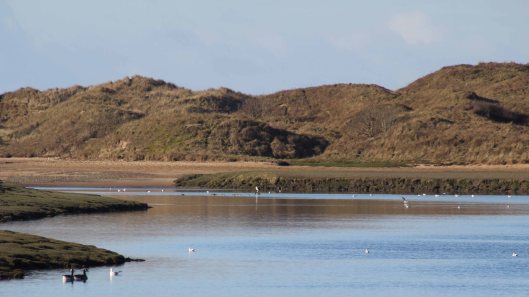
Wednesday dawned clear and frosty so on went the layers of clothing, scarf, hat, gloves and boots, in the backpack went the camera, binoculars, a spot of lunch and rain jacket (this is Wales and I was once a Girl Guide so I was prepared!). I’d scanned tweets, posts and blogs so knew vaguely what to expect and left the house hopeful.

180211 Birding at Ogmore & Kenfig (10)

And I did not despair, nor was I disappointed. On my first Glamorgan Bird Club trip of the year, to Ogmore – both the river and the beach – and then on to Kenfig National Nature Reserve, I added ten new birds to my 2018 list, including two lifetime firsts in the Slavonian grebe and Short-eared owls.

180211 Birding at Ogmore & Kenfig (3)

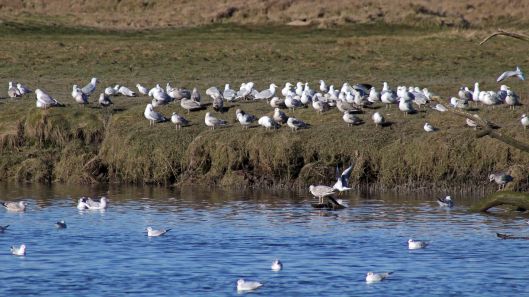
At Ogmore, the weather was glorious – blue skies, and heat in the sun, if you managed to shelter from the chilly breeze. There were gulls galore, mostly Herring and Black-headed, a sprinkling of Common and a single Med, as well as, further down river, a Great black-backed gull – what beasts they are!

180211 Birding at Ogmore & Kenfig (2)

180211 Birding at Ogmore & Kenfig (1)

A Kingfisher added its flash of turquoise, to the mostly white, grey and brown colours of the other birds (Little egret, Cormorant, Mallard, Redshank, Canada goose, Mute swan). But I don’t mean to imply the other avian species were boring – just look at these dazzling Goldeneyes!

180211 Birding at Ogmore & Kenfig (4)

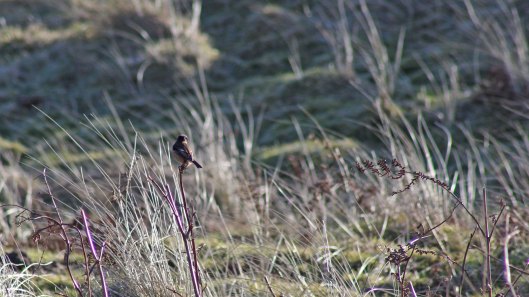
As we wandered further towards the river mouth, a Stonechat popped up to survey the humans adorned with bins, scopes and cameras, all staring in the opposite direction, to peep briefly, ‘Look at me!’. So I did.

180211 Birding at Ogmore & Kenfig (9)

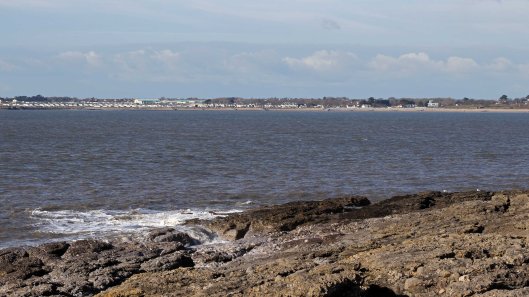
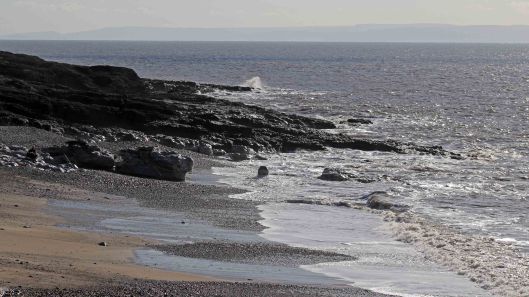
At Ogmore beach, we were hoping for Purple sandpipers but, even with 21 pairs of eyes surveying every nook and rock cranny, we lucked out. Turns out the birds were spending the day across the bay at Newton and Porthcawl. But hey, the scenery was glorious, with glimpses of the recent dumps of snow across the water on Exmoor.

180211 Birding at Ogmore & Kenfig (5)180211 Birding at Ogmore & Kenfig (6)

Sandwiches devoured, we headed to Kenfig and stomped down to the pool, where I almost immediately got on to my first lifer of the day, the little black-and-white Slavonian grebe that’s been overwintering there. It’s small, a frequent diver, and was distant but was plainly see-able through bins and scopes, if not such a great subject for my camera.

180211 Birding at Ogmore & Kenfig (7)

By this time, the sun had clouded over, and even a stroll through boggy fields, over wonky stiles, around the lake’s edge in search of White-fronted geese failed to keep the chill from my bones – and we didn’t see those geese. But, a small stalwart seven of us – the others peeling off to heated cars and homes – decided to head for a high point to survey the dunes for the Short-eared owls that have recently been sighted hunting at dawn and dusk. Another lifer! Two birds were seen, one flying low, back and forth amongst the dunes, the other gliding high, with a Kestrel for company.

180211 Birding at Ogmore & Kenfig (11)

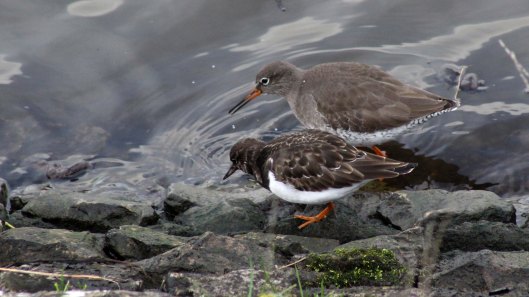
And to finish off a wonderful day’s birding, we got the call that tea, coffee and cake awaited us at the Kenfig office, and spotted these two Greenfinch amongst trees along the way. Just perfect!
180211 Birding at Ogmore & Kenfig (8)

We saw 62 species in total: the full list can be seen on the Glamorgan Bird Club’s website here.

Like Loading...
← Older posts
Newer posts →

About me

sconzani

sconzani

I'm a writer and photographer; researcher and blogger; birder and nature lover; countryside rambler and city strider; volunteer and biodiversity recorder.

View Full Profile →

Follow earthstar on WordPress.com

Enter your email address to follow this blog and receive notifications of new posts by email.

Recent blog posts

  • Thrift March 29, 2026
  • The day of the Wheatears March 28, 2026
  • Cetti’s warblers March 27, 2026
  • Goose barnacles March 26, 2026
  • Black-tailed godwits fighting March 25, 2026

From the archives

COPYRIGHT

Unless otherwise acknowledged, the text and photographs on this blog are my own and are subject to international copyright. Nothing may be downloaded or copied without my permission.

Fellow Earth Stars!

  • Unknown's avatar
  • Unknown's avatar
  • Unknown's avatar
  • Unknown's avatar
  • Unknown's avatar
  • Unknown's avatar
  • Unknown's avatar
  • Unknown's avatar
  • Unknown's avatar
  • Unknown's avatar
  • Unknown's avatar
  • Unknown's avatar
  • Unknown's avatar
  • Unknown's avatar
  • Unknown's avatar
  • Unknown's avatar
  • Unknown's avatar
  • Unknown's avatar
  • Unknown's avatar
  • Unknown's avatar
  • Unknown's avatar
  • Unknown's avatar
  • Unknown's avatar
  • Unknown's avatar
  • Unknown's avatar
  • Unknown's avatar
  • Unknown's avatar
  • Unknown's avatar
  • Unknown's avatar
  • Unknown's avatar
  • Unknown's avatar
  • Unknown's avatar
  • Unknown's avatar
  • Unknown's avatar
  • Unknown's avatar
  • Unknown's avatar
  • Unknown's avatar
  • Unknown's avatar
  • Unknown's avatar
  • Unknown's avatar
  • Unknown's avatar
  • Unknown's avatar
  • Unknown's avatar
  • Unknown's avatar
  • Unknown's avatar
  • Unknown's avatar
  • Unknown's avatar
  • Unknown's avatar
  • Unknown's avatar
  • Unknown's avatar

Blog at WordPress.com.

Privacy & Cookies: This site uses cookies. By continuing to use this website, you agree to their use.
To find out more, including how to control cookies, see here: Cookie Policy
  • Subscribe Subscribed
    • earthstar
    • Join 642 other subscribers
    • Already have a WordPress.com account? Log in now.
    • earthstar
    • Subscribe Subscribed
    • Sign up
    • Log in
    • Report this content
    • View site in Reader
    • Manage subscriptions
    • Collapse this bar
 

Loading Comments...
 

You must be logged in to post a comment.

    %d