• ABOUT
  • BIRDING 2018
  • Birding 2019
  • BLOG POSTS
  • Butterflies 2018
  • Resources

earthstar

~ a celebration of nature

earthstar

Tag Archives: birding

Little egrets, again

22 Thursday Feb 2018

Posted by sconzani in birds, nature

≈ Leave a comment

Tags

birding, birdwatching, British birds, Cuckmere Haven, Egretta garzetta, Little egret, Rye Harbour Nature Reserve, Winchelsea Beach

It seems Little egrets (Egretta garzetta) are rather partial to southern England as I saw several during my holiday in East Sussex last week, at Rye Harbour Nature Reserve and in the fields behind Winchelsea Beach.

180222 Little egrets (1)

We also get Little egrets in Wales, of course, and I’ve blogged about them before, when there were two visiting a Cardiff lake last July, but I was delighted to get much closer to one particular bird last Saturday at Cuckmere Haven. The weather was glorious, and people were out in droves to enjoy the almost-summery day, but this lovely little bird simply moved slightly further away as they passed, then returned to the well-trodden grassy path to continue probing for earthworms and miscellaneous insects.

180222 Little egrets (2)
180222 Little egrets (4)

180222 Little egrets (5)

180222 Little egrets (6)
180222 Little egrets (3)


Like Loading...

Drake domination

20 Tuesday Feb 2018

Posted by sconzani in birds, nature

≈ Leave a comment

Tags

Aythya ferina, birding, birdwatching, British birds, Pochard

180220 Pochard (1)

So it’s not just in the world of human beings that males dominate females. No, I’m not climbing on my soapbox – I’m referring to the recently published results of surveys of European and North African populations of Pochard (Aythya ferina), which have indicated that, over a 16-year period, the proportion of males to females has increased significantly in favour of the males. You can read more about the research here.

180220 Pochard (3)

180220 Pochard (4)
180220 Pochard (2)

180220 Pochard (5)

Like Loading...

Goosie, goosie, goosander

18 Sunday Feb 2018

Posted by sconzani in birds, nature

≈ 2 Comments

Tags

birding, birdwatching, British birds, Goosander, Merganser, Mergus merganser

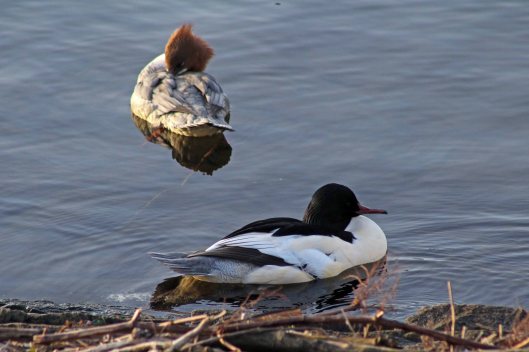
Officially Mergus merganser – the name merganser is a hybrid eighteenth-century word obtained from the Latin root merg-, meaning ‘diving’, and anser, meaning ‘goose’, this beautiful bird is the Goosander. It used to be known as the Common merganser, and I’ve noticed some birders still call it that – old habits…. The bird has a ton of other vernacular names, like, from Sussex, dun diver; green-headed goosander, harle, and jacksaw, in Yorkshire; land cormorant (in Dublin); in Shropshire, pied wigeon; and, in Orkney, rantock. And then there are the understandable references to that long serrated ‘all the better to catch fish with’ bill: sawbill, in Stirlingshire; sawneb, from Aberdeenshire; and, from Suffolk, sawyer.

180218 Goosander (1)

Female above, male below

Their fish-catching habit is why Goosanders have often been persecuted, particularly by the fishermen who think the birds are theirs for the catching. Fortunately, the bird’s population has, thus far, not suffered unduly from this persecution and, from 1871, the year they were first known to have bred in Britain, the Goosander has gradually colonised most of Scotland and spread through much of England and Wales.

Male
Male
Female
Female

Britain has another merganser, Mergus serrator, the Red-breasted merganser, and the two species can be hard to tell apart. But the main thing to note is location – Goosanders are mostly freshwater birds and can be seen year round on rivers and lakes in many parts of Britain, whereas Red-breasted mergansers, although equally at home in fresh- and salt-water locations, are mostly seen in the winter months in coastal areas.

180218 Goosander (4)
180218 Goosander (5)
Like Loading...

The turnstone and the redshank

15 Thursday Feb 2018

Posted by sconzani in birds, nature

≈ Leave a comment

Tags

birding, birdwatching, British birds, Cardiff Bay, Redshank, Turnstone

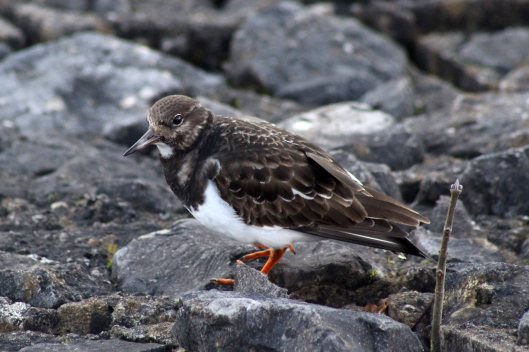
180215 turnstone and redshank (1)

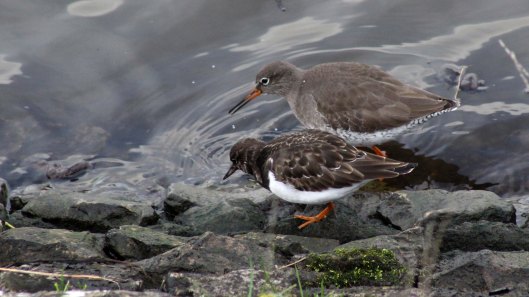
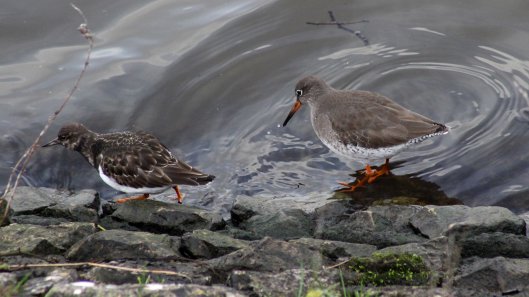
T: ‘Found anything tasty?’

180215 turnstone and redshank (2)

R: ‘Nothing to see here. Move along.’

180215 turnstone and redshank (3)

Like Loading...

Fluffing up

13 Tuesday Feb 2018

Posted by sconzani in birds, nature, winter

≈ 4 Comments

Tags

bird behaviour, birding, birdwatching, British birds, feathers, feathers as insulation, fluffing up feathers, how birds keep warm, robin

180213 robin (2)

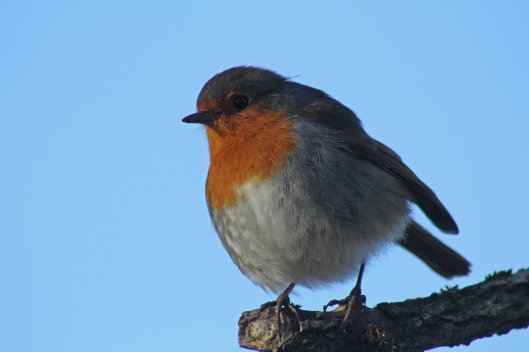
The biting wind seems to find the smallest crack in your several layers of clothing to nip at exposed flesh, your hands feel frost-bitten even though you’ve got your thickest gloves on, and the tip of your nose is so cold that you can no longer feel it. Yet there on a fence post directly in front of you, equally exposed to the wintery weather, is a chirpy wee Robin, singing its heart out, seemingly oblivious to the chill. How does it do it?

180213 robin (1)

Well, the answer is in the fluffing up of its feathers. If you’ve ever slept under a down- or feather-filled duvet, you’ll know how incredibly warm feathers can be, and that’s especially true for our wee Robin. You see, feathers are a brilliant form of insulation material – feathers trap air close to the bird’s body so, in winter, they trap the warmth of the bird’s body heat. The more fluffed up the feathers are, the more warm air they trap, the more cosy is our little Robin.

180213 robin (3)

Like Loading...

Birding at Ogmore and Kenfig

10 Saturday Feb 2018

Posted by sconzani in birds, nature, seaside, walks

≈ 2 Comments

Tags

birding, birdwatching, Glamorgan Bird Club, Goldeneye, Greenfinch, Kenfig National Nature Reserve, Kenfig Pool, Ogmore, Slavonian grebe, Stonechat

Wednesday dawned clear and frosty so on went the layers of clothing, scarf, hat, gloves and boots, in the backpack went the camera, binoculars, a spot of lunch and rain jacket (this is Wales and I was once a Girl Guide so I was prepared!). I’d scanned tweets, posts and blogs so knew vaguely what to expect and left the house hopeful.

180211 Birding at Ogmore & Kenfig (10)

And I did not despair, nor was I disappointed. On my first Glamorgan Bird Club trip of the year, to Ogmore – both the river and the beach – and then on to Kenfig National Nature Reserve, I added ten new birds to my 2018 list, including two lifetime firsts in the Slavonian grebe and Short-eared owls.
180211 Birding at Ogmore & Kenfig (3)

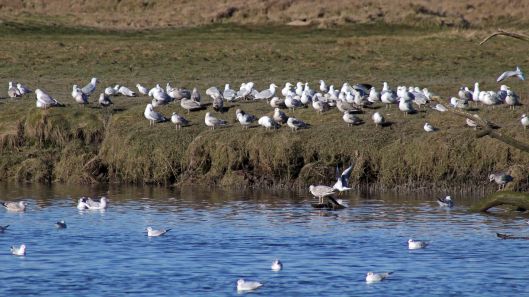
At Ogmore, the weather was glorious – blue skies, and heat in the sun, if you managed to shelter from the chilly breeze. There were gulls galore, mostly Herring and Black-headed, a sprinkling of Common and a single Med, as well as, further down river, a Great black-backed gull – what beasts they are!
180211 Birding at Ogmore & Kenfig (2)

180211 Birding at Ogmore & Kenfig (1)

A Kingfisher added its flash of turquoise, to the mostly white, grey and brown colours of the other birds (Little egret, Cormorant, Mallard, Redshank, Canada goose, Mute swan). But I don’t mean to imply the other avian species were boring – just look at these dazzling Goldeneyes!

180211 Birding at Ogmore & Kenfig (4)

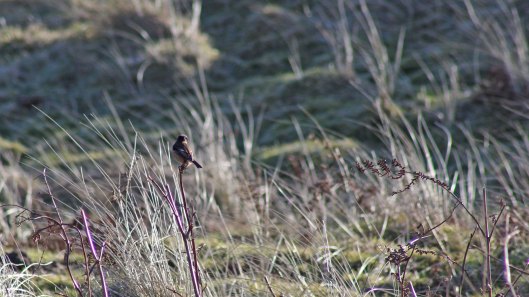
As we wandered further towards the river mouth, a Stonechat popped up to survey the humans adorned with bins, scopes and cameras, all staring in the opposite direction, to peep briefly, ‘Look at me!’. So I did.
180211 Birding at Ogmore & Kenfig (9)

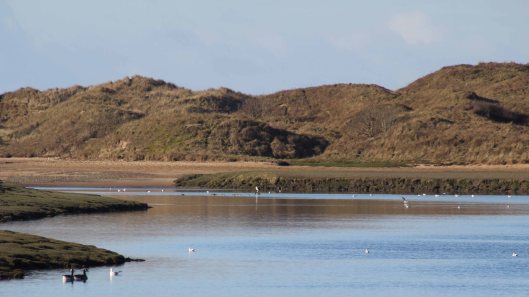
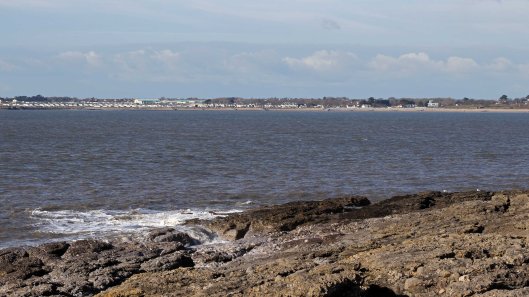
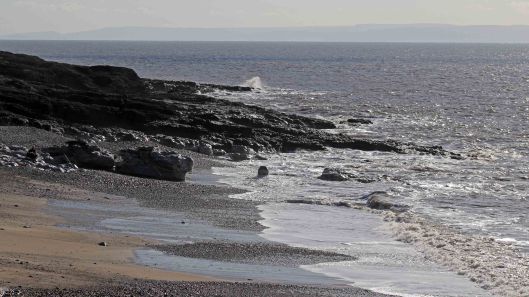
At Ogmore beach, we were hoping for Purple sandpipers but, even with 21 pairs of eyes surveying every nook and rock cranny, we lucked out. Turns out the birds were spending the day across the bay at Newton and Porthcawl. But hey, the scenery was glorious, with glimpses of the recent dumps of snow across the water on Exmoor.
180211 Birding at Ogmore & Kenfig (5)180211 Birding at Ogmore & Kenfig (6)

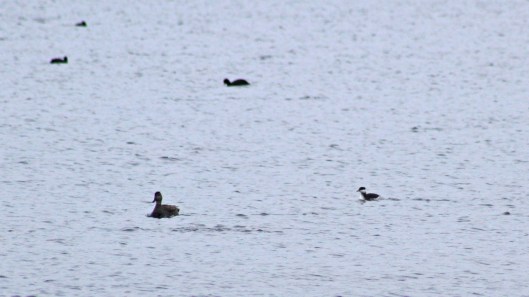
Sandwiches devoured, we headed to Kenfig and stomped down to the pool, where I almost immediately got on to my first lifer of the day, the little black-and-white Slavonian grebe that’s been overwintering there. It’s small, a frequent diver, and was distant but was plainly see-able through bins and scopes, if not such a great subject for my camera.
180211 Birding at Ogmore & Kenfig (7)

By this time, the sun had clouded over, and even a stroll through boggy fields, over wonky stiles, around the lake’s edge in search of White-fronted geese failed to keep the chill from my bones – and we didn’t see those geese. But, a small stalwart seven of us – the others peeling off to heated cars and homes – decided to head for a high point to survey the dunes for the Short-eared owls that have recently been sighted hunting at dawn and dusk. Another lifer! Two birds were seen, one flying low, back and forth amongst the dunes, the other gliding high, with a Kestrel for company.

180211 Birding at Ogmore & Kenfig (11)

And to finish off a wonderful day’s birding, we got the call that tea, coffee and cake awaited us at the Kenfig office, and spotted these two Greenfinch amongst trees along the way. Just perfect!
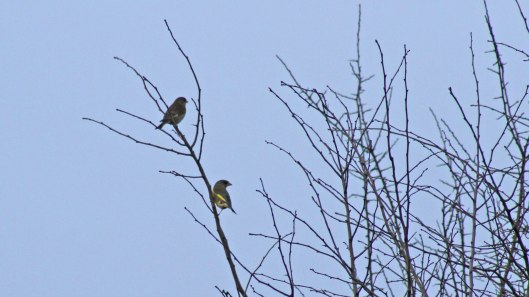
180211 Birding at Ogmore & Kenfig (8)

We saw 62 species in total: the full list can be seen on the Glamorgan Bird Club’s website here.

Like Loading...

A stroll at Sully

06 Tuesday Feb 2018

Posted by sconzani in birds, coastal fauna, nature, seaside, walks

≈ Leave a comment

Tags

birding, birdwatching, British birds, Curlew, Grey plover, Little ringed plover, Oystercatchers, Rock pipit, Sully, Turnstone, Wales Coastal Path

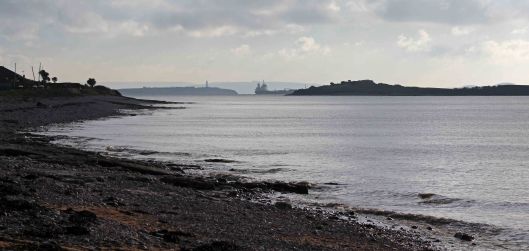
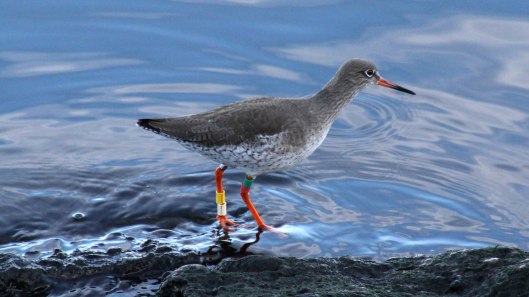
At 9:20am yesterday I was on the bus to Sully, looking forward to seeing what seabirds might be scavenging along the shore at the 10:16 high tide. A bonus was seeing my first pheasant of the year in a passing field.

180206 Sully stroll (1)

Walking down the long narrow path to the beach, I was immediately rewarded with the sight of Black-headed gulls and Oystercatchers looking for worms in the neighbouring field, and a Rock pipit flew up from the shore to join them in their foraging.

180206 Sully stroll (2)
180206 Sully stroll (3)

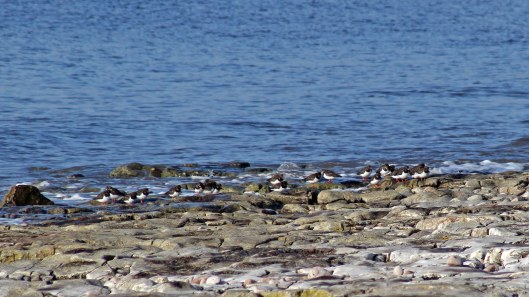
The beach looked empty as I strolled along the ‘coastal path’ – really just a line of rocks and mud here – but a flurry of loud peeping made me turn my head and bring the camera up in time to catch this flock of Turnstones flying in.

180206 Sully stroll (4)180206 Sully stroll (5)

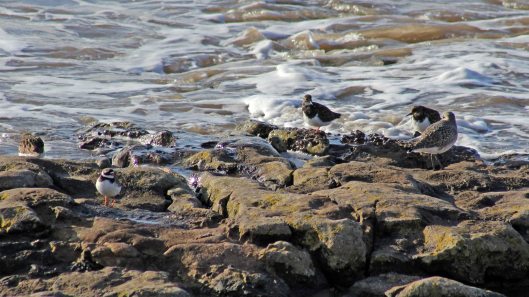
Further east, scanning the water’s edge with my binoculars, I finally spotted an interesting little group of 3 Turnstones, a Little ringed plover and a Grey plover, the latter two year ticks for me, and I’d not seen a Grey plover so close before (I’m still talking a couple of hundred metres away but see-able with bins and long lens). I watched them for perhaps 10 minutes before two loud women and their dog scared the birds off.

180206 Sully stroll (6)

180206 Sully stroll (7)
180206 Sully stroll (8)

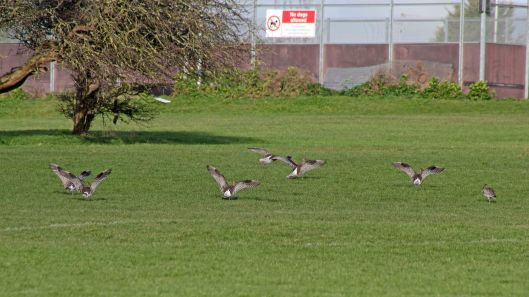
Last, but mostly certainly not least, as these beautiful birds are endangered in Britain, 28 handsome Curlews were using their long curving beaks to probe the playing fields that abut the coastal path in search of worms. After 15 minutes’ watching I left them to their feast, with a silent ‘thanks for being the icing on the cake of my lovely morning at Sully’, and strolled on …

180206 Sully stroll (9)180206 Sully stroll (10)

Like Loading...

The habit of looking

03 Saturday Feb 2018

Posted by sconzani in birds, nature

≈ 4 Comments

Tags

birding, birdwatching, British birds, Collared dove, habit of looking

Someone asked me recently how you become a good birder. Well, I’m not sure I am, yet, a good birder but I was reminded of some thoughts I read in Simon Barnes’s most excellent book How to be a bad birdwatcher (Short Books, London, 2006) (which you really should read): ‘I have developed the habit of looking: when I see a bird I always look, wherever I am.’ And, in response to seeing a ‘How often do you go birdwatching?’ questionaire in a birdwatching magazine, ‘I don’t go birdwatching. I am birdwatching’ (my emphasis).

180203 Collared dove

This photograph is, I think, an example of what Simon meant. A couple of days ago I went for a wander around the local town of Barry and was at the station, waiting for my train home, when, out of the corner of my eye, I noticed movement above me. Two birds were walking along the beams that support the platform roof. So, of course, I had to look closer to see what they were – two lovely Collared doves – and, as I had my camera in my backpack, I had to quickly grab a couple of photos before my train pulled in. I am always looking! I am always birdwatching!

Like Loading...

January at Cosmeston

01 Thursday Feb 2018

Posted by sconzani in birds, nature, parks

≈ 6 Comments

Tags

birding, birdwatching, blackbird, British birds, chaffinch, coal tit, Common Gull, Cosmeston, Cosmeston Lakes Country Park, Gadwall, Great tit, long-tailed tit, Marsh tit, nuthatch, Pochard, Reed bunting, robin, shoveler

180201 1 Long-tailed tits & Blackbird

7 January Gale-force winds were blasting across the exposed areas around the lake today but, with blue skies overhead, the park was full of people out walking, despite the chill. The wee birds were hungry and I was greeted with much happy peeping wherever I scattered seed and virtually mobbed at the dragon tree in Cogan Woods, by Great, Blue, Coal and Long-tailed tits, Dunnocks and Robins, Chaffinches and Nuthatches, Blackbirds and a Reed bunting were all happy to accept any tasty little morsels.

180201 2 Reed bunting
180201 3 Chaffinch
180201 4 Nuthatch
180201 5 Great tit
180201 6 Robin
180201 7 Coal tit

On the lakes the birds were mostly hunkered down, as it was too windy for flying. Teal, Gadwall, Pochard and a Shoveler were some of the highlights.

180201 8 Shoveler
180201 9 Gadwall & Pochard

17 January After much scrutinising of the huge numbers of gulls that you nearly always find at Cosmeston, I spotted my first Common gull of the year.

180201 10 Common gull

23 January A regular Cosmeston-going birding friend had reported an adult Yellow-legged gull the previous day and I fancied a good walk so I headed to Cossie for a look. These was no sign of the gull but I was delighted to see one of the Marsh tits that frequents a particular spot in Cogan Woods, and it became bird number 67 on this year’s list, before I strode quickly home in pouring rain (yep, drenched!).

180201 11 Marsh tit

I’ve been to Cosmeston a couple more times this month but those outings were more about braving the rain  to satisfy my cravings for fresh air and exercise than nature-watching, particularly as it’s been too wet to have camera and binoculars out and about. Let’s hope February is a bit drier.

Like Loading...

January on the Ely embankment

30 Tuesday Jan 2018

Posted by sconzani in birds, nature, walks

≈ 2 Comments

Tags

birding, birdwatching, British birds, Carrion crow, Ely embankment, Goosander, Grey wagtail, little grebe, Pied wagtail, Redshank, River Ely, Rock pipit, Turnstone

31 December 2017 I’m being a bit sneaky here as I managed to fit in one last walk along the embankment before the start of 2018 but after I’d written my December summary. So, on the last day of last year there were 5 Turnstones, 2 Redshanks, 2 Pied wagtails and 2 Grey wagtails, 1 Rock pipit and a couple of Crows.

180130 Ely embankment birds (1)
180130 Ely embankment birds (2)
180130 Ely embankment birds (3)
180130 Ely embankment birds (4)

1 January 2018 The very next day, New Year’s Day, I passed this way as part of a complete circuit of Cardiff Bay. It was a glorious blue-sky day but there were just 3 Turnstones present.

180130 Ely embankment birds (5)

11 January This was another glorious day and another circuit of Cardiff Bay, though in the opposite direction. And it was a bumper day for the Ely embankment, with four Redshanks (including the ringed bird, shown above, which I’ve seen and written about previously), 6 Turnstones, 1 Pied and 4 Grey wagtails, and a Rock pipit.

180130 Ely embankment birds (6)
180130 Ely embankment birds (7)
180130 Ely embankment birds (8)

16 January With 40-mph winds blasting down from snow-covered areas further north, the air temperature was hovering below zero when I walked along the embankment late morning. I wasn’t surprised, then, to find very few birds around – a single Turnstone that was wandering along half way up the embankment (not wanting to put its feet in the chilly water?), which was good for me as it was closer for photos, and just two Grey wagtails. There weren’t many birds on the river either, just a couple of coots, one Great crested grebe and several Black-headed gulls looking hopefully in my direction.

180130 Ely embankment birds

20 January I didn’t get out till late afternoon as it had rained most of the day, so the light was going as I strolled along the embankment path. But I was pleasantly surprised to see a few birds: my friends the Grey wagtails never disappoint (two of those); just one Turnstone poking away amongst the stones; and two Redshanks, including my little buddy the colour-ringed bird. Floating along the river were a Little grebe, a Great crested grebe and a pair of Goosanders – the latter were scared away by a boat cruising by and flew off towards the other side of Cardiff Bay, where I had seen a pair a week or so previously – perhaps the same birds.

180130 Ely embankment birds (9)
180130 Ely embankment birds (10)
180130 Ely embankment birds (11)

25 January I detoured along the embankment on my return from a longer walk and was delighted to find six Turnstones (lovely to see so many), two Redshanks (but not my little ringed mate), two Grey and two Pied wagtails.

Like Loading...
← Older posts
Newer posts →

About me

sconzani

sconzani

I'm a writer and photographer; researcher and blogger; birder and nature lover; countryside rambler and city strider; volunteer and biodiversity recorder.

View Full Profile →

Follow earthstar on WordPress.com

Enter your email address to follow this blog and receive notifications of new posts by email.

Recent blog posts

  • A female Tawny April 21, 2026
  • NFY: Orange-tip April 20, 2026
  • All the yellows April 19, 2026
  • Spider: Dysdera crocata April 18, 2026
  • Recent Reed buntings April 17, 2026

From the archives

COPYRIGHT

Unless otherwise acknowledged, the text and photographs on this blog are my own and are subject to international copyright. Nothing may be downloaded or copied without my permission.

Fellow Earth Stars!

  • Unknown's avatar
  • Unknown's avatar
  • Unknown's avatar
  • Unknown's avatar
  • Unknown's avatar
  • Unknown's avatar
  • Unknown's avatar
  • Unknown's avatar
  • Unknown's avatar
  • Unknown's avatar
  • Unknown's avatar
  • Unknown's avatar
  • Unknown's avatar
  • Unknown's avatar
  • Unknown's avatar
  • Unknown's avatar
  • Unknown's avatar
  • Unknown's avatar
  • Unknown's avatar
  • Unknown's avatar
  • Unknown's avatar
  • Unknown's avatar
  • Unknown's avatar
  • Unknown's avatar
  • Unknown's avatar
  • Unknown's avatar
  • Unknown's avatar
  • Unknown's avatar
  • Unknown's avatar
  • Unknown's avatar
  • Unknown's avatar
  • Unknown's avatar
  • Unknown's avatar
  • Unknown's avatar
  • Unknown's avatar
  • Unknown's avatar
  • Unknown's avatar
  • Unknown's avatar
  • Unknown's avatar
  • Unknown's avatar
  • Unknown's avatar
  • Unknown's avatar
  • Unknown's avatar
  • Unknown's avatar
  • Unknown's avatar
  • Unknown's avatar
  • Unknown's avatar
  • Unknown's avatar
  • Unknown's avatar
  • Unknown's avatar

Blog at WordPress.com.

Privacy & Cookies: This site uses cookies. By continuing to use this website, you agree to their use.
To find out more, including how to control cookies, see here: Cookie Policy
  • Subscribe Subscribed
    • earthstar
    • Join 642 other subscribers
    • Already have a WordPress.com account? Log in now.
    • earthstar
    • Subscribe Subscribed
    • Sign up
    • Log in
    • Report this content
    • View site in Reader
    • Manage subscriptions
    • Collapse this bar
 

Loading Comments...
 

You must be logged in to post a comment.

    %d